
Lighting Museums: A Practice in Precision, Collaboration and Care
With a wealth of experience in illuminating museums and cultural institutions, Zerlina Hughes, Creative Director of StudioZNA, shares some of her knowledge in lighting this medium, with particular reference to her recent work at London’s National Gallery.
 At Studio ZNA, we have specialised in illuminating cultural institutions, public buildings, and commercial environments since 2006. My own career spans more than 25 years across theatre, opera, retail and the cultural sector, working on everything from pop-ups and temporary exhibitions to major renovations and the permanent collections of museums and galleries globally. Each project comes with its own individual challenges, opportunities, and intricacies.
Museum renovations remain some of the most exciting and complex projects we undertake. They offer the opportunity to collaborate with the best architectural and curatorial teams, often within historic buildings, and surrounded by the world’s most esteemed artworks.
The responsibility is considerable. Lighting determines not only what is seen, but how it is perceived. It sets rhythm, mood, and tone, shaping the atmosphere and the narrative arc of a visitor’s journey. Done well, lighting feels effortless, yet beneath that apparent simplicity lies a carefully structured design approach – we are crafting a sensory architecture that supports narrative and storytelling.
One of our most significant recent commissions has been for The C C Land: The Wonder of Art at the National Gallery in London. This major redisplay of the permanent collection marks the Gallery’s bicentenary and spans all 66 galleries. Opened in May 2025, it is a once-in-a-generation redisplay, and we were honoured to be selected to contribute to a transformation of such cultural significance and scale.
Light as a Narrative Medium
Our approach was not only to illuminate the artworks, but to support the curatorial story, enriching the spatial experience, and articulating the emotional tone of each space, from cathedral-like grandeur to intimate, contemplative rooms.
In the Sainsbury Wing, we used lighting to enhance a devotional sensibility appropriate to the period and content of the works. The aim was to create spaces that feel both reverent and resonant, where light emphasises form, scale and texture without distraction.
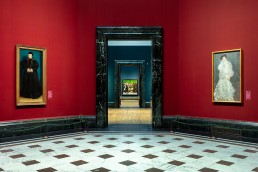
In the adjacent galleries to the east and west, which hold smaller-scale works, a more nuanced lighting strategy was required. The curatorial intention was to create quieter spaces for intimate viewing. We reduced daylight by applying light-diffusing film to rooflights and introduced darker wall tones, which helped create a more subdued visual environment. These adjustments were paired with artificial lighting designed to sit lower within the visual field, supporting a more reflective mood. The result is a gentle tonal shift, inviting closer engagement and moments of stillness within the overall rhythm of the redisplay.
Within the High Renaissance galleries, we allowed daylight and artificial light to interact, creating a soft wash that supports the architecture while allowing individual artworks to be treated with precision. Each piece was given its own lighting layer, designed to enhance colour, depth and texture. Later galleries, housing Impressionist and Post-Impressionist works, were treated with a cooler, more neutral colour temperature. This subtle perceptual shift aligns with both the visual language of the paintings and the more minimal architectural detailing of these spaces.
In each case, the lighting design responds directly to the specific nature of the artworks and the curatorial intent, balancing historical context with contemporary exhibition standards.
The Craft of Making Light Invisible
When lighting works well in a gallery context, it often goes unnoticed. Visitors rarely remark on balanced lighting; they comment when it feels too low, too bright, or overly visible. When visitors are not distracted by glare, imbalance, shadow or visible fittings, they are free to focus on and experience the artwork itself. Yet achieving that level of invisibility demands significant technical control and attention to integration.
 Lighting quality is only part of the equation. For this project, the centralised control system allows for pre-programmed settings that adapt to time of day, function, or event requirements, with fade sequences that maintain continuity and ensure conservation requirements are met throughout.
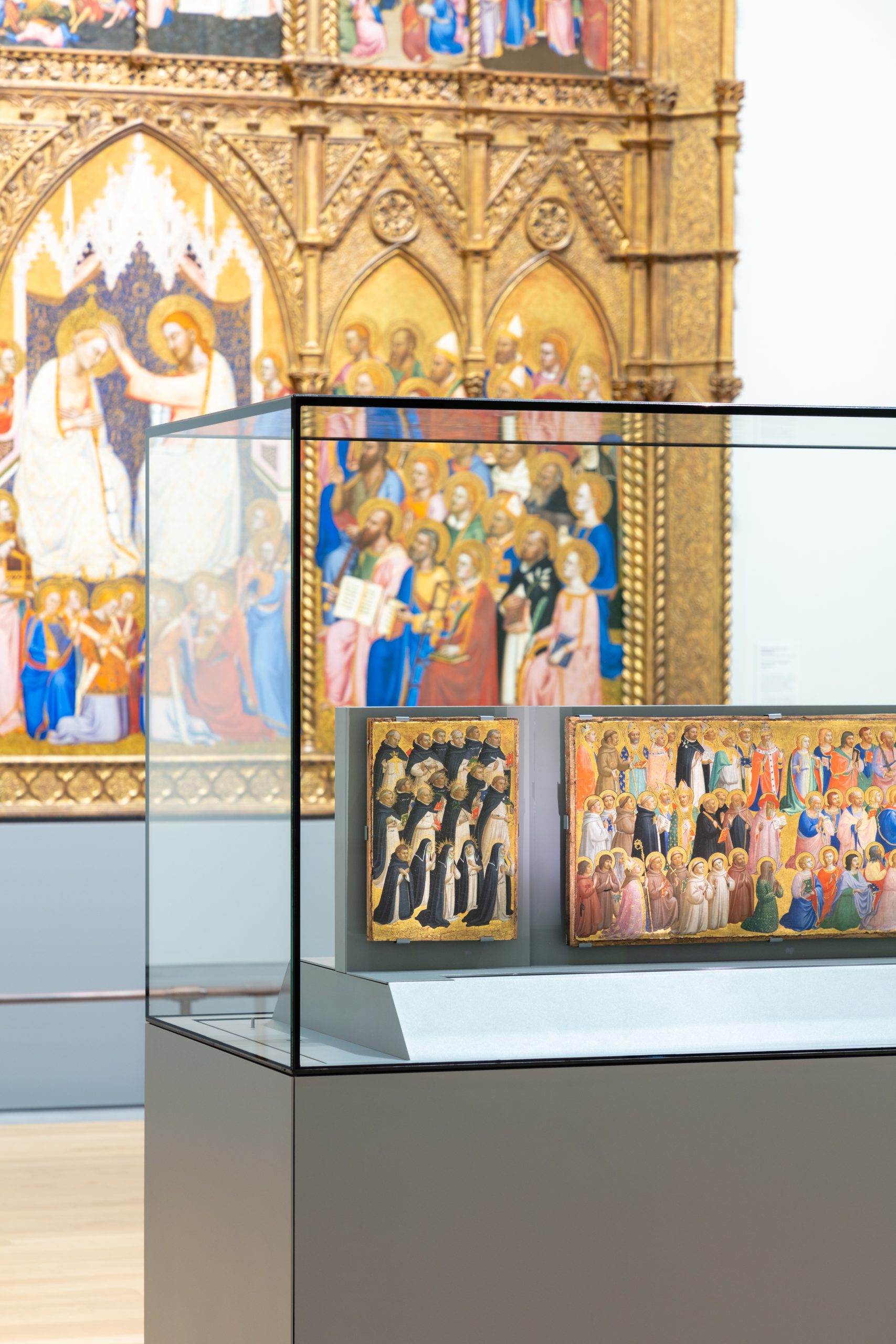
Showcases bring their own challenges. We worked closely with the Gallery’s design team to create bespoke vitrines with internal lighting. Reflections and glare were carefully managed. We designed internal lighting strategies – top and base mounted – allowing the glass to ‘disappear’ and the objects to be studied in close viewing and also experienced in dialogue with the surrounding wall-mounted works. Beam shapers provided pinpoint control, and fittings were miniaturised and integrated seamlessly into furniture design, ensuring clarity without visual intrusion.
In heritage spaces, lighting must work with rather than against the architecture. This required careful thought: we used tunable white uplights embedded into cornices, refined surface-mounted tracks in carefully selected finishes, and avoided visible cables or structural compromises to historic plasterwork. Every detail was considered, and often prototyped, to ensure technical performance never compromised aesthetic clarity.
Human Experience and Conservation in Balance
Visitor experience was a core consideration. Previously, many galleries exhibited abrupt shifts in lighting levels. Our aim was to create a unified and intuitive journey throughout. A consistent colour temperature range of between 3500K and 4100K helped minimise visual fatigue and supported curatorial coherence, while also respecting conservation guidelines.
Thresholds and circulation spaces were recalibrated for legibility, clear signage, interpretation and movement between galleries. The aim was to provide visual clarity without drawing attention to the lighting itself. 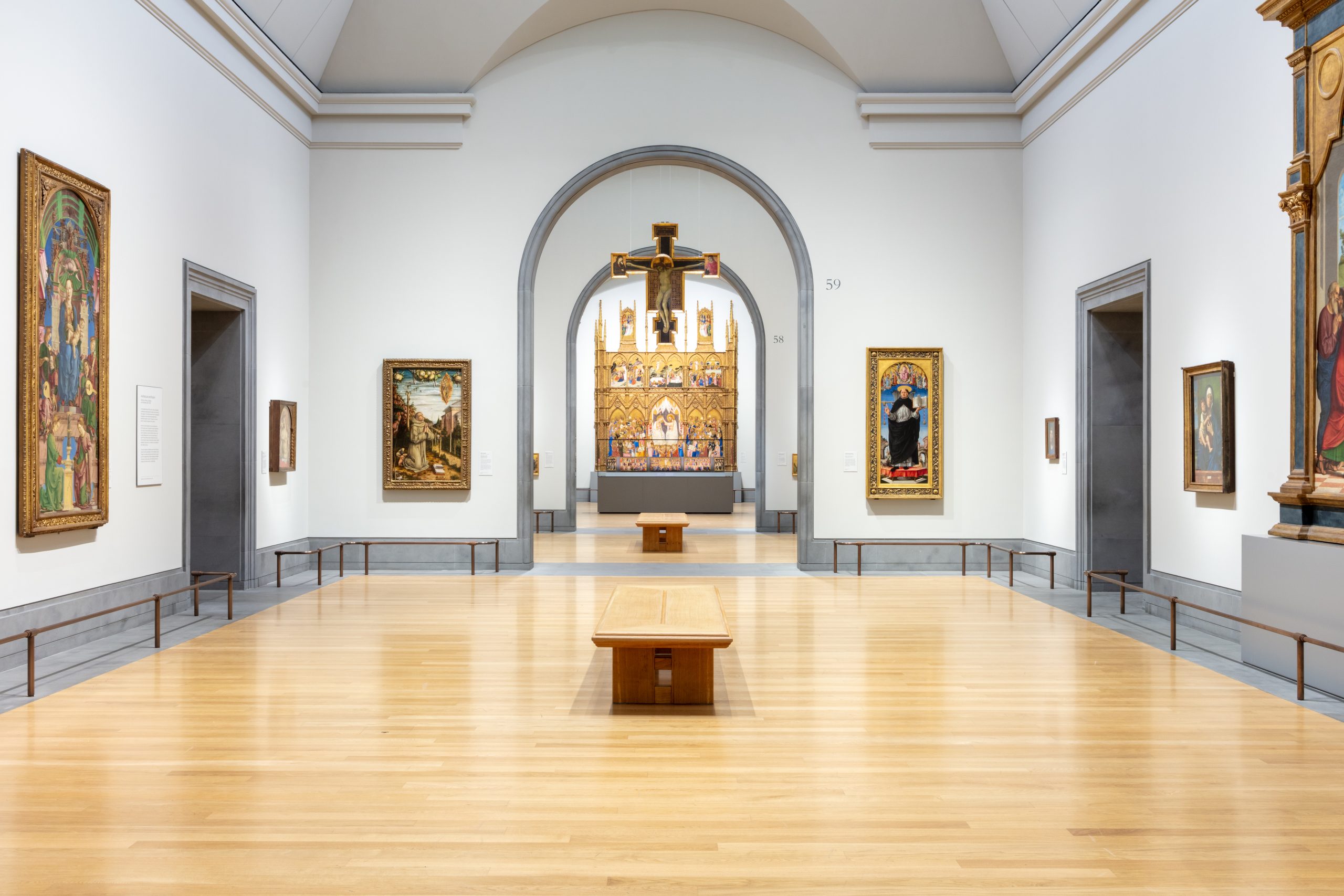
We also worked with conservators on a daylight management strategy. Where natural light enters, we calibrated motorised blinds and sensors to control the flow of diffused light, avoiding jumps in luminance. These transitions, particularly from daylit to non-daylit rooms, required fine tuning to avoid visual shock. This was especially important during winter and for evening events, when natural light is limited. Every room was modelled with these scenarios in mind, ensuring both the artworks and architecture remain legible and engaging under all conditions. Scene presets allow the Gallery to maintain conservation standards while supporting its vibrant events programme, balancing protection with presence.
Collaboration as a Creative Method
The success of museum lighting is never down to a single discipline. It requires continuous dialogue with curators, conservators, architects, and technicians. Every decision, from beam angle to control system, is shaped by collaboration.
With The Wonder of Art, the curatorial team brought a strong conceptual vision to the redisplay. Our role was to translate that vision into a visual language – supporting mood, pacing, and materiality. Conservation teams advised on tolerances and exposure limits, shaping our decisions around fittings, positions and intensities. The result is a scheme that is both technically rigorous and curatorially responsive.
Reflection and Continuity
Designing the lighting for 66 galleries within a national institution is both a privilege and a responsibility. It is an opportunity to demonstrate not just technical capability, but conceptual understanding – to think about how light can support storytelling, spatial continuity, and human engagement.
The result of our work at the National Gallery is a lighting scheme that is both structured and flexible, respectful and contemporary. It is designed to evolve alongside the collection and to remain quietly present, always working, guiding, and ideally, never competing with the art it reveals.
Images: Luke Hayes
www.studiozna.com