
Lucky Cat 22 Bishopgate, London
A fourth incarnation of Gordon Ramsay’s upscale pan-Asian restaurant – Lucky Cat – has opened at 22 Bishopsgate, London, introducing a Tokyo-inspired drinking den now set on an elevated level.
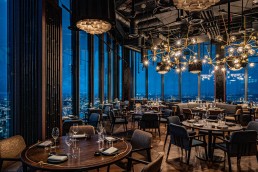
In the fastest elevator in Europe, guests are transported to the 60th floor, where they can savour flavour-packed Asian cuisine and world-class drinks while enjoying breathtaking 360-degree views of London. Arriving via the elevator, transporting the punters are transported back to 1930s Japan when the elevator doors open directly to the restaurant, adorned with detailed glasswork and curved lines, sultry lighting and luxurious design everywhere.
To achieve the same theatrical Japanese ‘Kissa’ aesthetic, darkness was a quintessential element and key to aligning with the original Lucky Cat Mayfair design; thus, lighting had to be carefully considered to achieve the sultry atmosphere. With a well-established reputation for crafting atmospheric and evocative lighting schemes, Victoria Jerram Lighting Design was the only viable option for the job. As a longstanding collaborator on a diverse range of Gordon Ramsay’s restaurants, including the Savoy Grill, The River Restaurant, Lucky Cat Manchester, and Bread Street Kitchen Battersea. Victoria Jerram has consistently brought a nuanced approach to hospitality lighting. Her studio has an enduring partnership with the project’s interior designers, Russell Sage Studio, with past collaborations including the iconic The Goring and the Oriental Club, further underscoring her role as a go-to lighting designer for such a high-profile project.
Despite working on numerous Gordan Ramsey restaurants, the latest addition to the Lucky Cat franchise couldn’t simply replicate its sister restaurants. With the new addition being housed in one of the capital’s tallest skyscrapers, the challenge had been taken to another level. The creative concept centres around a striking juxtaposition of the 1930s-inspired Mayfair Lucky Cat design, thoughtfully adapted to suit the sleek, contemporary architecture of a modern skyscraper. The space is distinctly theatrical, characterised by dramatic, dark finishes, intricate detailing, and expertly crafted lighting to create an immersive atmosphere.
Drawing on Eastern influences, the design reimagines traditional Asian aesthetics for a bold, modern setting. To recreate the dim, intimate ambience of the Kissa bars, both in the evening and during the day, meant using discrete lighting that had been carefully integrated into the joinery and metal framework to emphasise the extraordinary architecture of the space. Maintaining the panoramic views of the city skyline was the primary design consideration for the level 60 space, which boasts 5.7-metre-high ceilings and floor-to-ceiling glazing. The aim was to allow guests to fully enjoy the breathtaking skyline from day through to night, with minimal reflections. To achieve this, Victoria Jerram Studio collaborated closely with Russell Sage Studio to develop a scheme where dark finishes were used throughout the space, and any large feature elements were positioned at least three-metres above the eyeline of seated diners to avoid obstructing the view.
With an exposed services ceiling, track lighting was the natural solution for ambient illumination. Lighting fixtures were carefully selected to minimise glare, such as Lucent’s Prospex TubeLED Mini spotlights in a black finish, featuring a deep-set light source and honeycomb louvre to offer maximum glare control and reduce unwanted reflections on the glazing.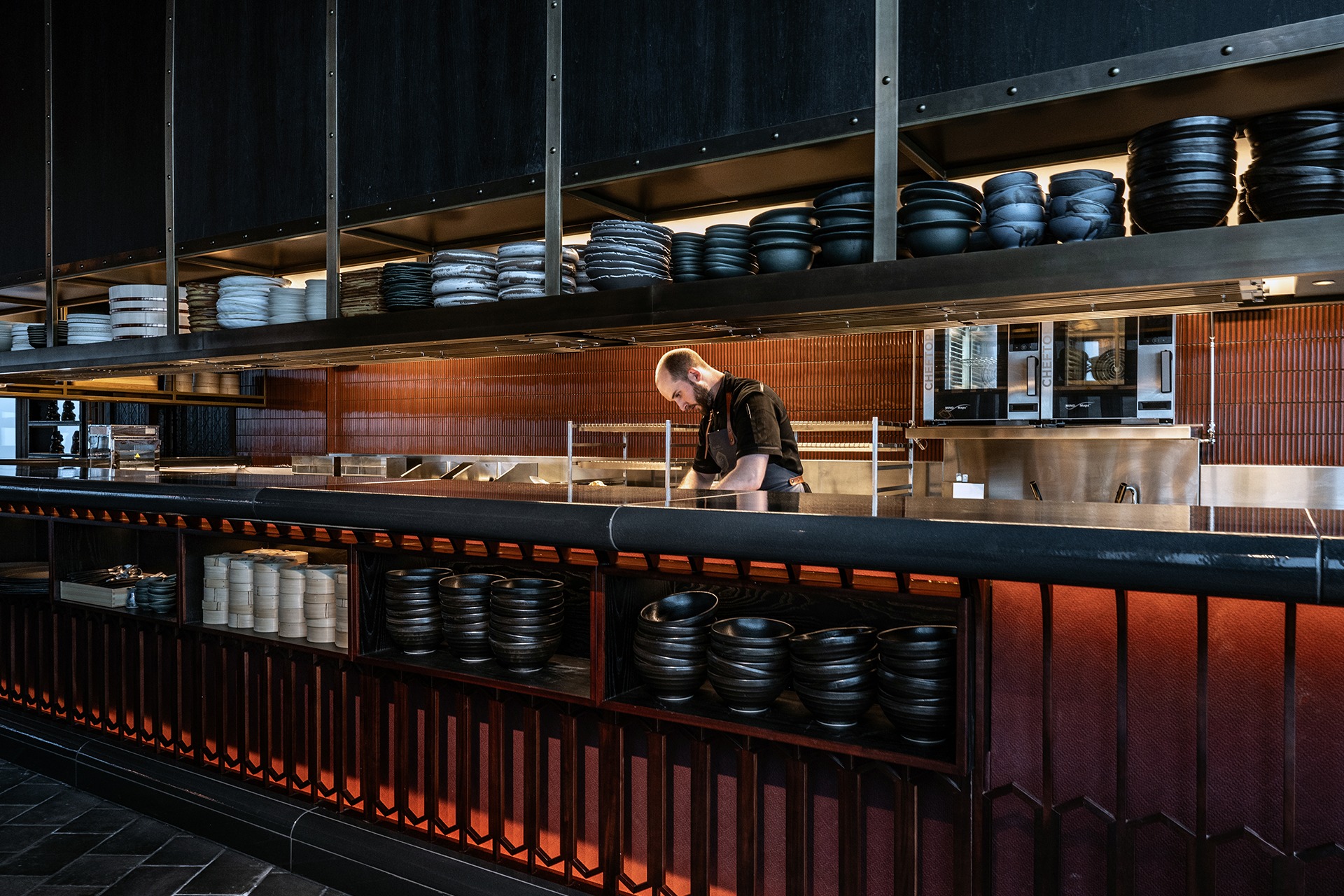
Structural constraints posed another challenge, particularly due to the building’s unusual shape, which complicated the coordination of lighting tracks and services. However, the flexibility of track lighting helped navigate this, and in areas where track could not be installed, Jerram selected Lucent’s matching Prospex TubeLED Mini pendants. These provided consistent light performance and retained the same clean, minimal aesthetic, ensuring visual continuity throughout the space.
A sophisticated lighting control system was essential, given how dramatically natural light levels vary throughout the day. Mode’s eDIN system was chosen, with its multi-sensors able to monitor changing light levels throughout the day. This provided flexibility so the client could adjust lighting as needed, dimming or switching off ambient lighting during brighter periods to conserve energy. Three evening lighting scenes were curated to subtly change the lighting levels and mood through the course of the evening, with dimming levels tuned to minimise unwanted reflections, preserving the clarity of the skyline view throughout the night.
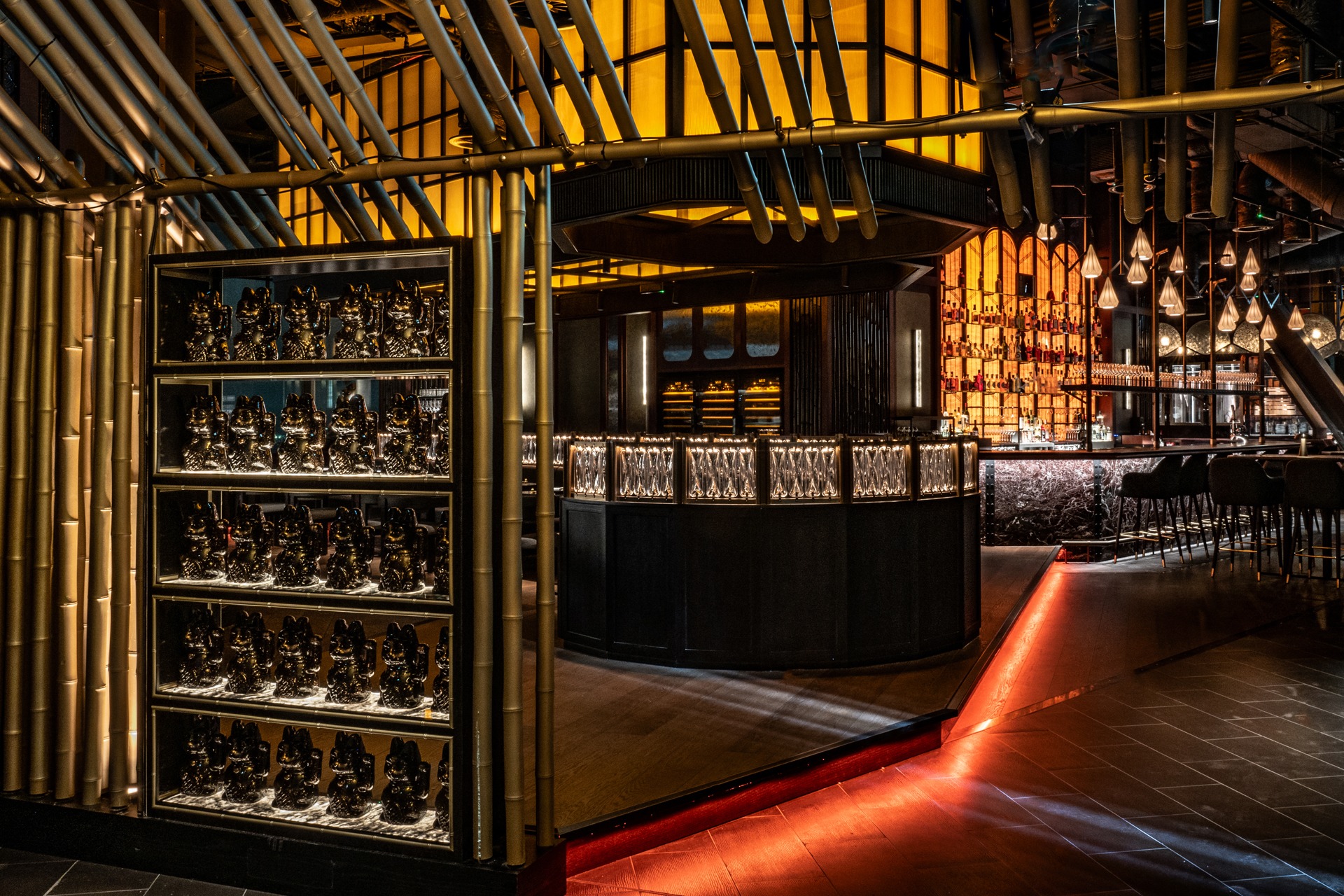
The expansive views from the restaurant are a spectacular feature to have in a hospitality setting; however, what they offer is quite the juxtaposition to the intimate feel the client wanted to create. With more than 120 covers in the main restaurant alone, creative thinking was required to deliver an intimate feel to the dining experience of guests, while also celebrating the vast volume of the space. Large-scale features and careful integration of lighting within these, like the bamboo entrance portal, were one of the design solutions. Low-level ‘human scale’ lighting was used at night to create a warmer, more personal dining experience for guests with the help of integrated joinery lighting.
The space features a strong blend of architectural and decorative lighting elements, which could only work seamlessly with both lighting and interior design studios working together. To add to the intimacy, especially at night, low-level lighting was designed into the scheme through the use of battery table lamps and integrated joinery lighting such as the illuminated banquette divider.
Jerram adds: “I worked closely with the Russell Sage FF&E team, who were responsible for the decorative lighting, offering advice on the lit effects, the materiality and functionality for both off-the-shelf and bespoke pieces. I also specified the lamps for each decorative piece to ensure harmony of colour temperature and quality with the architectural lighting.
A sense of drama has been created by layering different types of light to highlight key areas. Notable examples include creating a tunable white light sheet behind the back bar; Projected Image gobo projectors for the signage to the exclusive dining space called Restaurant Gordon Ramsay High; and LightGraphix mini joinery uplights and in-ground uplights for the bamboo arch structure at the entrance.
Employing warmer temperatures helped evoke a stronger sense of intimacy throughout the space. This was exaggerated by including a large-scale Shoji lantern structure suspended from the ceiling in the main restaurant, as well as the installation of a bespoke cluster chandelier at the Sushi Bar end of the restaurant. This added to the visual appeal, as well as the sense of theatricality that diners desire from a high-end dining experience.
In a restaurant where the kitchen is proudly on show, the relationship between front of house and back of house lighting becomes more critical than ever. At Lucky Cat, 22 Bishopsgate, the open kitchen isn’t just functional – it’s part of the theatrical experience. Blending the practical demands of a working kitchen with the atmospheric drama of the dining space required precision and restraint. “The key was in the choice of colour temperature and lighting quality,” explains Jerram. “I ensured that both the ambient front of house lighting and the open kitchen lighting were set to a consistent 2700K with high colour rendering. This helped create a visual harmony between the two zones, despite their very different functions.”
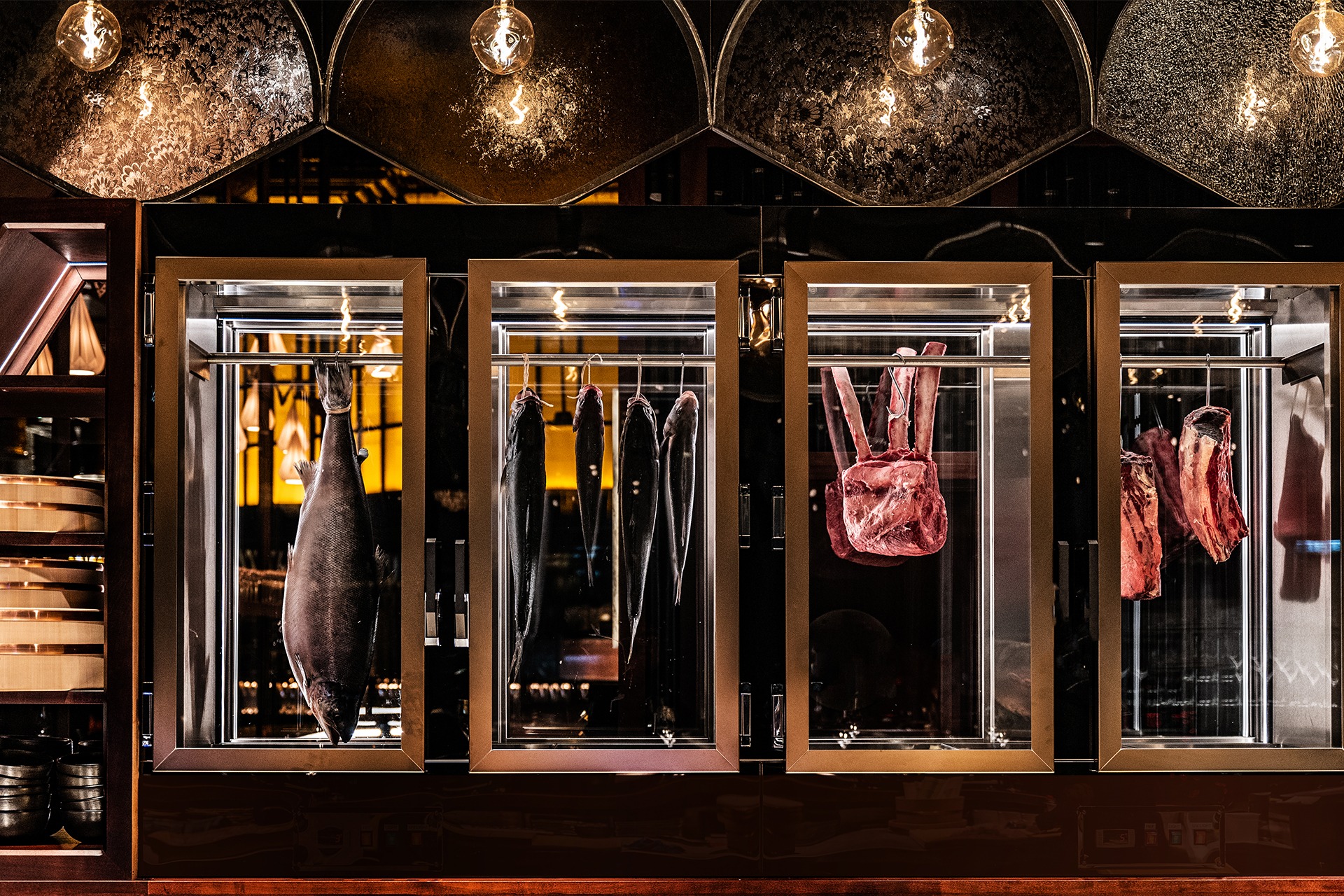
Where the functional fittings of the kitchen couldn’t be concealed behind decorative gantries at the pass, tightly focused luminaires were used to control spill and minimise distraction. The result is a carefully curated glow that respects the mood of the dining room without compromising the working needs of the kitchen.
A final layer of finesse came during scene setting, Jerram adds: “I used a light meter to fine-tune the kitchen lighting levels and created a separate evening scene with dimmer output, timed to begin once food prep had finished. This allowed the space to transition naturally into a softer, more refined ambience, keeping the focus firmly on the dining experience.”
Shaping the ambience of one of London’s highest restaurants came with both ambition and precision. Situated atop one of the City’s most iconic towers, the project demanded a lighting scheme that could deliver drama and intimacy without ever compromising the breathtaking skyline views, to which Victoria Jerram delivered. It’s a scheme that stays true to the original vision, while enhancing the sensory experience for guests throughout the day and into the evening. Looking back at the finished space, the designer reflects on how successfully the lighting delivers on its initial promise, Jerram says: “I’m delighted with the final result. The lighting brings atmosphere, drama, and intimacy to the space, and really delivers the wow factor that’s expected of a destination restaurant.”
Among the many rewarding aspects of the project, one of the team members was given the pleasure of dining at the restaurant during its opening week. On an overcast but clear afternoon, she was delighted to experience the hard work she and her team had achieved and was particularly thrilled to see that there was no glare on the glazing, allowing the view to remain pristine. This was a huge win for the team, given that it was the primary wish of the client from the beginning.
Finalising her thoughts on the project, Jerram emphasises that collaboration was key throughout. She says: “It’s always a pleasure to work with a client who truly values lighting. Their experience and clarity of vision meant we could push the design further, knowing we had a shared understanding of what we were trying to achieve.”
With panoramic views, considered detailing, and a lighting scheme that brings theatre and soul to the space, Lucky Cat 22 Bishopsgate sets a new benchmark, not just for dining at height, but for how light itself can shape the experience.
Client: Gordan Ramsey Lucky Cat 22
Lighting Design: Victoria Jerram Lighting Design, UK
Interior Design: Russell Sage Studio, UK
Lighting Specified: Addlux, Lucent Lighting, Orluna, Precision Lighting, Projected Image, LightGraphix, Fibre Optic FX, Unibox, Mode