
Insights from Tech-X 2025
On Wednesday 10 September, Ellie Walton had the opportunity to attend Tech-X – The Lighting Industry Association’s (LIA) first technical excellence conference, held at the Convene, 133 Houndsditch in the heart of London. Marking its debut, Tech-X set out to redefine industry gatherings by creating a dynamic, multi-disciplinary forum that reflects the evolving needs of the lighting sector.
Born out of extensive feedback from LIA supporters and event attendees, the event brought together manufacturers, designers, engineers and regulators under one roof. With multiple stages and a diverse programme spanning connected lighting, cutting-edge design and the latest regulatory insights, Tech-X delivered a platform for knowledge sharing, innovation and collaboration.
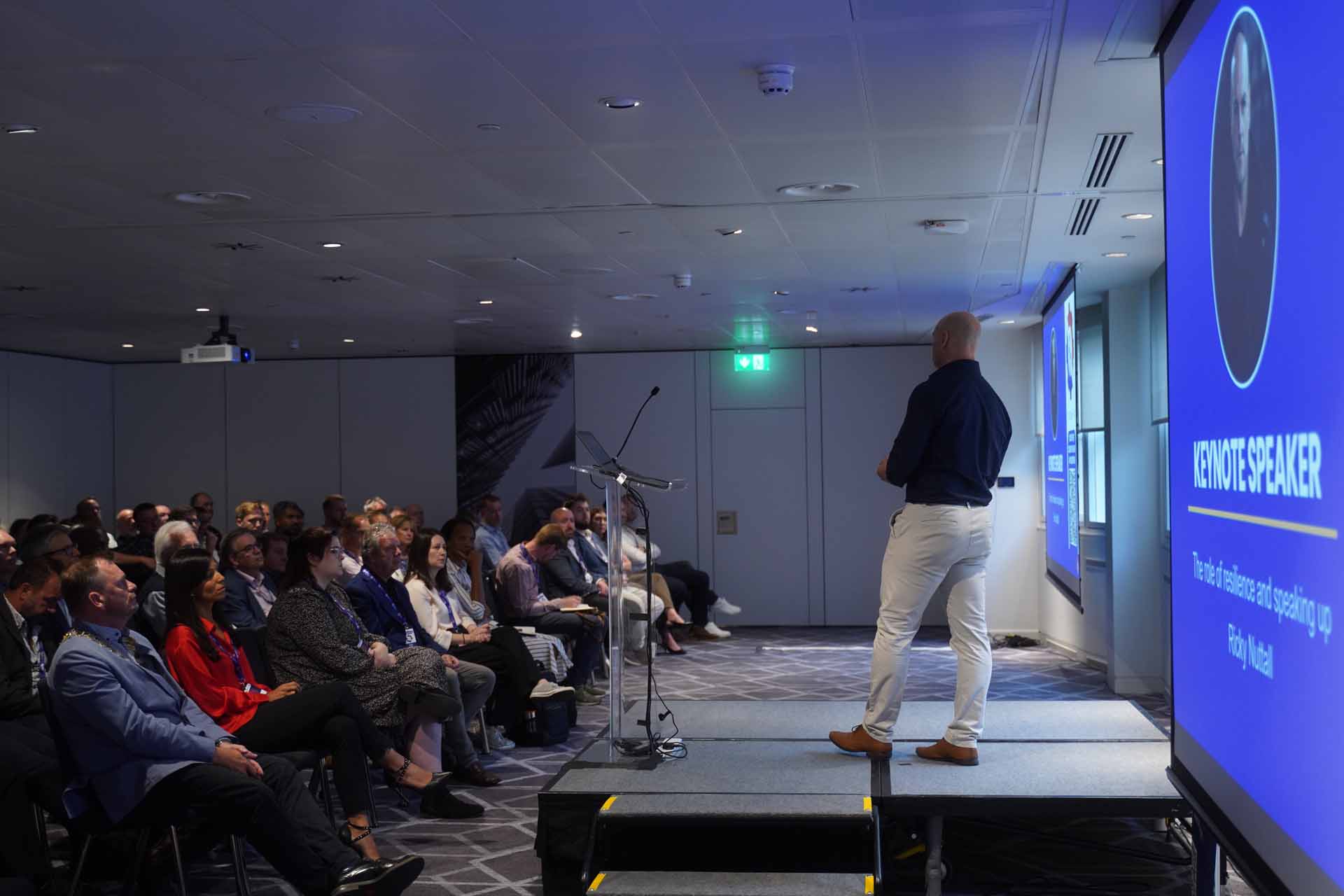
The event commenced with a warm welcome from Ayça Donaghy and David Barnwell, CEO and President of the LIA, respectively. Following the welcome speech, the audience had the privilege of hearing from the Keynote Speaker, Ricky Nuttall. A firefighter and first responder to the tragic Grenfell Tower incident, Nuttall delivered a deeply moving and thought-provoking address drawing on his personal experiences. He highlighted the profound importance of resilience, courage, and the necessity of speaking up when confronted with unequivocally wrong situations. Nuttall also spoke on the importance of people’s roles in design, and how the combination of design flaws and lack of standards met escalated the fire at Grenfell Tower to spread rapidly. His words resonated powerfully with the audience, serving as a reminder that strength and integrity are essential not only in times of crisis but also within professional and everyday contexts.
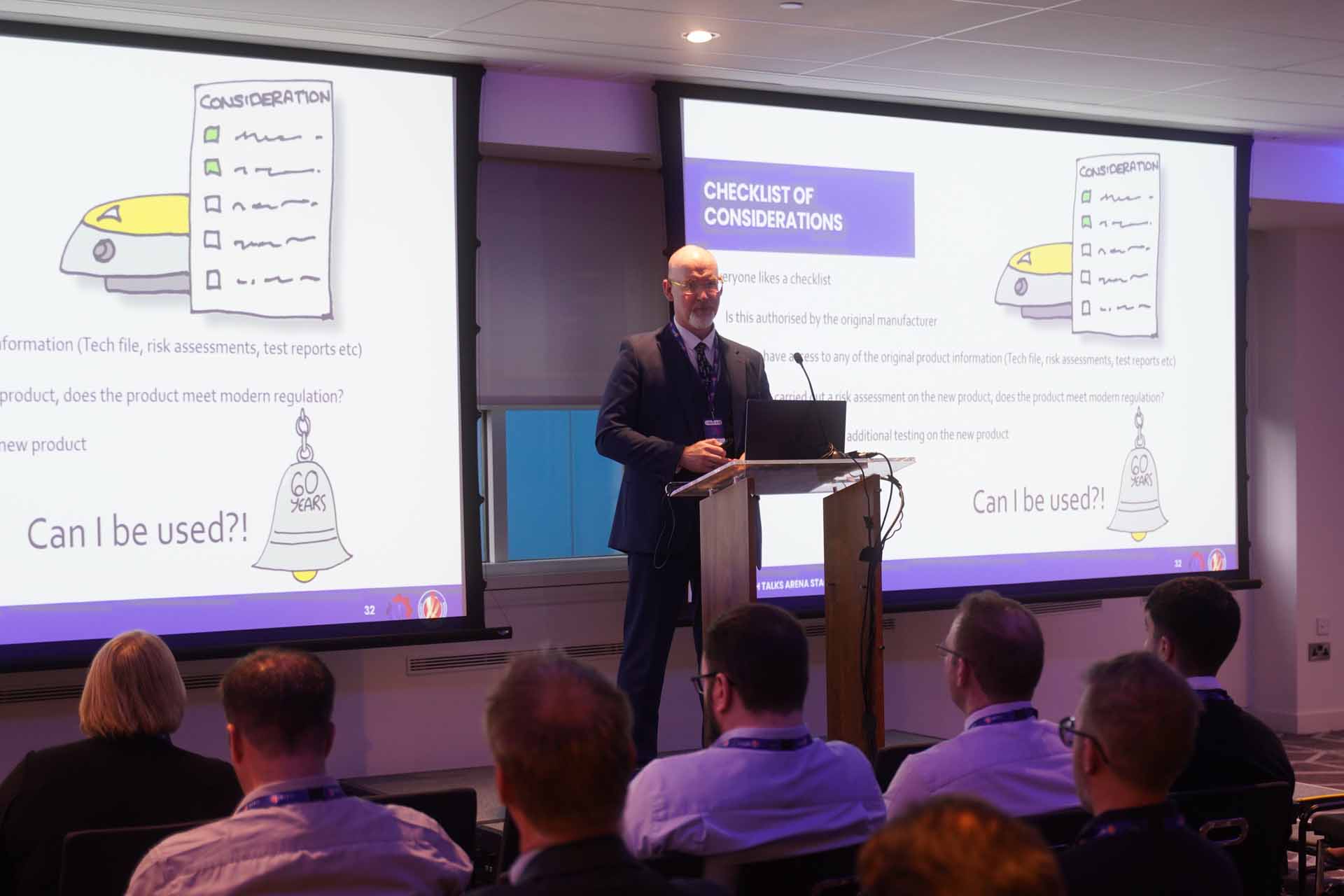
The programme was divided into three stages, with stage one dedicated to standards and compliance, with the opening talk hosted by the LIA’s Stuart Burns. Burns’ presentation focused on clearing up the confusion between repairing and remanufacturing lighting products, and why the distinction matters. He explained that repairing simply means fixing a broken light, so it works as it did before, while remanufacturing involves making a bigger change, such as converting an old fluorescent fitting into an LED one, which effectively turns it into a new product in the eyes of the law. This means remanufactured lights must meet today’s safety standards and carry the same certifications as brand-new ones. Burns also highlighted some of the challenges, such as who holds responsibility if something goes wrong, the risks of using another company’s design or branding without permission, and how difficult it can be to guarantee performance or sustainability claims when using older parts. His main message was that remanufacturing can be valuable for extending the life of products and supporting sustainability, but it must be done transparently and in compliance with modern regulations.
The final presentation for the morning on stage one was Andy Hughes from Zumtobel Group, and his presentation, ‘When the Rulebooks Don’t Apply’. Hughes’ presentation tackled the thorny issue of what manufacturers should do when standards haven’t yet been harmonised. He explained how, in the past, compliance was fairly straightforward – if a product met the relevant standard, it was assumed to meet legal safety requirements. However, changes to EU directives, the introduction of independent ‘HAS consultants’ to review standards, and Brexit have complicated matters. Many standards now fail the harmonisation process, leaving manufacturers caught between outdated official lists and newer, more relevant versions. Hughes stressed that simply following a standard is no longer enough: companies must also carry out risk assessments and document how their products meet essential safety requirements. He outlined the different routes manufacturers can take, from sticking with harmonised standards to using the latest international ones or even building their own compliance cases, while warning that each carries different risks. His key message was that while the system has become messier, the safest approach is to stay as up to date as possible, compare old and new standards carefully, and always put risk assessment at the centre of compliance decisions.
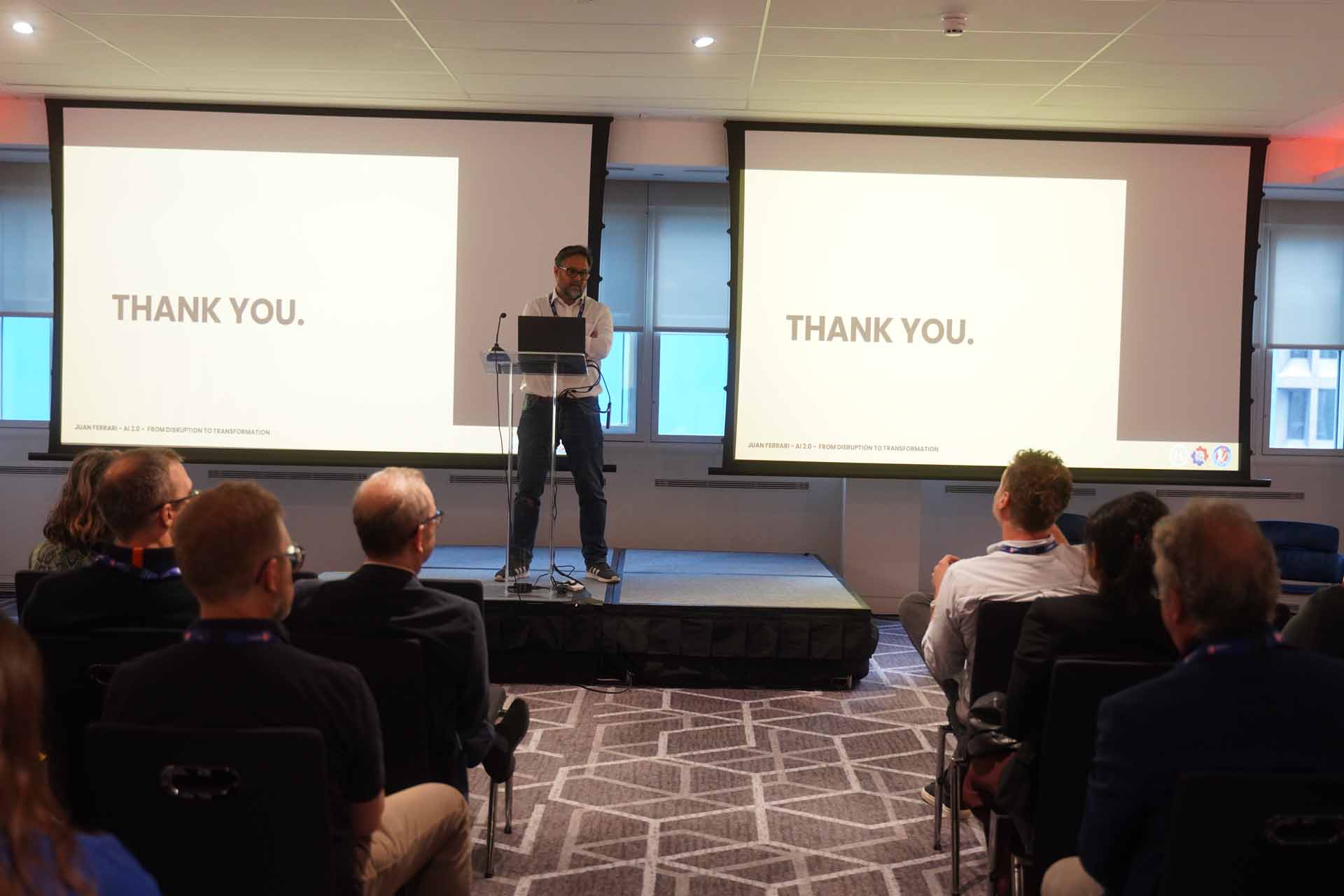
After lunch came the Lighting Design Stage (stage two) to see the much-anticipated presentation from Juan Ferrari of Hoare Lea, where he gave a revised version of his IALD presentation on AI. Titled ‘AI 2.0: The Future of Lighting Design’, Ferrari explored how artificial intelligence is reshaping the creative process and what that means for lighting designers. He spoke openly about his own journey of learning – from initially knowing little about AI to now experimenting with it in meaningful ways. His key message was that AI should be seen as a tool, not a threat, and that its value depends on the quality of data we feed it. Ferrari highlighted both the opportunities and risks: AI can save huge amounts of time by automating repetitive tasks, generate powerful images and concepts in minutes, and helping designers work more efficiently. But without careful oversight, poor data or outdated information can lead to unreliable results. He stressed the importance of keeping “a human in the loop” to check accuracy, ensure transparency, and apply ethical judgment. Ultimately, Ferrari argued that while AI can provide the “how”, it’s still up to humans to bring the “why”, which is the creativity, context, and meaning behind design decisions.
Following Ferrari was his peer from Hoare Lea, Ruth Kelly Waskett, whose presentation, ‘The Key to Healthy and Sustainable Buildings’, was all about why daylight matters so much more than we often give it credit for. She explained that natural light isn’t just about saving energy, though using daylight instead of electric light can dramatically cut carbon emissions, it’s also essential for our health and wellbeing. Daylight supports our body clocks, keeps us alert, and even provides infrared wavelengths that artificial lights can’t replicate, which play an important role in cell health and recovery. Beyond the science, Waskett reminded us that people simply enjoy being in daylight-filled spaces: they feel more comfortable, more connected to their surroundings, and more uplifted. She also busted some common myths, like the idea that bigger windows always mean better daylight, showing instead that quality, placement, and design matter far more. Waskett emphasised that if we want buildings that are not just efficient, but also healthy and enjoyable places to live and work, daylight must be at the heart of their design.
After a short break, conversations became much denser with abundant legal and technical jargon during the third stage dedicated to connected lighting. Thet Oo’s presentation, ‘The Sustainable Future of Smart Buildings and IEQ’, explored how upcoming regulations and smart technology will influence the buildings we inhabit. He explained that by 2050, countries are committed to net-zero carbon targets, with upgrading existing buildings being a key route, rather than focusing solely on new construction. This is where smart systems come into play. Oo highlighted new laws coming into effect in Europe (and soon in the UK) which will mandate large buildings to have automated controls, publish energy performance ratings, and monitor indoor environmental quality (IEQ). IEQ includes factors such as light, air quality, temperature, and noise, and he demonstrated that improving these elements is not merely about reducing energy consumption but also about enhancing comfort and performance. To illustrate this, Oo shared a hospital case study in the Netherlands, where smart lighting and sensors tracked energy use, air quality, and occupancy patterns. The outcome was not only lower energy bills but also healthier environments for staff and patients. His main message was that the lighting industry has an opportunity to lead this transition by leveraging existing sensor networks to provide valuable data, helping buildings become more environmentally friendly and better suited for their occupants.
Jon Belfield’s presentation, ‘Smart Synergy: Unlocking Full Building Potential with Integrated Lighting and BMS’, explored why lighting and building management systems (BMS) have often remained separate and why now is the time to bring them together. Drawing on his decades of experience as a BMS engineer, Belfield explained that while the technical barriers to integration have largely disappeared, cultural and contractual barriers still hold the industry back. Too often, there are different teams working on individual operations, such as electricians, lighting, and other construction fields, leaving no one responsible when things go wrong. He argued that instead of chasing buzzwords like “smart buildings,” the focus should be on making systems user-friendly, well-integrated, and supported by people with the right skills. Belfield also reflected on the generational shift in technology adoption, from email being revolutionary in the 1980s to AI being normal for today’s graduates. He believes this shapes expectations in buildings. Belfield summarised that true smart synergy isn’t about technology alone; it’s about collaboration, clear responsibilities, and using existing systems better to deliver buildings that work seamlessly for both operators and occupants.
Overall, Tech-X 2025 demonstrated the lighting industry’s commitment to innovation, collaboration, and sustainability, bringing together diverse voices from across the sector to tackle both technical and regulatory challenges. From Ricky Nuttall’s poignant keynote on resilience and safety to discussions on AI in design, smart building integration, and the importance of natural light, attendees were offered a wealth of practical knowledge and thought-provoking ideas. The conference highlighted that while technology can offer a world of possibilities, its success relies on collaboration and clear responsibilities so that the use of that technology is streamlined for the occupants and operators. It is programmes like Tech-X that set the benchmark for these conversations that foster a dialogue on the future of lighting design. For those who attended, it was both an inspiring and practical experience, reaffirming that lighting is about creating environments that are safe, sustainable, and human-centric.