
Measuring Good Design
Measuring Good Design: How Do We Value Illuminated Architecture?
By Sameer Sodhi, Business Leader-Entertainment and Color Kinetics at Signify
For decades, the value of architecture has been measured through familiar metrics: construction costs, energy performance, occupancy rates and return on investment. Yet one of the most influential elements that brings any impact alive often remains overlooked in those calculations: lighting.
Architectural lighting has traditionally been viewed as a finishing touch. However, it is becoming clear that lighting is far more than decoration and can is a crucial tool in shaping experiences, places, influences behaviour, supports local economies and contributes to civic identity. The question is no longer whether lighting matters, but whether we can accurately measure the (overlooked) value it creates.
A recent impact analysis conducted by Color Kinetics, of four illuminated public spaces across the United States provides compelling evidence that lighting delivers measurable returns beyond aesthetics. The report ‘Lighting Public Spaces – Impact and Analysis’ examines projects ranging from civic landmarks to public art installations; the study found that architectural lighting generated economic, social and cultural benefits that extended well beyond the initial investment.
Beyond Lumens and Energy Savings
Lighting professionals can quantify energy use, maintenance savings and carbon reductions, but these technical measures tell only part of the story. The report considers lighting’s effects on community engagement, tourism, economic development, visibility, partnerships, sustainability and wellbeing, treating it as infrastructure that shapes how cities function, and communities connect. As architecture increasingly prioritises interaction, wellbeing and local identity, lighting is central to delivering these outcomes.
When Buildings Become Destinations
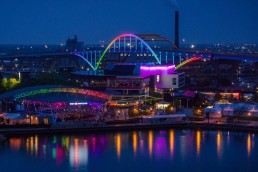
Perhaps the strongest evidence of lighting’s value lies in its ability to transform familiar places into memorable destinations. For example, the Daniel Hoan Memorial Bridge in Milwaukee was once simply functional transport infrastructure. Today, dynamic architectural lighting has transformed it into a visual icon that reflects the city’s identity and connects residents and visitors to the waterfront in a new way, making it one of the city’s most recognisable landmarks. The bridge now hosts community and civic events, causes, initiatives, and annual festivals throughout the year.
The way a piece of architecture looks at night can have a huge impact on its digital presence, driving millions of online impressions, tourism campaigns, and widespread media coverage that have positioned the bridge as an ambassador for the city itself. Lighting has effectively transformed infrastructure into cultural infrastructure. This is an important distinction. Success is no longer measured solely by how well a structure performs its intended function, but by how successfully it contributes to the wider identity of a place.
The Economics of Experience
Architectural lighting also creates economic value in ways that traditional procurement models often struggle to capture. The report estimates that the four featured lighting projects collectively generated almost $30 million in total impact through direct investment, supply chain activity and wider economic effects. Yet the indirect impacts may be even more significant. West Sacramento’s Barn demonstrates how thoughtful lighting can support placemaking. Originally conceived as an event and dining venue, connected lighting has helped establish it as the focal point of a growing mixed-use district. The space now attracts concerts, festivals, sporting events and community activities while helping activate the surrounding waterfront. Approximately ten residential developments have subsequently been built or are under construction nearby, highlighting the role that quality public spaces can play in wider regeneration. The value created extends beyond construction economics. Visitors stay longer, businesses benefit from increased footfall, and the location develops an identity that encourages repeat visits and investment. These outcomes are rarely measured in traditional lighting specifications, yet they may represent the greatest long-term return.
Lighting as a Civic Platform
One of the report’s most interesting findings is that architectural lighting increasingly functions as public communication. Philadelphia City Hall illustrates this perfectly. Its programmable lighting lets the building respond instantly to national celebrations, charitable campaigns, and civic events, transforming a historic landmark into a dynamic expression of the city’s identity. Whether celebrating sporting victories or marking important social causes, the building becomes an active participant in public life rather than simply a backdrop.
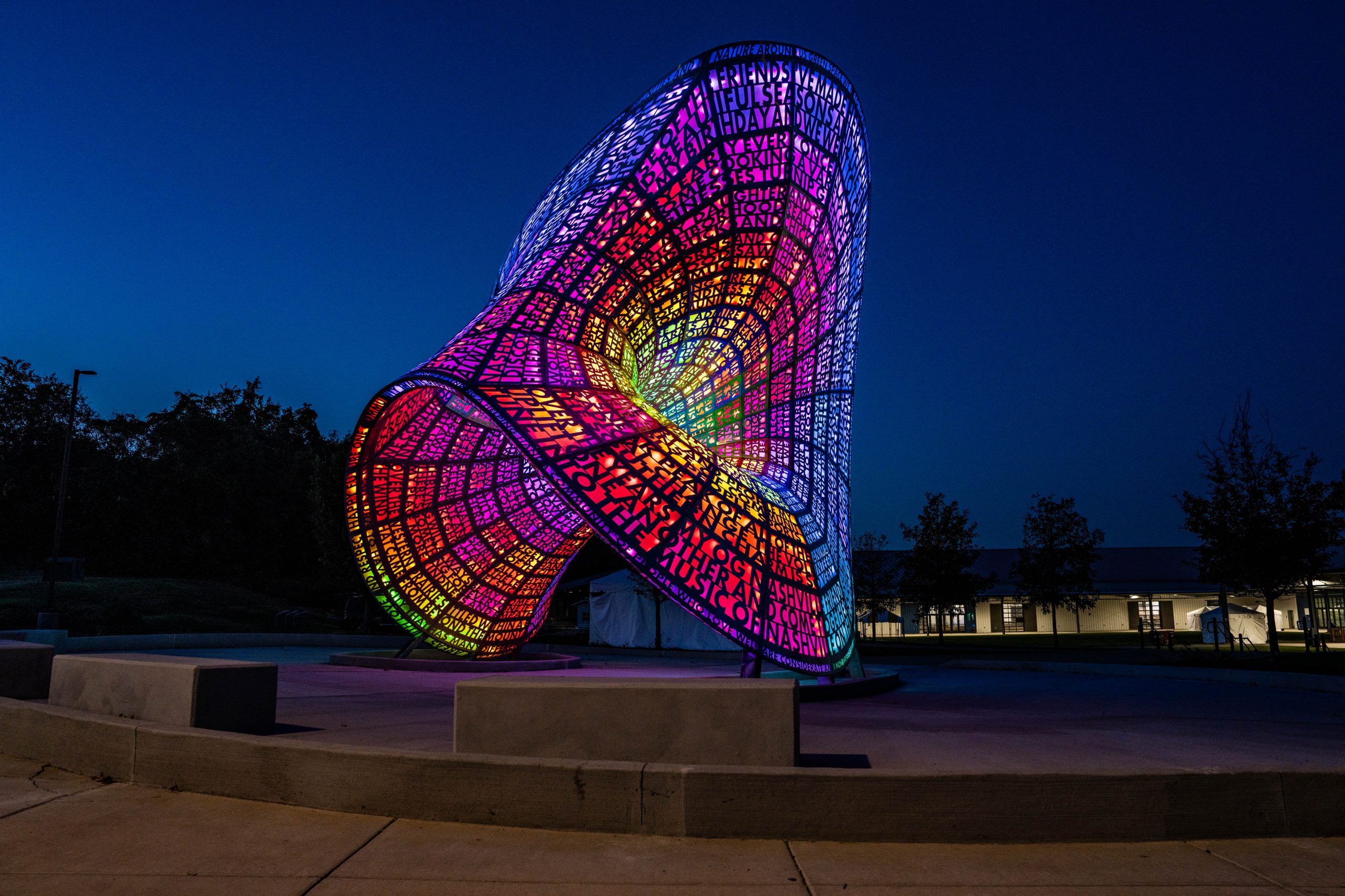
Similarly, Nashville’s Loqui demonstrates how illuminated public art can amplify community voices. Working in tandem with the sculpture’s innovative, unique shape, the lighting design aimed to personify the words of the city’s residents, inviting stories in and projecting them out. The installation incorporates words and stories contributed by more than 400 local residents, creating a permanent artwork shaped by the people it represents. Rather than lighting serving the artwork, the lighting becomes integral to the experience itself.
These projects suggest that good lighting is no longer simply about visibility. It is about participation.
Towards Better Measures of Good Design
The challenge for architects, lighting designers and clients is that many of these benefits remain absent from conventional project evaluation.
A business case often focuses on installation costs, operational savings and maintenance cycles. While important, these measures overlook questions such as:
- Does the lighting encourage people to spend more time in a public space?
- Does it increase civic pride?
- Does it attract visitors?
- Does it support local businesses and boost nighttime economies?
- Does it improve the visibility and reputation of a destination?
- Does it create a stronger emotional connection between people and place?
These outcomes may be more difficult to quantify than energy savings, but they are no less valuable.
Such qualitative indicators, including stakeholder engagement, digital reach, tourism activity, and community participation, can sit alongside economic modelling to provide a more complete understanding of lighting’s contribution.
Designing for Lasting Value
As cities continue to invest in regeneration, climate resilience and healthier public environments, expectations of architecture will continue to evolve. Buildings and public spaces are increasingly judged not only by how efficiently they operate, but by how effectively they create meaningful experiences.
Architectural lighting is uniquely positioned to support that ambition. It can extend the usability of spaces after dark, strengthen local identity, encourage social interaction and help transform ordinary infrastructure into memorable landmarks. When thoughtfully integrated from the earliest stages of design, lighting becomes a strategic investment rather than an aesthetic upgrade. Perhaps this is the real measure of good design. Not simply how beautifully a building is lit, but how effectively that light helps people connect with architecture, with one another and with the places they call home. If architecture is ultimately about creating lasting value for society, then lighting deserves to be measured not as an optional enhancement, but as one of its most powerful contributors.