
Equation
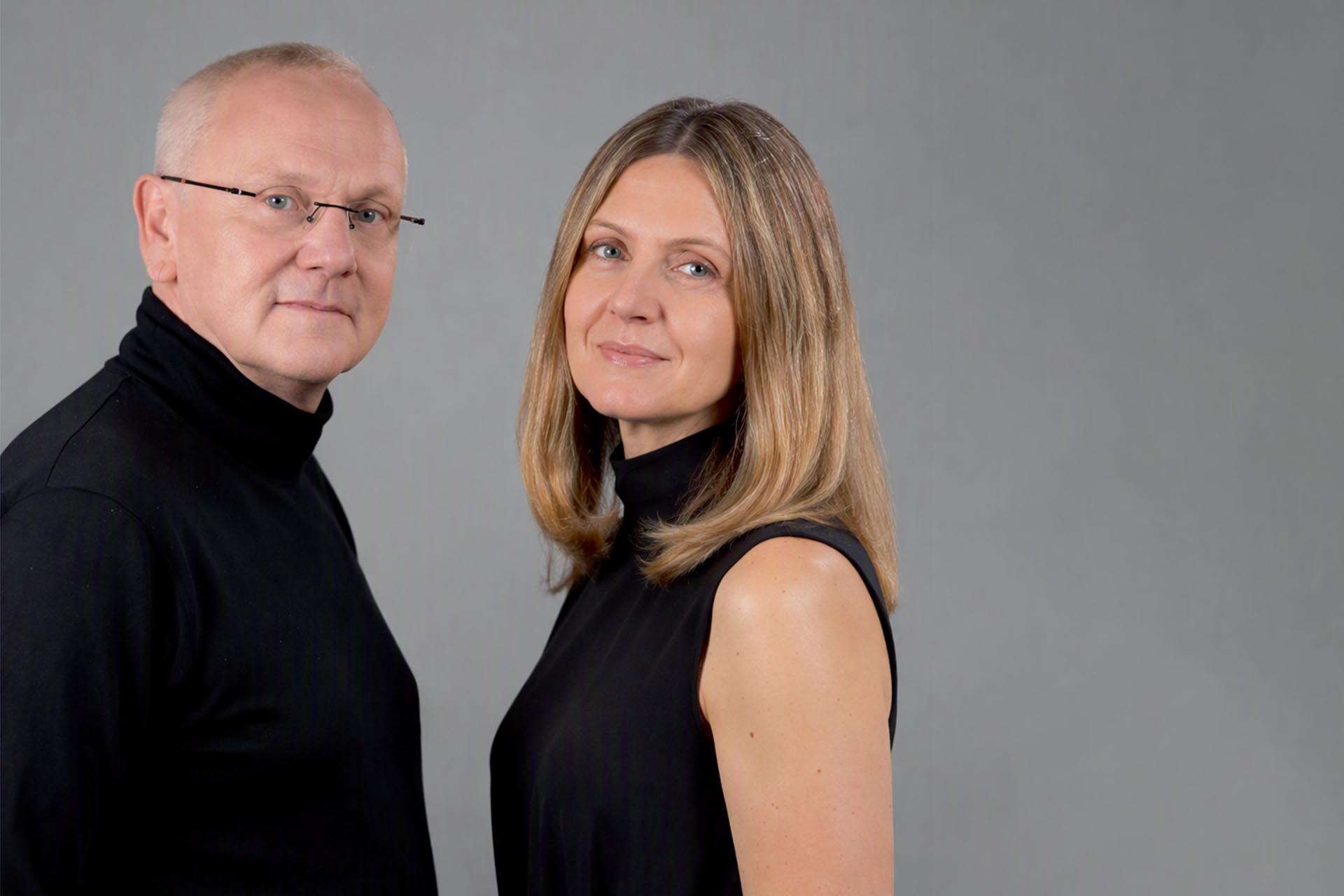
The lighting design world has changed a lot since 1986, but one thing that has remained consistent is Equation Lighting Design’s independent philosophy, and its output of excellent lighting projects. To mark the studio’s 40th anniversary, arc editor Matt Waring sat down with Equation Directors Maida Hot and Keith Miller to learn more about where the studio came from, and where it plans to go in the future.
A lot can change in 40 years. For those of you old enough to remember, cast your minds back to 1986, and you’ll recall that the world was a very different place. Madonna was top of the charts; Top Gun was released in cinemas; the first ever disposable cameras were launched; and Maradona was breaking English hearts with his ‘Hand of God’ at the World Cup (OK, Argentina are still breaking English hearts at the World Cup, so maybe not everything has changed…).
In 1986, the lighting design profession was also a very different place. While gaining ground in the USA thanks to the growing traction of the International Association of Lighting Designers (IALD), in the UK, with the exception of emerging independent studios such as dpa lighting consultants and Lighting Design Partnership, lighting design was still largely the domain of manufacturers providing products from their own catalogues.
Hoping to provide a different approach to this was John Bullock, who in 1986 formed Equation Lighting Design. Rather than designing “from a catalogue”, the studio instead took a more independent slant.
“Equation was formed not to work from a catalogue, but to almost work backwards; to think of what we want to achieve and then see which of the manufacturers could provide the optimum solution. That sounds standard now, but it wasn’t like that in lighting design then,” says Maida Hot, Equation’s Managing Director.
“At the time, it was pretty challenging to be a lighting consultant where you had to completely rely on your expertise, not on manufacturers or selling a product, because people didn’t really believe that they needed a lighting designer.”
However, the formation of Equation came at an opportune time. Just a year later, the Light and Lighting Master’s course at Bartlett School of Architecture – a launching pad for many a future lighting designer – was formed, and the concept of hiring an independent architectural lighting designer started to take more of a foothold.
“Architects thought that we were taking the fun bit away from the engineers,” adds Keith Miller, Director at Equation. “They also thought that they could design the lighting, but slowly the profession grew and grew, and by the 1990s, it was an established thing.”
In the early days, projects for Equation largely revolved around helping architects “on some of the key points” for civic projects – visible public spaces where lighting would play an important role in the viewer’s perception and experience of the project.
“People thought that you needed lighting to do something that has a big impact; otherwise, you don’t really ‘see’ the light,” says Hot.
As the studio became more established throughout the 90s, an awareness of good quality lighting design started to grow. “People started to acknowledge that lighting design was crucial to the look and feel of a project, and people began exploring everything that lighting can do,” explains Hot. Tapping into this acknowledgement, Equation started picking up larger, more significant projects, collaborating with the likes of Foster + Partners on The Sage in Gateshead, and with Zaha Hadid Architects on the Maxxi in Rome.
As an independent design studio, Equation has consistently sought to keep its project scope broad. Even since its inception in the mid 1980s, it has covered a wide array of applications and typologies: from infrastructure and commercial developments to hospitality, residential, cultural and heritage projects.
It’s a variety that, while always intentional, has often at times been shaped by the trends of the time. Miller recalls: “Different types of projects come along at different times, and every kind of project has its own unique characteristics that make it interesting. And there are trends – in the early days in the 1980s, there was the Big Bang in the City of London. There was sweeping deregulation and suddenly a lot of banking projects.
“In the 90s, there was a growth in lighting masterplans, and working in the public realm became a lot more important. Currently, we are working on many fit-out projects where companies are reorganising their businesses post-Covid and reevaluating the workplace. So, having that fluidity and flexibility has been quite beneficial.”
“We have always had a good mix of projects,” adds Hot. “Even before myself and Keith joined, Equation was never known for one type of project, which is great because if the clients came to us, they recognised that we could use light to add value to a project.
“Obviously with economy changes, you get more of certain types of projects in some periods of time – not many shopping centres are built now in the UK, for example, and that is reflected in our work. But if that market started up again, we would get stuck into it. We have experience, but we don’t look to stick to one area. That has never been the aim of the company.”
However, what has always been an aim for Equation is to maintain an independent stance, something that Hot says has been there from the very beginning. “We never had any relationships with manufacturers, and we don’t gain anything from selling. That has been a fundamental principle since Equation was formed, and we have no plans to change. There is a strong view from all the designers in the team that independence is very important.”
While the notion of independence has always rang true, Equation as a studio has gone through several iterations over its 40-year tenure. John Bullock served as Design Director of the practice until the late 90s, and not long after he set up the company, he was joined by Mark Hensman, who remained until 2011. It was around that point that both Hot and Miller joined the studio, leading as Managing Director and Director respectively to this day.
Miller has been an active member of the lighting design community dating back to before Equation was founded in the 1980s. He began his career working at Concord Lighting, before moving to the technical department at Erco. As Lighting Design Partnership looked to establish a London studio, Miller was recruited to join the team. He then served as an Associate at dpa lighting consultants from 1997 to 2011, before joining Equation.
Reflecting on the early days of lighting design in the UK, Miller says: “We didn’t have the internet, obviously. We didn’t even have computers initially. We had electronic typewriters, but everything was drawn by hand. It wasn’t until 1997 that I did my first CAD project, and from there it started to accelerate, but it was a very manual, hands-on process.”
Hot’s entry into the lighting design world came in the mid-90s, after having attended a lecture at the Bartlett from Mike Simpson. Having previously studied architecture and science, she was inspired by the way that light, and by extension lighting design, sits at the middle of these two fields.
Working at engineering firm Fulcrum Consulting at the time, she was keen to explore lighting further and so enrolled in the lighting design course at the Bartlett, with the backing of her employers. After completing the course, she then formed a lighting department within Fulcrum and started winning separate appointments.
“It was great because I learned a lot about the multidisciplinary approach, and I had exposure to projects where I could weave in the lighting as an extra discipline by virtue of being there and persuading the client that it was important to have that as well,” she says.
In 2001, Hot moved to NDY Light to lead the lighting design studio of its then-new London team. Although part of a much larger, multinational organisation, Hot says that she was given “a lot of freedom” in terms of managing the direction of the London studio – something that she feels gave her a great footing in how things can be set up to be able to develop and grow.
After 10 years with NDY, she felt that it was “time to move on”, and transitioned from NDY Light to Equation, which itself had recently gone through a major transition of its own, as in 2008, it merged with multidisciplinary company GIA, becoming GIA Equation.
“Typically, what can happen with practices that are independent, where the owners didn’t necessarily have that experience in active management or training, is that you hit a point where the demands of managing all the regulatory aspects, administration requirements and HR can become quite overwhelming,” says Hot. “So, by merging with another company, in Equation’s case, with GIA, that could be offloaded, and then the design could once again take more priority.
“That was one of the main drives of the merger, besides the additional benefit of the shared market opportunities.
“It certainly helped us at the time, and by 2011 when I first joined, and then Keith a few months afterwards, my task was to build on the strengths of the independent lighting design practice, while also having that support. That evolved and helped to set up all the processes that I was previously used to having – creating a very solid base to cater to any client, on any continent, with any demands.
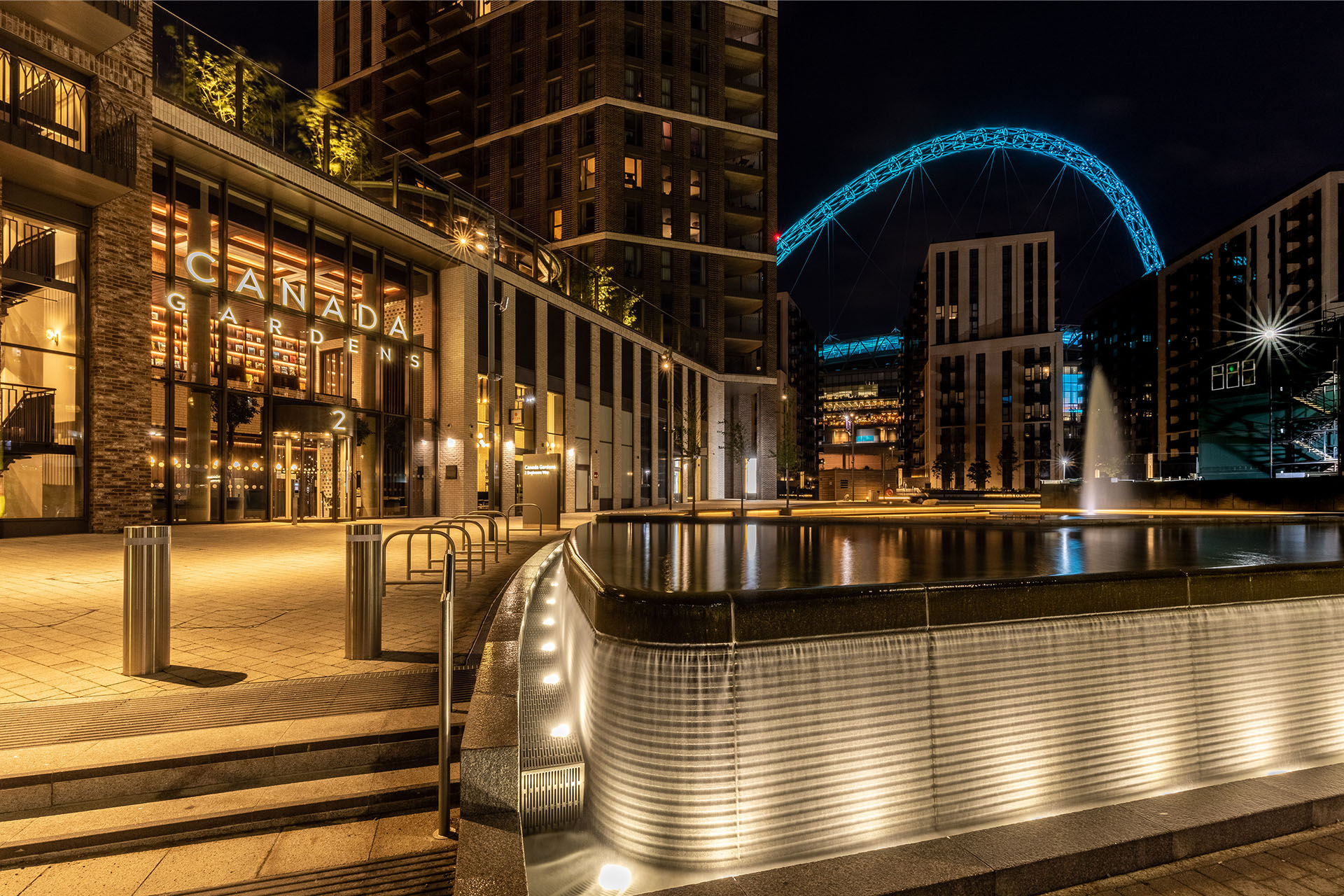
“An organisation like GIA also had access to the development of projects earlier. They worked with developers in the very early days and could bring us in then. It gave us exposure to big developments, projects like Battersea Power Station, for which we provided the lighting masterplan and delivered Phase 1 both interior and exterior lighting.”
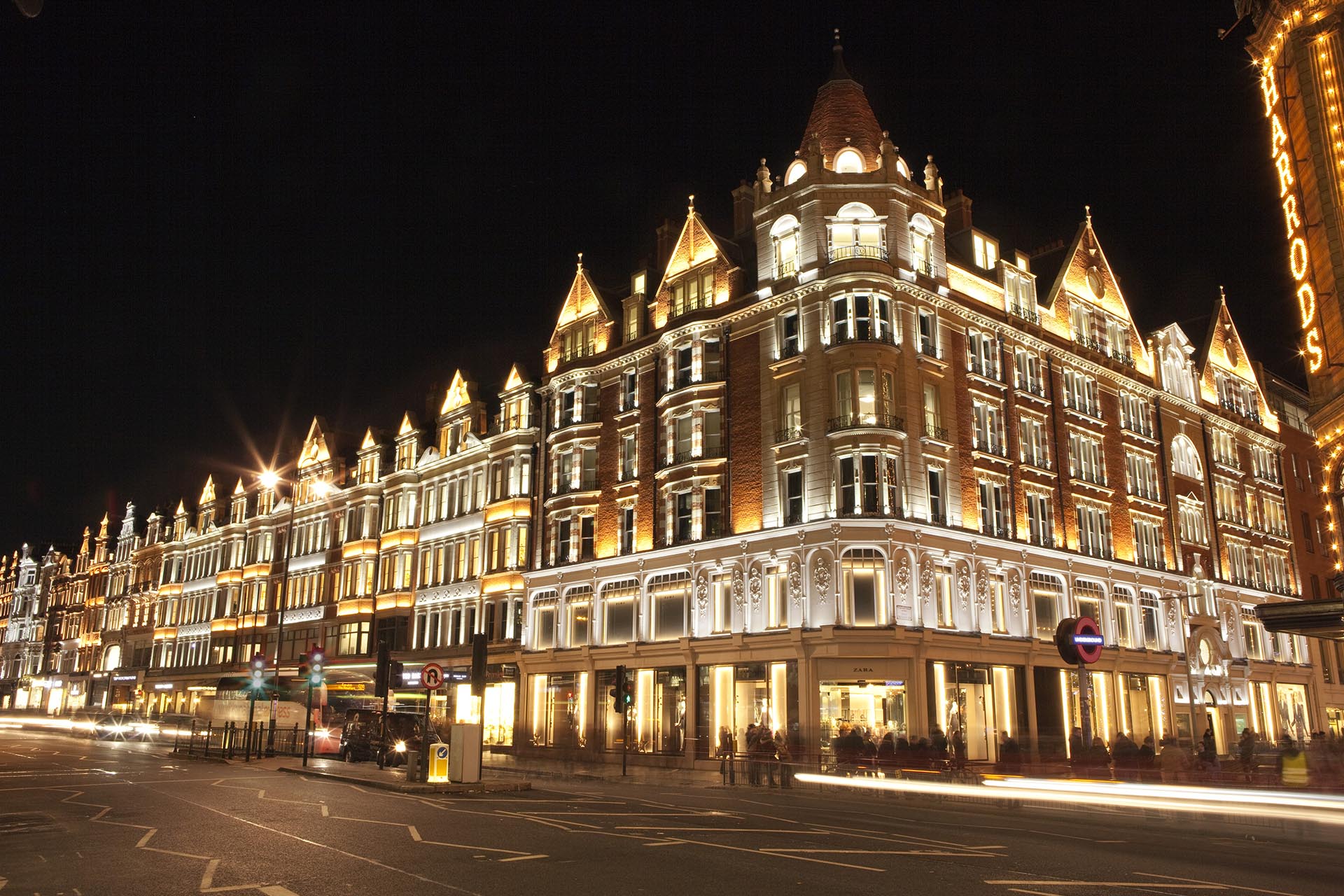
Other key projects that Equation worked on following its merger with GIA included the façade regeneration of London’s Knightsbridge Estate. Tasked with visually unifying the entire historical estate at night to put the building block “firmly back on the prime retail map”, the Grade II listed estate called for sensitive and thoughtful design considerations, due to the varying architectural styles, elements, and stone types. Spanning more than 500-metres, it became the largest installation of its kind in the UK and utilises dynamic-white LED luminaires to enable custom tuning of white light colour temperatures in order to suit each building material, while also creating more flexibility and creativity when adjusting the lighting to suit the differing seasons.
“It really showed what the power of light can do for placemaking. It transformed something that looked quite scruffy into something really beautiful. The client supported us all the way, and they were really pleased because as soon as the lighting came on, high-end retailers were flooding in, wanting to sign up for the retail space,” Hot explains.
“We won an IALD Award for that project, and we had quite a few clients approaching us off the back of it, because they could see that, just with light, you could do something really transformative. It was a great moment for lighting design.”
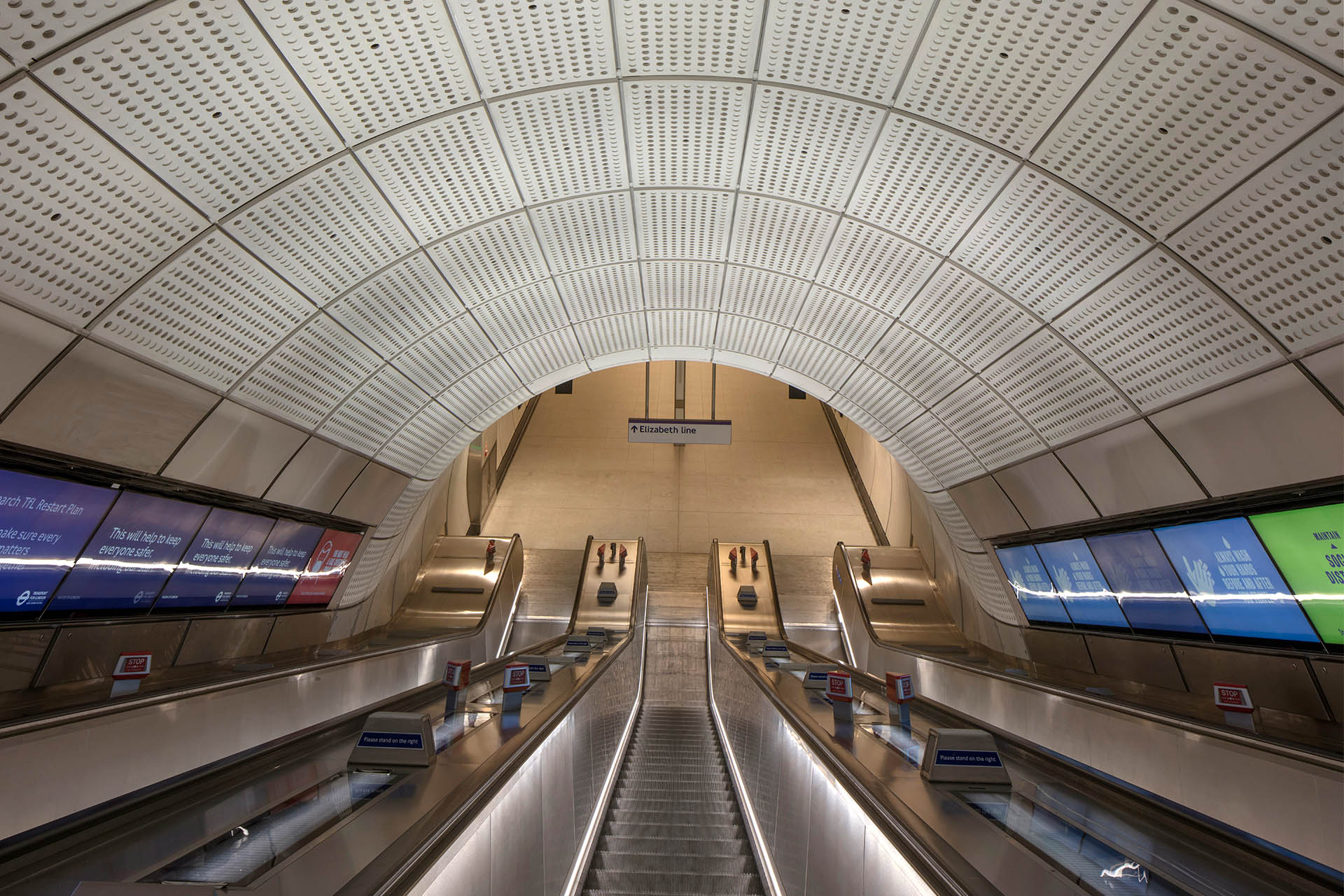
The partnership with GIA remained in place for several years, until in 2019, GIA and Equation made the decision to “amicably split”, with the lighting design studio becoming its own separate entity once more. The two parties have continued to collaborate on projects, including those that were started during the merger. One such project, the Elizabeth Line, has seen Equation gain plaudits across the design world. From gracing the pages of many a lighting publication (including this very magazine back in issue #131), to winning the RIBA Stirling Prize, the Elizabeth Line has set a new standard for the London Underground with its considered, sensitive approach towards lighting.
“It was Europe’s largest infrastructure project at the time, and we basically steered the ship so that once the design reached the contractors, the purity of the original design and the purity of the original concept was held tight,” Miller says.
“We were pushing the boundaries in terms of technology, where London Underground wanted us to use fluorescents. And we had to prove that you could use LEDs and do something different with them.”
When it comes to boosting the profile of lighting design within the wider design community, projects like the Elizabeth Line have been instrumental, particularly as the Stirling Prize is this year honouring 30 years of its winners.
“Typically, with these things, lighting designers have been swept under the carpet, but in every publication about this project, we are mentioned,” says Hot. “That was a big thing for us, to get that acknowledgement. It is what we are most proud of, for the lighting design to have been recognised as making a difference – not just for us at Equation, but from a professional standpoint, for the whole industry.”
Regardless of the project, whether it is a large-scale infrastructure project, a heritage façade scheme, a retail development, or a commercial workspace, Hot explains that the processes within Equation always remain consistent. “At the beginning, we always focus on getting a briefing that is really aligned with the client’s aims. That vision is incredibly important; we don’t just jump into it, it’s all about looking at what the client’s aims are, where we are creating value for them, where our creativity can give them the best of what they want, and what is their aim with our services.
“Once that is aligned, we develop our ideas based on this, and on all the tools and resources that we have in terms of what the client wants to commit to – what are the principles of what we want to achieve with light.
“Every project has that phase of thoroughly looking at what we want to achieve, the end results and the vision. That has always been the same, no matter what the technology is and what type of project it is.
“Lots of architects would tell us that we are very analytical before we present our concepts, but we don’t want to get into a situation where, down the line, someone does not realise the value of what we are doing.
“That attention to detail is where the quality lies. You can have a grand, creative vision, but how do you get from there, to actually realising the project?
“One thing that is important to remember is that you can be great in the good times, but actual greatness comes when you perform in the bad times; when you have to pull together as a team when something doesn’t go well, when you have to think on your feet. Creativity and delivery are given things, but actually, who can be there for the life of the project? It’s a very important aspect, and that’s where we don’t ever want to let anybody down.”
Such a strong attention to detail and commitment to quality has been at the forefront of Equation’s philosophy over the past 40 years. This is evident not just in the calibre of projects that the studio has routinely completed, but also in the incredibly high standard of designers that have worked on the team over the years. Take a look through LinkedIn, and you will see that a veritable who’s-who of the UK’s finest lighting designers have had stints with Equation. This is something that brings a great deal of pride to both Miller and Hot. “We are very proud of it,” she says. “When somebody goes to another practice, it is typically based on their talents, and our nurturing, educating and mentoring them.
“We take training seriously, and if you lose somebody to another practice, it happens, but we are happy to see the community grow. They move onto different things, but it is still the same industry, we are still liaising with each other and sometimes even working on the same project, so it is very rewarding.
“The industry is very small, but it is always good to see people succeeding. There is a sense of pride that you may have helped them on their journey in some way.”
This pride in lighting design as a profession, and the quest for it to receive more recognition is something that extends beyond Equation’s own lighting design projects, as Hot and Miller are both very ardent supporters of the industry’s professional bodies and associations.
Miller has been part of the Technical Publications Committee of the Society of Light and Lighting (SLL), for over a decade, working on a number of different lighting guides, while Hot has been a strong supporter of the IALD, regularly working with the association on the programme for its Enlighten conferences.
Standing on this support, Equation pays for team members to have at least two memberships of lighting institutions, and Hot and Miller both encourage active involvement, whether that is through the writing of codes and standards, support at an organisational level, or just through attending conferences to further their education.
“It’s all part of the strategy,” says Miller. “We give back within the team by mentoring people and encouraging junior members of the team, passing on our skills and knowledge within Equation, but we also do it in the wider industry. You can use your expertise to steer things in a certain direction externally and be a voice of reason.”
Within Equation, one of the primary ways in which the firm is encouraging junior members is through its recent transition to an Employee Ownership Trust model. By giving those that work at the practice an active stake in its future, Hot feels that it will help put a framework in place for the next generation.
“You can never de-risk the future, but by introducing the Employee Ownership Trust, we acknowledge that our work here is all about the team.
“You can tell Equation was never meant to be one person, because it never had any one person’s name attached to it – it is all about the team. And we have a great up and coming generation of project directors here with Philip Avery, Beatrice Bertolini and Aniket Gore, together with the rest of the team. We’re setting up a framework for that new generation to carry on flying the Equation flag.
“Through the Trust, we are not dependent on one person, on their personal or private circumstances. It shows a maturity of thinking about where we want to be as an organisation, where everybody gets a reward according to their input, and where they can feel a part of it. All the decisions are with us as a team, and it gives us all the ingredients for the next 40 years.
“Keith and I don’t have an active plan to leave the company, but we know it is going to happen someday. And what is the point in waiting? It takes years to hand things over, to train people on different subjects, and we want that transition to be seamless. If one generation leaves, it should feel natural.”
As a company reaches a landmark anniversary, particularly one as significant as 40 years, there can be a tendency to get retrospective, to look back at where you have come from and bask in your former glories. However, while Hot and Miller are clearly grateful of everything that has come before, they have very much got a keen eye on the future.
“We’re always driving forwards. I’d like to think that we’re still at the forefront of design in another 40 years. Everything in terms of the way that we do projects is constantly changing and evolving, whether that is new technology, new challenges, new clients – but the process that we go through is the same,” says Miller.
“When you conceptualise a space, you imagine which parts are lit and which parts are not, you define technical premises – whether that’s with a piece of paper and free hand calculations, or with computers. But the whole process of conceptualising the lighting, communicating ideas, the narrative, the scheme design, technical design, that will remain the same. And that core process and rigorous method of working can take us anywhere.”
Hot adds: “I am quite positive about the future of lighting design. As long as we rely on our eyes, and the way that the eyes process the environment around us, light will always be important. Virtual environments, unless we are in The Matrix, will not prevail because personal experiences will still be important to the way that we design, and the way that we as humans experience our environment.
“We just need to embrace the new. The same way that LEDs changed everything, every decade there is something new. But if we build our knowledge, understand new technologies, we can be prepared.
“What we have now at Equation is a framework within our team, and within our leadership structure that is ready. Our project directors, designers and seniors are determined to embrace things to come. We are hungry.”
A lot can change in 40 years. And while very few among us can accurately predict what lighting design will look like in 2066, Equation will make sure that they are there: ready, prepared, and continuing to operate at the forefront.