

Light: The Missing Pillar of Human Health
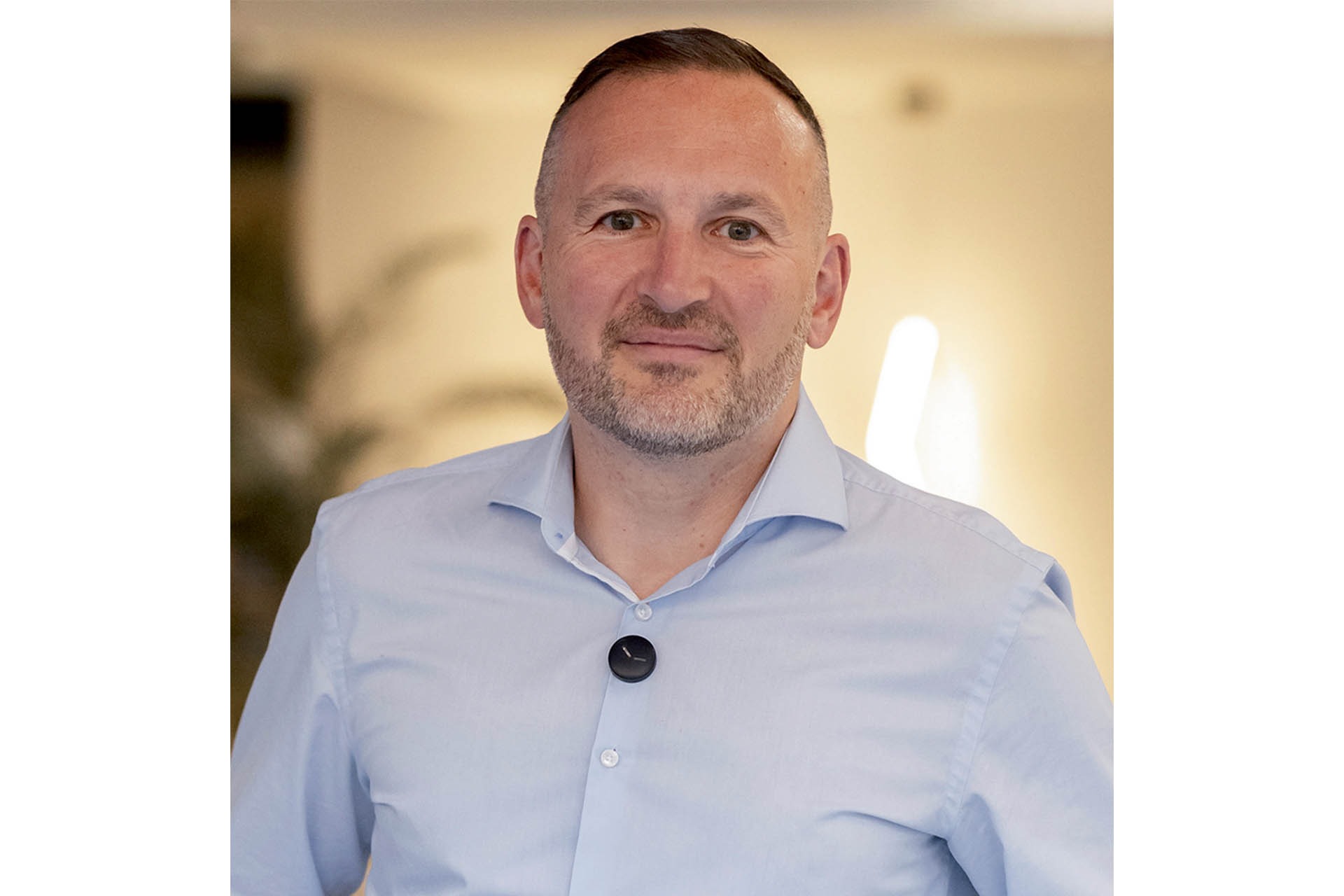
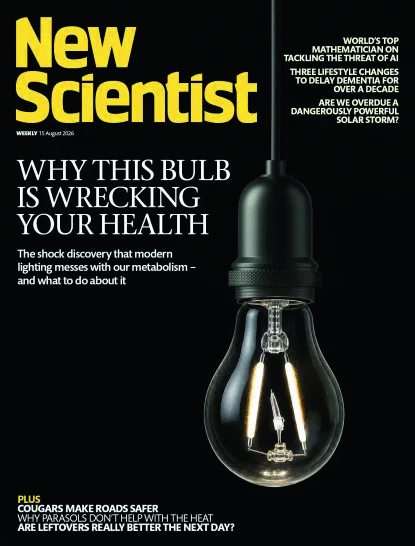
After the link between light and health made the front cover of New Scientist magazine this August, Good Light Group board member Ulysse Dormoy offers his opinion on the subject.
Many readers will have seen the recent cover story in New Scientist (10/08/26) either first hand or bouncing around our industry’s socials and inboxes. Graham Lawton certainly doesn’t beat around the bush in this article. It is stimulating for our sector to scoop the front cover of a global publication. But is there more to it that we should be aware of, or even be wary of? Almost daily, new findings are published around the subject of light and health. Visible, non-visible, UVA, UVB, 420nm, 480nm, Red, Near Infra-Red (NIR). Motivated by the New Scientist article, The Good Light Group board member, passionate light quality campaigner and researcher, and CEO of UK-based distributor Atrium, Ulysse Dormoy, picked up his pen to share his thoughts on the matter and then answered a few questions besides…
Light: The Missing Pillar of Human Health?
The recent New Scientist cover story, Why This Bulb Is Wrecking Your Health, generated exactly the kind of reaction one might expect. Some considered it alarmist. Others welcomed the attention being directed towards a subject they believe has been neglected for too long. Like many headlines designed to provoke debate, the reality is probably more nuanced than the cover itself suggests. Yet beneath the provocative headline lies a question that deserves serious consideration: Have we fundamentally changed the light environment in which humans live, and if so, what are the consequences? For decades, discussions around public health and wellbeing have focused on nutrition, exercise, sleep and air quality. These are rightly regarded as the foundational pillars of health. Light, however, has largely remained outside that conversation. We think of light primarily as something that enables us to see. Lighting standards are generally concerned with visual performance, comfort, energy consumption and safety. These are all important considerations. But what if light is more than a visual requirement? What if light is also a biological input?
The Pursuit of Efficiency
The lighting industry has spent the last half century pursuing a largely admirable goal: producing more light with less energy. From fluorescent lamps to LEDs, technological progress has delivered extraordinary improvements in efficacy. We have reduced energy consumption, decreased maintenance requirements and helped support global sustainability objectives. These achievements should not be underestimated. The question, however, is whether efficiency has become such a dominant metric that we have unintentionally overlooked other characteristics of light that may matter to human health. The phrase “better light” has increasingly become synonymous with “more lumens per watt”. Yet humans are not lux meters. A source can be highly efficient in producing visible light while simultaneously creating a spectral environment that differs significantly from the one under which human biology evolved. That possibility alone warrants investigation.
We Have Been Here Before
Perhaps the easiest way to understand this issue is to look beyond lighting. Modern society has become extraordinarily successful at optimising for convenience, efficiency and productivity. We have engineered food systems that allow us to eat almost anything at any time of the year. Yet despite being well fed, many populations remain undernourished. We have developed transport systems that minimise physical effort. The result is that many people now have to schedule exercise into their day to compensate for the movement that previous generations acquired simply through living. We spend increasing amounts of time inside highly controlled environments. We breathe conditioned air, work under artificial lighting, communicate through digital devices and remain connected long after the working day ends. Each individual change has brought benefits. Collectively, however, they represent a profound departure from the environmental conditions in which humans evolved. The question is not whether modern life is better or worse. The question is whether, in solving certain problems, we have inadvertently created others.
The Forgotten Energy Debate
One of the most fascinating aspects of the emerging light and health discussion is the way we think about energy. In the lighting industry, light is almost always discussed as a consumer of energy. We measure watts, efficacy, energy consumption and carbon reduction. Success is often defined by how little energy a lighting system uses to produce the required amount of light. But this is only half of the equation. At its most fundamental level, light is also a provider of energy. We accept this principle without question in many other contexts. When we light plants, we understand that light is delivering energy that drives biological processes. When sunlight reaches a photovoltaic panel, we recognise that radiant energy is being converted into electricity. The concept that light carries energy is neither controversial nor new. Yet when light reaches a human being, we rarely discuss it in those terms. Instead, we tend to focus on visual performance, aesthetics and electrical consumption. We think about the cost of producing the light, but much less about the potential value of the light itself. Emerging research into photobiology, photobiomodulation and mitochondrial function raises an intriguing possibility: that light may play a more active physiological role than we have traditionally assumed. If certain wavelengths influence biological processes, then the quality and composition of the light reaching us may matter just as much as the efficiency with which it was generated. This does not mean that every claim surrounding red or near-infrared light should be accepted uncritically. The science is still evolving, and many questions remain unanswered. What it does mean is that we may need to broaden our perspective. Perhaps the future conversation about lighting should not be framed solely around energy consumption, but around energy exchange. Not simply how much energy a lighting system uses, but what role the energy contained within that light might play once it reaches the people occupying the space. That is a very different question. And it is one the lighting industry has only recently begun to ask.
Why Light Deserves a Seat at the Table
One reason the discussion has become polarised is that it is often framed as a debate about LEDs. That is probably the wrong way to approach the subject. The issue is not whether one technology is good and another is bad. The real issue is whether the biological consequences of our indoor environments have been sufficiently considered during the design process. Light does not operate in isolation. It interacts with sleep, movement, nutrition, stress, visual comfort and behaviour. A person spending 10 hours a day indoors under electric lighting, eating ultra-processed food, exercising infrequently and sleeping poorly is experiencing the combined effects of multiple environmental factors. Attempting to separate one from another may oversimplify a much more complex picture. What seems increasingly clear is that light belongs within that broader discussion Not above nutrition. Not instead of exercise. Not as the single cause of modern chronic disease. But alongside the other environmental factors that shape human health.
The Conversation We Need to Have
Perhaps the greatest challenge is that this cannot be a conversation owned by the lighting industry alone. It requires input from neuroscientists, chronobiologists, clinicians, architects, workplace strategists, public health specialists, building services engineers, occupational health experts, lighting professionals, nutritionists, and even sports scientists. Most importantly, it requires genuine curiosity: Not marketing. Not ideology. Not predetermined conclusions. The New Scientist headline may have overstated its case. But perhaps its greatest value was not in the answer it offered. Perhaps its value lies in the question it asked. For decades we have spoken about nutrition, exercise, sleep and air quality as pillars of health. Maybe it is finally time to add light, and at times the complete absence of light, to that list. Not because light is the whole story. But because it has always been part of the story, and only now are we beginning to understand how important that role may be.
Where do we go from here?
As Ulysse suggests, curiosity to find the answers to the pertinent questions is key. To know how the industry might act differently, it must draw upon knowledge emerging from multiple sectors to find consensus and reach robust conclusions. At the shorter wavelength end of things (480nm) this has begun. The physiological effects via our iPRGCs are becoming widely appreciated. Benefits to our mood, alertness and sleep (with all that this entails) of receiving adequate light in the early part of the day, much lower levels into the evening and virtually none while we are sleeping, are being accepted and adopted into formal guidance. WELL Building Standard v2 adopts and heavily rewards the m-EDI (Melanopic Equivalent Daylight Illuminance) minimum levels proposed by Brown et al (2022). In August 2026, the Society of Light and Lighting revised its position statement on integrative lighting recognising these same recommendations. We will explore that in issue #155. While that is a very significant move to formally recognise the above, we are sure that it won’t be the last. The knowledge pool is growing daily, across the electromagnetic spectrum.
Any Other Questions…
Building off his comments, the Good Light Group has some follow on questions for Dormoy on the links between light and health. Good Light Group: As a seasoned lighting professional, what initially motivated you to delve so comprehensively into the non-visual impacts of “light”?
Ulysse Dormoy: It began with a feeling rather than research. Around five years ago, I sensed that light sat at the intersection of technology, health and wellbeing. I could not fully explain it, but light seemed to influence us far beyond vision. A colleague challenged me: “If you believe that, prove it,” and asked me to present the case to the wider business. That challenge opened a fascinating rabbit hole. One of the first papers I found was Melatonin and the Optics of the Human Body by Scott Zimmerman. It transformed my view of light. Like many in the industry, I had considered it mainly through visibility, aesthetics, efficiency and performance; now I encountered light as a biological input with potential links to human physiology. That began an ever-deepening journey. I have since met researchers and thought leaders at the forefront of studying light’s non-visual effects and our relationship with the natural spectrum. The deeper I explored, the more I felt light had been overlooked in health discussions. Nutrition, exercise, sleep and air quality are routinely treated as fundamental to wellbeing, yet light – one of our most constant environmental inputs – rarely receives equal attention. What motivates me now is not a belief that light answers every health challenge, but a growing recognition that it is more important than many of us previously appreciated.
GLG: If you could know the unequivocal answer to one outstanding question in this area, what would it be?
UD: Dose. Beyond UV exposure, few consider their light “dose”; outdoors, we simply experience daylight as nature provides it. For almost all human evolution, we encountered a broad, dynamic spectrum varying with time, season and environment. Today, many people spend about 90% of their time indoors under sources far more spectrally restricted than natural light. As photobiology and photobiomodulation advance, researchers seek beneficial wavelengths. Yet this risks reductionism: human biology evolved under rich broadband light, not isolated exposures. The question is not merely whether a wavelength helps, but how much, for how long, in which combinations and under what conditions. Understanding dosimetry – the interplay of wavelength, intensity, duration and timing – may be a defining research challenge for the next generation. Ultimately, we may need not to recreate a single wavelength, but to identify which features of natural light biology depends on and integrate them responsibly into modern buildings.
GLG: In terms of the emerging light and health data, how can the lighting industry make a positive impact to the built environment?
UD: The greatest opportunity is to broaden our definition of good lighting. Too often, light is undervalued at a project’s outset and progressively devalued as it evolves – treated as a cost to minimise rather than an investment in the built environment. Price, efficiency and compliance dominate decisions, while light quality receives far less attention. This is paradoxical. What emerges from a luminaire cannot be touched, yet light touches everything: how we experience spaces, work, sleep and interact with our surroundings – and, increasingly, we discover, human biology. Unlike many aspects of the built environment, lighting is rarely a personal choice. People do not choose the light under which they work, learn, heal or spend time; architects, designers, engineers, building owners and policymakers prescribe it. This places significant responsibility on our industry. As understanding of light’s non-visual effects develops, we must look beyond lux levels, lumens per watt and compliance metrics. These remain important, but do not tell the whole story. For decades, the lighting industry has rightly focused on reducing energy consumption, and sustainability must remain a priority. Yet we need a more balanced perspective: light is not only an energy consumer, but also a provider. We measure its cost exceptionally well; the next challenge is understanding its contribution. Our industry’s most significant contribution may be creating built environments that support health as well as vision. This does not mean abandoning efficiency or embracing unproven claims, but combining the best evidence from lighting, architecture, medicine, neuroscience and public health to understand how people interact with the spaces we create. Ultimately, architecture and design could play a significant role in public health. If so, light will be among their most important tools.
This series is curated by Dave Hollingsbee of Stoane Lighting, dave@mikestoanelighting.co