

Arulmigu Subramaniya Swamy Temple, India
The Arulmigu Subramaniya Swamy Temple in Tiruchendur, situated in the southern Indian state of Tamil Nadu, stands as a breath-taking masterpiece of Dravidian coastal architecture. With a rich history spanning more than 2,000 years, this sacred shrine serves as a monumental tribute to Lord Murugan’s victory over the demon king Surapadman.
According to sacred legend, following his triumphant battle, Murugan wished to worship his father, Lord Shiva, and summoned the divine architect Mayan to construct this holy sanctuary directly on the shores of the Bay of Bengal. The temple’s legacy is defined by an extraordinary resilience; it survived a 17th-century occupation by the Dutch East India Company – which included the legendary theft and subsequent miraculous recovery of the deity’s idol from the ocean – and more recently emerged largely untouched by the devastating 2004 Tsunami, forever cementing its reputation as a site of profound divine protection.
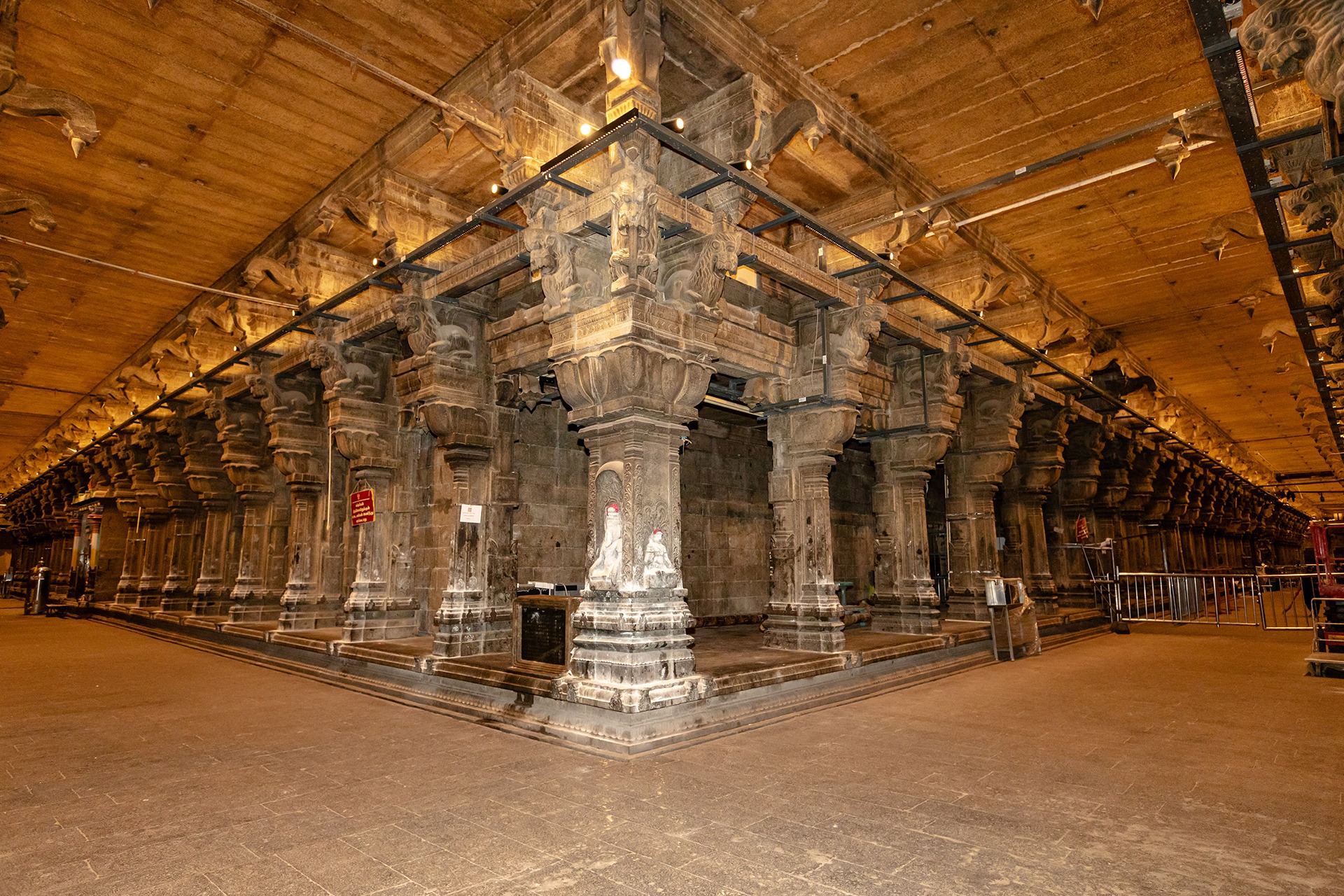
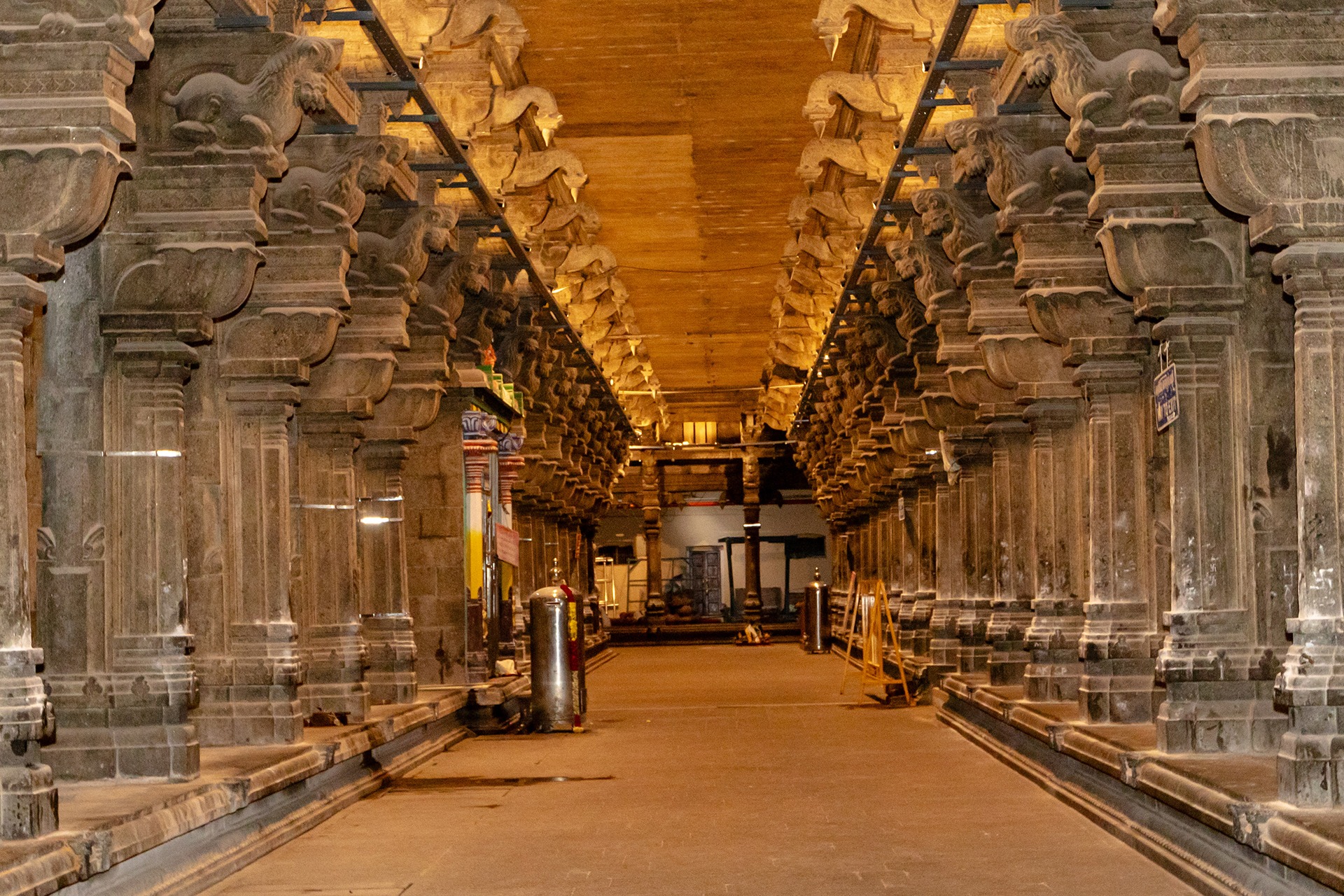
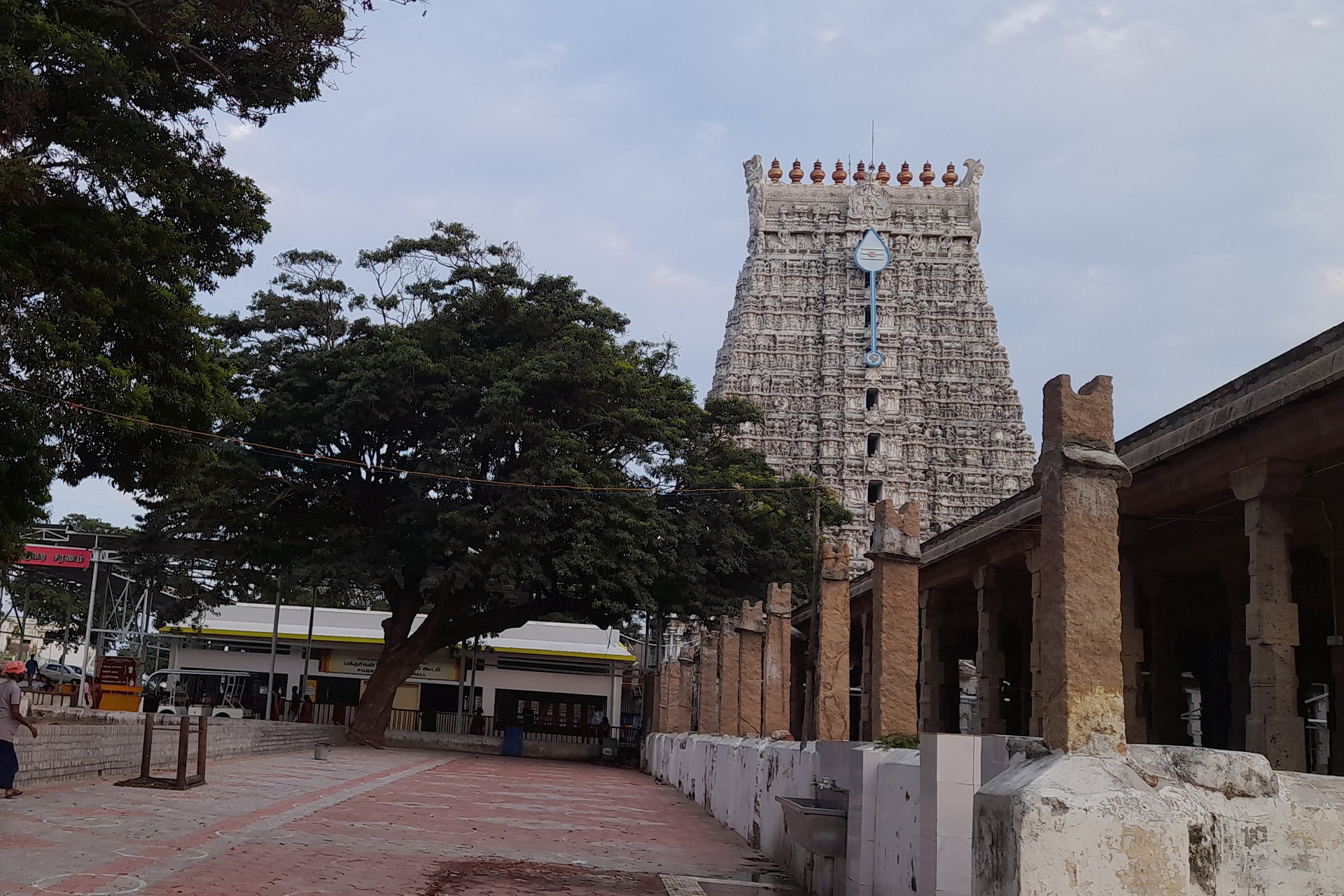
Architecturally, the temple holds a unique position among the Arupadai Veedu (the six sacred abodes of Murugan) as the only shrine located on the coast rather than a hilltop. The massive complex uniquely faces south and is defined by its soaring, 137-to-140-foot western Raja Gopuram (raja tower). This magnificent nine-tiered entrance tower is adorned with nine sacred copper kalasams (pitchers); its rare western orientation deliberately deviates from the traditional eastern format to gracefully accommodate the temple’s immediate proximity to the sea. A true engineering marvel, the interior features the expansive Sivili Mandapam – a grand pillared hall housing 124 intricately carved columns – alongside vast prakarams (corridors), the sacred Azhikinaru (well), and a Garbha Graha (sanctum sanctorum) carved into a cave-like recess that creates a dramatic, spiritual transition from the bright coastal sun to a space of intimate depth.
As this ancient structure rests directly upon coastal sand dunes, modern conservation efforts must constantly balance structural engineering with heritage preservation. The foundation continuously battles harsh marine environments, including saline sea spray, coastal winds, and hydrodynamic forces, requiring advanced geo-structural surveys and specialised obstruction walls to halt coastal erosion. To address these challenges, the temple has undergone a massive ₹300 crore mega-renovation project funded jointly by the state and private donors. Every aspect of these Tiruppani (extensive restoration and preservation works) is meticulously supervised to ensure strict compliance with ancient Agama shastra (scripture of temple science), maintaining the temple’s absolute architectural and historical integrity. To sustainably prepare the site for the grand Kumbabhishekam (re-consecration ritual), heavy modern amenities – such as advanced queue management systems, resting shelters, and water treatment plants – have been strategically integrated on the outer periphery, leaving the ancient heritage core untouched and beautifully preserved for generations to come.
The journey to redefine the temple’s nighttime identity began when the appointed architectural firm, Conservation Mainstream, recognised the critical need for a specialised lighting intervention. The firm’s principals, Aishwarya KV and Keerthana Murali, possessed a deep appreciation for the transformative power of light, having studied a dedicated lighting elective during their university years under Dr. Amardeep M. Dugar of Lighting Research and Design. This foundational education instilled in them a keen understanding of how lighting dictates architectural perception, prompting them to reconnect with their former mentor to collaborate on this sacred site. Upon assessment, the team faced a dual challenge: the existing lighting relies on outdated tubular battens that cast a harsh, distracting glare, while simultaneously flattening the exquisite, three-dimensional details of the ancient stone carvings and pillars.
Compounding the aesthetic issues were stringent heritage building regulations that strictly prohibited the installation of new electrical formwork or any destructive mounting methods on the historic fabric. To navigate these constraints, the architects and the lighting design team united for an exhaustive, hands-on site survey to meticulously map the temple’s structural nuances. This close collaboration yielded an ingenious, non-invasive solution. Rather than altering the ancient stone, the team decided to utilise the temple’s existing cable-tray framework as the foundational infrastructure for mounting the new luminaires – proving that rigorous heritage preservation and modern lighting innovation can seamlessly coexist.
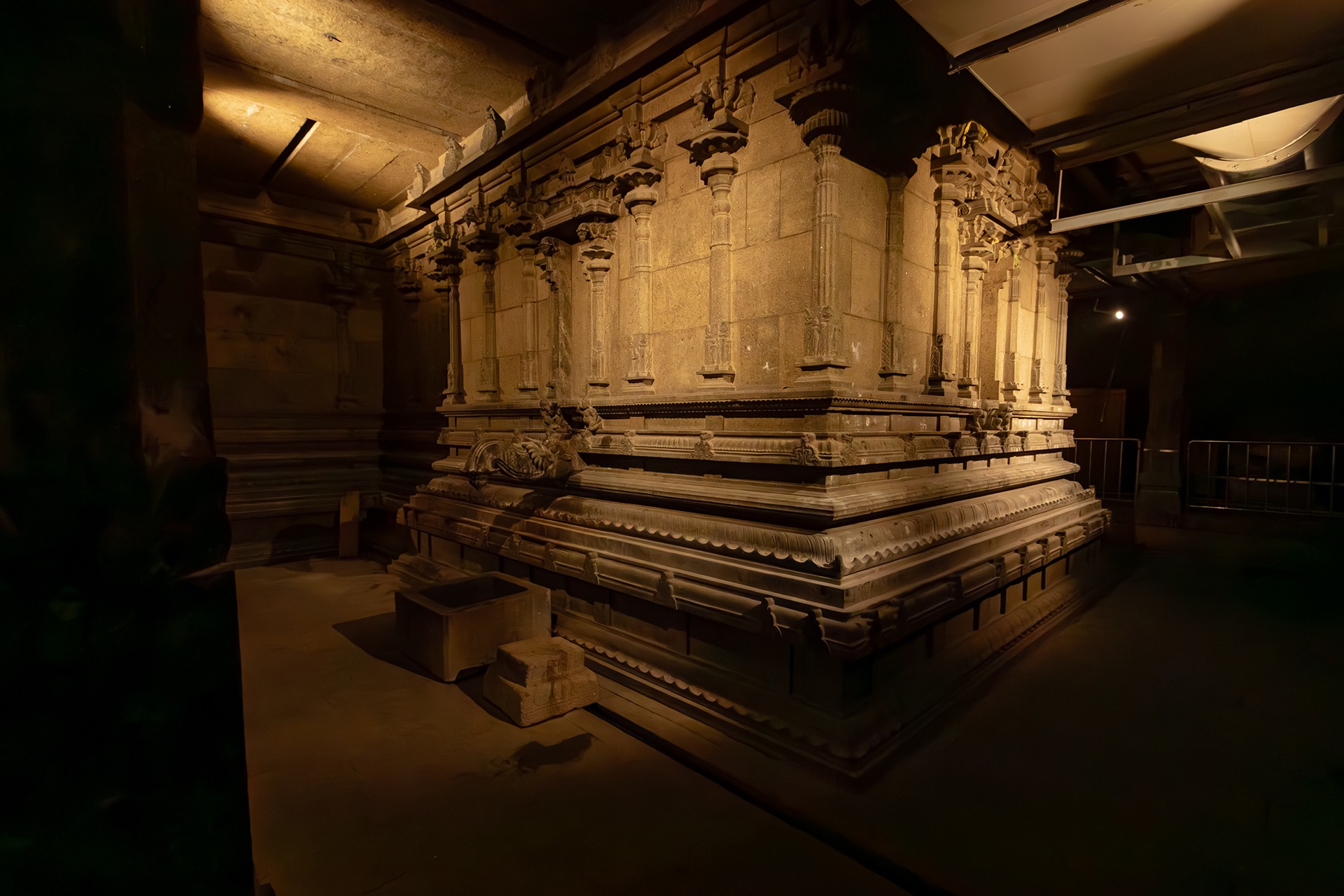
Designing a lighting scheme required a delicate touch to manage three core elements: preserving the temple’s historic atmosphere, providing clear general illumination, and accentuating the architectural artistry. As the temple is constructed from dark granite and sandstone, its interior spaces are inherently dim. This pervasive darkness is not a design flaw, but rather an intentional hallmark of traditional South Indian Hindu temple architecture that evokes deep spiritual introspection; therefore, preserving this characteristic was paramount. However, because the temple welcomes millions of devotees annually, establishing a baseline level of general illumination was absolutely essential for visitor safety, visibility, and accessibility. The final challenge lay in effectively highlighting the intricately carved pillars and walls, which had previously been obscured by shadows or flattened by glare.
To reconcile the need for visitor safety with the preservation of the temple’s sacred, shadowed character, the design team turned to detailed lighting simulations. The data revealed an elegant methodology: by simultaneously illuminating both the ceiling and the floor, the scheme could deliver an even, volumetric distribution of light. This technique successfully grants devotees enough ambient illumination to safely navigate the vast corridors without washing out or disrupting the temple’s revered “dark” essence.
Furthermore, the design intentionally mirrors the natural daytime transition into the temple; illumination levels are engineered to gradually reduce from the entrance toward the inner sanctums, easing the visual adaptation from the blinding coastal sun to spaces of intimate depth. Given the highly corrosive, saline nature of the immediate coastal environment, standard architectural hardware was insufficient – some luminaires required specialised, marine-grade IP-ratings to ensure long-term durability against the elements.
Executing this vision required a highly tailored, non-invasive hardware configuration mounted entirely to the existing cable trays: A combination of LED linear downlights and unified up-downlights (Regent Crest 28W and 28W+28W) equipped with advanced low-glare optics were deployed to wash the floors and ceilings with soft, balanced, volumetric light.
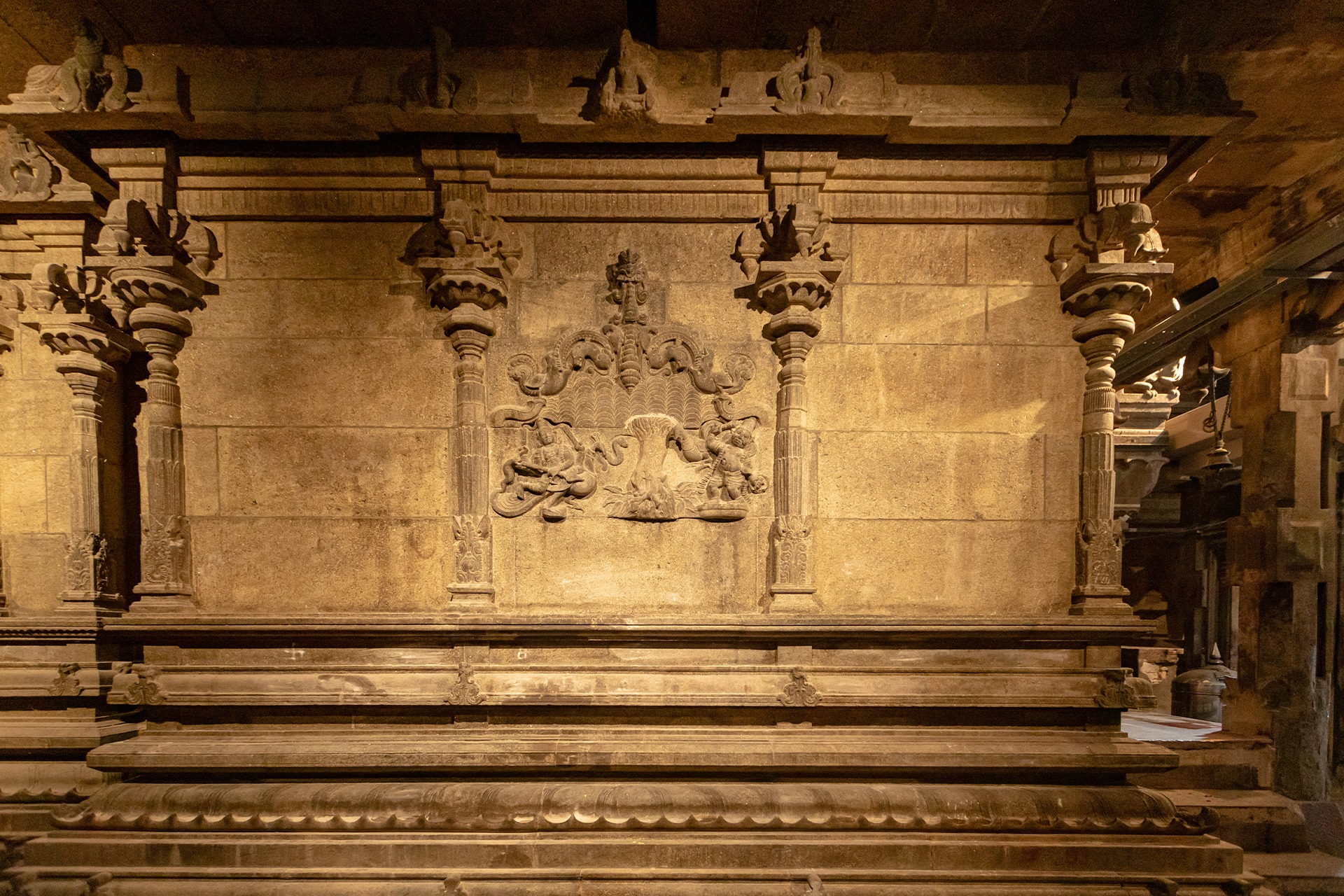
Adjustable surface spotlights (Regent Zava 12W and 25W) were integrated onto the exact same cable-tray infrastructure, allowing the design team to add architectural highlighting, casting precise, directional focus onto the historic stone carvings and pillars.
Following extensive on-site mockups, a warm color temperature of 3000K was selected as the optimal spectrum. This specific warmth beautifully enriches the gray tones of the historic stonework, revealing its rich, three-dimensional textures and artistic reliefs without feeling artificially bright.
The design of this temple serves as a definitive masterclass in how darkness and lighting can coexist to honour the sacred. By shifting away from flat, high-glare conventional fixtures and embracing a non-invasive, custom-engineered approach, the design successfully bridges two seemingly contradictory worlds. It provides the necessary clarity and volumetric balance required to safely shepherd millions of modern pilgrims through the vast complex, yet it fiercely guards the intentional, deep-seated shadows that have defined South Indian temple architecture for millennia.
Ultimately, this project proves that heritage preservation does not mean eschewing modern innovation; rather, it demands a deeper synergy between architectural history and specialised design. Through the delicate interplay of low-glare optics, precise directional spotlighting, and a warm 3000K colour spectrum, the temple’s magnificent 124 pillars and ancient reliefs are finally allowed to step into the light, while the soul of the temple remains beautifully, timelessly enshrouded in its sacred darkness.
Project Credits:
Lighting Design: Lighting Research & Design, India
Conservation Architects: Conservation Mainstream, India
Luminaire Supply & Installation Support: Regent Lighting