
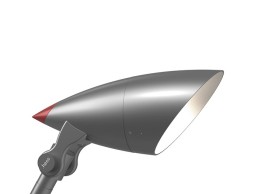
Hess ARINI
ARINI is a new lighting system that combines light and multifunctionality with a design inspired by the organic form of a parrot and has the diversity and impressions of nature as its model. ARINI opens up new design and application possibilities for urban structures – and is as varied, as intelligent and as colourful as a parrot.
In addition to the organic form, the rear part of the luminary head can be equipped with RGBW lighting. The ARINIs are – just as the models that inspired them – available in almost all desired colours. Whether “tone on tone” or with deliberate contrast colouring.

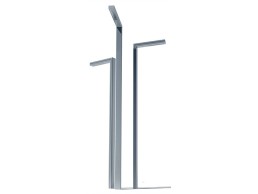
Technilum Shiraz K Nano
Shiraz K Nano is an efficient, modular, decorative, contemporary but timeless lamp post. Shiraz K Nano is a variation of Shiraz K, Technilum’s functional lighting best-seller. Both models benefit from the City Module technology, a patented concept of poles made of extruded aluminum. Equipped with LEDs, they contribute to reduce environmental footprint thanks to extended life-span, reduced energy consumption and easy maintenance.
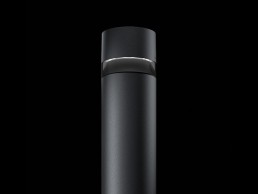
ERCO Castor
Castor is the first pure LED bollard luminaire in the ERCO portfolio. Two light distributions and two sizes enable differentiated lighting design using a single range of luminaires. An innovative optical system with a ring-shaped lens spreads the light 180° onto pathways or, alternatively, a full 360° for open areas. The luminaires can be spaced up to 10m apart, producing highly precise and uniform light without compromising on the glare control. The ERCO Dark Sky technology prevents light from being emitted above the horizontal plane.
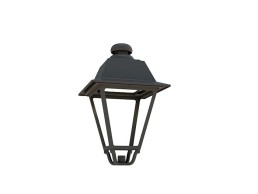
Cariboni Agathos
A lantern specifically designed to house the LED technology, its traditional shape makes the fitting ideal for the lighting of urban areas with particular historical, architectural or natural interest. The high quality of its optical systems increases perfomance significantly for the replacement of old light sources. Agathos can be installed on post-top, on arm to be fixed on pole or wall, both up and downwards. The fixing methods are compatible with the most common post top, wall-mounted or pendant-mounted systems.
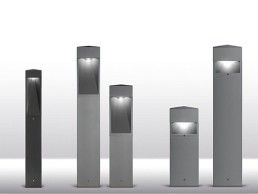
Arcluce Bollards
Arcluce bollards comply with the highest safety standards and provide a solution for residential and architectural applications. Gothic 110, Gothic 180 and Kubix 180 are decorative and create a dynamic combination of light-shadow contrasts. The fragile elements of the optic (source, reflector, diffuser) are entirely covered inside the die-cast aluminum body, making the bollards ideal for installation in public areas such as gardens, car parks, pathways and entrances.
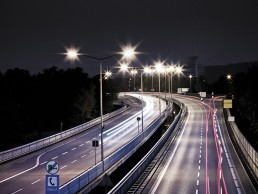
Vestel Ephesus LED Street Lights
With an efficacy level of up to 145lm/W, Vestel Ephesus LED Street Lights are 30% more efficient than their standard equivalents. Compatible with numerous smart control devices, Vestel’s Ephesus design is made to offer further cost-saving potential, allowing for the possibility of timed and seasonal illumination that can also be used to monitor footfall and traffic. Delivering consistent, uniform lighting to cover much wider areas, Ephesus ensures brighter, longer lasting illumination that can withstand the sound and vibration of heavy traffic.
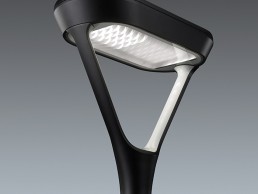
Thorn Urba Deco
Urba Deco is a decorative LED lantern with a unique shape to provide ambience and high quality lighting. Mounted either as post-top, suspended, wall and catenary, Urba Deco is available with an efficient clear or comfortable prismatic diffuser, symmetrical or asymmetrical optics and more than 20 light distributions. This creates the right light for the application with an appealing design.

2015/16 Jonathan Speirs Scholarship Fund winner announced
(UK) - University of Sheffield Year 6 Architecture student Charlotte Eley impresses judges with passion for using light and architecture to tackle social issues.
The Trustees of the Jonathan Speirs Scholarship Fund are excited to announce the winner of its 2015/16 award as Charlotte Eley, a Year 6 Architecture student completing her MArch at the University of Sheffield.
The judges were impressed by the maturity and sensitivity of Charlotte’s application, which conveyed her passion for the potential inherent in light and architecture to tackle large social issues such as inclusivity, crime prevention and community cohesion.
Charlotte explained: “I believe good lighting design should be accessible to all, being designed and provided for all members of society, from school children to the homeless. Each of my architecture projects at university has tackled different issues of lighting, including crime prevention and inclusion, the tyranny of commercial supermarket lighting and the role of lighting in creating spiritual environments at the end of life.”
Charlotte plans to use the £10,000 scholarship to fund participatory design methods and testing for her final Masters design project. This project looks at the role lighting and architecture can play in supporting social interaction, particularly for those with complex communication requirements such as the hearing impaired, or those who speak a foreign language. Following her studies, the scholarship will also help to support Charlotte while she furthers her learning within the lighting design community, and allow her to become more involved in nonprofit design work, focusing on lighting design for public interest.
John Roake, Chairman of the JSSF commented: “We are delighted to present the third JSSF scholarship to Charlotte Eley. Each year we are impressed by the diversity and quality of the submissions, however we all agreed that Charlotte’s work is really special in being representative of a growing movement in the fields of architecture and lighting design, where priority is given to considering ways in which designers can help dramatically improve the lives of those who often do not have immediate access to well thought-through, practical and sustainable solutions. It was her social responsibility which shone through which we thought made her deserving of support and encouragement.”
This award is made possible thanks to the incredible generosity of a number of companies and individuals. There is pledged to be a minimum of one award each year until 2023.
www.jssf.org.uk
www.speirsandmajor.com

Eaton announces winners of 39th annual SOURCE Awards
(USA) - As commitment to current and future lighting designers, Eaton's 39th SOURCE Awards recognises six professional and six student awards at LIGHTFAIR International 2016.
Power management company Eaton has announced the winners of the 39th Annual SOURCE Awards national lighting design competition, part of the company’s commitment to celebrating current and future lighting designers. The winners were recognised yesterday at LIGHTFAIR International 2016 in San Diego, California. Six professional awards and six student awards were presented.
The annual competition, which began in 1977, focuses on furthering the understanding, knowledge and function of lighting as a primary element in design and requires the predominant use of lighting and controls products from Eaton’s lighting solutions. Entries are judged on the blending of aesthetics, creative achievement, technical performance and the degree in which the lighting meets the project constraints and design concept goals.
“We congratulate the talented winners of this year’s SOURCE Awards competition, our 39th year of celebrating lighting design,” said Kraig Kasler, president, Eaton’s Lighting Division. “The outstanding quality of work from the professional winners features a diverse group of architectural projects including new corporate offices in Guatemala, an impressive New York cancer center, a dining hall at Ohio University, a high school natatorium in Missouri and two beautiful homes in Colorado. For our winning students, we hope their impressive work will inspire them towards a career in lighting.”
The 2016 winners include:
Professional Category
- Winners: ENVIRO, Guatemala City, Guatemala, and designer Julio Alvarado, LEED AP, for the lighting of the Microsoft corporate headquarters in Guatemala City, Guatemala; and Robert Singer and Associates, Inc., Basalt, Colorado, and the design team of Robert Singer, IES, IALD, Chase Carter, LD, and Kim Quint, LEED AP, LD, for the lighting design of the Waterstone residence in Woody Creek, Colorado.
- Honorable Mentions: Robert Singer and Associates, Inc., and designers Robert Singer, IES, IALD, and Jason Diaz, LD, for the lighting design of the Grayhead residence in Telluride, Colorado; EwingCole, Philadelphia, Pennsylvania, and designer Carl Speroff IV, PE, LC, for the lighting of the Memorial Sloan Kettering Cancer Center in West Harrison, New York; and Tec Studio Inc., Columbus, Ohio, and designer Ardra Paige Zinkon, IALD, MIES, for the lighting of The District on West Green at Ohio University in Athens, Ohio.
- Awards of Recognition: McClure Engineering, St. Louis, Missouri, and the team of Mary Goodman, Amy Hughes and Jamie Westerson, PE, for the lighting design of the Walker Natatorium at Kirkwood High School in Kirkwood, Missouri.
Student Category
- Winner: Elizabeth Hundley from Appalachian State University, Boone, North Carolina, for her conceptual lighting design restaurant project, titled Salt: A Persian Experience. Hundley was under the direction of Jeanne Mercer-Ballard, associate professor of the Interior Design Program at Appalachian State University.
- Honorable Mentions: Megan Everhart from Appalachian State University, Boone, North Carolina, for her conceptual lighting design restaurant project, titled Kroger Marketplace; and Kaitlyn Hutchens, also from Appalachian State University, for her Framework: Supporting Success office building project. Everhart, who won the competition last year, and Hutchens, who received an Honorable Mention award last year, were under the instruction of Hessam Ghamari, assistant professor of the Interior Design Program at the university, as well as Mercer-Ballard.
- Awards of Recognition: Juan José Acosta from Parson The New School for Design, New York, New York, for his conceptual lighting design of his El Ponce communal youth home project; Emily Gross from the University of Wisconsin – Stout, Menomonie, Wisconsin, for her Bibliothek collegiate library project; and Carolina Diep Haro and Evelyn A. Chavez Reyes from the Universidad Autónoma De Ciudad Juárez, Ciudad Juárez Chihuahua, Mexico, for the lighting design of their entertainment “flex room” project, titled Phytoplankton Bioluminescence. Acosta, an Honorable Mention winner in 2014, was under the direction of Nathalie Rozot, associate professor at Parsons The New School for Design; Gross was under the direction of Julie E. Peterson, PhD, WRID, NCIDQ, IDEC, IES, program director and associate professor at the University of Wisconsin - Stout; and Diep Haro and Chavez Reyes were under the direction of Cristina Macias, coordinator, Interior Design Program, Universidad Autónoma De Ciudad Juárez.
The professional winning firm, ENVIRO, received a $2,000 monetary award. Student winner Hundley received $1,500 and each of the Honorable Mention students was awarded $500. All winners were presented with a crystal trophy and offered an invitation to attend a complimentary class at the SOURCE, Eaton’s state-of-the-art lighting educational center located in Peachtree City, Georgia. The students’ instructors are also invited to attend a class.
www.thelightingresouce.eaton.com
www.eaton.com
Next Generation Luminaires SSL design competition winners announced
(USA) - Next Generation Luminaires design competition recognises 25 commercial LED indoor and outdoor lighting products.
The eighth annual Next Generation Luminaires (NGL) Solid-State Lighting (SSL) Design Competition has recognised 25 commercial LED indoor and outdoor lighting products for excellence. The winners were announced at LIGHTFAIR International 2016 in San Diego.
Sponsored by the U.S. Department of Energy (DOE), the Illuminating Engineering Society, and the International Association of Lighting Designers, NGL was launched in 2008 to encourage technical innovation and promote excellence in the design of energy-efficient LED luminaires for commercial, industrial, and institutional applications.
A number of improvements were observed in the 2016 NGL entries. For example, efficacy for all submitted products was consistently higher than in previous years – although efficacies of recognised indoor products were roughly the same as in 2015. About four-fifths of all submitted products had lumen maintenance greater than 85% (L85) at 50,000 hours. And for the first time, a significant number (31%) of awarded indoor products had a colour rendering index (CRI) > 90.
The idea behind NGL is to make it easier to find the best specification-grade LED lighting products. This means recognised products have to measure up on many fronts. The 2016 NGL entries were evaluated by a panel of judges (eleven for indoor, ten for outdoor) drawn from the architectural and outdoor lighting communities, and were scored on colour, illuminance, glare control, light distribution, serviceability, value, dimming control, and appearance – with lumen maintenance and luminous efficacy ratings based on LM79, LM80, and TM21 submitted to DOE’s LED Lighting Facts program by the manufacturers.
Submissions making it to the judging phase presented market-ready samples and complete documentation – including luminaire and component specification sheets, LM-79 test reports, lumen maintenance projections, warranty statements, and marketing materials. These documents help make sure actual performance matches what’s claimed.
As LED technology and product design have evolved, NGL requirements have become increasingly demanding. “The NGL bar is set high, and the tires get kicked often and hard,” said DOE SSL Program Manager, Jim Brodrick. “So when the judges award a product, you know it was well earned.”
NGL continues to focus on key applications where product quality or availability clearly lags market opportunity. This permits more in-depth and rigorous evaluation, rather than spreading effort over many well-established luminaire categories. Reflecting this focus, two new categories were judged for the first time in 2016: connected lighting (indoor) and sports lighting (outdoor). Altogether, the 2016 NGL indoor and outdoor competitions recognised a total of 25 luminaires out of 93 judged entries, with five of the 25 highlighted as Outstanding.
For indoor products, the 2016 target areas included luminaires with high lumen-output capabilities, as well as several aspects of controllability: simple digital dimming (required of all entrants); dim-to-warm; tunable-white; and connected systems of luminaires, sensors, and controls. The sharpened focus resulted in the evaluation of 62 indoor luminaires, 16 of which were recognised across just eight categories, with three of those products singled out as Outstanding.
The outstanding winners in the indoor competition came from three manufacturers: Focal Point’s Nera linear pendant, Eaton’s Portfolio dim-to-warm downlight, and Kenall Lighting’s white-tunable MedMaster Balance. Among the other recognised indoor winners, Visa Lighting, Selux Corporation, and LED Linear GmbH all earned praise for their decorative pendant luminaires; and Philips Ledalite received recognition for two of its linear pendant luminaires. Selux Corporation, Acuity Brands Lighting Inc., and Acuity’s Juno Lighting Group were recognized for their white-tunable luminaires, with METEOR LIGHTING receiving recognition for its high-output downlight. Juno Lighting Group earned praise for its recessed accent light; LF Illumination and LumenWerx, for their cove lights; and QuarkStar, in collaboration with Everlight, for a wall wash luminaire.
Connected lighting systems – which integrate luminaires, sensors, and software to monitor and control operation – received special emphasis in the 2016 indoor competition, a first for NGL. Two basic types of connected lighting systems were submitted: those with an external controller and networked luminaires, represented by EnLighted’s Lighting Control Solution, and those with self-contained network controls integrated into the luminaires, represented by Cree’s SmartCast Technology and Philips’ SpaceWise Technology. The judges did not find any single connected-lighting entry to be generally superior, but rather noted that each has benefits and limitations in different applications.
For outdoor products, the target areas included pedestrian-scale luminaires; garage luminaires; and typical roadway, parking-lot, and wall-pack categories. Integrated sensors were evaluated for the garage luminaires, while simple dimming control was required for most other categories. Of the 31 products making it past the prescreening process in the outdoor competition, nine were recognised across just four categories, with two of those products considered Outstanding.
The Outstanding winners in the outdoor competition included Landscape Forms, Inc.’s FGP Path Light bollard and Cree’s RSW Series LED Street Luminaire. Among the other Recognized outdoor winners, First Light Technologies and Selux Corporation earned praise for their bollards, and Landscape Forms Inc. and Eaton received recognition for their pedestrian-scale post-top luminaires. Kenall Lighting, RAB Lighting Inc., and Philips Gardco were recognized for their parking garage luminaires.
The 2016 outdoor competition included sports lighting for the first time. While significant advances have been made in LED sports-lighting equipment for large arena and stadium applications, there remains a need for high-quality, affordable lighting to meet the demands of smaller exterior installations such as high-school and recreation fields, where lower mounting heights call for improved glare management, and light scatter beyond property boundaries can be an issue. The two NGL sports luminaires evaluated – Eaton’s Ephesus Lighting Stadium Pro and KMV’s SUFA-A Sports Luminaire – were considered Notable but were not recognised as fully appropriate for recreational applications.
Through a rigorous evaluation process and detailed feedback from expert judges, the Next Generation Luminaires competition encourages and recognises exceptional performance and quality in LEDs for general-illumination lighting.
For more information on this year’s NGL winners, including photos, please visit www.ngldc.org

ÅF Lighting incorporates Oscar Nyström Lighting Designer
(Sweden) - Oscar Nyström and Julia Ekman open doors into southern Europe and Middle East, strengthening ÅF Lighting's international expansion.
ÅF Lighting keeps growing. In April, it integrated the company Oscar Nyström Lighting Designer into its team, welcoming two lighting designers to its Stockholm office: Oscar Nyström and Julia Ekman.
Having graduated from London’s City of Westminister College, Oscar Nyström set out as freelancing a lighting designer in 1992. In 1999, he started his own company, choosing to focus on the international market. Today he has more than 20 years’ experience, from three continents, of lighting various types of environments.
“Our recent lighting projects span from prestigious luxury hotels, private houses and flats to zoos, yachts, shops and restaurants,’’ said Nyström. He claims that it is possible to fit a creative and innovative lighting design to any project and any budget, and he hopes this conviction will form part of his contribution to ÅF Lighting.
Nyström loves a challenge and non-standard projects, allowing him to integrate lighting and create an atmosphere. He believes that lighting should not be noticed as such but perceived as a living element - it should add a 24-hour pulse to environments and thrill spectators. Julia Ekman is also a trained lighting designer and Nyström’s colleague of five years.
”No project is too small or too large. The main thing is that there is some creative ambition,” said Ekman. ”What matters most is that our profession receives the recognition it deserves. A lighting designer should be involved from the start of every project.”
As Oscar Nyström Lighting Designer integrates its customer portfolio and experience with that of ÅF Lighting, the company strengthens its position on the international market.
Daniel Strömberg, Manager of ÅF Lighting in Stockholm, said: ”With the addition of Oscar and Julia we form a stronger unit, where we can all develop. The integration is an important step in the international expansion of ÅF Lighting. This opens doors into southern Europe and the Middle East, which is very exciting. Our New Nordic Lighting design is much in demand abroad.”
www.oscarnystrom.com
www.af-lighting.com
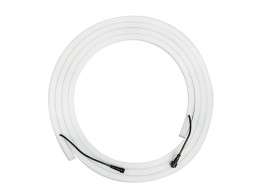
Koledo Flexline
The Ambium Flexline is a flexible and robust LED string similar to the look of a Neon tube. Available in different shades of white, red, green, blue colours or RGB, this optically diffused, rigid Flexline is a 24V flexible LED strip made with Triple-A branded LEDs. Available in lengths of 1,000mm and 4,000mm (other lengths upon request), Flexline uses integrated constant current sources on its circuit board. Therefore, a lifetime up to 50,000 (LM80) will be guaranteed. Flexline can be mounted to a wall or ceiling, using special mounting clips for installation.
