
Light Equity
Following the devastating fires that destroyed more than 16,000 structures across Los Angeles, non-profit lighting group Light Equity established Light for LA, an initiative that aims to help build back the affected areas of Altadena and the Palisades in a more equitable way. arc speaks to Light Equity members Nick Albert and Cy Eaton about the initiative and its long-term goals.
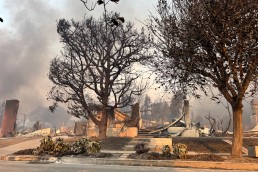
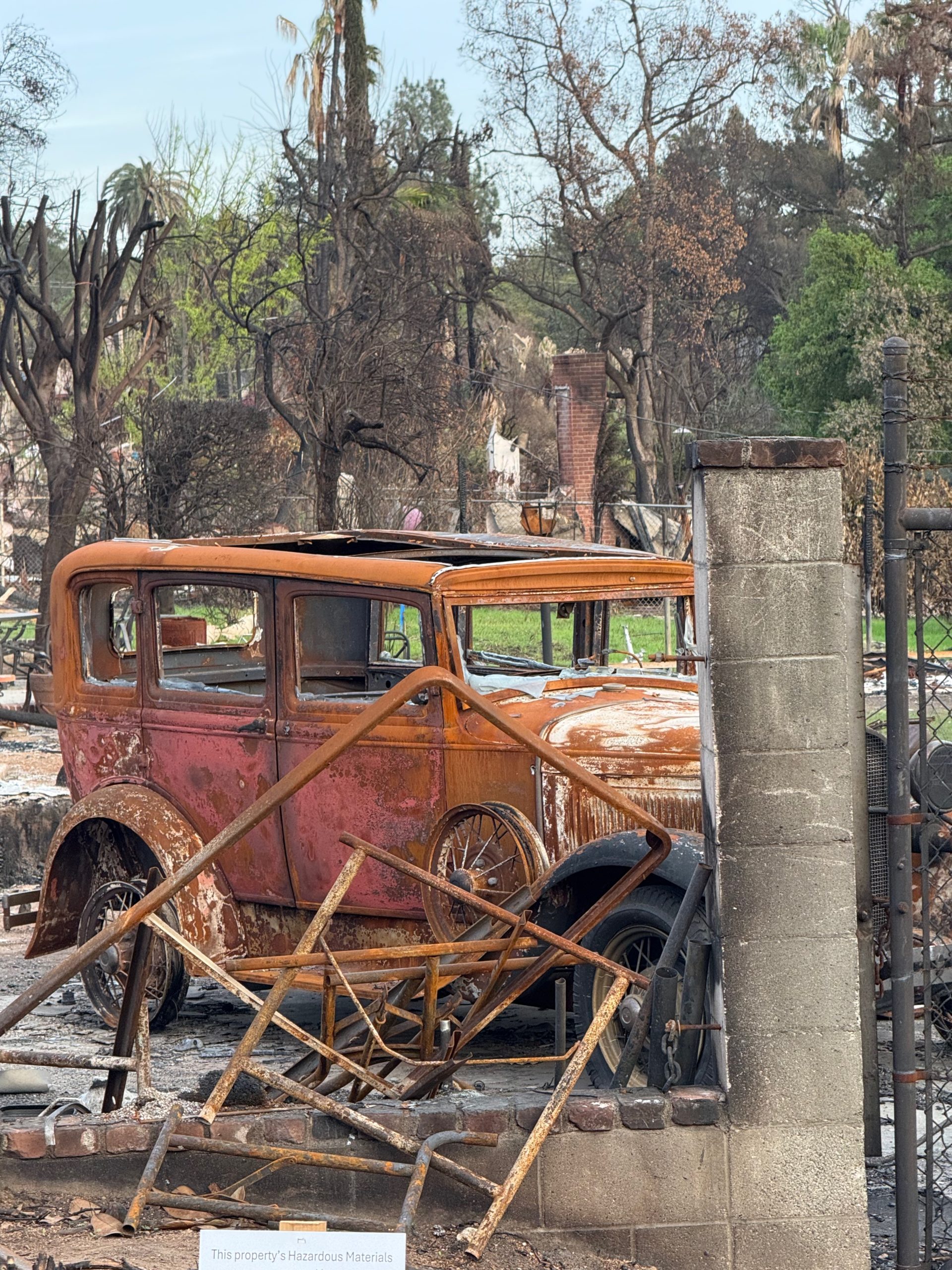
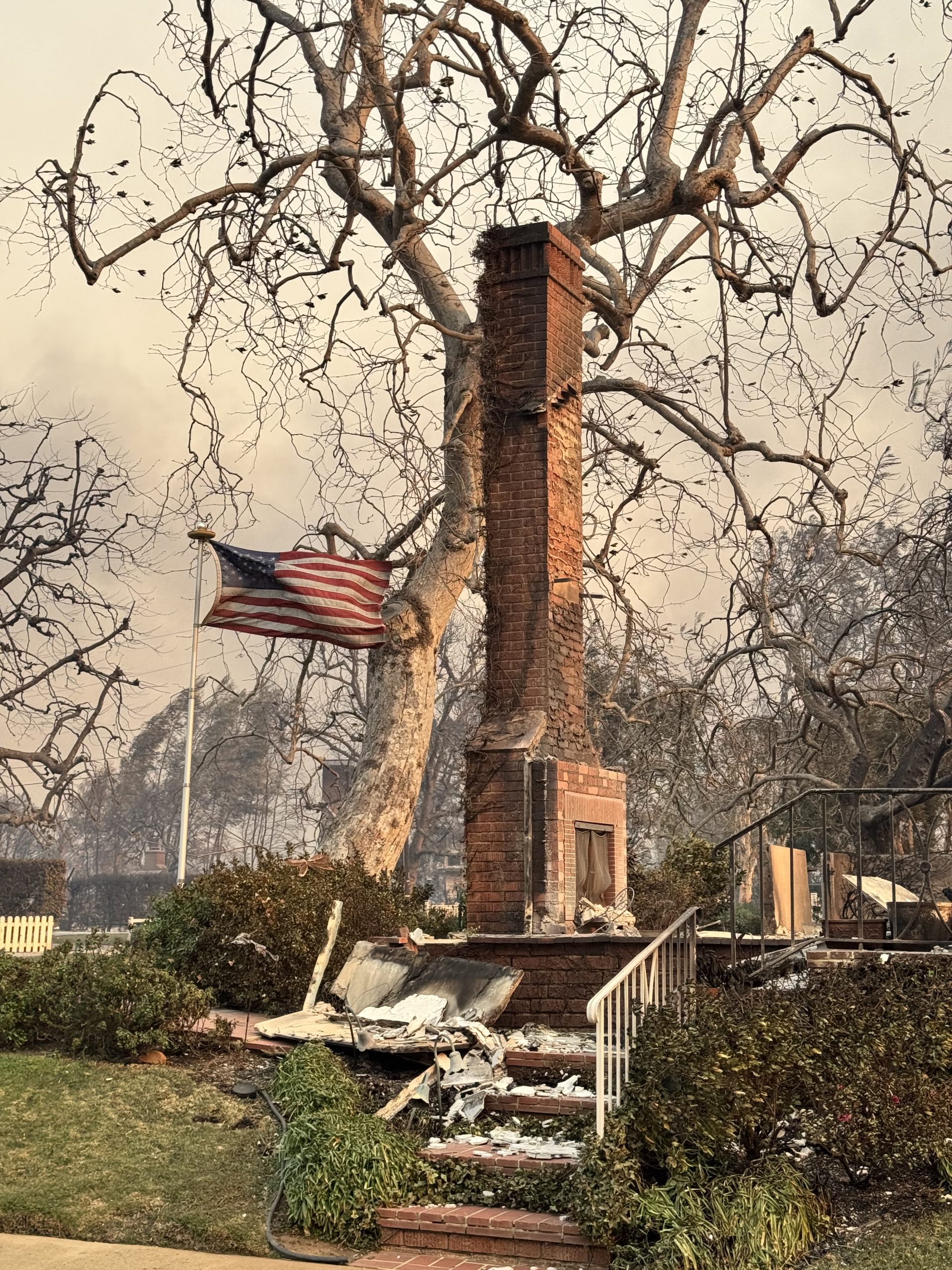
In January of this year, a series of wildfires tore through the Greater Los Angeles area of Southern California. Spanning more than 57,000 acres (89 square miles), the fires caused massive damage, destroying more than 16,000 structures across the Palisades and Altadena – making them among the most destructive fires in California’s history.
As the rebuild begins across these districts, a group of lighting professionals have come together with the goal of empowering those affected, with “community-centred lighting solutions”.
The group, named Light Equity, was initially formed by Nick Albert and Lauren Dandridge of Chromatic, Cy Eaton of HLB Lighting Design, and David Komonosky of Above All Lighting in the wake of the social justice issues across the USA in the early 2020s. The intention being to redefine how lighting design is approached in local communities, understanding that it is not just about aesthetics, but creating environments where people can thrive, connect, and feel safe. A statement on the group’s website reads: “Lighting inequality remains a pervasive issue in our communities, perpetuating disparities and neglecting the fundamental right to safe and inclusive spaces for everyone. The practice of lighting design is a crucial aspect of urban planning, but is often not considered as a tool to address the needs of underserved neighbourhoods. This lack of understanding and application has resulted in a multitude of challenges that affect these communities.”
The mission of Light Equity, therefore, is to recognise these challenges as urgent calls to action and address the root causes of lighting inequality, empowering communities to see lighting design as a tool to support and enrich the places they live, work, and connect, and ultimately create safer, more vibrant, and inclusive spaces for everyone.
Nick Albert, Principal at Chromatic and Executive Director of Light Equity, says: “Our work fosters equity and resilience by supporting access, awareness, and advocacy for the value of light and the role that it can play in people’s lives.
“The equity in this case is not purely a conversation of socioeconomics, or race, or religion, or any of the other ways in which equity is often talked about – although those statistical groups are important and relevant, and are the underpinning of a lot of the inequity. In this case, what we’re talking about is something that lighting design as a profession has been talking about since the beginning, that this is a valuable thing in people’s lives. But the number of people that have access to that way of thinking is miniscule. Lighting designers, at least in the US, are often called ‘luxury consultants’ because that’s just where they fit. There is a price threshold for where you can hire a lighting designer in terms of dollars per square foot that you’re going to spend on a building, but there is no price threshold for where lighting design can be valuable. And so that is a gap in access that creates inequity, and that is what Light Equity is about addressing.”
Albert’s career began initially in architecture and construction – he studied architecture in Ohio, and worked on some construction jobs, becoming a glass and glazing contractor for three years in the Midwest, fabricating and installing curtain walls, hanging off high rise buildings, “all kinds of stuff that I can’t stomach anymore now that I’m older and wiser”. However, after moving to Los Angeles with his partner and looking for jobs in architecture, he, like many before him, “stumbled into lighting”. “It wasn’t a professional intent – I didn’t have much awareness of lighting as a specialty, but my generalised architectural knowledge, and in particular my knowledge of building systems and detailing at a really tactile level was something that my first lighting employer, Francis Krahe, thought was really important and valuable. And so, with no specific lighting background, that’s what got me into that position of being part of his team.
“Architectural design is a discussion of pieces of a whole and how they work together; buildings are a combination of systems that have to work for the people and with the people. When you think about glass systems and fenestration, it connects you with what is outside and reminds you that you’re part of something larger at both a human and natural scale. It’s a way that the building becomes a vehicle to communicate those experiences, and what I found is something really similar in lighting as well, where the real purpose of lighting in a space is about communicating those experiences with people and engaging people. So, to me, it’s one of the really critical and expressive touch points of architecture.”
After working with Francis Krahe for 10 years, Albert moved to Illuminate Lighting Design, a time he recalls as “a great experience to start diving deeper into lighting’s role in the narrative of space”. It was while he was at Illuminate that Albert met Lauren Dandridge – who was then working in Specification Sales at Performance Lighting Systems. The two developed a good friendship and strong working relationship, and eventually joined forces to establish Chromatic in 2021.
Albert recalls: “At the time of George Floyd, we did a lot of friendly soul searching, where we were wondering how what we were doing had to do with the bigger, more important things that we were acutely aware of at that time. Something that kept coming up in our discussions was this idea that my grandparents embedded in me that ‘you take care of your corner of the shop first’. And where Lauren and I landed is that our corner of the shop of life is lighting. This is where we’re at – we have this expertise and influence. So, we thought to ourselves ‘is there a different way to do it?’, and that’s what Chromatic is. It has to do with missions of equity and inclusivity, and the idea that all social systems lack that, to some regard.”
It was during his time at Illuminate that Albert first met Cy Eaton, who was interviewing for a position with him at the time. “We kept in touch on and off over the years, but we really reconnected at IALD Enlighten Americas last Fall,” Eaton explains. “We realised ‘hey, it’s been way too long, let’s grab a drink some time and catch up’. And that led to me, a few months later, being up on Nick’s roof, helping him re-roof his house – that’s what you do for your friends and colleagues, you help out where you can. And so, Nick said ‘Cy, thanks for your help with the roof, I owe you one’. And then a month later, I call him up and say ‘Hey, you wouldn’t believe it, but I might need help with a roof, and a few other things.’”
Like Albert, Eaton’s journey into architectural lighting was conventionally unconventional. “I came from a theatrical lighting background, and through that attained a real kinetic and immediate connection with light, and how lighting can impact the experience of a space and the emotional experience for people in that space, and how powerful a tool that is. So, I then shifted my attention towards wanting to apply those tools, but in a way that was more broadly accessible to the community, because theatre and the arts can be a profound way of communicating and connecting with people, but it also has a very finite reach.
“So that, through various iterative steps, led to me getting involved in architectural lighting, with a brief detour into theme parks, but really coming out of the other side of all that, wanting to have the broadest reach and the most significant impact possible on day-to-day life and experience. In the same way that Nick and Lauren and a lot of other colleagues that we know went through a bit of a reckoning back in 2020-2022, thinking ‘we just do lighting, but what is the deeper meaning’? I went through a bit of that then as well.
“But then, when the fires hit LA in January, along with 16,000 other structures, my household was one of those affected. It made the whole experience much more personal, but also much more tangible. One of the ways that I’ve been able to move forward is by finding ways to not just help myself, but to help my whole community recover and move forward.
“We’ve been so blessed with certain things falling into place for us and having a really amazing, supportive community, that then when we felt like we were on stable ground, rather quickly we could turn the attention towards people that we knew were having a harder time, and would have a bigger struggle in the long term to rebuild.”
This was the moment when Light Equity established Light for LA, an initiative that the group hopes will “provide tools and resources to support a full recovery and bright future” for all affected. Methods to achieve this include building comprehensive, publicly accessible residential lighting guidelines and resources for sustainable, healthy lighting in residential development, while also providing builders, installers and homeowners with the resources and know-how to access the high-quality lighting equipment and technologies needed to light the modern home.
Beyond this, the group also hopes to create pathways to careers in lighting design and installation, prioritising underserved communities and offering skills-based training for sustainable employment. Finally, the group hopes to help “restore the spirit of the community” and a sense of place, by engaging in public outreach with all stakeholders, and advocating for supportive community lighting – connecting the community with public and agency officials to define target lighting outcomes and design standards.
“We would like to consult for those who haven’t hired us, and really try to put in place the structures to make that happen,” explains Albert. “Lighting design is both the job of being a consultant and a designer, and most of the consultancy portion is trying to understand the mechanisms and levers that have to be pulled to make a thing possible.
“Rather than waiting for the cities of Altadena and the Palisades to decide they’re going to hire a lighting consultant, we are trying to get out there and make a case for why it’s important, make the case for the opportunity they have at this point to really put some of that thinking into their communities, to build back the spirit of what they lost.”
Eaton continues: “At the time, I was reminded of a playwright friend of mine that I studied under, that was also a naval reservist. In 2001, on 9/11, he was called up to duty to go to Ground Zero, and his job as a naval officer and a writer and journalist was to document what was going on. He said at the time that he felt so helpless, because there’s this massive destruction, and what, he’s supposed to take a pen and paper and write down what he sees? His wife reminded him, ‘this is your skillset. I know you see people out there with their shovel and their bucket and they’re picking up the debris and trying to put it all back together, but that pen and paper is your bucket and shovel’.
“And I realised for myself and Nick and for our immediate community, our ability to engage the overall community about the impact that light can have on the experience of a space and the experience of life in that space is our ability to improve the lighting quality of what gets rebuilt. And so that’s our shovel. That’s our bucket. Let’s get to work.”
And so, as the group “gets to work” in establishing Light for LA as a non-profit, it has already begun engaging in both short-term initiatives within the community, but also looking at the bigger picture and developing long-term strategies with other likeminded organisations.
“Our main job right now is tilling the soil,” Albert says. “We have to create the opportunity for lighting design decisions to be made, because so many lighting decisions are made by things that have nothing to do with lighting many years before.
“In the Venn diagram of the lighting community and the larger community, we’re pushing up against the inside of that lighting circle, and trying to get some more overlap, to push that intersection into being able to occupy a bigger part of the conversation. Where Cy as a homeowner can’t think about his downlights today, we’re having conversations with city officials or community officials that are around the idea of masterplan guidelines.
“We’re also connecting with other complementary organisations. We’ve got some really good partnerships and connections to the folks in the SoCal branch of the National Organisation of Minority Architects (NOMA) – discussions on equity are incredibly relevant to that group, and the underserved communities in Altadena specifically are a particular point of interest for them.
“I am always blown away by this spirit of goodwill that exists in design and architecture in a larger sense. I think that most people design out of a real desire to make other people’s lives better. There’s no shortage of folks who are doing interesting things, and so we’re in a period of trying to form those partnerships where we can have an impact and leverage our combined resources.”
Indeed, the support from the lighting community is something that both Albert and Eaton have been particularly humbled by.
“It’s a thriving industry ecosystem,” Eaton adds. “The home systems integrator community is very strong here too, and as we’ve reached out to all of those various stakeholders in the overall industry, like fellow designers, manufacturers, reps, installer contractors, I realised quickly that everybody just wanted to be a positive part of the response, and not seen by the community as being opportunistic or profiteering in this process.
“They also wanted to see better outcomes, including the people that we cynically think are just in it for the money. They have embraced this paradigm that we’re offering out there that we’re going to provide a unified response, make it easier to make lighting easier for property owners and builders to make those lighting decisions, and then deliver on those decisions. So far, we’ve experienced near universal acceptance and support from all corners, and it’s now incumbent on us as a community to deliver on that, but I believe that we are heading in the right direction, so that we have all of these resources available for the community as they rebuild. And part of my job within the initiative is to be one of the bellwethers of where community members are in the process, as now is not the time to be in their face talking about lighting.
“Now is the time to be preparing the groundwork, tilling the soil, getting all those resources in place so that when they’re ready to start the conversations in about six months, we’re there for them, when they’re ready to start making decisions in about 12 months, they know where the resources are to make those decisions, and when real purchase and install decisions are happening in around 18 months, the guidelines are already in place to inform what equipment to purchase and how to install it in your home or community space.”
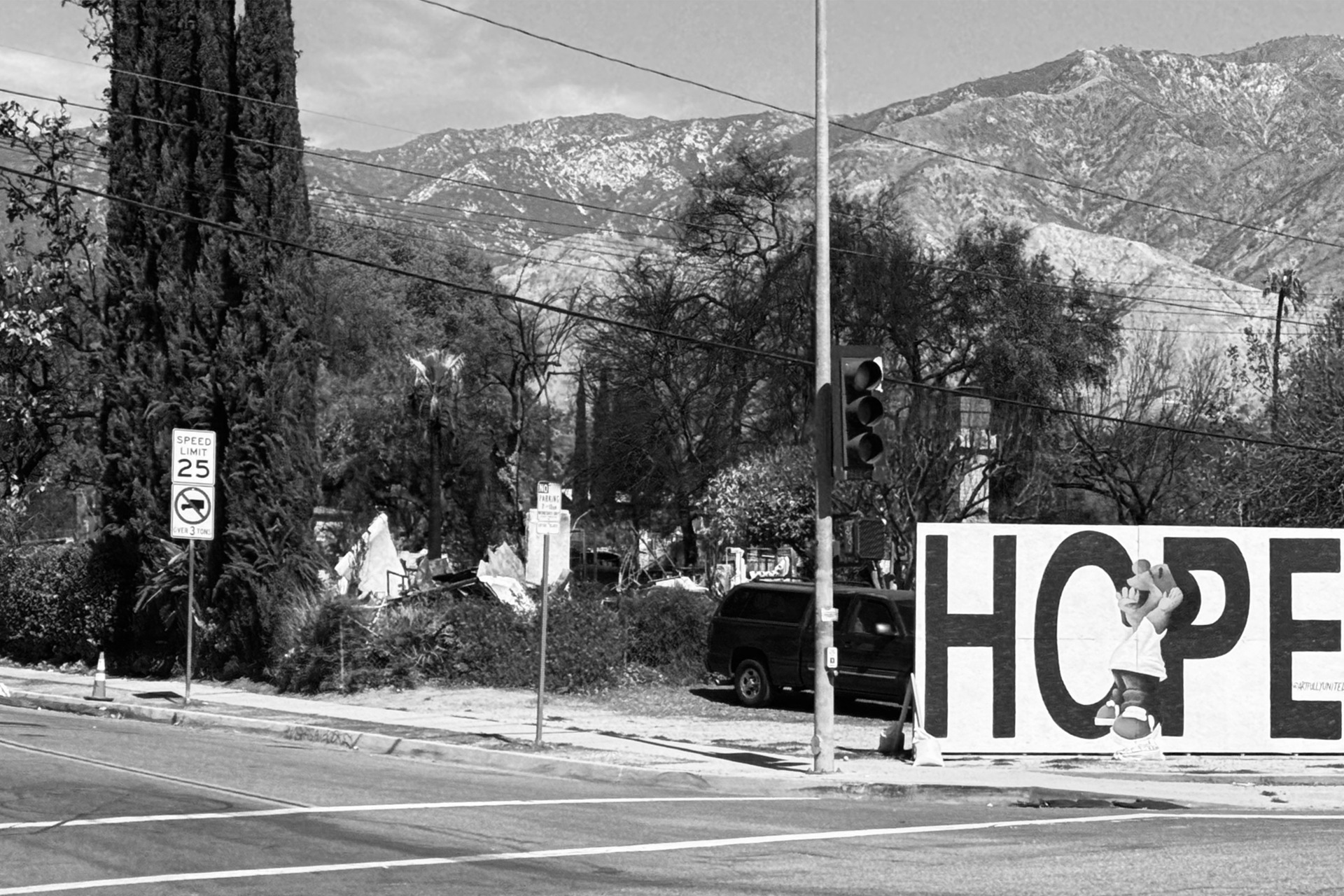 Albert continues: “If we work with the town council, if we talk about community lighting standards, a developer will then adhere to simple things. Don’t leave a motion detector floodlight on all night, don’t point things inextricably up to the sky. The Palisades and Altadena are both really interesting natural environments, they’re beautiful, natural spaces, and we can do something towards that.”
Central to the conversations surrounding Light for LA has been the idea of building back the “spirit” of what was lost in the fires – not necessarily just replacing, like for like, the luminaires and lighting infrastructure that was previously in place, but enhancing and building on the former lighting strategies, and creating something ultimately more equitable. This, Albert feels, is the “exciting part” of the process.
“This is where we get to talk about the subtleties of the lighting design, and we can talk about those value propositions that lighting design as a practice brings to the community. It’s the idea that just replacing the streetlights that were lost is not building the place back from this sense. What we can do is not only put back light as a function of the built environment, but we can help put back the character that’s the best memory of that place. We can build back people’s associations and their feelings about a space more than a lot of other things can.
“Most people will have a rosier memory of what they’ve lost. There’s always that association with memory that’s really important, and when we talk about building back, what we are trying to protect is the idea, the atmosphere, and the experience of what was lost. Folks like the Foothill Catalogue Foundation [a fellow non-profit organisation dedicated to rebuilding and restoring communities affected by the fires through a collection of pre-approved home designs for displaced residents to affordably and expeditiously rebuild] are making sure that rebuilt houses are stylistically the character of what was lost, and then we as lighting designers can come in and build back the character and quality of Altadena in a way that improves it, but keeps that core idea.”
However, Albert adds that there is a delicate balance between designing “for” people, and designing “at” people – meaning that Light for LA needs to tread the line between community consultation, and asserting one’s own knowledge and expertise as a lighting professional.
“In order to do this right, we’re going to have to have a pretty robust community outreach and community engagement programme. I’m as guilty as anyone at talking over the person on the other side of the table and telling them what I think, rather than listening to what they need, but it’s a good opportunity for us to improve.
“We’re starting partnerships with community advocates, who are experts at that sort of conversation, or listening and telling, and setting up the mechanisms of getting buy-in, and more gently moving people towards a solution that will benefit.
“I have conversations in every sphere of my life where people will say to me ‘lighting is everything’. They can never follow that up with another sentence. It’s something that people really viscerally understand, but don’t really know how to talk about. They don’t have the vocabulary to articulate what that ‘everything’ means to them. Part of what we have to do at this moment is help people develop that vocabulary so that they can talk to their contractor, or their public official, or their architect, or whomever, and communicate what they really want, and what’s really going to affect and improve their life so that somebody can then help them achieve that.”
At the time of writing, it has been six months since the LA wildfires, and while Light Equity has made some solid progress, Light for LA as an initiative is in the early stages of what will be a lengthy journey. Similarly, Eaton explains that, although progress has been made, the recovery process on the ground in Altadena and the Palisades will take some time.
“We’re still very much in the literal and figurative clearing of debris phase,” he says. “People who have lost everything are still adjusting to those paradigms and setting their lives back up – sometimes just down the street, sometimes across the country – while they consider next steps. The city has moved impressively fast at clearing the literal debris. A cleanup process that was initially estimated to take the full year is now 80-90% complete, in less than six months.
“The counterpoint to that is that there is now scrutiny as to what corners may have been cut to get to that milestone so quickly. And that brings us full circle to the concern as we move forward in construction, what corners may be cut in the interest of expediency that may shortchange homeowners in the long term with regards to the quality of the outcome, where you get a thing that looks like the home that you lost a year sooner, but something that is not going to last, not going to be as durable or as healthy, going to be more costly to maintain over time. That’s the concern. And we do see the beginning of engagement with adjacent trades within the Architecture, Engineering and Construction community that are thinking with a similar mindset: how do we take this opportunity to build correctly and more resiliently as a whole community so that we come out of this stronger?”

Simiarly, one of the biggest questions that Light Equity faces is how to keep the message of Light for LA at the forefront of people’s minds. The news cycle being what it is, to those not directly affected, the wildfires will already feel like old news, so how do they stay relevant, particularly when it will be a long-term project?
“It’s going to take a growing mass of supporters to maintain the momentum over time,” says Eaton. “It’s a long game kind of effort, it’s not going to be something that will be wrapped up by the end of the summer, or even by the end of the year, so to keep the urgency and the importance top of mind is a challenge.”
Albert adds: “I would hazard a guess that it’s embedded in almost every community-serving non-profit ‒ how do you stretch it out. One of the most notable differences that I am experiencing as we go through this process is time – design is fast, construction has always been the slowest part of what we do.
“Sometimes I’ll get a feeling of anxiety on a Thursday afternoon that I haven’t done enough, but I have to remind myself ‘this isn’t a design development deadline. It’s a longer timescale’. It’s also good, because it gives us the opportunity to tap into the altruistic desire in our design community to serve and to help in a way that doesn’t fatigue. Some of the first partnerships that we set up were with the IALD and IES, both nationally and locally, which gives us a mechanism to keep it in the community conversation.”
While the focus at the moment is, understandably, predominantly on the rebuilding efforts of Los Angeles, Light Equity does have longer-term ambitions that extend beyond Light for LA that it hopes will attract a wider, international response.
Albert continues: “We’re hyper focused on LA at the moment, because we want it to be a community-focused result. So, where the Light for LA application specifically should be supported by LA individuals, there are parallel and complimentary conversations that can and should happen elsewhere.
“I expect that Light for LA will be part of every lighting conversation in the city next year. I think that we will be a regular agenda item on the local IES chapter meetings. We are establishing a local board of advisors who are going to see names that everybody recognises from all segments of our community being involved.
“From that, we’re looking for this to grow organically. From the conversations that we have had with the IES and the IALD at a national level, they can understand how this is relevant beyond the scope of LA.
“But on a broader level, I want folks in our community to start thinking about this as a conversation that can happen in a lot of different arenas. My real hope and ambition was never based on disaster response. I want the tools that Light Equity will develop through the Light for LA initiative, and through other initiatives, and the larger community coming together, to be accessible to a 500-person town that just has this vague inkling that they’re going to change their tax district in the community centre, and they want to have a food truck night or a town art walk, some sort of experience that they’re grasping at, and they think lighting might have the answer for them.
“The real goal of Light Equity is to give them a set of tools that push that Venn Diagram over their experience, and get them into that set of opportunities where lighting can make a difference in their community – for good reasons as much as disaster reasons. Even if people are just having the conversation about lighting, we’re moving the needle.”
As Albert, Eaton, and the Light Equity team look ahead, while there is still work to be done, they can already feel proud of the efforts made. The group are already on track to have a Foothill Catalogue-designed, Habitat for Humanity house built with a Light Equity lighting design. And Albert hopes that, with every extra little victory that comes, the initiative will be a bigger and bigger success.
“I want there to be a real quantifiable, tangible value given to every dollar and man hour that’s volunteered as part of this,” he says. “For everybody that puts effort into this, I want them to see some results. Whether we’re looking at number of homes built, number of communities who have developed a lighting masterplan, number of products in a specific support category install, that’s how we know it will be successful.
“One of our most important jobs for the people who participate will be to remind them of the good things that they are doing, the impact that they are having, and telling those stories. I hope to be talking to you again about the kids that are eating breakfast in their new home, or the shop owner in Altadena that has a wine night now and it’s part of a new community ritual, or the folks in the Palisades that can see the stars now because there’s not so much sky glow. It’s really important to keep telling those stories and celebrating those little successes, because even a small effort will fundamentally change things for the better.”