
The Shelbourne Hotel
One of Miami’s most iconic hotels, The Shelbourne, has been given a new lease of life through its reimagined interiors. Long regarded as a cultural institution, having hosted legends from Frank Sinatra to The Beatles, its walls have borne witness to decades of history. Under the creative direction of ADC Tuneu, The Shelbourne enters a new chapter defined by texture, place, and light.
Light plays a dual role: subtly softening the architecture within it or making design statements that nod to Art Deco or 70s nostalgia. Designers Marta Tuneu and Aaron Clarke discuss with arc what it was like to work with such an iconic structure, and how they revitalised its interior while still honouring its ever-enduring place as a home for the stars.
To start with, can you tell us how you became involved in the project, what the client’s initial brief was, and how long it took from start to finish?
Tuneu: The Shelborne’s construction team knew us from Soho House Miami and we were approached. We received the initial clients brief as soon as we got on board. The brief was to create something truly special, but obviously taking into account we were working on a historical building. The Art Deco and South Beach architecture were to be taken into consideration. It took approximately two years to finalise the work.
The project merges inspiration from both Miami’s coastal context and the Art Deco era. Which elements from these influences were most important to you in shaping the design language?
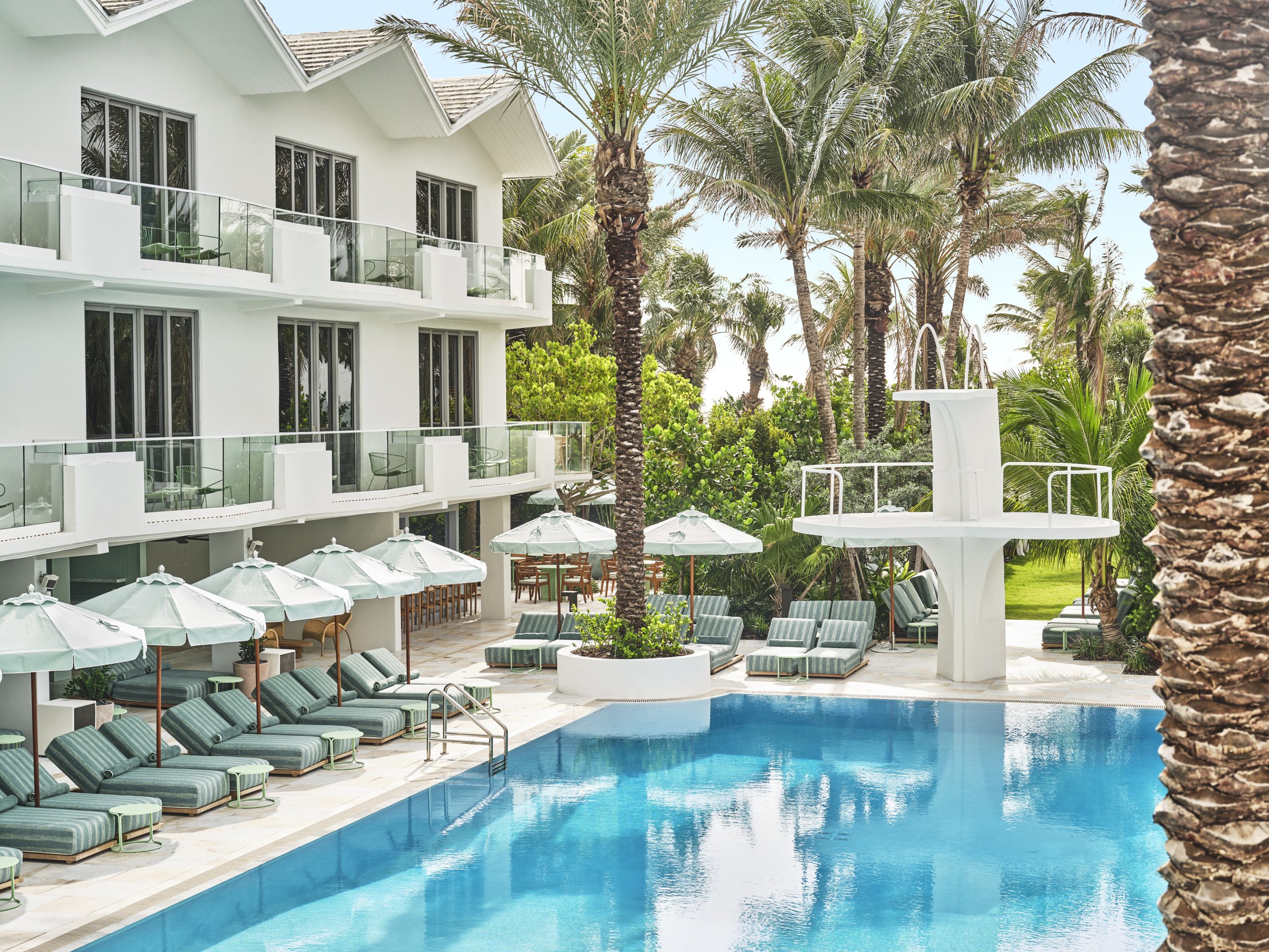
Clarke: For sure, we needed to embrace the historical elements of the building, such as the façade, pool deck and diving board, the pink marble walls at the entrance and build around them. We studied all the patterns, colours, design elements, and furniture of that time and looked to replicate them in a modern way.
How did you approach integrating restored historic features, such as the 1950s pool deck and diving board, with entirely new design elements?
Tuneu: When we have historic or iconic elements, we base our design on them; those elements become the main feature of the space. In the case of the diving board, we coloured all the pool area furniture in aqua, using calm and subdued patterns to make the diving board outstanding.
Lighting seems crucial to the atmosphere. What overarching lighting philosophy guided your work throughout the hotel? And, what role did decorative lighting have within that?
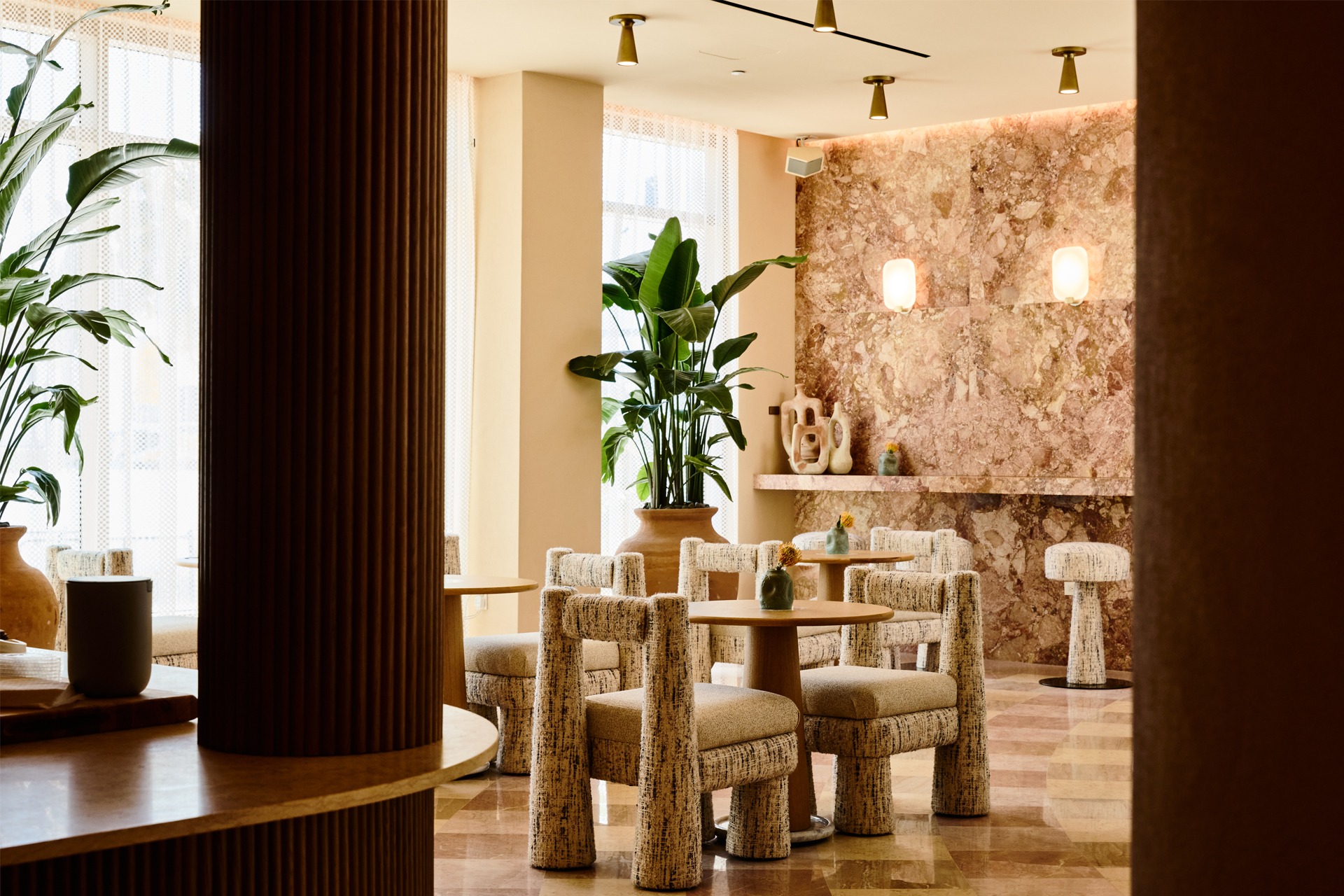
Tuneu: Light is fundamental to creating spaces with a soul. Miami has a lot of natural light, so it was very challenging to adapt all the different lighting scenarios in the project, especially when it is daytime. We used a lot of decorative lighting that recalls Art Deco, with shades of brass, textured crystal, and so forth.
Clarke: Finding the right light temperature is key to creating interiors, and we always work with lighting consultants who help us balance out all the decorative lighting and technical details and ensure the light levels are perfect in every corner in every moment of the day. The hotel also has a lot of interesting shapes, and lighting must be an element to highlight the architecture, not only to decorate.
How does lighting help to emphasise the architectural gestures and material contrasts in the dramatic interplay of curving forms and clean lines in the lobby?
Clarke: As I mentioned before, we want to use light strategically in order to emphasise shapes or key elements and make sure the light levels are right at all times. Shades are important as well to create contrast and emphasise architecture.
In The Little Torch bar, how did you achieve the club-like, soft-retro evening ambience? Were there specific lighting temperatures, dimming strategies, or fixture types you relied on?
Tuneu: Yes, there are a lot of dimming moments, not only in Little Torch but in every room and every space of the project. In Little Torch, we wanted to create a club-like ambience by incorporating warm light. We did not want to put wall lights in this case; the light comes from above, and little decorative lights were placed on top of the marble tables, so when it is dark, you can use the tables to get your cocktails and appreciate the colours created. Little Torch is sometimes used in the daytime for events, as it has great natural light coming from the glass brick wall. In the afternoon, it gets the orange lights coming from outside – the orange lights are for turtle protection. They happen to look great there and tell part of the story.
What role did both decorative and technical lighting play in shaping character versus function throughout the hotel?
Clarke: They are both important and complementary. Decorative lighting makes a statement, and the technical is required to balance out the light and create the ambience. They work perfectly together in all our projects.
Throughout the space, how did you approach lighting the varied artworks to ensure they remain both visible and protected?
Clarke: The artwork that we used at the Shelborne is very textured; some are woven, others are a plastered finish, etc. We did not use a lot of picture lights, as these kinds of textured artworks speak for themselves. We positioned the art, thinking about how it could work within the space with day and night lights. Therefore, they are all protected from direct light on top of them.
With so many layered textures – travertine, onyx, patterned rugs, pastel marbles, etc. – how did lighting strategies ensure these materials read correctly throughout the day and night?
Clarke: Daylight is very strong in Miami, so the spaces need only a little strategic lighting on key features with decorative lighting. Technical lighting and strategic lighting focal points ensure the visibility of all these materials at night.
What emotional journey did you intend guests to have from the moment they step into the lobby? How does lighting contribute to that sense of arrival?
Tuneu: The arrival at the lobby is very special, very warm, and chicness added by the art and furniture. From here, you can see how the main corridor curves, with light and shadow to create a wonderful atmosphere that gives a unique experience just as you walk in.
How did you approach lighting in the guest rooms to foster comfort without losing design personality?
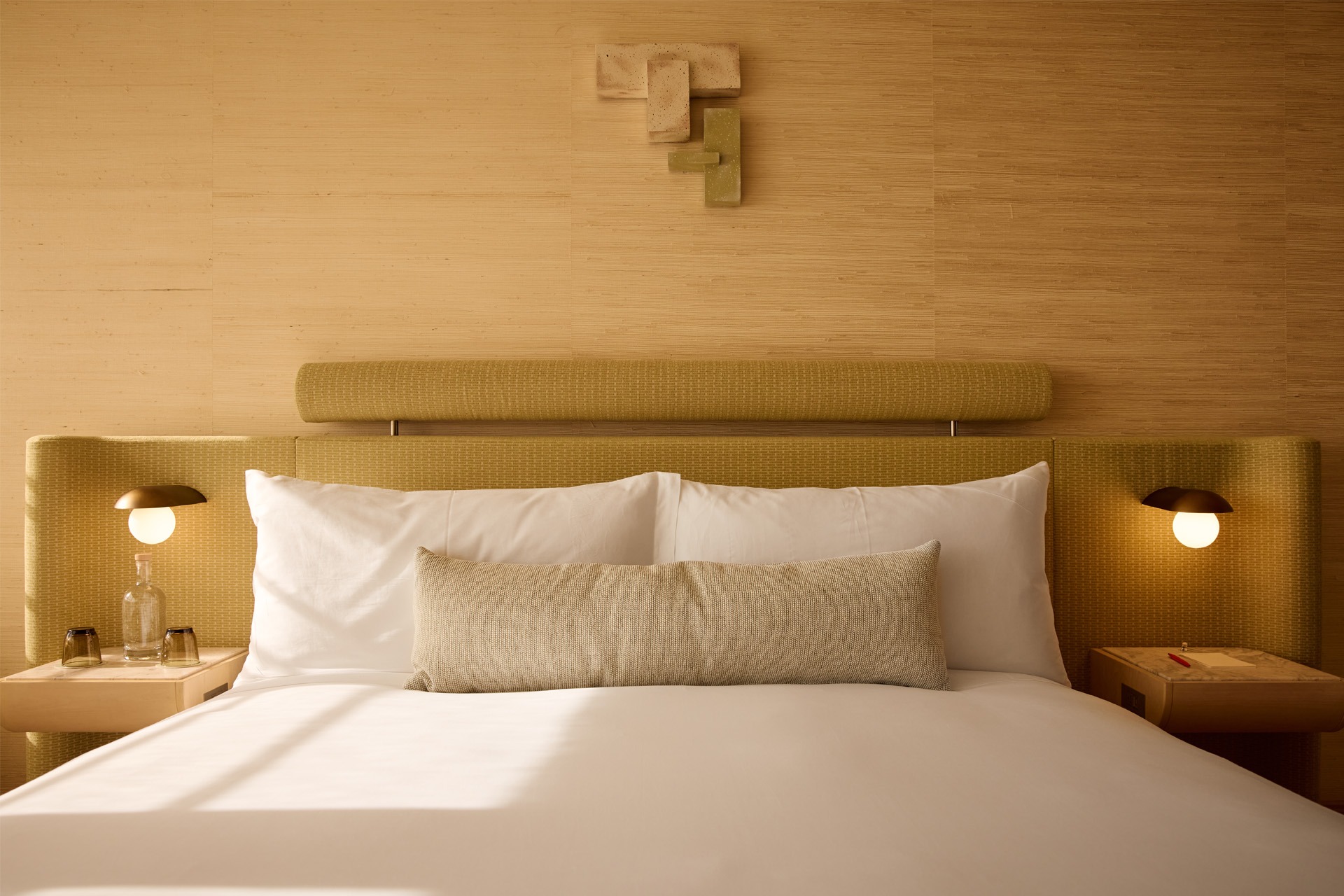
Clarke: Again, it’s finding the right balance between natural light, decorative light and technical lighting. All lights are dimmable, so you can get different intensities at different times of the day.
Pauline, the restaurant, incorporates geometry, feminine textures, and Latin American vibrancy. How did you tailor the lighting to support this particular narrative and culinary atmosphere?
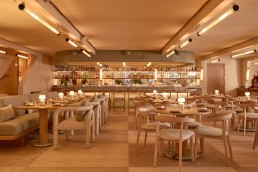
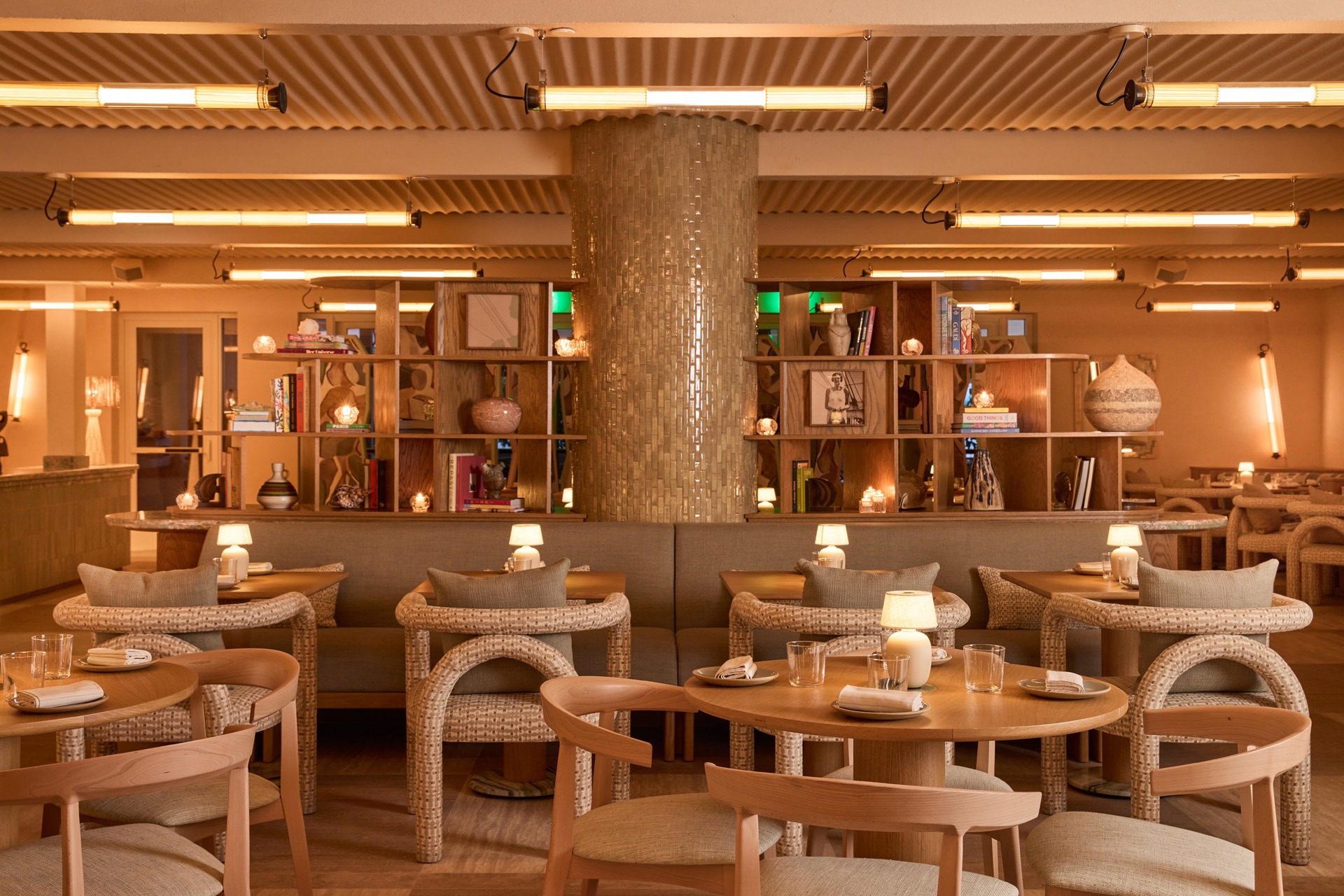
Tuneu: That space is very particular; it is a bit different from the rest of the hotel. It has a great geometry with its very iconic round windows. We wanted to create a Miami version of fine dining, and therefore some statement decisions were taken in the ceiling and walls. We wanted to emphasise the wavy ceiling that recalls the waves of the sea and the feminine shapes by using repetitive tubular lighting that lights 360°.
Clarke: For the walls, since the space has very beautiful angled structural pillars, we decided to use the same tubular feature to emphasise the angles and recall the architectural bones of the space. There are a few lighting points in the shelf unit that we have in the middle of the space. We wanted to create a focal point for all the Caribbean inspired design elements featured in this section.
Were there particular challenges you faced working within an historic building? Particularly, any issues with lighting integration or electrical constraints?
Tuneu: Yes, as an existing structure, it does not offer the same flexibility as if it were a new building, where you can position any lights in any position. There are places where some lights can’t be anchored. In turn, we had to be creative in making the full elevation work. We had the same approach with the ceilings. In terms of the exterior, there is a strong regulation in order to protect the turtles, the outdoor lighting is orange, and that reflects in the interiors. It just happens to create a beautiful, relaxing lighting atmosphere all around.
Did you work with a lighting designer on this project? If so, what do you feel the benefits are of working with lighting designers, and is this something you do regularly?
Tuneu: We worked with Luciforma; these guys are great at shaping projects, they give a 360 vision for day and night. They are great in helping us find the perfect light intensity in all spaces, considering decorative, technical and natural light in every season, working together. We normally work with lighting consultants because for us it’s crucial to have this kind of collaboration to achieve the best results. In addition, we must be challenged and have a different opinion and perspective on our decisions. We always listen to the experts who help us in every project, as they know their field, and after all, teamwork makes a difference and leads to successful designs.
On reflection, were you pleased with the results? Is there anything you would change if you had the opportunity?
Tuneu: We are very pleased with the result. We are very lucky to work with the best teams on this project, and as a studio, we are very adaptable and look to make a project work perfectly with what we have.
Client: Proper Hotels
Interior Design: ADC Tuneu
Lighting Design: Luciforma
Photography: Courtesy of Proper Hotels
Lighting Specified: DCW Editions, Marset, Hudson Valley, Santa & Cole, plus various antiques and vintage pieces from markets.