
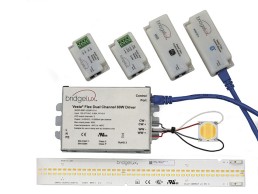
Bridgelux Vesta Flex
Vesta Flex is a family of dual channel LED drivers and control modules designed to reduce the cost and complexity of connected tunable white luminaires while delivering the flexibility required for project-based lighting installations. This specification-grade, future-ready solution is smart, interoperable, programmable, and flexible; compatible with control protocols including Wi-Fi, Bluetooth, DALI2 and 0-10V. Optimised to work with Bridgelux Vesta tunable white light sources, this unique turn-key solution from one supplier ensures compatibility and functionality out of the box.

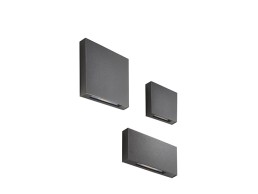
Cariboni Sans Serif
Sans Serif is a line of LED floor-washers, ideal for the lighting of pedestrian walkways, ramps, corridors and the external perimeters of buildings. With essential forms, the Sans Serif line stands out for its considerable visual comfort obtained thanks to the total-dark-light optical system. The light distribution is wide and even. The design and engineering of the product, combined with the use of LED technology, have allowed the depth of all three versions to be limited to just 26mm.
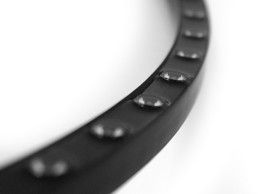
Linea Light Group Rubber 3D Bend Optics
The flexible and foldable polyurethane body is characterised by a micro optical system with a high precision light beam, which transforms the strip into a linear articulated bar, with an excellent wall grazing effect. It is available in three sizes and colour temperatures and two finishes: black and white. The black strip has excellent glaring control and very clear emission, with greater distinction in the initial part of the beam that softens as you go up. The white strip illuminates more at the beginning of the beam and is suitable for walls that need uniform light in the lower part.

Intra Lighting Tracker
Inspired by the soft and fluid forms from nature and architecture, Tracker bends with the ceiling beyond the horizontal movement. Its clean, spine-like look makes it fit every standard construction element. It can discretely blend in and support the creative choices of the architects and lighting designers. It’s a trimless luminaire with a seamless light curve that gives out homogenous light with the high light output.
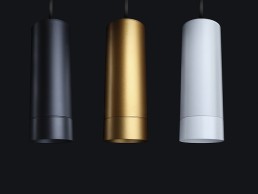
Soraa Aerial
Soraa Aerial combines unprecedented colour and optical performance with a classically proportioned cylindrical design to deliver beautiful and precise lighting that integrates seamlessly into architectural environments. Available as a surface, pendant or track-mounted luminaire, the range has been designed with the circular economy in mind and features a removable light module and control gear. Soraa Aerial is offered with a variety of beam and colour temperature options, and can be ordered in both standard and custom finishes.
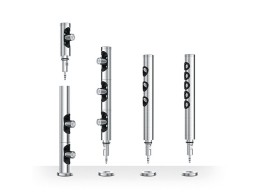
Precision Lighting Stacko
Stacko is the latest luminaire to join the award-winning Miniature Accent Lighting range from Precision Lighting. The new Minipoint system allows luminaires to be plugged and unplugged in seconds. Build unique lighting arrangements by ‘stacking’ components together, giving full control over the number of light engines, lumen output, beam width, finish and adjustability. High CRI and instant adaptability makes the Stacko collection perfect for any display application, including retail, museums and galleries.
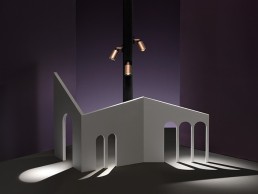
L&L Luce&Light Krill
Krill is a family of compact projectors with a pared-down design for lighting inside shop windows and display cabinets in the retail and museum sectors. Krill can be installed in variety of ways, so it can always easily reach the details that need emphasising. It has seven different accessories, including a magnetic plate and a double-jointed arm in different lengths that can be adjusted by up to 180°. The projector has a version with a fixed focus, available with either six optics, or a zoom lens with which the angle of the light beam can be adjusted and adapted as the objects on display change.
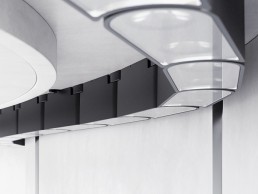
formalighting Cobra IP66
Cobra is an elegant, modular, serpentine system, which smoothly wraps around rounded or non-linear surfaces, lending itself perfectly to the seamless illumination of elegant architectural elements and surfaces. Cobra IP66 is the ideal solution for sophisticated architectural illumination in outdoor environments. Available in a variety of configurations to provide bespoke lengths for any project requirement, it works on constant current drivers at very low temperatures to maximise the system’s lifespan.
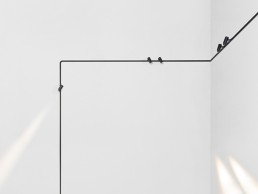
Arkoslight Minimal Track
Minimal Track is a low voltage (24V) surface track system, where miniaturisation reaches a new paradigm. Its ultrafine design is perceived as a minimalist line on the ceiling, creating a trimless visual effect. The system is composed of a matte black anodised aluminium profile and a flexible rectangular-section conductor that merge into total visual uniformity. Measuring 15mm wide and 10mm high, its surface application is practically imperceptible, with no connections, fastening elements or connection tracks in sight.
Light Symposium: Connecting health research with lighting practice
Asst. Prof. Dr. Karolina M. Zielinska-Dabkowska IALD, IES, CIE, MSLL, RIBA, looks at the interdisciplinary initiative Light Symposium Wismar 2020 and its historical development.
Thanks to state-of-the-art medical and environmental research, our current understanding about the impact of light and lighting is improving at a rapid rate (http://bit.ly/2OD9RvN). While the evolution of lighting technologies offers promising design possibilities, it also poses new challenges to planners and the general public. This is further complicated by the fact that today’s modern indoor lifestyle means we can be completely disconnected from nature and natural light. Instead, we live under artificial skies in man-made environments (http://bit.ly/3bgHhu5).
To answer the need for cross-disciplinary talks and in order to bridge the knowledge gaps in the field of architectural lighting design, in 2007, the concept of a Light Symposium emerged at the Professional Lighting Designers Convention (PLDC) in London. Michael F. Rohde, a German lighting designer and professor at the Hochschule Wismar (HSW) in Wismar, was inspired to create an interdisciplinary event where light and health could be holistically addressed and connected with research and practice.
In 2008, the first event, called the Light Symposium Wismar (LSW), was held in Germany, in conjunction with the 100th anniversary of the HSW, University of Applied Sciences: Technology, Business and Design. Soon after, Professor Jan Ejhed, a Swedish lighting designer, professor and head of the Lighting Laboratory at Royal Institute of Technology (KTH), Stockholm, joined forces and a new partnership was formed. It was proposed that the event should take place every two years on a rolling basis in Wismar and Stockholm. Since that first event in 2008, another five symposia have taken place in 2010, 2012, 2015, 2016, and 2018, where well known architects, interior designers, lighting practitioners, physicians, biologists, colour psychologists, ergonomists and other experts from Europe and overseas presented their experiences in lectures and workshops, and together with the numerous participants, created a lively discussion forum. Associations, universities, media partners and the lighting industry now regard this event as the benchmark for international education on the impact of lighting on health.
Due to the enormous interest in the fifth LSW in 2016, presentations were directly streamed online for the first time, allowing those who couldn’t physically attend, to participate in the event. All of these talks can still be watched free of charge at: http://bit.ly/2GUfcKU. Another element that was introduced was a follow-up book called: New Perspectives on the Future of Healthy Light and Lighting in Daily Life, which features best lighting design practice, lighting research and related aspects, as well as potential issues connected to medical science and lighting in man-made and natural settings. This publication includes contributions and research originally presented at LSW 2016. It is a valuable and vital reference source for students, researchers, academics, the lighting industry, lighting planners and policy makers. This book can be downloaded free of charge at the symposium website (http://bit.ly/2ODoAqJ).
Light Symposium Wismar 2020
The approaching Light Symposium Wismar 2020 (LSW 2020) is a three-day forum that will bring together the latest insights into the future of daylight and artificial lighting in healthy built environments with respect to research, theory, technologies, design and applications.
It aims to deliver state-of-the-art discoveries and breakthroughs that explore how daylight and artificial light affect the mental and physical health of humans in natural and built environments. The symposium is an occasion for researchers, students, and practitioners who wish to keep up-to-date with recent findings.
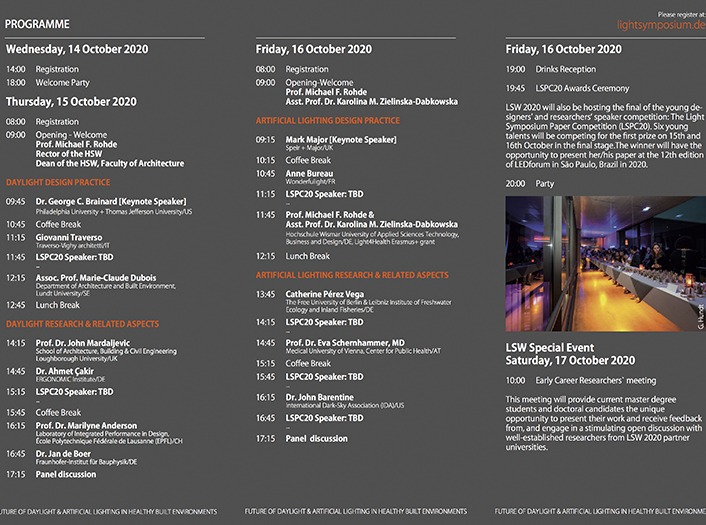
The interdisciplinary structure of LSW 2020 promotes future-oriented discussions on the importance of light and the lighting design profession. There are fourteen renowned speakers from fields such as: architecture, lighting design, engineering, biology, as well as environmental and medical science. Experts from Germany, US, Canada, Switzerland, Italy, Austria, Sweden, and UK will present their talks in four different thematic tracks: Daylight Design Practice, Daylight Research and Related Aspects, Artificial Lighting Design Practice, Artificial Lighting Research and Related Aspects. This year, confirmed keynote speakers include neuroscientist Dr. George C. Brainard from Philadelphia University and Thomas Jefferson University, and Speirs + Major principal Mark Major. (Figure 2).
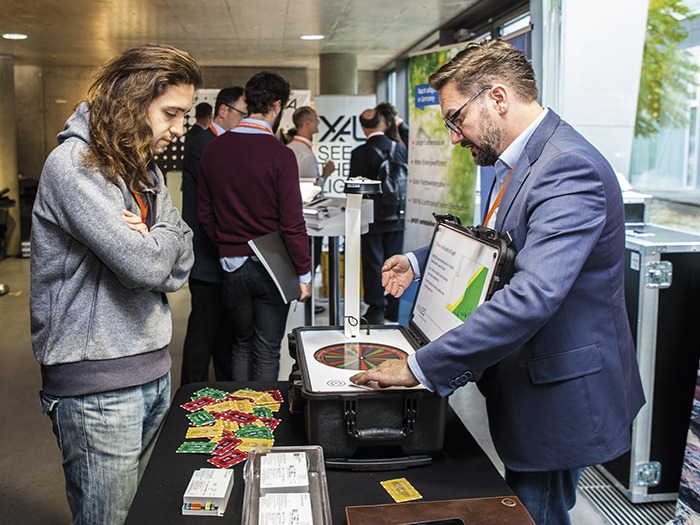
LSW 2020 is already financially backed by ten lighting manufacturers including: Bega, ADO Lights/TTC Timmler Technology, eldoLED, LED Linear, Lucifer Lighting, Osram, Siteco, Technolight Leuchten, We-ef and XAL. But organisers of the event welcome other lighting manufacturers who want to present and discuss their lighting products to the conference participants via a display booth (Figure 3).
Light Symposium Paper Competition 2020 (LSPC20)
LSW 2020 will also host the final of the young designers and researchers speaker competition. There are four topics: Fundamentals, Architecture, Health and Design. Six young talents (three Master’s students and three PhD students) will compete at the final stage for the prize on 15 and 16 October. The speakers will be judged on the quality of the content of their papers and the professional quality of the presentation itself. The jury, supported by independent experts, will decide on an overall winner, which will be announced on Friday 16 October during the LSPC20 Awards Ceremony. The call for papers will be released next month.
The symposium’s comprehensive supporting programme is also designed to stimulate discussion and debate – and the following activities all contribute to enhancing LSW 2020’s reputation as a quality lighting event: a guided tour to visit the UNESCO heritage old town of Wismar, a Welcome Party, and the LSPC20 Awards Ceremony.
The Future is Bright
Modern lighting technologies and design should address and, if possible, be based on evidence gathered by scientific studies. The implementation of new technologies such as LEDs is already changing the future of lighting design and will continue to do so. The impact of this, and the opportunities that exist are hard to define right now, which is why they are the subject of discussion. No wonder human health and wellbeing are areas of increasing interest and concern.
Furthermore, today and in the future, architectural lighting design needs to better acknowledge the need for interdisciplinary collaboration between scientists, medical researchers, the lighting industry and lighting designers.
This is why the Light Symposium plays a unique and integral role in continuing education, building on its foundation to enable developments in the field of lighting design as a discipline and profession.
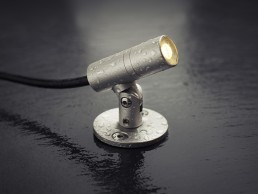
David Morgan Review: Stoane Lighting Pipien
David Morgan was keen to take a closer look at Stoane Lighting’s diminutive Pipien spotlight after it took home the KIT Exterior trophy at December’s [d]arc awards.
When a company grows over a 25-year period, from the proverbial garage start-up in Edinburgh to an international architectural lighting brand that now employs 45 people, there is an interesting story to be told.
Stoane Lighting was founded in 1995 by Mike Stoane, he produced custom-machined aluminium and steel luminaires in his garage for local lighting designers in Edinburgh. Early products included low voltage halogen rod systems and chandeliers. The first major spotlight project was for the Benson + Forsyth 1998 extension to the Museum of Scotland, with lighting design by Kevan Shaw. The resulting luminaire was the iconic twin cylinder MLX design with the LV transformer housed in the top cylinder.
When Mike Stoane retired in 2014, the company became an Employee Owned company. Stoane Lighting’s EO model is an Employee Ownership Trust (EOT), meaning the majority of the company’s shares are held in a Trust for the benefit of the employees.
The company continues to produce a variety of high specification luminaires based on machined aluminium and steel components and one of the latest additions to the range is the diminutive Pipien IP66-rated spotlight. It is understood that requests from lighting specifiers prompted the company to develop Pipien as an IP66-rated version of the interior-rated Surf Type S spotlight.
A number of the functional design features of the Surf Type S luminaire in terms of adjustability, lockability, durability, changeable optics and re-buildability are incorporated in Pipien. Apparently some of the design principals used to achieve the IP66-rating for Pipien emerged during the design of the Stoane Bulwark luminaire for a Lighting Design International project for Oyster Yachts.
With a body diameter of only 16.5mm, Pipien incorporates a single Osram Oslon Square LED, which produces a high quality of light output with a clean distribution. The maximum drive current is 500mA, giving a lumen output of 71 lumens with an LED power consumption of approximately 1.5W. Pipien requires a remote constant current driver and a number of luminaires can be run in series from a single driver. Using remote drivers can cause issues in some situations with long cable runs causing volt drop, but this approach does result in a miniature luminaire design, while also simplifying the construction.
All the mechanical components are made in machined aluminium with an anodised satin black finish. The quality of the machining and anodising is very high with a pleasing surface finish. Rotation and aiming angle for Pipien can both be locked securely with an Allen key.
The lenses are designed to be changed by the installer or end user, but this would not be advisable after installation in an outdoor situation, as dirt or moisture could get trapped inside. The glass window is neatly bonded to the machined front ring with a back printed detail to hide the adhesive area. The cable entry seal at the back of the spotlight is nicely detailed with a machined compression ring.
The knuckle joint is machined separately from the body and fixed with a couple of small stainless screws. All of these mechanical details are executed with a clean accuracy, which gives the luminaire a high perceived quality.
Stoane Lighting’s commitment to the green agenda is evident as they make a point of designing their products for easy re-use or recycling. Pipien follows this approach. The only components that are bonded in place are the window and the light engine PCB, both of which could be disassembled at the end of life or if damaged.
The aluminium LED light engine PCB is bonded to the heat sink body with a phase change adhesive so that in theory it could be replaced on site, although Stoane Lighting recommend this is done at their factory under controlled conditions.
The miniature size of the Pipien is evidence of a continuing trend among manufacturers to develop smaller luminaires for many applications. This development is partially in response to the ongoing increase in LED efficiency but also the desire to produce more complex lighting schemes. Small luminaires now have far greater light outputs than in the past, but the important trick is to ensure that the quality and efficiency of the smaller optical system still produces a pleasing lit effect. The mechanical and optical design of the Pipien works very well in this respect. It will be interesting to see how long this design trend can continue and how practical it will be to develop ever smaller luminaires.
The miniature size of the Pipien will enable it to be used in a very wide range of exterior detail accent lighting applications. The mechanical design is simple, straightforward and well executed, while the light output is more than adequate for likely applications and the beam quality is pleasing.
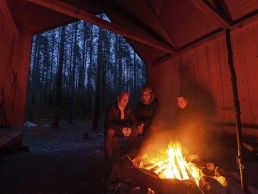
WhiteNight
Following their success at the 2019 [d]arc awards, we caught up with Joonas Saaranen and Arto Heiskanen, founders of WhiteNight, to learn more about the award-winning Finnish studio.
Named after the midnight sun that occurs during Finnish summer, WhiteNight Lighting believes that its values and philosophy are reflected in its beautiful natural surroundings.
Co-Founder Joonas Saaranen explained: “In our Scandinavian surroundings, light is constantly transforming with the change of seasons. Late in the fall, just when you think it couldn’t get any darker and gloomier, the first snow storm will suddenly wrap the landscape in dazzling white tones. Towards the spring, the sun clings on to the horizon longer each day, and come midsummer, sunlight has taken over both day and night with an overwhelming effect on all life.
“Our northern homes have taught us to truly value the light and our passion towards our work stems from a deep understanding of light and darkness.”
Founded in 2013 by Saaranen and Arto Heiskanen, the duo established WhiteNight with the “common goal to start an office that would technically be top-notch and push the project until the very end to take care of the customer and create a good customer experience”.
The pair first met while working at VALOA Design in 2010, but for Saaranen, his journey into lighting began much earlier: “I got interested in lighting in high school,” he explained. “I tried to get into the theatre to study lighting design but I didn’t get accepted. Instead, I studied industrial design at the University of Lapland, close to the Arctic Circle in the city of Rovaniemi. During my studies I was deeply affected by the surrounding natural light, and I’m guessing this had some kind of profound effect on me.”
In the summer of 2006, Saaranen enrolled in a partnership programme that saw him work with Saas Instruments – a small Finnish luminaire manufacturer. From here, he travelled to Barcelona, before enrolling in the Berlin Weissensee School of Art. While there, he entered into a competition ran by Licht Magazine to design a luminaire, and visited Light+Building and Luminale. This led him to the Architectural Lighting Design Master’s programme at KTH in Stockholm, and then a spot at Philips Research in Eindhoven, before eventually joining VALOA in 2010. After a year at VALOA, Saaranen joined Ljusarkitektur in Sweden, before returning to Finland to work at Kone Elevators, where he and his team designed the iF Award-winning RL20 elevator ceiling light.
Heiskanen’s route into lighting design was far more straightforward, as he explained: “My interest in light comes from photography. My dad had his own laboratory to make black and white photographs at home, and I’ve been doing photos with my dad and grandad since I was a young child. In black and white photos, light and shadows are the main thing.
“After high school I was studying classical music, and after a few years of studying and playing in orchestras I was ready for something else. That led me to study lighting design at the School of Art and Media at Tampere University in 1999. A year later I went to do my trainee period at VALOA, and I started to work in the same office while finalising my studies.
“In 2010 I met Joonas for the first time; we worked on a few projects and then he left, and it was a few years before our paths crossed again. In 2013, I was ready for a new challenge, and after thirteen years of working in the same office, I decided to jump into a new challenge together with Joonas.”
Alongside their shared ambition to establish a “technically top-notch” studio, the duo share an affinity towards the transformative power of light – something that was a key driver in their decision to branch out on their own. “With lights you can tell a story and guide the spectator to see a detail or steer into a specific place,” Saaranen said.
“Finland is a very dark country during winter, so my hope was to use light to enhance the quality of living.”
Based in Tampere, the Finnish studio has been very influenced by so-called Scandinavian style, as Heiskanen continued: “I think in some sense our ‘signature style’ is very Nordic: simple and functional.
“However, every project is different, so there isn’t a continuity between them. Our style could be recognisable in well-designed details – we try to pay attention to everything in a project. And of course, there is always something to learn in every project.”
“Due to very different natural lighting conditions between different times of the year, we have learned to appreciate the beauty of nature and the phenomena it can provide. We don’t feel like everything cool can only be done by designers and technology,” added Saaranen.
“We often explore ideas for our lighting scenes and colour changes from natural lighting phenomena. Lighting doesn’t need to be just a thing placed into a space or building to create some ‘wow effect’. It can also be a very composed and integrated part of the architecture, letting daylight and other things shine.”
The idea of using natural lighting phenomena as a source of influence is none more evident than in Aurora Experience; the [d]arc award-winning project in Saariselkä, Finland. Inspired by the tale of Tulikettu, the mythical fire-fox that used his tail to create the Aurora Borealis while running away from hunters, Aurora Experience consists of a dramatically illuminated toboggan run that lets participants live both the thrill of chasing Tulikettu, and being inside the natural light phenomenon.
Saaranen explained: “Saariselkä is a unique place, as is the whole of Finnish Lapland, with its nature, history and stories. It was quite clear that we should try our best to draw inspiration from those things. Luckily, the art plan for the ski resort area encourages the use of local folklore and heritage. We just had to find a good enough story to be told through the means of light.
“The Aurora Borealis is a distinctive phenomenon highlighting the beauty of natural light, attracting people around the world to witness it with their own eyes.”
The Aurora Experience begins next to the sky itself, above the treeline at the top of the Kaunispää fell. From this barren landscape, participants speed down an illuminated track through arctic scenery littered with projected imagery of Finnish lore.
Halfway down the fell, they arrive at a central plaza where “Pohjannaula”, the proverbial centerpin of the known world, according to Finnish folklore, stands. After this point, the tone of the course changes, and illuminated evergreens line the rest of the route down the valley, while projections and lighting mimic the dance of the Aurora Borealis.
Lighting on the route comes via streetlight luminaires, customised for this project and equipped with RGB LEDs – providing good optical qualities while still maintaining powerful colour effects – while the light projections were mainly done by metal halide GOBO-projectors.
The Aurora Experience saw WhiteNight pick up not just the SPACES – High award at the 2019 [d]arc awards, but also the ‘Best of the Best’ Ultimate [d]arc award – it received more than twice as many votes as any other project entered into the awards – and Saaranen exclaimed his delight at the success: “We started the company from zero seven years ago, and to get a prize like this with a small team is very uniting.
“We are constantly playing the game with big engineering offices, so these kinds of projects are a good showcase that a small team of devoted professionals can succeed.”
While Aurora Experience has given WhiteNight international recognition, the studio has gained a lot of plaudits closer to home for its work in and around its hometown of Tampere. From larger lighting projects like the Vuolteentori Square and Tammerkoski Power Plant, to smaller, more artistic pieces such as SuperSized IceLantern – a feature based on the Nordic tradition of freezing a bucket of water to shape a lantern and placing a candle inside – and the illumination of the Kultakutri (Goldilocks) statue in Konsulinsaari, WhiteNight has built an impressive portfolio of work across Tampere, in many cases using light to honour its industrial past.
“Tampere has a deep history in industrialisation and the rapids flowing through the city have always played a major role in the city,” Saaranen said. “The banks of Tammerkoski have many red brick buildings, and we have had the honour to light many of these over the years. Nowadays we have a good understanding of the essence and soul of redbrick buildings."
However, one of the main points of pride for Saaranen is Hämeenkatu, the main street of the city. Modernised during the introduction of the Tampere Tramway, WhiteNight designed the lighting for the whole street, which separates vehicle and pedestrian traffic through colour temperature of the lighting – colder white light illuminates the road, while warmer lighting is used on the pedestrian sidewalks and crossings.
This lighting was housed in custom-made, multipurpose poles designed by WhiteNight. The shape of these poles is inspired in equal parts by the city’s old trolley bus poles, and the organic shapes of nature. “This might sound a bit boring, but the design of the pole is very radical,” said Saaranen. “Because the pole is used to carry contact wires for the tramlines, and hang seasonal lighting, there are special needs for the rigidity of the pole. It was designed to meet these requirements with an airy design, fitting in to the scale of the environment.”
Following their success last year, Saaranen and Heiskanen, alongside third team member Aleksi Riihimäki, who joined the team in June 2018, are showing no sign of slowing down. Instead, they’re taking stock of the emerging trends within the industry to try and predict where the lighting world will go next.
“After the fast revolution of LEDs, maybe the quality of the light and the luminaires is now more considered,” Saaranen said. “For example, preventing light pollution and achieving exactly the features needed from the luminaire, alongside reliability, are important.
“Artificial Intelligence and machine learning as a global megatrend is getting into the lighting industry too. Luminaires can already deliver data in their current state. In the future, probably more sensors will be integrated into lighting fixtures and poles, and luminaires will be able to learn and adapt to surroundings based on gathered data.”
On a more personal level though, Saaranen revealed that WhiteNight has looked at the increasingly prevalent use of technology as a means to improve its service offering. “Lately, we have put some effort into Virtual Reality and utilising it in our work,” he said. “We’ve found it to be a really helpful tool to visualise our ideas in an even more realistic way to the customer.
“We try to keep ourselves updated on the latest technologies, not just VR, but also the latest products and ways to control lighting too, for instance integrating open data into lighting control.”
Through all of these changes though, it is important to retain the passion that made you fall in love with lighting in the first place – the ability to tell a story, transport spectators to another world and create moments of magic. This passion is something that lives strong in WhiteNight, as Saaranen proclaimed: “Working with lighting is rewarding in itself.
“It literally lets you bring light into darkness, highlight the otherwise unseen, and bring forth beauty that would otherwise be hidden in the absence of light.”
