
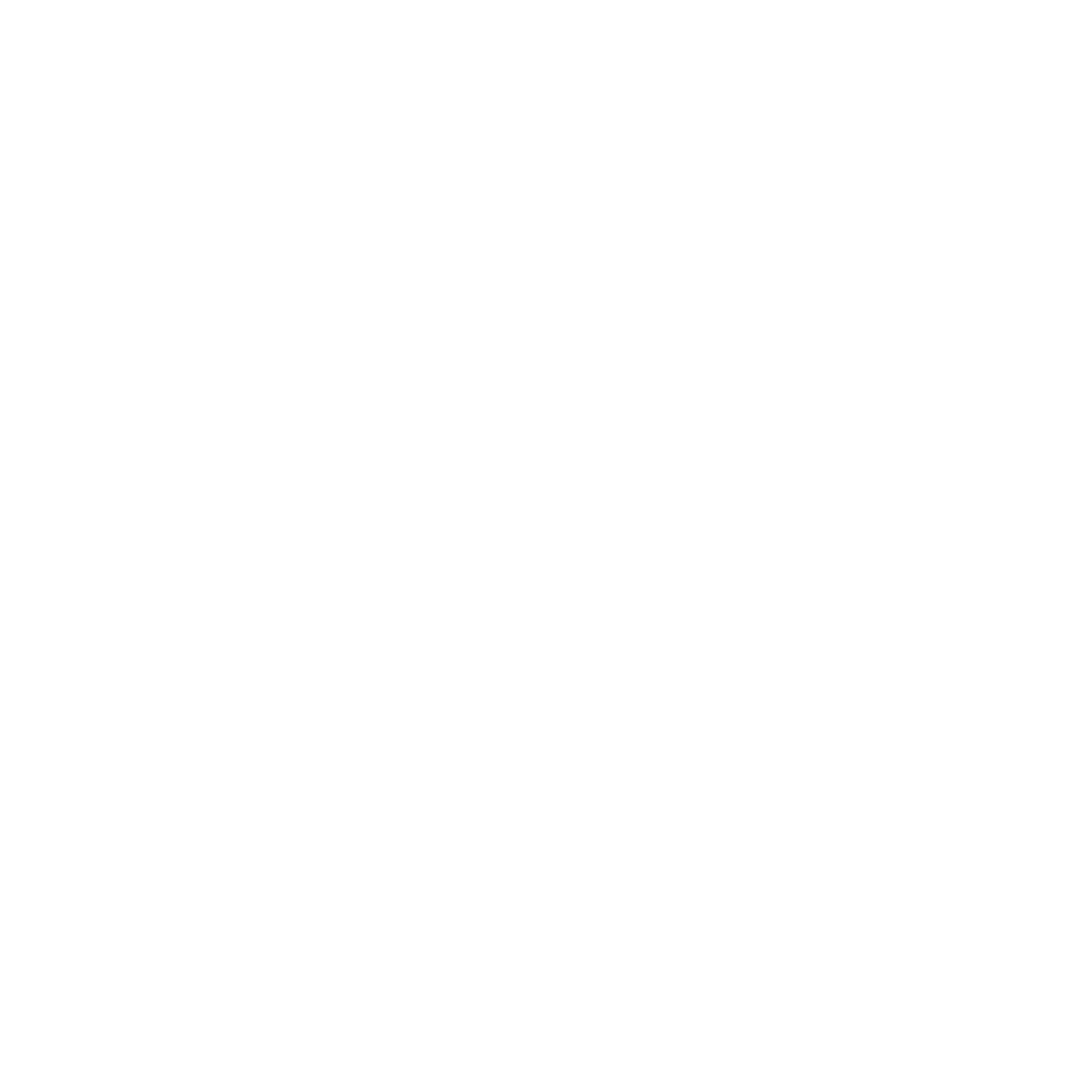
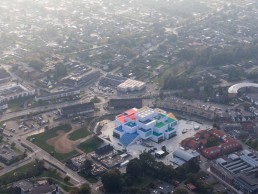
Lego House, Denmark
The Lego House has become an iconic landmark, not just for the city of Billund but for Denmark as a whole. We sat down with Jesper Kongshaug, lighting designer for the project, to discuss the way that lighting helps to showcase the exhibits inside.
As children, we all played with Lego, building houses, towers, and all manner of imaginative architectural creations with the colourful bricks. The Lego House in Billund, Denmark, designed by BIG (Bjarke Ingels Group) Architects, sees this childlike imagination brought to life.
With an architectural concept that is the manifestation of Lego itself, founded in Billund by Ole Kirk Christiansen in 1932, the Lego House consists of 21 ‘bricks’ stacked together to form an irregular pyramid. The façade of the building has been designed to look as though each of the 21 ‘bricks’ has itself been constructed out of Lego.
A special brick, entitled the ‘Keystone’, tops the structure. Designed to match the dimensions of a traditional 2x4 Lego piece, the Keystone features eight skylights, intended to correspond to the buds seen on such a block.
Built around a 2,000sqm, publicly accessible space called Lego Square, the Lego House features a number of outdoor roof terraces and two separate outdoor amphitheatres, with seating generated from the gradual sloped pixelation of two of the building’s main ‘bricks’. Intended to be a city space, open to both visitors and the general public, Lego Square has no visible pillars, while daylight and the sun’s rays pass through cracks and gaps between each structure, filling it with light.
Inside, the building houses three restaurants, a Lego store and an auditorium on the ground floor. The heart of the centre though comes in the Experience Zones, which host four brightly coloured play areas, alongside a large gallery of Lego models, and a special exhibition showcasing the legendary toy brand’s development history, including 500 of the most iconic Lego boxes produced.
The ‘Keystone’ houses the Masterpiece Gallery - a bridge between all corners of the exhibition, it also serves as a sky-lit gallery for Lego as an art form.
Copenhagen-based Jesper Kongshaug Lighting Design developed the lighting for this remarkable structure, working alongside BIG, as well as Lego’s own design team, to create a precise, yet subtle lighting scheme.
“I tried to find a balance between lighting quality and lighting precision,” said Kongshaug. “But it should not be a building where you think about the lighting. You should have a really high quality experience without knowing or thinking about how much effort was put into it.”
Although the lighting is intended to appear effortless throughout, a lot of technical preparation went into creating the right ambience for each exhibition.
“Each room has its own layout and setup, and everything is thought out precisely to fit that particular quality of that particular room,” Kongshaug explained.
“If you look at it as a normal guest, you perhaps don’t realise that everything has been customised for that particular role, but it was necessary because we have some quite strong differences in each room’s characteristics.”
A key part of this differentiated lighting came in the adjusted colour temperatures. Although white light was used throughout, it was shifted slightly from 3000K in the activity and exhibition spaces, and 4000K in the navigation routes.
By lowering the colour temperature slightly for the exhibition spaces, it means that the bright colours of the Lego bricks are properly reproduced. Kongshaug also worked to consciously avoid glare, and to get the right balance of shadows depending on each space’s function.
“When there are activities with bricks, we have made sure that there is a soft shadow,” he said. “We achieve this by adjusting at least three spots indirectly down towards the tables without dazzling. Where the visitors stand or walk, we have created a very vertical light, which also does not dazzle, but it increases accessibility and security.”
Another important factor for Kongshaug to consider was how to illuminate the various interactive areas situated throughout the Lego House. These areas use video projections and scanning cameras, and as such the wrong kind of lighting would have caused interference, blurring the video projections and preventing the scanners from recognising Lego figures, as intended.
“We had to make sure that there was a very good transition between the exhibition spaces and these media-based areas where the cameras and digital projectors take over,” Kongshaug said. “To counteract waste light and glare, we used black honeycomb grids within the luminaires.”
To create this precise lighting, Kongshaug called on his previous experience working in theatre lighting. “Precision is crucial in a theatrical space, and that was the case here too, as it was crucial to precisely direct the light.”
Although Kongshaug had to be very precise when directing the lighting throughout the Lego House, this task was made much more difficult by the fact that none of the exhibitions were in place when the lighting was being installed. “All the lighting was put up and focused and pointed in completely empty rooms,” he said. “It was quite an awkward situation, but we could not come in with the lifts and ladders and everything after all the exhibits had been put in place.” As such, Kongshaug and his team spent several weeks calculating and placing the luminaires according to drawings of the exhibitions.
“I could tell that the lighting was coming out successfully even when there was no exhibition installed yet, because I could put my hand in the space where I knew the experiences would be and see that it was all working out fine.”
While the majority of the Lego House features relatively uniform lighting, if alternating slightly in colour temperature, there were a few areas that needed a more dynamic lighting scheme. The World Explorer exhibit, for instance, features lighting that changes throughout the day from morning, to daytime to night. “We linked this to all kinds of things, lighting in the houses and trains, in the models and so on, and we had to get the lighting to change in the same rhythm,” Kongshaug said.
The building uses a DALI 2.0 control system, and Kongshaug said that using this, rather than the preferred DMX system, offered up an interesting new challenge. “We wanted to challenge the manufacturers to give us a spot that would do a precise colour programming with precise timing that wasn’t done by DMX,” he said. This control system was also utilised to illuminate the Tree of Creativity, a 50-foot structure that stands in the middle of the building, and is illuminated with a number of small RGBW LED spots.
“We had some challenges to make the DALI control work in a good an effortless way, but after a few adjustments we were able to develop a very strong tool. Normally we would have used DMX but it was a great advantage that we could use the same protocol that is used in the rest of the building.”
Kongshaug predominately opted for Targetti spots throughout the Lego House, after being put in touch with the Italian manufacturers through a local distributor.
Recessed fixtures from Targetti’s CCTLED Architectural range, alongside Ledo projectors equipped with different optical systems and beam openings meet the various requirements that Kongshaug had for the lighting, as they were used to control the play of light, shade and colour. The spots were given a special finish, requested by Lego, in order to blend into the ceiling. Elsewhere, Kongshaug also made use of spots from Erco and LTS.
Because of the building’s staggered brick structure, and the installation of skylights in several of the exhibition rooms, the space is filled with natural daylight. The recurring use of white walls throughout add to a visually serene background, so as not to draw attention away from the vibrant colours of the Lego models on display. Daylight and shadow calculations were also made, with filters installed on some windows to control the amount of light that enters, so that it does not conflict with the exhibitions inside.
Since completing work on the Lego House, Kongshaug has gone on to work on the new Olympic Headquarters in Lausanne, Switzerland - a project that he won the competition for halfway through his involvement with the Lego House.
And he said that the experience of working on such a high-profile project has only helped him.
“It definitely was a learning process to be involved with a big international organisation,” he said. “I won the competition for the new headquarters partly because I had learned how to work on high scale projects like that, and I’ve used a lot of the things that I learned during the Lego House.”
Kongshaug added that it was a particularly exciting opportunity to work on such a project in his home country. “Being from a small country, you don’t get that many projects domestically, I normally have to go abroad, so it was good to get it.”
Throughout the Lego House, the lighting is blended seamlessly into the fabric of the building, complementing the striking architecture perfectly. In keeping with Kongshaug’s initial aim for the building to be a space where you don’t think about the lighting, he said that such a level of integration is “a fantastic reward when you think about it”, and he is delighted with how it has turned out.
“It was a complex solution in a complex building, where the lighting is quite low profile. BIG has been very happy with the lighting, and I would say that I’m very pleased.
“It’s something that I can look back on and think that we pulled this one off.”

Issue 109
arc Apr/May 2019 – Issue 109
Design is everything...
Salone Del Mobile Milano was a welcome reminder of why we love lighting design.
With lots of noise about complete service providers, smart cities, the Internet of Things, Bluetooth mesh networking, connected light, WiFi, LiFi and goodness knows what other technological and structural changes to our industry, it was extremely satisfying for the arc team to visit a good old design show that showed beautiful things, cleverly designed in often stunning settings.
The event was a huge success too, proving that design is still something to behold, even if the nitty gritty of technology is often foremost in most of our minds. The 386,236 attendees, over the six days, from 181 different countries was a 12% increase over the 2017 edition, which also featured Euroluce and Workplace3.0.
Of course, technology and performance of lighting is number one when it comes to specification decisions, but it was great to see the aesthetics of lighting design being so prominent in Milan. From stunning installations such as Aria’s Come To Light as featured on our front cover, Raytrace by Benjamin Hubert / Cosentino and TM Lighting, and Aglow by Liz West and Uozu to ridiculously stunning stands at Euroluce like Flos and Artemide, design and, more importantly, lighting design was celebrated as if we had all remembered why we are part of this profession.
In some small part, this is what we are doing with our [d]arc events. This month sees us offically launch both [d]arc room and [d]arc awards for 2019. Both events approach traditional formats and turn them on their head with creativity and collaboration with the involvement of consultants, Light Collective.
[d]arc room, with its own space at the Old Truman Brewery at London Design Fair during London Design Festival in September, offers pared down pods for companies large and small to creatively exhibit their products on a level playing field. Attracting 30,000 visitors last year, the event will aim to showcase 75 architectural and decorative lighting companies to the design community.
[d]arc awards pairs sponsors with lighting designers to create installatons that will be shown at [d]arc night, the Christmas-themed awards party on 5th December at the very special MC Motors venue in London.
Both events reflect our progressive attitude to lighting design and it would be great to have you involved. Get in touch!
Paul James
Editor
arc
Visitor numbers grow at GILE 2019
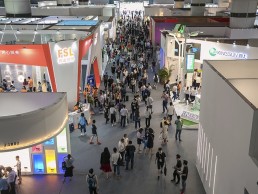
(China) - 172,856 visitors attended this year’s Guangzhou International Lighting Exhibition.
Guangzhou International Lighting Exhibition (GILE) welcomed
more than 172,000 visitors from 133 countries this year, event organisers have
revealed.
The show, held concurrently with Guangzhou Electrical
Building Technology, welcomed the world’s lighting industry to South China for
a four-day event that featured a total of 2,626 exhibitors from 22 countries
and regions, all showcasing the latest lighting and LED products, technology
and solutions over 195,000sqm of exhibition space.
The 2019 edition of GILE embraced a new show theme of Envisage
the Next Move as a nod towards the current state of the lighting industry;
an industry that on the one hand continues to pursue new innovations, while at
the same time facing challenges in defending its core competencies and protecting
the quality and sustainability of lighting.
Commenting on this year’s exhibition, Lucia Wong, Deputy
General Manager of Messe Frankfurt (HK), said: “Contemplating what the future
holds for the lighting industry is a theme that has been truly embraced by the
fairgoers at the 2019 edition of GILE. From the renowned guest speakers
gathered on stage from China and overseas to the plethora of smart and emerging
technologies showcased around the exhibition halls, fairgoers have left this
year’s show with food for thought about what is next for this thriving
industry.
“Judging by the passionate speakers and the innovative array
of technologies on show, the future certainly looks bright.”
www.guangzhou-international-lighting-exhibition.hk.messefrankfurt.com
Atrium acquires Kelvin Lighting
(UK) - Acquisition to give Kelvin Lighting’s customers access to Atrium’s portfolio of lighting brands.
Scottish independent
lighting distributor Kelvin Lighting has been acquired by Atrium.
Together, the expanded
group will represent the single largest independent specialist lighting
distributor across the UK, serving architects, lighting designers, interior
designers, engineers and contractors. The acquisition will also lead to
improved, coordinated and comprehensive coverage nationwide.
Kelvin Lighting, founded
by Scott Kelly in 2007, will operate as a trading division of Atrium, and will
continue to be known as Kelvin Lighting Limited in Scotland. Kelly will move up
to the board of Atrium as a shareholder and director.
Kelvin Lighting’s
customers in Scotland will have direct access to Atrium’s portfolio of lighting
brands, and will continue to receive local technical support and expertise.
They will also have access to Atrium’s UK-based QuickShip programme, that
provides for the most commonly specified lighting products and accessories to
be available for immediate delivery.
Ulysse Dormoy, Managing
Director of Atrium, said: “This is a very exciting time for us in a market
sector that’s constantly evolving through technological innovation. Scott and I
have complementary views on the way forward and we’re both very much looking
forward to this next phase of growth for our combined businesses. We’re very
fortunate to have great teams of people working with us and to be working with
the world’s leading lighting brands.”
Scott Kelly, Managing
Director of operating division Kelvin Lighting, added: “It will be business as
usual for our customers in Scotland, but with the additional offer of iconic
architectural lighting brands. These are exciting times for our companies, our
customers and our suppliers.”
www.atrium.ltd.uk
www.kelvinlighting.co.uk
iF Design Awards move to Berlin
(Germany) - The UNESCO City of Design to host the 2020 awards.
After eight years in
Munich, the iF Design Awards will take place in Berlin in 2020 for the first
time.
Held on 4 May, the iF
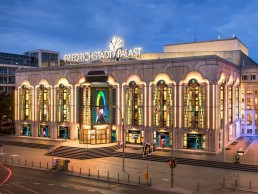
Design Awards will be hosted at the Friedrichstadt-Palast, the largest event
stage in the world. The move to Berlin marks the opening of a new design
chapter in the UNESCO City of Design - one of the most fascinating and creative
cities in the world.
First held in 1953, the
iF Design Awards is the oldest independent design competition in the world; a
symbol of outstanding design achievements, it focuses on the innovative power
of design.
Each year, companies,
designers, agencies, builders and architects put themselves forwards for the
awards programme, and entries for the 2020 awards are currently open. With
awards for Product Design, Communication Design, Packaging Design,
Architecture, Interior Architecture, Professional Concept and Service Design,
entries can be submitted until 18 October 2019.

Lamp Awards winners announced
(Spain) - The eighth edition of the Lamp Awards,
held in Barcelona last night, revealed the winners from more than 500 entries
from around the world.
On June 13th,
the winners of the Lamp Awards 2019 were unveiled, in a ceremony held at the
Barcelona Nautic Centre in the port of Barcelona city.
The eighth edition of
the awards was led by Lamp CEO Ignasi Cusidè and hosted by TV journalist
Bibiana Ballbè, while lighting designer and president of the jury, Roger
Narboni closed the event, alongside his panel of judges, lighting designers Uno
Lai, Paul Nulty and Pascal Chautard, lighting artist Aleksandra Stratimirovic,
architects Hilde Léon and Antonio Ruiz Barbarin, and interior designer Mercedes
Isasa.
This year’s instalment
of the Lamp Awards saw a total of 502 entries from 42 countries, with winners
divided into four categories: Outdoor Lighting, Indoor Lighting, Installation
Lighting and Student Proposals.
The winner of the
Outdoor Lighting category was The Musicon Path in Roskilde, Denmark, created by
ÅF Lighting and Simon Panduro. Judges praised the project for “its simple and
beautiful lighting design that delivers a unique and innovative public realm.
The thoughtful and engaging application of light imbibes the cultural space
with personality and affords users an exciting and dynamic experience.”
Two projects received
awards in the Indoor Lighting category. Firstly, the Bloomberg European
Headquarters in London, UK, with lighting design by Tillotson Design Associates
was praised for “an exceptional lighting solution that revolutionises the role
of lighting within the office environment”. Judges stated that “It is unique,
innovative and sophisticated - a genuinely revolutionary, inspirational example
of next level workplace design.
The German Ivory Museum,
in Erbach, featuring lighting from Licht Kunst Licht, continued its global
success, after having won a [d]arc award
in 2017, and claiming the Radiance Award at last year’s IALD Awards. Judges
commended the project for “a dramatic and perfectly balanced lighting strategy
that captures the imagination. It has been beautifully executed and creates a
wonderful sense of drama within the space, and focuses the eye exactly where it
should be - on the displays”.
Judges presented the
2019 Lamp Award for Installation Lighting to Escola Municipal Art i Disseny
Terrassa for Ocre in Olot, Spain.
According to the judges, the installation was “beautifully simple in its
execution. Reminiscent of nature, the piece is constantly evolving as a result
of the elements. The organic, natural quality of the installation alongside its
dynamic characteristics combines to create a stunning effect”.
Finally, the Student
Proposals award was presented to Rodrigo Llavayol, a student at the Universidad
de la República in Montevideo, Uruguay for Light
Follows Function!. Judges said of Llavayol’s proposal: “this playful,
imaginative and interactive scheme places the intensity of light into the hands
of the user, making it a very personal and compelling environment.”
During the awards
ceremony, the jury also extended a special mention to Kerem Asfuroglu’s Dark
Source following its work in Abuko, Gambia on The Vessel. Calling it a
“commendable piece of charity and social work”, judges said of the project: “By
focusing on local materials, culture and experience, combined with training,
this project is concerned with making a long lasting, sustainable difference
within the community.”
Aware of the social
importance of light, Lamp awarded this special mention with a donation of
€1,000 in lighting material for Asfuroglu and Dark Source’s next social light
project.
Speirs + Major to present VR experience at ILP summit
(UK) - VR experience speculates on future of London’s public realm lighting.
Speirs + Major will
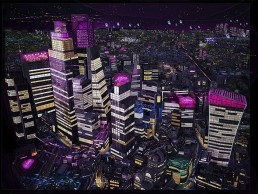
present a unique Virtual Reality experience entitled Third Age of Light at the ILP Professional Lighting Summit, held on
12-13 June at the Life Science Centre in Newcastle, UK.
Alongside this, Mark
Major will be hosting a talk on the ideas considered in the experience at
Rawthmell’s Coffee House at London’s Royal Society of the Arts, where the
experience is also currently installed. The talk will take place on Friday 28
June at 1pm as part of Rawthmell’s Friday Conversations.
The experience aims to
examine how London’s public realm might be experienced after dark in the near
future. Following a successful debut in Paris in November 2017, the content has
been fully updated to respond to a number of questions as to how societal
attitudes and emerging technologies might change our nightscape.
Those attending the ILP
Summit or visiting the Rawthmell’s at the RSA are invited to explore three
virtual areas of London in the near future - the South Bank, King’s Cross, and
Primrose Hill. Specific themes within each area provide deeper insight into
issues such as augmentation, networks, communities and the environment.
Mark Major, Principal at
Speirs + Major, said: “As designers working with light, we challenged ourselves
to speculate on how London may be illuminated in the near future. We believe
that technologies and behaviours are emerging in the field of lighting that
will impact the way we experience the public realm after dark in the future.
“The themes we explore
aim to create awareness of these possibilities, allowing us to think ahead to
the social, economic and environmental opportunities and challenges we may
face. Our ideas are not necessarily offered as solutions, nor intended to be a
comprehensive review, but we sincerely hope that our efforts will provide
visitors with an enjoyable, interactive experience that will provoke further
thought and discussion.”
The Third Age of Light experience will be
available throughout the ILP Summit from 9.30am on 12 June until 4.30pm on 13
June.
The experience can also be accessed
Monday-Friday, 8.30am-9.00pm via Rawthmell’s Coffee House, RSA House, 8 John
Adam Street, London, until Friday 28 June.
Zumtobel Group partners with Casambi for wireless lighting control solutions
(Austria) - Partnership to improve controllability for Zumtobel and Thorn luminaires.
The Zumtobel Group has
teamed up with Casambi with a strategic partnership that will see Zumtobel and
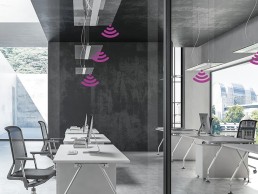
Thorn luminaires offer seamless control to users via Casambi’s BLE software
control platform.
Further to this, a
series of Tridonic drivers is now also ‘Casambi-Ready’, allowing luminaire
manufacturers to easily integrate wireless controls within their products to
reduce cost and complexity. The connected lighting solutions form part of the
dynamic lighting management platform, Tridonic basicDIM Wireless, which enables
users to adapt various settings to their individual needs in an intuitive
manner.
“Our partnership with
Casambi allows us to combine our outstanding luminaire design with
state-of-the-art Bluetooth technology, which simplifies installation,
commissioning and operation of lighting systems and, thanks to its
interoperability, leaves room for future developments and applications,” said
Alfred Felder, Zumtobel Group CEO.
Casambi CEO Timo Pakkala
added: “With Casambi technology installed within the Thorn and Zumtobel
luminaires and also supporting Tridonic drivers, lighting control has become
more powerful, versatile and easier to use.
“Moreover, the
introduction of these new connected lighting solutions from an industry titan
such as Zumtobel Group goes a long way to demonstrate the continued rapid
growth achieved by Casambi’s expanding ecosystem.”
www.zumtobel.com
www.casambi.com
DIAL and Relux to collaborate on uniform data format for lighting design
(Europe) - The two companies wish to meet challenges of digitalisation with open format for import and processing purposes.
DIAL And RELUX are
jointly planning to develop a new, open data format for luminaires and sensors
that can be used, among other things, in the companies’ two lighting design
programmes - DIALux and RELUX.
The future lies in
digital processes, which is why users and industry are placing increasing
demands on electronic product data, and digital planning methods, such as BIM,
require data to be processed uniformly. The two companies want to meet these
challenges with an open data format for import and further processing purposes.
In comparison to
frequently used IES and LDT formats, the new data format will contain more
comprehensive information about the product. This can be in the form of
parameters such as geometry, photometry, texts, product images, dynamic control
and controllability.
The open data format has
many benefits for lighting designers and manufacturers alike. Manufacturers who
are actively involved in the development process need only provide one format
for the two lighting design programmes. This improves the data quality
available on the market and makes it more up-to-date. In addition, products can
be simulated more realistically in the planning process.
“DIALux is a powerful
and open product with an open data format. With DIALux, we want to make life
easier for planners and manufacturers,” said Dieter Polle, CEO of DIAL.
Markus Hegi, CEO and
Partner of RELUX, added: “The aim is to standardise the creation of product
data and continually adapt it to requirements in order to ensure smooth
processing of high quality. Manufacturers as well as users receive great added
value.”
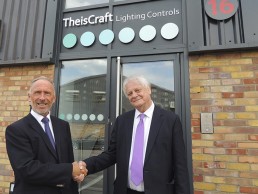
TheisCraft acquire Multiload Controls
(UK) - Acquisition to see TheisCraft develop relationship with architectural sector and other standalone markets.
TheisCraft has acquired
Multiload Controls, the company has announced.
The Multiload product
portfolio complements the existing TheisCraft product range, and the
acquisition allows TheisCraft to further develop its relationship with the
standalone markets and the architectural sector.
Brian Cuthbertson,
Managing Director of Multiload Controls, said: “This is an extremely exciting
time for both companies. The markets, customers and resources that TheisCraft
have will give us the opportunity to penetrate sectors of the industry we have
never worked in before.”
Multiload’s project
history includes Lord’s Cricket Ground, Wimbledon Lawn Tennis Association,
Thermae Spa, Bath and a host of other well-known and prestigious installations.
TheisCraft has worked alongside Multiload on a number of occasions over the
last few years for non-DALI dimming solutions, particularly on architectural
projects.
Jon Theis, Director of
TheisCraft, added: “We have wanted to develop a closer relationship with
Multiload for quite some time, so this is a perfect fit for TheisCraft.
“Following the
acquisition, it will be very much business as usual, but we will now look to
maximise every opportunity both commercially and technically as we move
forward.”
www.theiscraft.co.uk
www.multiload.co.uk
Norka expands business activities with acquisition
(Germany) - By acquiring the Traffic &
Industries division of Swareflex, Norka expands its product portfolio into road
and tunnel lighting.
Specialist luminaire
manufacturer Norka has acquired the Traffic & Industries division of
Swareflex, a Swarovski Group company. This includes the development,
manufacture and sale of lighting systems for road and tunnel lighting.
“The new acquisition is
an outstanding addition to the existing product portfolio and will further
strengthen Norka’s market position as a company specialising in lighting
technology,” said Florian Schönfeld, Managing Director of Norka.
“We expect to have many
synergies, especially in the development and manufacture of fully encapsulated
luminaire systems.”
Johannes Oberdanner,
Managing Director of Swareflex, added: “We have found a longstanding successful
company in Norka, whom we trust, because they share the same values as
Swareflex in terms of reliability, customer focus and innovative spirit. This
will ensure the customary high quality that is essential for customers and
subsequently for road users.”
Swareflex will focus on
its core business in the future - the development and marketing of solutions
with glass reflectors for traffic safety and individual applications for light
control with glass lenses.
In order to serve the
market in Austria and neighbouring countries, Norka is planning on establishing
a competence centre in Wattens/Tyrol as a wholly owned subsidiary, and will be
supported along the way by five highly specialised Swareflex employees.
The next few months will
be used to organise the transition of the business, implement the transfer of
know-how and fulfil the production engineering requirements in the Norka plant
in Dörverden-Hülsen.
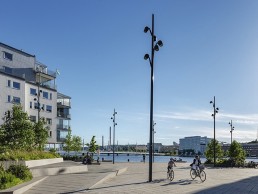
Selux license interior luminaires to Ridi
(Germany) - Selux is focusing on the dynamic
market of smart exterior lighting.
As part of a strategic
realignment to smart lighting for exterior use, Selux has licensed the
manufacturing, sale and distribution of its interior lighting within Europe to
Ridi Leuchten.
Product families to be
produced and distributed by Ridi with the ‘Designed by Selux’ label in the
future include, among others, the Selux series Via, Fluid, Loop, Kju, Purelight
LED, Xea, M-Modular, M60 Connect, Pallas and Survivor.
“This agreement
constitutes a win-win situation for all involved,” said Markus Schiebold, of
the Selux executive board.
“Selux will retain
valuable resources for the subsequent restructuring process, while at the same
time Ridi will optimise and extend its portfolio to include products designed
by Selux.”
“Needless to say, we are
delighted to be able to keep the Selux design and our extensive know-how alive
in the interior area in this way, while enabling its continued usage in
numerous construction projects throughout Europe,” added fellow Selux executive
board member Jürgen Hess, who is responsible for product innovations at Selux.
