
The Word, UK
In the UK, the impact of austerity measures over the past few years has hit certain sectors hard – particularly public libraries. Cut backs on expenditure have led to a raft of library closures across the country, and for all intents and purposes, it appeared that the local library was fading from British society.
So much so that figures recently published by the Chartered Institute of Library and Information Professionals, there has been a 14-percent decline in library visitors over the past five years.
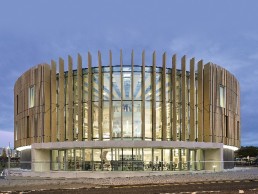
That is not the case in South Shields though, as thanks to FaulknerBrowns Architects, Muse Developments and Desco, a stunning new library building has been constructed.
Dubbed The Word, the new building is not just intended to be another run-of-the-mill library, but an outstanding social hub for the community, with it’s unique circular structure designed by FaulknerBrowns to mimic the fanning pages of an open book.
Located on a prominent gateway site linking South Shields’ riverside area with the town centre, The Word is one of the first projects for the redevelopment of the area, and as such the scheme needed to be successful to provide a striking new focal point in the North East town’s marketplace, in which its community can take great pride, and from which the wider regeneration will develop.
Because of this, the design and construction team created a shining example of an attractive, efficient civic building, encompassing design features that reflect the town’s industrial and manufacturing heritage, enhanced by a complementary, bespoke lighting scheme, developed by Desco, to attract and engage visitors.
Desco had previously developed a good relationship with FaulknerBrowns, having worked on numerous projects together over the years. Through this existing relationship, Desco were recommended by the architects to Muse Developments to join the team.
From this initial recommendation, Desco was involved from the project concept through coordination, installation, commissioning and all the technical aspects of the lighting scheme, including prototype design and approval. Alongside this, they worked with manufacturers Hacel and Atelje Lyktan to develop some bespoke lighting solutions.
James Davison, Senior Design Engineer at Desco, explained how he worked with the architects to develop the lighting concept: “FaulknerBrowns’ initial concept of an open book with the pages fanned out was also the main inspiration for the lighting design.
“The concept matured as the client’s ambitious vision for a more wide-ranging, exciting visitor attraction emerged. As the brief and client expectations gradually evolved, so too did the lighting design, retaining a flexible approach to the design being the key element.
“Faulkners had a very keen sense of how they wanted the building to look and the lighting needed to tie into this vision whilst maintaining the element of flexibility throughout the building.”
However, while the lighting design needed to be flexible, there also had to be a sense of uniformity. As the highly sophisticated building includes library and exhibition spaces, alongside a number of key areas allowing interactive exhibitions, storytelling and social spaces, all co-existing alongside contemplative and study zones, Desco sought to utilise a singular concept to illuminate all these areas, creating a sense of commonality in the space.
Davison explained: “We developed the notion of a linear extrusion with multiple uses, which could be interchangeable to reflect the fluid nature of the architecture. These linear ‘spokes’ tied in with FaulknerBrowns’ concept and the overall ‘language’ of the building.”
The multiple uses of this bespoke linear extrusion meant that Desco was able to adapt to the changes throughout the building as the areas and room boundaries ebbed and flowed by modifying the luminaire components to suit the spaces.
“Within the main luminaire housing there are three main sections,” Davison elaborated. “High output linear sections to illuminate larger areas and displays, track mounted spotlights to emphasise exhibitions and key artwork pieces, and lesser output linear sections with a more controlled and diffused light for areas where glare control was paramount – offices and reading areas.
“By interchanging these elements within the confines of the original ‘spoke’ design, we were able to be extremely agile to the client’s changes.”
This bespoke linear lighting design serves to complement the structure’s circular, ‘fanning pages’ effect, extending from the building’s centre outwards, to align with the architecture. The fluid solution of multiple linear sections within a single extrusion brings a sense of continuity to the design aesthetic while maintaining the desired element of flexibility.
Desco collaborated with local manufacturers Hacel to create this linear system, as Davison explained: “Hacel were in the midst of developing a linear lighting system and we were able to exploit this process and tailor the luminaire to our needs.
“We started with the continuous extrusion – this needed to come in different lengths to tie in with the architecture. Once this ‘carcass’ was established, the individual components could be inserted almost like piecing together a jigsaw.”
The main feature, Davison explained, that differentiates this system – which later became Hacel’s Infinitas – with other linear installations is the inclusion of the track section. This means that the spotlights incorporated within the ‘carcass’ allow a single extrusion to run for, in some cases, more than 10-metres, illuminating several areas differently while maintaining a sense of commonality.
On entering the building, a halo of LEDs integrated into the soffit of the overhanging upper floors illuminates the building’s perimeter at ground level, encouraging the public to engage with the building, while the glazed triple height atrium floods the space with natural light, while providing stunning views of the River Tyne and the neighbouring Grade I listed Old Town Hall – two enchanting aspects of the building’s historic context.
Due to its circular shape, the whole building appears to emanate from a central point, the large, three-storey atrium. The whole building seems to channel visitors into this fabulous space, and the lighting revolves around this concept. The linear lighting emphasises this, while providing an optical illusion that the entire building is sloping inwards.
At the heart of the development is a bespoke, 6.5-metre wide LED luminaire, designed by Desco and FaulknerBrowns in collaboration with Atelje Lyktan. The chandelier – the largest single fitting ever manufactured by Atelje Lyktan, was custom-made to fit an architectural ceiling recess with the depth of the fitting dictated by the architect’s vision. The installation is comprised of 84 ‘drums’ mounted to a bespoke frame. As the chandelier is literally bolted to the soffit, all cables were hidden within the bespoke mounting frame of the luminaire installation, with the cabling cast within the concrete before the installation design had been completed.
The chandelier was incorporated with tuneable white LEDs, allowing for the atmosphere and mood of the building to be altered depending on the time of day, as Davison explained: “The colour temperature of the fitting is designed to simulate daylight; a warm 2700k light in the morning gradually changes to a colour temperature of 6500k as the sun peaks, then turning back to 2700k tones at sunset.
“As the colour of the light changes so gradually, most people don’t realise the subtlety of the effect directly. This gradual change results in the mood of the building changing over the course of the day, with the building awakening with the sun in rich golden tones, achieving its peak effect at midday with a very clean natural light, and gradually returning to the early colours, changing and evolving the atmosphere of the building throughout the day.”
Desco was also responsible for the external lighting design, in which they aimed to enhance and enliven The Word’s context within the public market square, creating a new meeting place and community event space. Peripheral lighting with a mixture of Concord uplighters and integrated LEDs clearly defines routes and complements the architectural form of the building, helping to draw visitors in. The Word defines its landscape, and the external lighting scheme helps to transform and emphasise the structure at nighttime.
FaulknerBrowns worked hard to ensure that the building, while remarkable in its shape and design, still held true to its surroundings, paying homage to South Shields’ industrial heritage with a palette of materials chosen by the architect including coal, salt, glass, stone and metal.
“As such, the colour temperature of the luminaires needed to be correctly chosen to bring out the rich tones in each of these materials,” said Davison. “All of this occurs within the confines of dark sky initiatives to reduce light pollution, which is something we were very keen to achieve.
“It would have been very easy to bathe the building in light but we have picked out key components to the external façade instead, allowing the building to be highly engaging.
“The external lighting was also selected and placed to highlight the circular nature of the building, where traditional façade lighting would have made the building appear flat and lifeless, the shape is highly accentuated by the scheme without ever overpowering it.”
Despite The Word being an incredibly unique building, particularly for a library in the UK, Davison asserted that Desco has, through its experience in the leisure sector, worked on projects of a similar nature in the past, although he did concede that the approach towards this building was quite different to other projects.
“Sometimes a client or architect gives an open brief to the lighting design – they’re not sure exactly what they want but normally have a strong idea of what they don’t! With The Word though, the concept was well established and the challenge became one of ensuring the brief was met and maintained,” he said.
“The other major factor in how this differed from other buildings is the shape – there aren’t too many spherical buildings built these days! I enjoyed the challenge of creating a lighting design that responds to and complements the architectural concept.”
However, Davison revealed that, while he enjoyed creating the lighting design for The Word, trying to maintain the aesthetic while having an eye on lighting requirements of such a firm, restrictive geometric pattern was a ‘real issue at times’.
“Avoiding over illuminating at ‘peak’ areas, i.e. where the linear extrusions meet, meant a lot of work was done on the DALI lighting control system,” he said. “We dimmed the lines of light as they became closer together, but not too much so as it would be instantly noticeable – we wanted to maintain a sleek, uniform light.
“It’s a detail that isn’t immediately obvious and possibly passes most by, but it’s something that for me, although relatively simple, really captures the extremely detailed thought pattern that has been applied to the lighting design.”
This detailed thought process has led to the creation of a very effective lighting design throughout the new centre, serving both on a functional basis to emphasise the architectural form of the building, blending into the overall concept of the design, and also as a statement piece, with the bespoke Atelje Lyktan chandelier dominating the three-storey space without ever looking out of place.
“Both major applications achieve their goal and demonstrate the technical capabilities and expertise available,” said Davison. “Sometimes it is difficult to imagine how a building will look, especially from 2D plans and even 3D models as the light interaction within a space may differ in reality.
“With The Word however, the vision we wanted to achieve was clear and the similarities between our initial concept sketches and calculations and the finished building is striking.”
Since its completion, the impact that The Word has had on the South Shields community has been reflected in its success. Figures revealed that in its first two months of operation, this new cultural venue has attracted 88,000 visitors, and as further evidence of its success to date, 867 new readers have joined the library – an increase of nearly 400-percent compared to the same period at the old Central Library. Alongside this, there has been a staggering 750-percent increase in library users in the teenage demographic, which Davison puts down to the “sleek, modern and welcoming design of the building” being a major contributing factor in creating appeal for new and future generations of readers to come.
“Against the backdrop of gloomy figures recently published by the Chartered Institute of Library and Information Professionals, The Word’s statistics are very welcome news,” added Davison.
One of the most impressive feats of The Word though, Davison believes, is that it was completed not under the big budget that privately-funded developments are, but the slender means of a local authority deep in the midst of austerity measures, making the success of the project all the more remarkable.
“All aspects of the design needed to reflect this, including the lighting package,” he explained. “Our cloth needed to be cut accordingly whilst maintaining a high level of design. This was achieved by good design, collaboration and innovative thinking; all leading to the development of an iconic and flagship structure.”
Overall though Davison is delighted that The Word can serve as a social hub for the local community, providing a beautiful new location for residents to take pride in and taking that all important first step in the regeneration of the town centre.
“South Tyneside Council’s aspiration for the scheme was for it to be an icon for South Shields, promoting footfall and tourism back into the town centre. The impressive visitor figures and positive feedback serve to demonstrate how The Word and its intelligent and eye-catching design is already achieving that aspiration and helping to shine a national spotlight on culture and design excellence in the North West of England.”

Canadian Museum of History, Canada
The Canadian Museum of History, located in Gatineau, Quebec, is the most visited museum in Canada, welcoming more than 1.2 million visitors each year.
With roots dating back to 1856, it’s one of the country’s oldest public institutions and a respected centre of museological excellence, sharing its expertise in history, archaeology, ethnology and cultural studies both within Canada and abroad.
With roughly 25,000sqm of exhibition space spread across four floors, the lighting design needed to be just right, in order to showcase the more than 200,000 artefacts on display.
To create a new lighting scheme for the museum, Montreal-based GSM Project – a group that specialises in the design and production of thematic installations and exhibitions – brought in Lightemotion, who through a combination of museum and architectural lighting, highlighted the work of architect Douglas Cardinal, while showcasing the museum’s history.
François Roupinian, President of Lightemotion, said that the goal for the new lighting design was: “to create a visual narrative with the lighting that would take the visitors throughout the different galleries that tells the story of Canada. The light should act as a magic wand, directing the viewer’s attention to key areas.”
To accomplish such a feat with a maximum spectrum of effects, the team at Lightemotion used more than 40 kinds of light fixtures. From theatrical floodlights to gobo projectors from ETC and miniature LED heads from the likes of iGuzzini and Sistemalux for subtly illuminating even the smallest details of the displays, all equipment used throughout the museum was carefully studied and adjusted in order to create a unique path of light.
Roupinian continued: “Flexibility is important for creating the right lighting.” As such, nothing was left to chance, with features including interchangeable lenses, zoom, anti-glare accessories, an integrated potentiometer to adjust the lighting level for conservation needs and ambience, and the option to add colour filters. Because of this, the lighting manufacturers for the project were chosen with particular care so that a wide range of choices would be available to ensure colour consistency.
Beyond the myriad of fixtures required, a project such as this comes with its own set of challenges; the first being the use of LED technology to recreate the warmth and subtlety of halogen, as LEDs are often too bright for the more subtle needs of a museum, as Roupinian explained: “The use of LED in a museum with thematic environments is not easy. Manufacturers want to produce very high lumen output luminaires but the choice and quality of optics is not always available.
“Also, in a museum we need control of the light and spills, and a good quality beam. We do not necessarily need a lot of light output, especially when you illuminate objects at 50 or 100 lux.
“The problem then comes though, that even when you have fixture equipment with integral dimmers, when the light is dimmed on an artefact, the LED lights become greyer.”
Roupinian and his team countered this though by working closely with different manufacturers, such as ETC, iGuzzini and Sistemalux, that could produce fixtures with good quality optics that would give less spill and residual lighting.
“Also, to counter the greyish colour that certain luminaires would produce through dimming, because of the lux level requirements, we used filters to correct the tonality of the light,” he explained.
Another important element to take into account was that certain fragile artefacts are sensitive to heat. When fine-tuning the lighting, Lightemotion worked closely with the museum’s conservation team to provide consistent and suitable lighting, carrying out tests that include thermal models to ensure optimal conservation conditions for the artefacts.
But one of the biggest challenges, Roupinian explained, was ensuring a consistent feel throughout the museum: “The one great challenge was keeping the same design aesthetic, quality and control of the light in a situation where we had different ceiling heights, different mounting possibilities and in some areas, we didn’t actually have any ceiling or lighting positions to hang the fixtures.”
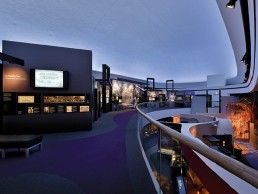
This was evident in the case of the museum’s main, emblematic dome. Acting as a visual reference point throughout most of the museum pathway, the dome is an immense structure, but it’s shape made it impossible to install lighting. However, the team at Lightemotion employed a special approach: “We wanted to use this constraint as an advantage,” said Roupinian.
“That’s where we got the idea to use the dome to create light with indirect lighting. We wanted to make it the centrepiece of the museum’s ecosystem.”
“So we carefully tested many tonalities to illuminate the dome to create a great ambience, while using indirect lighting within the space,” he continued. “We also designed, with GSM, a mounting system for the exhibit installations where we could have lighting positioned within a minimal track system.”
Following these colour tests, the team was able to create their desired effect: a timeless tone for a comfortable atmosphere, where visitors feel as if they have stepped into the museum’s very own world. “Our goal was to illuminate this beautiful space architecturally, but at the same time design a lighting system that would serve the artistic and narrative purposes of the exhibit,” explained Roupinian.
“The light ultimately needs to tell a story. The visitors shouldn’t have to be aware of the technical feats behind the scenes, the lighting should create a complete sensory experience.”
The Canadian Museum of History isn’t the first project of this sort that Lightemotion has worked on, having built up an extensive portfolio of museum projects over its 16-year history from as far afield as China, Italy, New Zealand, Singapore, and its home nation of Canada. However, Roupinian believes that this time around, it offered up a different challenge than usual.
“It is quite a different museum project compared to the others that we have done in the past,” he explained. “We normally design lighting for exhibits that are very immersive, and where the architecture is not very present, or at least is not placed in the forefront.
“But in this project, we were able to apply our sensibilities in lighting design both in the exhibit lighting and in the architectural lighting. Both have to be in symbiosis, without upstaging each other. This was a great challenge for us, and we feel very fortunate to have had the opportunity to work with such a great client and talented exhibit designers and architects.”
As such, Roupinian is very pleased with the end result, and he believes that their work in the lighting design could lead to new avenues for LED in the world of museum lighting. “This is a new benchmark for uses of LED systems in museums, where it is possible to have good control and a high quality of lighting, like we were able to have in the past with halogen technology,” he said.
“I am currently working with different manufacturers in designing fixtures that would be more suited for museum lighting. We often use the same type of fixtures for retail and museum lighting, which I don’t think is a long-term solution. The industry has to adapt to the needs of lighting in museums, that is mostly driven by the control of lux levels on artefacts.”
This work, Roupinian feels, serves to add to the success of the project: “I honestly feel that we were able to bring the lighting to its maximum potential with the technologies available when we designed the project,” he exclaimed.
“We are very happy with the result, and so are our clients. The lighting tells a story and guides the spectator throughout the different galleries.
“I think the lighting helps to make a connection, keeping the visitors connected to the space and the artefacts that tell the story of Canada.”
First Direct Access, Heathrow Airport, UK
When traveling first class, it is reasonable for one to expect a certain element of luxury – a high-end level of sophistication that sets the experience apart from standard class.
Such an experience is exemplified in the new First Wing at Heathrow’s Terminal 5. Now open for business, it enables esteemed passengers to proceed from landside to the First Class Lounges in under five minutes.
Lighting designer practice StudioFractal was invited to join the design team, working alongside architects Pascall & Watson and contractor MACE to create an atmospheric, luxury security portal, befitting a first class experience.
It’s not the first time that StudioFractal has worked at Heathrow Airport; indeed, Ian Payne, Design Director at StudioFractal and lead designer on the project, boasts of a “long and industrious affiliation” with Heathrow Airports Limited, having brought many of their major undertakings to fruition, including the multi-award winning T2 terminal.
“It has been a real delight collaborating with numerous innovative partners, from architects to artists,” he said. “It’s that long-standing relationship that led us to the appointment by MACE and collaborations with Pascall & Watson.”
Alongside MACE and Pascall & Watson, StudioFractal worked meticulously to develop designs within the challenging project deadlines, with a brief to create a security portal that fit seamlessly within the high quality framework of the existing Terminal 5 concourse, while also creating a high-class, premium experience for the First Class British Airways passengers. The scope for this design included all lighting components, along with the development of a feature wall.
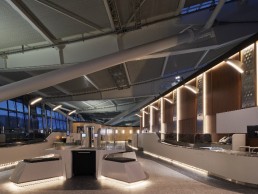
The definitive solution for the feature wall includes sections of slanting perforated metal, with back and front lighting, in this case LED Linear’s VarioLED Flex. Rhythms of timber sit between each panel, illuminated from the edges with warm white light, emphasising the rich tones of the wood. A specification of warm lighting was implemented in pursuance of enhancing the rich and luxuriant materials palette.
StudioFractal took Heathrow’s initial client aspirations and explored materials, texture, pattern, movement, tone and integrated lighting solutions to give the space levels of quality and tone more akin to a luxury hotel lobby than that of an airport.
This aesthetic wasn’t easy to achieve, according to Payne. “Airport security zones are inherently functional spaces where lighting must fulfil security objectives and facilitate the observation of passengers and luggage.
“To move away from a clinical environment and into a sophisticated ambience we developed a strong ‘material and texture palette’ alongside Pascall & Watson, to ensure materials would respond well to a variety of lighting techniques.
“To maintain a premium feel it was important to integrate the lighting within the architectural framework, we developed a number of simple lighting details to allow key materials to be illuminated from concealed lighting sources.”
Elsewhere, low-level illumination achieves a more intimate ambiance, in direct contrast to the high level treatments utilised throughout the rest of the terminal. This was perfected by clever integration of the lighting into the furniture and cladding details, and by developing sculptural wall-mounted elements that express the same material palette used throughout the space. This was partly due to the constraints of working within the terminal building’s existing framework as lighting needed to be coordinated amongst existing structural beams and proposed perimeter balustrades.
However, StudioFractal was able to develop a curved LED luminaire head with lighting from Kemps Architectural Lighting, mounted to the feature wall and to custom-made poles on the perimeter of the security zone. This served to provide the ambient lighting levels that they were looking for.
All luminaires and feature wall components required stringent DFT Aviation Security in Airport Development (ASIAD) compliance, and were specified through the airport’s second tier lighting suppliers. However, as Payne explained: “StudioFractal worked with Heathrow to ensure the challenges of designing within an aviation environment did not encroach on the sophistication of the finished first class portal.”
As such, the lighting designers explored a number of solutions in order to ensure that they achieved the right balance of form over function, safety over client experience – a constant challenge in an environment like this.
However, throughout its portfolio, StudioFractal has an extensive aviation experience, having worked on airports both in the UK and abroad, developing projects for the likes of Gatwick, Stansted, Dublin, Abu Dhabi, Vienna, Gabon, Riyadh and Indira Ghandi International Airport. The firm’s work on Heathrow’s Terminal 2A even saw them claim Public Project of the Year at the Lighting Design Awards in 2015.
This experience and prior knowledge no doubt served StudioFractal well throughout the new project at Heathrow. “Aviation projects naturally lean heavily towards highly engineered solutions, safety, sustainability and longevity, focusing on defining character and wayfinding,” said Payne.
“Whilst those things factored heavily in the First Direct Access, we had the added complexities of designing a luxury environment displaying warmth and elegance amongst the bright, expansive Terminal 5.”
Despite these complexities though, StudioFractal, alongside Pascall & Watson, have created a warm, relaxing, luxurious space for first class passengers.
And Payne believes that the collaboration between the client, Pascall & Watson, and StudioFractal, immensely helped in reaching such a successful outcome. “It’s of upmost importance to develop a clearly defined concept and strategy from the offset, with the client and the design team,” he said. “Though we’re obviously very proud of the project, we always measure our success in terms of feedback and we’ve had exceptional responses from users of the new area, the Heathrow client and the design team.”
Some such feedback came from Nitesh Naidoo, Project Director at Pascall & Watson, who said: “StudioFractal has been a valued, skilful and effective collaborator on the T5 BA First Wing project. Their input during the design phases has helped us realise a groundbreaking addition to the luxury facilities provided at Heathrow Airport.
“The StudioFractal team has been instrumental in the design and realisation of the feature lighting concept for the premium search facility.”
But while there has been plenty of praise for the design of the new facility, Payne believes that for a project to be a true success, it needs to stir emotions in its visitors.
“A successful design is not just about how an environment presents itself but how you feel amongst it,” he said. “The union of light and materials sets a sophisticated tone for the first class route, your focus is drawn to the human level, not to the vast space in which it sits.
“The contrast between cool and warm lighting adds to the experience of moving from a busy light terminal into the serene luxury zone. Through connecting small visual details to the main terminal the First Wing sits comfortably within it, yet it offers its own superlative experience.”
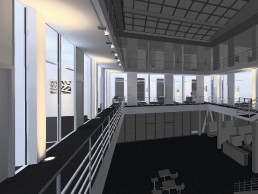
DIALux mobile app
The new DIALux mobile app makes it possible to design and plan lighting directly on site in interior spaces. In the latest version of the DIALux evo 8.0 lighting design software there are yet again many new features, which will simplify the designer’s work and speed up the workflow.
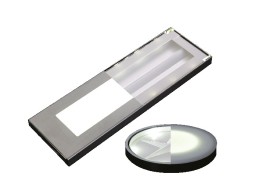
Furukawa MCPET
A lightweight reflector with unrivalled levels of diffuse and overall reflectivity, the MCPET is perfect for low glare, indirect lighting solutions. This lightweight reflector is easier to process and more rigid without backing. Custom created in either sheets, cut, folded or formed to customer requirements, this fitting provides complete surface homogeneity with more than 100% diffuse and overall reflectivity compared to BaSO4.
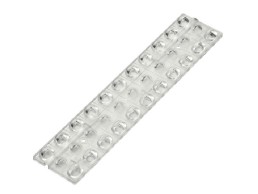
Tridonic Accessory Package Optics
The Tridonic portfolio has been expanded to include a complete accessory package of lenses with various beam characteristics. The lenses are suitable for all DC LLE 24mm modules and are easy to mount. For the three-row LLE 55mm modules, the company also provides the corresponding optics enabling various light distributions for applications in offices and shops. This accessory package supports luminaire manufacturers in developing luminaires in a quicker and more cost-optimised way. Thanks to the high-quality PMMA materials used in the manufacture of the lenses, they achieve optical efficiency of up to 95 percent.
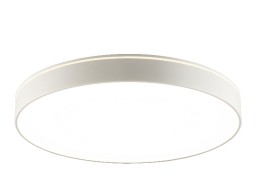
LTS Lunata
The discreet and elegant Lunata can be used as a ceiling, wall or pendant luminaire. It’s available in five different sizes and comes with the option of ceiling lighting, light effect ring or tunable white light. You can also choose from different luminaire colours and colour temperatures. The luminaire can therefore be individualised according to personal taste and tailored to suit the most diverse requirements and spatial conditions.
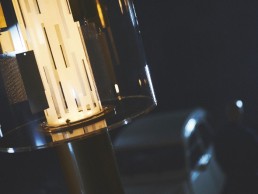
Fagerhult Devina
Devina combines a timeless design with scope for customisation to provide an exterior lighting solution, which not only illuminates but also creates an identity in public spaces. The perfectly symmetrical cylinder was developed according to the most enduring of design principles, the Golden Ratio. Each Devina has a distinct visual language, which speaks through the carefully curated composition of materials. Choose between the pre-defined styles or create your own expression with different textures or colours.

Tryka Module range
The 2018 family of Tryka Modules encompasses a full range of power options from 3W through to 48W, delivering a CRI >90 and efficacy of up to 100lm/W, this series of luminaires provides a suitable power/performance package to meet virtually any external and internal application. Designed and manufactured in the UK, all use powerful Cree XP-E2 LEDs coupled with high efficiency LEDiL lenses. This is combined with three or four channel customisable LED population, enabling Single Colour, RGB, RGBW, RGBA, Tuneable White or bespoke colour arrays.
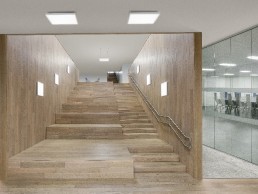
Glamox C95-W
The new square addition to the popular C95 family is finally here. Glamox C95-W is an elegant wall-mounted luminaire, in two neat sizes. The family is characterised by a clean, minimalistic design and fully illuminated surfaces. The edge lit technology allows for a slim profile and sleek design. Glamox C95-W is also available with integrated emergency lighting. C95-W is one of the many products we will present at Light + Building.
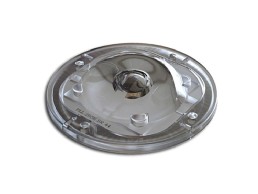
Khatod SIO3 Junior Lenses
Free form lenses, for COB LEDs, nine to 23mm LES, eight beam angles. Made of Ultra-Clear Silicone (LSR). Excellent transparency, high optical clarity, long term durability. No need for extra protection. Engineered for Street/High-Bay/Area Lighting, Outdoor/Indoor, SIO3 Junior Lenses are in great demand in horticulture, greenhouses and urban vertical farming applications. The lenses allow immediate switching from conventional lighting to SSL, and can be easily installed in existing fixtures. Temperature resistant from –40-degrees Celsius to 200-degrees Celsius, they are UV-resistant, with a non-yellowing effect, and designed to comply with IP65 and IK10 ratings.
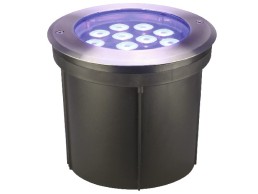
Studio Due Terra Plus
The Terra Plus family of In-Ground LED lighting has been designed for architectural and landscape applications. These powerful fixtures are suitable for the illumination of buildings, sculptures, pedestrian areas and gardens. The new range offers has optimised beam control and delivers exceptional lighting performance. All of the Terra family are easy to install, they are compact in size and conform to standard building regulations. Available in RGBW, Monochromatic, and Tuneable white, the Terra Plus family features very high lumen output, and motorised tilt adjustment of -2 to 10-degrees.