
[d]arc thoughts programme returns to Clerkenwell
(UK) – Highly regarded talks programme takes centre stage at Clerkenwell Design Week.
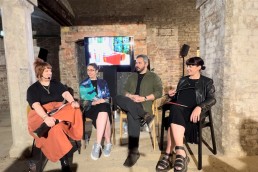
Curated by the editorial team behind darc media, the [d]arc thoughts talks programme returns to Clerkenwell Design Week (CDW) for 2024, bringing three days of lighting focused content to a wider design audience.
Taking place from 21-23 May, CDW is one of the leading design festivals in the world and features more than 600 showroom events, more than 11 curated exhibitions, striking installations, topical walks, design destinations, as well as a fringe programme and more.
Covering topics such as statement lighting; quiet luxury; and the future of hospitality design, [d]arc thoughts at CDW will also see the Green Light Alliance take a closer look at sustainable lighting – aiming to provide a ‘beginners guide’ for designers who might not work closely with lighting but are keen to learn more.
Speakers for 2024 will include lighting designers from Into Lighting; Nulty+; Michael Grubb Studio; and Equation Lighting Design, while interior designers, Dara Huang of DH Liberty and OIga Alexeeva of Black & Milk will join the panel discussion on quiet luxury.
A series of Q&A sessions will be held with the likes of Nigel Tresise, Director of Align Design and Architecture on understanding sustainable design; Anna Burles and Chris Trotman of Run for the Hills; and Samuel Edmonds of HLW will take a closer look at project work and design trends, while Holly Hallam of DesignLSM will discuss the future of hospitality.
Alongside the talks programme, the [d]arc media team will host an informal drinks party at Clerkenwell Prison as part of the wider late-night opening on Wednesday 22 May.
Then, on Thursday 23 May – in collaboration with Women in Lighting and representatives from the ILP’s new initiative Women Lighting Professionals, Women in Office Design, and Women in Architecture, [d]arc media will host a networking brunch held in Design Fields from 11am – 12pm.
Registration and more information on the [d]arc thoughts talks programme be found at: www.clerkenwelldesignweek.com


Charlie Bark-Jones
This year, the Workspace Design Show will showcase a diverse range of lighting exhibitors, ranging from Daisalux and Luxxbox's expert emergency lighting, Stoane's bespoke, statement pieces, to Synergy Creativ, which specialises in biophilic lighting, Reon’s unique wall lights, Erco’s flexible spotlights, right the way through to Ricoman's acoustic pendants. In short, we’re delighted that this year’s event really runs the gamut of commercial lighting.
We've seen a variety of lighting trends coming through this year. The emergence of sustainability as a priority in lighting will come as a surprise to no one. This year, however, it is evident there is a newfound enthusiasm for reusing products, hence the thinking behind the talk at this year’s show 'The new aesthetic of repair and re-use in lighting design: Why we need a mindset shift’. We’ve assembled an expert panel to discuss this, including Dan Lister, Associate Director, Lighting, Arup, Ruth Kelly Waskett, Project Director, Hoare Lea, Simon Fisher, Founder & Director with F Mark and Kristina Allison, Senior Lighting Designer at Atkins Global.
With the sector’s increased focus on contributing to reducing carbon emissions, lighting designers are and must increasingly be focussed on developing sustainable methods and long term solutions, ensuring products work to achieve energy-efficiency targets. Exhibitor Stoane Lighting, for example, is launching a new division called ‘ReNew’ which has been set up for just this purpose. Its products are designed so that they can easily be disassembled, have internal components replaced, upgraded and eventually parts recycled.
Our theme for this year’s Workspace Design Show theme for 2024 is ‘Bloom’, reflecting the huge increase in biophilic design in the built environment. In design terms, biophilia seeks to integrate elements of the natural world indoors, fostering a deeper connection to the natural world. This trend is exemplified by our exhibitor Synergy Creativ, which specialises in design lighting fixtures such as living walls. In this way, it incorporates greenery to promote this connection with nature, promoting wellbeing and productivity by cultivating a serene atmosphere that visually connects inhabitants with flora and fauna. We expect to see more and more biophilia-inspired lighting in the next few years as in other areas of interiors.
Statement lighting has long been an asset in the designer’s armoury. Unique and eye-catching lighting fixtures can take centre stage to wow workers back to the office – think dramatic atriums or areas where a big impact needs to be made – for example in town hall spaces or shared kitchens. Designers often focus on creating bespoke, statement pieces that not only provide illumination but also serve as artistic elements to elevate a space. Manchester-based Ricoman Lighting has created Flow Curved Linear Lighting', which allows for countless dramatic possibilities. This system consists of straight and curved basic modules, which can be combined in different ways to create unique lighting projects. The modules can also be configured to classic circular luminaires, rounded rectangles, continuous waves or even more abstract shapes. Providing even more possibilities, single or continuous luminaires can be suspended or mounted on ceilings and walls with the light directing downwards, inwards, outwards and also twisting, making this product range ideal for larger spaces as a theatrical, suspended architectural lighting configuration.
Lighting is also becoming more experiential with dynamic lighting effects such as colour gradients, motion sensors, and interactive elements able to create engaging and immersive experiences in both commercial and residential settings where the boundaries between light and art blur. Lighting fixtures can also serve as works of art themselves of course, featuring beautiful sculptural forms, and innovative use of materials to really bring out the brilliance in an interior. Lighting is also working harder than ever before with products having the ability to provide acoustic baffling or even sprinklers or M+E systems.
Human-centric lighting is also set to continue its rise in popularity into 2024. This concept involves designing lighting systems that mimic natural light patterns to positively impact human health and well-being. This includes adjusting colour temperatures throughout the day to support Circadian rhythms to suit people’s needs. At home, this means keeping the light out when you need to sleep and ensuring you let the light in when you need to wake up and stay energised. In commercial interiors, whether that’s a workplace or other commercial environment it could mean providing a range of lighting from brighter lights to warmer tones, depending on the time of day.
This fits in nicely with the idea of personalisation in lighting, another key trend set to continue. This not only includes overhead lighting but also the use of desk lamps, allowing individuals to customise the amount of light required on their individual workstations, as well as making an attractive addition to the physical desktop.
Lighting is a key product category for us here at Workspace Design Show and we look forward to visitors exploring the thriving ecosystem of work life, including lighting up offices in a multitude of ways.
Cantabrian Maritime Museum
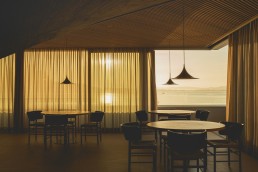
Architectural studio Zooco has transformed the hospitality venues inside the Cantabrian Maritime Museum, creating an elegantly simple destination that celebrates the building’s original architecture.
The Cantabrian Maritime Museum, Spain, was conceived as part of an architectural complex together with the Oceanographic Center, designed by Vicente Roig Forner and Ángel Hernández Morales and built between 1975 and 1978.
The original building consists of two square bodies connected by a canopy, with a concrete structure. The interior is distributed over three floors around a central courtyard covered by a vault of paraboloid membranes. In 2003, a renovation and extension was carried out, which included the extension of the west façade and the roof of the terrace with a pyramidal aluminium structure, thus altering the initial conception of the building.
Madrid-based architectural studio Zooco was brought on board initially to rectify issues of dampness in the roof and façade of the building. This later developed into the team designing and creating a new space of the museum on the second floor, which houses its restaurant and terrace.
When describing their involvement in the project, Miguel Crespo Picot and Javier Guzmán Benito, two of the three founders of Zooco, explained how fortunate they were that the client granted them complete freedom when it came to shaping the design of the restaurant.
“Throughout the duration of the project, the integrity of the design remained unaltered, preserving its originality and functionality without undergoing any changes.”
The geometric properties of the space helped define the approach to the restaurant’s interiors. The square morphology of the restaurant’s volume is the result of four additional triangles that regularise and complete the concrete paraboloids of the original building.
“The original building had a terrace on the third floor, where the concrete structure was completely outside and functioned as the roof of the museum’s central patio. In 2003 the building was renovated and within this intervention, the paraboloids were covered with a new roof and the space between them, and the perimeter of the building was closed with glass, generating a covered space where there was previously a terrace. From the outside, the original cover can no longer be seen, and from the inside it is covered by paint or coating,” explain the two founders.
“Our intervention focused on recovering the original essence of this significant construction element. To do this, the coating and paint were removed, and the inclined green glass was replaced with vertical transparent glass. In this way, the paraboloids appear in their pure state and a perimeter terrace is recovered along the entire space.
“The geometry of the existing structure conditions the space, because its height in its lower part is impractical, so a large bench was arranged around the entire contour that allowed us to take advantage of that space and organise the distribution of the rest of the floor plan.
“We wanted the concrete paraboloids to be the absolute protagonists of the space. To do this, we looked for a floor finish that was as neutral as possible, that adapted to the existing conditions and did not compete with the main element of the project.
“To enhance the original structure, we decided to use a wooden roof that framed the perimeter of the paraboloids. The wooden slats bring warmth and friendliness to the space, while allowing us to solve all the technical needs for air conditioning, heating, and lighting, leaving them hidden. In this way we ensured that all these elements did not interfere with the dialogue of concrete and wood, which were presented as continuous and clean elements.
“This geometry became a recovered element, a vestige of the past, and the protagonist of the restaurant’s interior. Treated as an artistic element, the triangular wooden false ceilings frame it.
The museum’s location also played a key role in the design strategy for Zooco. “We could say that it influences 100%,” says Guzmán Benito. “We are at the Cantabrian Maritime Museum, a museum dedicated to the sea, which is practically on top of the water. When we are inside, the feeling is the same as when we are inside a boat, there is only water around, and that is why we used clean glass from floor to ceiling, generating a perimeter terrace as if you were on a boat.”
“The use of wood and steel for all the furniture is reminiscent of the materials used in ship building,” continues Crespo Picot. “The wood is arranged in small boards just as it is used in the hulls of boats and the furniture has slight curvatures that are reminiscent of the aerodynamic shapes of boats. Likewise, the lamps are inspired by the masts for ship sails.
“The dialogue between the concrete container in grey tones, on the one hand, and the glass envelope that allows a total visual connection with the outside, generates great spatial harmony. Everything is completed and harmonised with all the oak wood furniture and stainless steel accessories.”
The role of decorative lighting was integral to achieving the minimalist aesthetic the team were working towards for the dining area. Along with fixtures from Arkoslight, Menu and Gubi, Zooco also created a custom piece called the MMC Lamp.
“The concept behind the design of the MMC lamps stemmed from a specific necessity – the quest for a lighting solution that seamlessly emerged from the table surface, eliminating the need to suspend it from paraboloids,” explains Crespo Picot. “This innovative approach aimed to preserve the integrity of the concrete structure, ensuring a harmonious blend of functionality and aesthetics. In addressing this challenge, the lamps were meticulously crafted to not only fulfil their illuminating purpose but also to become an integral part of the architectural composition.”
Discussing the various considerations for lighting placement, Guzmán Benito says: “First, in this luminous spectrum are the suspended fixtures, gracefully poised from the ceilings adorned with wooden slats. Second, the MMC Lamps that emerge from the table, and thirdly the recessed spotlights, which are strategically placed to illuminate pairs of tables, creating intimate pockets of radiance.
“[Decorative lighting is] as important as any main element of the design. The luminaires, in their varied forms, become not merely sources of light but protagonists in the narrative of design, illuminating not just spaces but also the nuanced interplay between permanence and flexibility, aesthetics and functionality.”
When asked how this project differed to others in Zooco’s portfolio, Guzmán Benito explains that the task of rehabilitating the existing concrete structure was a point of difference for them. “This challenge added layers of complexity to the process, requiring a meticulous approach to preserve and strengthen the structural integrity while undergoing rehabilitation.
“Zooco designs everything. Our philosophy consists of approaching any type of assignment, regardless of its scale, budget, and programme, with the same attitude and creative ambition. Applying the same process searching the most appropriate and valuable solution, both from an artistic and functional point of view.”
In Focus - Lysabel Lorenzo Truant intra lighting
Designer Lorenzo Traunt discusses his pendant light, Lysbel, for intra light.
What is the design concept behind Lysabel?
Lysabel was born as a straight line, hypothetically infinite, radiating its light 360°. The primal idea of Lysabel originated from the beautiful images of laser sabre battles in well-known science fiction movies. The whole project was illustrated through compelling images, reminiscent of the epic saga, with numerous characters wielding the lamp attached to the power cord. For example, the robotic multi-armed Grievous from Star Wars (who wielded four lasers) lent itself to being associated with the adjustable multi-armed Lysabel chandelier or the “en guard” position of one of the knights approaching the floor lamp.
The collection grew with the thought of light like a gash in the darkness, like a weapon to be wielded in a dark space to illuminate it, like a battle between opposing entities such as light and darkness.
How long have you been working on the collection?
The Lysabel collection was born in 2019 and developed over a few months with increasingly elaborate concept sketches and an initial 3D-engineered design equipped with all the essential components. In 2020, it was sent to Intra lighting, with the first prototypes unveiled in 2022.
What was the most challenging aspect of this project?
Managing the uniformity of light along the light rod. In my initial drawings, I identified both a 360° spread and a predominance of light on one side, without compensating for the opposite side. The hypothesis could only be checked in the prototyping phase, thanks to the photogoniometer provided by Intra. This device allowed us to assess optimal light diffusion with precise data, without bothering the view.
Another challenge involved designing the connection between the light rod and the power cord. The detail borrowed from the particulars of irons has been simplified and embellished. This detail personalises the lamp and makes it ready to become a horizontal, vertical or tilted element as desired.
What materials and design processes are used?
The basic materials are aluminium and acrylic glass (PMMA), both of which are 100% recyclable. The profile of the acrylic glass is obtained by an extrusion process that easily allows for varying lamp lengths and improves production by optimising it in terms of assembly time and production adjustment. High-quality LED strips can be cut to size, allowing for high production flexibility. The light sources have high-quality parwww.intra-lighting.comameters: Hi flux LED strip, CRI>90, MacAdam<2, and with a wide range of colour temperatures: 2700K, 3000K, 3500K, 4000K. The design process begins with imaginative assumptions. These ideas converge into thoughtful formal choices that undergo verification in the engineering and prototyping phase. Subsequently, they are further examined in the photometric results, utilising tools such as the photogoniometer. This meticulous approach aims to achieve optimal functionality and manageability.
What technologies are used?
The frosted opalescent acrylic glass tubes are extruded by calculating the exact coverage of the opalescent compound so that the light is diffused evenly without the bright dots of the LEDs being visible, but without the diffuser finish being able to cover too much of the light emission. The aluminum body, including the ball joint and all visible metal details, is offered with a choice of finishes: gold, onyx, and bronze in coated or brushed variants. The components are of high quality, and the ballast operates at 24V, maintaining a constant voltage. The light source consists of long flexible webbing that can be cut at will, carrying on board numerous LEDs juxtaposed one to the other and electrically connected.
Despite its slender appearance suggesting fragility, the collection is surprisingly resilient and manageable.
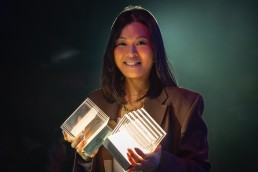
Artifact Bar wins big at [d]arc awards 2023
(UK) – LightOrigin Studio wins two [d]arc awards for lighting scheme.
Artifact, a speakeasy bar hidden within the basement of Hong Kong’s BaseHall Central, won the Places Low category before winning Best of the Best for receiving the most votes across the competition.
Inspired by its interior design’s theme of rhythmic patterns of underground cisterns, Light Origin’s lighting inspiration is drawn from the underground cisterns’ creating tranquil yet theatrical lighting atmosphere with ethereal ambience.
Find out more on LightOrigin’s Artifact project here: https://darcawards.com/portfolio/artifact-bar-hong-kong/
370 entries worldwide were submitted to this year’s awards with more than 11,000 votes cast. Before voting all entries were shortlisted by a team of lighting designers: Eugenia Cheng, LightOrigin Studio; Andrea Levratti, Lightera; Jenny Bland, Lightheory Studio; Pinar Onatm P.ERO Lighting Design; Nicolas Houel, l’Observatoire de la nuit; Sophya Acosta, Sophya Acosta Lighting Design Studio.
The 80s themed awards party hosted by darc media and creative partners Light Collective. 600 guests attended with 90% of which were designers.
The evening included neon inspired light art installations, 80s food and dress code, a retro video game arcade sponsored by Lutron, Alexy’s Revenge’ selfie spot provided by Unibox, and UV face paint.
The light art installations were provided by manufacturer sponsors who partnered with lighting design studios to design something inspiring, fun but sustainable within a £600 materials budget.
Into and Fibr8 took the award for best installation for their compilation tape inspired installation, ‘Now That’s What I Call Darc’, which used Fibr8’s Laser-Powered Fibre Optic Light Lines.
2023 [d]arc awards manufacturer partners and installation teams:
- Applelec and Nulty+ – “TM Tetris”
- Architectural FX and dpa lighting consultants – “Murder on the Dance Floor”
- Designed Architectural Lighting and Delta Lighting Design – “Blockbustetris”
- ELR and Equation – “Party Light Out”
- Fibr8 and Into Lighting – “Now That’s What I Call darc”
- Formalighting and Foster + Partners – “Saturday Night Live”
- Kingfisher Lighting and Arup – “Flicker of Fear”
- No Grey Area and Michael Grubb Studio – “Let’s Get Physical”
- Proled and Buro Happold – “Illuminated Dreamscapes”
- Rako Controls and Lighting Design Studio – “Top of the Crops”
- Radiant Architectural Lighting and BDP – “Pac Man”
- Signify and Cundall – “A Fruity Place to Dance”
- Thorn Lighting and Hoare Lea – ‘The darc 80s”
- Vivalyte and Light Bureau – “Voguelicious”
All category winners from the 2023 [d]arc awards included:
Places – High Budget: Chapel of Sound, China by Beijing Ning Field Lighting Design
Places – Low Budget: Artifact Bar, Hong Kong by LightOrigin Studio
Spaces – High: The Dark Line, Taiwan by Artec Studio
Spaces – Low: Bùnquers del Castell de la Trinitat, Spain by Atelier Medina Querini
Structures – High: Islamic Arts Biennale Jeddah, Saudi Arabia by Glare
Structures – Low: St Patrick’s Church, Ireland by Dark Source
Art – High: Inner Peace, UK by Foster + Partners
Art – Low: Reverberating Light, USA by lightexture
Art – Bespoke: Garlo I Chaise Longue, UK by Marina Garlo
Event: Amsterdam Light Festival Edition 12, Netherlands
Kit – Architectural Interior: Cometa Q4 by DGA
Kit – Architectural Exterior: Mini G-Cat by Stoane Lighting
Kit – Decorative: Array by Vibia
Kit – Technology: Laser-Powered Fibre Optic Light Lines by Fibr8
The [d]arc awards is supported by the International Association of Lighting Designers (IALD) and the Society of Light + Lighting (SLL). The awards are curated by Light Collective alongside darc media and will be celebrating its 10th anniversary at the 2024 awards.
Watch the full awards at www.youtube.com/[d]arcawards-liveatfabricnightclub
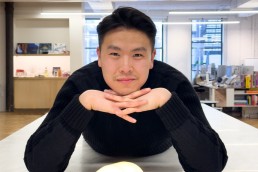
Steven Eshleman
Interior design studio AvroKO is not only well known for its stunning interior schemes, the firm also has a product design arm, which is led by Director of Industrial Design, Steven Eshleman. darc chats to the designer to find out more about his career at the New York studio, and his design approaches when it comes to creating light fixtures.
American interiors studio AvroKO is well known for some of the most beautiful hospitality projects spanning across the world. Established in 2001 by four close friends, Kristina O’Neal, Adam Farmerie, William Harris and Greg Bradshaw, the studio prides itself on four foundational values; create as a collective, work macro-to-micro, be hospitable, and think sideways.
“As we’ve grown as a firm, this idea of “connection” has extended beyond just the four of us, our studio, and even the end result of the work,” says the firm. “We orchestrate experiences that envelop patrons through a combination of design-driven programming and contextual references.
“This ultimate goal of connectivity in our design is to ensure that hospitality backdrops are not simply passive reception spaces where people dine or sleep, but that they create emotionally transcendent experiences, however tiny or even subliminal, allowing the energy of the spaces to shift and evolve timelessly.”
Along with delivering outstanding interior schemes for hotels, bars and restaurants, the studio also provides product design services.
“A big part of the design of our spaces is focused on the magic of custom lighting and furniture pieces, elements that often define the experience of a space. We pride ourselves on our passion for developing these custom furniture, case good and lighting components inhouse and turning them from visions into production pieces.”
To discover more about the product design arm of AvroKO, darc’s editor spoke with Steven Eshleman, Director of Industrial Design at the studio.
“I spent my formative years in Hong Kong, and subsequently in Toronto, Canada,” he tells darc. After high school, he obtained a bachelor’s degree in environmental studies at The New School university in New York, and a Bachelor of Arts degree in industrial and product design from Parsons School of Design.
Alongside his design career, Eshleman gives us a personal insight into his side line hobbies: “In recent years, I can admit that I’ve fostered an addiction to collecting and caring for unusual houseplants. At the same time, I’ve cultivated a budding interest in writing horror fiction on themes surrounding technology and climate change. Curiously, these hobbies are the functions of perceivable light and conceptual darkness.”
Perhaps this self-confessed interest in the dark side explains one of his intriguing original career aspirations, to work with the dead. “I don’t think I consciously desired a career in design, life moves fast, and I just leaned in; I do remember I wanted to be a mortician or to work in advertising. Early on, I was told I had a penchant for sketching, collaging, and anything that involved crafts. That led me to an arts education, which led me to an arts-focused university. After the first year in school, a professor urged me to major in 3D design based on what he observed of my work. From there, everything seemed to point towards industrial design.
“Before disbanding for higher education, I developed and capitalised on a quick-service food concept with a few schoolmates. In university, I interned for a fledgling pet product design company, and had another internship at a furniture and lighting design atelier. At one point, I had the opportunity to teach a college course by myself. Afterwards, I worked in sourcing and procurement for an eco-fashion start-up. My career could have very well ended up on any of those paths.”
Eshleman joined the AvroKO team in 2019 as Senior Furniture and Lighting Designer before progressing to Director of Furniture and Lighting in 2022, and now Director of Industrial Design in 2023.
“My current role is pretty novel at AvroKO in that it demands a multidisciplinary approach to the work, the mentorship of younger designers, and the conceptual pollination of future projects. The work is micro in scale but has macro impacts if not executed thoughtfully; the princess will feel the pea. On a typical day, I’m still involved in ideation, sketching, and 3D modelling just like any member of our furniture and lighting team. We take Hospitable Thinking very seriously for our clients as well as our staff; I emphasise a place of empathy and collaboration for my team so that they can be empowered to succeed in every project they tackle. Outside of client-based projects, we also wear various hats in product development for our own lines of furniture and lighting with collaborators and partners like Visual Comfort and Stellarworks.”
The concept of Hospitable Thinking referenced by Eshleman is a phrase coined by AvroKO that describes its philosophy to approaching projects. The studio describes it further: “AvroKO believes that hospitality transcends languages, industries, and borders, it’s a collection of small moments that can have a powerful, positive impact on how people feel. Human needs are universal. They transcend geography, race, religion, culture. They are wired into our very DNA, informing our decision-making and shaping our reactions to the world around us. They are few, finite, and classifiable, and have remained constant throughout history and human culture. By understanding and fulfilling these fundamental human needs, brands and businesses can resonate with consumers on a deeper, more profound level, resulting in a strategic approach that maintains relevance and longevity. It’s an approach we call Hospitable Thinking. We bring the philosophy of Hospitable Thinking to all of our projects in order to foster remarkable experiences and ultimately form more meaningful connections between people. This process integrates timeless core truths, behavioural sciences, and environmental psychology to maximise hospitality experiences.”
Looking more closely at Eshleman’s product design journey, he reflects on his design style over the years and how his various experiences and education have influenced this. “In my early career, I gravitated towards the mid-century modern, as many of us are guilty of. But in an effort to diversify, I’ve focused on the perennial aspects of design rather than a specific period or place. What makes a product or design alluring to a person apart from its period or place? This question allows us to focus more on form and design rather than a point in time that might fall out of fashion. Perenniality in creativity is identifying inspiration from the past just as well as works from today; it does not discriminate between Eastern or Western styles. This certainly has an influence on AvroKO interiors because our work cannot be defined by a particular era — let alone be replicable by others. What is old becomes new again can describe others’ works, while our designs live in the nostalgic tension between the old and the new.
“In product design, the light we work with is promethean and basic, but that doesn’t mean it’s easy or elemental. The conjuring of new light is heavily influenced by memories of past experiences. A new design for a sconce, for example, only emulates all the light that has ever been. When we describe our work, we often propose that a light fixture evokes a place, a time, or a snapshot. We ask questions like, “should the light be diffused and spray like shattered crystals up a column? Or should it peak and dance through reveals in an opaque shade?” Light itself is fickle and intangible in the most romantic way. It reminds us there is a past, and plants us squarely in the illuminating present.
“I have always been drawn to the works of H.R Giger, Carl Auböck and Eero Saarinen. All of their works remain steadfast and unflinching through grace and brutality; timeless in execution, skewering passing fads. Today, I’d say my inspirations can come from a concept or idea derived from tangible thematic research. I often find myself in decrepit flea markets flipping through books or trawling the recesses of strange Tumblr pages trying to draw connections from one idea to another.”
With reference to his first degree, he continues: “Environmental studies is a broad topic that encompasses everything from urban landscape design to cartography in the service of disaster research. At AvroKO, it has helped me to understand the macro-level impacts of the furniture and lighting industry. We promote a workflow where we encourage our clients and vendors to think globally but act locally. Not everything we design must be manufactured and sourced from oceans away, it’s up to our team to resource that homegrown industry given the renewed need for a repatriated supply chain. With that, I have always seen hospitality environments as the most eco-friendly way of experiencing good design; in the lifetime of a hotel, for example, thousands of people can experience a chair rather than the creation and delivery of thousands of chairs in as many homes. We can elevate the product through diligent material selections and design engineering, thus ensuring a longer product life; many of our works can be refinished or refurbished for a new life after the original project.”
In Eshleman’s experience, good lighting should above all be functional. “No one wants to be blinded by a phone camera in a restaurant with medieval light levels and miniscule menu fonts. Light imagines and maps memories onto space, whether the memories are filled with contentment or melancholy is entirely up to the guest and user. Through materiality and geometry, a simple point of light through tinted glass panes can be manipulated to evoke the green flash at the ocean’s horizon, for example. At its core, lighting reflects one’s histories, and those illuminating histories bring nostalgia.”
In order to balance aesthetic appeal with functionality, Eshleman and his team work through iterative sketching. “Yes, we can make it beautiful, but we can be thoughtful in the way it can be manufactured, assembled, and serviced too,” he explains. “If we see that the aesthetics or function of a product is eclipsing the other, then that is when we reorient. Many times, it’s a simple stroke of the pen or just omitting a detail to bring those aspects to a harmonious design.
“Good designers employ a blend of critical, conceptual, and technical thinking. It answers the “what,” “why,” and “how” through tangible designs and use cases. There is really no prescribed “good” product design, only if it solves a need; the need can be met with experiential and practical products.”
With regards to technological developments, he believes that technology is “simply a tool in our primitive hands”. “Tools can be helpful, or they can be abused. We designers have been using tools long before generative AI, and we will be creating long after our current arsenal of software becomes obsolete. I’d instead reframe the question to, “how do we empower designers to create their works without stripping them of their nuanced experiences and cultural context?” Perhaps the worst outcome is that we would fail to see the subtleties of organic design or the sophistication of the beholder. The best outcome? We keep designing.”
Walking us through the design process of creating a new decorative lighting product, Eshleman describes how he and his team are immersed into “three distinct conceptual pillars” from which they ideate. He continues: “The conceptual triumvirate informs us of the site, its relative history, as well as any associated muses as a contextual backdrop. From there, we research and unearth unexpected themes that we can incorporate into the larger story. We fold those findings into our hand sketches and ideations. For example, we reimagined the form of a proto-handloom from pre-modern Korea as details in a series of lighting for a new hotel in Chicago. When the schedule permits, we frequently prototype our designs for our clients and internally for quality control. All of this culminates into the delivery of an original product that is truly one-of-a-kind, with notes of the past and a foot into the future; AvroKO’s designs today are tomorrow’s coveted vintage finds.”
When it comes to the relationship between technical architectural lighting and decorative lighting in the world of interior design, Eshleman refers to the topic as somewhat controversial. “There seems to be two schools of thought, the architectural design perspective is prescribed to run in opposition to the visions of interior designers. Architectural lighting can create a sleek and modernist tableaux, but a liberal use of which creates a sense of coldness and frigidity. It’s up to interior and lighting designers, engineers included, to negotiate and identify the utility of the space in question. While we can all agree that programming for lighting is straightforward for boutique hotels or the healthcare space, it is the transitional and transformative spaces that need careful consideration. These require us to be cognizant of what the space is used for at different times of the day or night, and in changing social contexts. In short, it’s finding the optimal balance because nothing is as jarring as ghastly lighting temperatures in otherwise thoughtfully designed welcome spaces.”
Reflecting on one of the most significant moments in his career, Eshleman describes the moment he “professionally stepped into the Idlewild at JFK airport”, which has since been recast as a public space for the TWA hotel. “It remains the most reverent project that I have been a part of since I have family who are of Finnish descent. At parties, the topic is a tried-and-true icebreaker because chances are, someone had a layover or made the pilgrimage to the iconic site.”
Looking at design trends across products and interiors, Eshleman has seen a shift to “loose, relaxed, soft, and comforting” due to the “current atmosphere of stress reckoning”.
“Design trends reflect the attitudes of the entire creative ecosystem, which encompasses the industries with the most cultural influence, such as fashion and film. As a generalisation, the next generation of designers are inclined to foster a sense of protectiveness and soothing in their works, as opposed to the brash or restrictive. What this translates to is plush and enveloping furniture and lighting that is blushed and elemental, at its core, approachability, and a sense of tranquillity. I’m not sure where design is going next, but I think you need to look out a restaurant window, feel the sentiment of passersby, and eavesdrop on current issues.”
As for the future of AvroKO and the direction the studio is moving, Eshleman concludes: “There is much to be done in the realm of mindful hospitality and all the industries that it touches. Nothing is off the table because everything is some function or experience of conscious design. With that, do stay tuned for AvroKO’s forays into the product world with many collaborations ahead…”
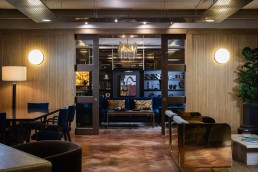
Matrix Office
Alex Dauley tells darc about her workspace scheme for Matrix Studio. Combining luxurious colours and furnishings, she has created a stunning and professional environment.
After two years of pandemic-induced remote work, the return to the workplace has left companies and their employees stuck at a crossroads. On one hand there is a positive attitude to the familiarity of routine and the welcome escape from home confinement, bringing back a natural rhythm to life. On the other hand, the comfort of our own abode is sorely missed when forced to work the nine to five in the same bland environment complete with squeaky swivel chairs and sterile lighting.
Matrix Studios, an office, studio, and co-working space, nestled in West London, is one of many companies changing their perspective of post-pandemic workspaces. Embracing the idea of being a “home away from home” Matrix has invested in its interior landscape to make employees and clients enjoy working in the space. Interior Designer Alex Dauley of Dauley Design was tasked with the ambitious endeavour to transform the space. Dauley, already having a longstanding relationship with the client, brought a wealth of expertise to the project with her knowledge of the company and working with many commercial projects since the pandemic.
“The office is used by two music industry companies, 2 Tone Entertainment and Stellar Songs. They are publishers and artist management. Their brand is very strong and the image they needed to project to their clients and artists informed the design direction. It needed to feel opulent, sophisticated, and professional yet relaxed,” says Dauley.
Previously the office was a stereotypical white box with little character, thankfully the client was open for a complete transformation, leaving Dauley with a blank canvas. Her design emerged from her observations of how the team worked and through thorough research of the client’s brief.
In response to the clients wishes to have a SoHo House inspired look, the design process unfolded with a nuanced approach aiming to establish sophisticated feel to it’s hospitality. Using a layered approach to textures and tone, Dauley designed a neutral backdrop using stone and wood, which were juxtaposed against bronze mirror, brass accents, and reflective surfaces. Each element was meticulously created not only for its visual appeal but also its practicality in conjuring the kind of productivity for a music company. The overarching aesthetic sought to strike a balance between opulence and fostering an atmosphere that will nurture creativity. Take for example, the chairs, upholstered in a vibrant blue velvet, injecting energy while blue can simultaneously bring peace and calmness.
Dauley explains: “This space was about creating a vibe, a space that allowed for creativity and entertainment, alongside the day to day running of the business. It had to function on several levels. Technically we had to soundproof the entire office so music could be played without causing too much disturbance. The space needed hot desks, a group meeting area, break out spaces, a private meeting room, bar, and stage for client performances. We fitted a lot into a small space.”
Alongside textured materials and warm metallics, the look is complete with ambient light such as Andrew Martin floor lamps positioned in the corners of the room, while Andrew Martin’s tubular chandelier takes centre stage from the ceiling. The wall lights are vintage and bought from Crystal Palace Antiques, washing the walls with a warm glow.
Dauley adds: “I wanted the space to feel like you were at home. The lighting was residential lighting placed into a corporate space. It needed to be softer and more tactile to create that ambience.”
According to Dauley, decorative lighting is one of the crucial components when achieving a dynamic look in workspace environments to add both comfort and luxury. She says: “The lighting played a huge role, again to help it move away from feeling too corporate. Layered ambient lighting, lamps, vintage wall lights and statement pieces added to the relaxed aesthetic and the mood could change depending on the lighting used.”
The shift in workspace design since the pandemic has been notable to Dauley, with most of her commercial projects requesting to move away from corporate looks and instead prioritising comfort. The reason for this is crystal clear to Dauley as she explains from her experience: “I think companies want to entice people back into the office environment and have realised the importance and benefit of creating a space people want to spend time in and that promotes wellbeing and happiness.”
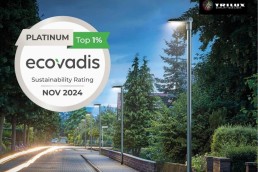
Trilux Achieves Platinum EcoVadis Rating
(UK) – A leading provider of professional lighting solutions, has been awarded the prestigious EcoVadis Platinum Rating for the company's commitment to sustainability, social responsibility and corporate ethics.
EcoVadis is one of the world's largest providers of sustainability ratings, evaluating companies across key areas, including environmental impact, labour and human rights, sustainable procurement, and ethical business practices. Achieving Platinum status places Trilux in the top 1% of all assessed companies.
"Sustainability is a central component of our corporate strategy," says Klaus Röwekamp, Senior Vice President of Sustainability, Products and Solutions at Trilux. "This platinum award is confirmation of our ongoing efforts to develop innovative lighting solutions that are not only energy-efficient and resource-conscious but also create real added value to society and the environment."
Further information on Trilux’s sustainability strategy and initiatives can be found at www.trilux.com/en/company/sustainability/

Lucent Lighting attains carbon-neutral status
UK) - Lucent Lighting attains carbon-neutral status for the 2025.
Underscoring its dedication to environmental sustainability by calculating and offsetting its total emissions, Lucent Lighting continues to lead the way in responsible business practices within the lighting industry.
Lucie Sidwell, Global Operations Director at Lucent Lighting says, “At Lucent Lighting, sustainability isn't just a goal; it's the essence of our innovation. We believe in crafting solutions that not only illuminate spaces but also light the way towards a greener, more responsible future. Achieving carbon-neutral status for another year is a testament to our unwavering commitment to environmental stewardship and underscores our belief that every light should leave a positive impact on the worldLucent Lighting commits to prioritising sustainable practices in product design by enlisting products through life cycle assessment (LCA), minimising environmental impacts and providing a comprehensive LCA report. This commitment aligns with their dedication to transparency and accountability in environmental efforts.
In line with circular design principles, it maximises the reuse, recycling, and upcycling of materials to ensure minimal waste generation. The company consistently strives for energy-efficient product designs, focusing on reducing energy consumption during manufacturing, usage, and end-of-life phases.
It's key initiative for designing products must include longevity, ease of repair, and maintenance. By extending the lifespan of their products, Lucent aims to reduce the need for premature replacements, contributing to a more sustainable approach to lighting solutions. Additionally, it continues to monitor the amount of electrical equipment placed on the market, actively working towards effective recovery solutions.
The company's environmental promises include a focus on resource consumption reduction and the efficient use of resources. Sustainability remains a focal point for the company, ensuring that environmental criteria are consistently integrated into the sourcing of goods and services.
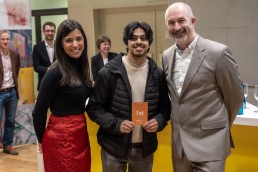
LIA strengthens commitment to emerging talent
UK) – Student Aaron Varghese Abraham wins Loughborough University design initiative.
150 students were tasked with a product design brief to create an exterior lighting product and to research different aspects of standards, regulations, existing products, and niche markets.
A panel of judges representing the Lighting Industry Association (LIA) and Holophane Europe assessed the submissions and selected a top three.
The winning design saw a genius solution of a lantern for use in the desert that uses UV rays to illuminate scorpions.
In second place, Oscar Warman designed a sustainable, solar-powered streetlight that encourages birds to nest, with a built-in area for them to do so.
Lauren Adam came third with a lamp that illuminates the fishing area and attracts carp while ensuring it was safe for wildlife and the environment.
The successful designers have been invited to attend the Spring LIA Technical Forum in April to present their product designs to key stakeholders in the industry. The opportunity cements them in the lighting industry and as members of the LIA, alongside networking and potential job opportunities.
Ayça Donaghy, LIA CEO, says: “This was a fantastic initiative, and I am grateful to everyone involved in making it such a success. The design work from all the students, and especially the winners, was so impressive. The lighting industry has a bright future if these talented individuals are an example of who may join the sector over the next few years.”
The LIA takes pride in supporting emerging talent and newcomers to the lighting industry. One of its flagship schemes is the Young Industry Group, part of its Talent Supply and Development strategy, which aims to empower and develop emerging talent in the lighting industry by providing opportunities for growth, leadership and learning.
This dynamic programme will help to tackle the challenges posed by an ageing workforce; that without a succession plan, as skilled workers retire there is a real risk of losing invaluable expertise. There are several initiatives currently underway to assist members of The LIA.
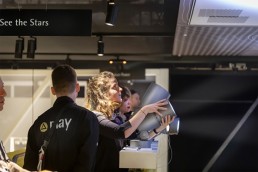
Light + Building Day Events Round Up
The biennial visit to the Light + Building never fails to deliver an electrifying mix of innovation, networking, and celebrations. Amidst the bustling crowds and displays from brands, we at arc eagerly dived into both seeing our familiar encounters and fresh connections. While the event may exude the opportunity to reunite with those old friends, our mission remained focussed on both work endeavours and discovering new insights. Below is a snapshot of what we got up over the few days.
DALI
Monday’s celebrations on the Dali Alliance stand included a special drinks reception to celebrate the victors in the Dali Lighting Awards 2024. Members of the winning teams were invited to raise a glass to their achievements with the DALI team, while being informally presented with a DALI Lighting Award trophy.
12 winners over eight categories were selected for their innovative application of DALI in lighting design and control.
Paul Drosihn, Dali Alliance General Manager says: “These projects demonstrate the outstanding results that can be achieved across the globe using DALI in lighting design and control, spanning a breadth of applications and sectors. It’s a fantastic testament to how the lighting industry has embraced DALI and is leveraging this technology to gain significant benefits.”
Silhouette Awards
The Silhouette Awards held an in-person celebration hosted by LED Luks on Tuesday, where young talents in the lighting were honoured. Inspirational talks were hosted by members from the co-founders of the programme, Katia Kolovea of Archifos and Stacey Westbrook of Parrot PR and Marketing, along with mentors and past winners of this remarkable initiative.
The pioneering awards, a collaboration between Parrot PR and Marketing and Archifos, aims to spotlight emerging talent in the lighting industry and provide support throughout their careers. This includes a platform to showcase new industry talent and a six-month mentorship programme with a senior lighting professional for the awardees.
VLDC
On the Wednesday afternoon, the Virtual Lighting Design Community (VLDC), held a get together with drinks, canapés, and baklava, on the Aero Lighting stand. Normally an online community, the get together gave current and potential members from around the world the opportunity to meet in person and catch-up face to face. VLDC founders Martin and Ingmar Klaasen, Amardeep Dugar, Katia Kolovea, Martin Lupton, and Sharon Stammers were all present and on-hand to answer any questions about the platform, and to talk about the benefits of joining the ever-expanding community of members.
Claudia Paz LEDC4 collaboration
Peruvian lighting designer Claudia Paz displayed a lighting installation in the Architectural Indoor and Outdoor product area. Paz provided visitors with a transformative experience to understand the impact of light on space perception and materials. Integration of a DMX system allowed individual control of each ‘Taglio di luce’, injecting dynamism into the space and creating an area where light sequences designed by Paz came to life.
Paz says: “We live in a digital world, where everything is in motion and constantly evolving. Lighting design merges with technology to move beyond the technical aspects and towards creating experiences and emotional connections with users. Where are we headed? Towards a digital world where light plays a crucial role.”
Erco Play
Erco offered an interactive stand this year that allowed visitors to experience sustainable lighting solutions in a fun game allowing visitors at the ERCOplay stations to test their lighting knowledge across five interactive stations:
At Station 1, participants turned into lighting directors on a miniature stage. Using the new Axis showcase lighting, a lighting concept based on the "3-point lighting" approach, had to be realised. Moving on to Station 2, the lenses of Optec spotlights were to be changed until the light was precisely aligned with the target surfaces. At the downlight station, the objective was to solve estimation questions, including about light distribution, with a quick tap on the buzzer. Station 4 was outdoor-themed: The teams were asked to practise aligning the Beamer spotlights. The 5th station, 'hands on' Invia, encouraged participants to experiment with ERCO's linear system to create their own lighting scenes including wall washing, ambient lighting, indirect and accent lighting.
After completion everyone who participated then entered a draw to win an Erco Light. However, everyone left a winner with knowledge on sustainable lighting and a delicious chocolate bar to boot.
Next edition of Light _+ Building set to be held 8-13 March 2026, Frankfurt.
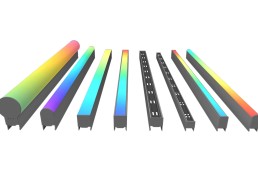
Fiberli - C-Line
C-Line’s Balanced High Voltage feature eliminates the need for electrical feedback cables in the field. This results in material savings but also accelerates project implementation by reducing assembly times. This innovative approach underscores the product’s commitment to resource efficiency and timely project execution. With its outstanding slim design and true color DMX feature, Fiberli C-Line is produced with 30% less material compared to its previous versions, aligning with the sustainability goals of our contemporary world.