
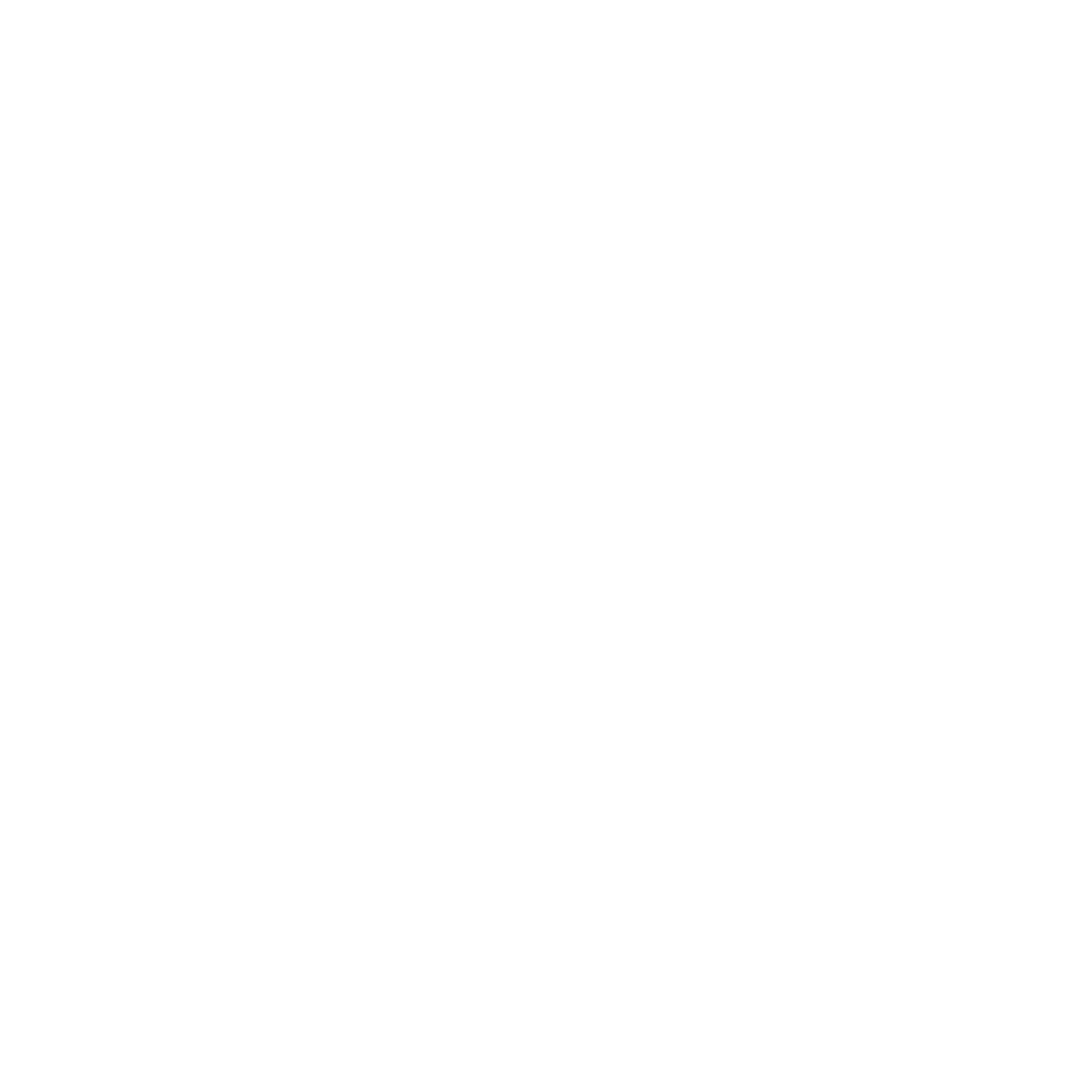
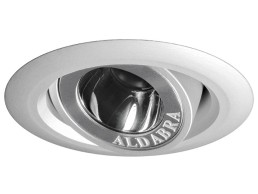
Aldabra Adhara
Adhara is a compact adjustable (±25°) recessed fixture, made of natural anodised aluminium. Fitted with specular hybrid optics (16° or 40°) characterised by high visual comfort or with diffusive screen, Adhara is available in monochromatic finishes (3,000K or 4,000K). Powered up to 500 mA, it uses highly efficient power LED light sources with an output ranging between 105-140lm/W. The product also has stainless steel springs included and a protection degree of IP40.

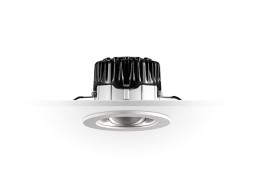
Targetti CCT LED Downlight (Mini / WW)
A compact recessed downlight that delivers a high performance and impressive wall wash solution for architectural lighting. The new wall wash optic is fitted with high efficacy LED sources to deliver up to 150lm/w for an energy-efficient light application. As a part of the CCT Led Downlight Mini Series range, the downlight is available in a variety of colour temperatures, CRIs and additional distributions. The series is constructed with first choice materials and components to meet high quality standards.
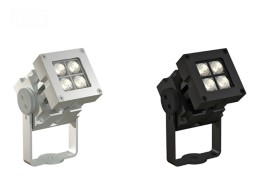
CLS Direct DMX Series
With the new series, CLS offers durability, ease of use and installation and maximum performance in a compact housing. With the DMX electronics and power supply integrated in the fixture, the luminaire is available in both normal and REVO Compact series as well as in IP67 and Rail versions. The fixture also offers white, single colour, RGBW, RGBA, AWB and tunable white versions. Dynamic Power Control (DPC) ensures 25% higher light output, while Dynamic Temperature Control (DTC) ensures optimal protection of the fixture in hot weather conditions.
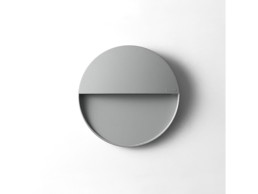
Unilamp ZOUK
Slim and surface-mounted, the ZOUK family is now available in a thin round shape. Thanks to the high output Samsung LED engine, ZOUK offers both low glare and high output. Manufactured from LM6 aluminium, the housing is built to last harsh climates. The double coating of polyester powder and nano-ceramic film ensures longevity. Built with the mindset of light comfort and soft visualisation, ZOUK has no visible glare. With a CRI > 80 and an offering of both 3,000k and 4,000k, ZOUK is also available in square and rectangular shapes.
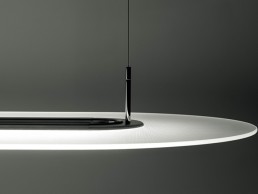
Linea Light OptiLight
OptiLight, a transparent polymethylmethacrylate (PMMA) panel distributes the light from a LED perimeter source in a homogeneous way thanks to its laser-engraved pattern: a soft, glare-free light providing total visual comfort. The Optilight technology allows high lighting performances whilst offering effective luminance control, a feature that makes the products fitted with Optilight the ideal solution for use in offices and workspaces where compliance with standard EN 12464-1 is required.
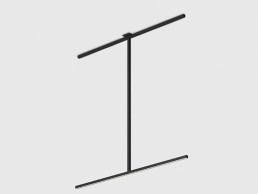
Kreon Fuga
Fuga is a pendant lighting fixture that creates an independent, autonomous form. With its slim profile dimensions and flexible product layout, a fascinating tension between the closed, ceiling mounted and pendant illuminated profiles is created. At the same time, a relational space develops between the object and architecture. The lower horizontal bar includes an LED-strip with diffuser for a homogenous light output. This bar can be repositioned to an offset position or in the middle of the vertical bar. The additional possibility to rotate the lower horizontal bar makes Fuga a dynamic pendant luminaire.
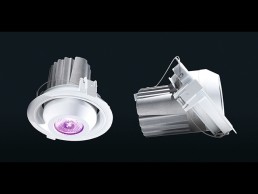
Acclaim Quad Eye
The Quad Eye is a high output, DC powered, colour-changing downlight. It features an adjustable head that rotates and pivots, an on-board DMX + RDM driver, and a single 10W CREE quad colour LED. With a power consumption of 17W, operating voltage of 24VDC and lumen maintenance of L70 at 150,000 hours (25º C), the product is available in a white (standard) and black (optional finish and has a die cast aluminium housing material. It weighs 1.75 lbs (0.8 kg) and measures 5.3” Dia x 4.35” L (135mm Dia x 110.6mm L).
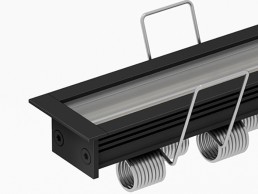
LED Linear LUNA
LUNA is a small linear luminaire for recessed applications that offers high modularity. With twelve different optics, it is suitable for various applications. Three lenses in 10°, 30° and 60°, and nine covers enable grazing light effects as well as soft light for general lighting. Equipped with powerful LED strips of up to 40 W/m the luminaire offers a high luminous flux of up to 4,300 lm/m. It is suitable for application in living rooms, museums, galleries, corridors, shops, hotels and offices.
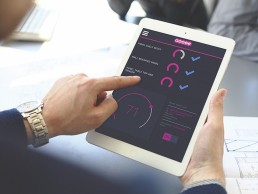
Gooee and Leedarson form alliance
(USA) - Strategic alliance enables parties to share knowledge of smart lighting technology, and develop smart hardware needed for ‘full-stack’ ecosystem to connect lighting OEMs to IoT.
Gooee, the enterprise Internet of Things (IoT) platform designed for the LED lighting sector, has signed a partnership agreement with Leedarson, the OEM/ODM contract manufacturer for lighting solutions.
The alliance will enable both parties to share knowledge and expertise in smart lighting technology, and develop the smart hardware needed for the world’s first ‘full-stack’ ecosystem to connect lighting OEMs to the IoT.
Eder Lee, General Manager at Leedarson commented: “We are excited to be working alongside Gooee in the development of connected lighting, especially as this is an area in which we are specialising in terms of research and manufacturing. To progress and succeed in this new generation of communication, we agree that working together and sharing knowledge and skills are essential.”
Jan Kemeling, Chief Commercial Officer at Gooee, added: “Gooee and Leedarson are each bringing their unique strengths to this collaboration that will enable us to develop the quality components and products required for our designs. Our partnership enables us to share knowledge and expertise in both LED and IoT technology that will lead to mutually advantageous opportunities and reach our end goal to making commercial buildings and homes smarter, greener and more energy efficient.”
Gooee provides a full suite of hardware and software components that lighting companies can integrate into their own products and connect them to the Gooee Cloud. The latter gives OEMs the ability to offer customers competitive cloud-based services, such as Lighting Control, Energy Management, LED Analytics and Beacon Management, across a multitude of vertical markets and through a scalable, service-oriented business model.
www.gooee.com
www.leedarson.com

GVA Lighting joins Philips Lighting's EnabLED Licensing Program
(Netherlands) - GVA joins other members to help accelerate adoption of energy efficient LED lighting.
Philips Lighting has announced that it signed a patent license agreement with GVA Lighting, a designer and manufacturer of LED lighting systems for architectural and commercial markets. The license provides GVA Lighting with full, worldwide access to a wide range of basic LED control, colour-mixing, and system-level technologies.
With the agreement, litigation between the companies related to the patents offered under the EnabLED Licensing Program for LED Luminaires and Retrofit Bulbs has been dismissed.
‘‘We are very pleased that GVA Lighting has joined our EnabLED Licensing Program and that the litigation has been dismissed. By utilising our wide range of LED lighting innovations, GVA Lighting will help accelerate the adoption of energy efficient LED lighting with the rest of the program members,’’ said Frank Bistervels, Vice President for Intellectual Property Licensing at Philips Lighting.
The license agreement with GVA Lighting follows earlier agreements between Philips Lighting and more than 700 lighting companies, including, amongst others, Chauvet, Colorbeam Co. Ltd. (Taiwan), iGuzzini, and Amerlux. Philips Lighting aims to accelerate market adoption and growth of LED-based products by offering its market-leading patented LED luminaire and retrofit bulb technologies.
Since 2008, EnabLED has encouraged innovation and fostered industry growth. The company has pioneered many of the key breakthroughs in lighting over the past 125 years and has led the development of the LED industry over the past 20 years. Few companies can match its level of R&D investment. Philips Lighting's LED patents include inventions such as warm dimming, high colour rendering white, tunable white, colour illumination and efficient light mixing and distribution.
www.ip.philips.com/licensing/enabled
www.gvalighting.com
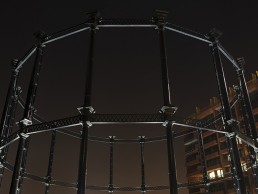
Gasholder No 8, UK
Located in London's King's Cross and winner of the Spaces High Budget category in this year's darc awards / architectural, Speirs + Major's lighting of Gasholder No 8 uses astronomy and the lunar calendar to highlight the iconic structure and the new public pocket park and event space found within.
Located in the northern residential quarter of London's new King’s Cross redevelopment, Gasholder No 8 is the largest of the iconic gasholders that once dominated the skyline in the area. This magnificent heritage structure has undergone a major offsite restoration and been repurposed as the frame to contain a new public pocket park and event space. Bell Phillips Architects added a mirror polished stainless steel canopy and a landscaped lawn to create a tranquil green space for use by local families and the children from the neighbouring school.
With a long standing involvement in the wider King’s Cross regeneration, lighting designers Speirs + Major were engaged to ensure that the new ‘Gasholder Park’ would be as attractive and as usable by night as it is by day.
The lighting is designed to ensure that park users feel safe and secure as natural light fades, but also to make the most of the uniquely juxtaposing materiality and forms of the new park. The circular layout led to the idea of using light to create both a beautiful night-time landmark and an enlivening immersive experience inspired by the idea of a solar eclipse.
In an eclipse, the form of the moon is revealed by a soft corona of light, which shifts in intensity and position as the sun and moon move relative to each other. Within the park, each of the canopy uprights are uplit with cool white light on the inside using a very narrow beam that enforces the architectural rhythm. This light reaches the interior of the canopy and is reflected back onto the path, creating a glowing ‘corona effect’ that highlights the circular form and creates a sense of enclosure.
The historic gasholder frame itself is uplit with cool white light from the inside. The resulting silhouette is not only highly legible from a distance but also creates the illusion that the light is emanating from the corona generated by the interior canopy. This reinforces the sense of enclosure, marking the park out as a truly special place to be.
As with a solar eclipse, much of the beauty of the experience lies in how the light animates the form as it moves. The pavilion lighting is programmed over twenty minute cycles, beginning with all lights on and cross fading from east to west over three minutes, followed by a pause of two minutes in darkness (full eclipse) and then a slow east to west cross fade back up to full brightness. This creates fabulous shifts in the shadows and inter-reflections from the polished surfaces, gently animating both park and users.
The management of the lighting program is based on an astronomical time clock, with the timing of the light cycles also changing in accordance with the lunar calendar.
The light scheme is completed with warm white lighting to the steps and ramps neatly integrated into the handrails to ensure the safety of all visitors to the park and to integrate into the wider public realm.
Pic: Courtesy of Speirs + Major
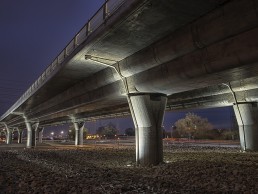
Spillepengen, Sweden
Designed by Johan Moritz, the lighting scheme of Malmö's Spillepengen interchange, darc awards / architectural winner of the Structures Low Budget category, is both understated and sophisticated, while improving the safety of its pedestrian and cycling tunnel.
Located in Malmö, Sweden, the Spillepengen interchange project was a collaboration between the Swedish Transport Administration and the Municipality of Malmö. The project's aim was to solve the traffic conflict between the roundabout in one of nine European transport routes that connects Scandinavia with Europe via the port of Malmö with one of Malmö's major commuter routes. The solution was to lift commuter traffic with a bridge over the roundabout in a so-called ‘fly over’.
Commencing in 2009, with construction starting in spring 2014, the interchange was finally inaugurated on 1 December 2015 when the bridge was opened for traffic.
The project's task was to find ‘the key to North Harbour’ and the solution became a ‘gateway to Europe’. The construction form was decided to be a turn-key contract, but the lighting design was strongly controlled by the client.
Originally, the bridge had a simple illumination that provided an interesting light image of the bridge. Bronze street lights could be seen as a string of pearls, creating a safe cycle route for the commuting cyclists through the interchange.
Designed by the City of Malmö’s official lighting designer Johan Moritz, the new lighting scheme involved retaining the masts and strengthening lights to create a backlight of the area. The alternative was to take down the masts and have the traditional street lights around the circle.
“The place had an unclear identity. Commuter traffic did not know where the city began,’’ explained Moritz. ‘‘Traffic to and from the port didn't know if it was in Malmö or outside the city. Seeing as the port is part of the city it was important to use lighting in a way that would strengthen the identity and the orientation of the area as a whole.’’
Approaching the city from the inner ring road defines its ending and then connects to the beyond. The team wanted to signal from a long distance the significance of the interchange for all users. So the bridge piers have been illuminated from below to begin a common method used for bridges along the inner ring road.
Initially, white and other colours were suggested for the illumination, with warm white streetlights on the bridge selected to create the same feeling of a string of pearls. “We lowered the lighting height of the bridge to eight-metres and slightly reduced the distance between lighting points,’’ explained Moritz.
Street lights on the bridge also shed light on the ground between the bridges with their warm white lighting.
The scheme also helped to strengthen the safety aspect by enhancing lighting inside the pedestrian and bicycle tunnels with the completion of targeted ground lighting on their respective wing walls.
For the selection of light sources and luminaires in the project, priority has been given to the selection of environmentally friendly materials. Therefore, there is a mixture of traditional light sources and solutions with LED.
“For many international commuters to and from Europe, Interchange Spillepengen is the only iconic view that is accessible. By using simple yet effective lighting methods we were able to appeal to many users and create a more coherent sense of place,’’ concluded Moritz.
Pic: Lars Bendroth
