


Keynote speaker announced for inaugural Tech-X conference
(UK) – The Lighting Industry Association (LIA) has announced that Ricky Nuttall will be the keynote speaker for its inaugural Tech-X: Technical Excellence Conference, taking place on Wednesday 10 September at Convene, 133 Houndsditch, London.
A former firefighter, mental health advocate, award-nominated screenwriter, and published poet, Nuttall is best known for his courageous service during the Grenfell Tower fire, and his powerful advocacy work around trauma, PTSD, and recovery. His keynote will offer a compelling and human-centred perspective to open a day that the LIA hopes will offer deep technical insight and sector-wide collaboration.
Tech-X is a brand-new conference built entirely around feedback from the lighting industry; it is intended to bring together lighting professionals, designers, engineers, manufacturers, regulators and policy leaders for a full day of dialogue and discovery across three dedicated stages.
The Main Stage – Tech Talks Arena, will focus on standards, compliance, regulation and sustainability, including major updates to IEC 60598 and 61347, plus insights on CE/UKCA, BREEAM V7, and more.
The Lighting Design Stage will explore innovation, inclusive design, AI, neurodiversity, Part L, and the future of lighting for people and place. Finally, the Connected Lighting Stage will provide a deep dive into smart systems, cyber resilience, hybrid integration, residential tech trends, and data-driven value creation.
In addition to Nuttall’s keynote, Tech-X will feature a high-profile line-up of expert speakers from LightingEurope, CIBSE, OPSS, BSI, and beyond. Key topics will include: single lighting regulation and market surveillance; batteries in luminaires and sustainability; circularity, remanufacturing, and transparent supply chains; lighting controls, data integration, and digital innovation.
“This conference isn’t just about technical updates,” says Ayça Donaghy, CEO of the LIA. “It’s about understanding what’s changing, asking better questions of how we design and deliver, and remembering the people affected by the choices we make. Ricky Nuttall brings a perspective that helps us hold on to that – the human side of progress.”
Tech-X 2025 is open to all, but with limited places available the LIA strongly recommends early booking. More information on how to register can be found here.
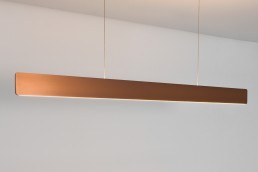
Neko Lighting - Space 07
Defined by its ultra-slim 7mm light-emitting surface and refined electroplated finish, Space 07 is as much a design statement as it is a luminaire. Its minimalist form brings quiet elegance to any space, casting soft upward glow through an opal diffusor (110°) and precise downward light via a prismatic diffusor (80°). Balanced, understated, and beautifully defined.
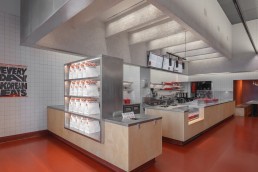
Sopo, New York, USA
In the heart of New York’s Garment Center Historic District, a new fast-casual spot called Sopo offers a space of calm amid chaos. The restaurant serves everyday Korean fare with efficiency and flair – an ethos echoed in its precisely crafted interior. Designed by Brooklyn- and Los Angeles-based architecture studio Model Practice, the 900sqft space occupies the ground floor of the 1924 Arsenal Building, originally designed by Ely Jacques Kahn.
Model Practice took an editorial, restrained approach to the design. “We embraced the concept that a utilitarian loft factory's architecture, like the Arsenal Building, needn't be mundane,” says Christopher Lee, partner at Model Practice. At the centre of the concept is light – specifically, a thoughtful system of luminaires from architectural lighting manufacturer Coronet LED.
Albeit small, the space had soaring ceilings. Lee and fellow partner Minyoung Song leaned into this verticality with a suspended volume inspired by the Korean dosirak, a compartmentalised lunch box. “Sopo means ‘small parcel’ in Korean,” says Lee. “The client wanted the space to feel like an escape from the chaos of Seventh Avenue – one that elicited the same joy you’d get from opening a package. The dosirak metaphor felt like a natural fit.”
The pair created a floating “box” that hovers above the front-of-house area, its form reinforcing the logic of the space below while discreetly concealing access panels, speakers, and fire sprinklers above. Acoustic baffles span the length of the box, running perpendicular to the service line below to create visual compartments.
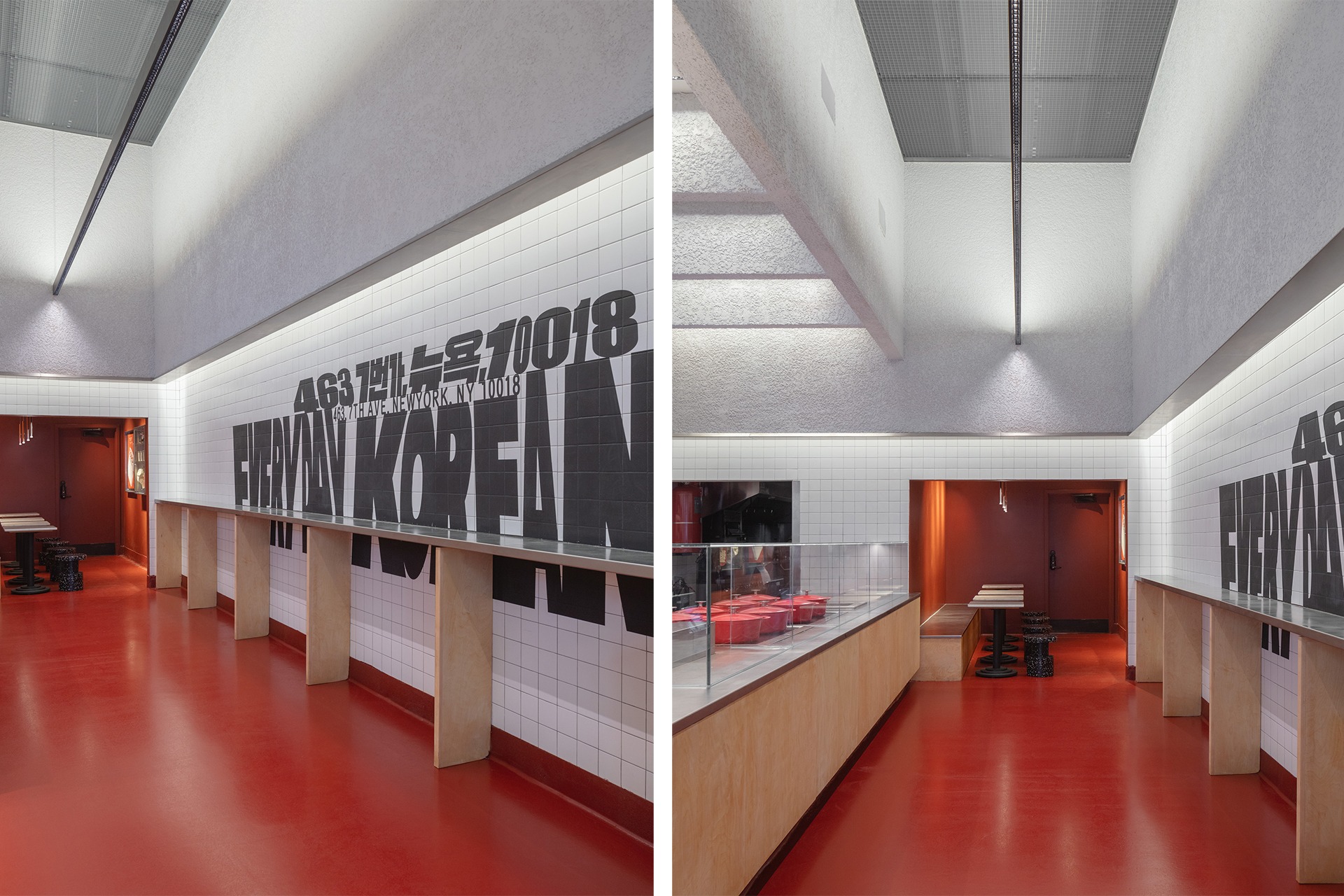
Lighting was key to the execution. Inside the box, Coronet’s Rush Sharp fixture casts a soft, even wash that defines the individual compartments and highlights the texture of the acoustic plaster that coats the volume’s interior. Meanwhile, the reflective surface on the box’s exterior catches light from adjacent fixtures, drawing attention to the form without overpowering the compact space.
Lighting was also leveraged to choreograph circulation through the restaurant. A 28ft long LS1 Sharp fixture from Coronet’s flagship LS Series runs parallel to the service line, drawing guests in the door and through the space. Specified with both uplighting and downlighting, the suspended luminaire draws more attention to the chapel-like ceilings. A tailored louver and optical system minimises glare and offers precise control over beam spread, ensuring a comfortable environment for customers.
Around the restaurant’s perimeter, the LS3 – another member of Coronet’s Declare-listed LS Series – adds dimension to the white-tiled walls. Slightly heftier in profile than the LS1, this linear fixture creates a soft perimeter halo. Its placement helps distinguish the compact service area from the quieter dining nook tucked in the rear, all without interrupting the openness of the floor plan.
That quiet integration was intentional. Aside from the LS1 Sharp, which boasts an ultra-slim profile, Coronet’s fixtures are concealed – tucked into the ceiling or integrated within architectural elements. The LS3 and Rush Sharp luminaires are completely hidden, casting soft, indirect light that gently defines the space without visual distraction.
To meet both performance goals and energy requirements, Model Practice collaborated closely with Coronet to specify precise light outputs across all fixtures. The manufacturer’s control-agnostic infrastructure made it easy to pair the system with manual dimmers, allowing staff to adjust brightness throughout the day.
As is often the case in hospitality design, expedience was a priority. Beyond aesthetics, Coronet’s flexibility proved essential to the project’s fast-paced timeline, allowing Model Practice to execute their vision without compromising the schedule.
The result is a finely tuned space where every detail, down to the beam angle, contributes to a larger architectural story – offering diners a brief but beautiful pause from the rush outside.
Project Credits
Architect: Model Practice
Builder: Stonegate Build
Environmental Graphics: Spreadworks
Brand Identity: Ordinary People
Photography: Naho Kubota
Lighting Manufacturer: Coronet
Client: Sopo
Hotel Indigo, Malaysia
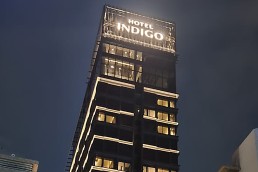
Hotel Indigo Kuala Lumpur on the Park, is a striking 26-storey boutique hotel transformed from a 13-storey office building in a culturally diverse area of Kuala Lumpur. The hotel's architecture masterfully blends modern design with local heritage. Its extensive use of glass and black-framed windows creates a contemporary charm and floating illusion, enhancing the city's skyline. This design not only offers panoramic city views but also elevates the hotel's modern aesthetic and overall visual impact.
This project was led by renowned architectural firm: Nexus Idea Consultancy, and received the "Best Architecture Design" award at the 2024 Asia Architecture Design Awards. The stunning façade lighting was expertly designed by Lumino.
The hotel's exterior façade is elegantly illuminated by SR Contour Light LM06, creating a stunning visual effect that highlights the building's architectural features after dark. This sophisticated lighting solution provides a uniform, continuous line of light that accentuates the modern design elements while ensuring energy efficiency.
The LM06 Contour Lights are strategically installed along the building's key architectural lines, emphasising geometric patterns and creating depth through controlled light and shadow. The system's precise beam control minimises light pollution, while maximising aesthetic impact while highlighting the building's height and structural rhythm. With its IP67 rating, the Contour Light performs reliably in Kuala Lumpur's tropical climate, withstanding heavy rainfall and high humidity. The lighting system's colour temperature complements the building's façade materials while providing optimal visibility and creating an inviting atmosphere for guests and passersby.
With the SR Contour Light LM06 selected to illuminate the exterior of Hotel Indigo Kuala Lumpur, the lighting not only enhances the hotel's striking visual identity but also embodies a thoughtful balance of aesthetics, performance, and sustainability – an inspiring example of how light can transform design into an unforgettable experience.

L’Observatoire International opens London Office
(UK) – L’Observatoire International has announced that it is opening a new office in London, marking a significant expansion for the studio, reinforcing its presence across global creative capitals.
Founded by Hervé Descottes, the London office will join the firm’s studios in New York, Paris, and Seoul.
As a studio rooted in the believe that light shapes experience, L’Observatoire International’s expansion into the UK reflects a continued commitment to collaboration, innovation, and excellence in architectural lighting deisgn. With a growing portfolio of work across the UK and Europe, the London office is a natural next step in the evolution of the practice.
Hervé Descottes says: “Opening an office in London is both a strategic and symbolic step for L’Observatoire International. It is an opportunity to solidify our presence more within Europe but also to ensure we keep working truly internationally. Since then, we have worked on many notable projects, from museums such as the National Gallery, fabulous retail projects such as Selfridges and Harrods façade, and many hospitality and residential projects, including Claridge’s, the Connaught, The Emory, and many more. Establishing a permanent presence here now feels especially meaningful. London, with its strong connections and rich history in design, is a natural position for us to base our team, for L'Observatoire International and our global journey.”
The new office will be led by Leah Xandora, Project Director. Xandora brings nearly a decade of experience with L’Observatoire International, leading landmark projects with a thoughtful, precise, and sensitive approach to light.
Xandora adds: “Having a dedicated team in London allows us to be more closely engaged with the projects and exciting work taking place in the UK, Europe and the Middle East. It’s a valuable opportunity to strengthen our relationships with collaborators from another global position, both internationally and UK-based. While our team has had the experience in working 'internationally' with these regions, the importance of a strong locality and on-site engagement with a project cannot be underestimated; a most notable example being our work on the refurbishment of the Sainsbury Wing at the National Gallery – a project that embodies the kind of architectural dialogue and cultural collaboration we’re excited to continue from our new London base.”
Organic Lighting expands UK presence with new distribution partners
(USA / UK) - Organic Lighting has secured major sales representation across the United Kingdom. The expansion comes through new partnerships with Aestivo and Chroma Lighting.
The move marks a significant step in Organic Lighting’s international expansion strategy and ensures tailored, region-specific support for architects, lighting designers, and building contractors seeking integrated lighting solutions that combine smartly engineered lighting solutions that are easily maintainable with visual elegance.
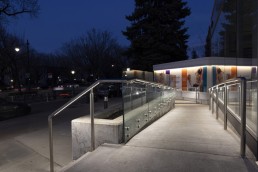
Aestivo will act as the exclusive representative across Great Britain. Steadily building a reputation for their design-led, consultative approach to architectural lighting, the company works with lighting designers and architects in hospitality, retail and commercial spaces, as well as landscape architects and building contractors. Organic Lighting’s unique flood-proof, drive-over inground lighting and illuminated handrail systems are a key addition to Aestivo’s growing portfolio of design- and performance-led lighting solutions from brands across the world.
“Organic Lighting’s solutions bring a level of durability, customisation and ingenuity that fits perfectly with the types of projects we support,” says Greg Russell, Director at Aestivo. “We’re always looking for manufacturers who share our commitment to quality, reliability and creativity. Organic Lighting ticks all three boxes.”
In Northern Ireland, Organic Lighting will be represented by Chroma Lighting, a highly respected lighting supplier and consultancy that partners with the region’s leading architects, electrical engineers and contractors. Based in Belfast, Chroma Lighting has earned a strong reputation for often guiding technically demanding lighting projects from concept through to delivery.
“From outdoor public realm regeneration to high-spec commercial interiors, we pride ourselves on delivering lighting schemes that are both practical and expressive,” says Lloyd Crawford, Director at Chroma Lighting. “Organic Lighting’s solutions will slot very neatly into the kind of creative designs and functional projects developed by our clients.”
For Organic Lighting, the agreements mark the culmination of a targeted effort to build a foundation of local expertise within the UK market.
“Having trusted and knowledgeable partners on the ground is key to delivering the level of service we’re known for in North America,” adds Jonathan Cocking at Organic Lighting managing international sales. “Partnering with Aestivo and Chroma Lighting as partners, we can now deliver comprehensive UK-wide service and support to every customer.
First speakers for Circular Lighting Live revealed
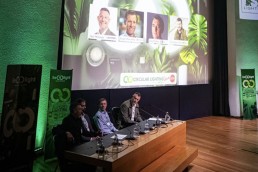
(UK) - The first tranche of speakers for Circular Lighting Live 2025 have been revealed. Organised by Recolight and taking place on 25 September 2025 at The Minster Building, London, this year’s conference will once again bring together the brightest minds and most impactful voices from across the lighting industry.
With more speakers to be announced in the coming weeks, this first release already promises a compelling and insightful programme for professionals across the sector.
Eight Curated Sessions to Drive Industry Transformation
- Climate-Driven Design: Insight from Asela Rodrigo and Hamish Angus McAndrew on sustainability practices adapted from Mount Everest expeditions.
- The Regulatory Roadmap: A forward-looking session with Teresa Selvaggio of LightingEurope, outlining the complex web of incoming UK and EU policies shaping the future of lighting design and manufacturing.
- Smart Remanufacturing: Featuring Thorlux Lighting’s retrofit of Aston University Library, cutting carbon and enhancing functionality through intelligent upgrade strategies.
- Managing Metrics: From TM66 updates to Environmental Product Declarations (EPDs), this session includes Recolight’s Max Robson on practical specification using robust environmental data. TM66 co-author Kristina Allison updates on the development TM66 and what to expect in Version 1
- Creative Cat A: Paul Beale of 18 Degrees presents a radical rethink of office fit-out lighting through rental and reuse models, supported by a documentary showcasing early pilot projects.
- Innovations in Circularity: Examining pioneering materials and product concepts Sylvania Group regional director Gareth Petley explores the OptiClip, its development, application and unique properties.
- Closing the Loop: Insights from SAS International business development manager Tim Phillpot, on developing a viable market for reclaimed and remanufactured ceiling tiles – a model that offers lessons for the wider built environment.
- Pioneering Projects: Benz Roos of Speirs Major Light Architecture shares experience from relighting Utrecht’s Dom Tower using reused luminaires, navigating optical and design challenges.
New for 2025 are ‘Just One Thing’ micro-presentations: short, punchy case studies showcasing real-world circular success stories. And a Moonshot Panel, which will challenge conventional thinking and propose bold, industry-shaping ideas.
Complementing these formats is a much larger exhibition space, allowing for hands-on interaction with the latest sustainable lighting solutions from leading brands. From materials and controls to components and complete luminaires, the showcase provides a uniquely focused, single-day opportunity to see and compare the best in sustainable design.
Tickets are free for independent fee-based lighting designers, architects, consulting engineers, and end-users. For other attendees, early bird rates are available until 31 July.
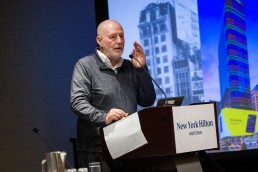
LEDucation 2026 Speaker Submission Opens
(USA) – The call for speakers at next year’s LEDucation conference, taking place on 14-15 Apil at the New York Hilton Midtown in New York City, is now open.
LEDucation is renowned for its dynamic presentations, lively panel discussions, and compelling case studies that dive into the most pressing and emerging issues in the lighting industry. The conference highlights groundbreaking technologies, the latest regulatory updates, key industry challenges, and exciting new lighting trends. All sessions are AIA CES-approved, with many offering AIA HSW credits – making it a must-attend event for professionals eager to stay at the forefront of lighting innovation.
“As the lighting industry navigates rapid advancements, shifting regulations, and ongoing challenges, we’re more inspired than ever to hear from thought leaders who are driving progress and developing strategic solutions. We look forward to fresh perspectives, forward-thinking ideas, and impactful topics to offer our attendees. Expertise is essential to guiding the future of lighting, and we are excited to see the 2026 proposals that come in,” state LEDucation Presentations Committee co-chairs, Wendy Kaplan, Kelvix; Craig Fox, ETC; and Shaun Fillion, RAB/NYSID.
Speaker submissions require a detailed abstract and four (4) clear and measurable learning objectives for proposed sessions.
LEDucation is seeking presentations on the following topics:
- Sustainability and material transparency
- Codes and compliance issues
- Lighting for health and wellbeing
- Lighting design tools, communication, metrics, and methodologies
- The business of lighting in different market sectors
- Emerging LED, OLED, and controls technologies
- Case studies of lighting design applications.
- Lighting design and specification topics.
Proposals are welcome from speakers representing a diverse range of backgrounds reflecting the broad array of industry insights. Proposals will not be accepted from marketing companies, third-party entities, life coaches, or business coaches. Keynote speakers will not be considered.
Presentation proposals must be submitted by 15 September, 2025. Complete guidelines, requirements and application information can be found on the LEDucation website, along with past presentations, for reference.
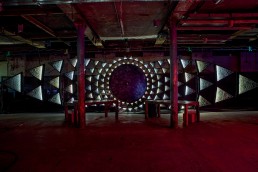
International Year of Light: 10 Years Later...
10 years ago, UNESCO launched the International Year of Light and Light-based Technologies - a year-long celebration of light and its impact on human society, that spawned a number of lighting events, including the very first [d]arc awards. 10 years later, we look back on its impact and its legacy.
In 2015, something extraordinary happened. Under the patronage of UNESCO and adopted by the United Nations, the International Year of Light and Light-based Technologies (IYL 2015) launched a global celebration of light – its science, its applications, and its profound importance to human society. What started as a science-led initiative quickly evolved into something broader and more inclusive, thanks to the passion and persistence of the lighting design community, and the support of UNESCO. Ten years later, as arc magazine celebrates the newest winners of the [d]arc awards – a programme born from that very same momentum – we pause to reflect on how IYL 2015 changed the course of lighting design history.
The Origins
The first idea for an International Year of Light dates back to 2009, when IYL 2015 Steering Committee Chair John Dudley proposed the ideal while representing the Quantum Electronics and Optics Division (QEOD) of the European Physical Society (EPS) at a meeting of the International Council of Quantum Electronics (ICQE) in Baltimore, USA. An item that was discussed at this meeting was how to follow up activities that were planned to celebrate the 50th anniversary of the laser in 2010 with something even more ambitious. The photonics community felt that there was an opportunity to reach out beyond the scientific sector to raise much broader awareness of the problem-solving potential of light-based science in so many areas of life, and to make a global effort to influence education and policy in both developed and developing countries. The proposal was endorsed by ICQE, which then began the path towards IYL 2015.
International Years are part of the United Nations declared observances, designed to promote awareness of issues relevant to its aims and international programmes. The first step to successfully achieve the proclamation of the International Year is to work through UNESCO to prepare and submit a resolution to the UN General Assembly; but before this, EPS had to construct the proposal in detail, and build a consortium amongst the major optics and physics societies. During 2010 and 2011, the main motivations and goals for IYL 2015 were drafted, and it was decided that 2015 would be the target year, based on several key scientific anniversaries.
Reflecting on these initial conversations, John Dudley tells arc: “It was extremely difficult to learn how to interact within the UN system. Luckily, we were helped by Ana Maria Cetto from Mexico, who had extensive previous experience with UNESCO and the UN, as well as the late Professor Francis Allotey from Ghana. With their help, we were able to cross the starting line to launch the political process with a draft resolution to UNESCO. Once the resolution was adopted at UNESCO in 2012 in Paris, it opened the door to visiting New York and speaking at UN Headquarters in 2013. [The date of this meeting was 16 May 2013 – the day that, coincidentally, became the UNESCO International Day of Light] A number of member states then took up the process, and a formal proclamation was made at the UN General Assembly in December 2013.”
With the official UN green light, work accelerated during 2014 to put into place all the structures to ensure the success of the year – fundraising, enhancing the network of organisations supporting the initiative, increasing the number of IYL National Nodes, and reaching out to non-scientific communities such as artists and architects.
In the UN’s Executive Summary of IYL 2015, published in July of 2016, an official statement defined the primary objectives of the year as follows: “The International Year afforded an unparalleled opportunity to demonstrate the importance of light science and its applications in contributing to the 2030 Agenda for Sustainable Development. In particular, light-based technologies contribute directly to the effective achievement of the Sustainable Development Goals, given that they provide practical and cost-effective solutions to challenges in areas such as agriculture and food science, energy and the environment, poverty eradication, water purification, combating diseases and climate change. Moreover, light science is an inspiring subject to stimulate children’s interest in education, and industries based on photonics are major economic drivers.
“A central aim of the International Year was to raise global awareness of the importance of those issues, and to stimulate associated capacity-building and research in the basic sciences and engineering. It also promoted the themes of visual arts and culture, architecture, and light pollution.”
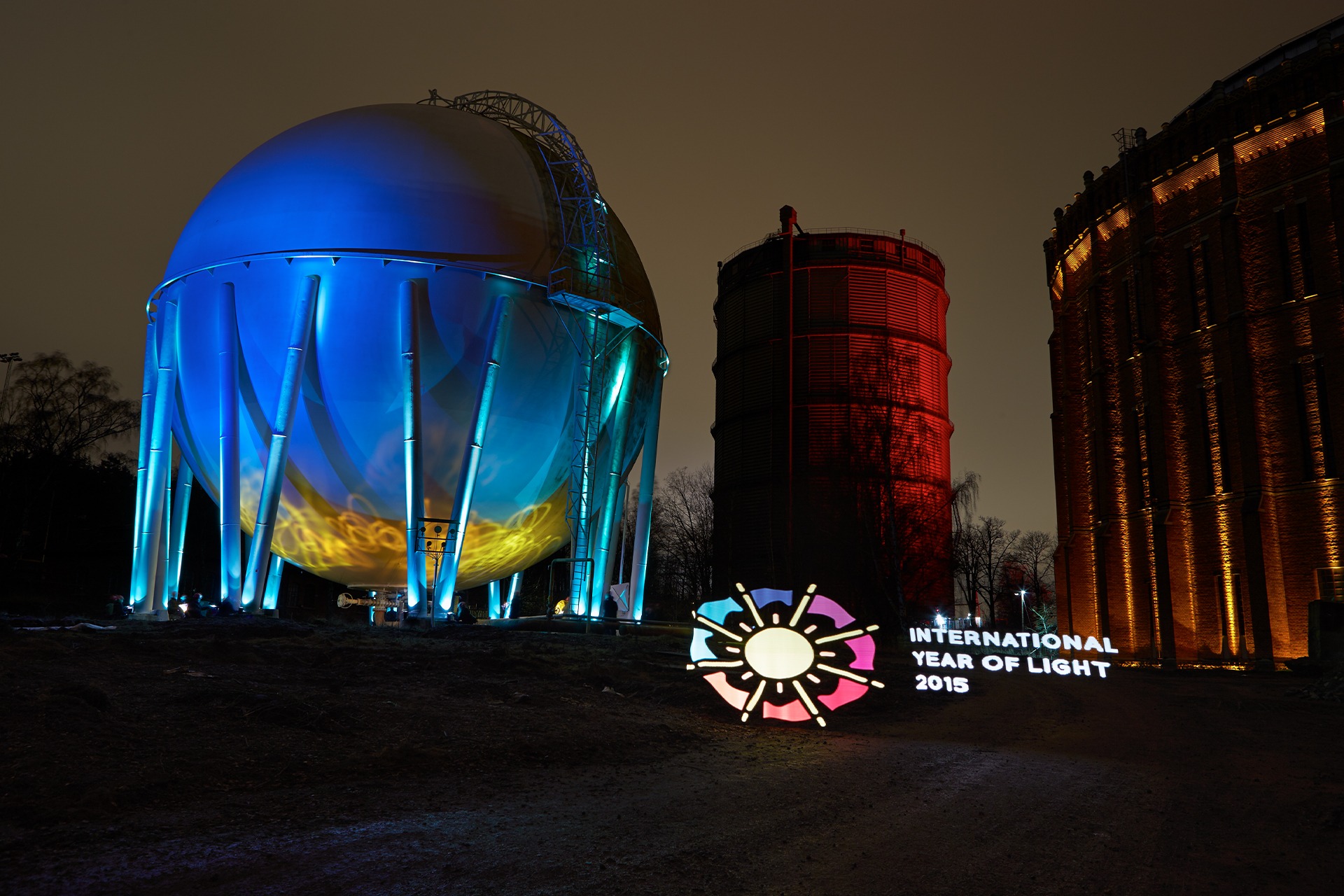
From the Shadows into the Spotlight
However, when IYL 2015 was first proposed, lighting design wasn’t part of the conversation. The focus was firmly on photonics, optical technologies, and scientific breakthroughs. But lighting designers knew that light was more than data and devices.
A grassroots petition emerged, gathering momentum to include lighting design within IYL's framework. Thanks to the excellent organisation of the IYL2015 Global Secretariat, and particularly to the welcoming support of ICTP, UNESCO Category I Institute, the outcome transformed the initiative itself: lighting design wasn't merely recognised – it became integral to IYL's identity, illuminating light's artistic, cultural, and social dimensions alongside its scientific achievements.
Recalling the extra support that the lighting design community brought to IYL 2015, Dudley adds: “Aspects of public lighting quality, culture, and design were essential in reaching the general public. UNESCO has three key words in the acronym: education, science, culture. But experience shows it’s much easier to attract people to an education/science event if there is a light show that showcases art, design, and broader themes.”
It was in this context that the Lighting-Related Organisations (L-RO) coalition was born: a voluntary federation of 45 international associations, institutions, the academic world and media (including arc magazine), formed to ensure the built environment and human experience were part of the global light conversation.
Soon after, the International Association of Lighting Designers (IALD), a founding L-RO member, became a patron sponsor of IYL2015, underscoring its commitment to promoting the power and potential of light on a global stage. IALD's sponsorship and active involvement were crucial in elevating the visibility and importance of architectural lighting design within the broader celebration of light during IYL 2015, particularly highlighting its relevance to the built environment and human wellbeing.
The Emotion-driven Technology
Lighting designers brought something to IYL 2015 that no one else could: a unique blend of science, art, and empathy. As Joe Niemela, Global Coordinator for IYL 2015 at UNESCO, stated in an interview for issue 82 of arc magazine (then known as mondo*arc), "I think the role of Lighting Designers should be… BIG." Designers showed how light isn’t just functional – it’s emotional. It shapes behaviour, fosters connection, creates identity, and uplifts communities.
The IYL platform made it possible for the wider world to see what designers had long understood: that light can help make a street feel safe, a home feel warm, or a public space feel magical. Through exhibitions, educational events, public interventions, and artistic installations, lighting designers around the world illuminated the human and space experience of light. Meanwhile, education-based events were held worldwide demonstrating the physics and magic of light for students, professionals, and citizens alike.
Amongst the many events launched to coincide with IYL 2015 (of which Dudley believes there were “more than 13,000”), UNESCO held an official Opening Ceremony on 19-20 January 2015 in Paris, France, whose 55 speakers included UNESCO leaders, five Nobel laureates, distinguished international scientists, students, representatives of non-governmental organisations, former CEO of Signify, Eric Rondolat, and then-IALD President, Barbara Horton. A closing ceremony was held in Mérida, Mexico, from 4-6 February 2016, in which follow-up actions were defined for the future. The ceremony was accompanied by art events, a high school outreach programme, a film festival, and a light installation at the archaeological site of Chichén Itzá.
Several countries obtained high-level support and patronage from Heads of Stage, while several governments officially recognized the International Year. Many countries chose light as the theme for important national science education initiatives, while regionally, the European Commission provided €2.65million for coordination and support in 30 European countries to promote the importance of light science and careers in photonics to young people, entrepreneurs, and the general public. It is this involvement in education that Dudley recalls the most fondly. He said: “Personally, I really liked the events I was involved in at schools – seeing the enthusiasm of young people for light was remarkable. 10 years later, I am regularly contacted by people who participated in outreach events in schools during 2015, and who are now continuing the legacy in their own careers.”
Reflecting on IYL 2015 10 years later, Joe Niemela recalls how the diversity of lighting as both a concept and a profession added to this broad array of lighting events: “The term ‘light’ attracted many different and important segments of society. For instance, light artists were very active during the year, as were the lighting community, in terms of improved living and working spaces, spectral tuning of digital lighting sources for wellbeing and productivity and affordable and accessible lighting in the many parts of the globe that lack it, thereby providing light that enhances education and also safety.
“Then there were elements of light as a philosophical concept (enlightenment, knowledge, etc), which reached directly to cross-sectoral aspects of UNESCO and also attracted, for example, the Vatican (which produced its own commemorative postage stamp), and of course, the optics and photonics community providing, amongst other things, applications of affordable technology to aid in food production, water purification, healthcare, and more throughout the developing and developed world. This diversity in partners mirrored the diversity of our societies, reflecting the need to work together for sustainable solutions to pressing societal challenges. Raising awareness of the potential of light and light-based technologies to improve our quality of life – across a broad spectrum of society – was directly connected to the overall success of the year.”
L-RO members and countless volunteers donated their time, energy, and expertise throughout the year. This collective effort – driven by commitment, passion, and professionalism – fostered a global community united by light's potential. Their dedication transformed IYL 2015 from celebration into movement, creating ripples that continue expanding today.
Lighting a Legacy
The L-RO’s final publication, We Are Light, captured the spirit of this transformation. The IALD supported this initiative, printing the booklet as a great effort of cooperation and advocacy. We Are Light presented the activities organised by L-RO to celebrate the Year of Light, and emphasised on expanding the knowledge of lighting beyond the profession, planting the seeds for cross-disciplinary thinking that continues to flourish today.
And while the International Year of Light officially ended, its energy lives on in lighting festivals, academic programmes, social impact projects, and design communities. It lives on in the [d]arc awards, which launched as an official IYL 2015 activity and has since become a defining platform for contemporary lighting design. It lives on in the countless collaborations sparked during that year, many of which still shine brightly.
The legacy of IYL 2015 is one of recognition and relevance. A decade ago, lighting design was often dismissed as niche or luxury. Today, it's increasingly recognised as essential – an agent of sustainability, wellbeing, and cultural enrichment that shapes how we experience the world around us.
Reflecting on the impact of IYL 2015, Dudley adds: “There have been a number of important outcomes at different levels. Firstly, when we started working with UNESCO in 2012, the value of International Years as an instrument for education and awareness raising was being discussed and evaluated within the UN system, and the success of 2015 really helped to cement their place. In fact, Joe was present in New York in 2016 in a special session where the final report was presented to the UN General Assembly.
“We used the 2015 experience to help other groups with their international year projects as well: the International Year of the Periodic Table of Elements (2019); the International Year of Glass (2022); the International Year of Basic Science for Sustainable Development (2022-23); the International Year of Quantum Science and Technology (2025). I think we really made life a lot easier for them, as they were able to point to what a real successful international outreach initiative can achieve.
“And, of course, the International Day of Light is a direct legacy, which is now celebrated annually – in the eight editions so far, we have seen over 3,000 events worldwide in more than 100 countries, continuing to reach out to new audiences, and new generations of young people.”
The Next Ten Years
The challenges we face, climate change, urban transformation, biodiversity loss, require new ways of thinking. Lighting design, with its unique ability to blend technology and empathy, form and function, is poised to help lead that charge.
As the lights go up on this year’s [d]arc awards winners, it’s worth remembering that their platform was built not just from accolades, but from advocacy. Their spotlight exists because a community of designers believed in the value of what they do, and demanded to be seen.
As we look ahead, the legacy of IYL 2015 reminds us of what’s possible when lighting designers claim their space in the global dialogue, not just as technicians, but as storytellers, changemakers, and stewards of light.
Ten years ago, we proved that light could unite us. Now, it's time to let it guide us forward, on a shared mission: “With the people, for the people, through Light.”
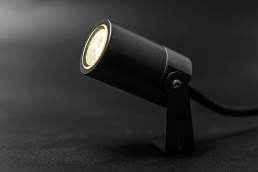
Neko Lighting - Neptune XSU CV
Small but powerful, this mini outdoor projector light packs a punch with its 34mm diameter, robust weatherproof design, and a minimum available beam angle of 12°. As part of the versatile Neptune series, it offers flexible options, including models with base and size variants for diverse installation needs, combining compact elegance with powerful, reliable illumination.
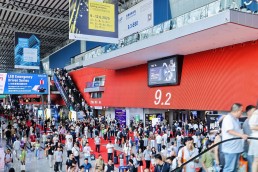
30th anniversary edition of GILE hailed a success
(China) – The Guangzhou International Lighting Exhibition (GILE) celebrated its 30th edition in style this June, with the participation of more than 200,000 visitors from across 151 countries and regions around the world.
Themed “Light for Life”, the 250,000sqm event ran alongside the Guangzhou Electrical Building Technology (GEBT) event, and once more looked to connect industry professionals while fostering innovation in the global lighting sector.
Reflecting on the event, Lucia Wong, General Manager of Messe Frankfurt (HK), said: “This year’s GILE introduced the concept of ‘Light-enhanced Living’, demonstrating how lighting technologies can transform fields such as cultural tourism, smart agriculture, intelligent health ecosystems, and home design. As we celebrate the show’s 30th anniversary, we are proud of its significant contribution to the development of the global lighting industry over the past three decades.
“The exhibition provided an exceptional platform to showcase these innovations and foster collaboration among industry players. The enthusiastic response from participants underscores GILE’s vital role in driving the adoption of new ideas and technologies, and we remain committed to supporting the growth and evolution of the lighting industry.”
GILE 2025 welcomed a diverse range of visitors from 151 countries, and various industries. The event featured several buyer matching sessions through its Power Match programme, providing tailored opportunities for professionals to connect with suppliers and explore targeted solutions. Through its lighting design forums, the fair also hosted more than 100 exclusive sessions, providing a platform for professionals to explore the latest advancements in lighting design and technology. Highlights included the “illuminnovation lab”, which showcased innovative lighting solutions for hotels, commercial spaces, residential environments, and wellness. For example, the Asia Lighting Art Forum explored cutting-edge trends in lighting design, while seminars on smart agriculture and bio-optics highlighted the role of lighting in sustainable food production. Elsewhere, a session titled ‘Chinese Designers Go Abroad: Blend in or Lead Out” examined how cultural integration and innovation contribute to global success. These sessions underscored GILE’s role as a vital hub for cross-disciplinary collaboration, inspiring innovation and influencing the future direction of the lighting industry.
The next edition of GILE will be held on 9-12 June 2026. The fair is part of Messe Frankfurt’s Light + Building Technology fairs, headed by the biennial Light + Building event; the next edition of which will be held on 8-13 March 2026 in Frankfurt, Germany.
www.messefrankfurt.com.hk
www.light.messefrankfurt.com.cn