
Casino Düsseldorf, Germany
Lighting designers at Licht Kunst Licht have created a unique way to bring a touch of the outdoors to a basement cafeteria, harnessing the power of “artificial daylighting”.
Few people would suggest a basement without daylight as an ideal location for a cafeteria. However, Licht Kunst Licht, alongside Frankfurt-based architectural firm ttsp hwp seidel, has created a biologically effective “artificial daylighting” system that transports employees of a multinational banking and financial company in Düsseldorf to the banks of the Rhine.
The canteen in the financial corporation’s basement was typical for the time of its construction. Yet while the red granite façade of the building, designed by HPP Architekten in the 1970s, still emanates a timeless elegance, the windowless canteen had become visibly outdated. Coupled with the inadequate technology, illumination and functionality, the space had a distinct lack of daylight and flair, which affected the overall quality of the space. A renovation was therefore badly needed.
This renovation saw the architecture and lighting of the staff restaurant and associated kitchen optimised; the crooked and inefficiently used dining area and kitchen plan layouts were fundamentally simplified, and free flowing, interlocking functional areas were established. As a result, the amount of seats could be increased from 150 to 200.
An essential design task in the renovation of the 465sqm space was the introduction of an additional daylight component and a reference to the outside world. Given the canteen’s basement location, this task proved difficult for the architects, and for the project lighting designers, Licht Kunst Licht.
Isabel Sternkopf, lighting designer and project manager from Licht Kunst Licht, explained: “After getting involved in this project, the architect and client gave us an initial briefing that was focused on artificial lighting only, but in the course of the project it turned out that an additional daylight entry was required by the local district government. As a result our lighting design suddenly focused on generating this subsequent daylight input.”
However, comprehensive studies undertaken by the German lighting design firm demonstrated that, with the small window openings that could be established, the daylight intake would be minimal, and the positive effects of natural light and a view to the exterior would be imperceptible.
“We performed calculations and realised that there is no possibility to provide sufficient daylight,” Sternkopf continued. “So we started a discussion with the local district government and tried to convince them that an artificial daylighting concept adds more value to the users than small basement windows.”
Sternkopf and her team argued that the added value for the user could only be established through artificial light that simulates natural light with daytime-related and annual variations, dynamic changes in light colour, light direction and intensity, while simultaneously supporting the circadian rhythm of the occupant.
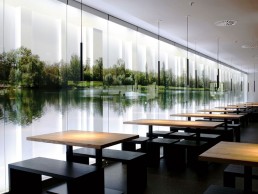
As a result, Licht Kunst Licht developed the idea of a 22-metre-long, floor-to-ceiling artificial panorama window. Extending across the entire canteen rear wall, it compensates for the lack of daylight by establishing a mimicked relation with the exterior.
Displaying images from artist Stephan Kaluza’s series The Rhine Project, in which he followed the entire 1,233 kilometres of the river Rhine, documenting his voyage with a series of camera shots taken every few minutes, the window was intended to show a view of the Rhine that one might see from a room at ground level. The photograph is printed on a folded plasterboard, which is applied to an existing concrete wall. A floor-to-ceiling glazed window is located in front of the photograph, protecting it from dust and damage, while enhancing the impression of a window to the outside.
Illuminated by iGuzzini’s Linealuce Compact fixtures concealed in the ceiling behind the glazing, the lighting starts at a warm 2,700K in the morning, gradually changing to a cool 6,000K around noon, before returning to the warmer hues in the evening. Similar floor-mounted RGBW-LED profiles, mounted behind the glass wall, allow for an upward grazing light effect on the backdrop, emphasising and intensifying the texture. These fixtures create light colours in orange hues for the scenes during sunrise and sunset.
However, while the panorama window is an impressive, innovative solution to the lack of natural daylight, Sternkopf had to work to convince the district government that the window had no harmful effects on the health of the employees. “We had to prepare countless presentations and meetings, and at the end we needed to provide a medical certificate that confirms that our artificial lighting concept was not harmful to the users,” she said. “We did a lot of technical and scientific research to find out how the artificial lighting could appear as natural as possible, and we had an expert of occupational health and safety, as well as an occupational physician consultant involved in the project.”
Further to the introduction of more natural light, the architects wanted the new-look space to feel “more like a restaurant than a canteen,” according to ttsp hwp seidel architect and project manager Tanja Nopens, and the new lighting scheme was designed to support and respect this impression. “An intelligent lighting control system allowed us to create differentiated lighting scenes to avoid the homogenous and uniform lighting atmosphere often experienced in canteens,” Sternkopf explained.
Functionally, the space is organised into four ‘zones’, each with distinct lighting approaches, ceiling heights and furniture. The largest area, with long wooden benches under an open white ceiling, is the central meeting point for larger groups to eat and exchange ideas. The wooden furniture designed for the project creates punctual warm accents that contrast with the black seating.
The focal point for visitors is the free-flow area with the food counter. Designed entirely in black, its ‘spaceship-like’ counters extend to the kitchen partition wall. Towards the exterior wall is a narrow zone with a group of four-person tables, which is surrounded by building columns and a lower ceiling, making it suitable for quiet and more confidential conversations.
The illumination for these different zones is, as intended, more akin to a restaurant than a canteen: warm and inviting. Some of the seating areas are accentuated by pendant luminaires, courtesy of XAL and Artek, while the large flex-use seating zones at the centre of the dining room are more evenly illuminated with Soraa spots embedded into a custom-designed, grid-like structure. iGuzzini’s Laser Blade High Contrast provides vibrant accent illumination above the buffet stations, complemented by the Italian manufacturer’s discreet Pinhole Adjustable Round recessed luminaires in the circulation areas.
The colour temperature of the circulation lighting and the illumination of the adjacent open kitchen area is also variable, and is controlled in sync with the panorama window wall. All luminaires are programmed to create an atmosphere similar to daylight, with gentle light transitions intended to create the impression that occupants are in a room illuminated primarily with daylight and only supplemental electrical light. “Together with the architect we have developed a concept that makes the room appear spacious, friendly and inviting,” Sternkopf said.
While the project may have presented some difficulties to Sternkopf and her team, she feels that any problems that they encountered only helped lead them to the end result. “Sometimes I still wonder what twists the project has taken over time,” she said. “In the end, we can even be grateful that the district government demanded the entry of daylight, and allowed it to be interpreted through the artificial panorama window, as it enabled us to pursue this innovative approach.
“There is no study or hormone examination yet, but there is feedback from the client that the occupancy rate of the canteen has increased significantly. Of course, this is not only due to the lighting, but the client also mentioned that the seats at the window are always occupied first, which is an indication of the successful implementation of the concept.”
Since completion, Sternkopf and Licht Kunst Licht have received a lot of positive feedback, with Sternkopf going on to present the project, and particularly its use of ‘artificial daylighting’, at last November’s IALD Enlighten Europe conference in Barcelona. “Many people were surprised by the result, and that we put so much effort into the project,” she said of her presentation.
“A lot of them were very interested in the topic of human centric lighting, especially because it is still relatively rare to work on such projects. Even though this was only a small project, it shows what added value a human centric lighting concept could generate for users.”

Liquid Light, Sweden
ÅF Lighting has created Liquid Light, a unique approach to lighting design that orientates itself to human needs where natural light is lacking.
The demands of today’s technological and fast paced society requires a lighting scheme that keeps up and remains as fluid as the environment it is situated in.
Liquid Light, created by ÅF Lighting, is a design concept that brings light to life, by creating a visual environment with its own identity and unique expression.
ÅF Lighting is making it its mission to take part in designing the cities of the future and make them more environmentally friendly, efficient and navigable.
The concept of Liquid Light originated during collaboration with architectural firm Snøhetta and the construction of Powerhouse.
Located in Trondheim, Norway, Powerhouse is the world’s northernmost energy-positive building, where Liquid Light has ensured sustainability and an inspiring visual environment. The building is designed to be an office building that produces more energy than it consumes; the construction is designed so that the excess energy produced during the building’s operational time will exceed the energy used to produce the building materials, operation and eventual demolition.
“Liquid Light is contextually designed with respect for human needs and energy efficiency, ensuring unique lighting solutions for the users,” described the firm.
“The concept is inspired by natural light and based on the philosophy that the lighting should respond and adapt to the changes that are physically happening throughout the day.
“The absolute main challenge in the Powerhouse project was to reach the high energy goals without compromising the quality of lighting. Some energy goals were conflicting with each other, so we encouraged the client to deviate from these constricting criterias and instead ensure a good working environment where those who want can choose to use a desk lamp, as well as ensure an overall low power consumption used for the functional lighting,” explained Thea Collett, Architect and Senior Lighting Designer at ÅF Lighting.
“Further challenged by the demands of keeping a low energy consumption, the idea of having the light triggered by real time data, such as people moving around in the building, prompted the development of the lighting concept Liquid Light.”
Morten Jensen, Country Manager of Norway for ÅF Lighting, explained the decisions behind the colour temperature choices for the space: “We are not trying to copy nature, but rather adapt to it. For example, if the weather outside is rough and cold, the lighting could adapt by bringing warmth and calm lighting into the building. The lighting changes organically in parallel with the outside environment. It adds a natural element to the lighting installations and the architecture with the intention of connecting people to their surroundings.”
Associating the living and working space with nature and the outdoors, and its impacts on our physical and mental health, is a current point of interest in the lighting industry, and recognised through ÅF Lighting’s research.
“When we include natural elements in architectural design, we instinctively reconnect with nature,” they said.
The variability of this lighting approach allows ÅF Lighting to create schemes and concepts that are individually customised for the end user, without the need for any involvement from the individual.
Sensors are used to detect movement throughout a space, and lighting is programmed to react accordingly. The changes in movement are seamlessly integrated into the environment due to long dimmer curves and positively affect the user’s senses.
Each zone can be shaped to any personal need or set the mood for a particular space that facilitates meetings or workspace.
Powerhouse was fitted out with multiple predefined sensors that determined the time of day, week or year and controlled the lighting scenarios.
“As the project developed, so did the concept of Liquid Light,” explained Collett.
“We constantly adapted what kind of sensors to use, how the control system should be programmed and what real time data should be triggering the light levels. When it was decided that the concept should be implemented, all other technical decisions needed to adapt to this.
“One of the main challenges in the early stages was to find an energy efficient, visually comfortable luminaire that could adapt to the architecture and maintain general lighting.
“The design of the luminaire was a collaboration between Evolys, Snøhetta and ÅF Lighting,” continued Collett. “This multidisciplinary process ensured a general lighting scheme that adapts to the architecture, meets the highest energy demands and provides visual comfort through both technical and visual design aspects.
“We know that people feel positive when the lighting harmonises with their tasks or location in a workspace. Liquid Light is designed to adapt and follow each person as they move around in the building. Sensors trigger movements and the lighting seamlessly changes and adapts accordingly, which creates a sense of wellbeing.
“We recently completed an inspection to see the nearly finished result, with all the different lighting principles mounted. One of the most striking elements to see was the great impact of the different colour temperatures working together.
“In all working areas we used 4000K in the E-16 fixture. A main architectonic element is the cores (toilets, kitchens, stairs, lifts, etc.) running all the way through the building. “These are covered in wooden slats and in-between some of the slats we used linear LED products with a very warm light (2400K).
“Seeing the effects of the warm wooden cores, both from indoors and outdoors, exceeded all our expectations. We often illuminate vertical surfaces as a key feature in our designs. This ensures the impression of a bright area and allows us to dim or even skip lighting in areas such as corridors. The functional neutral lighting combined with the warm wooden verticals created just the atmosphere we were aiming for.”
Energy-positive constructions are encouraged globally and are playing a significant role in hopeful solutions to global warming. Snøhetta’s new architectural concept aims to set the standard for future commercial buildings to follow suit in being environmentally conscious in their construction.
The World Health Organisation predicts that stress-related illnesses would be one of the largest contributors to disease by the year 2020. The use of lighting to create a more natural environment is one of the proposed solutions to creating a better living and working space. It is thought that by bringing elements of the natural world into the built environment - known as biophilic design - stress levels and other ailments are reduced and productivity increased.
Incorporating biophilic design into their projects, the Liquid Light concept will play a crucial role in creating the natural environment effect with artificial lighting.
“Liquid Light is designed by using real time data harvested from traditional and natural sources like windmills or through temperature sensors, such as seasonal changes, or direct and indirect sunlight, as well as unconventional data sources, such as cloud formations, bird migration, human movement and automatically generated sine curves. It is a combination of conventional parameters and real-time data that determines these organic light scenarios,” explained ÅF Lighting.
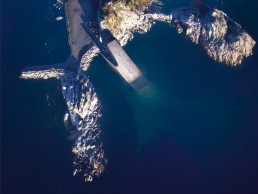
Following on from Liquid Light’s conception, ÅF Lighting joined up with Snøhetta once more, this time to create an underwater dining experience at Under. The restaurant, due to open in March 2019, is located on the coastline of the Norwegian village, Båly. The concrete rectangular structure is semi-submerged five-metres under the North Sea and provides diners with a one-off underwater eating experience.
Due to the uniqueness of the project, it was important that the designers and client were transparent with their plans throughout the construction process. “All of the designers were forced to work together in order to deliver a holistic design that added value to the building and the business the project will show and serve,” explained Jensen.
“From day one, the design group has been a part of the client’s vision. All the designers were part of an advisory group that acted as ambassadors and gave the client input on professional skills.
“The project demanded full transparency in the design and engineering, therefore all the members had to have a good understanding and knowledge about each others’ approaches and were kept informed of any technical issues throughout the whole construction period.”
Both teams at ÅF Lighting and Snøhetta undertook extensive research, before embarking on the project, into the human impacts on marine life and the effects artificial lighting and architectural creations had on it.
“Research shows that light has a significant impact on the ocean’s ecosystem and, together with marine biologists, ÅF Lighting tested different lighting solutions and measured the effects on local marine life. Thus, the lighting concept at Under extends beyond the interiors into the water to measure the effects of light according to luminous emittance and spectral distribution,” explained ÅF Lighting.
The aim was for the lighting to attract various species that would be visible from inside the restaurant for the guests to see, but without harming the natural environment.
“By adding light to the area around the submerged restaurant, we can attract fish and observe the marine life at night. The light sources and amount of light will affect the marine species, depending on the light source,” explained Jensen.
“The underwater stage lighting was a challenge to position correctly due to the fact the ground is continuously changing through tides and currents,” elaborated Collett.
“The initial lighting fixtures are now in place and positioned under the water but there will need to be a scuba diver with lighting design skills that can maintain the luminaires over time.”
As well as functioning as a restaurant, the building’s other purpose is as a research centre for marine life. The coarse concrete surface of the building is specially chosen to encourage marine life such as mussels to cling to it, resulting in an increase in biodiversity.
The structure of the building played an important factor in the lighting design, as it was key for the designers to illuminate the space but discreetly disguise the fixtures, so as not to distract from the overall completed look.
“The whole building is mostly covered by seawater and leaning into the sea,” described Jensen.
“The ceiling is curved for acoustic purposes, so there was a special need for a tailor-made solutions for each luminaire. We ended up with more than 400 fixtures positioned exactly with vertical output and into a grid formation with no space for flexibility, which brought with it some challenges in the detailing.”
“Our main challenges were to maintain a natural light and to create a safe atmosphere at the bottom of the ocean for the visitors,” added Jensen.
“Due to the minimal amounts of daylight below the sea and with a natural reference to the theme of the restaurant, we envisioned that the lighting would float into the room where it is needed. It is finely tuned to the surroundings inside the restaurant and designed in harmony with the nature around, with an aim of creating a visual ecosystem.”
“By use of LEDs in a matrix located in the ceiling, the light sources are small with good glare control, which makes them almost invisible. Technically, Liquid Light consists of data harvested from different sensors, and for instance in Under, infrared sensors detect heat, while acoustic detectors respond to sound frequencies in the room. The data is then interpreted and transformed into light scenarios constantly changing and adapting to its milieu and the people using the space,” reflected ÅF Lighting.
“Liquid Light is designed to bring the wild outdoors into our civilised world. Just like air quality, thermal comfort and acoustics, lighting is a precondition for people to live and work comfortably in a healthy building. With Liquid Light, we embrace the challenges of designing human centred lighting.”
www.afconsult.com
www.snohetta.com
Issue 107
arc Oct/Nov 2018 – Issue 106
Oh what a night...
darc awards 2018 ends in spectacular fashion with Christmas themed darc night and some stunning installations...
The 2018 darc awards came to an end on 6th December with darc night, a spectacular Christmas party event in the wonderful surroundings of MC Motors in London. Christmas tree light installations, street food, a free bar and a unique presentation format all contributed to a hugely enjoyable and creative evening.
darc night marked the conclusion of a record-breaking six month process. There were over 400 entries (up from 300 last year) including 100 entries in the PLACES (Best Interior Lighting) - High Budget category and over 100 entries in the Product categories. Altogether there were projects from 50 countries submitted and, remarkably, over 7,000 votes (up from 6,000 last year) making the darc awards a truly global, democratic awards programme.
A massive congratulations to all our winners but in particular to DHA Designs, who are celebrating their 30th anniversary this year, for their Hintze Hall project at the Natural History Museum in London. Even though this project was in the most highly contested category (PLACES - High Budget), it still received the most votes out of any of the winning projects thus winning the ultimate darc award.
Whilst 18 Degrees and Delta Light won the Best Installation on the night, all of the installations were spectacular in their creativity and delivery. I want to thank all the sponsors and installation teams that participated and helped make darc night so spectacular.
As announced during darc night, we also have some exciting news regarding darc room, our lighting specification exhibition that takes place during London Design Festival. 2019 will see the event partner with London Design Fair in the Old Truman Brewery in Shoreditch. Taking place on 19-22 September, darc room will have its very own hall where we will continue our unique exhibiting concept as well as having educational workshops and live streaming. We’re all very excited about this new development as being part of London Design Fair will enable us to expose lighting design to even more design professionals from outside the lighting fraternity. Something that we always strive to do with our events and media.
We look forward to your participation in next year’s [d]arc events.
Paul James
Editor
arc
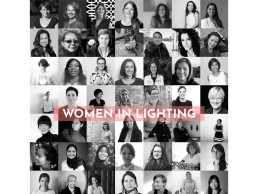
arc to support Women In Lighting
(Global) – Light Collective and lighting designer Katia Kolovea launch celebratory project that looks into leading women in lighting industry.
Women In Lighting is a project established by Light Collective’s Sharon Stammers and Martin Lupton that will set out to create an inspirational digital platform for women working in lighting to promote their passion and achievements, narrate their career path and goals, celebrate their work and elevate their profile in the lighting community.
Starting with lighting designers, the scope will expand to include women in all aspects of lighting – education, journalism, manufacturing, art and research. A website and social media campaign launching on International Women’s Day (March 8), will begin with interviews with female lighting designers completed by Light Collective.
Light Collective have interviewed women in Sweden, Holland, Spain and the UK and some of the interviews will form part of the website launch with further interviews added from Italy, Dubai, the EILD event in Uruguay and the US as the project progresses. The team hope to add more participants to their ever-growing list of female ambassadors to the project that already boasts an amazing 50 women.
The project launch is being supported by formalighting. Light Collective approached formalighting with this project as it is a company with a strong, inspirational woman in a lead role – Sharon Maghnagi. Also supporting the initiative is Katia Kolovea (Archifos) from Urban Electric as the head of the social media campaign.
arc magazine is proud and excited to participate as media partner for the project and will feature a regular editorial piece in each issue, celebrating the work of the ambassadors and promoting female design in the industry.
“We started this project to try and make a difference. Although women make up at least 50% of the lighting design profession, you only have to look at the number of women speaking at major conferences, acting as judges in awards, being asked as keynotes and serving on editorial boards to realise that the profile of women is significantly lower than men. We want to change this,” explained Martin Lupton of Light Collective.
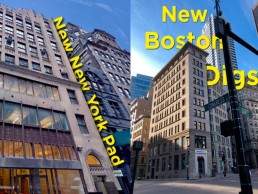
Available Light studios relocate
(USA) – Available Light’s Salem and New York studios expand into bigger locations to accommodate growing staff.
After eighteen years in Salem, Massachusetts, Available Light has relocated to the centre of downtown Boston. “We are thrilled to join many of our colleagues and clients in the hub of one of America’s oldest and most beautiful cities. Our modern studio is the perfect home and headquarters for our burgeoning design firm,” said Founder, President and Creative Director Steven Rosen.
“Salem has been a wonderful and gracious home; although we are moving to the big city, the Witch City will always have a place in our hearts.”
After eleven years on the Great White Way, Available Light’s New York studio will be moving to a larger location on the eighteenth March.
“Our good fortune has led to a larger staff, and we’ve finally outgrown our space,” said Managing Principal Ted Mather. “While we are sad to leave the bustle of Broadway behind, this new space will allow us the opportunity to both better serve the many clients we have here in the city and grown our activities and staff in the New York metropolitan market.”
“We are very proud of the growth we have seen over the past few years, not only in terms of the number of designers, but also the increasing number and variety of projects. As we continue to support the next generation of lighting designers, we look forward to the many opportunities these geographical moves will deliver,” added Rosen.

Planlux opens London office
(UK) - The new Planlux UK office is the first satellite location for the Turkish lighting designers.
Turkish lighting design firm Planlux has expanded beyond its home base of Istanbul, launching its new London office.
Led by Director Doğan Kozan, the expansion comes off the back of an expanding international client base, and will aim to help the firm develop more opportunities in one of the most important cultural and commercial hubs in the world.
Of the new office, Kozan said: “Planlux’s skill and quality has been proven with more than ten years of background. Now, with our combined experience and skill, we’re very positive that Planlux UK will take part in landmark projects all around the globe.
“London is the capital of design and innovation in Europe, and also a gateway to other regions like the Middle East, East Asia, South America, etc, and we’re very excited to be a part of this network.”
As a practice aimed for a combination of creativity, efficiency and expertise, Planlux focuses to provide joyful lighting design in its projects, while balancing time, budget and quality.
The new London office is the first satellite location for the Turkish firm, and the team is hopeful it will act as a milestone to reach further markets in the future.
Ecosense acquires Lumium Lighting
(USA) - The LED technology company expands its presence in the architectural linear lighting market with the acquisition of Lumium.
Ecosense has announced the acquisition of Lumium Lighting, a privately-owned, California-based company that specialises in the design and development of architectural linear lighting.
Ecosense and Lumium share similar values, development and innovation philosophies, and the acquisition allows Ecosense to expand its presence in the architectural linear market. Coupled with the company’s other products, it will enable Ecosense to fully compete in the tier one, general office space.
“Lumium’s specifier-grade portfolio is a great complement to our brand,” said Mark Reynoso, CEO of Ecosense Lighting.
“We are thrilled to partner with Ecosense and leverage their key strengths, including new technology development, manufacturing efficiencies and global sales expertise,” added Jordan Kloos and Jeff Mitchell, Co-Principals of Lumium Lighting.
www.ecosenselighting.com
www.lumiumlighting.com

Light & Tech to dominate Expo Lighting America 2019
(Mexico) - Expo Lighting America will take place at the CitiBanamex Center in Mexico City on March 5-7.
The ninth edition of Expo Lighting America will return to Mexico City this March.
The annual event acts as a hub for the Central American lighting design community, gathering a multidisciplinary community of lighting enthusiasts through innovation, experiences and knowledge, in a bid to strengthen the light industry and culture in Mexico.
As Expo Lighting America organisers look to reflect on and understand the technological convergence, alongside the growing capabilities of the Internet of Things, artificial intelligence, and other technologies that are changing the world, this year’s event will operate under the central theme of Light & Tech, in which the relationship between light and technology will be explored.
Alongside keynote talks from Fisher Marantz Stone, Pelle Design and new media artist Maja Petric, the show will see the return of Dark Room, which will feature a set of light art installations with the intention of showing light without any distractions, so that it can be experimented with the latest developments of the illumination world.
This year’s event also introduces the Nuevos Talentos (New Talents) space, in which independent designers, young design firms and enterprises can showcase their creations.
Elsewhere, the ELA Showroom will showcase various solutions and applications focused on retail, smart home and landscape. This will be complemented with the most important brands in the world of decorative illumination in the Décor Lighting Pavilion.
Thanks to its Go Green programme, Expo Lighting America is the first exhibition in the lighting sector that is entirely sustainable, compensating 100% of the carbon footprint generated during the event through wind farms located in Oaxaca.
Once again, the event organisers have collaborated with opinion leaders, allies and new talents to put together a printed accompaniment - Insights & Inspiration. Edited in conjunction with lightroom.lighting, the fourth edition of the publication will gather the most innovative ideas and trends from the lighting world.
Registration is still open for Expo Lighting America. Visitors can register here.
Full lineup of speakers unveiled for Light Space Design
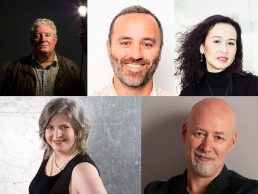
(Australia) - The Light Space Design summit, held in Melbourne on 27 March, will feature keynote speeches from NDYLight, Mint Lighting, Ramus Illumination, Arup and Michael Grubb Studios.
At the upcoming Light Space Design 2019 summit, to be held in Melbourne, Australia on 27 March, attendees will gain and share knowledge on how lighting should best fit into the overall design puzzle.
Supported by the Building Designers Association of Victoria (BDAV), the event will feature a variety of speeches, panels and networking sessions, allowing lighting and design professionals to engage in a distinctly Australian dialogue on maximising lighting design within a variety of settings.
Steve Brown, one of Australia’s most experienced lighting consultants and Director of NDYLight, will draw from his 30-year career to deliver an opening speech on the history and future of lighting design.
Brown will be joined at the summit by a group of talented and experienced local lighting professionals turned speakers. Ramus Illumination Founder/Creative Director Bruce Ramus will present on the intricacies of lighting public events, using his practice’s award-winning work on Perth’s Optus Stadium as a case study. Ramus will also discuss how new lighting technologies can be harnessed to elevate human experiences within such settings.
Zooming into a significantly smaller setting will be Mint Lighting Director Adele Locke. Through her presentation, Lifting Mood, Lighting the Home, Locke will explore how broader lighting industry shifts reflect best-practice solutions for residential lighting designs. The nexus between our increasing focus on energy efficient lighting and designing wellness-enhancing, aesthetically pleasing lighting for homes will be a key point of discussion throughout Locke’s keynote speech.
Elsewhere, Arup’s Florence Lam will take the stage to unpack how changing expectations for building tenants impact the way we should apply lighting within interiors. Lam’s skill in utilising light to draw out the architecture of a space will echo throughout her speech, especially when discussing the implications tenant preference shifts have on architects seeking to efficiently utilise light within their designs.
Meanwhile, UK lighting designer Michael Grubb will provide a big-picture view of lighting design, analysing whether lighting professionals would benefit from looking to the past or moving ahead with the times when evoking more alternative, out of the box methods of working. Creative Director of the eponymous Michael Grubb Studio, Grubb’s keynote will feature a variety of case studies, including his practice’s work on the darc award-winning Black Prince Road.
The packed lineup will also feature presentations from Martin Klaasen, Principal and Founder of Klaasen Lighting Design, who will discuss the challenges of lighting heritage buildings; Simon McCartney, Director and Partner of Illumination Physics, who will examine the challenges and opportunities of contemporary façade lighting; and Farah Deba, Senior Lighting Designer at Steensen Varming, whose Lighting Critical Areas talk will look at the lighting needs for healthcare environments.
Alongside this, the summit will include two panel discussions. The first - Achieving Cohesion Between Light, Space and Design: Effective Collaboration Between Design Professionals - will see David Bird, Director of 2B Designed, David Ritter, Associate Director at Atelier Ten, Donn Salisbury, Director of Electrolight, Nicolò Brambilla, Senior Lighting Designer at Schuler Shook, Robert Hamilton of Webb Australia Group and Illumination Physics Director/Partner Simon McCartney discuss the role that lighting plays in the wider design world.
The second, entitled New Parameters of Wellbeing-enhancing Lighting will tap into the ongoing debate surrounding the positive impacts that human-centric lighting can have on wellbeing. This debate will feature Anne Truong, Design Manager of Light Project, Antony DiMase, Principal Architect at DiMase Architects, Lighting Consultant Dave Anderson, Jenny Petschenyk, Architectural Lighting Consultant at H.I. Lighting and Laurie Aznavoorian, Senior Practice Director at BVN.
The programme for Light Space Design 2019 is filled with diverse content, covering topics including future-proofing retail lighting design, the challenges of lighting heritage buildings, lighting design for critical medical areas, and lighting up Australian hospitality venues.
Registration for the event is still open. IESANZ members can gain up to six CPD points when attending.
www.lightingdesignsummit.com.au
Keith Bradshaw of Speirs + Major to headline Trends in Lighting Forum & Show 2019
(Austria) - The event will return to Bregenz on 24-26 September.
Keith Bradshaw, Principal of Speirs + Major, will be the keynote speaker at Trends in Lighting Forum & Show 2019, it has been confirmed.
The event, held in Bregenz, Austria, alongside LpS Symposium and Expo, is dedicated to bridging the gap between technology and architecture, applications and design. Designed to be educational, informative and engaging, it aims to keep delegates up-to-date on the latest trends in architectural and urban lighting designs including smart lighting solutions for indoor and outdoor lighting.
Attendees will hear from Architects, Planners, Designers, and Technologists, including the keynote speaker, Keith Bradshaw from Speirs & Major. Bradshaw became a Principal of Speirs + Major in 2009. Based in Edinburgh, he directs projects from both of Speirs + Major studios. He has led many of the practice’s award-winning international and UK projects, including the Copenhagen Opera House, Sheikh Zayed bin Sultan Mosque, Shenzhen Airport and flagship stores for Giorgio Armani in Tokyo, New York, Milan and Beijing. Noteworthy current projects include urban realm projects in Miami, Helsinki and Hong Kong and civic buildings in Rome, Oslo and Beijing.
Bradshaw regularly publishes articles and has been a keynote speaker at design conferences around the world. He has also lectured and taught practical workshops to a range of students, and was invited to be a Fellow of the RSA in 2013.
For those wanting to present at the show, the call for speakers closes on Feb 15th.
Surface Design Awards Winners Announced
(UK) - The Surface Design Awards hail the best and most impressive use of materials in, and on, architectural projects from around the world.
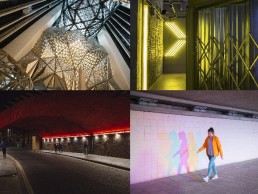
The winners of the 2019 Surface Design Awards have been announced, with Michael Grubb Studios, ÅF Lighting, Isometrix and Lightivity Lighting Design collecting awards in the lighting categories.
Held during the Surface Design Show, the Surface Design Awards aim to recognise the best use of innovative surface materials in architecture and design internationally, with categories ranging from public buildings and retail to housing, commercial buildings and sustainability.
Isometrix and Zaha Hadid Architects, alongside Lightivity Lighting Design, won awards in the Light & Surface Interior category for the Morpheus Hotel Atrium and Gymbox respectively. Elsewhere, Michael Grubb Studio’s darc awards winning Black Prince Road won the Light & Surface Exterior category, alongside Story Wall by ÅF Lighting.
Such was the strong competition, out of the thirteen categories, only the lighting categories featured split winners.
Elsewhere, the beautiful new Maggie’s Centre Barts, London was named the Supreme Winner. A beacon of design in the charity sector, the building by Steven Holl Architects was shortlisted in the Public Building Exterior category, gaining acclaim from the panel of judges.
Other category winners included such high profile names as Snøhetta, Kengo Kuma & Associates and Rockwell Group.
The judging panel for the 2019 awards was co-chaired by Christophe Egret, Founding Partner at Studio Egret West, and Paul Priestman, Chairman at PriestmanGoode. The full panel comprised of Cany Ash, Partner at Ash Sakula Architects; James Soane, Director at Project Orange; Jeremy Offer, Chief Creative Office at Arrival; Katie Greenyer, Creative Talent & Network Director at Pentland Group; Paul Edwards, Head of Creative Design at Airbus and Roz Barr, Director of Roz Barr Architects.
Launched five years ago, the Surface Design Awards have grown year on year, and the 2019 shortlist consisted of 43 projects from nine countries, with each entry an example of creative and innovative use of materials and lighting in both interior and exterior schemes.
The Surface Design Awards 2019 winners in full are:
Retail Interior
Aesop Flagship Store, UK, by Snøhetta
Retail Exterior
Lava Stone Shopfront, UK, by STAC Architecture
Public Building Interior
Writ in Water, UK, by Studio Octopi with Mark Wallinger
Public Building Exterior
Maggie’s Centre St Barts UK, by Steven Holl Architects
Commercial Interior
The Veil, UK, by Giles Miller Studio & Orms
Commercial Exterior
Morpheus Hotel, China, by Zaha Hadid Architects/Isometrix Lighting Design
Temporary Structure
TED Theatre, Canada, by Rockwell Group
Sustainable Interior
SGS Berkeley Green, UK, by Hewitt Studios
Sustainable Exterior
Cultural Village, USA, by Kengo Kuma & Associates
Light & Surface Interior
Gymbox, UK, by Lightivity Lighting Design
Morpheus Hotel Atrium, China, by Zaha Hadid Architects/Isometrix Lighting Design
Light & Surface Exterior
Black Prince Road, UK, by Michael Grubb Studio
Story Wall, Sweden, by ÅF Lighting
Housing Interior
Powis Cloud, UK, by Lily Jencks Studio
Housing Exterior
Fijal House, UK, by Mole Architects
Europeans want better workplace lighting, survey shows
(Austria) - A survey, conducted as part of the Repro-light project, found that 56% of workers want better workplace lighting.
Results from a pan-European survey reveal that current lighting in the workplace is not satisfying end-users and their needs, while at the same time having a big impact on productivity and human wellbeing.
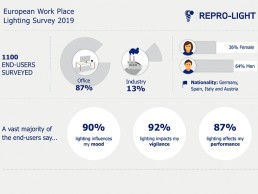
The survey, conducted as part of the Repro-light project, engaged with 1,100 workers across Germany, Spain, Italy and Austria. Participants were asked to consider their working environment’s lighting and what changes they would like to see that could improve their productivity, mood, and performance.
More than half (56%) of end users said they would like the better workplace lighting. A high level as workspace lighting should follow a strict lighting design code (e.g. EN. 12464-1), which guarantees, for instance, that a certain level of brightness is reached in a workplace. The survey showed, that the individual requirements for the lighting differ, showing that personalisable lighting is needed to satisfy all the users.
The results go on to show that women significantly more often encouraged an improvement in workplace lighting, while workers over 50 showed a greater desire for an improvement in lighting. It is not only the need for improved light, more than 50% said that the physical luminaire aesthetics where important to them, especially workers under 30. 80% of those questioned would like to have workplace lighting which automatically adapts to personal needs, with over 75% wanting their work light to change colour when it turns dark outside.
All of these factors play a role in the greater impact of lighting on the workforce of Europe, and not surprisingly more than 90% of those asked said they believe their work lighting can impact their mood, 87% said it affects their performance, and 92% said it influences their vigilance in the work place.
As part of the Repro-light project’s first phase, the survey, conducted by consortium members Bartenbach and Mondragon University, set out to investigate what end users really want in their workplace lighting in order to develop a user-centric lighting design solution for the future.
The Repro-light project, as part of the European Commission’s Horizon 2020 work programme, will now be moving into the next phases of investigation and design iteration to develop a ‘Luminaire of the Future’ that will endeavour to meet all the user needs discovered in this recent survey.
The full report can be downloaded from the Repro-light website https://www.repro-light.eu/downloads
