
Light Equity
Following the devastating fires that destroyed more than 16,000 structures across Los Angeles, non-profit lighting group Light Equity established Light for LA, an initiative that aims to help build back the affected areas of Altadena and the Palisades in a more equitable way. arc speaks to Light Equity members Nick Albert and Cy Eaton about the initiative and its long-term goals.
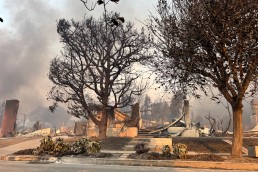
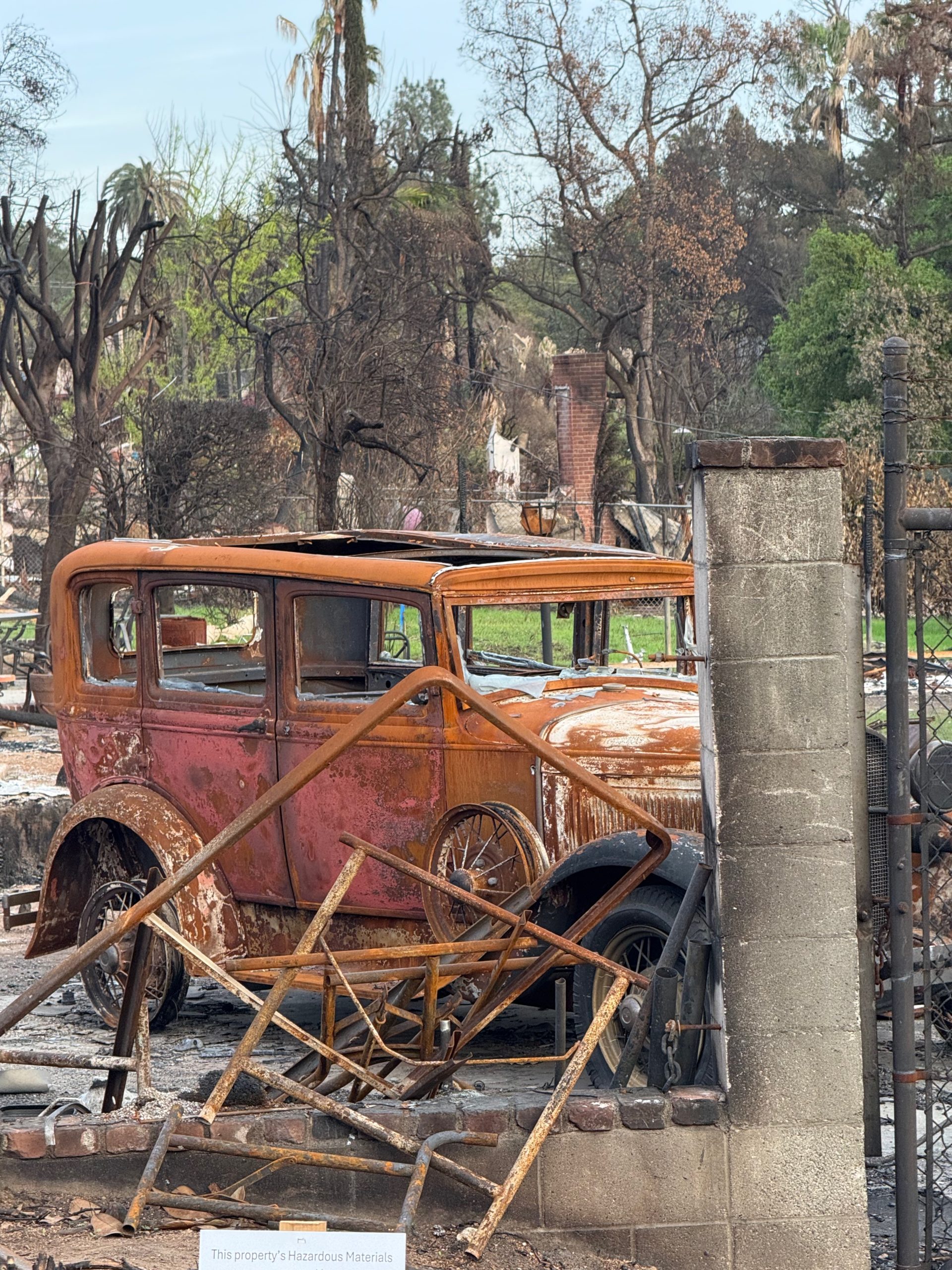
In January of this year, a series of wildfires tore through the Greater Los Angeles area of Southern California. Spanning more than 57,000 acres (89 square miles), the fires caused massive damage, destroying more than 16,000 structures across the Palisades and Altadena – making them among the most destructive fires in California’s history.
As the rebuild begins across these districts, a group of lighting professionals have come together with the goal of empowering those affected, with “community-centred lighting solutions”.
The group, named Light Equity, was initially formed by Nick Albert and Lauren Dandridge of Chromatic, Cy Eaton of HLB Lighting Design, and David Komonosky of Above All Lighting in the wake of the social justice issues across the USA in the early 2020s. The intention being to redefine how lighting design is approached in local communities, understanding that it is not just about aesthetics, but creating environments where people can thrive, connect, and feel safe. A statement on the group’s website reads: “Lighting inequality remains a pervasive issue in our communities, perpetuating disparities and neglecting the fundamental right to safe and inclusive spaces for everyone. The practice of lighting design is a crucial aspect of urban planning, but is often not considered as a tool to address the needs of underserved neighbourhoods. This lack of understanding and application has resulted in a multitude of challenges that affect these communities.”
The mission of Light Equity, therefore, is to recognise these challenges as urgent calls to action and address the root causes of lighting inequality, empowering communities to see lighting design as a tool to support and enrich the places they live, work, and connect, and ultimately create safer, more vibrant, and inclusive spaces for everyone.
Nick Albert, Principal at Chromatic and Executive Director of Light Equity, says: “Our work fosters equity and resilience by supporting access, awareness, and advocacy for the value of light and the role that it can play in people’s lives.
“The equity in this case is not purely a conversation of socioeconomics, or race, or religion, or any of the other ways in which equity is often talked about – although those statistical groups are important and relevant, and are the underpinning of a lot of the inequity. In this case, what we’re talking about is something that lighting design as a profession has been talking about since the beginning, that this is a valuable thing in people’s lives. But the number of people that have access to that way of thinking is miniscule. Lighting designers, at least in the US, are often called ‘luxury consultants’ because that’s just where they fit. There is a price threshold for where you can hire a lighting designer in terms of dollars per square foot that you’re going to spend on a building, but there is no price threshold for where lighting design can be valuable. And so that is a gap in access that creates inequity, and that is what Light Equity is about addressing.”
Albert’s career began initially in architecture and construction – he studied architecture in Ohio, and worked on some construction jobs, becoming a glass and glazing contractor for three years in the Midwest, fabricating and installing curtain walls, hanging off high rise buildings, “all kinds of stuff that I can’t stomach anymore now that I’m older and wiser”. However, after moving to Los Angeles with his partner and looking for jobs in architecture, he, like many before him, “stumbled into lighting”. “It wasn’t a professional intent – I didn’t have much awareness of lighting as a specialty, but my generalised architectural knowledge, and in particular my knowledge of building systems and detailing at a really tactile level was something that my first lighting employer, Francis Krahe, thought was really important and valuable. And so, with no specific lighting background, that’s what got me into that position of being part of his team.
“Architectural design is a discussion of pieces of a whole and how they work together; buildings are a combination of systems that have to work for the people and with the people. When you think about glass systems and fenestration, it connects you with what is outside and reminds you that you’re part of something larger at both a human and natural scale. It’s a way that the building becomes a vehicle to communicate those experiences, and what I found is something really similar in lighting as well, where the real purpose of lighting in a space is about communicating those experiences with people and engaging people. So, to me, it’s one of the really critical and expressive touch points of architecture.”
After working with Francis Krahe for 10 years, Albert moved to Illuminate Lighting Design, a time he recalls as “a great experience to start diving deeper into lighting’s role in the narrative of space”. It was while he was at Illuminate that Albert met Lauren Dandridge – who was then working in Specification Sales at Performance Lighting Systems. The two developed a good friendship and strong working relationship, and eventually joined forces to establish Chromatic in 2021.
Albert recalls: “At the time of George Floyd, we did a lot of friendly soul searching, where we were wondering how what we were doing had to do with the bigger, more important things that we were acutely aware of at that time. Something that kept coming up in our discussions was this idea that my grandparents embedded in me that ‘you take care of your corner of the shop first’. And where Lauren and I landed is that our corner of the shop of life is lighting. This is where we’re at – we have this expertise and influence. So, we thought to ourselves ‘is there a different way to do it?’, and that’s what Chromatic is. It has to do with missions of equity and inclusivity, and the idea that all social systems lack that, to some regard.”
It was during his time at Illuminate that Albert first met Cy Eaton, who was interviewing for a position with him at the time. “We kept in touch on and off over the years, but we really reconnected at IALD Enlighten Americas last Fall,” Eaton explains. “We realised ‘hey, it’s been way too long, let’s grab a drink some time and catch up’. And that led to me, a few months later, being up on Nick’s roof, helping him re-roof his house – that’s what you do for your friends and colleagues, you help out where you can. And so, Nick said ‘Cy, thanks for your help with the roof, I owe you one’. And then a month later, I call him up and say ‘Hey, you wouldn’t believe it, but I might need help with a roof, and a few other things.’”
Like Albert, Eaton’s journey into architectural lighting was conventionally unconventional. “I came from a theatrical lighting background, and through that attained a real kinetic and immediate connection with light, and how lighting can impact the experience of a space and the emotional experience for people in that space, and how powerful a tool that is. So, I then shifted my attention towards wanting to apply those tools, but in a way that was more broadly accessible to the community, because theatre and the arts can be a profound way of communicating and connecting with people, but it also has a very finite reach.
“So that, through various iterative steps, led to me getting involved in architectural lighting, with a brief detour into theme parks, but really coming out of the other side of all that, wanting to have the broadest reach and the most significant impact possible on day-to-day life and experience. In the same way that Nick and Lauren and a lot of other colleagues that we know went through a bit of a reckoning back in 2020-2022, thinking ‘we just do lighting, but what is the deeper meaning’? I went through a bit of that then as well.
“But then, when the fires hit LA in January, along with 16,000 other structures, my household was one of those affected. It made the whole experience much more personal, but also much more tangible. One of the ways that I’ve been able to move forward is by finding ways to not just help myself, but to help my whole community recover and move forward.
“We’ve been so blessed with certain things falling into place for us and having a really amazing, supportive community, that then when we felt like we were on stable ground, rather quickly we could turn the attention towards people that we knew were having a harder time, and would have a bigger struggle in the long term to rebuild.”
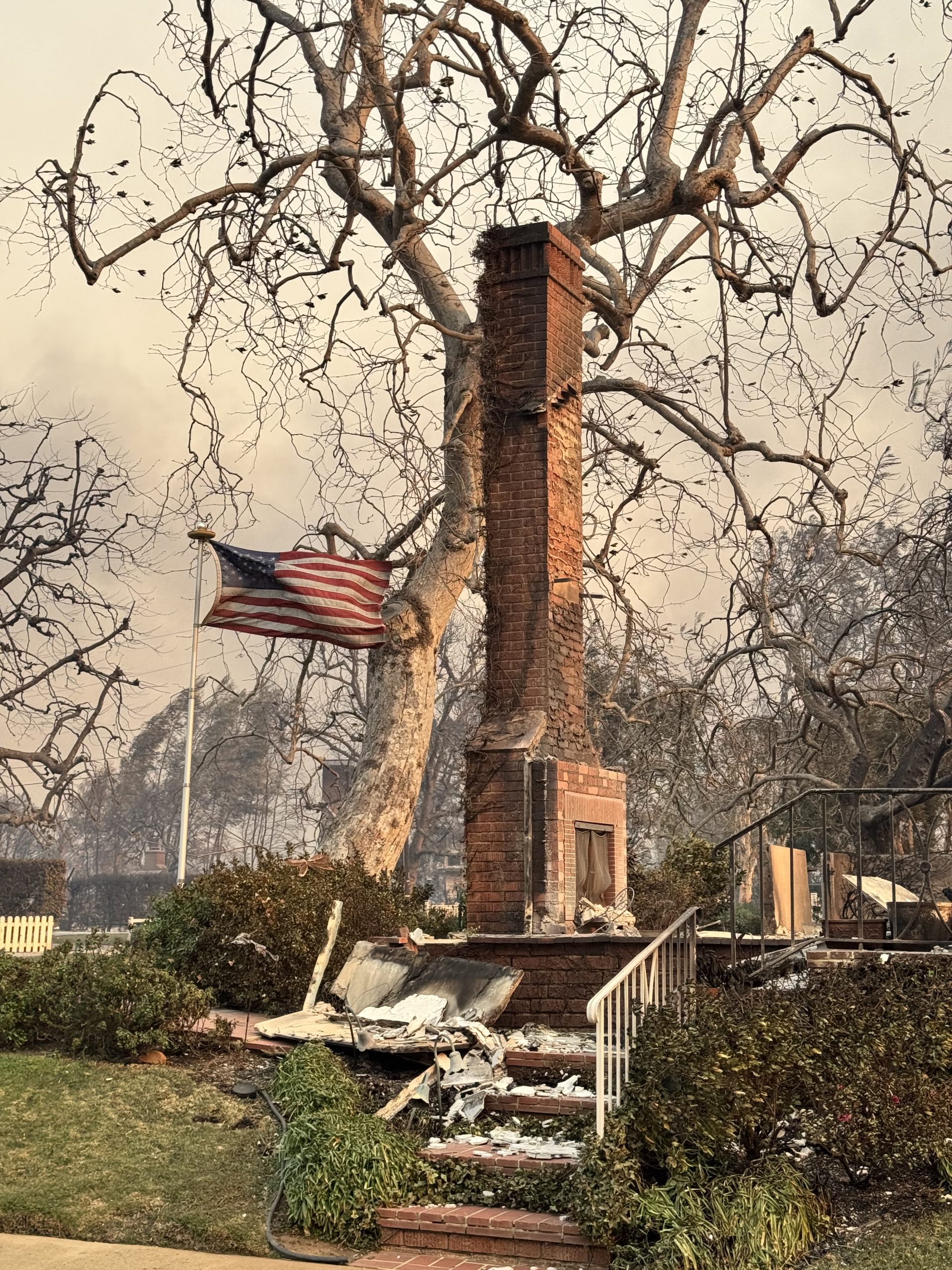
This was the moment when Light Equity established Light for LA, an initiative that the group hopes will “provide tools and resources to support a full recovery and bright future” for all affected. Methods to achieve this include building comprehensive, publicly accessible residential lighting guidelines and resources for sustainable, healthy lighting in residential development, while also providing builders, installers and homeowners with the resources and know-how to access the high-quality lighting equipment and technologies needed to light the modern home.
Beyond this, the group also hopes to create pathways to careers in lighting design and installation, prioritising underserved communities and offering skills-based training for sustainable employment. Finally, the group hopes to help “restore the spirit of the community” and a sense of place, by engaging in public outreach with all stakeholders, and advocating for supportive community lighting – connecting the community with public and agency officials to define target lighting outcomes and design standards.
“We would like to consult for those who haven’t hired us, and really try to put in place the structures to make that happen,” explains Albert. “Lighting design is both the job of being a consultant and a designer, and most of the consultancy portion is trying to understand the mechanisms and levers that have to be pulled to make a thing possible.
“Rather than waiting for the cities of Altadena and the Palisades to decide they’re going to hire a lighting consultant, we are trying to get out there and make a case for why it’s important, make the case for the opportunity they have at this point to really put some of that thinking into their communities, to build back the spirit of what they lost.”
Eaton continues: “At the time, I was reminded of a playwright friend of mine that I studied under, that was also a naval reservist. In 2001, on 9/11, he was called up to duty to go to Ground Zero, and his job as a naval officer and a writer and journalist was to document what was going on. He said at the time that he felt so helpless, because there’s this massive destruction, and what, he’s supposed to take a pen and paper and write down what he sees? His wife reminded him, ‘this is your skillset. I know you see people out there with their shovel and their bucket and they’re picking up the debris and trying to put it all back together, but that pen and paper is your bucket and shovel’.
“And I realised for myself and Nick and for our immediate community, our ability to engage the overall community about the impact that light can have on the experience of a space and the experience of life in that space is our ability to improve the lighting quality of what gets rebuilt. And so that’s our shovel. That’s our bucket. Let’s get to work.”
And so, as the group “gets to work” in establishing Light for LA as a non-profit, it has already begun engaging in both short-term initiatives within the community, but also looking at the bigger picture and developing long-term strategies with other likeminded organisations.
“Our main job right now is tilling the soil,” Albert says. “We have to create the opportunity for lighting design decisions to be made, because so many lighting decisions are made by things that have nothing to do with lighting many years before.
“In the Venn diagram of the lighting community and the larger community, we’re pushing up against the inside of that lighting circle, and trying to get some more overlap, to push that intersection into being able to occupy a bigger part of the conversation. Where Cy as a homeowner can’t think about his downlights today, we’re having conversations with city officials or community officials that are around the idea of masterplan guidelines.
“We’re also connecting with other complementary organisations. We’ve got some really good partnerships and connections to the folks in the SoCal branch of the National Organisation of Minority Architects (NOMA) – discussions on equity are incredibly relevant to that group, and the underserved communities in Altadena specifically are a particular point of interest for them.
“I am always blown away by this spirit of goodwill that exists in design and architecture in a larger sense. I think that most people design out of a real desire to make other people’s lives better. There’s no shortage of folks who are doing interesting things, and so we’re in a period of trying to form those partnerships where we can have an impact and leverage our combined resources.”
Indeed, the support from the lighting community is something that both Albert and Eaton have been particularly humbled by.
“It’s a thriving industry ecosystem,” Eaton adds. “The home systems integrator community is very strong here too, and as we’ve reached out to all of those various stakeholders in the overall industry, like fellow designers, manufacturers, reps, installer contractors, I realised quickly that everybody just wanted to be a positive part of the response, and not seen by the community as being opportunistic or profiteering in this process.
“They also wanted to see better outcomes, including the people that we cynically think are just in it for the money. They have embraced this paradigm that we’re offering out there that we’re going to provide a unified response, make it easier to make lighting easier for property owners and builders to make those lighting decisions, and then deliver on those decisions. So far, we’ve experienced near universal acceptance and support from all corners, and it’s now incumbent on us as a community to deliver on that, but I believe that we are heading in the right direction, so that we have all of these resources available for the community as they rebuild. And part of my job within the initiative is to be one of the bellwethers of where community members are in the process, as now is not the time to be in their face talking about lighting.
“Now is the time to be preparing the groundwork, tilling the soil, getting all those resources in place so that when they’re ready to start the conversations in about six months, we’re there for them, when they’re ready to start making decisions in about 12 months, they know where the resources are to make those decisions, and when real purchase and install decisions are happening in around 18 months, the guidelines are already in place to inform what equipment to purchase and how to install it in your home or community space.”
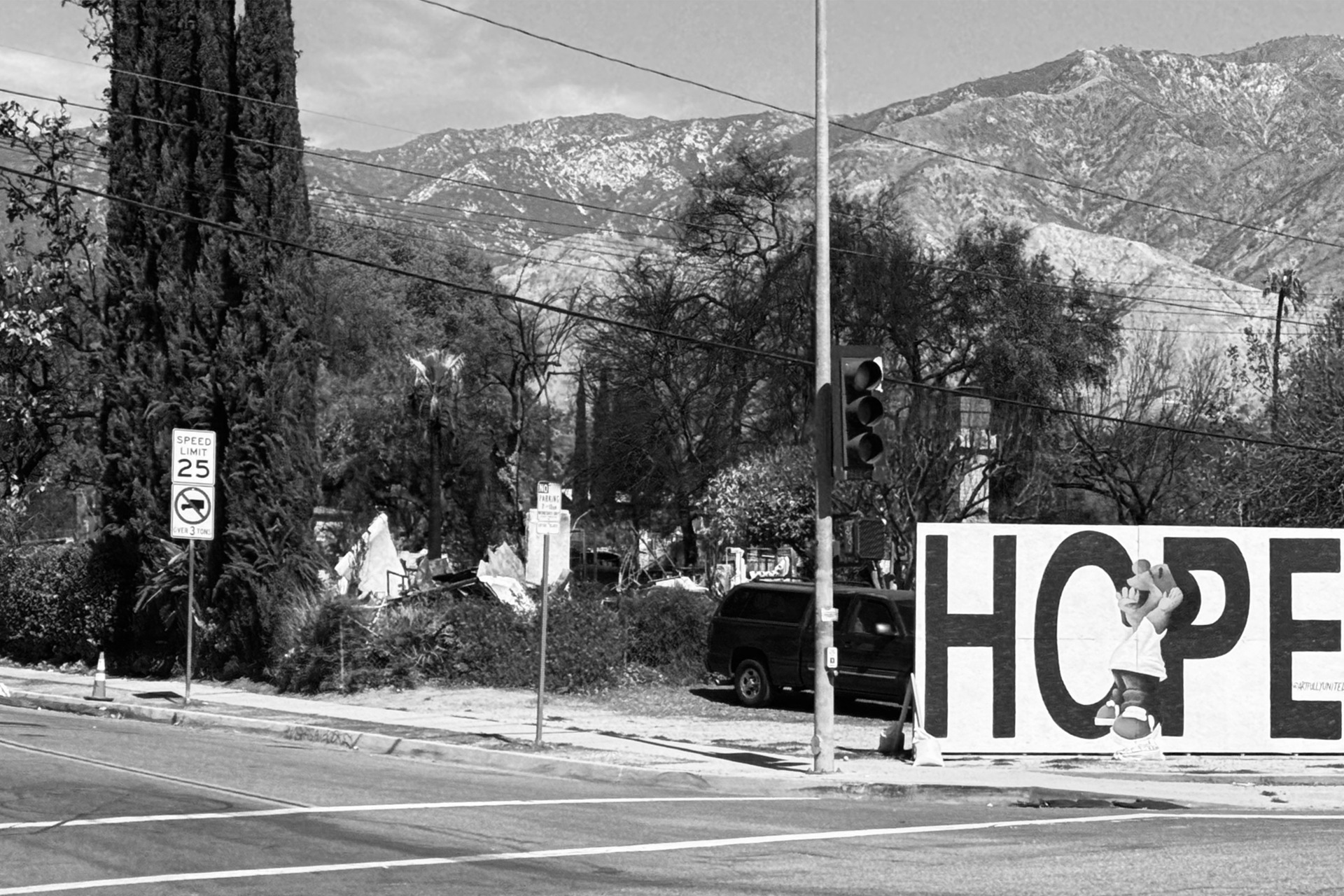 Albert continues: “If we work with the town council, if we talk about community lighting standards, a developer will then adhere to simple things. Don’t leave a motion detector floodlight on all night, don’t point things inextricably up to the sky. The Palisades and Altadena are both really interesting natural environments, they’re beautiful, natural spaces, and we can do something towards that.”
Central to the conversations surrounding Light for LA has been the idea of building back the “spirit” of what was lost in the fires – not necessarily just replacing, like for like, the luminaires and lighting infrastructure that was previously in place, but enhancing and building on the former lighting strategies, and creating something ultimately more equitable. This, Albert feels, is the “exciting part” of the process.
“This is where we get to talk about the subtleties of the lighting design, and we can talk about those value propositions that lighting design as a practice brings to the community. It’s the idea that just replacing the streetlights that were lost is not building the place back from this sense. What we can do is not only put back light as a function of the built environment, but we can help put back the character that’s the best memory of that place. We can build back people’s associations and their feelings about a space more than a lot of other things can.
“Most people will have a rosier memory of what they’ve lost. There’s always that association with memory that’s really important, and when we talk about building back, what we are trying to protect is the idea, the atmosphere, and the experience of what was lost. Folks like the Foothill Catalogue Foundation [a fellow non-profit organisation dedicated to rebuilding and restoring communities affected by the fires through a collection of pre-approved home designs for displaced residents to affordably and expeditiously rebuild] are making sure that rebuilt houses are stylistically the character of what was lost, and then we as lighting designers can come in and build back the character and quality of Altadena in a way that improves it, but keeps that core idea.”
However, Albert adds that there is a delicate balance between designing “for” people, and designing “at” people – meaning that Light for LA needs to tread the line between community consultation, and asserting one’s own knowledge and expertise as a lighting professional.
“In order to do this right, we’re going to have to have a pretty robust community outreach and community engagement programme. I’m as guilty as anyone at talking over the person on the other side of the table and telling them what I think, rather than listening to what they need, but it’s a good opportunity for us to improve.
“We’re starting partnerships with community advocates, who are experts at that sort of conversation, or listening and telling, and setting up the mechanisms of getting buy-in, and more gently moving people towards a solution that will benefit.
“I have conversations in every sphere of my life where people will say to me ‘lighting is everything’. They can never follow that up with another sentence. It’s something that people really viscerally understand, but don’t really know how to talk about. They don’t have the vocabulary to articulate what that ‘everything’ means to them. Part of what we have to do at this moment is help people develop that vocabulary so that they can talk to their contractor, or their public official, or their architect, or whomever, and communicate what they really want, and what’s really going to affect and improve their life so that somebody can then help them achieve that.”
At the time of writing, it has been six months since the LA wildfires, and while Light Equity has made some solid progress, Light for LA as an initiative is in the early stages of what will be a lengthy journey. Similarly, Eaton explains that, although progress has been made, the recovery process on the ground in Altadena and the Palisades will take some time.
“We’re still very much in the literal and figurative clearing of debris phase,” he says. “People who have lost everything are still adjusting to those paradigms and setting their lives back up – sometimes just down the street, sometimes across the country – while they consider next steps. The city has moved impressively fast at clearing the literal debris. A cleanup process that was initially estimated to take the full year is now 80-90% complete, in less than six months.
“The counterpoint to that is that there is now scrutiny as to what corners may have been cut to get to that milestone so quickly. And that brings us full circle to the concern as we move forward in construction, what corners may be cut in the interest of expediency that may shortchange homeowners in the long term with regards to the quality of the outcome, where you get a thing that looks like the home that you lost a year sooner, but something that is not going to last, not going to be as durable or as healthy, going to be more costly to maintain over time. That’s the concern. And we do see the beginning of engagement with adjacent trades within the Architecture, Engineering and Construction community that are thinking with a similar mindset: how do we take this opportunity to build correctly and more resiliently as a whole community so that we come out of this stronger?”

Simiarly, one of the biggest questions that Light Equity faces is how to keep the message of Light for LA at the forefront of people’s minds. The news cycle being what it is, to those not directly affected, the wildfires will already feel like old news, so how do they stay relevant, particularly when it will be a long-term project?
“It’s going to take a growing mass of supporters to maintain the momentum over time,” says Eaton. “It’s a long game kind of effort, it’s not going to be something that will be wrapped up by the end of the summer, or even by the end of the year, so to keep the urgency and the importance top of mind is a challenge.”
Albert adds: “I would hazard a guess that it’s embedded in almost every community-serving non-profit ‒ how do you stretch it out. One of the most notable differences that I am experiencing as we go through this process is time – design is fast, construction has always been the slowest part of what we do.
“Sometimes I’ll get a feeling of anxiety on a Thursday afternoon that I haven’t done enough, but I have to remind myself ‘this isn’t a design development deadline. It’s a longer timescale’. It’s also good, because it gives us the opportunity to tap into the altruistic desire in our design community to serve and to help in a way that doesn’t fatigue. Some of the first partnerships that we set up were with the IALD and IES, both nationally and locally, which gives us a mechanism to keep it in the community conversation.”
While the focus at the moment is, understandably, predominantly on the rebuilding efforts of Los Angeles, Light Equity does have longer-term ambitions that extend beyond Light for LA that it hopes will attract a wider, international response.
Albert continues: “We’re hyper focused on LA at the moment, because we want it to be a community-focused result. So, where the Light for LA application specifically should be supported by LA individuals, there are parallel and complimentary conversations that can and should happen elsewhere.
“I expect that Light for LA will be part of every lighting conversation in the city next year. I think that we will be a regular agenda item on the local IES chapter meetings. We are establishing a local board of advisors who are going to see names that everybody recognises from all segments of our community being involved.
“From that, we’re looking for this to grow organically. From the conversations that we have had with the IES and the IALD at a national level, they can understand how this is relevant beyond the scope of LA.
“But on a broader level, I want folks in our community to start thinking about this as a conversation that can happen in a lot of different arenas. My real hope and ambition was never based on disaster response. I want the tools that Light Equity will develop through the Light for LA initiative, and through other initiatives, and the larger community coming together, to be accessible to a 500-person town that just has this vague inkling that they’re going to change their tax district in the community centre, and they want to have a food truck night or a town art walk, some sort of experience that they’re grasping at, and they think lighting might have the answer for them.
“The real goal of Light Equity is to give them a set of tools that push that Venn Diagram over their experience, and get them into that set of opportunities where lighting can make a difference in their community – for good reasons as much as disaster reasons. Even if people are just having the conversation about lighting, we’re moving the needle.”
As Albert, Eaton, and the Light Equity team look ahead, while there is still work to be done, they can already feel proud of the efforts made. The group are already on track to have a Foothill Catalogue-designed, Habitat for Humanity house built with a Light Equity lighting design. And Albert hopes that, with every extra little victory that comes, the initiative will be a bigger and bigger success.
“I want there to be a real quantifiable, tangible value given to every dollar and man hour that’s volunteered as part of this,” he says. “For everybody that puts effort into this, I want them to see some results. Whether we’re looking at number of homes built, number of communities who have developed a lighting masterplan, number of products in a specific support category install, that’s how we know it will be successful.
“One of our most important jobs for the people who participate will be to remind them of the good things that they are doing, the impact that they are having, and telling those stories. I hope to be talking to you again about the kids that are eating breakfast in their new home, or the shop owner in Altadena that has a wine night now and it’s part of a new community ritual, or the folks in the Palisades that can see the stars now because there’s not so much sky glow. It’s really important to keep telling those stories and celebrating those little successes, because even a small effort will fundamentally change things for the better.”

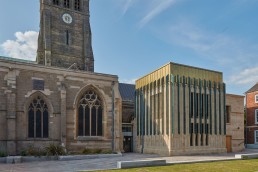
Lighting for Heritage and Renewal - Reimagining Through Sensitive Illumination
Leicester Cathedral has stood for centuries as a symbol of continuity, culture, and community. In 2012, the discovery of King Richard III’s remains in a nearby car park and the decision to reinter him within the cathedral brought international attention and an extraordinary new chapter to its history.
When CBG Light Perceptions was first engaged over a decade ago, the aim was to create a lighting scheme that would support the cathedral’s evolving role as a place of worship, learning, reflection, and tourism, while remaining true to its historic character. The reinterment of the monarch required the lighting design to be sensitively adapted, with solutions that could honour this unique responsibility.
Designing for heritage spaces is never simply a technical exercise; it is as much about restraint as it is about illumination, with every element of illumination respecting the building fabric. At Leicester Cathedral, this meant working closely with conservation specialists, using existing fixing points wherever feasible, and ensuring cable runs and equipment placement were sympathetic to the architecture. Light levels were carefully modelled to protect delicate surfaces from over-illumination, avoiding glare that could detract from the visitor experience.
Intrusive spotlights and floodlights were replaced with custom-designed Arts and Crafts-style pendants, with their frosted glass shades diffusing light softly through the nave. Their suspension height and positioning were chosen to allow light to flow naturally through the arcades, eliminating harsh shadows and revealing the stonework and carvings in a gentle, balanced way. The fittings themselves recede into the architecture, allowing the building and Richard III’s tomb to remain the true focal points.
An adaptable, programmable control system was introduced, enabling staff to transition between different lighting scenes with ease, from candlelit services to large-scale concerts, private reflection, and educational tours. This flexibility ensures the space can serve both sacred and civic purposes without compromising either.
The work at the cathedral extended beyond the interior. As the new Heritage Learning Centre (HLC) took shape, a sensitive exterior lighting scheme was developed to connect the cathedral’s historic presence with the HLC’s contemporary architecture. The façade lighting will restore prominence to key features, ensuring the building remains a welcoming landmark from every approach after dark.
The Leicester Cathedral project is a reminder that historic buildings are not static artefacts; they are living environments. In heritage lighting, the designer’s task is not to compete with history but to serve it, finding ways to reveal and reinterpret without overwhelming. At CBG Consultants, we believe that to light a historic building well, you must first listen to it: to understand its story, its rhythms of use, and its emotional relevance. Only then can light truly become more than a functional necessity.
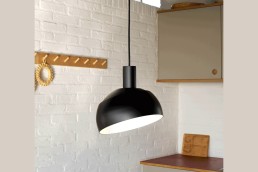
Louis Pulsen – New FJ Elements collection
(Denmark) – Danish luxury lighting brand announces the introduction of the Finn Juhl lamp as part of the FJ Elements collection – an archival collection of lights by renowned architect Finn Juhl.
Inspired by art and the abstract, the collection consists of a pendant and a table lamp available in three neutrals and the original two-toned grey. Characterised by its rotating shade, this feature allows the light direction to adjust in multiple ways, ensuring glare-free illumination. The design is enhanced by the upper shade, which opens up to provide a gentle upward light from the housing for ambience.
In Conversation With... Lewis Taylor
https://vimeo.com/user57462087/davidcollins?share=copy&fl=sv&fe=ci
Perhaps best known for its signature restaurant and bar projects in London, David Collins Studio delivers industry-leading interior architecture and design within the hospitality sector. Celebrating its 40th year in business this year, [d]arc media editor, Sarah Cullen sits down with Design Director Lewis Taylor to reflect on the studio’s story so far and how the design industry has grown in that time.
Zafferano - Filo
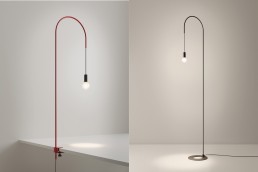
(Italy) - Due to be available this August, Filo is a lighting collection by Federico de Majo for Zafferano, comprising sconces, floor lamps, and table lamps available with either a base or clamp. Designed with a focus on simplicity and versatility, the collection features a painted metal structure in white, red, or black, supporting an exposed E27 bulb.
A distinctive element of the design is the rotatable upper section, which pivots around its vertical axis to offer adjustable light direction. The minimalist, curved silhouette introduces a graphic quality, offering both visual interest and functionality.
Suitable for a range of interiors, Filo is intended to serve as both a practical lighting solution and a decorative element.

Crea-Re Studio - Boletus desk lamp
(Spain) - The Barcelona studio that bridges art and design has unveiled a new lamp, Boletus, a modern desk lamp that merges organic inspiration with functional design.
Shaped after the “Bolets” mushroom, the lamp features a wide, rounded lamp shade and a grounded base, offering both visual impact and soft, focused illumination. Crafted by hand with a rustic, porous surface, this large table lamp reflects light and illuminates the area beneath it well, making it ideal for writing, reading or creating a calm atmosphere.

Nishi Shah to leave LDI after 29 years
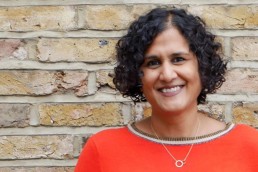
(UK) - After nearly three decades at Lighting Design International (LDI), Design Director Nishi Shah is stepping down, marking the end of a remarkable career that has helped shape the landscape of architectural lighting design.
Shah joined LDI in 1996, shortly after completing her MSc in Light and Lighting at The Bartlett, UCL, following an earlier degree in Architectural Engineering from the University of Leeds. Her initial career in structural engineering soon gave way to a passion for lighting, a decision that would lead to an influential and lasting impact on the industry.
Over 29 years, Shah has led the design and delivery of some of the most prestigious lighting schemes in the world. Her portfolio includes luxury hotels and resorts across the UK and internationally, landmark office spaces in London, and renowned residential projects such as Ham Yard Hotel, Heckfield Place, Rivercourt, and One Hyde Park.
Colleagues at LDI recall Shah as a dedicated mentor and creative leader who has played a pivotal role in nurturing young talent and shaping the company’s ethos and growth. Joining as a graduate, she has since helped steer the studio to become one of the most respected lighting design practices globally.
Reflecting on her departure, Shah comments: “I owe everyone at LDI past and present, especially Sally [Storey, Founding Director], who I owe so much, it comes with mixed feelings and some trepidation, but I am stepping into the next chapter in my life. I have some fantastic memories which I will hold close to my heart. Thank you!”
www.lightingdesigninternational.com
Lodes – Map
(Italy) – Following its preview at Euroluce in April, Lodes modular lighting system, Map, is now avabilble to the market.
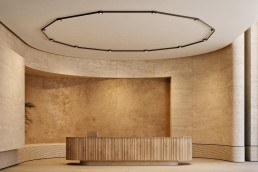
Developed in partnership with Berlin-based studio Geckler Michels, Map strikes a balance between aesthetics with advanced lighting performance. The design's visual element is a fabric tape, stretched between various modules, which powers the entire system and offers multiple compositional options. Like a map that reconfigures space and constellations, Map enables free positioning of lights, creating rhythms and reanimations for any environment.
Ideal for spaces with a single power source, Map offers a solution for ceiling and wall applications, enabling customisable configurations that go beyond traditional track lighting or integrated LED strip systems. The system's versatility makes it suitable for environments with architectural constraints, such as low ceilings or the lack of central lighting points, ensuring optimal light distribution without major structural alterations.
The ribbon, available in an eight-metre reel and five centimetres in height, is stretched between various lighting points, providing continuous power even without additional ceiling or wall power sources. Each module, measuring 130mm in diameter and 63mm in height, features a PMMA lens offered in multiple options to meet different lighting needs, from directional illumination to diffused ambient effects. Once the lens is fitted, the module is magnetically sealed for a seamless finish.
Reflecting on the new collaboration, Lodes Managing Director Massimiliano Tosetto comments: “Map was conceived to meet the need for a decorative electrified track, offering lighting designers unprecedented design flexibility. Whether for residential spaces or commercial projects, Map provides a bespoke solution that empowers designers to create the ideal configuration for their needs, defining the space through a distinctive visual language.
Prolicht unveil new brand positioning
(Austria) – Prolicht has announced a strategic shift in its global brand positioning, unveiling the tagline “Designed to Create”, signalling a broader focus on empowering architects and designers.
Prolicht’s new messaging seeks to redefine its role within the creative process. According to the company, the change reflects a long-standing ethos that prioritises design freedom and user-driven solutions.
Walter Norz, founder and CEO of Prolicht, explained that the rebrand is not a departure from the company’s roots but a refinement of its core philosophy. “It wasn’t a sudden shift. It was more like the sharpening of something that had been there all along. We’ve always worked closely with creative professionals – architects, lighting designers, planners. And over the years, we’ve realised that what they value most isn’t the product itself, it’s what the product enables them to do. That was a big insight. Our role isn’t to steal the spotlight. It’s to give others the freedom to design spaces exactly how they envision them.”
The statement “Designed to Create” shows a personal and professional commitment from the company’s leadership. After hearing creative professionals’ frustrations about having to compromise on timing, customisation, or quality, Prolicht wants to clarify that its purpose as a company is to support bold ideas and reject limitations.
Through this brand evolution, Prolicht aims to reposition itself not as the star of a space but as a partner in the creative journey. Norz adds: “We hope we can make those who are willing to challenge the brief, who look at an empty space and see its potential, feel seen. I hope they hear an invitation to explore and to question. Because in the end, new doesn’t just happen. New is created, and people who believe that, that’s who we’re here for.”
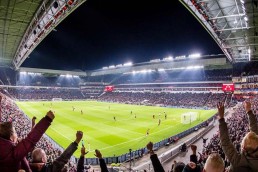
Signify announced as a FIFA ‘Preferred Provider’ for floodlights
(Netherlands) – Signify has been selected as a Preferred Provider for floodlights, affirming that the brand’s sport lighting systems meet the highest quality FIFA standards. The selection follows FIFA’s rigorous evaluation process, which assesses the performance requirements of products, production, and infrastructure.
As part of the FIFA Quality Programme, Signify will contribute to driving research and development in sports floodlighting, advancing technical standards for the future.
Signify’s stadium lighting solutions are currently used in major venues worldwide and are designed to enhance visibility and consistency for players, officials, spectators, and broadcasters. High-quality floodlighting also supports critical technologies such as Video Assistant Referee (VAR) systems, goal-line detection, and optical tracking.
The company’s lighting systems are also capable of supporting pre- and post-match entertainment through synchronised light shows, adding to the matchday experience for fans.
Stadiums partnering with Signify through the FIFA Preferred Provider scheme gain access to advanced lighting systems such as ArenaVision LED gen3.5, which delivers high-quality pitch lighting, efficient thermal management and long lifespan. Integrated with the Interact Sports system, it allows for remote control and scheduling. Also available is the OptiVision LED gen3.5, a flexible solution for various venue sizes, offering excellent visual comfort, uniformity, and reduced light spill. With smart controls, it can cut energy use by up to 65%.
Signify’s floodlighting is currently being used at world-class stadiums across the globe, including Stadion Feijenoord in Rotterdam, the Netherlands, where a new Arenavision lighting system has improved the match day experience for all, and provides energy savings of 63% against previous systems.
Niels Geven, International Director for Sports and Arenas at Signify, comments: “This recognition from FIFA, which is responsible for some of the world’s most prestigious and watched sports events, is an important milestone for Signify and a reflection of our leadership in sports lighting. High-quality illumination is hugely important in modern-day sport, especially top-flight football. It’s vital for both player performance, officiating and broadcasting purposes, and an essential part of the match-day fan experience.”
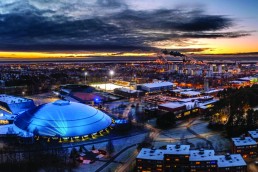
LUCI Cities & Lighting Summit to take place in Oulu
(Finland) - Urban lighting experts worldwide will gather in Oulu, Finland, from 25–27 February 2026. The second edition of the Lucie Cities & Lighting Summit will explore how innovative lighting can shape cities.
The programme will expand on the opportunities offered by Art and Technology and explore their intersection potential in urban lighting, while addressing how light can shape sustainable and inclusive cities.
As a global hub for urban lighting innovation, the summit brings together city leaders, lighting professionals, and urban planners to share ideas and spark local solutions through global collaboration.
Highlights include in-depth panel discussions exploring how lighting interconnects with art and technology, insights into global and local initiatives and their impact on city planning and urban lighting developments, guided tours around Oulu’s lighting projects, and the experience Oulu 2026 European Capital of Culture programme.
Amid rising demands for sustainable urban development and smart solutions, the LUCI Cities & Lighting Summit aims to foster collaboration and practical strategies through global knowledge-sharing. Oulu, a city known for blending innovation with nature, offers a fitting venue for these discussions.
Registration is now open. For more information, visit the website here www.luciassociation.org