

IALD Enlighten Americas announce keynote speaker
(USA) – World-renowned artist Janet Echelman will deliver the keynote presentation at IALD Enlighten Americas 2022, the IALD has announced.
Known for her sculptural pieces around the globe, Echelman works at the scale of buildings and city blocks. Interactions between her work, light, wind and the local environment transfer her pieces from objects you look at into an experience that you can get lost in.
Her TED Talk, “Taking Imagination Seriously” has been translated into 35 languages, with more than two million views. Recipient of the Guggenheim Fellowship, Harvard Loeb Fellowship, Aspen Institute Henry Crown Fellowship, and Fulbright Sr. Lectureship, Echelman received the Smithsonian American Ingenuity Award in Visual Arts, honouring “the greatest innovators in America today.” In popular culture, Oprah ranked Echelman’s work #1 on her List of 50 Things That Make You Say Wow!, and Echelman was named an Architectural Digest Innovator for "changing the very essence of urban spaces."
IALD Enlighten Americas 2022 will take place on 29 September – 1 October at the Westin Rancho Mirage in Palm Springs, California. The full conference schedule includes 29 experts speaking across more than 18 educational sessions. Registration is open, with more information available here.


Michael Grubb Studio promotes Daniela Rendon to Project Lighting Designer
(UK) – As part of its ongoing response to significant levels of rapid growth, Michael Grubb Studio has promoted Daniela Rendon to Project Lighting Designer.
Having worked for the studio since 2019, Rendon has demonstrated her commitment to the lighting design industry. Her skills and knowledge have undoubtedly contributed to the success of many of the company’s recent projects.
In her new role, Rendon will manage design projects at varying stages of completion, working with a senior team member to ensure deadlines are met. She will put her self-motivation, good initiative and organisational skills to good use, as well as demonstrating her ability to liaise with suppliers, clients and design teams.
Rendon will be able to draw on her vast experience of working on projects of varying scales, across multiple sectors. These include the award-winning Bath Abbey project, King’s Walk Shopping Centre in Gloucester, and Woolsery in Devon. She has also been an active participant in industry events such as the creation of a lighting installation at the [d]arc Awards 2019, as well as being crowned a Technical Award Winner at the 2021 SLL Ready Steady Light challenge.
Speaking of her new role, Rendon said: “I am very excited to start my new position. I truly appreciate the opportunity and look forward to continuing to grow, as well as contribute to the creative and talented team of Michael Grubb Studio. I feel extremely motivated and encouraged by the team support, which makes coming to work an absolute joy.”
Michael Grubb, Founder and Managing Director of Michael Grubb Studios, added: “Daniela has proven herself to be a committed team member, with excellent lighting design and project management skills. In her new role, she will be able to build on these, as well as taking a more prominent position with clients and other stakeholders.
“I’m extremely proud of Daniela and it has been wonderful to watch her grow and develop as part of the Michael Grubb Studio team.”
GILE 2022 attracts more than 128,000 visitors
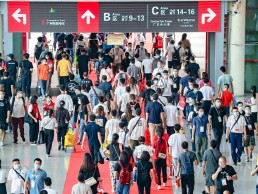
(China) – The 27th edition of the Guangzhou International Lighting Exhibition (GILE) took place at the beginning of August at the China Import and Export Centre. Taking place alongside the concurrent Guangzhou Electrical Building Technology (GEBT) show, this year’s event saw a significant rise in visitor numbers, with the two fairs attracting more than 128,000 visitors from 58 countries and regions over the four days – a 31% increase from the previous edition.
Commenting on this year’s fair, Lucia Wong, Deputy General Manager of Messe Frankfurt (HK), said: “As the industry steps into the new era of lighting, new technologies and business models will need to be discovered to meet the changing demands of consumers. That’s why GILE is such a key industry platform, helping the lighting market to develop more rapidly. I would therefore like to thank the industry for their incredible support in continuing to stand behind the show. The high number of exchanges that took place across the show floor this year proves that face-to-face interaction is in high demand.
“The industry is constantly evolving, with smart technologies, as well as more human-centric and low carbon approaches driving the development of new lighting products,” she continued. “While lighting design is moving towards “smart and healthy lighting”, the current trend is to use innovative ways of thinking to create more energy efficient lighting products. This year, GILE created more opportunities for business exchange. In addition, the fair’s fringe events explored the challenges faced by the industry, and the opportunities brought by technological change, which garnered much positive feedback from participants.”
Under the theme “New era, new opportunity”, the show aimed to encourage industry players to find new applications for lighting technology. This year’s fair was organised under nine key themes, discussing how new technologies can change people's lives, and how industry players can use this to create new business opportunities. Key topics included light art, lighting control technologies, smart cities, residential and commercial lighting.
The next editions of Guangzhou International Lighting Exhibition and Guangzhou Electrical Building Technology will be held from 9 – 12 June 2023.
www.guangzhou-international-lighting-exhibition.hk.messefrankfurt.com
Illuminated River to participate in Totally Thames' Reflections event
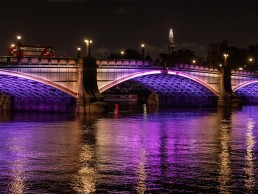
(UK) – As part of Totally Thames’ Reflections event on 24 September, Illuminated River will be lit in a celebratory sequence of majestically evolving light and colour.
The specially programmed display, created by Illuminated River artist Leo Villareal, will celebrate the Queen’s Platinum Jubilee, accompanying an illuminated flotilla along the River Thames, organised by the Thames Festival Trust. Comprised of 150 boats adorned with white lights, the procession will travel at dusk from Chelsea to Tower Bridge, creating a ribbon of light reflected across the water.
Illuminated River’s main colour scheme will be threaded with tones of platinum and purple in a synchronised flow of subtly moving LED lights across nine central London Thames bridges, from Lambeth to London Bridge. The display will be unveiled at sunset on Saturday 24 September and will run until 2am on Sunday 25 September.
The Reflections flotilla will include Gloriana, the Queen’s Rowbarge, which was made for Her Majesty’s Diamond Jubilee; and all participating crews are raising funds for the RNLI, to support the construction of a new lifeboat station at Waterloo Bridge.
Adrian Evans LVO, Pageant Master and Director of Totally Thames Festival, said:“The river was centre stage for Her Majesty’s Diamond Jubilee. Ten years on, the Thames joins her Platinum Jubilee celebrations in magnificent style with a sumptuous, illuminated flotilla and its bridges given gorgeous bespoke lighting specially for this historic occasion.”
Jayne George, Director of Fundraising, Media and Marketing at the RNLI, added: “We are so grateful that Reflections has chosen to fundraise for the new Tower Lifeboat Station. The crew there respond to around 600 calls for help on the Thames each year. The building no longer meets our operational needs, but our new floating lifeboat station at Tower will provide much improved facilities for our casualties and crews and will help us save many lives in the heart of the capital for decades to come.”
Entries open for SLL Young Lighter 2022
(UK) – The Society of Light and Lighting (SLL) has announced that entries for the SLL Young Lighter 2022 are now open. Aimed at people in the early stages of their lighting career, the competition is open to anyone under the age of 30 with an interest in light and lighting.
Entries can be based on any light-related topic, and the winner will receive £1,000 in prize money, along with the prestigious title of SLL Young Lighter 2022.
The competition is designed to provide people with a platform to share their lighting ideas – this could be a piece of research, a lighting concept or design, a new technology or product, or even a proposal for a new lighting metric or design methodology.
Previous winners include Maria Englezou, whose winning paper questioned current approaches to the design of lighting for healthcare facilities rooms; Aluwaine Manyonga, who proposed an off-grid solar lighting system to help provide improved access to education in Africa; and Anna Wawrzyniak, who proposed a light boosting system to support the circadian rhythms of commuters using underground transportation for their commute to and from work.
The competition is open to entrants from all over the world and is broken into three stages. Entry Stage One calls for six introductory Powerpoint slides outlining the entry. These could include images, illustrations, graphics, animations, text, voice etc; at Stage Two, the SLL will ask entrants to elaborate with a short presentation to expand on their initial ideas. This can be in whichever format they feel illustrates the entry best; for Stage Three, finalists will be selected and invited to deliver a 15-minute presentation in front of an online audience.
Entries are open until 25 August. More information can be found on the SLL website here. Or you can email sll@cibse.org for further details.
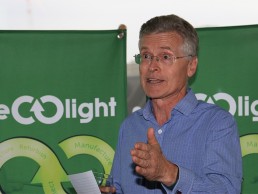
Recolight to spearhead circular economy for lighting industry
(UK) – Recolight has announced that it is bringing together a comprehensive range of services to help the lighting industry to fully embrace the circular economy.
Speaking at a key stakeholder event in London yesterday (21 July), Recolight CEO Nigel Harvey said: “The unprecedented heatwave we recently experienced is a salutary reminder of the need for us all to redouble our efforts to tackle the climate emergency, and that has been one of the key drivers for the way Recolight has transformed its business over the last three years. The circular economy is a vital component of the response to the climate crisis.
“We are now doing more than ever to support a circular economy. That includes product design training workshops to help lighting producers design for circularity, and to navigate the emerging voluntary and mandatory specifications.
“The Circular Lighting Report news service keeps the industry abreast of the latest developments. A certification service will help manufacturers demonstrate their level of compliance with the CIBSE TM66 circular lighting standard. And vitally, the new in-person event, Circular Lighting Live, which takes place in London on 22 September, will provide a unique forum to consider forthcoming standards and legislation, emerging technologies, and new business models.”
Harvey added that the new events and services complement the changes that Recolight has already implemented to try to reduce the level of luminaire recycling, and increase reuse of old lighting equipment, and of excess lighting equipment stock.
“At Recolight, we’re also doing our best to ‘walk the walk’ on the climate,” he continued. “All of our events are hosted at locations that favour travel by public transport. Climate action is one of the criteria in our tenders, and we’ve set an annual internal target for all staff to reduce the carbon footprint of our lamp collection services by 10% this year.
“It is particularly important to mention the pivotal role of the Recolight team in this transformation. I am immensely proud of their passion, energy, and commitment. None of this would have happened without them.”
LEDFlex Group and Lichtvision Design shine a light on hospitality lighting
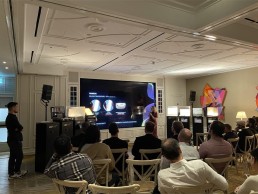
LEDFlex Group and Lichtvision Design, joined forces last month to host their first collaborative VIP event. Held at the prestigious Great Scotland Yard Hotel, guests were welcomed to an evening filled with workshops, canapés, drinks and networking. The extravagant cocktail reception was sponsored by Atrium Lighting, Northern Lights and Zico Lighting.
‘Hospitality Light Lounge - A VIP Lichtvision and LEDFlex event’ offered architects and interior designers the opportunity to understand more about hospitality lighting in an evening that inspired education, collaboration and creativity for a variety of people within the design industry. LEDFlex Group and Lichtvision wanted to share their years of hospitality knowledge through conversation, networking and informative workshop-style talks.
The talks, presented by Laura Čižauskaitė from Lichtvision and Anthony Kerr from LEDFlex, covered a range of topics, from the pitfalls of poor lighting applications to benefits of building relationships with professional lighting manufacturers and develop a better understanding of the importance of hospitality lighting when it comes to curating the perfect ambience.
One of the highlights of the evening was the interactive pods that were custom-made by LEDFlex Group; a standout feature in demonstrating the ways designers could achieve effective lighting in different luxurious environments through applications such as cove, wall grazing, etc. Guests were able to interact with the pods and the mini environments that inhabited them, allowing for more stimulating experiences to be had.
With more than 40 renowned architects, interior designers and press, this was an event that raised awareness of light, and also enlightened guests about the significance it plays in architecture and hospitality.
“We are overwhelmed by the attendance and feedback from the Hospitality Light Lounge event. The guests were fully engaged in an evening of workshops and networking honouring hospitality lighting. Not only did they come away feeling inspired, but also enjoyed a fun-filled evening,” said Anthony Kerr, LEDFlex Group.
Laura Čižauskaitė, Lichtvision Design, added: “I wanted to create a different concept for future events - an event where people can meet and network with different industries, entertain, learn and visit a new, inspiring place. Put all that in one place, and you get a remarkable experience for everyone to remember.”
www.lichtvision.com
www.ledflexgroup.com
WILD issue respone on overturn of Roe v. Wade
(USA) - Women in Lighting + Design (WILD), alongside the North American Coalition of Lighting Industry Queers (NACLIQ) and Equity in Lighting (EIL), has issued a statement in response to the US Supreme Court's decision to overturn the Roe v. Wade ruling on the right to abortion.
The statement, available to read on the WILD website, reads as follows:
"On June 24th the US Supreme Court struck down the long-standing ruling of Roe v. Wade in the Dobbs v. Jackson Women’s Health Organization decision, eliminating the constitutionally protected right to abortion. Women in Lighting + Design (WILD), the North American Coalition of Lighting Industry Queers (NACLIQ), and Equity in Lighting (EIL) believe this polarising decision must lead to a conversation about how self-determination over our own bodies is fundamentally aligned with equity.
"We acknowledge that our members hold a range of political and religious beliefs, and believe that our industry must be diverse and inclusive so that all our members can thrive. This decision by the Supreme Court harms the lighting industry and our greater society by restricting access to healthcare, expanding gender inequality, and jeopardising the right for our members to choose the path that is personally best for them and their families. Without the right to bodily autonomy and privacy, the rights of women, LGBTQIA+, and people of colour are denied. When historically marginalised people have agency over their own lives, diversity thrives. Without it, the diversity problem that plagues this industry will only worsen. When bodily autonomy is denied we lose control over our own future - both personally and professionally. It is the mission of WILD, NACLIQ, and EIL to help the lighting industry understand and counteract the obstacles that our members and other marginalised communities face.
"WILD, NACLIQ, and EIL call on the lighting community to join us in supporting the right of all lighting professionals to make informed, private, healthcare-related decisions and to understand that the greatest impact will be on those without the ease, means, or ability to travel. We call on companies in the lighting industry to offer expanded healthcare and travel benefits where state laws ban or severely restrict abortion access. We call on our colleagues and other lighting organisations to acknowledge the impact of this ruling on professionals in the industry and to amplify our call. As always, we call on the industry to mindfully support pregnant colleagues and working parents on their journey.
"While we recognise this topic is polarising on a deeply personal and political level, the core of the issue is not. This is not about abortion, it is about all individuals having personal dignity and autonomy and the freedom to make intimate and personal choices. Now is the time to find support in our community, have tough discussions, and demand more of employers and industry advocates. It is imperative that we come together in pursuit of equity for all lighting professionals and create a more diverse and inclusive community of which we can all be proud."
www.womeninlightingdesign.wordpress.com

Nobile Italia and Collingwood Lighting join forces
(Europe) - Nobile Italia has joined Collingwood lighting to create a pan-European lighting group under Ambienta’s ownership.
In a move that will see both companies benefit from complementary lighting expertise, product portfolios and supply chain opportunities, the partnership is a significant step in transforming the group into a market leading pan-European player. The alignment will also see the group benefit from opportunities in the areas of product cross sell, R&D collaboration and supply chain.
Hamdi Conger, Chairman at Collingwood, commented "We are delighted to be joining forces with the Nobile team. Our business models, values and ambitions are aligned and with this acquisition Collingwood achieves further international scale, accesses the highly attractive Italian market and gains access to new products we can cross-sell to our existing customers."
Fulvio Nobile, CEO of Nobile, added “We are very proud of our history and success at Nobile. It is an honour to join Collingwood and I am convinced this will help our Company accelerating its future growth potential taking the business to the next stage. Partnering together we will create synergies and great future growth opportunities.”
www.nobile.it
www.collingwoodlighting.com

Jonathan Speirs Scholarship Fund 21/22 winner announced
(UK) - The Trustees of the Jonathan Speirs Scholarship Fund (JSSF) have announced the winner of the 2021/22 award is Ernest Chin Yang.
Yang is currently studying architecture at the Bartlett School of Architecture, University College London. He has a long-standing fascination with light, describing it as “a fundamental pillar of human experience” and the thing that “makes (or breaks) a space”. His impressive portfolio of conceptual designs and exploratory pieces include a final year project that centres on ice, investigating the dialectic relationship between light and this unique material.
His design for a festival of ice set on Lågskär Island seeks to show how it could become a legitimate building material to augment the urban context. In it, he explores how the conditions of transparency, translucency and opaqueness can shift across time, seasons, and frameworks, changing the quality of light and impacting the user experience.
After graduating, Yang plans to work for the Housing Development Board in his home country, Singapore, where he can see an opportunity to make a meaningful difference. By introducing a specific focus on lighting design to the architecture, he hopes to improve the living experience and transform the way everyday Singaporeans interact with their home and city.
The scholarship will be used to support Yang in his final year of architectural studies, helping to pay for more extensive model making and testing of his ideas, as well as setting up a mini production studio including a 3D printer for rapid prototyping.
John Roake, Chairman of the JSSF commented: “We congratulate Ernest Chin Yang on his presentation and portfolio; we were unanimous this year in agreeing he is a worthy and exciting scholar.
“We marked a poignant date in June 2022 with the 10th anniversary of Jonathan’s passing. Our pledge was that we would make a minimum of one award each year until 2023; it is therefore with great satisfaction that we reach this landmark with the next award. As we near the end of the scholarship, we would like to extend our sincere thanks to those companies and individuals who have been so generous with their financial support over the years. It is only thanks to them that we have been able to nurture these talented students in the fields of architecture and lighting.”
More information on past scholars and their progress, as well as news of the final year of the scholarship, can be found on the JSSF website.
Cemdag Lighting Group acquires Noral
(Europe) - Cemdag Lighting Group, an expert in interior and exterior technical lighting, has acquired Noral from Scandinavian Aura Light as part of an ongoing investment and expansion into Europe.
Noral was founded in 1948 by Knut Eng in Orje, Norway. As of its establishment, it has made a strategic expansion by continuing its international incorporation, marketing and logistics operations. Working with world-renowned designers and award-winning design offices to reflect the Scandinavian approach to the design processes, Noral continued to develop its production activities for quality-oriented special lighting fixtures and decorative lighting poles for the needs of cities.
Since 2014, Noral, which was owned by Aura Light, has tended to serve premium product segments by producing lighting fixtures suitable for places where usage conditions are difficult with the slogan “made in Scandinavia”.
At the signing ceremony, held in Stockholm at the end of May, all Noral property belonging to Aura Light was acquired by Cemdag Lighting Group with the signatures of CEO Peter Mannhart and CFO Marie Lantz on behalf of Aura Light, Chairman of the Board İbrahim Süha Cem, Vice Chairman of the Board of Directors Tahir Süheyl Cem and CEO Sina Cem on behalf of Cemdağ Lighting Group.
Aura Light CEO Peter Mannhard said of the move that Cemdag Lighting Group has the right conditions to drive the Noral business forward: “We are happy to have agreed with a company that can keep a well-established brand like Noral as the market leader. I am sure that as a result of the relevant acquisition, Cemdag Lighting Group, which is an expert in interior and exterior lighting, will develop and strengthen the Noral with its knowledge and expertise in its field. It feels safe to leave such a recognised brand in good hands. I look forward to following Noral’s expansion in Europe.”
Cemdag Chairman of the Board of Directors, İbrahim Süha Cem, added that he sees great potential and value in taking over Noral: “We are proud to take over such a well-established brand as Noral, which has been operating in the Scandinavian region for 74 years. Noral is an important brand that has also undertaken serious projects in the Middle East as well as Europe, that produces city lighting fixtures positioned in the upper segment, bringing the Scandinavian design approach to the fore.
“As Cemdag Lighting Group, we have been producing products of similar quality for years, but we continue our activities mostly in Western Europe. We have been following Noral admiringly. With this acquisition, we will position Noral’s headquarters in Germany to continue our work for the Scandinavian and western European markets. We look forward to creating new areas and increasing our brand awareness in our activities on smart poles, street/road luminaires, and tunnel luminaires for the premium product segment in Europe and Scandinavia.”
www.cemlight.com
www.auralight.com
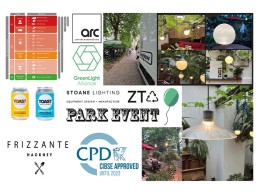
Stoane Lighting’s Park Event makes return
(UK) – For the first time in three years, Stoane Lighting held its renowned Park Event in-person in London this June.
Sustainability was high on the agenda, with Stoane’s Circular Economy-focused product range ZTA, including the first outing for its ZTA.35 and ZTA.100, inter-compatible decorative products with recycled materials, Stoane’s ReNew mobile workshop, sustainability partners eldoLED, Llama Digital, GreenLight Alliance and CIBSE. One of the highlights of the event, alongside the complementary cake, was Stoane’s latest CIBSE-accredited CPD.
Presented by Roger Sexton and Dr. Irene Mazzei, Luminaires and their Environmental Impact Design and measurement for through-life carbon analysis examined embodied and through-life carbon analyses and how Life Cycle Analyses of alternative product specifications can be used to design for the lowest environmental impact. For example, what’s the difference between 90 and 95 CRI? Or manufacturing components in house vs importing from 5,000 miles away?
One guest described the event as “a wake-up call”, while another called it “incredible”.