
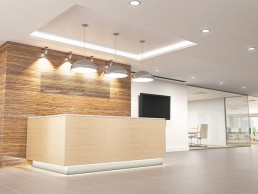
SLL publish specialist lighting guide for FMs
(UK) - SLL Lighting Guide 20 addresses key lighting tasks for facilities managers.
The Society of Light and Lighting (SLL) has published its first guidance document designed specifically to address the key lighting tasks required of facilities managers.
Lighting is a critical element in providing a safe and productive work environment, and much of the management required to procure, maintain and optimise lighting systems falls on facilities managers. The SLL Lighting Guide (LG) 20 sets out a logical approach for non-specialists in lighting to identify and undertake the tasks required in order to "provide the right amount of light in the right place for the right amount of time".
The guide explains the three critical aspects to meet this objective; firstly, quality of light - lighting levels, uniformity, unified glare rating (UGR) and colour rendering; secondly the quantity of light - watts and lumens, colour temperature and fidelity, useful life expectancy of LED light sources; thirdly is timing and lighting controls.
LG20 also includes guidance on energy consumption and assessing the maintainability of existing lighting installations. This information is often required in relation to service level agreement, or can create a compelling argument for upgrading lighting systems, in terms of investment in energy savings, reduced carbon footprint and increased reliability.
The guide features three case studies, each helping to provide practical examples and context. These look at lighting for a data centre; upgrading emergency lighting in a 6-storey building; and the circular economy and repurposing luminaires. There is a growing interest and need for a circular economy approach, meaning that future lighting installations may be made up of refurbished or even leased products.
Written by Sophie Parry, vice-chair of the SLL Technical and Publications committee, in conjunction with the CIBSE Facilities Management group, LG20 is designed to be supportive of facilities managers with knowledge of electrical services, but whose work may occasionally involve lighting or related decision making.
Regarding the aims of the guide, and in developing communication between related disciplines, Parry said: "As the construction industry aligns with the increasing drive to net zero carbon by 2050, one of the methods being considered to reduce embedded carbon within a building's fabric is to re-furbish existing buildings where possible, rather than demolish and re-build. The refurbishment scope and complexity will vary on a project by project basis, but in many instances will require local knowledge and input from the incumbent facilities manager. it is therefore imperative that facilities managers have the correct knowledge level/access to knowledge of many construction disciplines to add value to such projects."
LG20 is the latest addition to a series of application-specific Lighting Guides, produced by CIBSE and the SLL. A full list of publications is available via the SLL website, including the SLL Code for Lighting and the Lighting Handbook.


Entries open for 2021 Casambi Awards
(Finland) – Winners to be announced at Casambi Summit on 4 March 2021.
The entry process for the 2021 Casambi Awards is now open. The award winners will be announced at the Casambi Summit on 4 March 2021.
Returning for a second year, the judges for the 2021 Casambi Awards are Kai Piippo, Head of Design at Light Bureau, Pavlina Akritas, Associate Lighting Designer at Arup, Andrea Nava, Managing Director of Erco Italy, Marc Juarez, Technical Director at Seoul Semiconductor, and [d]arc media Managing Director, Paul James.
To enter the awards, participants are invited to fill in a form on the Casambi website here, and submit it together with 4-10 photographs.
Casambi stated: “You are free to nominate any types of architectural lighting projects that include Casambi technology, and it can be as many projects as you like. The project has to be at least in the final installation phase, if not completed, and there are no categories nor any restrictions on the project’s location. You can also nominate projects as a group.
“It doesn’t matter if you are a lighting designer, electrical consultant, architect, interior designer, commissioning engineer, or just a general influencer, as long as you are passionate about the project and know how the project came about.”
The awards are free to enter, and entries will be open until 15 February 2021.
The Light Retreat launched to offer escape and support
(UK) – Initiative seeks to boost positivity and encourages taking time out.
Jess Gallagher and April Dorrian have launched The Light Retreat – a social media campaign promoting escapism and positive mental health.
The Light Retreat, which can be found on Instagram at @the_light_retreat, came about from conversations the pair had about days when “it all got too much and about where as a result we would rather be” – a sentiment that many can relate to in these stressful times.
“We have been friends for more than 15 years, well known faces in lighting, heading up various initiatives and projects. But this was the first time we had done something together just for us, with no formal associations to a brand. We were committed to offering comfort silently at a chaotic time, firstly to each other and then to others.”
Through the account, Gallagher and Dorrian hope to give a glimpse of forgotten home comforts, creative or craft projects, and offer “warm mugs of tea and kindness”.
“We increasingly felt that life needed to slow down, we needed to breathe out, we wanted people to use less block capitals, less neat sound bites and bulletens. We recognised people needed to retreat, we simply offered a safe place to go.”
The Light Retreat therefore looks to offer a virtual safe space, encouraging people to take time out to enjoy the simple pleasures in life – craft, cooking creativity, and most importantly, community and friendship.
Jess Gallagher said: “The Light Retreat is a place for good things you have noticed rather than press releases or project shots. April and myself are not striving to ‘hit the market aggressively’, we are not ‘smashing it’. We have simply come together to offer Retreaters a warm welcome, in a special place, where they might find a glimpse of Retreat regulars merrily going about their days blissfully free of any thoughts of the Pandemic.”
April Dorrian added: “One of my personal favourite Retreaters is our Hackney Hound. There is something quite magical to me, in an increasingly complex and anxious world, about escaping to a place where true happiness is found on the paw, ears pinned back, seeking large sticks for the Retreat ‘finds shelf’ and dreaming, legs twitching mid snore, of chasing squirrels up trees. I rather think we can all take something from a life in the day of our Hackney Hound.”
Find The Light Retreat on Instagram at @the_light_retreat.
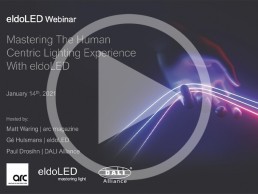
eldoLED: Mastering the Human Centric Lighting Experience
In this technical webinar, presented by Gé Hulsmans of eldoLED with guest speaker Paul Drosihn of the the DALI Alliance, in association with arc magazine, you can learn how to achieve the optimal human centric lighting experience. The presenters will highlight the requirements of a reliable lighting control system, LED driver and light technology.

Nulty appoints Gary Thornton
(UK) - Thornton joins the studio's UK office as Associate Lighting Designer.
Lighting designer Gary Thornton has joined Nulty's UK team as Associate Lighting Designer, the practice has announced.
Thornton has extensive knowledge of the lighting industry, and has previously been responsible for the delivery of an array of high-profile projects, from Bluewaters Island in Dubai, to Toronto's Four Season's Hotel. He joins the team at an important state in Nulty's evolution, as the company gears up to celebrate its 10th anniversary later in the year.
"I'm over the moon to be joining Nulty at such an exciting time in their journey. I am looking forward to delving into their current projects, being able to creatively input and take projects forward to completion, as well as seeing to bring new project work into the company," Thornton said.
Paul Nulty, Founder of Nulty, added: "I am thrilled to welcome Gary to the Nulty team. We are entering a new year with an exciting work load and I know Gary will be an asset in the delivery of our projects. His experience and creative attitude is the perfect fit for all of us at Nulty."
Technilum: La Croisette, Cannes
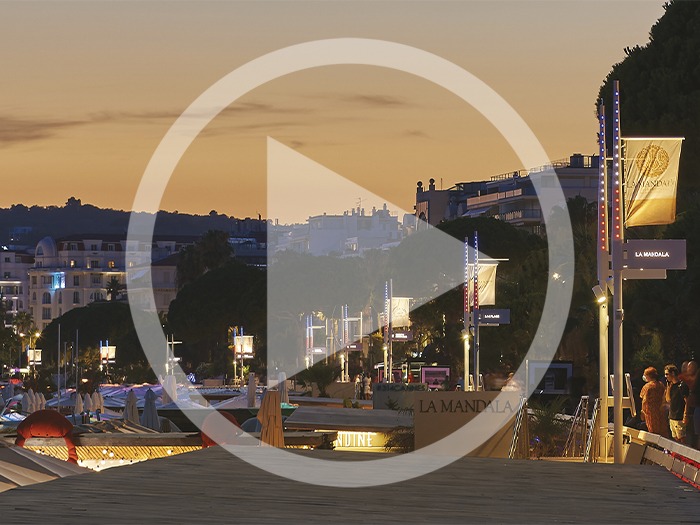
French manufacturer Technilum has developed chic tailor-made lighting structures for the La Croisette promenade in Cannes. Imagined by Belgian designer Alain Gilles and lighting designer Vincent Thiesson (Agence ON), these high-end lighting systems now equip the beach entrances of Cannes.
Created to ease congestion and to enhance the public realm, this extremely elegant lighting furniture is also incredibly smart, with the integration of 10 additional features, including dynamic and texturised lighting, alongside signage, CCTV, speakers, menu-holders, mailboxes, etc.
LPA: Magical Shores at Siloso, Singapore

Magical Shores at Siloso is a grand scale, multi-sensory experience that transforms Singapore's Siloso Beach and its islets on the island resort Sentosa into an interactive light installation.
Created by Lighting Planners Associates (LPA), the permanent installation along the 400-metre sandy beach was set as a part of the island revitalisation programme. Inspired by the rich biodiversity of the island, visitors can enjoy the interactive lighting and projections that respond to the weather and movement of the people.
Read more about LPA in a special 30th anniversary feature in arc 119 here.
Video courtesy of LPA.
Fisher Marantz Stone: Shanghai Bund

Starting in April 2018, Fisher Marantz Stone spearheaded a mammoth re-lighting project in Shanghai's Bund district that saw 25 buildings along the Huangpu River illuminated in a warm white light. Paying homage to the former high pressure sodium lighting system, FMS, alongside Uno Lai Lighting Design and six other local lighting specialists, utilised a CCT ranging from 1800K to 3000K in a marked contrast to the dynamic light shows of the Pudong across the river. This warm white light also helped to showcase the classical architecture of the Bund, celebrating its history and creating a waterfront for the people.
Read more about this project in arc 119 here.
Video courtesy of FMS.
Light Collective: The Perfect Light Experience
Following on from their Perfect Light Project, Light Collective has launched the second film in the series; a documentary that follows five lighting designers on a trip to Japan in a quest to find the perfect light experience. The journey was made in 2018 and shown at private viewings in late 2018 and early 2019.
Light Symposium Wismar 2020/21 moves online

(Germany) - The three-day event to take place on 10-12 March 2021.
The upcoming Light Symposium Wismar 2020/21 (LSW 2020/21), scheduled to take place on 10-12 March, has been moved online in a new, remote format via Microsoft Teams.
The symposium, rescheduled from 2020, is a three-day event that will aim to bring together the latest insights into the future of daylight and artificial lighting in healthy, built environments with respect to research, theory, technologies, design and applications.
An occasion for researchers, students and practitioners who wish to keep up-to-date with recent findings, the forum will look to deliver state-of-the-art discoveries and breakthroughs that explore how daylight and artificial light affect the mental and physical health of humans in natural and built environments.
The interdisciplinary structure of LSW 2020/21 promotes future oriented discussions on the importance of light and the lighting design profession.
The event will include 14 renowned speakers from fields such as architecture, lighting design, engineering and biology, as well as environmental and medical science. Experts from Germany, USA, Canada, Switzerland, Italy, Austria, Sweden and the UK will present their talks in four different thematic tracks: Daylight Design Practice, Daylight Research and Related Aspects, Artificial Lighting Design Practice, Artificial Lighting Research and Related Aspects.
Confirmed keynote speakers for the event include neuroscientist Dr. George C. Brainard from Philadelphia University and Thomas Jefferson University, and Speirs Major principal, Mark Major.
The current programme is as follows:
Wednesday 10 March 2021
Light4Health Public Workshop at Light Symposium Wismar 2020/21
| 14:15 | An Introduction and Welcome (Prof. Michael F. Rohde & Asst. Prof. Dr. Karolina Zielinska-Dabkowska) |
| 14:45 | Panel Discussion with invited members of Light4Health team |
| 16:00 | End (Sponsors meet LSW participants) |
Thursday 11 March 2021
| 11:00 | Opening Welcome - Prof. Michael F. Rohde, Prof. Achim Hack, Dean of HSW, Faculty of Architecture |
Daylight Design Practice
| 11:15 | Assoc. Prof. Marie-Claude Dubois (Keynote Speaker), Department of Architecture and Built Environment, Lundt University |
| 12:15 | Giovanni Traverso, Traverso-Vighy Architetti |
| 12:45 | Prof. Dr. Marilyne Andersen, Laboratory of Integrated Performance in Design, École Polytechnique Fédérale de Lausanne |
Daylight Research & Related Aspects
| 14:15 | Dr. George C. Brainard (Keynote Speaker), Philadelphia University & Thomas Jefferson University |
| 15:15 | Prof. Dr. John Mardaljevic, School of Architecture, Building & Civil Engineering, Loughborough University |
| 15:45 | Coffee Break (Sponsors meet LSW participants) |
| 16:15 | Dr. Ahmet Çakir, Ergonomic Institute |
| 16:45 | Dr. Jan de Boer, Fraunhofer-Institut für Bauphysik |
| 17:15 | Panel Discussion |
| 18:00 | End (Sponsors meet LSW participants |
Friday 12 March 2021
| 11:00 | Opening Welcome - Prof. Michael Rohde, Asst. Prof. Dr. Karolina Zielinska-Dabkowska |
Artificial Lighting Design Practice
| 11:15 | Mark Major (Keynote Speaker), Speirs Major |
| 12:15 | Anne Bureau, Wonderfulight |
| 12:45 | Prof. Kevin Hauser, Oregon State University |
Artificial Lighting Research & Related Aspects
| 14:15 | Prof. Dr. Eva Schernhammer, MD (Keynote Speaker), Medical University of Vienna, Centre for Public Health |
| 15:15 | Catherine Pérez Vega, The Free University of Berlin & Leibniz Institute of Freshwater Ecology and Inland Fisheries |
| 15:45 | Coffee Break (Sponsors meet LSW participants) |
| 16:15 | Dr. John Barentine, International Dark Sky Association |
| 16:45 | Panel Discussion |
| 17:30 | Farewell Speech and Announcements |
More information on participation fees and registration will be available soon on the Light Symposium Wismar website.
[d]arc media announces launch of [d]arc sessions
New networking event for specifiers and suppliers to take place in Mykonos in October.
[d]arc media, the market-leading publisher and event organiser for the international lighting design industry, has announced the launch of [d]arc sessions, a series of exclusive and intimate gatherings for lighting specifiers and suppliers.
The first [d]arc sessions will take place at the Royal Mykonian resort in Mykonos on 5-8 October 2021 with more planned in different resort locations for the future.
[d]arc sessions has been designed with COVID and a ‘new normal’ in mind. It comprises four key elements: Speed+Sync meetings, Symposia speaker sessions, Sustenance breakouts and Social celebrations. Guests attend [d]arc sessions to specify and source projects; to escape, regenerate and rebuild, always in beautiful and abundant settings.
To create a sense of community and shared experience, guest numbers are strictly limited. Every specifier attending [d]arc sessions will be carefully selected, vetted and authenticated to ensure suppliers are meeting genuine decision-makers with purchasing power, actively working on live lighting projects. The latest event management / app technology enables qualified meetings and quantifiable ROI.
Winners of the six Project categories in this year’s [d]arc awards (PLACES - Low / High Budget); SPACES - Low / High Budget); and STRUCTURES - Low / High Budget) will also receive an all-expenses paid trip to [d]arc sessions to ensure the latest exemplars of award-winning projects are in attendance. The deadline to enter these categories for this year’s awards is 31st January.
“I am very excited about this new event for the lighting specification industry,” says Paul James, Managing Director of [d]arc media. “I believe that a resort is the perfect location for a new kind of intimate face-to-face event during these challenging times. Participants will be able to relax as well as do business in a safe and creative environment.”
[d]arc sessions also enjoys collaboration with leading industry brands. It is hosted in association with arc and darc magazines and the [d]arc awards, and includes speaker-driven content curated and presented by the [d]arc media editorial team. The event is organised and delivered by Connect X, the team behind hotel design event HIX.
Suppliers who are interested in participating in the event should contact the [d]arc media team via the [d]arc sessions website.
www.darcsessions.com
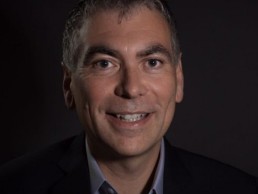
Martin Valentine to join Filix Lighting
(Croatia) – Valentine joins Filix with 35 years’ experience in the lighting industry.
From 1 February 2021, Martin Valentine will join Filix Lighting as Global Lighting Solutions Specialist and Managing Director of the brand’s new UK office.
The appointment comes as part of a growth strategy from Filix aimed at better supporting the global lighting community.
Valentine arrives at Filix with 35 years of experience in the lighting industry, with an in-depth knowledge of lighting design, business and product development gathered at organisations such as AECOM, Abu Dhabi Municipality and most recently Ligman.
Aside from his core roles, supporting lighting designers and engineers internationally, Valentine will, through his membership and involvement in organisations such as SLL, IALD and IES, interface with the lighting community and continue to work on education and industry-wide research.
It is hoped by Filix that Valentine’s experience and knowledge across multiple areas of the industry will bring the brand a much-needed boost to continue its growth and contribution to the lighting industry.