
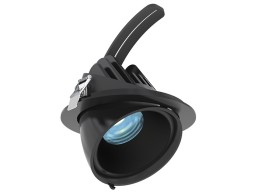
CLS Mika Colour Flow & Tunable White
The Mika Colour Flow series is available in white, RGBW/RGBA and Tunable White variants. The fixtures are delivered with a CLS LDC-407 DMX driver, with the optional possibility for wireless DMX or Casambi control. The Mika offers 58° vertical adjustability, while optics can be changed in seconds. CLS also manufactures a wide range of Jade rail fixtures, which are equipped with the same LED modules and optics. This enables lighting designers to combine the Mika and Jade series.

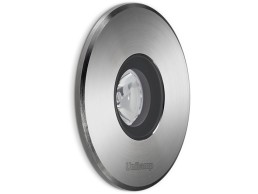
Unilamp Volga
Volga is a new series of robust, marine-grade stainless steel fixtures, featuring an underwater spotlight, in-ground uplight and spotlight. It utilises high power LEDs in 2700K, 3000K or 4000K, with high quality optical lenses offering narrow, medium, and wide, as well as elliptical light distribution. Volga is an ideal choice to illuminate swimming pools, decorative pools and fountains. To avoid installation issues, Volga is pre-wired and fitted with an anti-condensation device. The marine-grade 316 stainless steel body guarantees corrosion-free appearance throughout the product’s lifetime.
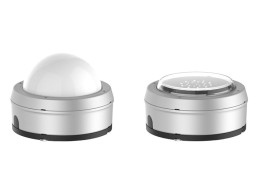
Lumascape Faisca F6
The Faisca F6 is an intelligent and high-powered architectural marker light with a simple yet elegant design that allows for easy and rapid deployment. Plug and play electrical connections further contribute to the quick and easy installation process. The F6 utilises ultra high-performance colour LEDs, achieving high intensity while maintaining beautiful saturated colours with perfect even illumination. From highlighting architectural elements to smooth crossfades and colour flows, there’s no limit to what can be achieved with the F6 and other luminaires in the PowerSync4 network.
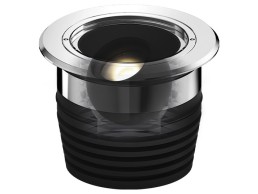
LightGraphix LD155
The new LD155 is an IP67-rated, high powered, adjustable uplight designed for internal and external use. The product features a new light engine giving more than 900lm output, and an innovative new ball joint design. This houses the LED, optics and accessories, allowing 360° rotation and 25° tilt adjustment in any direction. Quick on-site focussing is achieved with a removable inner bezel allowing all adjustments to be done from the front with no requirement to remove the product from the mounting surface.
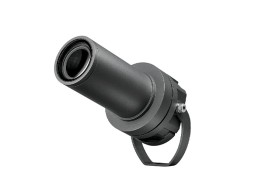
We-ef FLC210
Winner at the Design Plus powered by Light+Building 2020 competition, the FLC210 profile projector is part of We-ef’s FLC200 series. Measuring just 298x172x197mm, the projector is extremely compact, but its power ratings of 18W and 26W and two different colour temperatures make it an ideal choice. The FLC210 profile projector can be used to subtly project interesting motifs onto buildings and surfaces in towns and cities, or convey advertising messages.
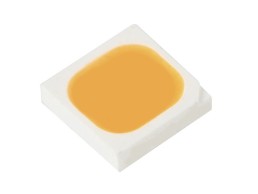
Seoul Semiconductor SunLike
SunLike fundamentally transforms LED lighting technology by removing the blue LED light source and replacing it with a purple light LED chip. An ordinary LED spectrum is very different to sunlight, whereas SunLike’s spectrum is almost the same. Objects lit by SunLike appear as they would in real sunlight. Humans, animals and plants have been under sunlight for millions of years, with SunLike, Seoul Semiconductor are bringing it back.
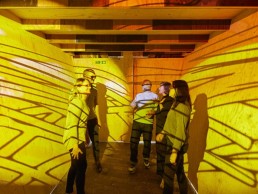
LDF 2020 to go ahead
(UK) – London Design Festival organisers confirm event will still take place.
In an official statement released, the organisers said: “In light of the Covid-19 pandemic, we have been looking hard at our options and have consulted our partners, the broad design community, and the Mayor’s office about London Design Festival going ahead in September.
“The overwhelming consensus is that it should, and that it is important the design community stands together in these challenging times. We want to put the spotlight on the brilliance of London’s design scene at a time when it needs to be promoted more than ever.
“LDF 2020 will of course be different from any other. With very little, if any, international travel, it will be a Festival for Londoners with a strong focus on the local. We are adapting the festival accordingly.
“Over recent years the number of Design Districts has grown. Each one has its own growing personality and enables audiences to walk between different shows. We hope that these local clusters of design will be a defining feature of LDF 2020.
“Like everyone, we are planning greater online activity and are exploring new formats to present design and promote discussion. Audiences are hungry for content, but some will not be able to physically visit different locations. We must make it easy for them to see and hear what design in London has to offer.
“London now has the biggest creative economy of any city in the world and our design reputation is renowned. Showcasing is a key part of the sector and the platform the festival offers is an opportunity to say something. It is important that major events like the festival happen this autumn, not least as a symbol of London’s determination to maintain its creative and cultural leadership.
“Many are still deciding how they participate. We appreciate that some won’t be able to decide until near to the festival dates, so we are being as flexible as possible with our deadlines. Accordingly, we will re-format the guide to allow printing to happen as late as possible. The digital option can be taken up at any time.
“There is much talk of the ‘new normal’ and we are all trying to adjust to its terms and conditions. We will do everything possible to make this year’s Festival a success for all our partners and an audience hungry for design. We sincerely hope that you will choose to take part in LDF 2020.”
London Design Festival is currently scheduled to take place from 12 – 20 September.

[d]arc thoughts: Episode 3 | In Conversaion With: Sarah Cullen, [d]arc media and Bianca Yousef, 74

In this next instalment of [d]arc thoughts, [d]arc media's Assistant Editor, Sarah Cullen, sits down with Bianca Yousef, Associate at interior design studio 74. In this video, they discuss how decorative lighting was integrated into the project Symons House student accommodation in Leeds, UK - a new, sophisticated student living space recently completed by 74. www.weare74.com
Video edited by Assistant Editor, Sarah Cullen.
Music from bensound.com
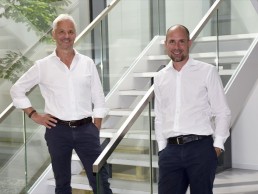
We-ef to appoint new Managing Director
(Germany) – Mario Dreismann to succeed Stephan Fritzsche as Group Managing Director on 1 October 2020.
After setting the course for the future of We-ef by joining the Fagerhult Group three years ago, Managing Director Stephan Fritzsche has decided to initiate the succession process after 34 years in the family business, stepping down as of 30 September this year.
Fritzsche is to be succeeded by Mario Dreismann. Dreismann joined We-ef on 1 June, and is working together with Fritzsche during a handover period until the end of September. On 1 October, Dreismann will then officially take over full responsibility as Managing Director of the We-ef Group.
After graduating with a degree in Engineering, Fritzsche joined the family business in 1986. He successfully led We-ed through major challenges such as globalisation, digitalisation and the LED revolution to its current market position.
Dreismann has international management experience as a business leader, and is an expert in the construction and lighting industries. Following his graduation in business management, he was Head of Sales and Marketing at Dorma for several years. In his most recent position, he was CEO at Ansorg and a member of the management board of the Vitra Group, where he was responsible for the shopfitting division.
“I am passionate about good architecture and lighting, two things that We-ef combines in an ideal way,” he said. “At the same time, I see myself as a team player with a strong interest in products, leadership and people.”
The aim of the succession plan is to hand over responsibility to the new management of Fagerhult Group as smoothly as possible. “We are pleased to welcome Mario Dreismann as the future Managing Director of the We-ef Group,” said Fritzsche. “He is well-qualified to carry forward the success, the specific character, and the innovative spirit of We-ef in an increasingly complex world.”
IALD: The Circular Economy + Impacts on Lighting Design
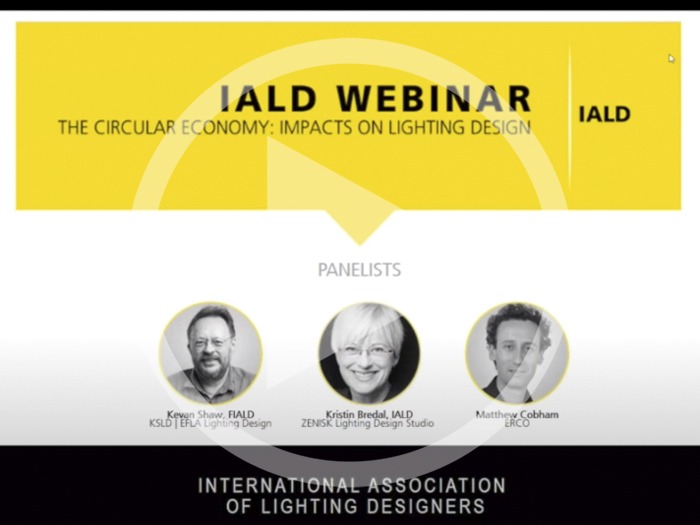
In this IALD webinar, a panel of lighting professionals examine how lighting design will likely be impacted by the transition to a circular economy.
Kevan Shaw, Design Director at KSLD | EFLA Lighting Design, Kristin Bredal, Founder of ZENISK Lighting Design Studio, and Matthew Cobham, Global Cluster Manager, Culture at Erco discuss what the circular economy is, what the EU's new plans entail, what this means for lighting designers, and how manufacturers will have to adapt.
Covid-19 and the Lighting Industry
Richard Taylor, Founder and Director of Graphic Strategy, shares findings from a recent survey of the lighting industry on the impact of Covid-19, and what it means for the industry going forward.
It is hard to imagine a more challenging series of events. Starting with modest concern over travel and meetings back in January, within 10 weeks our capacity to meet up, to visit clients and sites, to audit suppliers and at a more personal level, even to see family and friends or go to the supermarket to collect dinner has been dramatically altered. I appreciate that this isn’t the same everywhere, and of course hope, like quite a few million other people, this won’t last too long or the impact be too deep, but we have, unequivocally, entered a new era and with that, some very fundamental changes in the way we can, and very possibly also will do business in the future.
What happened?
I’m an engineer, not a doctor, an epidemiologist, or a virologist. I’ve worked in and around the lighting industry from almost 30 years, and so whereas I can only report anecdotally about the Covid-19 situation, I can report, from the coal face, what’s happening and where people are looking. I had the idea, back in late February, to ask my network via LinkedIn and a few other channels, how they look at the situation, and actually wanted to get this article written much earlier, but as the situation evolved, I got more and more valuable insight that I would like to share today. More than 400 people got in touch with me, initially via the survey as well as by email and then more and more Skype, Zoom or Teams calls. The sheer volume of input humbled me, and I’m truly grateful to everyone who took the time to contribute. Your opinions have helped form this piece.
Why did I bother?
Honestly, I love numbers and current affairs! I was in China in early January this year, and by chance, managed, quite literally to “miss the boat” back from my location to Hong Kong airport for the flight home. Luckily I had a bit of time, so with the help of some Chinese friends, I was able to get a bus from the border to the airport. Unlike the normal process however, I went through three temperature checkpoints, and also a health checkpoint, and more people than usual were wearing masks. In the times of the SARS outbreak, when I was stationed in Hong Kong, I remember the measures taken, and these struck me as being similar. What surprised me was not the controls in Asia, but much more the complete absence of any controls upon my return to London later that day. When I got home, one of my first tasks was to work out how bad this situation could get and to order a few bottles of hand gel to go with the rest of my household resilience kit.
The lighting industry never gets much attention – we may be only 2–5% of the total investment cost of a building, but other sectors always seem to get more attention. I decided, therefore, that a lighting-centric survey to gauge the opinions, outlooks and thoughts of our branch would be a neat idea. I hope, as you read this, you agree!
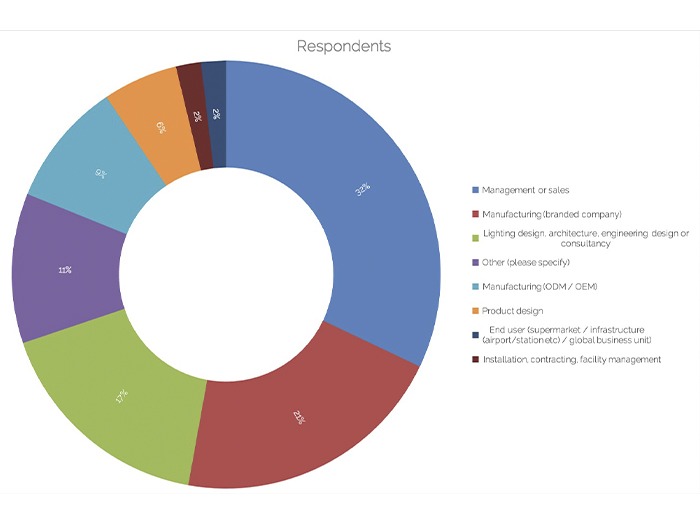
Since there are a lot of statistics in the findings, I’ve tried to separate them instead of just showing a big Excel chart, so of the 403 respondents, where were you from?

Ensuring representative feedback is also good, so I then filtered the results to work out the backgrounds of the generous respondents, and ended up with what I hope is a good mix of people who understand the sector, and also understand what is happening in the industry.
Crisis or business as usual?
It would appear that the lighting world has gravitated into three main groups: optimism, resignation and despair. The timing for a global event on this scale is never going to be good, but the Christmas/Lunar New Year/Product launch/Covid cycle has hit supply chains especially badly. With roughly six weeks from the world’s lighting factory to the market, and approximately the same six weeks between the situation in Asia settling and that in Europe exploding, the logistics of light never had a chance. Some things happened as usual – I was actually at Euroshop and noted the occasional face mask but didn’t really see anything untoward during the trip – three weeks later, meeting some clients and friends over in Frankfurt, the situation couldn’t have been more different with deserted airport concourses and 80% empty hotels.
Above all, what is now common was already in the early stages – a sense of concern, even worry about speaking to the “wrong” people or being in the “wrong” place and risking exposure inadvertently to this terrible new-age pathogen. On the streets of the UK, and indeed from my network I believe many other cities around the world, there is a mistrust of “others”. Who has the virus? Who could infect me? Should they be out? Are they panic buying? Equally we see a lot of happy things, such as companies working incredibly hard with limited workforces to supply key projects, obviously at the moment especially in medical fields.
How long do people believe this will continue?
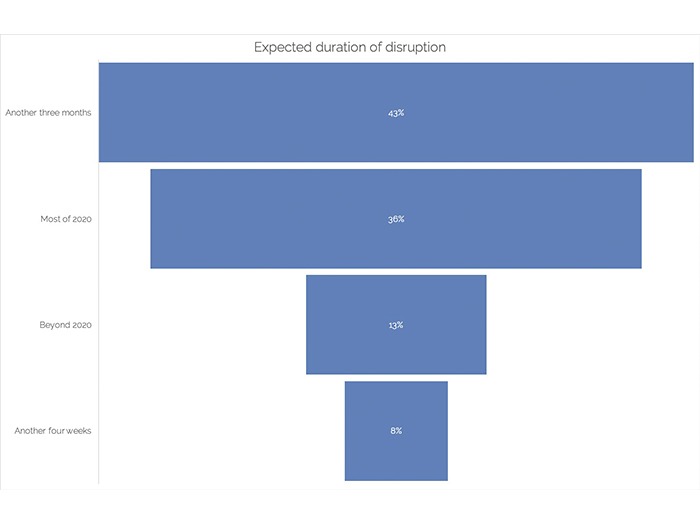
In honesty, those who answered early in the process were naturally more optimistic than those who were answering in mid-March! The government position of many European states was alarmingly relaxed until the numbers started skyrocketing back in early March. If I analyse the data as a time series, the curve looks quite similar to that of the virus, with the expected disruption share doubling in the “most of 2020” category during the past three weeks.
Disruption has many facets that are temporary and variable. At the start, it was the loss of freedom to fly, to drive, to travel. This has rapidly evolved to a more fundamental level of shops, bars, restaurants and “non-essential facilities” being closed down and the excitement isn’t buying a new outfit, but working out if your local store still has bread or salad on the shelf. When the winter weather is bad, and the police advise against all “non-essential” travel, the roads don’t look much emptier than usual, but adherence seems to have taken on a new level of responsibility, partly due to enforcement, but equally due to self-preservation instincts. Equally isolation-fatigue, even amongst some of my contacts, set in during early May and people are electing more liberal interpretations.
The disruption for lighting is also self-evident. Many of my dear friends, some of them ex-colleagues and some working for clients of mine are feeling personal disruption. Their places of work have shortened, in some cases radically, their working weeks. There are factory closures, extended home office demands, and, of course, some clear challenges to what the market needs and when. Building sites are suffering from massive disruption – many are still open, or soon will be, but recovery is slow.
As countries emerge from this crisis, one of the key areas of investment by the governments will be in infrastructure to help restart the economy. I’m not suggesting that this will lead to a bonanza of lighting business, but I do think that it’s more than plausible to expect businesses to think about how a facelift – for which lighting upgrades are a great idea – can help them appear as the phoenix arising from Covidian ashes.
Changes for the way we get information?
One issue which was significant was the willingness to go to the bigger shows.

Obviously we now know that Light + Building is not happening until 2022 and that the US LightFair is also off the cards now until it comes to New York in 2021. The other big Asian shows seem unviable due to travel restrictions and therefore people need to get their info in different ways.
What interested me was the clear shift that roughly half the respondents were willing to go to shows at a new time, and half were not, or were at least unsure. Mapping the data in this area against the background provided insight. The “show fans” were, to 84%, occupied within the lighting manufacturers, and so “must” go, whereas for those with a choice, the willingness to get on a plane and visit Frankfurt, Hong Kong or Las Vegas is extremely limited.
It has been reported on, comprehensively, that the silver lining of the Covid-19 cloud is a breathing space for the planet in terms of global emissions, and I do have to ask myself why people go to shows. Sure, they’re fun, and yes, people meet people and see new products. At the same time, some of the much smaller shows, such as [d]arc room, offer local venues and ways for people to connect in a much more meaningful manner than the big, noisy mega-shows that we have all become so used to visiting.
For the record, I enjoy Light + Building and think that Messe Frankfurt does a great job, but for a small business like mine, it’s a huge cost to go there, the hotels are notoriously expensive, and the quality time is spent with people. Now we have all got used to using Teams, Skype, Zoom and others, maybe we could start to wake to a new environmental responsibility, and participate in more virtual events rather than flying 1,000 or 5,000 miles to see a luminaire?
The future of travel, will largely be defined by how well governments manage their part in this event. Over 60% of respondents were unconvinced by their local government’s response in guiding and mitigating the effects, with some particularly harsh comments – I won’t share the details – about southern European, British and US institutional failings in preparing when they had a chance.
What are the current key disturbances people are worried about?

As is often the case in surveys, the category “other” revealed very useful comments such as:
• Challenges to complete necessary development projects
• Defocussing away from important innovations
• Urgent need to consider long-distance outsourcing and bring production back to base
• I’m worried that the market will only get cheaper and forget how important quality is
• Big and small innovators will all suffer disproportionately
• Further delays in projects completion
• Costing going up and the market will go down
On a brighter note, some of the individual conversations I had were a little more positive:
• This will lead to more innovation as “afterwards” people will need to focus on new, differentiated solutions
• The bulk and commodity model will be offset by investments into new technology, if companies are ready
• Lighting design will start to be taken seriously to create healthier buildings
• Building technology will play a role in suppressing future pathogens
There are also quite a few people who voiced concerns about media coverage and even that the whole “event” is a conspiracy and may not even be real:
• Scale of mass media conspiracy theorists and the unfortunate impact these evidentially have on the masses!
• Stupid decision made from fear and incompetence
• Fear
In terms of mitigation, I hope that people will start to rethink lighting.
How can we react?
One final thing I really wanted to know was how people are reacting to the changing situation. The respondents were clear that travel is tough, at least internationally, and increasingly that national travel is also less desirable and in many cases not really possible. The answers are shown here:
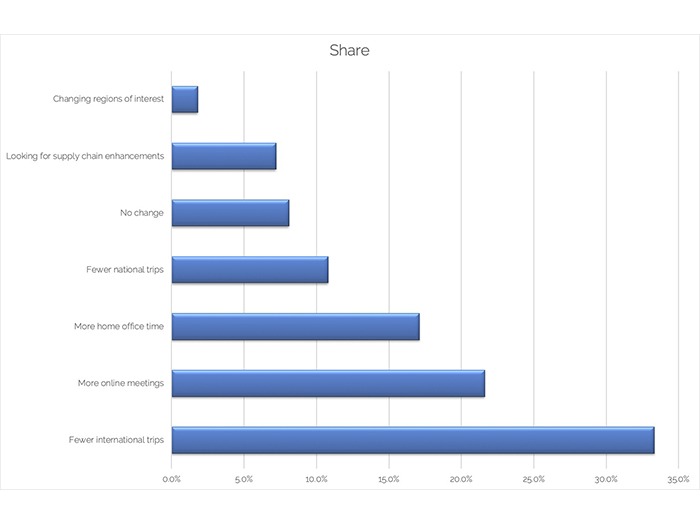
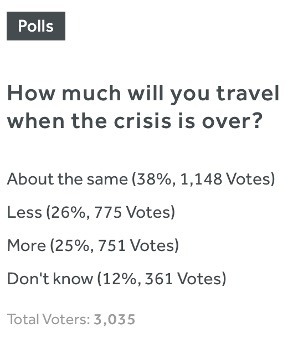
What surprised me was how little, at least until the end of the survey period, people seemed to be considering where the future regions of interest may be. Sure, this is a global event and as such, everything is challenged but tomorrow is a new day. I’ve run my own small business since 2008 and there are good months and those when you start to question the decision to set up in the first place! A recent poll from the venerable “Business Traveller” magazine revealed that the recovery should be reasonably quick, but still 26% of respondents expect to travel less in the future.
It would be inappropriate to say “you should do xyz” yet I really hope that companies and individuals can find the time to appraise their existing business strategy and think about what the future can hold. Clear shifts are under way, right now.
1. The supply chain model with the just-in-time version followed by many suppliers is not resilient – a friend of mine told me recently that just-in-time is never resilient, but I disagree it’s about planning, cooperation and strategy.
2. Automation and configuration need to come of age. You can order a Tesla online, you can configure a laptop online, you can design a kitchen online, and the rest of each of those processes is fluid and interconnected right up until installation. Lighting products are not as complicated as a car and I really believe that we need to consider how lighting design, lighting technology, site management and product configuration can be programmed to work with each other.
3. Yesterday’s boom market isn’t tomorrow’s – there is a clear shift in applications that will make life very interesting for product and solution development over the next few months.
4. Some companies have adapted very rapidly – it’s definitely worth mentioning that quite a few operations have shifted from their usual business to supporting, in especially honourable cases, more or less at cost, the creation of additional medical facilities in various countries – it’s spectacular to see that even in these challenging times, the “greater good” has not been forgotten and well done to them all.
On a final note, one respondent did make a very salient comment about a missing option, so without naming him, I’d like to say obviously I agree, and that personal health, safety and wellbeing must always be the highest priority. What we can do in small, and what our health services do on a much larger scale deserves appreciation and especially for the latter, gratitude, respect and admiration.
There was a lot more insight and feedback as well as naturally my own personal engagement with many different industrial channels, so I’d be delighted to hear from any interested readers if you would like to know more. You can reach me at richard@graphicstrategy.net. Many thanks for taking the time to read this. I wish us all strength, health, courage and vision now and always.
The Leader As A Beacon
Lighting Designer Patricia Lopez Yanez shares some vital lessons that she has learnt across her career in her myriad roles as client, leader and creative director.
Traditional educational institutions prepare students to be design consultants, but not necessarily leaders. Leadership is something that is learnt with time, in practice and by working in the real world, however strong professional skills are of course always required, and act as a base for career growth. In this article, I would like to share the main lessons learnt, reflections and experiences that have opened my eyes in my role as a client, leader and creative director, which can be a guide to other lighting designers to understand better the dynamics of the design and execution of a project.
Working as the Lighting Design Director for a real estate developer has given me a unique insight of the client’s and project’s requirements. Firstly, from this perspective, things are perceived very differently than from a consultant’s point of view, as many additional factors and stakeholders need to be considered in the design process. I have understood the importance of surrounding myself with a team that I completely trust and that have faith in me as their leader. Finally, working in this role, my appreciation for the lighting design profession has greatly increased.
As part of my Programme for Leadership Development at Harvard Business School, I was recently given a case study called the “Leader as a Beacon”. I was inspired as I found the title to be very poetic, and I immediately associated it with lighting. What I took from this case is that it is essential for all of us to acquire leadership skills, not necessarily to lead from the top, but from whatever our position in our company or our team is. A leader sees the panorama around them, sees the big picture, and with a clear vision, briefs, informs, influences, motivates and also protects the team. A leader must also be aware of the inner strengths of the company, be able to be very resourceful, at the same time keeping a team lean and agile.
My understanding of a client’s role is now very different than before as I have realised that a client indeed has more power, but with that power comes both a great sense of responsibility and a lot of pressure. The role of a client is not easy, as they experience first hand the challenges of representing a company in constantly changing external conditions in terms of economy, market demand and design trends. Also, they need to work with the interior decisions and politics within the company as things can change very fast, after feedback given by upper management, the operator or end users, which then needs to be translated to the consultant team. Decisions need to be made quickly, sometimes instinctively, with not all the information that would be ideally required, as the financial consequences of a delayed decision can create a domino effect and negatively affect the programme and budget of the project.
What has worked for me has been the implementation of lighting design guidelines to convey the vision, preferences and lessons learnt from the company, and which give consultants a better picture of the expectations. Also, always keeping an open and direct communication with everybody, to be able to convey the sometimes changing requirements of a project and be open to feedback.
When directing a project, I learned that it is very important to think about the human factor, to be able to manage a diverse team inside the company and external consultants, contractors and end clients, and approach each one with their own language. The selection of the right team is key to the success of a project, in some cases, a small local consultant team will be enough and in other cases a firm with international expertise and bigger team will be required. Without a supporting design network and lighting community of manufacturers and suppliers, it would simply not be possible to execute a project. In summary, a leader needs to have a very clear vision, cannot work alone and needs to be humble to ask for support when needed.
In terms of the team and design process, radical ownership, a strong concept, quality and consistency in deliverables are essential. A lighting concept, as we were taught in school, is very important. However it should transcend purely abstract and aesthetic notions. It should be used to make consistent design choices throughout the process that will later be translated into a cohesive final product. From a practical view, from the perspective of the developer, and people who end up using the spaces, a strong concept will finally be translated into a compelling story that will be experienced by the people visiting or living in the spaces. One of my main lessons learnt is that common sense and simplicity almost always win. The spaces are usually not there to be admired, but to be lived in and experienced by people. A highly sophisticated design with state of the art technology, but that cannot be figured out or enjoyed by the end user is not ideal. It is only by true teamwork, considering all the people involved and dimensions of a project, that success will be obtained.
Finally, lighting designers are such key players in the design and success of a project. I remember when I started in my career, the lighting designer was barely given a place in meetings and our reports were sometimes added as an appendix. Nowadays our role has completely changed, some real estate developers and multinational design firms have realised the importance of having this expertise, sometimes in-house.
A lighting designer’s role is also very complex, as we must be very well aware of the architectural design, client’s guidelines, restrictions given by the MEP and project’s budget. The lighting designer is responsible for how the project is perceived at night and throughout the day in areas where there is no natural daylight, which is so important. We all know how a slight change in intensity or colour temperature of a light source can take a space from uninviting and intimidating to an attractive space where people want to gather. We also know the responsibility that we have when coordinating all the information from other disciplines.
Quality control is very important, as each light point and product proposed has an impact in coordination with other services, in the overall project’s programme and in the budget. In addition to the technical responsibility, a designer should also have empathy, be able to think in terms of the end user and not be scared to simplify; be very practical and intuitive.
Besides design knowledge, it is very important for the designer to understand the psychology of the client. Be bold and confident to propose a solution if the client does not have a clear brief in mind or simply is not able to convey exactly what is wanted, have enough confidence to show flexibility to accommodate the client’s requirements, and be open to feedback. It is so refreshing to be presented a concept that shows initiative, that exceeds the client expectations, transcending the initial brief.
The main message I would like to leave us all to think about is the importance of deeply understanding the client’s project vision and brief, the significance of a strong design narrative and the confidence and ease that the ownership of a project from the designer’s part gives a client. At the same time not forgetting the value of common sense, simplicity and practicality in design.