
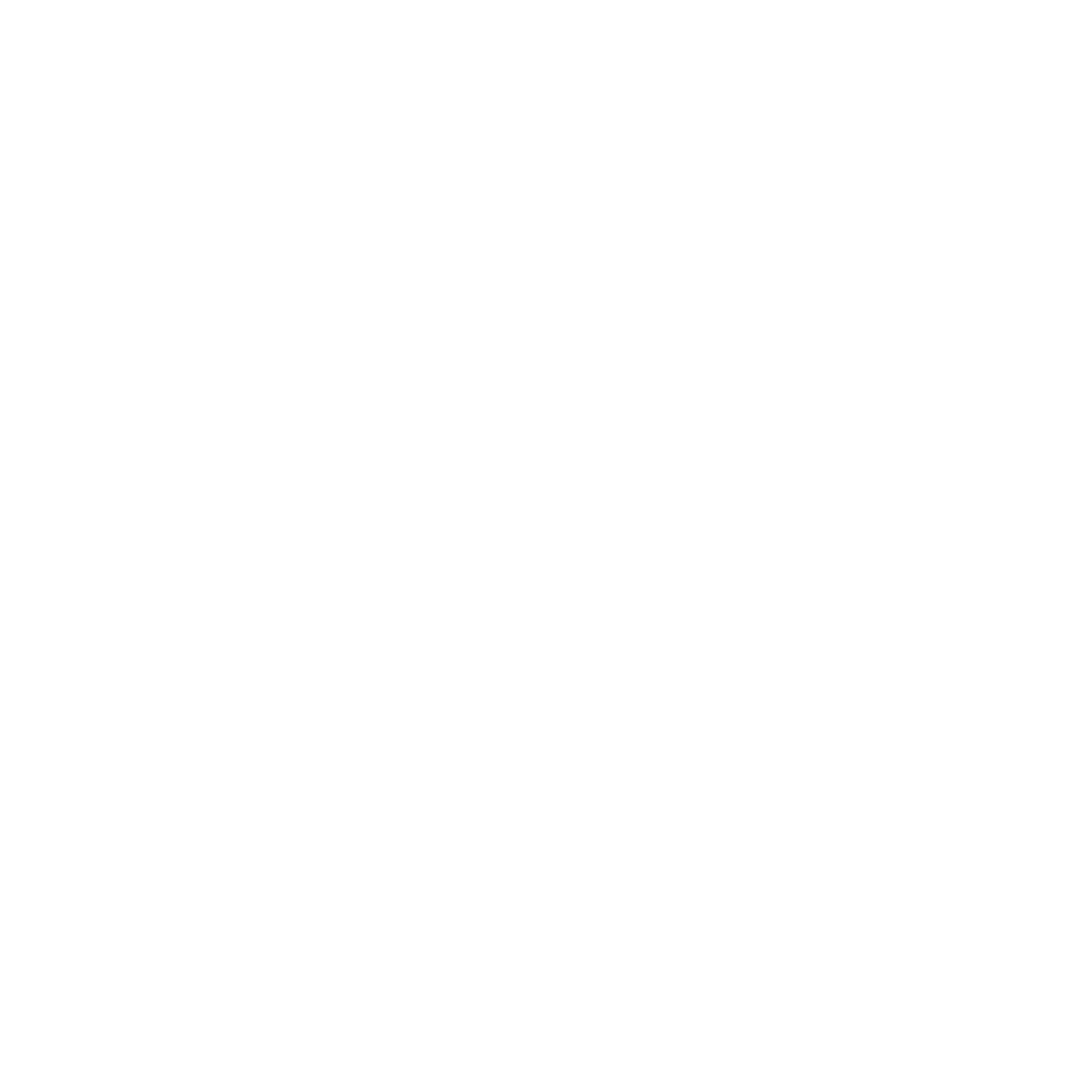
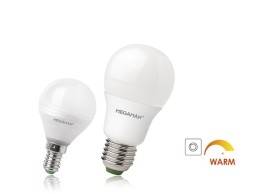
MEGAMAN Dim to Warm
This latest line of LED products, featuring Dim to Warm technology allows improved performance following the curve of filament lamps while enabling LED lamps to emit a warmer light as dimmed. It also makes it possible to offer true fit sizes and shapes across Megaman’s range of LED retrofit lamps, making it the widest offer available with the look and feel of old technology but with all the benefits of LED.

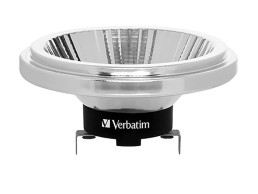
Verbatim AR111 LED Lamp
Using thermal control technology by Mitsubishi Chemical Corporation, Verbatim’s anti-glare AR111 LED lamp serves as a retrofit halogen lamp replacement. Avoiding glare from the central beam often found in LED products, the dimmable 10.5W AR111 emits light indirectly using the reflector. Weighing just 100g, the compact lamp is compatible with most types of AR111 fixtures. It offers reliability, a long expected lifetime of 40,000 hours and efficacy of up to 71lm/W.
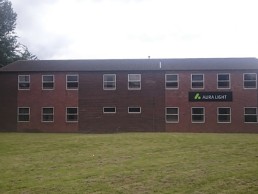
Aura Light UK moves into long life, low energy luminaires
(UK) - Long established lamp manufacturer grows into the fixtures market, offering a number of commercial and industrial LED fittings.
A relocation to larger new premises earlier this year has signified a new direction for Aura Light in the UK, for it has now grown into the fixtures market from its long established base as a lamp manufacturer.
In the fast expanding LED market, Aura Light now offers a number of commercial and industrial LED fittings. From modular ceiling luminaires for offices, through to LED light engines for spots and downlights and LED equivalents of high bay and low bay fittings for industrial applications and car parks.
Aura Light's acquisition of Zobra, a Swedish luminaire manufacturer, in February has brought with it the Noral brand and its complete exterior lighting range.
Simon Taylor, Managing Director commented: "We now have a very comprehensive offer in sustainable lighting solutions covering both interiors and exteriors. We have become a technology independent company providing not only LED but also HID and fluorescent options, all with guaranteed life."
"Our reputation in the long life market, regardless of whether it's our 80,000 hour T8 lamps or our exciting new LED product range, has put us at the forefront of long life solutions."

IALD and SLL support darc awards
(UK) - Major lighting design associations backs darc awards and will attend darc night on September 24th in London.
The lighting design associations, Society of Light & Lighting and International Association of Lighting Designers, have both become supporters of the darc awards and will be attending the awards event, darc night in London on September 24th.
Emma Cogswell, IALD Project Manager, and Liz Peck, SLL President, were shortlist judges for the darc awards and are happy to show their support for the event.
Emma Cogswell commented: "Lighting design is constantly changing to keep up with the demands of clients and new technologies. Designers use their skills to create a range of emotions and functions delivering beautiful environments. Judging the darc awards submissions was a pleasure and I really enjoyed navigating around the refreshing new format. It’s a welcome addition to see these new awards alongside more established programmes like the IALD awards. All of these accolades promote the importance of design and our industry as a whole, which is something to celebrate. The International Association of Lighting Designers (IALD) is pleased to support the darc awards in its inaugural year."
Liz Peck stated: "The initial judging process was really tough because of the volume of high quality entries, which is a credit to the darc team. I'm really looking forward to seeing the winners announced at the darc night and celebrate innovative lighting design during the UNESCO International Year of Light. I'm pleased that the Society is supporting the awards as many of our members have entered and been shortlisted, so it's great to have an opportunity to support them too.”
Voting is open for independent lighting designers and light artists until August 17th. Those that vote in every category are eligible for a free ticket to darc night
darc night will take place at Testbed1 / Doodlebar in London on September 24th during London Design Festival.
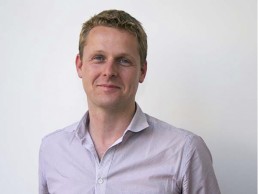
Andrew Howis passes away
(UK) - Managing Director of Speirs + Major dies suddenly aged just 41.
Andrew Howis, Managing Director of Speirs + Major, has died suddenly at the age of 41. He had been with the design practice for ten years, becoming MD in 2013 where he was responsible for the day-to-day management of the company. He worked on some of the practice's most high profile projects including the St Botolph building and Skylon restaurant in London.
Speirs + Major has released a statement from Keith Bradshaw, Principal of the firm:
"It is with huge sadness that we must announce that Andrew Howis, our dear friend and colleague, has passed away suddenly and unexpectedly at the age of 41 whilst holidaying with his wife and young family. Our hearts and sympathies are with all his family and friends whilst they try to manage the shock of Andrew's untimely death.
Whilst we are unable to express fully the loss we feel both as a practice and as individuals, we feel it appropriate to reflect on his numerous qualities and achievements both as a designer and colleague.
Andrew came into lighting design via the ‘scenic route'. Having studied Biochemistry at Edinburgh University he moved into theatre productions and the development of bespoke lighting tools. He transitioned into architectural lighting design via Enliten and Elektra Lighting, eventually joining Speirs + Major in 2006.
Each facet of his career journey gave him unique skills and insights into the process of working with light in the context of both temporary and permanent installations. His methodical design approach was refreshingly different to that of most people in the studio: he strove to apply logical principles and consistency to each design move. Notably, he possessed a rare ability to combine a pragmatic approach to design with consideration for the needs of people; he often spoke of designing people's experience in light.
At Speirs + Major, Andrew found a natural home, seamlessly blending his interest and skills as both a designer and business manager. As a designer he was a highly skilled and knowledgeable craftsman who knew all his tools inside out. He believed that the finesse of a design was hidden in its quiet perfection. With a sharp eye for detail he would tirelessly focus on all aspects of a project from its initial sketch until its completion, only regarding it as complete at the moment when it met the standard he had set out to achieve. His knowledge of lighting technology was second to none, such that only the best possible details and products were selected for each concept. With his charming yet fastidious character he always fought to make sure that projects got the attention they deserved: his calm and restrained exterior concealing an absolute determination to design high quality light work no matter the scale or project. He was instrumental in developing the practice's ongoing product design portfolio, working on numerous product innovations. As a business manager, he created efficiencies and insights into the best course of action for the practice. He leaves Speirs + Major stronger and sharper for his influence.
Andrew was fascinated by the design process and developed beautifully pragmatic and simple proposals with a sensibility to light and shade. These are evidenced in the award winning projects that he led at Speirs + Major; including Burlington Arcade, Devonshire Square, Skylon Restaurant, St. Botolphs, University of the Arts and many ongoing projects in the public realm at Kings Cross.
With loss of this kind there is anger alongside sadness at the passing of a dear friend: by his own exacting standards, Andrew's work was not done. Not only will he be missed by all of us at Speirs + Major but also our clients, members of their design and construction teams and the wider lighting community.
Do not go gentle into that good night,
Old age should burn and rave at close of day;
Rage, rage against the dying of the light.
Andrew, we will miss you greatly and remember you fondly.
Andrew is survived by his loving wife Emma and their two daughters Hannah and Isla, his sister Jen and his parents. Andrew's relationship with his loved ones and the protective spirit with which he regarded those dear to him were an inspiration and arguably his greatest success of all."
Details of any public memorial service will be found on Speirs + Major's website in due course.
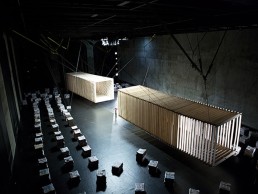
Requiem(s) King Lear, Canada
Using Shakespeare's King Lear as inspiration, Requiems King Lear is a theatrical festival by Hanna Abd El Nour, which visited Espace Libre in Montreal. The project used an old barracks converted into a theatre as the setting for Nour's contemporary project, creating a dramatic space for the actors and spectators. Making use of a 360° theatre, the idea was to create an installation modelled on the City of Quebec.
The immersive design by Nour and ephemeral architecture by Mazen Chamseddine was inspired by King Lear and his fate - when, overnight, he is stripped of his power and status and left homeless to become a nobody, living in a nowhere place and attached to nothing. It is also inspired by the origins of Quebec society and the performance of the actors; with the two inspirations driving and sustaining one another. The set becomes a space-time realm to be inhabited by visitors, made up of three worlds intermingled in the scenography created in situ. The three elements that define the space include: an immense wooden structure, numerous stacks of newspaper and a concrete block. All three elements came into conflict with the light and music to create a marketplace in which the ideas of the actors and the audience were expressed.
The striking theatre featured raw concrete walls, deliberately left exposed to form part of the scenographic landscape. Contrasting with the stark brutality of these walls, the wooden structure divided the room diagonally, offering a degree of transparency, giving the impression of an opening or a passage to an imaginary world.
Suspended in the centre of the room, the wooden structure immediately becomes both the contents and the container, providing a walkway through the large empty rectangle of the theatre. As if floating in the air, the structure represented a nowhere land, an inhospitable place that is perilous to traverse. Consisting of two mirror-image sculptures separated by a void, the structure gives the impression of a black hole which becomes the centre of the universe, extending to infinity.
The 175 stacks of newspaper reporting the city’s news populate the space, which transformed into a labyrinth to walk around. In reference to the newspaper stacks, Nour commented: "They serve both to create King Lear’s barren heath and to provide seating for the audience." The stacks were arranged in the room along a Cartesian urban grid, traversed by two storms, transforming the configuration by creating one centre at either end of the room. As a consequence of this arrangement, the boundaries between the spectators and actors was deliberately blurred, especially as spectators were given a shot of vodka at the start of the performance. A concrete block with the same dimensions as the newspaper stacks, acting as a counterweight to Chamseddine's wooden structure, was positioned facing the wall of the room
The steel wires used to suspend the installation heighten the feeling of insecurity and fragility, creating a poetic image and evoking the strings of destiny - the ties between humans and the social hygiene of the city.
At first, the approach to lighting for Requiems King Lear was that of darkness, but when faced with the empty space, lighting was used to create volume. Lighting designer Martin Sirois used light for its architectural features, aside from its function to illuminate or show. Sirois' idea was to structure the dark around the architecture designed by Chamseddine. His concept looked to suggest that light was living free before meeting the materials filling the space. The darkness was therefore cut surgically, suggesting a space outside of the visitor's body and time.
In reference to the introduction of lighting to the project, Sirois said: "Working with Hanna Abd El Nour and filling the space for the first time, is why we directed the concept towards the stars and astronomy." In each of the four corners of the theatre, Espace Libre spirals were installed - each with a distinct centre. This created a symbol of a black hole or the wheel of fortune. In the centre of the spiral, a projector directed towards the centre of the space and structures reflected the feeling of emptiness within the visitor, a dark framed space, evoking the fear of the unknown.
In the centre of the theatre nine moons, symbolise birth, life cycles, fate and destiny, but also the image of death and travel. Commenting on his inspiration, Director Nour said: "In the Divine Comedy, Dante rises through nine heavens, like new spheres revolving around the earth. While Dante rises into the new heavens, King Lear falls to the absolute void of existence. Nothing." Nour's Requiems King Lear looked to create the idea of a tenth heaven, consisting of ten projectors placed in a rectangle, like a sky framework that exists in a place further away from our world. Its mission was to replicate the movement of the heavens, controlling our destinies; in contrast, it is with this movement that time arises, which limits all that exists. The sky structure forms the tenth wasteland of King Lear, the the lost paradise, the promised land of the Apocalypse. Finally, the stars, created by 20 strobes directed on the wall of the theatre, looks to remember the death of stars, or the speed of light, as distant and mysterious.
Achieving true immersion through light, space and suggestive experiences, Requiems King Lear is a project that allowed visitors to transcend space and time.
Pic: Christine Bourgier
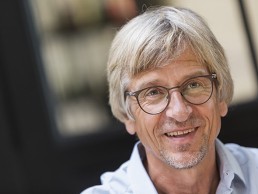
Andreas Schulz
Born in Bonn, but to parents from Berlin, Andreas Schulz is the dynamic leader of the multi-award winning German lighting design practice Licht Kunst Licht. He is also Professor for lighting design at HAWK (the Hochschule für Angewandte Wissenschaft und Kunst) in Hildesheim, Niedersachsen (Lower Saxony), north Germany.
Schulz was always fascinated by light. “As a child I was drawn to its dynamic and special qualities and this fascination focused my career; initially more subconsciously, towards the lighting design profession.” With a technical mind-set, but stemming from a humble background, Schulz originally trained as an electrician in Cologne, but admits that his “heart was always beating for light.”
After his initial training and having worked for a couple of years on construction sites and with financial support from the German government, Schulz then qualified as an electrical engineer. This led to work with a small engineering company in Bonn that was responsible for the maintenance of several department stores there.
This early experience was pivotal in Schulz’s career and developed his abilities as a lighting ‘trouble-shooter’. He found that he was drawn to finding solutions for the lighting installation problems in the department stores and would relish the early morning calls which invited his company to solve them. His specific interest in this field meant that he was well placed and had the opportunity to test his mettel and develop a unique expertise for himself and his company through finding solutions to the problems.
At the end of the 1980’s /early 1990’s Schulz moved to Berlin and into the embryonic lighting design profession that was beginning to evolve there, as in other parts of Europe and the US. This was an exciting time for Berlin and Germany since November 1989 saw the unexpected fall of the Berlin Wall or ‘Mauer’ and final political re-unification or ‘Wiedervereinigung’ of East and West Germany.
Schulz’s early training in Bonn served him well in Berlin where drawing influences from the famous 1970’s lighting design company LichtDesign, he worked on one of his earliest lighting design projects; the prestigious Kunst Museum in Bonn, designed by star Berlin architect Axel Schultes. Because, unlike some other early lighting designers, Schulz had not initially trained as an architect, he found he was able to communicate with many of his famous architect clients in an uninhibited and grounded way. Being unaware of some of the significance of their ‘star’ status, Schulz was happy to explain and resolve problems in a direct way and as such became the lead designer of many high profile and important projects, particularly those of a complex nature.
During the early days in Berlin, Schulz shared an office space with architect Volker Staab until his experiences quickly steered his career path towards the development of his own practice Licht Kunst Licht. This he founded simultaneously in Berlin and Bonn in 1991. Today, the two offices work together and employ a diverse spectrum of talented professionals including architects, interior designers, a stage designer and product designers with a combined total of 25 employees.
“The offices work purely to find the lighting design solutions for new and refurbishment architectural projects using the palettes of artificial and natural light. They are also increasingly required to find and design mechanisms for the lighting design as part of the holistic environmental strategy for a building.”
Currently the Licht Kunst Licht offices are working on over 50 projects that range in size and type and are located across a number of different countries. Current projects include the refurbishment of the parliament building for German Lander state Baden Wurttemberg. This project is particularly sensitive and innovative since the design requirements are to introduce natural lighting into the main assembly space that, in its present state, does not include for daylight infiltration as a main light source. Licht Kunst Licht is therefore working closing with the architects and design team to create specially designed light shafts or ‘funnels’ that will be drilled into the soffit of the assembly zone and bring daylight into the space.
With priorities for building and lighting design to become increasingly more energy efficient and green, Licht Kunst Licht is also working on the design of landmark energy efficient buildings such as a new headquarters for Swiss Re in Zurich, which will be rated a LEED Platinum building. To date Licht Kunst Licht has worked on more than 600 design projects and received over 70 awards with many of these being international and very prestigious.
Schulz considers that he has been very lucky to have had the opportunity to work on such a portfolio and attributes much of the success of Licht Kunst Licht to its office structure and ethos. This includes a flat hierarchy and working methods that he describes as interactive and responsive. This means that the design team are able to work chaotically and creatively but also in a structured way, thus allowing them to work well within the established frameworks of building design delivery structures.
When considering the broader influences to his work and the designs of Licht Kunst Licht, Schulz cites the architects Louis Khan and Peter Zumthor who have inspired him with their different understandings of and individual approaches to light. Otherwise Schulz considers his influences to be diverse and from across many different design fields. With an understanding that lighting design is neither a purely technical nor an artistic profession, Schulz also believes that the best lighting designers have a very strong empathy for art and the arts.
From the very earliest days of Licht Kunst Licht, Schulz has collated details of all the projects that the offices have worked on and these are documented in a series of books. No favourite projects are highlighted since all are considered important for their own special qualities and there are certainly no ‘black-listed’ projects that do not get included. It is Schulz’s belief that the offices should be able to be open and transparent about their work and projects, thus enabling the delivery of quality.
The last 24 years, since the formation of Licht Kunst Licht, have seen many cultural and technological changes in the evolution of the architectural lighting design profession. It has developed from something little understood and only supported and occupied by a few passionate individuals into a globally established and respected profession with institutional support. Schulz and Licht Kunst Licht have understood these developments and their significance to enhance architectural design, but also how light is literally able to add an extra dimension to architecture, which is considered by the best clients to be of clear and obvious value. In other cases a clear understanding is communicated that for a relatively small budget, in comparison to that often spent on design finishes and fittings, a building and its architecture can be significantly enhanced with the implementation of good lighting design.
“Despite recent developments in the architectural lighting design profession, the standards of and for its delivery across nations are still embryonic, variable and in flux.” While joking that he would not recommend the profession to others; so that Licht Kunst Licht does not have too much competition, Schulz currently works to support its development by inspiring students with his teaching work as a professor at HAWK.
“Technological developments over the last two decades have strongly impacted the lighting design profession. The design language has moved on from one incorporating the hundred year old technology of GLS lamps developed by Swan and Edison as a main source, to one that employs LED lamps and associated systems.” Andreas considers these new technologies to offer special opportunities and challenges when designing the lit environment, especially in consideration to the potential for lighting control and the development of smart buildings. He considers the complex nature of these new systems to offer lighting designers the potential for a larger design remit and take them into some of the territories that have previously been occupied by others such as electrical engineers. Likewise with the development of building design cultures, which have now in some cases displaced the more conventional hierarchies with the architects leading a project, Schulz sees the opportunity for the lighting designer to take more of a leading role.
Working as an architectural lighting designer combined with his teaching role and the development of his offices has given Schulz and Licht Kunst Licht the unique opportunity to work with many interesting and diverse clients; but also within different cultural contexts including between the two very different German cities of Berlin and Bonn.
He has been able to see the great potential this developing profession has to bridge across different technological and disciplinary boundaries ranging from pure architecture, industrial and stage design to engineering and the automotive industry, and derived inspiration from all of these.
In summary, Schulz’s early technical and practical training and his willingness to find solutions to problems, combined with a talent to see opportunity, to learn and to communicate, has led him to the very top of his profession and, as he describes himself, to become a very happy man.
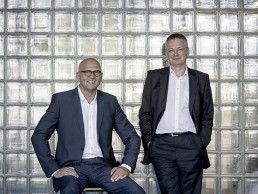
Jürgen Hess joins Selux board of directors
(Germany) - Hess combines passion for people and technology, with extensive experience and market knowledge to become Head of Technical Management at the Berlin-based luminaire manufacturer.
Jürgen Hess has joined the board of directors at Selux AG as of 27 July 2015, concluding the long-term transition from family-run business to manager-led company. Hess will join Felix Grönwaldt, who was appointed to the board in April 2014. While Hess will take on the position of Head of Technical Management, Grönwaldt will be responsible for Commercial Management and Sales.
Long-standing member of the board Ulrich Misgeld will be leaving the executive board, as planned, on 30 September this year. The board of directors and the members of the supervisory board at Selux AG express their thanks to Misgeld for his significant commitment over the years as well as his continued efforts to achieve successful teamwork and collaboration.
Udo Bansbach, who as the son of the founder of the company, Hermann Bansbach, has also played an active role in management for many years, will be taking these changes as the right time to step down from his role as consultant to the board on 30 September 2015. As the owner of Selux AG, and a member of the supervisory board, Bansbach will, however, remain closely linked with the company.
Graduate engineer and MBA, Hess combines his passion for people and technology with extensive experience and market knowledge of company management. After studying Electrical Engineering at the RWTH in Aachen, he joined Nokia, where he became involved in project development and took on managerial responsibility. In the course of his career he has held positions such as Head of Research and Development at Leica Camera and at the lighting manufacturer Erco. In his last job, Hess was the Managing Director of the Technical Division at Bürstner, manufacturer of recreational vehicles.
"It is only possible to truly realise visions and achieve fascinating innovations for designers and customers, if you have a talented and motivated team to back you," claimed Hess.
"I also see Selux as a leader in the lighting industry when it comes to technology, design and service," he continued.
Grönwaldt said: "I am really looking forward to working closely with Jürgen to continue to strengthen the Selux brand."
Plans are already in the making for Light+Building 2016 in the coming spring in Frankfurt, where Selux will be exhibiting a number of new products.

Hubbell signs license agreement with Philips
(Netherlands) - Through membership, Hubbell will benefit from Philips' patented innovations in LED control and system-level technologies.
Philips today announced that Hubbell Lighting, Inc., a division of Hubbell Incorporated has joined its LED Luminaires and Retrofit Bulbs Licensing Program. Through membership of its open Licensing Program, Hubbell will benefit from Philips' patented innovations in LED control and system-level technologies.
Kevin Poyck, Group President for Hubbell Lighting Inc. said:"Hubbell has a proud history of providing innovative lighting products to its customers. We are very happy to be able to benefit from Philips' innovations through this Program. Philips is a respected inventor in the LED market and we believe their innovations improve many of our product offerings to the market."
Arian Duijvestijn, Senior Vice President at Philips Intellectual Property & Standards commented:"We now have more than 500 licensed companies in our program and the addition of Hubbell underlines the value of our innovations. It is important to us that Hubbell can benefit from our patented technologies in its product offerings and work with us to grow the LED market as a valued member of our program. We believe having licensees like Hubbell in our open and accessible license program will further accelerate the adoption of LED lighting."
Launched in 2008, the LED Luminaires and Retrofit Bulbs Licensing Program, which provides access to over 220 inventions and over 1,400 granted patents to companies that sell their own branded LED products, added its 500th licensee earlier this year.
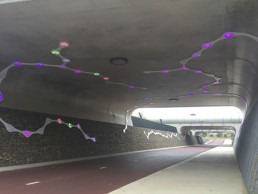
CLS illuminates Rijnwaal cycle path
(Netherlands) - 300 interactive light elements enhance cyclists' route between Arnhem and Nijmegen in Holland.
By appointment to the city councils of Arnhem and Nijmegen and especially to the Lingewaard municipality, CLS has recently accepted the responsibility to provide the design and production of a unique light-based artwork.
The Rijnwaal cycle path is a so-called fast-cycling route that connects the cities of Arnhem and Nijmegen. Cyclists can now directly and safely bridge the distance between both cities.
The light-based artwork consists of 300 interconnecting elements in the form of bicycle chain links. Every module of the installation can individually differ in shade of light and intensity. Even under the brightest daylight conditions, the light is clearly noticeable.
Incoming cyclists or pedestrians are detected via sensors at both ends of the tunnel. Depending on the amount of people in the tunnel, different light mood programs are shown.
The project also makes use of an app, with which the users of the tunnel can earn points, which they can in turn use to influence the colours of the light-artwork.
Special attention was paid to limiting damage caused by vandalism. For this purpose, all metal elements are provided with an anti-graffiti coating. In addition, all LED modules are equipped with a 1.5cm shockproof polycarbonate, protecting them from heavy battering.
Just a few weeks after the commissioning, the colourful artwork has been a success as pedestrians and cyclists seem to feel more comfortable while using the tunnel.

The Lighting Practice announces new associates
(USA) - Emad Hasan and Jonathan Hoyle will uphold TLP's design and customer service standards while furthering its mission to transform spaces.
The Lighting Practice (TLP) has announced the recent promotion of Emad Hasan and Jonathan Hoyle to Associate. Both Hasan and Hoyle have shown their commitment and dedication to lighting design, their clients and TLP team.
As Associates Hasan and Hoyle will uphold TLP's design and customer service standards while furthering its mission to transform spaces.
TLP said: "We are proud of both Emad and Jon, their talents have enhanced The Lighting Practice's team and the lighting design community at large."
Emad Hasan, Associate IALD, LEED BD + C
Associate
Hasan began his career with TLP as an entry-level lighting designer eight years ago. Hasan is a natural leader and is often found heading in-house charrettes and when the opportunity arises, impromptu learning sessions for younger designers. He is committed to expanding his own knowledge and that of the lighting design community at large through participation in the International Association of Lighting Designers (IALD). In his new position he will continue to lead by example and support TLP clients on a variety of projects.
Jonathan T. Hoyle
Associate
Hoyle has been with TLP for seven years. With a background in theatre and geology and a MFA in lighting design, he quickly established himself at TLP. His knowledge base and patience have secured his role as a respected designer and mentor. Hoyle is a source of support for his fellow designers. In addition to his unofficial teaching role at TLP, Hoyle is an adjunct professor for the Drexel University Department of Architecture + Interiors focusing on lighting design. He will continue to lead by example and support TLP clients on a variety of projects.

Targetti restructures US operation
(Italy) - Targetti USA to trade as independent business offering full line of US approved products from both Targetti and Duralamp.
Targetti Group will be transforming the Targetti brand in the US under new management and representation as a result of the December 2014 sale of Louis Poulsen to the Polaris Private Equity group - the group of shareholders who originally sold Louis Poulsen to Targetti in the ultimately doomed acquisition in 2007.
Targetti Group has announced its new operations in the US that will operate under the name Targetti USA and will be led by US Business Development Manager, Marie Paris.
Targetti USA headquarters will be located in Costa Mesa, California and will offer a full line of US approved products from both Targetti and Duralamp brands, available via Targetti USA sales representatives.
Luigi Ferrando, CEO of Targetti Group said: “Targetti is very excited about this transaction to enable Targetti USA to operate as an independent business under new management to help us establish our long-term, growth in the US market.”
“We have significantly improved the performance and versatility of our international offering in the architectural lighting business over the last five years, and are excited to have established a strong management team and innovation pipeline in the US. We are convinced that with an independently run US headquarters, Targetti can grow further, attract more customers and increase scale as a leading international company,” commented Ferrando.
Targetti USA will officially celebrate their USA operation opening at a ribbon cutting ceremony on Wednesday, September 16th from 6:30 p.m. - 9:30 p.m. PDT at the Irvine Spectrum Center in Irvine, California.
