
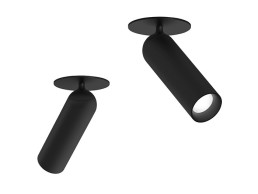
Intra Lighting Eye
Eye’s modern, clean look, and a 360° rotating mechanism that follows the functionalities of the illuminated areas, make this flexible spot the perfect choice for hospitality, retail, and private residences. Eye has a high lumen output and high IP protection, which allows it to be installed both inside and outdoors. Beneath its coloured die-cast material is a series of thought-out details, making Eye a responsive lighting fixture.

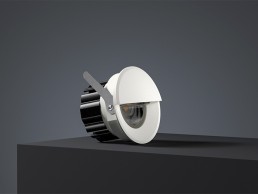
Orluna Muro
In contrast to typical wallwasher products, Muro is a miniature LED luminaire that creates uniform lighting, while being specifically designed to blend into the fabric of the ceiling. By using a straight optic, Muro creates a straight beam edge, unlike typical downlight wallwashers. This optic reaches floor-to-ceiling even illumination. It cuts in perfectly to the ceiling edge, leaving no shadows or space unit. Muro also benefits from Orluna’s proprietary Origin engine, which is celebrated for its high CRI and R9 values.
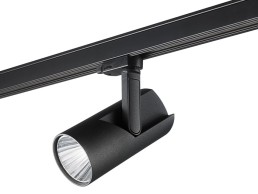
Imoon Krios P
Krios is a complete family of lighting fixtures that stands out for its compact and versatile aesthetic. The Krios P projector expresses this aesthetic impact through a design that is devoid of any superfluous features, with attention to the smallest detail. A newly developed projector where all the components are reduced to a minimum, such as the integrated driver, and the arm inserted into the side groove. Unparalleled precision in the orientation of luminous flux, Krios P boasts wide adjustability, up to 180°, as well as an almost complete rotation of the body to create targeted accents.
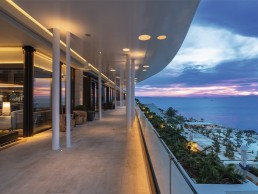
Four Seasons Astir Palace, Greece
The Astir Palace hotel complex first opened in 1958 , running successfully as a city resort during the 1960s. Entering into its new design phase, the Astir’s renovation saw Lighting Design International (LDI) to complete the new exterior and interior lighting schemes for the two hotels, Arion and Nafsika. From design to construction, the project took three years to complete; LDI was brought on board in July 2016 and the resort re-opened in April 2019.
Sandra Brookes, Senior Designer at LDI, sat down with arc to discuss the firm’s involvement in the renovation project: “LDI has an extensive hospitality and residential lighting portfolio. Therefore, understanding and achieving lighting design with the Four Seasons’ ethos of ‘a home away from home’ in mind was key for the success of the project.
“LDI has worked with Four Seasons Hotels on numerous occasions and understands the group’s vision. The brief was to design a sophisticated lighting scheme with a residential feel and fortunately this is what LDI is known for.
“While the structural elements, outer shell and some of the exterior walls were retained, the building was completely renovated and LDI worked closely with the project management and design teams in order to create a high-end lighting scheme both for the interior and exterior areas at both hotels.”
To realise the new lighting schemes for each hotel, the LDI team devised a mock-up room to test and present the new lighting solutions to the contractors and project team, in order to ensure the value and appreciation of specification was achieved.
Fortunately for the lighting designers, the brief at the beginning of the project was maintained throughout the duration of the renovation. “It took a lot of lighting mock-ups and tests, hard work and many hours to get to the level of quality desired. What made this project special was that the two hotels were unique, yet had a distinct lighting ambience that unifies them,” explained Brookes. “Arion’s look is more sophisticated and aimed at couples and singles, while Nafsika is more relaxed and family orientated. The lighting helped to enhance each hotel’s distinct personality.”
Nestled within its own pine-clad peninsula, the resort overlooks Athens Riviera, offering the best of both worlds; a laid-back seaside escape and tranquil forest environment. The Arion hotel building is a boomerang-shape, offering views across both the sea and the pine forest. “Arion stands tall on top of the hill; its façade visible from a distance. It was therefore decided to emphasise its shape by introducing an array of narrow washes of light to its ceiling,” explained Brookes. “This was achieved using two separate details: miniature custom-built fixtures mounted at a high level on the balcony walls, softly up-lighting the soffits, while at each room level, similarly discreet, low-glare uplights integrated within the existing twinned columns create a visual rhythm, highlighting their metallic surface. Carefully implemented detailing allowed cabling from the new fixtures to be concealed within the columns that had to remain otherwise untouched.
“To increase Arion’s sense of perspective, LDI integrated a concealed flexible linear LED fixture within an existing marble niche wrapping around the entire building at first floor level. This creates a unifying line of light to Arion’s outer shell perimeter.”
When guests first arrive at Arion, they are welcomed with minimal aesthetics in the reception area. The team deliberately chose dimmed lighting levels to create a calm atmosphere in this space. In contrast, the lounge-lobby boasts a double-height, voluminous space with floor-to-ceiling windows that look out over the sea. A focal point in the space is a timber bar with marble countertop that is highlighted with pinhole downlights above it and concealed linear LED details integrated within its fabric. Decorative lighting adds distinguishing features to the space.
“We had the opportunity of having a new and more current lighting scheme and control system incorporated within the buildings, leaving minimal lighting aesthetic visible. Leaving the guests to enjoy the warm and inviting lighting ambience without knowing where the equipment is located,” added Brookes.
“LDI designed the lighting layouts with the existing structure in mind, but with the advantage that most of the equipment was concealed from view successfully by the new interiors. Bespoke tailored details were developed in conjunction with the interior designers and incorporated within furniture and the building envelope.”
One of Arion’s special features is its spa. An arcade-like corridor, which is illuminated by daylight filtered through wooden ceiling slats and artificial lighting details, leads visitors to the treatment rooms. The lighting fixtures used for this purpose are provided in low-level concealed skirting details, creating a linearity effect. “Concealed feature backlighting to the strips themselves and ceiling recessed downlights with low-glare optics create pools of light along the main circulation axis,” elaborated Brookes.
Throughout the interior public spaces, including the restaurant and bedrooms and suites, fixtures from Reggiani dominated the lighting specified, with an array of mood adjustable fittings, along with fixtures from LED Linear used throughout.
Secluded on its own beach, the Nafsika hotel stands proudly on the sprawling rocks leading to the water’s edge, with “an architectural language of strong vertical concrete walls. These rectilinear geometries were framed at the slab edge with a small marker of light and further highlight with a soft wash of light,” explained Brookes.
“The intrinsic beauty of this façade highlights the visual journey, with its ever-changing lighting composition depending on the viewing angle, new perspectives are modelled with light from top to bottom across its length. It’s a façade that keeps the interest alive as in every corner there is a new panorama to be discovered; from the impactful first impression gathered at the top entrance with the pillar forest of light to the inviting ambience crafted with light in the social pool area at the bottom, the façade is ever present with its silent, soft, yet powerfully lit backdrop.” LightGraphix LD151 high-powered uplights were used to light the exterior columns situated at the entrance to Nafsika, with surface mounted LD10238 and LD10237 spotlights used to highlight other features. According to LightGraphix: “The linear-lensed LD38C wall washers installed were RAL colour matched to the façade so they blended seamlessly into the architecture. Miniature LD51 spotlights create a subtle wash up each of the balcony walls, and elsewhere LD64s, LD242As are being used extensively.
“As part of the lighting scheme, LDI wanted to create a wash of light on the balcony ceiling between the hotel rooms. Working closely with our specials department, they came up with the novel idea of orientating the LD47 wall light up, instead of down, and mounting it near the ceiling. However, since there was no recess depth, a new, custom surface-mounted version was developed.”
The interior lighting of Nafsika is dramatic and modern, mixing bold decorative gestures highlighting its “livelier atmosphere”. Turning the traditional hotel layout on its head, the Nafsika entrance lobby welcomes guests onto the top floor, offering stunning views over the Mediterranean Sea. Upon entering the lobby, guests are welcomed by a lit Antony Gormley sculpture with a backdrop that “resembles a forest of illuminated pillars.”
A distinctive lighting scheme guides visitor to descend from the top floor lobby to the swimming pool area below, via a series of interlaced, cohesively designed spaces.
The Avra Lounge’s jewel-like pendants take centre-stage, as you enter the restaurant’s reception area, creating a bold visual impact on the dining space. LightGraphix and Orluna fixures were used for the F&B lighting, with Orluna mini recessed warm dim tilt lamps for the pizza counter.
“Oversized bespoke decorative luminaires with integral spotlights help to retain a clean soffit and introduce drama,” elaborated Brookes. “The space presents floor to ceiling windows and seamless lighting integration with indoor/outdoor spaces was key. The warm welcoming atmosphere is provided mainly through decorative fittings and soft lighting integrated within the furniture and building fabric.”
A sense of intrigue is achieved through the use of varied finishes and a nuanced lit canvas that combines light and dark. One of the design focal points in the interior is the marble slatted corridors. The beautifully selected marble slats are both front and backlit with a careful balance, creating an elegantly lit canvas.
“Being a summer resort in Greece’s warm climate, both hotels public areas are closely linked to the outdoors. The newly lit façade provides a balanced and considered candlelit-inspired scene to the external presentation. The softly uplit features, such as columns and pilasters, combine with the warm glow achieved in the terraces, provides an inviting illuminated ambience with visually discreet luminaires. Again, Reggiani fixtures were used for the majority of fixtures, along with LED Linear throughout, LineaLight special mini step washers for the rooms and RCL’s DR7 recessed downlighter, for the ballroom.
“For both façades, a consistent use of fixtures with 2700K LED sources has been used throughout. Light fixtures and concealed lighting details have been painstakingly specified and designed to eliminate glare and views to sources as much as possible from all angles. All fixtures used externally have been specified with finishes that can withstand the harsh coastal environment,” explained Brookes.
“For both interiors, low-glare and concealed architectural lighting discreetly illuminate the spaces throughout, while decorative fixtures provide warmth at a more domestic scale. The luminaires specified use either warm or tuneable white (2200K-2700K) LED sources. The all-day bar and restaurant spaces use tuneable white and warm-to-dim LED sources to complement the natural daylight cycle in these spaces. A Lutron lighting control system was used to allow the lit canvas to be adjusted using scene setting capabilities.”
Overall, the two hotels present distinctly different design profiles, yet are intrinsically linked by a cohesive lighting scheme that draws on the outdoors and surrounding nature to create modern and stylish designs throughout.
www.lightingdesigninternational.com
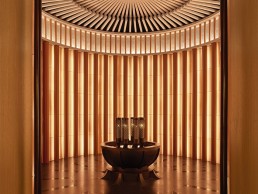
RuMa Hotel & Residences, Malaysia
Opened in the winter of 2018, the RuMa Hotel and Residences is a 253-room development in downtown Kuala Lumpur, Malaysia. Located in the vibrant heart of the city’s Golden Triangle, the hotel features dramatic views of the iconic Petronas twin towers.
Designed by Malaysian architecture firm BEP Arkitek, with interior design from MQ Studio and lighting design from The Flaming Beacon, the hotel takes great inspiration from the country’s heritage, offering a contemporary interpretation of Malaysia’s colonial past, with an additional, more homely touch; the name of the hotel, RuMa, is itself derived from the Malay word for ‘home’. As such, the design and conceptual approach for the hotel was based around a home that captures, in spirit, the houses of a bygone era.
The Flaming Beacon was introduced to the project via the hotel operator, Shanghai-based Urban Resort Concepts (URC), whom the designers have a long-standing relationship with, having worked together on a number of projects throughout China. Andrew Jaques, Director of The Flaming Beacon, explained more about the design concept for The RuMa: “Like many of the URC projects we have previously worked on, the RuMa encouraged the design team to explore contextually relevant information and condense it into a contemporary narrative for the project.
“There wasn’t a specific lighting design brief per se; we were fortunate to have, on this project, an operator and client who understood how well-lit spaces can positively affect the experience of their guests. They also trusted the entire design team to work together to deliver a hotel that met this broad approach.
“As the design developed, there was an increasing focus on creating a strong domestic character – hence the hotel’s name, RuMa, literally translating as ‘home’. This brought into focus during the design development the material selection and detailing, which were intentionally humble and tactile.”
Alongside this strong domestic character, other sub-themes emerge and reveal themselves within the project, specifically referencing aspects of Malaysian culture and design. The interior design in particular took a strong inspiration from the country’s heritage.
Jaques continued: “The interior designer, Andy Hall from MQ Studio, had spent several months researching Malaysia’s history, including its colonial and mining past, as well as its disappearing architectural vernacular.
“Andy presented his overall design approach to us and from that moment we worked together to find ways to express his ideas through rigorous integration of lighting devices, often with a contemporary take. He was very receptive to our ideas, especially those which expanded on his concepts through the use of lighting techniques, and was willing to modify his interiors to accommodate many of these ideas.”
Indeed the close collaboration between The Flaming Beacon and MQ Studio is something that Jaques felt was very unique to this project, as “it’s not often you have the lead designer asking ‘will this work for the lighting?’
“It was refreshing to have a design collaborator so invested in maintaining the lighting design intention.”
Throughout the hotel, lighting is inseparable from the interior design and architecture, forming one unified design strategy. To create this unified feel, Jaques added that The Flaming Beacon “studied every interior and architectural material and element to establish their importance and light ability in the space to build up our lighting scenes”.
“Where customised decorative lighting objects were required to complement these scenes, we applied complementary material and finishes to these objects to connect them to the spaces,” he continued.
On an architectural level, The Flaming Beacon used lighting to best express the architectural concepts, whether this be through the layering and revelations of various screening lattices, or reinforcing the architect’s implied datum, drawn from colonial fenestration studies.
“At the front façade, we introduced an amber glass at the architectural datum, and persuaded Andy to change the density of the entry screen above this point to make a clearer distinction,” Jaques said. “When the floor grazer’s peak beam hits the amber glass, the backlit screen above the datum has a completely different character to that of the backlit screen below.
“Despite embracing the design concepts, our client wasn’t experienced with a project requiring this level of detail. To the client’s credit though, he never lost sight of the project vision and quality expectation and persevered.
“From the outset, there was pressure on the budget, and lighting equipment was not immune. One of the ways we overcame this was to strategically determine where to use dimmers.
“Main public spaces were fully dimmable, but exterior and guest rooms had limited dimming and some circulation spaces had none. This primary, secondary and tertiary approach continued with the LED quality specification, which ironically resolved itself due to improvements in quality and cost of LEDs by the time it came to placing orders.”
Ensuring that key areas had dimming was critical in being able to create the intimate, warm atmosphere across RuMa - one that plays on the contrasts between light and shadow and generates a welcoming ambiance for visitors.
“Consistent warm light that transitions from warm to even warmer late into the evening makes for a cosy environment, and playing with shadow and texture makes for subtle but interesting variations for guests to enjoy,” Jaques explained. “This was something we challenged ourselves to explore in the design and were fortunate to have design collaborators who shared this vision.
“We constantly questioned how we could express materials in unexpected and interesting ways. For example, the kelarai screens, more often seen in traditional Malay dwellings and used throughout the projects, were in the spa, woven in such a manner to enable shadow patterns to land on the floor almost by magic.
“Finding someone who could still weave the rattan in the traditional way was a challenge. An expert weaver was eventually located – she was 90-years-old and living in a small village outside of Penang – and we went about testing several weave designs until one was made that retained the intended pattern, but also enabled the shadowing on the floor.”
Outside of the use of lighting, the design team worked with the interior designer in the selection of materials that would enhance the warm environment; materials such as the copper ceiling, the timber and warm stone finishes, and the use of terracotta, all add to the creation of the desired ambiance.
“Unwanted reflections that would have been a distraction were carefully planned for,” Jaques added. “One of the few specular surfaces in the hotel, the copper-clad lobby ceiling, is only visible via indirect reflected light from adjacent surfaces.”
The Flaming Beacon used Vista’s flexible LED strips at various outputs, from 2400K to 3000K, in coves and joinery throughout, while Delta Light’s Halosun surface-mounted JAC spotlights are used in recessed ceiling slots in the meeting rooms and lobby. Guestrooms are illuminated via Lucent’s Prospec downlight and Soraa’s Vivid MR16 luminaires.
Outside, Lumascape’s LS2010 spike-mounted uplights provide a soft illumination on planters and trees, while Luci’s line-graze fittings wall wash behind screens on the façade, and ceiling slot grazers and the lobby vestibules.
These lighting elements are complemented by custom fittings, designed by The Flaming Beacon and manufactured by InnerSpace, that feature throughout the hotel. These fittings, Jaques said, “drew inspiration from the narratives relating to trading and mining, and put a twist on them to suit the contemporary nature of the project.”
He continued: “In the case of the guestroom lights, the approach was to create a series of lighting devices that appeared ‘machined and assembled’ in reference to the industrial aesthetic of the colonial period.
“Many of the bigger lighting gestures blur the boundary between what is an interior element and what is a lighting element. In the entry vestibule, is the curved terracotta half pipe idea a giant light fitting array, or simply LED strips built into the architecture? This ambiguity is exciting.”
The ambiguity that Jaques speaks of helps to create a sense of drama amid the warm, welcoming environment of the RuMa Hotel, and while it has been gaining plaudits since its opening in late 2018, many feel that the lighting has been integral to its popularity.
“The lighting is a key element in creating a certain vibe, which can directly influence a hotel’s success, especially a boutique hotel unashamedly announcing itself as being different to its competition,” he said.
“Carefully integrated lighting always aimed at making the interior of the architecture expressions appear as natural and interesting as possible, and the design of customised light fittings that follow a similar material palate and feel seamlessly part of the interior design, make for a series of spaces that feel elegant, cosy, welcoming, and well… homely.”
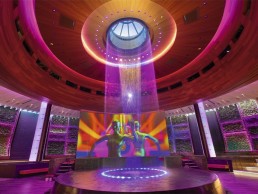
Seminole Hard Rock Hotel & Casino, USA
Focus Lighting, together with interior architects Rockwell Group, started work on the Seminole Hard Rock Hotel and Casino back in 2015. A major renovation of the Florida-based property, which saw the addition of a large new hotel tower, an expansive outdoor area and extension of the retail promenade, the team also worked on an additional casino floor alongside the renovation of the existing casino, hotel lobby, other smaller circulation areas and amenity spaces.
There was a clear goal from the very beginning to elevate the Hard Rock brand the world has become familiar with – transforming it into more of a resort lifestyle brand, with a lot of design choices made to support this. Rockwell Group’s concept of ‘architecture is frozen music’ – a famous quote by Gothe, ties into the design of the space and connects to Hard Rock’s emphasis on the music industry. Images taken by small cameras inside musical instruments supported this idea and informed the architectural details, evoking a different musical instrument within each area. It is a much more thoughtful take on how music can inform an architectural space.
Speaking with arc about the lighting design for this project, Christine Hope, Principal Lighting Designer at Focus Lighting, explains: “Through extensive coordination with the rest of the design team, lighting supports these shapes and forms with seamless architectural integrations and enhances the design concept through custom decorative applications. The result suggests the sophistication of a symphony of instruments, offering guests a new, refined take on the traditional Hard Rock brand.”
Above the lobby bar, the bottom curve of the hotel’s guitar tower peeks through the ceiling. Focus Lighting coordinated with Rockwell Group to create hidden pockets within the decorative trim pieces for a short piece of track and two Amerlux Hornet HP track heads to light the bar top and backbar.
Opposite the bar, layers of beaded string and chandeliers from Zaniboni evoke the delicate cadence of the symphony’s string section. Focus Lighting had each pendant custom-fabricated from a powder-coated tube, with a frosted inch-tall acrylic cylinder containing a 3w LED at the bottom. The lighting team worked with the manufacturer to select the pendants’ LED colour and found the perfect combination of filters to create warmth within each tube. The pendants were then fabricated with the outer rings at 5ft-tall and each concentric inner ring six-inches shorter, creating a rounded dome shape.
A collection of trellises provide lighting for the casino’s gaming tables - their huge openings and colourful interior evoking the feel of a horn instrument. Linear LEDs integrated inside reveal pops of colour, creating a feeling of jazz syncopation, and a series of wide floodlights sprinkled between them add a playful dappling of light and shadow. Additionally, ball chandeliers within each trellis are integrated with a mix of internal glow points and adjustable 2700K narrow flood LED accents, each on separate circuits so the lighting team could aim accents specifically to get the ideal level and coverage for tables below.
The rhythmic placement of the hotel’s memorabilia cases evokes the keys of a piano. The cases are illuminated with alternating horizontally or vertically-mounted LED accents by Eklipse Lighting, giving each piece a unique, eye-catching look. A glow from linear Luminii Lighting LED fixtures at the top and bottom of memorabilia cases works to accentuate the warm wood finish of the wall behind them.
Elsewhere in the hotel, a twinkling fibre-optic ceiling at the Centre Bar was inspired by the flashing cameras of fans at a live show. All of the illuminators are hidden within a ring above the bar, feeding out from a central point. Achieving their fibre-optic treatment in the Centre Bar’s complex curved ceiling required an incredible amount of coordination and detailing between the electrical contractor, lighting team and specialty fabricators. Focus Lighting mapped thousands of points in the ceiling and gave the electrical contractors a template to use for installation.
“The scale of the project created some of the greatest obstacles; there were so many different components and teams working at once that it felt like we were building a small city. All the teams worked relentlessly to coordinate with each other and ensure we were all on the same page,” Hope explains.
“As well as this, there isn’t one straight wall in the entire building, everything is free flowing and curvy. This complex geometry was a driving force in deciding how lights were specified. For example, we used more than 20,000 feet of ceiling cove lighting throughout the lobby and casino spaces. This was challenging because we needed the majority of this to be comprised of 12-inch lenghts to make all the curves work, which resulted in more coordination and required a more careful installation.
“The use of warm-dim technology was also a big decision for us,” continued Hope. “It is an unusual choice in a casino, but it was the result of the amount of daylight in the casino’s adjacent spaces. The warm-dim LEDs ability to shift from being airy and crisp during the day to a warmer, more intimate setting during the evening helped create the sense of luxury we wanted the space to have.”
Another area of the Hard Rock hotel worth mentioning is The Oculus – an immersive arrival experience that weaves together music, video content, dynamic water features and light. Encompassing a 140-inch x 35-inch room, its design combines natural light with architectural and theatrical lighting from Acclaim, ETC, SSL, Lumenpulse, 5Ten, USAI, and Ketra.
Coordination with water consultant WET Design allowed the lighting team to optimise the look of a central 10ft-diameter waterfall, which serves as a surface for light projection. The team tracked the waterfall’s choreography to ensure lighting was correctly timed and placed, suggesting a coat of mist to go around it - a dense curtain of particles that produces sharp, visible projections.
Focus Lighting was also tasked with choreographing sequences for the attraction’s eight daily shows. Eighteen layers of light with 4,600 points of control were designed into The Oculus, each controllable through a GrandMa console. The lighting team worked closely with Rockwell Group’s LAB and the programmers from Candela Controls to choose light colours that were in sync with music and multiple dynamic video and water elements for each four to six minute show.
“We wanted to make sure we balanced the architectural lighting with the natural daylight in the space,” said Hope. “You wake up in the morning with these pastel colours that remind you of a sunrise, then, throughout the afternoon, the feeling is more like a sunny day at the beach, with colours inspired by the ocean and sand. Towards the evening, it’s about being out on the town or at a club, so the colours become more saturated and the movement more dramatic to support that storyline. When a song ‘event’ happens, we made sure that it was a dramatic visual shift from the architectural setting. We picked colour palettes for each song that were complementary to the colours and themes of the content and song choices made by LAB, and corresponded in cadence and intensity to the time of day during which it was played; there were many factors to consider.”
Throughout the hotel and casino, there is a mix of integrated architectural lighting, display lighting and decorative elements, and while it was a challenge to merge everything together in order to create a unified, coherent lighting scheme, according to Hope it was always a big priority for everyone involved. “In the past, Hard Rock memorabilia cases were hung on the wall with not much thought given to their lighting,” she said. “At Hard Rock Hollywood, the warm glow that emits from behind cases where they meet the wall make them feel like part of the architecture.
The lighting design plays an important role in shaping the guest experience. As visitors move through the venue, they discover a combination of grand, exciting spaces with large architectural gestures and neatly integrated lighting, and more secluded areas where lighting provides a source of intimacy and comfort. Through careful integration and coordination, lighting successfully enhances the architectural language and functional use of the Hard Rock Hotel & Casino’s new public spaces.
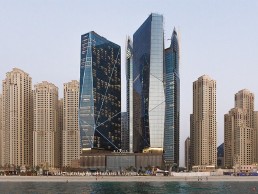
Al Fattan Crystal Towers, UAE
Dubai’s Jumeirah Beach is one of the UAE’s most famous areas, and for good reason. With a number of high profile hotels and resorts, the area has become known for its grand, extravagant buildings.
The latest addition to this increasing array of eye-catching destinations is the Al Fattan Crystal Towers, also known as Rixos Premium. Designed by Turkey’s Tabanlıoğlu Architects, the high-end 35-storey mixed-use twin towers comprise of retail areas, a hotel, luxury apartments and penthouses.
Alongside the sand-coloured architecture of the surrounding beach hotels, the Al Fattan Crystal Towers’ sleek, angular glass façades bring a glamourous sheen to the Dubai skyline. The architectural idea behind the towers’ unique form was to “create a crystal feeling in front of the horizontal sand atmosphere”.
The lighting for this striking new development was designed by ZKLD, which developed schemes for the interiors, landscape, and the dramatic façade. Mustafa Akkaya, Design Director at ZKLD, explained the thought process behind the lighting design: “The project is in a region that culturally has major interest in grandness and splendour. From the beginning, this was well-known and obviously affected the lighting design decisions. However, we also knew that we must set a balanced design under this flamboyant appearance that welcomes people who stay or visit the hotel, and creates a cosy ambiances to make them feel at home. In contrast to this flashy envelope, interior areas and landscape lighting also followed these intentions.
“An established bond between dynamic stance and serene ambiance was most desired by ZKLD from the beginning of the design phase.”
Throughout the design process, ZKLD also established a bond with the architectural team, thanks to a “mutual exchange of ideas”, that Akkaya feels “helped to make the whole process as streamlined as possible.”
This was of particular use during the development of the façade lighting. Inspired by the refractions and reflections that light creates when passing through a crystal, ZKLD sought to highlight the triangular forms on the façade through lines of light. These lines make the building rise dynamically at the oceanside, in contrast to the surrounding buildings.
“Emphasising the crystal effect on the façade through lighting was one of the main challenges that we encountered, because the building is located in one of Dubai’s most famous areas, and can easily be seen from different angles throughout the city,” Akkaya explained. “Therefore, the gutter detail was designed by considering the lighting effect as seen from a distance. It took several mock-ups and collaboration with the architectural team to execute the necessary detail of the gutter to obtain the desired result.”
While the façade lighting creates a lasting impact from a distance, the designers also wished to bring this feeling into the interior areas as well, with traces of the fractal forms dotted throughout.
A shining example of this can be found in the Alley – the lobby area, which acts as a spectacular focal point for the interior design. “Because it was like a passage connecting the city to the beach, it was aimed at attracting people inwards. Considering this, we wanted to introduce a brilliant light effect on the ceiling to grab attention,” Akkaya said.
“Guided by the crystal form, triangular shaped surfaces are created under the skylights, and are illuminated in a way that creates a magnificence and brilliant effect in the area.”
Through the use of Traxon’s DMX-controlled PXL Board LED fixtures, a play of light, colour and motion has been created, bringing a modern touch and an “attractive soul” to the vast lobby space that, according to Akkaya, “welcomes not only the people who stay at the hotel, but also visitors from the outside”.
Lighting has been seamlessly integrated into the architectural fabric of the project throughout its many different spaces, creating a smooth atmospheric flow as visitors transition both between the exterior and interior spaces, and once inside from one area to another. “By using the geometry supported by the lighting effect in interior spaces, we have created a uniform identity in all spaces, even though these spaces have different functions,” Akkaya continued. “Of course, the lighting levels and distributions have been considered according to their functions.”
Such examples of this can be found with the recurring motif of continuous lines of light, echoing the eye-catching effect of the façade lighting, through the use of Ilmas’ Estro Comfort and Osram’s Linearlight Flex fixtures. These lines of light are complemented by recessed up- and down-lighting from Flos, Erco and Endo.
Despite its grand, exuberant appearance, one of the key facets of ZKLD’s design approach was “interlocking the soul of both dynamism and calmness in one structure”, while creating a design that is holistic in its appearance.
To do this, Akkaya explained that the design team “intended to establish a bond between dynamic stance and serene ambiance”, with light being used to highlight the architectural form of the towers, while creating an atmospheric flow between spaces.
Although the architecture of the Crystal Towers is striking in and of itself, the lighting design from ZKLD is a major contributor in its success, highlighting the impressive structures and drawing visitors in.
“With the help of the glittering lighting design, Crystal Towers has become a stomping ground not only for tourists but also for city dwellers,” Akkaya said.
“Most importantly, it has become an iconic sculptural crystal, that has brought another identity and another level of prestige to its surroundings.”
nHow London, UK
With each of its six establishments across Europe, nHow Hotels has created a bright, colourful and creative destination for guests, mixing fun, vibrant interior design with a cool, modern feel.
The latest addition to this portfolio is nHow London, which opened in January of this year. The hotel is situated inbetween Hoxton and Shoreditch – in the creative heart of the city. Playing on its geography, the hotel describes itself as “a space where tradition and innovation collide. Located in a district marked by an industrial past and technological future [the hotel] soaks up those contrasts and plays with them in an unconventional and disruptive way”.
The hotel, which houses 190 rooms, alongside a restaurant, bar, meeting spaces, lounges, and a gym, was designed by interior design studio Project Orange, in collaboration with lighting design from Elektra Lighting.
Magdalena Gomez, Design Director at Elektra, explained how the studio got involved in the project: “We were approached by the project managers, JLL, as we were recommended by Project Orange, having worked with them previously on a couple of other hotel projects; it has always been a great collaborative work with really satisfying outcomes.”
Elektra and Project Orange worked together to develop a scheme that would enhance all the different areas of the hotel at different times of the day. “You can say that this was a wholesome design between the interior design and lighting,” Gomez added.
As with the other hotels in nHow’s portfolio, each boasting their own unique character, the new London branch is a hyper-stylised, visually stimulating destination. Gomez explained further how Elektra used lighting to complement such a striking interior design: “It’s a very lively and fun space. The lighting concept was envisioned to highlight and be a part of this fun and colourful experience.
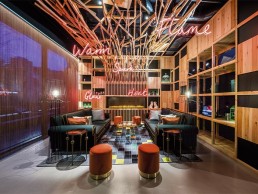
“You can see this in the lift lobby. Here, we worked together with the interior designers to use their proposed fittings and transform them into a light art piece. As they take over the whole ceiling space, it feels like they are suspended in the nothingness, leaving the feeling that the ceiling above the pendant is very deep.
“The fittings then change colour at different times of the day, with different colours every day of the week. This gives the guests different impressions and different experiences whenever they arrive.
“We also had a lot of fun highlighting the sculptures, graffiti, etc throughout the hotel. There are so many details, we just needed to be careful to select some and not overdo everything.”
Central among these myriad features was the introduction of a number of light-art pieces from the nearby Jealous Gallery. “Some of the artwork was conceived from the beginning of the project,” Gomez explained. “On these pieces, we made allocations and designed the lighting to work around them.
“There were a couple of last minute additions and changes, as is usually the case on every project, but the flexible lighting system we planned for allowed us to adapt to these additional pieces.”
By taking this flexible approach, Elektra was able to cater the lighting scheme to any number of changes that were implemented along the design process, from technical amendments, to different design choices and even adjustments to the budget.
Gomez continued: “Our original design brief didn’t change, but there are always some changes that we need to adapt the design to; for instance, the main brand colour changed from red to green, and with this obviously the interior colour scheme was changed. As the lighting is closely linked to the interiors, we had to make changes in order to have the best result.
“Elsewhere, part of our initial brief was working with exposed services on all ceilings, including the guestroom corridors. From our proposals, we looked into convenient ways to make the lighting system flexible in order to work around all possible obstacles we might encounter.
“We worked together with the wider design team to coordinate Reflected Ceiling Plans for all services and lighting. There is always so much happening on the ceilings and it all needs to be considered in detail. Our solution for the public areas was to locate areas for air vents, ducts, sensors, etc, and work the lighting tracks and decorative pendants around these items.”
In some cases, Elektra requested that the services be moved to allow the lighting to be above key locations. In the guestroom corridors, a suspended, slatted ceiling was installed to conceal the services from direct view; here, Elektra worked with the interior designers to select the right spacing between slats that would help them locate surface mounted spotlights, while making them less obvious, with the aim to create a theatrical effect for guests.
Despite the high number of changes over the course of the project, Gomez said that one of the most challenging aspects came with the budget. “We had to keep a very close eye on what is expected and how we could deliver what was expected within the expected budget,” she said.
“This meant that we selected some luminaires, and later on we had to replace them to fit the solution but with a smaller price tag. On this subject, we’re very careful to always specify good quality products – we always do thorough testing of solutions and luminaires - but without accruing high costs.”
Throughout its multiple spaces, the hotel features a combination of both architectural and decorative lighting, with custom-made pieces from Northern Lights and pendants from Gubi complementing lighting from Linea Light, LED Flex, LightGraphix and Precision, among others.
This blend of architectural fixtures with more decorative pieces came as part of the ongoing collaboration between Elektra and the interior designers in creating a unified, coherent lighting scheme. “The architectural lighting always falls in our scope of work, and the decorative elements are on the interior designers,” Gomez explained. “We normally work together with the interior designers to see their intent for the FF&E lighting. We select the right lamps to do the right job, and to work properly with the lighting control system.”
The overall impact of the lighting scheme complements the hotel’s playful interior design, with its “mix of vibrant colours, dark corners and dramatic effects”, to create a strong, lasting impression on guests.
And while the nHow features a number of unique ‘Instagrammable’ spaces, Gomez feels that designing inspiring spaces that create lasting impressions is more important than social media ‘likes’.
“I think one of the most important parts of the design process is travelling, getting familiar with different brands, and enjoying what you do,” she said.
“These days we are trying harder to create innovative spaces and trying to cope with the high demand for ‘insta-moments’. But more than just designing for a nice picture, we prefer to design for people, and to make lasting memories.”
Women in Lighting - Ksenia Kosaya & Sofia Kudryakova
Ksenia Kosaya and Sofia Kudryakova, lighting designers at Russian company QPRO discuss their influences, aspirations, and experiences as women in the lighting design world.
www.instagram.com/qpro.lighting
Videos submitted by Kosaya and Kudryakova to the Women In Lighting project.
[d]arc media is a supporter and media partner of the Women in Lighting initiative made possible thanks to Light Collective, formalighting and Archifos.
WIL 1st Anniversary
Women in Lighting celebrates its first birthday this year. Below we talk with team behind the project, and the army that supports them.
This year marks the one-year anniversary of the Women in Lighting movement.
Established in February 2019, Light Collective duo Sharon Stammers and Martin Lupton joined forces with Sharon Maghnagi of formalighting and Katia Kolovea of Archifos, to create the global project. The digital platform profiles women working across the lighting industry with the aim to promote their “passion and achievements, narrate their career paths and goals, celebrate their work and therefore help elevate their profile in the lighting community.” Despite comprising approximately 50% of the lighting industry, women are not as equally represented on the professional platforms as their male colleagues.
A statement on the WiL website reads: “The project is supported by individual female lighting designers in 60+ different countries. The Women in Lighting ambassadors are a point of contact in each location for anyone seeking to find out more about the project. The project also includes lighting designers plus those working in related lighting fields such as education, journalism and manufacturing. Women in Lighting is not about gender inequality but about inclusivity and how this is beneficial to the profession as a whole.”
“We started this project to try and make a difference. Although women make up at least 50% of the lighting design profession, you only have to look at the number of women speaking at major conferences, acting as judges in awards, being asked as keynotes and serving on editorial boards to realise that the profile of women is significantly lower than men. We want to change this,” explained Lupton.
The project’s official opening was launched with high energy and a huge amount of support, which propelled them through the first year with great success.
“Having been involved in lighting design from the very beginning, women have had a greater role in shaping the lighting design profession than in architecture and engineering,” commented Stammers. “The lighting design profession is a supportive industry for women and the many routes into the profession offer opportunities from a diverse set of backgrounds. It is an industry that is good at sharing information amongst its community and can therefore offer support to other women who may need it. We want to encourage women to choose to work in lighting or other related jobs.”
Gaining rapid traction, many women came forward to represent the project as ambassadors in order to support and celebrate the female lighting designers in their localised communities. Finland was the first country to host an event for its community as early as March 2019, which was followed by events held throughout the year in Chile, Australia, Italy, Dubai, Turkey, Brazil, Israel, Peru, Singapore, Thailand, and India. These individual country events were dispersed amongst an array of industry-led events, where WiL held a strong presence, including panel talks for darc thoughts at Clerkenwell Design Week and Light Middle East, to the Pakistan ambassador, Momena Saleem, talking about WiL on national television. “In October, I gave a live TV interview as a WiL Ambassador for Pakistan along with my colleague Ana Tanveer,” said Saleem. “It created an opportunity to introduce the Women in Lighting project and raise awareness about the lighting design profession in Pakistan. “With the immense support of WiL, I have been able to take steps like these with great courage and determination.”
Stammers added: “There has been some division of opinion about the project. On one hand, there have been countries that have embraced the idea behind the project, supporting the need to celebrate women in lighting and to inspire others with their stories. On the other hand, there are countries where gender balance is perceived to have been achieved already and see no need for the project. These countries are better placed to help raise up and inspire women in other countries and therefore we need everyone’s support for the project to succeed. There is a continuing need for more progressive mindsets and inclusivity in all areas of our industry.”
When speaking with Stammers, the Italian ambassador Giorgia Brusemini, explained Italy’s WiL journey: “The first Italian round table for WiL was held on 24 September, 2019 in Milan. Twelve professionals working in the lighting sector sat around the same table; their skills were: planning, teaching, journalism, production, art and research. Here was the beginning of the creation of original content to start highlighting the work of the Italian WiL on social networks (@Wil_Italy) showing the specificities of each. One of the goals of the Women in Lighting project is the construction of a digital platform for the promotion of women working in the lighting sector, creating a large database of testimonials that inspire future generations.
“We are happy to officially communicate the creation of the first WiL permanent corner in Italy, and it is a project very dear to me as the Italian ambassador! The corner, hosted in the Italian headquarters of formalighting (which we thank again for the great support), will serve to support and help the women in lighting interested in entering their video contribution on the international portal. We are interested in your story!” said Brusemini.
“In this first year, I started to involve and highlight the profiles of the professional Italian female lighting designers by building a strong group of twelve to thirteen professionals.
“Through these social networks I also advertise the courses and work of the Italian lighting designers…The WiL network is wonderful!”
Maghnagi and formalighting have supported the project from the beginning; she reflected on what she has witnessed over the last year: “It has been a privilege to sponsor the WiL project and witness the movement reach so many parts of the world in just one year.
“We celebrate those who took advantage of the opportunities the project offered - those who stepped out of their comfort zones and stepped up to speak, shared their work or journeys, served their own lighting design community, and created a new social network. This first anniversary is a milestone to reflect on the bigger picture and take pride in our own contributions. They are all part of the movement now.
“For me personally, I imagined that the first year of the WiL project would be an exercise in listening, but it proved to be so much more. The humanistic values from this experience have made me into a better leader and colleague. It was like some sort of professional awakening, which enhanced my relationships and helped me appreciate the role of male supporters. By serving WiL, we have positively impacted the culture of our own organisation, as everyone at formalighting embraced our involvement in the project and displayed genuine support for the lighting design community and renewed self-awareness.”
Coinciding with this year’s International Women’s Day, WiL celebrated its one-year anniversary by joining and promoting the social media movement #EachforEqual (see more on this on p.18).
“International Women’s Day 2020 had the theme #EachforEqual. ‘An equal world is an enabled world. Equality is not a women’s issue, it’s a business issue. The rise of women is not about the fall of men. Gender equality is essential for economies and communities to thrive,’” explained Stammers. “Everywhere, gender is on the mainstream radar and impacting how we work. Stereotypes and bias are more likely to be called out. Men’s role in society is more varied and gender roles are fluid. In more recent years, men as advocates and champions of change have been recognised as playing a key part in accelerating women’s equality and as allies in helping build diverse and inclusive organisations that challenge stereotypes and bias.”
Reflecting on her time over the last year, Portugal’s ambassador Paula Rainha had a big year both professionally and personally: “I had a baby last year who is now seven months old, so I’ve been on maternity leave for most of last year. However, among other things, we had a social get-together, participated in a light festival, did a lighting guerrilla, and were on a conference panel thanks to the enthusiasm of the Portuguese community in helping to make this happen. I’m aware I couldn’t have moved this far forward at this stage of my life without their help. So, I think that’s the lesson I’ve learnt about WiL; it’s about solidarity and being there for each other. We are not competing at a professional level but moving along and helping each other in whatever challenges we come across. Tomorrow it might be another one of us that will need an extra push. I think this is the beauty of this project; we create community spirit and we have fun along the way. Thank you all for being part of this, I know some of you, not all, but I’m happy to be part of this project.”
To commemorate the project’s one-year anniversary, Lupton created a featured video distributed online and through the WiL network on this year’s International Women’s Day. It reflects on the various events and people involved in making the WiL debut a great success over the last year. The video was launched on the WiL social media platforms, which have already gained more than 3.5K followers. Social Media Manager, Kolovea, commented: “I am deeply grateful and inspired by all of the amazing people I have met virtually on our WiL social media networks and physically at the events we attended this year.
“The incredible online participation and interaction on our social media challenges, the wonderful positive messages that we receive daily, as well as the growing inspiring content on the WiL website: interviews, blogs, new supporters and positive energy, bring me a massive smile and make me excited for what is coming next. Stay tuned! Together we are STRONGER so let’s keep lifting each other up.”
The website platform currently features nearly 50 interviews with leading international female designers sharing WiL stories. With many more lined up for 2020, the WiL are actively encouraging others to upload their own interviews, either written or filmed, to the website as well.
As well as the interviews, the website hosts the R.A.W Health blogs. R.A.W, written by Architectural Lighting Designer Martina Frattura and Lighting Designer and Architect Dipali Shirsat, looks at covering fresh perspectives on the contributions of trailblazing women in lighting. The Health blog is a series of contributed stories regarding different health-related experiences women in our industry have gone through, laid bare for all to understand and respect.
Providing Russian-specific content on the WiL Russian Facebook page, ambassador Olga Tu’zova has created a series of interviews for the Russian lighting community. Reflecting on her experiences, she said: “It’s such a pleasure to see how people started to change their mind about Women in Lighting. I don’t receive all the bad comments and letters anymore. People have started to support us, to be interested! And it’s just one year in! Thanks to all of you with all my heart!”
The team has been successful not only in its online presence, but it has also been recognised professionally from the industry, earning awards for Lux Persons of the Year 2019 for its contribution to the industry, shortlisted for a PLDC Award At Large and a large amount of 40 Under 40 awards for ambassadors.
The project has been widely covered by international industry media supporters, of which the [d]arc media team is proud to be from the very beginning. Both magazines frequently publish articles on the women, projects and events lead by the WiL movement, as well as host panel discussions during [d]arc room, and for the 2019 [d]arc awards, we were excited to welcome a full WiL panel of judges.
Spanish Designer and Educator Lara Elbaz reflected on her year of participation with WiL: “In less than a year, WiL has proven to be a powerful tool to celebrate the work of a growing number of female lighting designers around the globe. The project has unveiled the uncomfortable reality of the lighting industry and is offering positive ways of increasing the profile of very talented women. Personally, I am amazed at how fast and tight the WiL community is growing and developing, which proves there was a real need for such a movement. It has also made me discover there are women in lighting in the most unexpected countries, all fighting the same fight, which fills me with pride and hope!”
When speaking about her experiences with WiL, Swedish Designer and Architect Beata Denton commented: “Thinking about Women in Lighting three words spring to mind: Sharing. Encouragement. Joy.
“This project has no doubt had the effect it set out to do: make female lighting designers more visible. The core of the project is a feeling of inclusivity. It has been and continues to be, a lot of fun. For me, I think the sharing of life and work experiences has been the greatest inspiration. The interviews were the starting point. Personally, I enjoyed being forced to reflect on my own path and my values. It has been amazing to see female lighting designers from all parts of the world, and to listen to their challenges and passion for lighting. Meetings in real life always has the greatest impact on me. That’s why the strongest memories from the last year are the Pecha Kucha in Rotterdam – an amazing evening; Sharon’s own talk at PLDC in Rotterdam, so generous; and the panel discussion at [d]arc room, women and men sharing their views and thoughts. Nothing changes unless we talk about it. All in all – I am super grateful to be part of this project. It means a lot.”
Stammer’s concluded: “Let’s tackle unconscious bias wherever we see it in the lighting industry and move forward together. Let’s use this network to share knowledge and inspire each other. Let’s empower and support women wherever they are, in whatever way we can. Let’s celebrate great lighting design all over the world.”
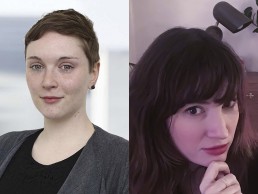
Kael Gillam & Kaye Preston
arc sits down with Nulty's Kael Gillam and interior designer Kaye Preston to chat about Designers Mind, a new forum aimed at raising awareness of mental health and wellbeing in the design world.
How did Designers Mind come about?
Kaye Preston (KP): Designers Mind is a forum and community of
creatives who are passionate about raising awareness around mental health and
wellbeing for designers in the workplace. The idea was born last October
at the Mad World Summit in London. I attended a talk by a journalist who had
created a sharing platform for his industry. At the time I was also aware
of a forum created for architects but knew of nothing specific for
designers. Throughout the day the seeds were planted and very quickly
started to grow. I co-chaired a roundtable about leveraging design in our
offices to create environments that promote wellbeing. It was in that
moment that I realised there was a complete disconnect in our industry. Here, I
was raising awareness about using design to help other people’s wellbeing, but
there was nothing in place to take care of the people actually doing the designing.
Kael Gillam (KG): I met Kaye through our Business Development
Manager Sarah Crooks, another fellow American, at a Thanksgiving dinner organised
by Nulty. We immediately hit it off and Kaye was absolutely bursting with ideas
about how to change the design industry for the better. Needless to say, I was
more than ecstatic to join the effort and am delighted that there are now a
handful of us supporting this vision.
What are your aims? What do you hope to achieve with it?
KP: Our aim is to help improve the mental health and wellbeing of designers
at work by raising awareness of the challenges they face within the industry
and the effect they can have.
We want to change the mindset of the current working culture that
doesn’t really allow the time to incorporate healthy habits into the day. Focusing
on prevention and the importance of incorporating sleep, healthy eating,
movement, connection with others into our days, can only make us healthier,
more productive and more creative in the long run.
How has the discussion on mental health changed over the last few years?
KP: It’s definitely become more open. Stigmas are being broken and many
more now feel they can talk about their mental health. Charities are doing
incredible work and providing much needed access to resources. There’s also a
new level of understanding that prevention methods can be taken through
healthier daily habits. Big names like Arianna Huffington talking about
the importance of sleep for instance, has been incredibly important for raising
awareness and changing mindsets.
KG: Charities are doing an impressive job of trying to raise awareness;
Mind really is a household name now. Organisations like CALM and Samaritans
have call lines that are helping people on a daily basis. The work they do is
literally saving lives by giving vulnerable people someone to reach out to in
an anonymous way.
How do you think both the lighting industry and wider design community responds to mental health awareness?
KG: I think that the lighting design community is very aware of the impacts
of poor mental health, and that we are a pretty open, honest bunch of people
who want to implement change in the way we work. However, the research that I
did for my talk at [d]arc room last year showed me that a big roadblock
for smaller firms trying to implement mental health policies is the belief they
have to spend a lot of money to make their workplaces happier and healthier
places. I want to debunk that misconception because there is so much that can
be done for minimal or no cost.
KP: Within the wider design community - I can only speak about the
interiors industry myself - I have to say that I have always felt supported by
all of the firms I have worked with when it comes to my mental health. But
there seems to be more policy in place for the moment when someone actually needs
help, rather than practicing regular prevention along the way.
Is there any ‘normalised’ behaviour in the design sphere that you think puts more pressure or strain on your mental health?
KP: For me it’s the combination of long hours and tech not allowing us to
fully switch off. I acknowledge that it’s a high-pressure, deadline-driven
industry, but I also think people can feel under pressure to stay late or look
at emails out of hours. We often prioritise work over wellbeing, resulting
in us not being able to switch off, set healthy boundaries and say no to heavy
workloads. This can all lead to overwork and exhaustion, which puts a strain on
our mental health.
What steps are Designers Mind taking to promote better mental health and wellbeing?
KP: We are working on raising awareness by sharing experiences and
working on holding talks and events to create a community and recruit
supporting partners. We would like to create tools and resources for the
industry, in addition to holding workshops to help people create their own
wellbeing toolbox and understand the importance of healthy habits and how they
are fundamental to mental health and wellbeing.
What has the response been since you started? Have you had much feedback from the design world?
KP: The response has been incredibly positive. I’m really grateful to
the amazing designers that have joined, been willing to share their stories and
help spread the word. The design team at Nulty has been extremely supportive as
well. They were some of the first people that I floated the idea past and the team even invited
me to speak at their London office where the concept was launched. The forum is still
very much in its infancy but with the positive response we’ve received so far,
we’re hopeful the momentum will build.
There’s a lot of talk in the lighting industry in particular, about the role of light on wellbeing, but this is mostly from a scientific, technical perspective, rather than psychological. Do you think there needs to be more discussion on the psychological effect that lighting and design can have on health and wellbeing?
KG: I’m by no means not the expert on this, but I agree that more research
needs to be done into the effects of things like circadian lighting on people’s
wellbeing. We had a CPD with Helen Looms last year, and unfortunately it sounds
like there’s a massive lack of funding for this kind of research. A lot of the
data that the lighting design community relies upon for its wellbeing hypotheses,
are the afterthoughts of wider medical studies that aren’t focused on the
actual qualities of light, perception and emotion. I would like to see more Master’s
students looking into this aspect of lighting design, as it’s clear the
industry is shifting towards the emotional, personal side of the perception of
a space, as opposed to ticking boxes for lux levels.
KP: Certifications such as WELL and fitwel are addressing the effects of
design on overall health and wellbeing. Biophilic design, connecting humans
with nature in our environments, has also become more popular - studies show
the positive effects of incorporating nature into our interiors on our mental
health. Our job as designers is to raise these options with our clients so
that we can use these tools when designing a space.
What advice would you give to someone who may be struggling with their mental health and wellbeing?
KP: I would say don’t try and go it alone. It may feel incredibly daunting
and even scary at first but reach out. Connect with someone you trust and start
the conversation. I know from my own experience that I felt like an incredible
burden to my family and friends. But I’ve since learnt that this never was and never
is the case. Everyone goes through something. It’s better to be in this
together.
KG: Try not to keep it all to yourself. If you’ve never spoken to someone
about your mental health before, it can feel stupid and scary and not important
because hey, other people have problems too, don’t they? Don’t invalidate your
own feelings; own them, accept them and seek guidance on how to work with (not
around!) your circumstances to feel healthier. We have a handful of resources
on the website and that list will hopefully get longer and longer as time goes
on.
What more can studios do to support their staff?
KG: There’s so many things to pick from here it’s hard to boil down!
Firstly, I would have to say that stopping the “always on” mentality is a must;
some companies have their emails shut off after work hours so there’s no
scrolling frenzy at 10pm hoping that someone may have got back to you.
Providing support is my other, though quite broad, piece of advice. Offer
managers Mental Health First Aid training, offer private healthcare and/or
digital counselling options, provide employees with a Mental Health resource guide
that shows all of your company’s policies and the resources available to them.
KP: I think focusing on prevention instead of reaction would be really
helpful. For example, addressing the long hours culture instead of making time
for healthier lifestyles. Whenever I’ve been in the position discussing
resource the same thing is always said: “We work longer hours when we have a
deadline, but this isn’t meant to be the norm.” Unfortunately, I think it has
become the norm and the times in between much less. The London Practice Forum
(a community of architectural practices) have signed an agreement to reduce 40+
hour work weeks. Could the design industry follow suit?
How can people get involved with Designers Mind?
KP: The easiest way to get involved and best place to start is at our
website. Here they can get in touch, follow us on social media and discuss what
they can do. I would also like to add that we really appreciate all of the
support.
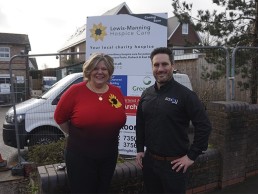
Saxby Lighting donates £6,000 of lighting to Dorset hospice
(UK) - Saxby Lighting has donated more than £6,000 of lighting free of charge to Lewis-Manning Hospice Care.
The Lewis-Manning Hospice Care helps people in Poole and East Dorset with life limiting illnesses. Its aim is to increase physical and social wellbeing, reduce isolation and loneliness, support people to stay in their homes longer, and alleviate the huge pressures on family and carers.
Sam Gilbert, Area Sales Manager for Saxby Lighting covering the South West region, said: “We want to help people in our community and when we were contacted asking for help by Lewis-Manning Hospice Care, we were delighted to help this incredible charity.
"We supply fittings which are ideal for an array of areas, both exterior and interior, suitable for the home, office or warehouse, so we knew we could help the Dorset charity with their refurbishment."
Clare Gallie, CEO of Lewis-Manning Hospice Care, added: “I would like to thank Saxby Lighting for this wonderful and generous gesture. So many businesses are getting involved with our refurbishment project and donating materials or assisting us in some way and we are grateful to every single one.
“Creating a light, pleasant, welcoming environment for our charity headquarters will benefit staff, our volunteers and those attending the sessions which are part of our vital support services.”
