
The Wedding Gallery, UK
For betrothed couples looking for a one-stop shop for their wedding planning needs, the Wedding Gallery at One Marylebone is the perfect location.
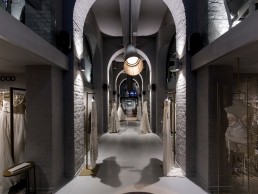
Located in a repurposed Anglican cathedral – formerly Holy Trinity Church – on Marylebone Road in central London, The Wedding Gallery provides a wealth of luxury retail establishments and wedding planning services, alongside a 400-capacity venue, all under one roof.
The 20,000sqft Wedding Gallery covers every detail needed for a wedding, from hair and make up, gowns, jewellery and suits to photographers, flowers and wedding stationary. The store also offers cakes and catering, with an on-site kitchen for taste tests.
Couples can also hire DJs and speechwriters, or visit the ‘hub’, where they can put on headphones and watch wedding singers and bands on a big screen to book musicians.
To make sure that no details are missed, wedding planners are on hand to provide advice, while insurance packages are also offered for worst-case scenarios in case one partner has a last-minute change of heart.
Perhaps more impressive than what is inside the Wedding Gallery is the building’s beautiful, neo-classical inspired architecture. Built in 1828 to the design of Sir John Soane to celebrate the defeat of Napoleon, the building boasts a grand portico and belfry tower.
The Grade-I listed building could be seen as being imposing, but the owners sought to use the facility’s impressive architecture to create an inviting environment both inside and out, especially at night.
The Wedding Gallery wanted the building’s architectural lighting to creatively provide upmost emphasis on the surroundings, with the ability to control the various areas using a touch-screen controller to maximise the usability. As such, they contacted Essex-based ErosPhos and EPS Lighting to design and supply the lighting respectively.
A multidisciplinary architectural lighting design practice, ErosPhos also covers lighting control systems design and engineering to provide clients with complete lighting solutions, while EPS specialises in determining and specifying appropriate LED lights and lighting controls based on three main criteria: performance, usability and effectiveness.
“Lighting had to be efficient, cost-effective and easy to install,” said Russell Vanstone, Technical Director at ErosPhos. “EPS used the light fixtures’ photometry to create a rendering based on the product’s performance, not an artistic representation. This allowed us to correctly specify and present the solution to the client, ensuring the end result is as expected.”
The exterior lighting was intended to serve two purposes; general illumination, but also as part of a rental package for events held on site. Because of this, EPS provided the ability to override the automatic controls. It also included a DMX input for a theatrical lighting desk, allowing event users to control façade lighting for different kinds of events. Based on these criteria, ErosPhos specified high-output, exterior-rated LED fixtures from Acclaim Lighting.
ErosPhos’ lighting specifications consisted of forward and side-facing flood fixtures, inclusive of lighting on the roof. Those lights include a combination of flood and linear grazing.
Acclaim’s Dyna Accent LED flood fixtures are used to uplight the building’s entrance doors and pillars, while DynaFlood XT QW highlighted the trees in the garden area to create dramatic effects. Designed for dynamic illumination of façades, structures, landscapes and monuments, the Dyna Flood utilises Acclaim’s quad colour technology in either RGBA or RGBW.
“The client initially wanted an ‘all white’ install, but through demos and mock-ups we managed to show that colour was indeed the best way forward,” explained Vanstone.
“We had to ensure that the building didn’t look like an animation from a cartoon, which unfortunately can happen when a building is lit in colour if the design isn’t done correctly, but the feedback from everyone is that the building has never looked better.”
Elsewhere, Acclaim’s DynaDrum SO QW bathes the cathedral’s front entrance and clock in light, while Dyna Flood fixtures were also used to side wash the structure. The lighting designers also specified linear outdoor LED DynaGraze AC DMX fixtures, which enabled them to create multiple configurations, including RGB, RGBW and Dynamic White.
“The creativity of the design and the use of colours has satisfied the client and the visitors of the event space,” Vanstone continued. “The lighting versatility, the simplicity and the output of the system greatly justifies the investment. Now, when visitors go to the old church, their wedding journey starts with a beautiful experience through colour that hopefully continues throughout their lives.”
Initially just brought in to provide lighting for the building’s exterior, ErosPhos were also asked to look at the interior of the building as well, and after putting together a design for this, they consulted with the client’s in-house construction team.
Inside the church, the many retailers are located throughout weaving tunnels and catacombs, adding a sense of exploration and playful, maze-like quality for guests as they navigate their way around the facility. However, such an unusual layout meant that there was a total lack of any natural light.
As such, it was essential that the lighting scheme developed by ErosPhos was fit for purpose. As with the exterior, Vanstone and his team provided design renders and mock-ups to make sure that what they were proposing would work, and also worked closely with interior designer Christian Lahoude to ensure that the lighting designs really maximised the architectural designs.
“We had to ensure that we specified the correct function and emergency lighting, which not only complied fully with the BSEN standards for emergency lighting and general illumination levels, such as that on stairs, we also met the design requirements and catered for the fact that this is indeed a very high-end retail environment,” Vanstone continued.
“We see way too often that effect comes before the relevant standards for illumination, and stairs are in darkness, for example, but with the right optics and distribution it is possible to meet the relevant standards, and also deliver on the architectural aspect.”
Lighting for the interior also came from Acclaim Lighting, alongside Nobile Italia and Hadler. Because of the building’s Grade-I listed status, ErosPhos were not able to make any structural changes to the building, nor damage the exterior façade. As such, all products were fitted using construction glues, and where actual fixings were required, these were done so using fixings that won’t damage the fabric of the building. The same applied for the building’s interior, where cable trays and recessed ceilings were used throughout.
Aimed at being a one-stop shop for couples looking for a luxury wedding, it was important that the Wedding Gallery had a lighting scheme to match the high-end luxury of its retail establishments. The design provided by ErosPhos complements not only the fine goods on display, but also the ornate architecture of this impressive building, adding to the already magical wedding experience and aiding in creating those special memories.


Lorenzo Maghnagi
With formalighting celebrating it’s 50th anniversary this year, arc caught up with founder and president Lorenzo Maghnagi to find out about the company’s past, present and future.
When was formalighting established and how did it come about?
About 50 years ago in the UK, we joined forces with other Italian design industrialists to develop downlighters for the architectural lighting sector, promoting Italian design through our showroom in London. Later, I was inspired by emerging Lighting Designers and Architects originating from South-East Asia, and envisioned our focus on architectural lighting for the commercial project specifications market, and formalighting branched off to realise an international presence with the expansion of a Hong Kong office. The business soon evolved to manufacture its own range of Italian designed architectural lighting and the expansion of our European headquarters in Milan.
How did formalighting look back then compared to now?
This year marks formalighting’s 50th anniversary. We have progressed from an international multi-brand distributor of Italian architectural lighting in the UK , to designer, manufacturer and global distributor of our own range featuring over 120 product families in four collections (interior, exterior, motorised and now decorative). Our family business has grown to involve a new generation (including my daughters - a lighting consultant/PR specialist and a lawyer - and my son-in-law, a software engineer). The energy on our booth at Light+Building and the interest in our new products really made me appreciate how far formalighting has come and the recognition and reputable position it plays. The global scale of the company has also been a realisation of my dreams, especially the recent opening of our USA office.
What was the big breakthrough in formalighting’s evolution?
It’s been a combination of conscious decisions and relentless hard work. Our decision to be where we could control production, the prices and product design, by establishing our wholly owned European, state-of-the art manufacturing facility in China, has been significant in our evolution. It forced our continuous investment in manufacturing processes and technology, the component industry, machinery, factory processes and standards and electrical engineering innovations, to ensure long term quality and functions in our fixtures. In turn this enabled our understanding and vision for lighting trends, rising design, architectural trends and technology. formalighting’s Italy office furthered our exposure to talented designers and architects who have helped steer our image. We also benefited from the guidance and expertise of Architect Franco Mirenzi, who designed our booth at Light+Building. However, I feel like our ‘breakthrough’ is yet to come, as the recent decision to cross over to the US market, combined with our product engineering and compatibility with advanced market technologies, are just now coming into fruition.
How important has your motorised technology been to your product portfolio and how did it come about?
The motorised technology has raised our profile in the hospitality sector. The Motolux range, which we launched at L+B 2016, came about from our collaboration with a US engineer. Within two years formalighting’s engineers developed the Motolux range to include over twelve product families and implemented innovative functions and mounting installations. We had the foresight to experiment with a range of technologies on the market, which led us to appreciate the benefits and applications of motorised lighting. We were amazed by the requests from visual merchandisers and lighting designers. The motorised lighting is not limited to architects and design needs anymore. It proves formalighting’s commitment to service and investment in R&D. We even took the motorised technology to a niche and developed a range for motorised jewellery and showcase lighting, which sparked a lot of interest at L+B 2018.
You are incorporating new technologies into your products. How has this made your luminaires better?
Synonymous with our commitment to service, these new technologies enable our luminaires to offer additional options to users, without requiring additional remote equipment or expensive set-up/installation costs. formalighting was first in the market to integrate the control of LensVector technology by the Casambi app (instead of another dedicated app), enabling users to adjust another feature, the beam angle, with a finger swipe of a touchscreen. Naturally it is an added benefit if the user can use the same interface to dim selected fixtures, move the fixtures, create scenes and timers. This is all in addition to our luminaires also incorporating the latest and most advanced LED technology with high density LEDs of CRI 93 or more and R9>60 offering perfect optics and interchangeable accessories.
What did you launch at Light+Building?
Product development is my passion so it was difficult to be selective. We presented eight new innovative product families in our Motolux range, of which many are the first in the market - for example, the Moto-Ola Pendant, a motorised disc-shaped light head that tilts vertically and also flips within its gimbal/disc remotely, so it can be used for direct and indirect light, adjusted by hand-held remote control or by our Casambi app. We also launched a collaboration with Italian designer, Maurizio Giuseppe Scutellà, the LineaVolo range, blending the line between architectural and decorative.
Can you tell us any plans for the future?
This next generation is our future. They have fresh ideas and plenty of energy, focused on growing the business by remaining fully committed to continuously invest in R&D, launch new designs and investigate packaging and material alternatives to reduce our carbon emissions.
We believe that sensors together with IoT development, will become a key part in lighting management/data collection, so our plan is to continue to integrate new technologies and relevant softwares in our fixtures and systems as lighting having its own artificial intelligence, which is part of human needs and evolution, has become part of the world’s infrastructure. So we hope to continue opening offices worldwide to increase our global presence and to facilitate our product system offerings.
Victor Palacio
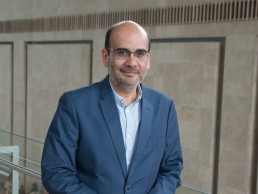
Firstly, a lighting designer and now former IALD President, Victor Palacio reminisced on his childhood days working for his father, whilst humbly looking back at his successful career in the lighting industry and where it has carried him to today.
As with many career paths, Palacio did not originally set out to be part of the lighting industry. Instead, when taking the typical school tests to determine which field of work to head towards at aged ten, young Palacio dreamed of being an Olympian by the age of 20. Much to his dismay, he has not exercised a day since… Progressing on from those early aspirations, he then determined he wanted to be a scientist, which explains his continuous interest in technology and attentiveness to the science of light.
A clear personality trait Palacio carries is that of a caring mentor. This attribute came to the forefront during his time in college when he began teaching computer technology classes to high school students during the early 1980s, when computers were the latest boom in technology.
After leaving college, Palacio worked in a flux metre manufacturing company as an electronics specialist before moving on to work with Fuji Film, just at the beginning of the 1986 World Cup in Mexico. Fuji Film was one of the official sponsors of the games and gave Palacio an unforgettable experience: “It was amazing! I was learning about photography and was involved in the installation of the mini developing labs. I learnt a lot - even about the science of light - related to photography and film printing and was lucky enough to be part of the World Cup team.”
Shortly after, Palacio moved on due to a nationwide employment collapse, which affected a lot of the Mexican population. This was the moment when Victor’s father saw a gap in the market and decided, along with his business partner, to establish his own commercial business in lighting. During expansion, his father decided to open a projects department, so the company wasn’t solely working in sales. This led to bringing an architect on board who, in turn, suggested Palacio was brought in to make up the electronics drawings. Immediately hooking Palacio’s interest in the lighting industry, he was taken on board to work on a museum lighting project, which would determine his passion for lighting design and historic preservation for years to come.
Just like other creative minds, Palacio has always had an interest in differing subject matters. During his time at University, gaining qualifications in electronics, he also opted into studying humanities modules, such as Art History. This sparked his interests in the design world, which was evident in later jobs he picked post-graduation. After completing various technical courses throughout his early career, he began to delve into the study of light and the technical attributes of a lighting engineer. Becoming, what he referred to, as the ultimate “geek”, he heavily studied the IES Lighting handbook whilst making calculations on computers before Windows was widely available.
Once he commenced work inside some of Mexico’s most renowned museums, Palacio began to pay close attention to the impact lighting was having on the many historic artifacts, as well as the buildings themselves, as many museums are situated in historically sensitive buildings. This required particular attention to be paid to the preservation properties and the artworks they housed. As a result, Palacio undertook a brief course at the National School of Preservation, at the National Institute of Anthropology and History. This led to pairing another fellow teacher, who specialised in preservation, with Palacio’s experience in exhibitions, to develop a course in museum lighting. After taking full control of this course after a time, Palacio decided to complete a postgraduate course in Architectural Preservation – again, claiming himself to be the “geek in the corner of the room making lesson plans on architecture from the fifteenth century!”.
“We were getting complaints from those in charge of looking after the care and preservation of the site of the museum project we were working on at the time, about both the artwork and the architecture. “So for me, it was much better to learn about it all from the very beginning, and develop a design that considered what they deemed important,” Palacio explained.
When discussing his philosophy and approach to lighting design nowadays, it is clear Palacio is very conscious about this idea of preservation. At the beginning of his lighting career, with his technical hat on, he was more focused on the light levels and colour renderings. But he now finds it far more compelling to “explore the impact of lighting on the aesthetics and, I think, that’s something that happens to a lot of lighting designers,” he claimed.
“Highlighting architecture, façades and features were what we focused on originally as a firm. Then I began to think, as did my colleagues, that even though it’s an important factor to architectural lighting, it’s not the main goal we are striving to achieve. We began to consider other factors related to the functions of places, for example the working place, to the productivity in residential spaces, to relaxation and commercial places to experience shopping. All of which, to some of us, came intuitively and to others in a knowledgeable way; we started focusing on peoples’ experiences.”
As many lighting designers and professionals in the industry began to notice, the non-visual impacts of lighting, the use of lighting on energy supplies, impacts on the environment and concerns of light pollution, are predominantly hot topics of consideration when working on new lighting projects, as well as being big matters of discussion during world conferences. “I think that’s going to be relevant for the profession of lighting design and for practitioners to become aware of. These are all side effects of lighting, which in the end sometimes don’t become the side effects but the main effects of lighting,” commented Palacio.
“Our philosophy of working is to create the visual experience of spaces. When we talk about visual, we relate it to lighting, experience is related to people, the spaces are related to the places where people perform activities, whether they’re recreational or commercial, interiors and exteriors; we focus our design ideas on that. When we are defining what lighting will be in a place, we will contribute in an important way to the experiences people will have in that space.”
When analysing the Mexican market and its general attitudes towards lighting design, some have regarded it as falling behind some of the bigger competitors such as North America and Europe. Palacio observed: “I think that unfortunately in Mexico the market has a very strong commercial component on the design side. That means a lot of commercial firms are getting into the design area, which makes it more difficult for lighting designers to develop their work, because they have this strong competition. I’m aware I may sound a little controversial saying this, but I guess lighting designers in Mexico haven’t made a clear decision to devote to lighting design.”
As we have seen in recent topical discussions in the lighting community, it is evident the role of the lighting designer is a blurred one. Palacio notes it is important we understand that the majority of us live in an upper market. For those that exist in a closed market, the situation is very different. Not to be mistaken for complaining, Palacio reinforces his point that he is not criticising the role of the manufacturer for offering the same services as a lighting designer; “I know I can provide better design services than they do!
“If I started designing products and tried to manufacture them, I know they would do a better job than I could,” he added.
Palacio has observed that a lot of potential problems could be a result of a lack of marketing from the lighting designers themselves. In order to be better as independent designers selling their skill set as their business, Palacio believes it is key to highlight the value of marketing yourself as a lighting designer.
“It’s up to us, the lighting designer, to stand out and speak for ourselves, have a louder voice and be better at convincing clients that they really need a lighting designer in their team,” he commented.
“I have heard some say manufacturers or commercial firms should stop offering design services, but I don’t agree! It is all healthy competition.”
During a time when Palacio was working with his father, he realised he had more of a passion to work on the design side, but was constantly blocked by people telling him it was a difficult profession to chase and there’s not a big enough market to be successful in it. But luckily he found the opposite to be true, and did find a market for lighting design and clients that appreciated him offering an independent service, which included specifications without being commercialised.
It is evident across Palacio’s portfolio that he has had a successful career in lighting and has validated his decisions to branch off and work independently, away from his father’s packaged approach.
Looking back, one of Palacio’s first and most notable projects was with the Mexican Museum of Anthropology between 1998-2001. Working with precise halogen lamps, the installations replaced the old theatrical fittings from the 1960s that highlighted numerous ancient artifacts, including pieces of the Aztec Calendar. Originally the ten theatrical luminaires aimed up to 15,000 watts into one stone, but were replaced with six fixtures using a combination of 35 and 70 watts aimed at the stone.
“At the time, the best tools we had were these metal and ceramic power lamps with very precise optics, low power and nice colour renderings,” Palacio explained.
The Fine Arts Palace in Mexico City is another notable project Palacio and his team at Ideas en Luz, has worked on. This time, focusing on the exterior of the building, they designed an entirely LED based scheme for their first exterior project. Completed only three years ago, the lighting design included fixtures from multiple manufacturers in order to find the perfect fit for each specific need. The main façade has throws of up to 70 metres high reaching two metre high sculptures at the top. It also proved to be a great opportunity for designers and contractors to collaborate on the field with the local firm Avantgarde Illuminacion.
One of the first corporate projects Palacio’s team worked on was with the IBM headquarters in Mexico City. Wanting to use indirect lighting was made easier through the strong collaborative relationship with the architect, who took that idea and designed the ceilings in the shape of the holds in order for the building to take advantage of the indirect lighting.
After establishing himself as a talented and respected lighting designer in Mexico and internationally, Palacio moved on to new heights when he stepped up as the IALD President. “Jeff Miller, who is a past president of IALD, thought, along with the board, that they needed to highlight the ‘I’ of IALD [International], because as it stood it was mainly a US centric membership. So one of the first steps out of the US was Mexico. I was lucky enough that the board had got in contact with many of my colleagues and myself at this time. I began to volunteer with the IALD and witnessed the efforts made to make the IALD a global organisation from the very beginning,” he reflected.
Many in the industry will be familiar with Palacio’s metaphor for the IALD’s globalisation and the fostering of memberships; instead of chasing butterflies and catching them in a net, it’s better to build a beautiful garden that will attract all the butterflies. The IALD have carried this approach forward in order to engage and nurture these memberships instead of increasing numbers for the sake of it. Originally, designers and practitioners were sceptical of the IALD, especially in Europe, and it wasn’t until the attractive garden was built, that some of the higher profile names in the industry became members, which in turn encouraged many more to follow.
Furthermore, during his time as president, Palacio was proud to witness the first steps on the field of the international certification of lighting designers, (CLD). Not wanting to enforce a lighting programme into universities, Palacio believed it was better to formulate an internationally recognised certification through the association instead.
“I was lucky enough to be part of the task force group, which started off testing the waters to see if it was feasible to develop the certification, and then be there at the time when it was officially developed with specialists into a certification programme,” Palacio explained.
Additionally, developing further on the globalisation, the IALD has worked hard to establish relationships with the IES for decades in the United States, as well as focusing on building friendships and collaborations with other lighting design associations internationally. For example in Brazil (ASBAI), France (ACE), the Spanish Lighting association and most recently, Palacio announced: “We will be forming a new collaboration with the Italian lighting design association”.
When initially in the nomination stage of obtaining presidency, Palacio had to complete a questionnaire that asked what he expected the IALD would achieve after his three years in term (one year as president-elect and two for presidency), and it is clear his main objectives were successfully achieved; building international bridges and fostering consistency through maintaining a ‘steady ship,’ so to speak. He believes when you have more people interested in bringing their perspective, you need to be very careful to be consistent in all the layers involved in every single action, strategy and with precision: “These are important because it’s a continuous effort that needs to be kept flowing, but still have someone chairing with a thoughtful mindset. You’re building something that needs to be bold and strong otherwise it will fall down sooner or later.”
Passing on the baton to David Ghatan, Palacio is filled with confidence that he possesses the necessary characteristics needed for the role; “I really admire him as a young professional; he is able to be sensitive to what’s going on around him. He’s a very good listener and is very good at synthesising peoples’ ideas. I have seen how he has embraced the role, the family feeling and sense of community that comes with the lighting industry, and think he will make a very strong contribution to the IALD…it takes up a lot of your time, mind and emotional strength but I see he has all of that under control. I am very happy to see him taking over and for me to take some rest!”
It is evident through Palacio’s nurturing nature; he has gained a lot of knowledge and experience from the industry and has earned the respect of many. For future generations of lighting designers, his two cents of advice would be when determining careers, to ensure you are moving in a clear direction and make definitive decisions. No graduate is going to land their dream role as principle designer for a firm such as Spiers + Major; it takes hard work and perseverance. “I have seen it in Mexico, we have one special lighting course at the National Autonomous University of Mexico, but when I speak to some students, they say they have been unsuccessful in becoming a lighting designer so they now work somewhere different,” Palacio remarks with disappointment.
“They have put a lot of passion into it, but there is a lack of courage. Of course it’s not easy, as it is in any profession, but you need to work hard, learn and be part of the community. This is not a profession for lone riders, it’s for teams.”
When asking who inspired and still inspires him in the industry, Palacio found it difficult to narrow down names, but did refer to Kaoru Mende from Japan for the cultural influences in his work, Mark Major and Jonathon Spiers for their portfolio of work that he used to cut out of magazines as a young designer himself to show off to his then students, and Barbara Horton, a fellow former IALD President and influential female lighting designer and businesswoman. In South America; Monica Luz Lobo, Pascal Chautard, Douglas Leonard, brand development by Fisher Marantz Stone, and Spanish designer Rafael Gallego. Fianlly, not to leave out the leadership of Gustavo Aviles in Mexico and the personal inspiration brought by his wife Liliana, as a professional supporter.
“All of them are people who have embraced the profession in a great way and they have brought their talents into the industry, and there are many more I have not mentioned still. Each professional has a special contribution!”
So much for taking some time to gather his thoughts and put his feet up, Palacio and his lighting team are moving swiftly into the New Year with more project proposal requests than ever before and focusing on establishing international collaborations - not allowing geographical locations to be limitations.

ASICS, UK
into Lighting was appointed by ASICS to work alongside interior designers Brinkworth to provide the lighting design for the largest ASICS retail store to date, which has recently opened on London’s iconic Regent Street and embodies the new concept retail approach for the brand going forward.
Featuring all four ASICS brands under one roof for the first time, ASICS, ASICS Tiger, Onitsuka Tiger and Haglöfs will now all be sold within this one store. into has worked as lighting consultants to ASICS for over six years, completing more than 90 stores Europe-wide, into Director Darren Orrow leads a team of five, comprising lighting designers and project managers to service ASICS as a client internationally.
ASICS is an acronym of the Latin phrase ‘Anima sana in corpore sano’ – A sound mind in a sound body. As such, interior designers Brinkworth have created a concept that reflects the harmony of this philosophy and a store environment that balances the highly technical aspects of the brand (a sound body) with natural, warm finishes, features and materials (a sound mind).
The concept offers consumers a fully integrated, holistic sports environment where both the mind and the body are stimulated. The ‘Sound Mind, Sound Body’ ethos of the brand will be consistently evident, with the use of living plant installations, sustainable products, natural wood finishes, LED lighting, and technology, as well as a complimentary juice bar and in-house DJ booth.
The concepts within the store are a reflection of the innovation that has been at the heart of the brand since its inception. There are four ASICS MOTION ID zones, using sensors to capture each consumer’s natural posture and movement when running, to inform recommendations of product types best suited to them.
A unique, state-of-the-art ‘robotic shoe delivery system’ has been introduced to enhance the delivery of products to the shop floor. Intuitive robotic arms placed in the shop window demonstrate key products and a striking kinetic lighting installation runs the length of the store, pulsating at the same pace as the heart rate of a 100-metre sprinter.
Large-scale integrated planting within retail is not normally successful due to the lighting specifically required for product display. Brinkworth and into have worked closely with landscape experts to incorporate a bespoke lighting system, this provides the plants with the correct light in order to grow. A bespoke drip feed watering system has been developed within the long stainless-steel planters to ensure clean and safe installations.
The retail furniture has been developed with RFP to deliver the best possible system for the ASICS product range. A modular post system provides a perimeter wall framework into which a whole range of display components fits inside, including integrated LED lighting, graphic backdrops, digital panels, racks, shelves and shoe stands.
into were appointed by ASICS to work alongside Brinkworth to realise their joint vision for the lighting in this new concept retail flagship. The lighting was to be as energy efficient as possible, all LED and tailored to different product types and displays, to help zone areas and to create a theatrical environment.
The 9,040sqft, two-storey former French Connection store comprises of a vast ground floor area with two mezzanine levels and a basement level, complete with the ASICS motion ID and body scanner area.
On looking through the store windows and entering the store, customers are greeted by a large-scale ‘wow factor’ bespoke kinetic lighting installation. This feature was developed, supplied and installed in conjunction with Skratch AV. The installation comprises a series of suspended RGB LED tubes on winches controlled via DMX to enable infinite colour change, chase patterns and a kinetic effect. A Madrix Luna 8 with a purpose-built program links to a Skratch Assist tablet control system to provide the store with a quick and simple method of controlling the light effects. The Skratch Assist tablet allows the store manager to turn the lights on and off with a simple tap, as well as changing between the pre-installed movement and light sequences.
The accent lighting to the ground floor is provided by low glare, high level Reggiani Yori track mounted LED fixtures in a matte black finish, which has a minimal visual impact against the dark ceiling. These fixtures have been carefully located to work with the listed ceiling constraints of the venue. The fixtures have a colour temperature of 3000K and CRI 90 coupled with a 15-degree optic to provide focused illumination of the apparel merchandise, whilst avoiding light spill to the vertical surfaces to ensure the video wall and screens stand out and are not flashed with light.
The mezzanine level to the right of the venue houses the ASICS Tiger brand. The accent illumination to the merchandise is provided by a smaller version of the track spot with a wide 47-degree optic, to accommodate the low ceiling height, in 4000K CRI 90 with a bespoke, diagonally suspended LED profile with yellow light to accentuate the branding. A cooler 4000K colour temperature has been selected here to accentuate the whites of the trainers on display and create a more daytime/fresher ambience for the ASICS Tiger area.
The Onitsuka Tiger section is located below this mezzanine and is lit by recessed Reggiani adjustable LED downlights due to the low ceiling height. These fixtures have a colour temperature of 3000K and CRI 90 coupled with a wide 51-degree optic to provide good vertical illumination to the merchandise.
The ASICS Performance area is housed under the mezzanine of the left-hand side of the store. This area is defined by the timber slatted surfaces which draw customers into the space and surface mounted bespoke linear LED fixtures that have been integrated within the slats to provide a uniform ambient level of illumination. These fittings have been specified as 1-10V dimmable so that the light level can be locally controlled within the area after dusk.
On the mezzanine above the Performance area sits a unique state-of-the-art ‘robotic shoe delivery system’ that has been introduced to enhance the delivery of products to the shop floor. This has been highlighted using a combination of track mounted LED spotlights in conjunction with a blue linear LED to frame the architectural opening within which the ‘robot’ sits.
The open staircase leads you down into the basement to an additional ASICS Performance area along with the Haglöfs brand. The accent illumination to the merchandise is provided by further Reggiani adjustable track mounted fittings with a colour temperature of 3000K and CRI 90, with exception to the fixtures illuminating the trainer walls, these are in a cooler 4000K CRI 90 to accentuate the whites of the trainers on display, again helping to create a fresher ambience. The suspended feature planter display within the basement provides a key focal point and careful consideration has been given to the illumination of these as the correct colour temperature and diffusion of light is required to aid the plant growth.
The glazed motion ID consultation area, which can be viewed from the store, is illuminated to a light level stipulated by ASICS via a surface mounted linear 4000K CRI 90 LED profile with track mounted adjustable spotlights to highlight the machinery. The combination of these provides an excellent uniform light whilst minimising any shadowing for the cameras.
Changing rooms throughout the store are lit with a combination of recessed ambient LED downlights with an opal diffuser to soften the light and avoid glare, coupled with linear LED integrated into the mirror to provide a halo backlighting effect. Changing room lobby areas are lit by bespoke recessed LED profiles integrated within the timber ceilings.
Darren Orrow, Director at into, commented: “We are very proud that our longstanding relationship with ASICS continues with the development of this fantastic new retail concept. The lighting concept is tailored to suit each of the ASICS brands within the store, further enhancing their own visual identity whilst the overall scheme provides a homogenous lighting design creating theatre and providing the desired ambience throughout. Our work for ASICS continues with the lighting concept being applied to new stores throughout Europe, the USA and the rest of world.”
Scott Wakefield, Direct to Consumer Director ASICS EMEA, added: “Our new Regent Street store is a beacon for the ASICS DNA. Through the innovative retail space consumers can physically interact with the brand, witnessing the technology, breadth of product and ‘Sound Mind, Sound Body’ philosophy. We will take all of the positive elements of this state-of-the-art offering and translate it through further store openings across the globe.”
The New Global Retail concept is currently rolling out with completed flagship stores including Amsterdam, Paris, Cologne, and New York Firth Avenue, all with lighting design by into. The interiors and lighting concept is scalable for smaller outlet stores and concessions. Some stores feature unique, site-specific add ons such as a yoga studio, exercise studio and juice bar.
L'Occitane, UK
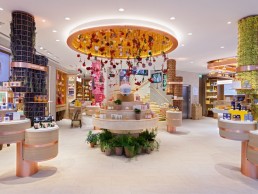
Twenty years after opening its boutique shop on London’s Regent Street, French natural beauty, skincare and fragrance brand L’Occitane en Provence has moved to a new, 6,450sqft flagship store.
In creating this new store, also located on Regent Street, L’Occitane commissioned lighting designers Nulty, alongside interior designers FutureBrand Uxus, to create a retail experience in fitting with the brand’s luxury, natural aesthetic.
Uxus was briefed to create a new, immersive experience that offered customers a luxurious and sensorial exploration of L’Occitane’s full range of natural beauty products, all inspired by the south of France art de vivre and Provençal beauty secrets.
Its vision for the space was an enchanting retail experience with education and trial at the core, sharing L’Occitane’s ‘beauty of life’ philosophy. “The region of Provence is at the soul of L’Occitane so we wanted to transport the customer there,” said Olivier Termijtelen, Senior Designer at FutureBrand Uxus.
“We incorporated real roses and showers of lavender in the interiors, and used tiles in warm yellow hues reminiscent of sunnier climes.”
The decision to use real flowers for the stunning centrepiece caused Uxus some issues, as Termijtelen explained: “The main challenge was to find fresh ingredients used in L’Occitane products that can also be used in a dry form to ensure longevity of the display, but not compromise the look.
“Using fake ingredients was not an option, as it didn’t speak to the originality of the botanical enrichment story we conveyed in the store, so we worked with a drying process that didn’t discolour or damage the ingredients, and we were able to create a strong focal point.”
On entering the store, customers are taken on a journey from garden to table – the store is intended to be “an enrichment for all the senses”, with sunshine yellows and rose gold accents flooding the space with a warm glow.
According to Anna Sandgren, Associate Lighting Designer at Nulty, L’Occitane wanted the colours throughout to “emulate the ‘golden hour’ that you get before and after sunset, emphasising the warmth and natural ethos of the brand, and to complement the materials used within the interior design”.
Nulty has a strong working relationship with Uxus, having worked with them on the lighting scheme for Bloomingdales Kuwait, and this relationship proved beneficial for L’Occitane. Sandgren explained: “Having worked together previously meant that the relationships had been nurtured and lots of trust and confidence in our working relationship was apparent throughout the design process, and I think this translated into the scheme.”
The two companies ran design workshops in the early stages of the project, enabling Nulty to create a lighting scheme that worked well with the interiors, complementing the varied material palette by using LED technology to bring out the colours and textures within the interior, helping the products to stand out.
“We used high quality LEDs that pick up the true colours of all the materials used within the store,” continued Sandgren. “The brand’s palette is naturally warm and the lighting chosen reinforces this, making the space feel sunny, warm and inviting to customers.”
Due to the nature of the brand’s warm colour palette, there was no need for Sandgren to add any additional warmth in the way of colour temperature. Instead she specified high CRI LEDs, lit at 3000k. However, the store features a number of digital screens throughout, which could have had an impact on the lighting scheme.
“We had to control the amount of light emitted from them and balance that with other elements to ensure that the retail space didn’t feel over illuminated,” she explained. “The lighting scheme within the ceiling was clean and uncluttered, which meant careful consideration of the placement of the downlights, keeping the quantity to a minimum whilst ensuring the correct amount of light coverage was achieved on all products below.”
Nulty has an extensive portfolio of retail projects from around the world, and as such has a sound knowledge of what constitutes successful retail lighting. With this in mind, Sandgren felt it was important to incorporate layers of light throughout the store. “Ambient lighting was achieved from the perimeter joinery displays, whilst task lighting featured from the adjustable downlights, illuminating the merchandise on sale,” she explained.
“The interior displays, such as the flower installations, were lit as feature elements together with the architectural coffers, adding additional visual interest within the store and catching the attention of passing customers.”
The shop floor is divided into beauty zones; a sunshine fountain with an array of soaps, a wild scented garden allowing customers to explore and find their fragrance, a pampering handcare bar, an abundant harvest table and a living beauty bar. Holistic treatments are provided upstairs, with refreshments and Pierre Hermé Paris macarons served while customers relax.
As such, Sandgren believes that it was an “ambitious design with a limited timeframe” to achieve and coordinate all the different elements, but she added that Nulty achieved this by “working in close collaboration with the client, while our existing relationship with Uxus allowed us to work quickly and effectively”.
The new Regent Street store is unlike any other L’Occitane shop, from arrival to exit, FutureBrand Uxus and Nulty have created a restorative oasis of calm on the busy London shopping street, and Sandgren believes that L’Occitane’s firm idea of what they wanted helped to make it such a success.
“The history and story behind a brand always help a designer when creating a vision for a store,” she said. “L’Occitane knew exactly what they wanted to achieve from the new flagship retail space while really understanding their well-established customer base. Altogether this meant that the brief was steady – which isn’t always the case in retail.”
Jamie Taylor, Retail, Wholesale and Property Director at L’Occitane UK, is delighted with the new location. “We are thrilled to secure our first UK flagship store on Regent Street,” he said. “This new store sets our customers at the heart of an unforgettable retail experience, with personalisation and customisation at the core.
“The unique concept design creates a truly multi-sensorial experience. Memory creation through inspirational storytelling was our vision for this Flagship Experience Store, providing an immersive exploration true to our deep Provençal roots.”
Sandgren agrees with Taylor’s sentiment, and she feels that the lighting greatly adds to the aesthetic that L’Occitane were trying to achieve in their new flagship location. “The lighting doesn’t take over from either the brand or the interior designer’s vision – it works with it and reinforces it,” she said. “Although not warm in its nature, the lighting helps reinforce and celebrate the brand’s colour palette.
“It is all about understanding the brand and what it wants to communicate, and using light as an emotional tool helps to connect the customer with this brand identity.”
Dolce & Gabbana, Japan
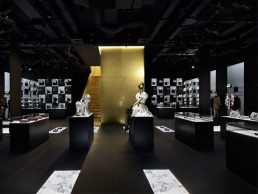
The Dolce & Gabbana flagship store in Aoyama, Tokyo, invites visitors to engage in an innovative shopping experience, channelling the sun of Sicily, where the Italian designers are originally from, into the Japanese lifestyle and shopping vibe.
Designed by Gwenael Nicolas of Studio Curiosity, with lighting design from Barbara Balestreri Lighting Design (BBLD), the store blurs the lines between retail establishment and fashion show, conceiving the space as a stage in which customers become the actors and the display “would unfold a creative narrative, a retail storytelling”.
The project is not the first time that BBLD and Studio Curiosity have worked together – the Italian lighting designers have worked with the architects on a number of projects, including Fendi’s flagship store in Ginza, Tokyo, where they “merged ancient Roman architecture into the Japanese metropolis lightscape”, and the Sloane Street Dolce & Gabbana location in London, in which Balestreri and her team created a “fluid lightecture”.
For the Aoyama location, Dolce & Gabbana had a very simple brief for the designers: “to create something that would surprise”. Barbara Balestreri, Director of BBLD, explained: “Such a challenge triggered ‘lateral thinking’ with Studio Curiosity, and we worked on a design that would be able to also enhance the shopping experience.
“The result is a dynamic lightecture of sharp lights and shadows which frames the products like they were on stage, and embraces customers with an inspirational display.”
The term “lightecture” is one coined by Balestreri, intended to express BBLD’s way of working, and its architectural approach to light. “Lightecture implies a wider meaning than lighting design, which is too often linked to products, interiors and technical features,” she explained. “It includes the creative process sprung from an understanding of the cultural, social and geographical contest.
“You wouldn’t design a building detached from its urban environment, we believe that crafting lights for a showroom, a museum or a public space should require the very same care.”
Such care and attention has seen BBLD work with a large number of high-end, designer retail establishments, from Dolce & Gabbana to Jimmy Choo, Armani, Moncler and more. “Each brand is like a planet with its own history, narrative and values,” Balestreri said. “And each retail space must meet the vibe of its own city.
“Our job is to translate these inputs into light. But the focus must always be on the final experience of the customers. Creating emotions and teasing their curiosity is our goal.”
In Tokyo, BBLD looked to social media for inspiration for the new Dolce & Gabbana store. “The project takes inspiration from how millennials choose their look while surfing on social media,” Balestreri continued. “On Instagram, the eye scrolls through never ending pictures slotted into grids to find catchy inspirations.
“In the Aoyama showroom, objects are constantly appearing and disappearing, creating a choreography of light. With this design solution, we aimed to plunge customers into an immersive, non-aggressive and non-digital version of the social media experience.”
It is here that BBLD sought to create a more theatrical lighting scheme, framing the products as if they were on a stage. Through cross-pollinating contrasts, the retail environment embraces the dramatic world of theatre, as traditional retail lighting solutions were implemented by using stage projectors.
“Light is a composite matter,” said Balestreri. “When tailoring lights on a volume or surface there are so many variables that most often the wanted effect must be achieved only, but combining different technologies, creating subtle contrasts or borrowing inspirations from different worlds.
“Bringing theatre dynamic lighting design was the perfect solution to combine movement with the statuesque poses of the mannequins and items on display.”
Professional ellipsoidal LED spotlights from Silver Star and ETC with interchangeable heads were positioned across the flagship store as if it were a stage. Thanks to framing shutters, the whole system proved to be highly flexible and precise in defining the sharp geometries required by the main concept.
Balestreri tested disposition of the projectors with physical mock-ups on different scales in order to tailor in the slightest detail light interactions and effects on products.
The dynamism of the retail space was achieved by orchestrating units that could be DMX-controlled independently. In this way it was possible to compose light sequences by alternatively switching on and off the projectors and tuning the whole system with music.
Jewels and watches are nested in bespoke, golden-framed niches hosting scenographic miniature interiors, each one lit by miniature theatre projectors hidden within the alcoves.
Outside, street windows catch the eye with floor to ceiling niches dressed in white marble, and a metal profile nested in the wall hosts the lighting system. Elsewhere, small directional and custom-designed projectors focus on the products, while couples of floor-to-ceiling linear light sources from DN Lighting and Moriyama enhance the rhythm of the building, echoing the dynamic contrasts inside the store.
In the store’s interior design, Studio Curiosity played with black and gold colours – an extremely elegant combination close to Dolce & Gabbana’s style. These gold elements, surfaces and stairs refer to the Sicilian sun, bringing an Italian flair to the Japanese retail market.
“Our work as BBLD was to shape the light in order to highlight the chromatic balance of the spaces,” continued Balestreri. “At the same time, this added a Japanese-style, tech-oriented touch.”
BBLD has been involved in the project since its inception, meaning that they could team up with Studio Curiosity to develop the main concept from the beginning, thus avoiding any technical difficulties that could have arisen had they joined the project at a later stage. “The design process evolved smoothly,” Balestreri said. “The teamwork was extremely inspirational.”
“Working on a project is always an opportunity to experiment new ideas. Being involved since the beginning is always a great chance to find and create tailored solutions that fit organically into the project.”
The end result is a stunning retail establishment firmly in keeping with the designer brand’s luxury aesthetic, and definitely living up to Dolce & Gabbana’s wish for a “surprise”.

Thorn celebrates 90th anniversary
(UK) – The lighting manufacturer celebrated the milestone anniversary in March 2018.
On 29 March, Thorn Lighting celebrated its 90th anniversary. Over the past nine decades, the manufacturer has firmly established itself within the lighting industry, and is known for its smart and reliable, high-performance lighting solutions.
Austrian-born Jules Thorn founded the company in March 1928 with a mission to make great lighting easy. Thorn first came to Britain as a sales rep for a company making gas mantles, but soon decided to set up his own company, launching the Electric Lamp Service Company.
Lou Bedocs, Lighting Applications Advisor at Thorn and one of the company’s longest-serving employees, said: “Everybody thought Jules was mad when he decided to build a 30-million-a-year capacity lamp factory. But he went ahead and built more than 70 factories around the world, not just for lamps but also for luminaires, control gears and lighting accessories. Now 90 years later, we can look back on a true pioneer who left his mark on the world of industry.”
The new company grew from servicing lamps to manufacturing, before later diversifying into luminaires, domestic appliances, TVs and radios. In 1936, under the new name Thorn Electrical Industries Ltd, the company floated on the London Stock Exchange, and by 1959 it was the tenth biggest company in the UK.
The company continued to grow throughout the 20th century, before joining the Zumtobel Group in 2000, positioning it for further global growth and strengthening its outdoor and sports lighting portfolios.
Today, the company is a multi-award winning lighting supplier, developing and designing lighting solutions for offices, shops, schools, universities and industrial sites all over the world, and is moving into the world of digitalisation, becoming a partner of smart city initiatives such as DOLL (the Danish Outdoor Lighting Lab) and LUCI (Lighting Urban Community International).
Paul Coggins, SVP Northern Europe, said: “We are immensely proud of our heritage at Thorn. Since Jules Thorn set up the company 90 years ago we have been pushing technology forward to produce the very best solutions for our customers.
“Our 90th anniversary is a time to look back on all the inspiring moments and stories in our history, but it’s also a brilliant opportunity to look ahead. Going forward we will continue to develop technologically advanced solutions for our core markets and segments.
“In addition the services on offer via Zumtobel Group Services will enable us to be the best placed to manage the lit environment, optimising user experience and maximising the opportunities that lie ahead in a connected world.”

Registration open for 9° LEDforum
(Brazil) – The ninth LEDforum, held in São Paulo on August 23-24, brings together lighting professionals from Brazil and around the world for an up-to-date industry outlook.
Registration for the 9° LEDforum 2018 is now open. In its ninth year, the event will take place in São Paulo, Brazil on August 23rd and 24th.
LEDforum is the largest Latin American congress of architectural lighting, hosted by Editora Lumière, with the support of AsBAI (Brazilian Association of Lighting Architects), IALD and other Brazilian and international associations and institutions, events, media and education institutions.
In every new edition, LEDforum gains in scale and diversity, attracting professionals from all over Brazil and other Latin American countries, such as lighting designers, architects, interior designers, urban designers, landscape designers, students, investors, entrepreneurs and government authorities.
The event, which gathered 520 participants in 2017, provided a panoramic and up-to-date industry outlook of what is happening in Brazil and worldwide, presenting and discussing studies, solutions, technology and professional practices in all aspects of light and lighting.
In addition to the lectures and discussion panels featuring industry leaders of lighting design around the world, the LEDforum also features exhibition and networking areas where all participants can meet and interact.
The Forum also provides a platform for participation with the innovation group activity mesa360. The platform encourages dialogue between lighting designers, architects, suppliers, educators and other strategic members of the lighting community.
As part of the Light Week 2018, LEDforum is AsBAI's partner, hosting the workshop "Ecology Of Light" – this activity is scheduled for 19-22 of August at the Vila Jataí area, an ecological neighbourhood in São Paulo. The third edition of the Lighting Lovers party promises to warm up the night of the 24th, marking the closing of another week of celebration of light.
Visitors can register for the event here.

Osram and Nichia to expand IP co-operation
(Germany) – Osram and Nichia will enter negotiations of a cross license covering around 7000 new patent applications.
Osram and Nichia have announced their intention to expand their intellectual property (IP) license co-operation.
The two companies have agreed to enter into negotiations of a cross license covering approximately 7000 new patent applications, including around 2000 granted patents from Nichia and Osram covering Automotive, General Lighting, LCD backlights, Display, Medial and Industrial applications, along with a full range of opto-electronics products.
The two firms entered into patent cross license agreements in 2002 and 2010, and as a result, both companies are allowed to use each other’s patents licensed under the respective agreement in its own nitride-based semiconductor products.
Aldo Kamper, CEO of Osram Opto Semiconductors, and Hiroyoshi Ogawa, President of Nichia Corporation, met at Light+Building, expressing their wish to expand and strengthen the license co-operation.
Aldo Kamper said: “To further advance LED and laser technology, Nichia and Osram have spent, in total, more than 2.5 billion Euros in research and development since 2011.”
“On all levels of the value chain, significant progress has been made in the past eight years, protected by a variety of new patents on both sides,” added Hiroyoshi Ogawa.
In order to capture their technological achievements in all existing as well as emerging application areas for opto-electronics products and technologies, Osram and Nichia will discuss a cross license that will cover the many additional patents based on post-2010 inventions.
“I fully share this view,” Kamper added. “As a consequence, our companies will be able to leverage each other’s technological advancements, while both companies’ customers will benefit from an industry-leading protection in IP related matters.”

Lightly Technologies offer investment opportunity amid expansion plans
(Ireland) – As the company plans to expand into Europe, Lightly Technologies has launched an equity crowdfunding campaign looking for investors.
Dublin-based tech startup Lightly Technologies is offering investors a unique opportunity to become a part of the company through an equity crowdfunding campaign of £250,000 via Crowdcube.
Founded in 2016, Lightly Technologies is a cleantech, hardware startup developing an ultra-thin, LED light source, essentially a tile producing a surface of white light. A client of Enterprise Ireland, the Irish state-supported agency for high potential startups, Lightly Technologies combines the slim style of OLED lighting with the performance benefits of LED technology, aiming to bring beautiful yet functional light to designers and architects.
The capital raised through the Crowdcube campaign will enable Lightly Technologies to set up the production line for their flagship product, Hikari SQ, and begin mass production. Lightly Technologies has ambitious growth plans into Europe, with expansion to the Sales and Marketing divisions as well as a dedicated Engineering team to work on future product generations of their ultra-thin LED lighting technology.
Founder, Matt Hanbury, commented: “We developed Hikari SQ having been inspired by the lighting fixture designs with OLED lighting but underwhelmed by the performance of the technology. We realised that there was a gap in the marketplace for ultra-thin, modern lighting fixture designs that perform, and that a paradigm shift was needed.
“Ultra-thin surface light sources don’t have to use OLED technology, and by leveraging my experience in the smartphone displays industry, I developed Hikari SQ. Put simply, Hikari SQ enables a new generation of lighting fixture design for stunning interior design and architecture.”
Brian Charman, Co-Founder, Lightly Technologies added: “Investing in Lightly Technologies will help bring this innovative technology to market and embrace a new generation of lighting fixture design. It’s a really exciting time to get involved as we launch lighting’s next big thing as part of a pioneering future product roadmap.”
More information can be found on the Lightly Technologies CrowdCube page at www.crowdcube.com/lightly, or on a special pitch video here.

Job Smeets to host darc awards / decorative
(UK) – arc's sister magazine darc has announced that world renowned designer Job Smeets of Belgium & Netherlands based Studio Job, will be guest host for this year’s darc awards / decorative taking place at the iconic London nightclub Fabric on 31 May.
Job Smeets is a pioneer of contemporary conceptual and sculptural design and founded Studio Job in 1998 in the renaissance spirit, combining traditional and modern techniques to produce once-in-a-lifetime objects. Joined in 2000 by graphic designer Nynke Tynagel the duo went on to work with a vast range of high profile clients including sculptures for Swarovski, Barneys and Land Rover, and product collections for brands including Venini, Alessi, Swatch and Pepsi.
Studio Job are consistently ranked as one of the world’s most influential players within design and art with work in more than 40 museums around the world, their highly collectable work creates a bridge between object and product by merging monumental design and graphic artwork.
Smeets has designed lighting collections for a wide range of producers, the famous ‘Tit Lamp’ for Venini; a hugely successful collection for Slamp, desk lamps for Lensvelt; and the highly crafted ‘Wonderlamp’ for Italian gallery DILMOS. While last year saw a joint venture between Italian manufacturer and Smeets to form the brand BLOW, launching the Banana Lamp based on his limited edition bronze sculpture that was 3D scanned to produce in resin.
Most recently ‘JOBBY the Cat Lamp’ was launched in Stockholm in February, a life-size cat sculpture based on Smeets’ own cat that has proved a huge hit for the brand.
When asked what had attracted him to the darc awards / decorative, Smeets said: “London is an amazing and crazy city and I love it. For me light is one of the most important things in the world, it is much more than LED and flashlights… Light means life. Design should always be serious fun so I’m bringing the rock and roll to the darc awards.”
DESIGNERS
Don’t forget to vote for your favourite projects and products to ensure you receive a free ticket to the awards party at Fabric, London, on 31 May, 2018.
SUPPLIERS
If you are a manufacturer or supplier of lighting and would like to attend the awards party, please contact Moses Naeem to purchase a ticket: m.naeem@mondiale.co.uk
www.darcawards.com/decorative
www.studiojob.be

Rogier van der Heide to curate Trends in Lighting 2018
(Austria) – The 2018 edition of Trends in Lighting will be curated by Rogier van der Heide, former Vice President and Chief Design Officer of Philips Lighting and Chief Design & Marketing Officer of Zumtobel.
Rogier van der Heide is to curate the 2018 Trends in Lighting (TiL) event.
A master of light, a provocateur and a futurist, van der Heide is on a mission to curate an event that will empower and inspire everyone. “The digital transformation of lighting creates not just new technical possibilities: it empowers professionals of all backgrounds to create meaningful solutions with light,” he said.
“At Trends in Lighting, our four knowledge tracks will enable everyone to discover the incredible breadth of digital lighting applications, and to exchange passion, expertise and enthusiasm.”
Van der Heide, an IALD Radiance Award winner, was the first choice for the event organisers when deciding on a collaborative partner, as Luger Research wanted to collaborate with a strong creative leader in light for their event in 2018.
Siegfried Luger said of this strategic partnership: “We have observed this change in light and lighting coming in recent years. Now is the right time to bring the two worlds of lighting technology and innovative light applications together. By working with Rogier, designers, visionaries and innovators will inspire lighting technologists and vice versa.”
In the digital age, light is perceived differently: in different applications, light now easily adds different values, ranging from "health and wellbeing" to "light that sells" and "connected light".
The role of the lighting designer is shifting and others are entering the field such as art directors, designers, business leaders, product designers and even doctors. Everyone can now create value with light.
Held alongside LpS, TiL 2018 will reflect these developments with four carefully curated tracks to inspire delegates;
Lighting Heart & Soul: Light for better living, light for health, light at work, light & sleep, light & mood.
The Right to Create: Design process, rapid prototyping, light & business, value with light.
Humanizing Tech: User experiences, usability, holistic experience of light.
Beyond Illumination: Connected light, IoT, software & light, integrating light in technology.
Registration for TiL 2018 is open until April 30th.