
Strasbourg Cathedral, France
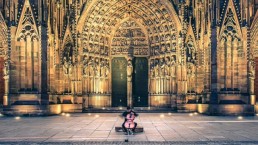
The nocturnal appearance of one of Europe’s most important cathedrals has undergone a remarkable transformation, thanks to a stunning new lighting design scheme.
Strasbourg Cathedral is located in the heart of the Grande Île, an island that lies at the historic centre of the north-eastern French city and has been a UNESCO World Heritage site since 1988. The cathedral itself has been under protection as a heritage building since the late 1800s, and is one of the largest Gothic cathedrals in France, with its high silhouette dominating the city’s skyline. Still deeply immersed in a medieval urban structure, the cathedral is the symbol of Alsace, and its four million visitors per year make it the second most visited cathedral in the whole of France, second only to the Notre Dame in Paris.
Construction on this landmark structure began in 1015 by Werner de Habsbourg, although following several fires, reconstruction of the cathedral began at the end of the twelfth century and continued until the fifteenth century, progressing from the chorus towards the western façade, and ending in 1439 with the raising of the spire. As such, the cathedral blends Roman, Gothic, Baroque, Neo-Gothic and Neo-Romantic architectural styles, and is considered to be one of the masterpieces of gothic art.
The new lighting scheme for the building was created by French lighting design practice L’Acte Lumière, working with electrical contractors Citeos, engineers Lollier and conservation architects JCBA.
The project was carried out as part of a wider, unified lighting plan aimed at revitalising the city, enhancing its heritage and creating something more attractive for tourists visiting the area through the use of light and shadow, while also inviting the Strasbourgois themselves to rediscover their city with new eyes.
The lighting for Strasbourg Cathedral reveals a new facet of the church that largely exceeds the framework for the urban area of Strasbourg. Each night, the cathedral is wrapped in a soft and balanced light and shadow. This glowing light is designed to respect the edifice and urban context in which it is integrated. It does this by magnifying the exceptional patrimonial and architectural wealth of the cathedral, such as its remarkable frontages and sculptures.
Initial specifications for the project called for a ‘highly qualitative light, revealing the iconic and magnificent architecture of one of the finest examples of Gothic architecture, while remaining respectful of its millennial history and sacred dimension’. Owing to its status as a UNESCO protected site, the team at L’Acte Lumière was required to present, account for and share their choices with the validation committee, which included the building owner, funders and contracting authorities from the city, as well as the heritage foundation itself. Designers were also required to complete a manifest stating their commitment to qualitative light as they revealed the architectural magnificence of this iconic Gothic cathedral.
During these early stages of the project, L’Acte Lumière went through a highly detailed planning process, using an incredibly complex 3D model of the cathedral to create the rendering, as Jean-Yves Soëtnick, lighting designer at the firm, explained: “It was very pleasant to work on such a highly-detailed 3D rendering, something that is not frequent on heritage buildings, to test almost every single floodlight on the Cathedral.
“Every projector had to be calculated, but while it was a huge amount of work, it was worth doing it as the day we completed the first rendering, I knew it would be fine. The rendering helped us to identify some details like complex shadows, which we were able to anticipate without spending time testing it on site.”
After deep consideration of the sacred and iconographic facets and meanings of the structure, designers chose to create a precise illumination, balancing shadow and light. The brown and yellow sandstone comprised rich gradients of red and purples, corresponding to R8 – R9 CRI. This is a difficult colour to render in high quality diodes, so designers selected a 2700K fixture with a short chromatic distortion to ensure quality light. This solution infuses a global ambient luminescence onto the structure, allowing the deep colours of the sandstone and its intricate details to be revealed.
Focal glow and highlights were used to enhance the architecture and reveal detailed layers of masonry, like illuminated text. Dynamic white LED luminaires, soft gradients and subtle tints were used to create three distinct nightscapes throughout the whole of the elevation.
These nightscapes vary depending on the time; the first, set between twilight and 10pm, acts as a ‘kind of continuity of the colours from the last solar rays’, highlighting the intricate layers of the structure, with each receding layer growing progressively warmer towards the centre.
During the second, set between 10pm and 1am, the iconographic details are reduced and blurred, to draw eyes to the elevation of the building to give a more unified view of the whole edifice at its full height, while in the third phase, set between 1am and dawn, only the upper part of the cathedral tower and roof is highlighted – immutable and comforting, it remains emergent throughout the night above the urban skyline while minimising light pollution to nearby buildings.
The lighting of the cathedral integrates the challenges of energy saving and easy maintenance. The light is produced entirely by LEDs, a first in France for a patrimonial building of such a size. As with the design of the new luminaires and their implementation, the optimisation of the energy output of the installation was one of the largest challenges for the project. However, the use of the latest LED technologies makes it possible to better target the elements to be lit, and therefore reduce total energy consumption, leading to a more effecting lighting. Alongside this, the installed LEDs have a much longer lifetime, and far reduced maintenance needs.
The installation is made up of 580 fixtures, including around 400 Lumenbeam and Lumenfacade luminaires from Lumenpulse, 30 periphery projectors, 60 devices embedded in the ground and 490 projectors or linear devices on the building, divided into eight families of devices, from 3-watts to 250-watts. Every projector is dimmable for the perfect quantities of light, revealing the splendour of the building, the distinctive colour of its sandstone and its intricate masonry and layers. These elements are DMX controlled by nine electrical power boxes that utilise Lumenpulse’s Dynamic White technology, which allows the lighting designers to tune the luminous power and colour temperature in order to precisely match the colours of the stonework.
“Throughout the project, the effects had to be correctly balanced and we had to reproduce the same effect across the building, however in some cases we had to simulate the same effect, but from different points, distance or angles,” Soëtnick explained.
“So it was important to be sure that we had the same quality of light without depending on one type of projector, so the Lumenpulse range was perfect for this.”
Elsewhere, L’Acte Lumière chose Louss for their recessed inground lighting, as they were able to make a dynamic white inground light, while Insta and WE-EF were chosen for the linear lighting.
Approximately fourteen kilometres of cable and 400 light sources are installed on the building, and the entire installation was completed without any drilling into the stone, only mortar joints – an important requirement for the project set by the heritage committee, owing to the cathedral’s UNESCO heritage status. On top of this, all of the bespoke clamping sleeves, collars, fixture corsets and luminaires were painted onsite with an accurate colour to match the stone. As a result of these considerations, the entire installation can be removed without causing any damage to the structure. None of the luminaires, except those in ground, are visible from the exterior, resulting in a balanced, quiet and ‘chiselled’ light, and a magnificent, poetic glow of the building.
“The lighting creates a very rich and peaceful glow that pictures can’t translate,” continued Soëtnick. “In a way, it's a light that you have to feel, especially in the intricate layers of masonry.”
Francois-Xavier Souvay, President and CEO of Lumenpulse Group, added: “This is a very great privilege to be involved in illuminating a building of such scale and importance. It’s architecturally and historically unique, and of immeasurable significance to the region of Alsace and the whole of France.
“We felt a great responsibility to make sure that we provided an effective, sensible lighting solution that reveals the cathedral at its very best, and that will last for many years to come.”
Soëtnick added: “For me, as a lover of the city of Strasbourg, I’ve been very interested in this masterpiece for a long time; its architecture, and its history. I’m always very proud when I see people staring at the building and finding intricate details that they never noticed during daylight.
“With this illumination, and the renewal of the ‘place du Chateau’ [completed by L’Acte Lumière in 2013], it’s a complete and vibrant heart for the city, and a new night icon, visible in a soft and chiseled light all around.”
The project itself has gained recognition on a wider scale too, picking up an Award of Excellence at the IALD Awards, while also being shortlisted for the upcoming darc awards / architectural. At the IALD Awards presentation, held in Philadelphia on 10th May, judges described the project as ‘a beautiful balance of highlighting and shadow’ and ‘an impressive technical solution – a bridge between the earth and sky, an icon of darkness and light, a monument that ignites the imagination and reveals the passion of its builders’.

Kéré Architecture
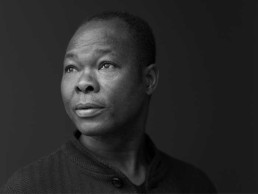
Since its inception in 2005, Kéré Architecture has been taking plaudits for its socially driven, sustainable approach to architecture.
Based in Berlin, Germany, the firm has worked on projects across the world, from Europe to the USA, and most notably in Africa, where founder Francis Kéré continues to reinvest his knowledge and expertise back into his home nation of Burkina Faso.
Alongside an ambition to engage localities in its design approach, Kéré has instilled a philosophy within his firm to provide more with less, fostering innovation and resourcefulness in the practice, using local materials, local knowledge and local technologies to create holistic and sustainable design solutions.
This quest to work closely with local communities in all phases of design, from planning to construction, is based on a belief that architecture can be a vehicle for collective expression and empowerment, and by supporting the educational, cultural and civic needs of local communities with its provocative, yet dignifying design, Kéré Architecture hopes to continue raising awareness towards the sustainable and economic issues facing populations in rural Africa and beyond.
Such passion and dedication towards improving the rural communities in Africa stems from the firm’s founder. Born in the small West African town of Gando, 125 miles south east of Burkina Faso’s capital, Ouagadougou, in 1965, Diébédo Francis Kéré was the first son of the head of his village. As such, his father allowed him to attend school, even though many in the village considered conventional western education to be a waste of time.
At 18, Kéré was awarded a scholarship to study carpentry in Germany, before he made the switch to architecture, earning a degree in architecture and engineering at Technische Universität in Berlin. During his studies, Kéré also set up the Kéré Foundation, formerly known as Schulbausteine für Gando, to fund the construction of the Gando Primary School, which earned the prestigious Aga Khan Award in 2001. The Foundation is still in operation today, providing funding for a number of community projects in Gando.
Since establishing his own architecture firm in 2005, Kéré’s work has earned many more prestigious accolades, including the Global Award for Sustainable Architecture, BSI Swiss Architectural Award, Marcus Prize, Global Holcim Award, and Schelling Architecture award.
Kéré has also been granted the honour of chartered membership of the Royal Institute of British Architects (RIBA) in 2009, and an honorary fellowship of the American Institute of Architects (FAIA) in 2012. This year, Kéré became the seventeenth architect to be granted the annual commission for the Serpentine Pavilion, and is the first from Africa to do so.
Erected outside the Serpentine Gallery in London’s Kensington Gardens, the temporary pavilion serves as an opportunity for an architect to create their first built structure in England, and has previously been commissioned by the likes of Frank Gehry, Zaha Hadid and Herzog & de Meuron.
Kéré was selected to design this year’s pavilion by Serpentine Galleries’ artistic director, Hans Obrist, and new CEO, Yana Peel, as both felt the need for a deviation from ‘old ways’. Speaking to CNN, Peel said: “We wanted to build on the history but instantly also create a new phase of invention and experimentation.”
“We were very interested in how his practice has evolved over the past few years into being this socially engaged and ecologically engaged practice,” added Obrist. “From our very fist meeting he was very interested in thinking about the Royal Park and how you link people to nature, and how you provoke a new way for people to connect with each other.”
Kéré’s pavilion, as with a lot of his work, takes inspiration from his African heritage; the pavilion’s colour and the way that it lights up at night is a reference to his childhood in Burkina Faso, while the form of the canopy is informed by a tree in his home village of Gando.
At the unveiling of the pavilion earlier this year, Kéré said: “Where I come from, a tree is often a public space. It can be a kindergarten, a market, a gathering place for everyone. The idea was to create a huge canopy that allows the visitors to feel the elements while being protected. It is enclosed by wooden blocks that are perforated, allowing the air to circulate, which create comfort inside.”
The pavilion’s slatted timber roof is lined with translucent panels of polycarbonate, keeping rain off visitors, while allowing light to filter through. Meanwhile its funnel shape is intended to direct rainwater into a well in its centre, which is then dispersed underground to the surrounding park.
The main structure of the oval pavilion is made up of triangular sections of deep blue wood, creating a design of v-shaped perforations. This rich, indigo blue colour again has strong links to Kéré’s culture. “Blue is so important in my culture, it is a colour of celebration,” he said.
“If you had an important date in my village, there was one piece of clothing everyone was going to ask for. So when I got the commission for the pavilion here in London, I said: I am going to wear my best dress, my best colour, and that is blue.”
The lighting design for the pavilion was a collaborative effort between Kéré Architecture and AECOM. Lit from within by strips of lights in the structure’s canopy, it is intended to act as a beacon for celebration. “In Burkina Faso, there is no electricity. At night it is dark, so what happens often is that young people go to elevated points to look around and if there is light, everyone goes to that place, and there will be a celebration,” said Kéré. “That is what the pavilion will be at night – shining to attract the visitors to come and celebrate.”
Project Architect for the Serpentine Pavilion, Blake Villwock, added: “The canopy in the pavilion functioned as both a filter for natural daylight and also the source for illumination in the evening. Both functions emphasised the canopy as an important element of the design, from within and from a distance.
“At night it becomes a glowing beacon for the city. In this way, we are interested in how the natural and artificial can be integrated in the built and natural environments. I think architects can really help to push these sorts of ideas forward and challenge the discipline to innovate.”
Villwock added that the teamwork on show across all aspects of the project helped to make it such a hit. “The success of the pavilion truly is the result of an incredible collaboration of the Serpentine Gallery, our engineers and the fabrication crew. We are forever grateful to our entire team,” he said.
“The Serpentine program is notorious for its quick turnaround of sketch to fabrication to opening night,” Villwock continued. “We were approached last October to submit a proposal where we flew through two weeks of conceptual design. The concept largely came from a sketch Francis drew during a late night workshop.
“Shortly after we won the commission, Francis and I were on a plane to London and a train to Yorkshire to start workshopping ideas with our team of engineers at AECOM and fabricators at StageOne.
“The brevity of the project led us to use a simple palette of materials that were innovated using the latest digital fabrication technology. It was always important to us that the pavilion seemed handcrafted, yet precisely detailed. Development of models and full-scale prototypes was an essential part of the design process where many aspects of the engineering were unprecedented. Throughout the process, David Adjaye [one of the architects on the panel that selected Kéré for the commission] was very encouraging as a design consultant to keep pushing the boundaries.”
Villwock, a graduate of the University of Wisconsin-Milwaukee, has been working at Kéré Architecture since 2014, and as project architect, liaises between Kéré and the firm’s clients, engineers and fabricators for English-speaking projects. He has also led design teams for a number of other projects in Africa and Europe, including in Germany, Uganda, the USA, the UK and Burkina Faso.
And he explained that while the firm, currently made up of thirteen architects and designers, has projects spanning several continents, Kéré remains deeply involved in every project, keeping in regular contact wherever he is in the world.
“Francis is very focused,” he said. “Projects around the world force him to spend much of his time traveling and away from the office. But having said that, we are in constant communication every day. The design process could take place across continents; sketches and feedback will bounce across many time zones.”
Kéré’s main passion though, lies in the work that the firm does in Africa. “Francis is more hands-on with projects in Africa, especially in Burkina Faso, where he is driving the construction and research on the ground,” said Villwock.
“For sites in Africa, he devotes a lot of time on-site coordinating with the local workforce and community; he is not only introducing schools for local children but also creating opportunities for training locals in construction.”
This passion for more community-led projects in Africa has rubbed off on the rest of his team at Kéré Architecture, as Villwock revealed that, while their African projects may be more technically challenging, the rewards can be greater in the end.
“Our Berlin team approach all projects in a thoughtful way,” he said. “Of course, there are more constraints when designing in Africa. It’s more challenging but this also brings unexpected potential for creativity.
“From my experience, the impact made in the African projects is often times much greater and so there is a strong sense of responsibility over just trying to be fashionable. Each project initiates an opportunity to inspire. The community is usually more receptive and appreciative to new ideas, which leads to a richness in the designs of these projects.”
Kéré Architecture’s community focus isn’t restricted to the likes of schools or community centres either, with the firm currently in the process of designing the new National Assembly of Burkina Faso, in the country’s capital of Ougadougou.
Replacing the one set on fire during the 2014 revolution that freed Burkina Faso of dictatorial rule for the first time in more than three decades, the new structure will ‘scale up the village dynamics while bolstering national identity’.
Villwock added: “In the design of the new National Assembly of Burkina Faso we introduced a new public space in the stepped façade where the community can come together and interact with their parliament in a completely new way. The pyramidal shape becomes a monument where citizens, many of whom have never seen a view higher than the treetops, can climb and have an elevated and new perspective of their city.”
Alongside this impressive new structure for the National Assembly, Kéré Architecture is currently working on a number of projects a little closer to home, including a cultural centre near Tunis, in Tunisia, an installation for a fashion show during London Fashion Week, and a temporary theatre in an aircraft hangar at Berlin’s historic Tempelhof Airport.
Kéré Architecture’s style has been described as ‘characteristically stripped back’, with a ‘frugal simplicity’. However Villwock doesn’t believe that they strictly confirm to a signature look or ‘style’, instead focusing on creating something new and unique in each project.
“I wouldn’t say that we have a signature style, but in every project our philosophy is to add value through design,” he said.
“The architecture is extremely complex. There is an immense amount of effort and research that goes into our work at all scales. Through each project, we are trying to push the boundaries in terms of performance and engineering. In terms of the ‘stripped back’ aesthetic, we try to be effective in the most economical way using locally sourced materials. Nothing is ornamental; every detail serves an important function.
“Francis constantly challenges us to work towards unprecedented design. The architecture of course serves its function, but it should always strive to be unique.”
Regardless of whether the firm has a signature look, there is a recurring theme of creating projects for the community and utilising nature in the work of Kéré Architecture, and this extends to the firm’s approach to lighting, as Villwock explained: “Light is the way nature comes into a space, it plays a huge role in our design and methodology.
“The architecture needs to negotiate the amount of light that is present in the space. In Africa for example, the design usually focuses on shading the interiors due to the hot temperatures. In places like Britain, we can embrace and try to enhance the effect of natural light.”
But while he believes that lighting plays a major role in the firm’s design, Villwock said that it is unlikely that they will introduce a lighting department within the company, instead preferring to continue working with local specialists on a project-by-project basis.
“Part of the joy of our small office is that we really benefit from the knowledge and collaboration of experts and designers,” he said. “With the broad range of projects that we do in all areas of the world, it is so important to engage with local specialists in all aspects of design, including lighting.”
The Wadden Sea Centre, Denmark
The Wadden Sea is a UNESCO World Heritage site that stretches 500km along the coasts of The Netherlands, Germany, and Denmark. It is a biologically rich, dynamic land and seascape that is a rich habitat for birds, seals, porpoises, dolphins, and crustaceans, many of them regionally endangered.
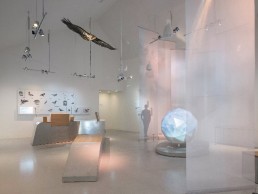
Located in Ribe, Denmark, literally on the beach of the Wadden Sea, The Wadden Sea Centre (WSC) is a new facility, completed in 2017. The Centre is a museum between land and sky that communicates the astonishing story of 15 million migratory birds that use the preserve to feed and rest during their long journey across continents.
The Centre’s new exhibition – ‘The Wadden Sea migratory birds’, is a journey through the landscape of the Wadden Sea – an incredible, aesthetic, fairytale exhibition about The Wadden Sea as seen through the eyes of migratory birds.
JAC studios, in collaboration with Jason Bruges Studio and No Parking, created the exhibition in harmony with the special nature of migratory birds, and the design creates a balance between communication and aesthetics that is unique in its field, building on the inspiration and interpretation of nature and allowing visitors to get a closer understanding of the importance of the site in the life of these birds.
A beautiful staging area begins the visitors’ journey with the birds. We see their lives in the Wadden Sea, and we follow them up in large swarms into the sky.
Plain white walls and exhibits provide a perfect canvas for gel-tinted, pastel lighting and multimedia projection, creating a wonderfully soft but dynamic environment for contemplation, study, and even entertainment.
The leading characteristic of the Wadden Sea is the breath-taking, infinite landscape with an all-encompassing horizon that creates the illusion of sky and land becoming one.
This vast landscape served as a key inspiration for JAC Studios, as lead architect and founder Johan Carlsson explained: “Upon my first visit to the Wadden Sea, I was captivated by the flat and infinite landscape. In the course of the project we have studied this landscape and especially the origins of the migratory birds. The landscape is in constant motion in the area; tides and migratory birds follow their own rhythms.
“This called for an exhibition that would last and age beautifully, an exhibition that was sustainable and had several layers of storytelling.”
Fortheloveoflight(.dk) provided lighting design for the exhibit, creating with the architect a new design and structure that inhabits the space as an integrated design element, without being technically imposing. It’s a partnership that has worked well previously, as Carlsson continued: “At JAC Studios, we are fortunate to share a studio with Fortheloveoflight, and have worked with Nikolaj Birkelund on several projects,” he explained.
“I believe that through these projects we have created a close process regarding our approach to lighting. Nikolaj and I share a common eagerness to develop new and custom made solutions to each project. I see the lighting design as a team creation, the light underlines the storytelling of the space and must be considered early in the design process.”
One such custom made solution for The Wadden Sea Centre came in the shape of the BBX.70 ‘Birdbeamers’. Designed by Fortheloveoflight and JAC Studios and produced by Mike Stoane Lighting using Xicato XIM Gen4 Artist modules, these fixtures are as much architecture as they are lighting – a visually simple and flexible low voltage lighting system with bespoke luminaires that becomes an integral design element in the exhibit, inhabiting the space rather than cluttering it.
“Common to all of the spaces is the urge to look up and sometimes out – maybe due to the theme of birds or the height of the spaces,” said Birkelund. “In a search not to disturb that moment with technical equipment and traditional track fixtures we came up with the idea of the BBX.70: a smart wireless, low voltage, plug ‘n’ play system that would contribute to the experience.”
The designers translated the reflection and the experience of dissolving horizons into the Birdbeamers with a materiality to match and designed a light rig that appears simple on the outside but is tech-rich beneath the surface. To give lightness to the visual expression, Fortheloveoflight positioned the lights on top looking down like birds perching on higher ground, very much in keeping with the theme of the exhibition.
The decision to opt for the Xicato XIM Gen4 Artist series stemmed from a need for a lighting control system that provides individial light control with deep, smooth dimming, that was simple to set up and simple to use. Mike Stoane Lighting has previous experience with the XIM, and with museum work, making them the ideal choice.
Understanding the complexities of the anatomy of birds requires focus and attention to detail. The lighting for the ‘Cabinet of Curiosity’ is integrated into a bespoke spine-rig that references the skeletal system of a bird. The delicate spotlights are high CRI to illuminate interior features such as the hand-painted watercolour paintings by the artist Carl Christian Tofte. The lighting invites you to silently explore and investigate the birds’ anatomy at a closer scale, offering a peaceful environment for concentration and learning, as Birkelund explained: “The integrated and close-up lighting is very important to how the visitor perceives the space. It adds hierarchy and makes the artifact stand out.”
The elevated world in which birds often inhabit is high in the sky where natural light is in constant change. From moonlight, sunrise and sunset, the birds experience an extensive variety of colours throughout the passage of a day. Within the exhibition, Fortheloveoflight worked with carefully selected and tested glass colour filters to reference the natural light and the softness of the sky.
“We experimented with tinting the light in pastel colours to envelop the visitor in a cloud of merging sky colours,” continued Birkelund. “The pastel colours take you up into the sky with the birds as they fly to distant continents.”
Jason Bruges Studio, in collaboration with Fortheloveoflight and JAC Studios, created an immersive installation that represents the 15 million migratory birds. Digital Ornithology is the last sequence of the exhibition and is comprised of hundreds of LCD screens suspended from the ceiling in a sequence that represents the migration of the birds. “It follows a journey of exploration and discovery of the native birds, to being fully immersed in their unique habitat and behaviours,” said Birkelund.
“The walls and ceiling of the space are grazed in cool white light to dissolve the boundaries of the space and create a backdrop for the LCD panels as they flicker like birds in the sky. Together with JBS, we programmed the dynamic lighting to follow the flow of the story being told. With the light, we could shift the focus of the space as a swarm of birds would take off.”
With an amalgamation of projection mapping of live footage and the light-modulating behaviour of the LCDs, the result is an ephemeral and captivating experience.
Throughout the centre, the exhibition made use of high-sloped ceilings punctured with windows, flooding the spaces with both direct sunlight and diffuse skylight. While this provides a closer connection to the outside, inviting visitors to look up and dream about the habitat of the birds, it is something that Birkelund believes sets the centre apart from other exhibitions.
“Exhibition spaces are usually controlled spaces that have little to no daylight because of the delicate objects on display. In this project, the artificial light and daylight had to merge and play together,” he said.
This blend of natural and artificial light was designed to support the narrative of the exhibition, communicating the surfaces, textures, artefacts and design elements in the best way possible, as Birkelund explained: “Through the lighting, we underline the storytelling and guide the visitors around the spaces with carefully selected illuminated elements and focal points.
“Each space has a unique light experience without deviating from the central concept. Each space tells a different story and that is also expressed through the lighting,” he continued.
“Not all spaces have access to daylight or are brightly lit. Some spaces invite visitors to play, touch and feel, while some spaces have a more contrastful setting, offering concentration and deep learning.”
Wadden Sea Centre was also among the first to test the Xicato Intelligent Gateway (XIG), which officially launched in April 2017. The XIG creates an intelligent Bluetooth network that is connected to the Centre’s MediaLON local area network that controls its multimedia projectors and audio, and serves as the building management system (BMS).
The project was a deeply collaborative process, with Fortheloveoflight working closely with JAC Studios, who in turn worked alongside Jason Bruges Studio and No Parking. Such collaboration is something that Carlsson feels is essential when working on exhibitions such as this. He explained: “To create an exhibition is somewhat similar to that of making a film. Several disciplines need to be working together: the craftsmen, the technical staff, the lighting and sound designers, graphic designers, etc.
“I believe that if all have the engagement and love for their individual discipline, and an understanding of the whole, the result will be unique.”
The result of this strong teamwork has received an influx of positive feedback, with more than 55,000 visitors to the exhibition since it opened in February. And Birkelund believes that the strong lighting design has helped to make it an enjoyable experience for all of these visitors.
“The Wadden Sea is a unique place that requires a unique approach,” he said. “The lighting plays a key role in the experience of the new Wadden Sea Centre, and the feedback and overall interest for the exhibition and the lighting design has been very positive and rewarding.”
Carlsson added: “What makes this project special to us is how we, from the very beginning, challenged the concept of a nature visitor centre, and with design, art and craft created a balance between communication and aesthetics that has proven to be unique it its field.
“I hope that the experience will continue to inspire visitors to explore the diverse life on the Wadden Sea and the magical world of these migratory birds.”
www.fortheloveoflight.dk
www.jacstudios.dk
www.jasonbruges.com

Rama Mendelsohn
“I think most people like to stand out, no matter what they do, but especially in a creative field where there is too much competition to be unique. For me, my hope is that when people enter a location which I have illuminated through my design, they feel a sense of peace, comforted and happy.”
This is the philosophy lighting designer Rama Mendelsohn has maintained throughout her career and undoubtedly achieved.
Setting out on a path as a child in the direction of becoming a doctor, specifically an aspiring cardiologist, Mendelsohn consistently proved she was a bright student. As she progressed through her education, slowly but surely she was turning her interests into a more creative direction, and ended up at The College of Management (Israel), School of Interior Design where she received a Bachelor’s degree in Interior Design. This spark in design for Mendelsohn then took her on an international journey to America where she pursued a Masters in Fine Arts from The New York School of Interior Design in New York City.
“At that time, I won a student award in lighting design. It was then that I realised I had a passion for the way light transformed spaces,” recalls Mendelsohn.
After receiving her Masters in New York, she returned home to Israel to begin working in the industry as soon as she could. This is exactly what she did in 2004 when she joined RTLD Lighting Design in Tel Aviv. Here she worked as a lighting designer for public, commercial and private projects both domestic and international. Within this position for over four and a half years, she gained valuable experience in leading and directing projects from the concept development stages all the way through to client liaisons, technical specifications for lighting products, overseeing of installations and establishing professional relationships with owners, clients, architects, designers, electrical engineers and suppliers – all of whom provided essential contacts for moving forward in her career and ultimately for when she established her own design firm.
When studying the past of any architect or designer, most people would comfortably admit there is usually one project or one iconic building that put that designer firmly on the map in the industry.
For Mendelsohn, she fondly reflects upon her time at this lighting design firm providing her that pivotal moment for her career. “When I worked at the lighting design company following graduation, I had the privilege of working on the Design Museum in Holon in Israel, with leading architect Ron Arad.” Working as a snowball effect from there, Mendelsohn continued to explain how this connection followed her all the way through to when she had set up her own business. “Six months into starting my own business, Ron contacted me directly to work with him on a luxury boutique residential building in Tel Aviv, located on the sea. Then, shortly after that, another architect I had worked with in the past offered me the opportunity to develop the lighting design plan for a hotel in Cervinia, Italy. Upon completion of that project, I began to be contacted for larger and more prestigious projects across Israel and Europe.” So as well as obvious skill and talent, it also proves that contacts within the industry are key to success. Mendelsohn is clearly a natural at both design and establishing lasting relationships within her field as she was only working for another firm for four and a half years before branching off to build her own design company – a feat that sometimes can take decades for established designers to achieve.
When taking on a new project, it is important to grasp a full understanding of the location, environment and tone of the place the client desires. Mendelsohn explains how she approaches her projects and goes about providing the attention to detail that her back catalogue of designs flaunt: “With each project, I take into careful consideration the overall look and feel of the location, and allow the lighting to follow. I spend a lot of time researching and exploring design element options for each project, and analyse the way each fixture will look from all angles. The lighting needs to complement the architecture and design of the project. To me, no matter how big or small the project, I approach each opportunity with the same level of professionalism and dedication.”
In 2017, she won the award for Lighting Design in the ‘Israeli Design Awards’ for her work in the high-end Herbert Samuel residential complex. These awards recognise excellence in achievements across many design fields including architecture, interior design and lighting design. Comprised of some of the most valuable real estate in Tel Aviv, Mendelsohn graced these 250sqm luxury apartments with lighting fit for a king. Mendelsohn’s aim was to design a lighting concept that would mimic the sparkling Mediterranean Sea that the apartment blocks look out onto from their $38,800 per sqm balconies. She achieved this through meticulous backlighting of the CNC materials throughout the building in order to emphasise and create textures with light.
One of the key relationships Mendelsohn has established in recent years is with LED Linear, whilst working on the Asruf Panoramic project. “I created the lighting design for the façade of the building, the lobby, indoor and outdoor public space, as well as the surrounding streets,” describes Mendelsohn. “The goal was to achieve a calming effect through the lighting design. This was a challenge due to the encapsulation of the LED lights, which typically increases the colour temperature, making it a more harsh light. At the same time, the C5M requirements (high salinity in the air, humidity, weather corrosion, UV exposure etc.) needed to be taken into consideration, due to the project’s proximity to the sea.”
Choosing to work with LED Linear’s VarioLED Flex VENUS fixture for the Panorama allowed Mendelsohn the flexibility with the arch shaped design as well as fulfilling the C5M requirements. It creates a softer light than the harshness you might usually find with LEDs as a result of the encapsulation of the lights.
Working with light is a very fluid process especially when interchanging between natural and artificial light. Mendelsohn discovered the challenges that came with this divide between light types when working in different geographical locations. She describes her approaches: “It depends largely on the location of the project. For instance, the natural daylight in Israel is brighter than Europe. Therefore, you don’t want someone to walk indoors and feel as though they are entering a dark space. I’ve learned that I need to strengthen the indoor lighting to balance out the natural light outdoors when in Israel.”
Mendelsohn describes light as breathing life into a project that cannot be obtained otherwise, and can create different experiences within buildings, restaurants or landscapes depending on the lighting scheme used.
Where does she see light going in the future and how it is changing over the years? Well, the biggest change, one that we have recognised in the industry as well, is that of the growth and development of LED technology. “It has helped to decrease the size of fixtures, thereby providing more options for a variety of projects. While halogen lighting was often the first choice for designers, due to the colour spectrum they provide, I believe LED will continue to grow in popularity across the industry.”
In the lighting world, it is also becoming more prominent that lighting designers are being recognised as vital roles within the design process of architecture, and designers are absolutely being taken more seriously – a first hand example is Mendelsohn herself.
When asked, upon reflection, Mendelsohn claims her most memorable project is the Edmund Rothschild Foundation Building in Tel Aviv. It is a historic building with very strict preservation requirements for lighting installations. She describes the restrictions the team had to work with and the specifications they had to adhere to in order to create the final look in accordance to the preservations: “I was invited by Plesner Architects to create the lighting design plan for the project, and worked alongside Baroness Rothschild’s interior designer. It’s a landmark building, so the requirements are set by the city’s preservation society. A certain percentage of the light fixtures needed to be reminiscent of the original lighting of the building, and the light temperature needed to be warm white, not cool white. These requirements presented an opportunity to blend the old and the new. The project was completed in 2015.”
Since working with RTLD Lighting Design firm until 2009, Mendelsohn has grown and developed into a fantastic lighting designer and now has the privilege of running her own business, which she does with the help of one other designer by her side.
The dynamic duo spends most of their time outside of the office and on site with projects or meeting up with architects to germinate new ones.
What advice would she give to any aspiring lighting designers? “Be prepared to be fully engaged and committed to the job and the industry (even if it means you have no life for a while). The more people you meet, the more projects you work on (no matter how big or small), the more conferences you attend, the more you will learn and grow, even if you don’t realise it’s happening at the time.”
Mendelsohn is a prime example of hard work and talent, and an excellent role model for young designers to look towards for inspiration. Particularly as a leading female designer in what can be, at times, a very male dominated industry. Keep an eye out for new projects on the horizon and maybe we will see her work across the seas in New York, where she dreams of taking the next step to broaden her career.

University of Wismar and Wings Lighting Design add to Master's programme
(Germany) – The Architectural Lighting and Design Management Master’s programme now includes a specialisation in ‘Heritage Lighting’.
The University of Wismar, alongside Wings Lighting Design, has added increased specialisation to its Architectural Lighting and Design Management Master’s programme.
The ‘Architectural Lighting and Design Management’ programme is a design-based Master’s in lighting design for students and professionals from interior design, architecture, exhibitions and theatre as well as electrical, environmental psychology backgrounds.
The combination of ‘Lighting Design’ and ‘Design Management’ provides students with the creative and technical knowledge to manage lighting design projects as well as the economic and marketing aspects necessary to manage offices professionally.
Starting in September 2017, Wings Lighting Design and the University of Wismar will be offering a specialisation in ‘Heritage Lighting’ to interested students. The specialisation will offer students the possibility to delve deeper into issues like lighting for heritage sites and buildings, lighting for protected sites, conservation, techniques and strategies for such sites and so on. This specialisation is part of a long-term plan to introduce similar specialisations in the field of ‘light’.
The professional study programme ‘Architectural Lighting and Design Management’ was started in September 2012 and is based on more than 15 years of experience in teaching the Master’s programme for Lighting Design in the Wismar University. The faculty includes some of the most experienced and renowned lighting designer and management experts from around the world, and the programme has been awarded the PLDR Award in the category Education by an international jury of lighting designers and have received the proof of accreditation for the study programme.
www.wings-lightingdesign.com
www.hs-wismar.de
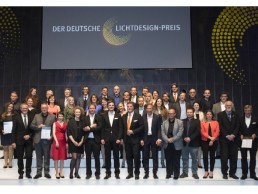
Reflexion wins Lighting Designer of the Year in German awards
(Germany) – The German Lighting Designer Awards celebrate the best in German lighting design, with Reflexion AG winning the overall Lighting Designer of the Year award.
Reflexion AG has won Lighting Designer of the Year at the German Lighting Designer Awards, having gained four nominations and three awards at the event.
The Lighting Designer of the Year award is a jury-based award presented each year by the independent German Lighting Design Award authority to an outstanding design office on the basis of a strict and transparent points system in the individual categories.
Members of the voluntary jury include university lecturers, representatives of the press and industry associations and – for each of the past three years – a designer from the previous year’s winning team. Guest jurors for the 2017 German Lighting Design Award were Peter Andres and his team.
Fourteen winners were announced out of 33 nominations and 120 submissions. Alongside Lighting Designer of the Year, Zürich-based Reflexion AG won awards in the International Project, Shop and Events & Fairs categories for the Collection Lambert in Avignon, the St. Jodern wine cellars in Visperterminen, and the Swiss National Bank respectively.
This is the second time that Reflexion AG has taken part in the competition. In 2016 it was a winner in the Traffic Buildings category with its lighting concept for the underground railway station at Löwenstrasse in Zürich. The office employs 25 architects, interior designers, lighting designers and electrical engineers, all engaged in developing interdisciplinary concepts for an extremely wide variety of lighting requirements.
Lightvision of Berlin won the Innovation Award for a lighting concept for a windowless bunker, realised in cooperation with the Fraunhofer Institute, while the lighting concept for the Hotel Adlon lobby in Berlin won the Hotel/Gastronomy category.
Elsewhere, Licht Kunst Licht picked up the Outdoor Lighting award for its urban space lighting solution around the Berlin TV Tower. The concept takes account of the high use levels of the square by a wide range of groups by giving various areas different lighting atmospheres.
Winners in the other categories were:
- Office and Administration: Atrium Tower Berlin, by Kardoff Ingenieure Lichtplanung
- Cultural: Montforthaus Feldkirch, by Light Design Engineering Belzner Holmes
- Public Areas/Interior: Hamburg Heights by Teamlicht
- Museums: Museum Himmlisches Theatre, Stift Neuzelle, by Konzeptlicht lighting solutions
- Productions: Club House St. Pauli, Hamburg, by Bartenbach
- Light Art: Mehr Los – A Line of Light, by Mortiz Gieselmann
The awards were presented in the Trafowerk in Mannheim, Germany before an audience of almost 500 guests including designers, the light industry and clients. For the first time this year, an honorary award was presented to Prof. Dr.-Ing Heinrich Kramer, for his contributions in the field of lighting design.
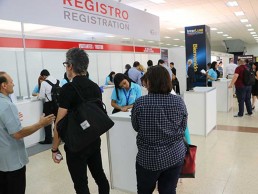
InterLumi Panama succeeds again with second show
(Latin America) - New Records Achieved at the 2nd Edition of InterLumi Panama 2017
InterLumi Panama Lighting and Led trading show in Latin America has achieved a wondrous second year of exhibiting between 29 June and 1 July, at ATLAPA Convention Centre.
Reaching record heights in numbers of attendees with 151 exhibiting brands from 21 countries, the showcasing of cutting-edge products and technologies in efficient lighting brought in 2,172 visitors from 28 global countries. In terms of exhibitors, there was a 25% increase in companies lighting up the emerging market.
Ms. Estherlin Pérez, Sales Executive and Lighting Designer of HP Winner commented: "It is a good platform to meet people from lighting industry and this is our main interest. We came here again because we had satisfactory results at last year's show. Now we are here again with more expectations and hopefully can receive feedback as good as last year."
One notable example is ATP Lighting, who returned with local distributer Sirenergy, and enlarged their booth space by more than twice this year. Mr Guillermo Redrado, Vice President of ATP Lighting said: "It’s a fair where we always have high hopes. We see that there are several interesting companies, and what we want is to be able to showcase to Panamanian market the new products that we have brought."
FD Center appeared as new exhibitors this year and received positive feedback from their visitors. Mr Victor Cachafeiro Sergent spoke highly of it: "It is a fair perfectly organized from all points of view. The level of excellence has risen in reference to the previous edition. It serves the Panamanian and Latin American market to unify trends in relation to lighting and also lighting applications with a different approach that could be estimated according to client needs. It has been an amazing idea that each exhibitor has the opportunity to interact with buyers brought from abroad. I have noticed that several international delegations came. We will make good use of this opportunity to inform them the innovative products that we have brought to InterLumi Panama."
As one of two focul points for the trade show, InterLumi Panama 2017 launched the Match-Making program over the first two days. Pre-selected purchasers from selected groups from Colombia, Costa Rica, Guatemala, Nicaragua Peru and Venezuela joined the program with the purpose of implementing new projects and finding potential partners. Over 100 sessions of face-to-face meetings were scheduled and both exhibitors and buyers gave their raving reviews.
"I think it’s an excellent program actually. We have had several meetings at a very good level and found important purchasing needs from the visitors," commented by Mr. Omar González from SELS (SMART ERA LIGHTING SYSTEMS).
"It is a good initiative and it is not found in other trade shows we have participated in worldwide." disclosed by French exhibitor Mr. Pascal Fouineau, Executive Sales Export of Fonroche Lighting. "The system is really fantastic because before the trade fair starts, we know that we can find potential customers who are interested in our products."
Mr. Juan Gómez from CMI (Corporación Multi Inversiones) Guatemala also added "Through the program I did find contacts and I even found some products that may be of interest, which is hydroelectric plants. It is also one of the company's main business and, for us, it is pretty productive."
Efficient Lighting Forum – Central America is seeing its second edition as the highly popular event of InterLumi Panama with a stong lineup of eleven experts from Argentina, Canada, Colombia, Guatemala, Mexico, Panama and Spain discussed 4 topics in vogue, namely Smart Lighting & IoT, Lighting Trends, Renewable Energy and Efficient Lighting Design. Bringing the show to a climax was a panel discussion after each session and interaction between speakers and the audience.
"I am so delighted to share our research and more than impressed to see this event. I know this is only the second edition of the event. But this is really a showcase of the world here in Panama, for not just this country but for the region. So, it has been a very pleasant surprise to see the high quality of delegates and exhibitors as well as the great presenters I met at the forum. I am learning as much as I am sharing." Mr. Ronald J. Zimmer, President & CEO of CABA (Continental Automated Buildings Association) expressed after his presentation at the forum.
Mr. Héctor Castillo, Project Leader of Grupo Salinas also shared his opinion from the perspective of being a forum attendee. "The forum themes are very complete and the professionals indicated very necessary technical aspects for the projects. We will bring the useful information back to Guatemala."
The success of this unique Panama trade show cannot be acclaimed without thanks given to the strategic partners who have provided constant support. "There are many products that can meet the needs of any visitor. Participants could have a comprehensive overview of the latest development of lighting industry in the global range. In regards to forum, it is also a must-see event on every edition. It is systematically managed and there are many ideas coming out of the forum that can be discussed further." said Mr. Rubén Omar Sánchez, President of Argentine Association of Lighting (AADL by its initials in Spanish).
"The market of efficient lighting is booming and we are on the right track to grow stronger day by day." stated Ms. Annie Hernández, Executive Director of Guatemalan Association of Lighting (AGI by its initials in Spanish). "We are considering how AGI and InterLumi can work together to strengthen the alliance throughout the region."
The third edition of InterLumi Panama will commence of 11 July to 13 July 2018.
Nordeon Group strengthens leadership foundations
(Netherlands) – As Nordeon Group consolidates its position in the market, it has appointed Louis van Uden as CEO, and established an advisory counsel.
The Nordeon Group has further strengthened its leadership foundation. Within just four years, Nordeon Group has developed itself into a full service, diverse global lighting company, operating at the forefront of technology, development, design, and services. With its brands, Griven, Hess, Vulkan, Lamp Lighting, Schmitz, WILA and Nordeon, it caters to a wide range of lighting requirements.
To consolidate this dynamic development, both at a strategic and operative level, and to continue to strengthen its market position, the Nordeon Group is arranging its management team.
Patrick van Rossum, Chairman of the Nordeon Group, commented: "Over the past four years, Nordeon Group, under Pierre van Lamsweerde's leadership, has done a tremendous job in establishing itself as a world class professional lighting company. To take the business to the next level, we have decided to further strengthen the Group's leadership structure."
Part of this has been the appointment of Louis van Uden as CEO as of July 1st 2017 replacing Pierre. Van Rossum continued: "Louis van Uden has been instrumental in re-establishing Vulkan as a leading outdoor urban area lighting business. Following this, he has revitalised Hess in its home markets and restored it to its former glory as one of the world’s leading decorative outdoor lighting companies. With a proven track record, he is the perfect fit for this role."
To further support the Group's leadership team in setting its strategic agenda Nordeon Group has appointed an advisory counsel, recruiting Doug Herst as its first member. Herst developed US-based Peerless Lighting into a leader in the specification market for architectural indoor lighting before selling his family business to Acuity Brands. He has a strong affiliation for technology, and amongst others, Doug sits on the board of Lumenetix.
Herst will be joined by former Nordeon Group CEO Pierre van Lamsweerde.
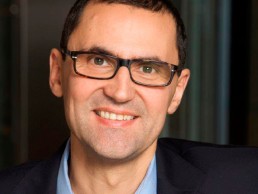
New CEO for Helvar
(Finland) – Adel Hattab will join Helvar as new CEO from September 1st.
Helvar’s Board of Directors has appointed Adel Hattab as new Chief Executive Officer.
Hattab will commence in his new position on September 1st, 2017. His professional experience spans several industries and covers different leadership roles in global companies, across the value chain. He joins Helvar from Outotec where he has been responsible for Strategic Customers and Business Development and a member of the Executive Board. He has deep knowledge of digital transition from past positions with Nokia as well as Metso Automation.
Hattab holds an MSc in Engineering from the Helsinki University of Technology, as well as a MBA from the Helsinki School of Economics and MIT Sloan School of Business.
“Adel has deep experience in the digital economy from various aspects, and has lead several businesses successfully. Helvar is a leader in a very exciting industry going through a digital transformation, and I am confident that he has what it takes to be successful in his new position," said Helvar’s Chairman of the Board, Kai Öistämö.
"I am very excited to join Helvar, a company that is well known within the industry. I am impressed and inspired by the Helvar team and the opportunities that lie ahead. I recognise that the transition of the lighting Industry provides great growth potential for the company. I look forward to working with the entire Helvar team, our customers and partners", added Hattab.
As previously announced, Helvar’s current CEO Hans Henrik Lund will join Nilfisk as CEO. "Under the past year of Hans Henrik’s leadership, Helvar has gone through a major transition. It is now one of the leading companies Intelligent Lighting. Hans Henrik leaves a solid foundation for Helvar to build on. On behalf of the whole Board, I thank Hans Henrik for his great contribution to the company", continued Kai Öistämö.
Illuminate Lighting Design launch new San Francisco Studio
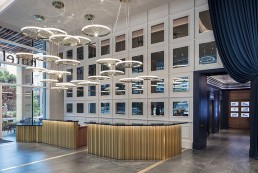
(USA) – The new San Francisco office is the second in North America and ninth studio globally for the company.
Illuminate Lighting Design, an award-winning international architectural lighting design consultancy and a division of the world’s leading hospitality interior design firm Hirsch Bedner Associates (HBA), celebrated the opening of its new San Francisco studio this month.
The newly minted office builds on Illuminate’s already strong Bay Area presence and a recent win at the prestigious Illumination Engineering Society (IES)’s Illumination Merit Award for their work on BCCI Construction Company project on Battery Street in San Francisco.
“Illuminate complements the work of designers and architects by shaping the perception and experience of a space through the playful use of both natural and electric light,” said Nick Albert, Director of Illuminate. “Our continued growth and success in the US has driven the need for a second office to serve our clients stateside through a combination of local support and unparalleled global resources.”
This is the second studio in North America for Illuminate after Los Angeles, and its ninth globally. Established in 2009, Illuminate Lighting Design creates bespoke lighting schemes for renowned projects around the world.
Illuminate’s projects include LEED, Title 24, WELL and other energy efficient strategies as well as advanced lighting and daylight control systems and the application of media integrated lighting. The team aims to create spaces that can excite and inspire, as well as provide critical functionality and comfort for those who work, live and play within.
HNC AND HND QUALIFICATIONS IN LIGHTING TO BE TAUGHT IN UK
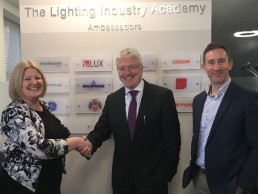
(UK) – A partnership between the Lighting Industry Association and the University of South Wales will see a Higher National Certificate and Higher National Diploma in lighting being taught in the UK for the first time.
This September will see the first ever Higher National Certificate (HNC) and Higher National Diploma (HND) in lighting being taught in the UK through the Lighting Industry Association (LIA) and the University of South Wales (USW).
The LIA announced its partnership with USW in July last year, with an aim to provide new opportunities for collaboration in both teaching and learning.
The introduction of a HNC and HND in Lighting Design and Technology will provide the first qualifications at this level in the UK to attract new talent and develop existing careers within the lighting industry.
The courses will be delivered between the LIA Academy in Telford and the USW campus in Pontypridd, recognising the state of the art facilities at both sites. Modules delivered at the Academy in Telford will be led by the LIA’s established team of expert tutors, who have all gained ‘Recognised Teacher Status’ from USW.
The HNC and HND are composed of modules covering the following subjects:
- Lighting Fundamentals (HNC/HND)
- Electrical Principles & Design (HNC/HND)
- Light Sources & Luminaire Design (HNC/HND)
- Lighting Design (HNC/HND)
- Lighting Project Specification (HNC/HND)
- Singleton Project (HNC/HND)
- Advanced Lighting Principles (HND)
- Component and Product Design (HND)
- Exterior Lighting (HND)
- Highway Lighting (HND)
- Interior Lighting (HND)
- Work Based Project (HND)
Upon successful completion of the HND course, the students will have the opportunity to progress to a full BSc (Hons) Lighting Design and Technology at USW.
Students can enrol to take the courses in either a full-time or part-time capacity, whether taking their first steps into lighting or aiming to strengthen and develop their existing career. These qualifications cater for all abilities and offer a natural career pathway.
Stuart Green, Course Leader of Lighting and Design Technology at USW, said: “The introduction of these qualifications provides a new pathway for individuals already working in the industry to strengthen and cement their learning, as well as offering a way into the lighting industry for new talent. Our partnership with the LIA enables us to combine our knowledge to co-ordinate development opportunities for lighting professionals.”
LIA CEO, Steve Davies added: “The courses delivered by the Lighting Industry Academy meet the exacting quality and academic standards expected from a partnership with a major UK university, for such highly respected and recognised qualifications.
“As one of the very few of their kind in the UK, these industry specific, academically recognised qualifications create a cornerstone in the development of the lighting community’s bright and exciting future.”

BLUETOOTH SIG ANNOUNCES MESH NETWORKING CAPABILITY
(USA) – Bluetooth technology will now support mesh networking, a new capability optimised for creating large-scale device networks, ideally suited for building automation, sensor networks and other IoT solutions.
The Bluetooth Special Interest Group (SIG) has announced that Bluetooth technology now supports mesh networking. The new mesh capability enables many-to-many (m:m) device communications and is optimised for creating large-scale device networks. It is ideally suited for building automation, sensor networks and other IoT solutions where tens, hundreds, or thousands of devices need to reliably and securely communicate with one another.
“By adding support for mesh networking, the Bluetooth member community is continuing a long history of focused innovation to help new, up-and-coming markets flourish,” said Mark Powell, executive director for Bluetooth SIG, Inc.
“In the same way the connected device market experienced rapid growth after the introduction of Bluetooth Low Energy, we believe Bluetooth mesh networking can play a vital role in helping early stage markets, such as building automation and wireless sensor networks, experience more rapid growth.”
Time and time again it has been shown that markets flourish when multi-vendor interoperability exists. Bluetooth mesh delivers proven, global interoperability that assures products from different vendors work together.
“Multi-vendor interoperability is a major factor in determining how fast markets develop,” said Russ Sharer, VP Global Marketing and Business Development at Fulham. “Fulham is excited to finally see a wireless, multi-vendor, interoperable standard for lighting controls and we believe Bluetooth mesh networking will greatly expand the size and functionality of the market.”
“Within the building automation market, there is a growing focus on connected lighting and the role it can play as a platform for providing automation services throughout a facility,” added Szymon Slupik, President and CTO of Silvair and Chairman of the mesh working group within the Bluetooth SIG.
“A smart lighting platform built on top of Bluetooth mesh networking can also support asset tracking, point of interest, and way-finding services. These value-added capabilities are part of why we believe Bluetooth is an ideal technology for enabling a mesh network.”
The Bluetooth mesh networking specifications, as well as the tools required to qualify Bluetooth products with mesh networking support, are now available at the Bluetooth website. Bluetooth mesh networking operates on Bluetooth Low Energy (LE) and is compatible with core specification version 4.0 and higher.
