

Silhouette Awards winners to be announced on 28 February
(UK) - The winners of the 2023/24 Silhouette Awards will be announced in an online presentation at 3pm GMT on 28 February.
Entering its third year, the Silhouette Awards aims to shine a light on emerging talent within the lighting industry. Each winner will be paired with a supporting mentor for six months.
The 22-23 Mentors are an esteemed panel of senior influential lighting designers:
- Andrew Bissell
- Carla Jardim
- Chip Israel
- Daniela Viloria
- Dave Anderson
- Fanny Englund
- Faraz Izhar
- Giulio Pedota
- Jorg Frank Seemann
- Maria Dautant
- Neha Sivaprasad
- Pamella Phang
- Panos Ferentinos
- Paulina Villalobos
- Rachel Fitzgerald
- Sandra Brookes
- Sara Isabel Ortega Donoso
- Tejas Doshi
- Veronika Mayerboeck
- Zerlina Hughes
With the support of the Silhouette Awards’ sponsors, the winners will be rewarded with the opportunity to enhance their skillset and pursue their career ambitions. This year’s sponsors include Monarca, ADO Lights, GVA Lighting, LUG Light Factory, Atea Lighting, Intra Lighting, Ledluks, Lucent, Luce&Light and we-ef.
Eve Gaut, Silhouette Awards Co-Founder, Parrot PR & Marketing commented: “We are overjoyed that we have been able to continue the success of the Silhouette Awards for a third year. We could not be more grateful to our supporters and sponsors for their continued support in nurturing young talent through our mentorship programme. As the awards grow each year, it is a wonderful collective achievement to see another 20 young designers’ benefit, progressing their careers and developing the future of the industry. We have seen a lasting impact from the past two years at how the mentorship journey has made a huge difference to our mentees. Congratulations to this year’s winners.”
Katia Kolovea, Silhouette Awards Co-Founder, Archifos, added: “As the Silhouette Awards programme has progressed into its third year, we are thrilled to see how the community has grown. As the pool of past mentors and mentees gets larger and reaches further around the world, we are proud to see how everyone is connecting and supporting each other. It is inspiring to see how our supporters, sponsors and mentors want to continue to benefit the industry. This year’s winners will equal 60 young talents which have been nurtured, making a massive impact on the future of the industry. We can’t wait to celebrate this year’s winners with the community.”
To find out the winners of this year’s Awards, tune in to a virtual event on the 28 February at 3pm GMT on the Silhouette Awards Youtube Channel. https://www.youtube.com/@silhouetteawards


Pharos joins Q-SYS Technology Partner Program
(UK) – Specialist lighting controls manufacturer, Pharos Architectural Controls has joined the Q-SYS Technology Partner Program Q-SYS, which allows software and hardware partners to create market solutions integrated with Q-SYS.
As part of the programme, key products from the Pharos range have been verified and endorsed by Q-SYS, a cloud-manageable audio, video, and control platform, following plugin integration with a Q-SYS Ready badge. Pharos Designer and Pharos Expert will integrate with Q-SYS to provide integration with Architainment showing control system for advanced installation through Q-SYS and Expert’s DMX control.
Pharos Designer now has a wide range of controllers to suit any DMX, eDMX and DALI lighting project, show control capabilities and free software for users to design and build installations as they wish. Pharos Expert enables dynamic architectural lighting with its straightforward control solution, centred around a single, reliable controller.
Bas Hoksbergen, Commercial Director at Pharos, said: “Our inclusion in the Q-SYS Ecosystem is the next stage in the development of our products to ensure customers have the best possible experience in their integration capabilities. We are excited to announce this partnership and look forward to seeing our customers make amazing projects.”
Geno Zaharie, Principal, Alliances & Ecosystem, Q-SYS added: “We are proud to have Pharos join our program and work collaboratively with us on a plugin integration that will enable elevated experiences across our shared customers.”
How to be brilliant by the ILP
Watch Paul Traynor as he delves into the delicate balance of lighting and architecture at LiGHT23's darc thoughts. Through insightful case studies featuring Maggie’s Centre in Leeds, Balenciaga’s London flagship store, and the Optic Cloak in Greenwich, discover the art of strategic illumination. Learn how lighting can elevate user experience, subtly express form, and breathe life into vibrant spaces.
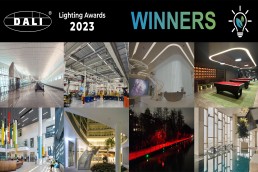
Winners of the Dali Lighting Awards 2023 announced
(USA) - On January, the winners of the DALI Lighting Awards 2023 were announced.
Each of the eight categories recognises the best use of DALI lighting control in projects from around the world, with the winners chosen by an expert panel of judges of lighting designers, media specialists and global lighting experts.
Winners of the eight categories include:
Healthcare & Education: Zencontrol for its work on The Louisa Martindale Building in Brighton, UK, a new state-of-the-art clinical facility. The DALI-based lighting system uses more than 20,000 assets, and DALI was selected as it fulfilled two essential design briefs, namely access to enhanced diagnostics, and future sustainability.
Industrial: Group Volvo Trucks won for the Battery Pack Factory in Gent, Belgium. This project used DALI technologies to improve worker wellbeing, by implementing tuneable white lighting across its manufacturing areas.
Infrastructure: Delmatic won or its work on Zayed International Airport in Abu Dhabi, UAE. The project is claimed to be the largest DALI control system in the world, with a single site-wide DALI network that manages and monitors 180,000 DALI lamps, 35,000 DALI emergency lamps and10,000 DALI sensors and switches, all coordinated by 3400 single and multi-universe DALI control modules.
Outdoor: esave AG won with its Waterfront Lighting project in Fürth, Germany. This small-scale project leverages DALI features including precise dimming, colour control and scheduling to deliver optimal lighting for human eyes, enhanced safety, and insect protection.
Residential: Morlights’ won for their work at the Ko’ula at Ward Village, Honolulu, USA. Morlights relied on DALI technology to ensure light levels and colour temperature suit the varied needs of different spaces, creating a human-centric lighting scheme, with cohesion across the entire venue.
Retail & Hospitality: bluebottle’s project at Ritz Carlton Hotel in Melbourne, Australia won for its multi-faceted project, which utilised intelligent DALI technology across each area of the hotel, including guest suites, to create a sophisticated environment, while also emphasising ease of use and flexibility.
Workspaces: Shanghai LONTRI for the Estée Lauder R&D Center project in Shanghai, China won the award for its 11,500sqm site. Designed according to the LEED Platinum and WELL Platinum standards, it utilises DALI in a variety of ways to reduce energy consumption and improve the employee experience.
Paul Drosihn, DALI Alliance General Manager, said: “Huge congratulations go to all our winners and highly commended projects that were successful against stiff competition. These projects demonstrate the outstanding results that can be achieved across the globe using DALI in lighting design and control, spanning a breadth of applications and sectors.
Drosihn continues: “It’s a fantastic testament to how the lighting industry has embraced DALI and is leveraging this technology to gain significant benefits.”
Details of the DALI Lighting Awards 2024 will be announced later this year. More information on the awards and the DALI Alliance, as well as the full list of this year’s winners can be found on the DALI Alliance website.
IES Forms New IES Middle East Section
(USA) - The Illuminating Engineering Society’s Board of Directors announced during Light + Intelligent Building Middle East, the approval of Society’s newest section, IES Middle East.
The IES Middle East Section represents IES’ growing representation in the international lighting community, and a demand for lighting resources and standards on a global scale.
This will be overseen by its local Board of Managers and committees, including: Majeed Uz Zafer, Section President, Section Liason; Courtney Mark, Section Vice President; Regina Santos, Section Treasurer; Selma Benmakhoulf, Section Secretary.
With more than 6,200 members internationally from over 60 countries, the Illuminating Engineering Society has a growing international membership. The IES ANSI-accredited standards are used in many countries by lighting specifiers and manufacturers who require the best source of lighting knowledge and recommended practices available in the field of lighting design and engineering.
IES Sections are the local subdivisions or chapters of the IES that help create and maintain a community of local lighting professionals. Sections host educational, networking and awards events as a way to bring together those with lighting knowledge to improve the lighting industry.
Majeed Uz Zafer, President of Middle East section said: “The Illuminating Engineering Society is the largest resource for lighting standards in the world based on lighting applications.
“With the rapid evolvement of the lighting industry in the Middle East, it is important that IES has a Middle East section. I am excited to have this chapter launched in the Middle East to work with the vibrant lighting community in the region in enhancing the quality of lighting.”

Lords disappointed by Government’s response to light and noise pollution on the UK
(UK)- House of Lords Science and technology committee has written to the Nature Minister, Rebeca Pow MP, on 31 January, to raise concerns with the Government’s “disappointing response” to its report on the effect of artificial light and noise on human health.
The report, “The neglected pollutants: the effects of light and noise on human health”, was conducted by the committee believing that valuable public health interventions could improve quality of life and NHS pressures in the UK. The committee urges the Government to reconsider its policy on light and noise pollution.
In a statement, the Committee states that it is concerned that the Government has rejected its recommendations on light pollution and the creation of a light policy statement, which would set out the expected roles of different departments in tackling light and noise pollution.
It says: “The Government acknowledges the need of more research to address the significant gaps in understanding of the effects of artificial light, however the recommendation for a research programme was rejected. The committee asks again if the Government will commit to fund further research into the effects of light pollution on human health, with a view to establishing metrics that can measure the extent and severity of light pollution in the UK.
“There’s a concern that the Government response contains no clear commitment to ensure that local authorities are sufficiently resourced or incentivised to address these issues on noise and light pollution, or to set out any standards to local authorities to help them manage light or noise pollution.
“There is a sense that the Government is not concerned about this policy area, despite the 25 Year Environment Plan’s promise to “ensure that noise and light pollution are managed effectively” – hence the report “the neglected pollutants”.”
The full letter to the Minister is available via the link https://committees.parliament.uk/publications/43158/documents/214669/default/
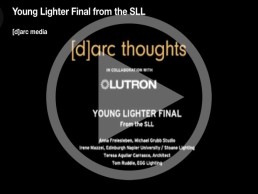
Young Lighter Final from the SLL
Each year, the Young Lighter competition provides a high-profile opportunity to help younger lighting professionals in the early stages of their careers. This year, LiGHT 23 will host the final presentations, which include:
Anna Freiesleben | Michael Grubb Studio
Light Beyond Earth: Illuminating life on exoplanets
Irene Mazzei | Edinburgh Napier University / Stoane Lighting
Improving sustainability in the lighting industry
Teresa Aguilar Carrasco | Architect
CircaLight, a new circadian light assessment tool for Grasshopper environment
Tom Ruddle | EGG Lighting
Lighting Remanufacture

Danish Mette Lyng Hansen appointed as new Head of Light Bureau
As of 1 January, Mette Lyng Hansen has been appointed as the new Head of Light Buerau, part of AFRY. Currently CEO of Gottlieb Paludan Architects, Hansen will continue to work across both practices.
“I am very pleased to be able to present the important and broadened responsibility for Mette. Her proven skills and competence will ensure the future business of AFRY Architecture & Design, both within Gottlieb Paludan Architects, as well as Light Bureau,” said Helena Paulsson, VP and Head of Business Area Architecture & Design at AFRY.
Light Bureau, established in the UK more than 25 years ago, is an independent full-service lighting design agency consisting of multi-disciplinary lighting experts. With numerous, global awards and award-winning projects, Light Bureau has received international recognition, with offices in the UK, Denmark, Sweden, and Norway.
Mette Lyng Hansen added: “To shine the light on society has always been a big part of my life, even privately. Family members have worked professionally in the industry for multiple years, which has provided me with both understanding, insight and dynamics of light. And after many years in the architectural industry, I can vouch for the fact that the design of daylight and architectural lighting plays an integrated role in creating coherent spatial experiences."
www.lightbureau.com
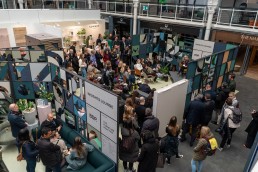
Workplace Design Show Unveils Talks Programme 2024
UK)- Workspace Design Show, taking place 27-28 February 2024, Business Design Centre, London, has announced more than 120 speakers covering four key elements of discourse during its talks programme.
The Workspace Design Talks programme, which will take place in the Design Talks Lounge, designed by global design and architecture firm Gensler, will feature sessions from leading industry professionals over the event’s two days.
Speakers include Helen Berresford, Head of ID:SR, Sheppard Robson; Alan Bainbridge, Director of BBC Workplace; Naomi Sakamoto, Principal, Gensler; Matt Jackson, CEO, BDG architecture + design and Grant Kanik, Partner, Foster + Partners. The latter will be speaking as part of a panel entitled “Insights and perspectives on the convergent future of workplace” which also features panelists Yasmin Al-Ani Spence, Director, WilkinsonEyre and Nicola Gillen, EMEA Lead, Total Workplace, Cushman and Wakefield, chaired by workplace design journalist and author Helen Parton.
During the talks programme, arc editor Matt Waring will moderate a panel titled “The new aesthetic of repair and re-use: Why we need a mindset shift”, with lighting experts Ruth Kelly Waskett (Hoare Lea), Kristina Allison (AtkinsRealis UK), Dan Lister (Arup), and Simon Fisher (F Mark).
Returning for both days of the show is the FIS Conference, an in-person gathering for the non-profit representative body of the finishes and interiors sector in the UK. Sessions will provide a platform for the latest industry thinking, supporting the organisation’s aims of improving safety, minimising risk, enhancing productivity, and driving innovation in the sector. The conference will include professional insight from the likes of Chris Webb, Head of Sustainability, tp bennett; Helen Gawor, Group Director of Strategy & Innovation, ISG; Vidhi Sharma, Creative Director, Modus Workspace and Ana Rita Martins, Sustainability Lead, MCM.
Sustainability Works returns for 2024 and is held on 27 February, bringing together a selection of key figures behind the workplace market’s leading sustainable initiatives and projects. Curated by Mick Jordan, Editor of Works magazine confirmed speakers include Golnaz Ighany, Sustainability Director, BDP; Gurvinder Khurana, Director, M Moser; Pernille Bonser, CEO, Resonate Interiors and Mario Viera, Head of Sustainability, Scott Brownrigg.
The Occupiers Forum, held on 28 February, is the complete “The View from HQ”. Located in the Insights Lounge, it will provide unique insights into what employers are doing to create an engaging workplace experience. The Forum’s speakers include Steve Wright, Director of Workplace Design & Change Management, GSK; Sarah Murdoch, Corporate Real Estate Director, Visa; Sue Glew, Programme Director, The Better Workplace Programme, BT and Kate Smith, Executive Director, Occupier Consulting UK, CBRE.
Both the Sustainability Works session and the Occupiers Forum will be held in the Insights Lounge, designed by BDP.
Registration information and the full talks programme can be found on the Workspace Design Show website.

Recolight respond to WEEE Consultation
(UK) – On 28 December 2023, the UK government launched the WEEE consultation, where a range of measures were proposed within the joint UK Government, Scottish Government, Welsh Government and Northern Ireland Executive consultation.
The reform of the WEEE regulations is intended to encourage reuse and collection of waste electricals. And for products that cannot be reused, or remanufactured, proposals are in place to make it easier for consumers to recycle. Recolight has responded to the consultation and is said to be pleased to see that the initial policy proposals cover what had been expected.
There are two separate consultations – proposals for short term regulatory change, and a call for evidence in other areas to aid the development of new policy proposals.
Proposals for short term regulatory change include:
- Free of charge collection of WEEE for consumers.
In essence, providing householders with free of charge collection of both small WEEE, and also of bulky WEEE, financed by the producers of new products. - Enhanced options for consumer takeback via retailers.
This includes strengthened obligations on retailers, in particular free collection of used appliances when delivering new appliances, and simpler in-store take back options for consumers. - Tackling non-compliant product sold via online marketplaces.
The government propose a new class of producer. This would require online marketplaces to take on the financial obligations for collection and treatment of their overseas sellers. This would be consistent with the current packaging reforms. - New category for vapes.
Establishment of a new category for vapes to ensure the cost of collection and treatment of these products is correctly borne by vape producers – and not by other producers. - Setting up a new central WEEE administration body
This would manage several functions currently undertaken by various organisations, together with managing household WEEE collections, to control costs.
The call for evidence invites stakeholders to provide input into future policy development in a range of areas and measures to incentivise better eco-design of new products, requiring producers to finance fly-tipped WEEE, incentivising reuse over recycling, and providing business end users with easier to access WEEE collections.
The consultation will run for 10 weeks, as Recolight will be working closely with scheme members to gather views and to develop a response that seeks to ensure changes will work well.
Nigel Harvey , Recolight Chief Executive, said: “This consultation is long overdue, but it is pleasing that it has prioritised some ‘quick wins’ for early implementation. For the lighting industry, the most important is no doubt action to end the scourge of WEEE non-compliance through online marketplaces. Research has shown that the overwhelming majority of smaller electrical products, such as light bulbs, offered for sale through online marketplaces do not comply with the WEEE regulations. The proposed changes will require marketplaces to finance the WEEE obligations of products from outside the UK sold via their platform. For the lighting industry, this cannot happen soon enough.”
www.recolight.com
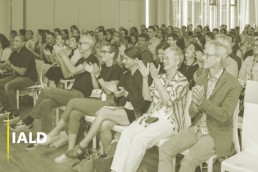
IALD Awards open for entries
(International) - Preparing for its 41st year, the IALD has opened the entries for the 2024 cycle of its annual IALD Awards.
Since 1983, the IALD International Lighting Design Awards has honoured lighting design that reaches new heights, moves beyond the ordinary, and represents excellence in aesthetic and technical design achievement.
Entries can be submitted for award consideration by any individual lighting designer or lighting design firm, provided they performed the design of the architectural lighting for that project. Eligible projects must be a permanent architectural lighting design solution for which construction was completed after 1 January 2022. Projects that were entered for consideration in the previous year can be resubmitted, so long as they adhere to the date requirements.
A seven-judge international panel spanning across professional disciplines will conduct two rounds of review, awarding points from a design criteria. The projects whose combined scores meet or exceed specific benchmarks can earn IALD Awards of Excellence or IALD Awards of Merit. IALD Special Citation awards may be given for a project that demonstrates a particularly innovative aspect of lighting design.
The IALD Radiance Award, the top honour of the IALD Awards, is presented to the project that yields the highest point score, thereby being considered the finest example of lighting design for the year.
IALD Awards Co-Chair Yah Li Toh, IALD and CLD said: “Given the success of the previous year, this is something to be excited about. Being presented with such a volume of projects that maintain a high level of technical and aesthetic mastery is an indicator of our strength as a profession.
“We’re proud to see the lighting design industry emerge so well from post-pandemic challenges. Around the world, designers and firms have adapted, evolved, and maintained integrity and excellence in their work. Our judges are eager to see and celebrate the results of that effort.”
Standard entries will be accepted from both IALD members and non- members through 26 February 2024, with a late-entry deadline of 17 March 2024.
Complete information on the guidelines for project submissions, required materials, and examples of the judging criteria are found on the official Call for Entries submission platform at www.iald.org

Martin Klaasen Launches Light Talk
(International) - Lighting industry expert, Martin Klaasen, has announced the launch of a new knowledge-sharing platform, Light Talk.
Light Talk is a digital hub of information, guidance, and advice for those engaged in the lighting profession or those looking to start their career in the sector. It has been curated by Klaasen, drawing on his four decades of lighting design experience.
Light Talk caters for a wide audience across different methods of learning by curating a range of media including articles and blog posts, podcasts, and video interviews under one roof. From lighting designers to manufacturers, architects and interior designers, or students of design-led disciplines, Klassen has ensured there is something for all the community.
There is also the option to sign up for Klassen’s masterclass for an annual fee, which offers access to a growing collection of learning modules covering a wide range of topics related to lighting and lighting design. The site also has Martin’s two books, which are available to download.
Martin Klaasen said: “Light Talk is an exciting venture for me as it allows me to share the knowledge I have built up over 40 years with those in the industry who can benefit from it. The lighting sector is known for being collaborative and welcoming, and I want to give back to the industry that has offered me so much. I hope my insights help those already working in the industry, as well as those just starting on their journey or even looking for a career change.”
