

Kevin Chung - AB Concept
Kevin Chung, Design Director at AB Concept, discusses the importance of decorative lighting in an F&B environment, highlighting the considerations to the architecture and referencing recent projects case studies.
Decorative lighting is the soul of a space; without it, the environment can feel lifeless and uninspired. In nearly every project, especially in restaurant and bar designs, we would want to collaborate with a highly skilled and capable lighting designer.
Today, restaurants and bars are more than just places to eat and drink—they are immersive experiences where lighting significantly shapes the overall atmosphere. Consider the effort and creativity a chef invests in crafting a dish that is both visually stunning and delicious. The role of the lighting designer is to enhance and showcase this artistry. Poor lighting would not only fail to do justice to the chef’s work but also detract from the intended dining experience.
In many of our projects, decorative lighting serves as the primary light source throughout the interior. We believe that decorative lighting is a critical component of the overall design, both visually and aesthetically. As a result, we would custom design every piece of lighting within the restaurant to ensure it complements and enhances the space.
In projects involving heritage buildings or those meant to convey a classic narrative, the role of decorative lighting is particularly significant. These spaces demand a lighting approach that both honours the architectural integrity and aligns with the historical context. We are always very careful to avoid the use or hiding of visible architectural lighting, such as downlights, that do not correspond to the architectural era. We believe it is essential to maintain the authenticity of the design by adhering to the lighting conventions of the period.
We deliberately limit the use of architectural downlights, using them only when absolutely necessary for function. This approach often ends up requiring custom design of almost every light fixture in the space, allowing us to create a cohesive narrative that not only respects the building’s history but also enhances its aesthetic integrity. With the sole purpose that the lighting design not only complements but also elevates the overall experience, preserving the character and essence of the original architecture.
One of our recent projects, the all-day dining restaurant, Yun He, at the Four Seasons Hotel Suzhou, is nothing short of an architectural gem. The space is designed with soaring ceilings and expansive window glazing, allowing an abundance of natural light to flood in. This design choice brightens the interior and provides guests with breathtaking views of the hotel’s meticulously landscaped gardens, creating a tranquil and picturesque setting that elevates every dining experience.
The restaurant’s interior lighting has been carefully crafted to adapt to the natural rhythm of the day, ensuring that the ambiance remains inviting and harmonious, whether guests are enjoying breakfast at dawn or dinner at dusk. Lighting transitions are designed to seamlessly shift from one hour to the next, offering a gentle, warm glow that complements the restaurant’s sophisticated décor. The decorative lighting elements are custom designed to subtly weave into the experience, telling a story of timeless elegance, crafting a unique and memorable atmosphere that leaves a lasting impression for visitors.
In another of our projects, the Mei Li, which is an award-winning restaurant within the Grand Hyatt Hotel, Kuwait, we pushed the boundaries of interior design to create a space that is both visually stunning and culturally resonant. Drawing inspiration from the rich traditions of the Peking Opera, the restaurant features intricate designs and towering ceilings that evoke a sense of grandeur. Central to the experience is the dramatic decorative lighting, which plays a crucial role in highlighting the exquisite details of the space. The lighting casts a captivating glow, accentuating the artistry and craftsmanship that define Mei Li. The abundance of decorative lighting not only enhances the presentation of the Asian culinary delights but also immerses guests in a sensory journey, where each meal is transformed into an unforgettable experience of taste, culture, and artistry.

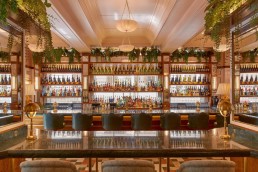
San Carlo - Fettle
Fettle brings a new atmosphere to the already well-respected San Carlo restaurant in Liverpool, UK, utilising layered light with beautiful decorative fixtures.
In the heart of the UK’s northern city, Liverpool is the iconic San Carlo restaurant, which has recently undergone a stunning renovation by London and LA-based interior and architecture studio, Fettle.
Fettle’s brief for the project was to refresh and reinvigorate the existing, well-established space, an all-day dining restaurant, which offers an opulent and contemporary take on traditional Italian dining with elegant interiors inspired by Grand Milanese villas and gardens. Fettle also drew from the architecture of Piero Portaluppi, creating a space that has an alluring ambience and timeless sophistication.
Speaking with darc on their involvement in the project is Andy Goodwin, Co-Founder and Creative Director at Fettle. “San Carlo was an existing client of ours and we had already successfully worked with the company on two London restaurants. San Carlo Liverpool was an existing site in their portfolio that they wanted to completely renovate and re-design. Having previously worked with the San Carlo brand, we were excited to embark on this new, large scale refurbishment project. Our brief was to reimagine the space including the bar, restaurant, private dining room and wine room. We stripped back the existing space to a shell, completely renovating and re-designing each element of the building.
“Altogether, the project took 14 months to complete.”
The design studio employed a rich and dramatic palette of marble, high gloss, timber and brass detailing throughout the venue. These are softened by layered mohair, leather and patterned fabric upholstery.
The furniture has been designed specifically for the project, including marble and timber tables, fluted oak bar stools with brass bases and green leather seats, elegant curved legged dining chairs and burnt orange leather and velvet banquette seating.
According to Goodwin, the project brief remained consistent throughout, with minor developments only occurring when the team discovered more about the site following its strip-out, and they were able to add a wine room to the basement corridor as requested by San Carlo.
The biggest challenge Fettle overcame was simply the process of re-designing an already successful site. Goodwin elaborates: “Our job was to retain the spirit of the existing space while totally reviewing and revising the aesthetic.”
When it came to lighting the space, Fettle introduced an array of decorative fixtures in colours and tones that beautifully blend with the overall design.
“Decorative lighting was a key component of the scheme and worked cohesively with other elements of the design to create a sophisticated ambience and timeless space,” explains Goodwin.
“We used a mixture of high-level chandeliers and pendant fittings to give an overall softness, as well as a range of wall lights and table lamps to give a more focused glow to each area of the bar and restaurant.
“Key pieces of the design have also been highlighted with concealed recessed LED lighting such as the back bar, planting and wine displays.
“We used a combination of bespoke and off the shelf lighting for the project. Bespoke Murano chandeliers were made in Italy by Sogni Di Cristallo, and these sit alongside a range of Visual Comfort wall and table lamps.
“We also used lights by Pure White Lines, Lion Iron Lighting, Northern Lights, Neoz, Humber, and bespoke lampshades by Yately Papers.
“Overall, we used a wide variety of types of lighting throughout each space, enabling us to dim everything down to create a comfortable and intimate atmosphere. We try to add as many layers of lighting as possible in order to give us and the client maximum flexibility in terms of light levels and dimming.
“Lighting is always a vital part of the design and helps inform the overall atmosphere of the space.
In San Carlo Liverpool’s case, it creates an elegant, intimate and playful ambience, working seamlessly with the interior design as a whole.
“The lighting scheme is broadly residential and layered in its approach. Architectural lighting was typically used to highlight details in joinery such as bars / back bars and planters, as well as providing more functional lighting over waiter stations and within coffers.
“By using a mixture of pendants, wall lights and table lights we were then able to create atmosphere by keeping these fittings dimmed to a low level throughout.
“Lighting is always a vital part of the design and in San Carlo Liverpool’s case, it creates an elegant, intimate and playful ambience, working seamlessly with the interior design as a whole.”
Lighting designers from engineering consultancy Hoare Lea were brought onto the project to collaborate with Fettle due the client’s specific requests to have balanced light throughout the venue. “This isn’t something we would typically do on a restaurant scale project and is normally reserved for larger hotel projects,” says Goodwin. “However, the client team were very keen for the light levels to be absolutely right, and that compatibility was ensured between the high number of different fittings, the lamps and the overall dimming system.”
Ben Acton, Associate at Hoare Lea tells darc about his participation in achieving these desires from the client: “We had previously collaborated with Fettle Design on a hotel project that was highly successful. Following that, Fettle recommended us to the San Carlo team, believing we could contribute significant value to their project. Fettle’s strong understanding of the importance of lighting played a key role in our collaboration. Our task was to work alongside Fettle to develop a lighting scheme that seamlessly complemented their decorative lighting choices with architectural lighting, resulting in a harmonious overall design. Coordination was crucial to ensure that each lighting element was discreetly integrated into the interior.
“Communication is the most important aspect to a successful project, and we have an excellent working relationship with Fettle. Initially we reviewed their design concepts, then, with multiple workshops together, we developed a detailed lighting scheme that offers layers of lighting that complemented their beautiful interior.
“Designing a restaurant that functions equally well during the day and night is a significant challenge. The goal is to ensure the space feels bright and inviting during the day while creating a warm and intimate atmosphere in the evening. Achieving this required a careful selection of luminaires and a sophisticated lighting control system. Since evenings are the restaurant’s busiest time, this was our primary focus. Our key approach to fostering intimacy was to create pools of light on the dining tables, allowing the surrounding areas to remain relatively dark. This effect was complemented by soft background illumination and the use of very warm, 2200K lighting along the perimeter, achieving the ambiance the client desired.
“To maintain the restaurant’s appeal during the day, we needed to provide relatively high lighting levels. While the restaurant benefits from ample daylight along one elevation, the deeper areas towards the rear risked feeling gloomy by comparison. To enhance the overall ambiance, large decorative globe pendants were used to deliver the necessary lighting, ensuring the space remained vibrant and inviting throughout the day.”
Due to the nature of the project, Acton goes on to explain the challenges they faced when tackling an already existing space: “This often presents unexpected challenges, especially when you start opening ceilings and seeing what you have to work with. In some areas, finding suitable locations to conceal drivers was challenging. However, by utilising custom joinery and strategically placed access panels, we were able to accomplish this discreetly and effectively.”
He continues, describing the various decorative lighting layers and how they worked alongside the architectural lighting: “The decorative lighting within the restaurant is a big part of its identity, complementing the interior design with a wide selection of chandeliers, pendants, wall lights and table lights working in combination. These elements add a lot of sparkle and contrast that add to the overall ambiance and character and identity of the spaces. Battery powered table lights are also positioned to all tables, which provide functional illumination, but all importantly provide focused accent light throughout the restaurant.”
Reflecting on the completed project, Goodwin explains how their designed remained consistent with the team’s initial plans: “We approach every project with a detailed design narrative and each space is unique. Stand out features for this project include the oversized, contemporary murals by artist Jesslyn Brooks, statement chandeliers, and the rich and dramatic palette of marble, high gloss, timber and brass detailing, softened by layered mohair, leather and patterned fabric upholstery.
“We wanted to develop a clear identity for the restaurant while retaining an aesthetic commonality with San Carlo’s sister restaurants. We feel we have created a truly elegant space with design details, lighting and material finishes utilised to offer a sophisticated yet relaxed dining experience.”
Acton adds: “I’m extremely pleased with the final lighting scheme and how the layering of different elements creates a flexible and adaptable space. The way the lighting interacts with the mirrors throughout the restaurant adds a sense of dynamism, offering new and intriguing perspectives as you move through the space. I’m particularly delighted with the bar backlighting, which makes a stunning first impression as you enter the restaurant and creates an eye-catching display visible from the street.
“The client for this project places a strong emphasis on lighting and has a deeper understanding of its importance than most I’ve worked with. This was especially evident during the commissioning of the lighting scenes, where he was very hands-on as we collaborated to create an ambiance that perfectly complemented the dining experience. It was incredibly rewarding to work with a client who truly appreciates the intricate details of a successful lighting scheme.
“The decorative and joinery-integrated lighting is a very warm 2200K, which effectively creates mood and intimacy throughout the space. The few downlights we’ve used are at 2700K, which works well for highlighting artwork, especially during daytime dining. However, in the evening, the contrast between these lighting elements becomes more noticeable. To achieve greater cohesion, I would like to have explored the possibility of using filters to warm up the downlights.”
Helvar welcomes Kim Långström as CEO
(Finland) - International lighting manufacturer announces with immediate effect Kim Långström as CEO as of 2 September.Långström aims to foster a culture that prioritises wellbeing and innovation, aligning with
Helvar’s goals of delivering smart solutions that enhance both occupant wellbeing and energy efficiency. Under his leadership, Helvar says it will continue to invest in research and development, exploring new technologies and approaches for the smart building industry.
Previous roles for Langstrom included senior leadership positions at Schneider Electric and Kone with his expertise lying in energy-efficient building solutions, commercial operations, and market expansion strategies. His background positions him to capture new opportunities in the market which are driven by increasing demand for smart building technologies and stricter energy regulations.
"I am thrilled to officially join the Helvar family,” says Långström. "Helvar is known for its commitment to sustainability, wellbeing, and intelligent lighting solutions. I look forward to meeting our customers, partners, and the team, and building on our strong foundation to seize new opportunities and further expand our market presence.”Långström adds: "Helvar has tremendous potential to shape the future of smart buildings. I am eager to lead our efforts in innovation, reinforcing our market position, and meeting the needs of our customers and partners worldwide."

LiGHT24 hosts discussion on gender equality
(UK) – Join LiGHT 24’s discussion on why it is important for both men and women to get behind Women’s Groups in the design industry and how male colleagues and peers can help change the narrative.
On 21 November at 12:00 and the Associations Lounge will host the panel discussion on the Gallery Level of the Business Design Centre, offering an opportunity to participate in the discussion of gender equality in the workplace alongside designers and representatives from these important women's initiatives in the design industry.
Speakers on the panel include Carmela Dagnello representing Women in Lighting; Rachael Davidson representing Women in Architecture; James Poore of JPLD; Harsha Kotak representing Women in Office Design; and Neil Knowles of Elektra Lighting.
The talk will be followed by a complimentary LiGHT Lunch providing an opportunity for visitors to network with peers and find out more about these much-needed industry women's groups. Kimberly Bartlett of Women Lighting Professionals and Zoe Bonser of the Women in Furniture Network will also be in the room to answer any questions.
This event has a limited capacity sue to the size of Associations Lounge therefore interested visitors should arrive in good time. However, this event is free for all LiGHT 24 visitors, which you now register here: https://register.visitcloud.com/survey/2my29bj4rukck

Silhoutte Awards announces call for mentees
(UK) - Applications for Mentees open until December 2024.
Designers now welcome to apply for a bespoke mentorship programme through annual Silhouette Awards. Applicants must have eight years or less experience in architectural lighting. This is an opportunity to benefit from a bespoke mentorship programme led by an expert panel of judges.
To enter, applicants must complete the online applications and submit a 3 minute (max) video recording.
Twenty successful applicants will be selected and supported by one of the programme’s mentors for a six-month mentorship journey. With the help of the Silhouette Awards’ sponsors and supporters, the winners will be granted the opportunity to enhance their skill set, pursue their career ambitions, adding real value to the creativity of the industry and raising the bar for talent around the world.
This year’s line-up of mentors include:
-
- Andrew Powell - Lighting Design Alliance (LDA)
-
- Armaghan Ahmadi Venhari - Light-Life-Academy
-
- Camila Blanco - Glare
-
- Cherine Saroufim – Atelier Saroufim
-
- Daniel Blaker - Nulty
-
- Eugenia Cheng - LightOrigin Studio
-
- Fabiana Nery Pardhanani – Glare UK
-
- Lee Barker-Field - AECOM
-
- Magdalena Gomez - So It Is Design Studio
-
- Maneck Tandon - ATPL Lighting
-
- Marc Juarez - UPC Barcelona
-
- Myriam Patricia Lopez Yanez
-
- Philip Hammond - BHA Lighting Design & Consulting
-
- Ratna Kumari - CD+M Lighting Design
-
- Sacha Abizadeh - WSP UK
-
- Sergio Boccia - Sergio Boccia Lighting Design
-
- Shahrzad Abtahi - Borealis Lighting Studio
-
- Tim Hunt - Arup
-
- Ximena Munoz Abogabir - LUXIA
-
- Vinod Pillai - Studio Lumen
Katia Kolovea, Co-Founder of the Silhouette Awards, says: “We are so excited to announce our outstanding line-up of Mentors for season four of the awards. By announcing a new year of the programme, we are able to create more meaningful relationships and offer 20 more designers an opportunity to learn from a mentor’s knowledge and experience to benefit them in their careers. We are so grateful to be able to continue this success for another season, offering more experiences to all of our winning mentees for 24-25. We can’t wait to see the incredible talent representing the industry this year and encourage mentees to get their entries in as soon as possible.”
Eve Gaut, Co-Founder of the Silhouette Awards, adds: “We are overjoyed to be back with a new season of The Silhouette Awards. Over the last three years we have seen countless successful journeys and development between our mentor and mentee pairings, and it has been a rewarding experience for everyone involved. We encourage all interested mentees to apply for an experience that is much more than an award and will make a huge difference to their future career and opportunities.”
More information about how to enter can be found here: https://silhouetteawards.com/how-to-enter/

Irene Mazzei on responsible design
In addition to Hollingsbee’s Lighting Guide, Mazzei discusses what to look for when specifying products for a sustainable criteria, and expands on additional assesments to be aware of.
Specifying truly sustainable products is not as easy as it seems. The market is full of green labels and images of leaves stamped on products, often used to cover unsustainable practices – in other words, greenwashing.
It is important that specifiers look for clues and evidence of real sustainable efforts from companies, such as verification from respected agencies and assessment results reported using common metrics. Ideally everybody should be using the same metrics to assess environmental impacts, so it is important to follow advice from industry organisations on the best actions to take and methodology options to adopt.
We are currently seeing manufacturers investing efforts into publishing environmental impact information at product level, in different ways:
- Using CIBSE TM66, to assess a product’s circular economy performance
- Using CIBSE TM65, to estimate a product’s embodied carbon
- Using Life Cycle Assessment to create Environmental Product Declarations, for a comprehensive range of impacts.
- CIBSE TM65 and TM66 are industry-led assessment methods which have been developed to help companies assess and report environmental aspects of products – embodied carbon and circular economy performance, respectively.
TM66 was developed specifically for the lighting industry and is based on a detailed questionnaire investigating characteristics such as repairability, easy disassembly, availability of spare parts and information for luminaires. Evidence of these and several other features are also required to be able to assign a circularity score to a product – from 0 to 4 – to categorise its circularity from low to excellent. Being able to easily evaluate luminaires this way allows to assess whether products on the market are able to support the development of a circular economy in the lighting industry, and it also helps manufacturers understand which aspects of their products they can change to achieve a higher circularity score for their luminaires.
TM65’s embodied carbon assessment method was initially developed for the wider MEP (mechanical, electrical and public health) sector, however in 2023 an update was published that contained lighting-specific information: TM65.2. The objective of TM65 is to give manufacturers a way to estimate the embodied carbon of their products in the absence of an Environmental Product Declaration (EPD). TM65’s assessment method was created to be easily understandable and applicable by any manufacturer, as it is an accessible and straightforward calculation methodology based on some assumptions and simplifications and not as granular as a full Life Cycle Assessment (LCA). For this reason, although an alignment can be observed, often the results of the TM65 calculations are not as accurate as the results of a full LCA, due to the trade-off between accuracy and simplicity of the approach. The TM65.2 lighting update is able to capture some aspects of products that were overlooked in the original version, and contribute to achieve more accurate results.
Life Cycle Assessment is a robust and globally recognised environmental assessment methodology, regulated by specific standards. For commercial communications, it is often preferred to report LCA results as third-party verified declarations, such as EPDs. These documents are published by organisations called Programme Operators, which, in addition to the standard rules of LCA, can develop Product Category Rules (PCRs) and Product Specific Rules (PSRs). These are useful to be able to adapt LCA to a type of product with specific characteristics, such as luminaires. It is important that the rules developed by different Programme Operators are aligned: this is why LightingEurope decided to endorse the PSR0014 by PEP Ecopassport as the most comprehensive set of rules for lighting products.
What is important for specifiers is to be careful when comparing impacts when they were obtained using different methodologies; this is why getting familiar with the different types of assessment schemes and methodologies available is now becoming crucial in the industry.
Companies can also communicate their efforts to be more sustainable through company-level assessment schemes, for example looking at Scope 1, 2 and 3 emissions and Net Zero ambitions, or focused on the wider meaning of sustainability – including also social and economic wellbeing – through schemes like B Corp or EcoVadis. The B Corp badge is the result of an assessment measuring a company’s performance against features that ensure inclusive, equitable and regenerative development, also supported by the company’s transparency and commitment. Similarly, EcoVadis is a platform that provides sustainability rating for businesses, looking at environment, labour and human rights, ethics and sustainable procurement, plus a dedicated section for carbon emissions.
Independently on the type of environmental assessment a company chooses to adopt, it is pivotal that the results are communicated transparently to the public. This is the only way we can truly support sustainability and empower people to make the right choices.

Dave Hollingsbee on responsible design
Hollingsbee provides a breakdown of various certifications and accreditations that aim to guide manufacturers and designers to create and specify responsible products.
1. B lab
Used by: Patagonia, Ben and Jerry’s, Stoane Lighting, Anglepoise
B Lab is the not-for-profit organisation set up to measure a company’s entire social and environmental impact. B Corp Certification is a designation that a business is meeting high standards of verified performance, accountability, and transparency on factors from employee benefits and charitable giving to supply chain practices and input materials. In order to achieve certification, a company must:
- Demonstrate high social and environmental performance by achieving a B Impact Assessment score of 80 or above and passing their risk review. Multinational corporations must also meet baseline requirement standards.
- Make a legal commitment by changing their corporate governance structure to be accountable to all stakeholders, not just shareholders, and achieve benefit corporation status if available in their jurisdiction.
- Exhibit transparency by allowing information about their performance measured against B Lab’s standards to be publicly available on their B Corp profile on B Lab’s website.
www.bcorporation.net
2. Eco Vadis
Used by: Ledvance, Signify, Zumtobel, Lucent
The EcoVadis platform helps you manage ESG risk and compliance, meet corporate sustainability goals, and drive impact at scale by guiding the sustainability performance improvement of your company and your value chain. By submitting to their EcoVadis assessment process, their assessors award medals dependent on the applicants scores relative to others on the EV database. eg. Platinum= top 1%, Gold = top 5% Silver = top 15% etc.
www.ecovadis.com
3. Declare
Used by: David Chipperfield Architects, Haworth Tomkins
Architects Declare is free to join. Many signatories use the simplicity and clarity of the shared declaration as a catalyst to drive effective change within their organisations. Many also use it as a tool to demonstrate their commitment to combatting the climate and biodiversity emergency in discussion with their clients and project partners.
www.uk.architectsdeclare.com
4. BREEAM
BREEAM is used to specify and measure the sustainability performance of buildings. Using this framework helps projects to meet their sustainability goals and achieve optimal performance over time. The BREEAM framework provides solutions to many of the key challenges facing the built environment, from working towards net zero carbon to addressing health and social impacts
www.breeam.com
5. LEED
Used by: The Empire State Building. Apple Park (aka “Campus 2]
LEED categories can contribute toward meeting the SDGs, not only by saving water, increasing energy efficiency, minimising of carbon emissions (GHGs) and significantly reducing harmful air pollutants, etc. but also by promoting education, creating jobs, improving health and wellbeing, enhancing community resilience, and much more. Policymakers, planners, and builders can use LEED and sustainable building practices as strategies for achieving the UN SDGs. There are many synergies between LEED and the SDGs. Explore the synergies between LEED and the SDGs on their website, to identify strategies to achieve specific SDGs through LEED certification.
www.usgbc.org
6. International Living Future Institute
The International Living Future Institute’s mission is to cultivate a society that is socially just, culturally rich, and ecologically restorative.
Its work is driven by a belief that a compelling vision for the future is needed to reconcile humanity’s relationship with the natural world. Of the many initiatives that come under ILFI’s umbrella, perhaps the most pertinent to this article is their “Declare” label. An easy-to-read ‘nutrition label’ for products with online resources to promote, share, and find healthier building materials.
Also, under the ILFI’s umbrella (see above) is the Red List. The Red List is a list of chemicals representing the “worst in class” substances prevalent in the building industry that pose serious risks to human health and the environment. The Red List is organised by chemical class and lists individual chemicals by Chemical Abstract Registry Number (CASRN). Since its inception in 2006, the Red List has been an intuitive tool for communicating the need to stop using chemicals that cause harm. Building projects (particularly in USA) may ask suppliers to provide assurances of their absence in their products or declare presence where that may apply.
www.living-future.org
7. Science based Targets
Used by: Whitecroft Lighting
Science-based targets provide a clearly defined pathway for companies to reduce greenhouse gas (GHG) emissions, helping prevent the worst impacts of climate change and future-proof business growth. Science-based targets provide companies with a clearly defined path to reduce emissions in line with the Paris Agreement goals. More than 5,000 businesses around the world are already working with the Science Based Targets initiative (SBTi).
www.sciencebasedtargets.org
Dali Lighting Awards
https://youtu.be/2qtXNeqdHeA
Dali Lighting Awards 2024 submissions are now open! Celebrating excellence across a range of categories. This year, Dali are excited to streamline the process by consolidating the application awards into four key categories: Residential, Commercial Interior, Commercial Exterior, and Industrial & Infrastructure.
To find out more or to enter click here.

[d]arc awards entries are now open
(UK) – You can now enter your 2024 projects and products into the [d]arc awards, the international lighting design awards organised by [d]arc media.
Entries will then be taken through a shortlisting process where a panel of esteemed lighting designers will decide who will make it through to the voting process. Every entry will be displayed online for full exposure and every entry will receive a free profile in the online darc directory.
This is the only lighting design awards in the world to use a peer-to-peer voting system, where the winners are chosen by the lighting design community. As a thank you, each voter will the receive an invitation to attend the beloved [d]arc awards night, an evening celebrations and partying, and where the winners will be announced.
There are 14 categories in total – covering high and low budget lighting design projects, as well as light art installations, and products.
The architectural categories include:
- Structures Low Budget
- Structures High Budget
- Place Low Budget
- Places High Budget
- Spaces Low Budget
- Spaces High Budget
- Event
Head to the [d]arc awards website to enter now entries www.darcawards.com/
Entries close on the 25th of January 2025.
One Click LCA and Recolight partner for carbon transparency
(UK) - One Click LCA, a provider of life-cycle assessment (LCA), and environmental product declaration (EPD) software, announce a reseller partnership with Recolight.
The agreement follows the launch of One Click LCA’s Luminaires EPD Generator, a tool to streamline manufacturing of EPD for lighting products.
By generating LCAs and EPDs, lighting manufacturers will better understand the carbon impact of its products and satisfy increasing specifier and client requirements for achieving green certifications like BREEAM, LEED, Net Zero, and more.
Key benefits of the partnership:
- Simple EPD generation: One Click LCA’s intuitive EPD software automates the process, helping lighting manufacturers to save time and resources.
- Market differentiation & benchmarking: EPDs will help lighting manufacturers stand out in a competitive market by showcasing its products’ environmental performance.
- Meeting customer demand: With EPDs, lighting manufacturers demonstrate their commitment to reducing carbon, meet green procurement standards, and attract sustainability-focused customers.
- Expert guidance: Recolight and One Click LCA’s understanding of the lighting industry will provide support and guidance to companies helping them cut through the complexity of environmental metrics.
Panu Pasanen, Founder and CEO at One Click LCA, says: “This collaboration with Recolight highlights our commitment to decarbonising the lighting industry. Recolight’s extensive network of luminaire manufacturers will benefit from combined access to world-leading LCA and EPD software, and support and consulting to enable them on their decarbonisation journey.”
Nigel Harvey, CEO at Recolight, adds: “An increasing number of specifiers and end-users are now demanding credible environmental metrics as part of their lighting procurement and specification. Those companies that move early will gain a competitive advantage. We are delighted that through our partnership with One Click LCA, we can provide access to industry leading LCA and EPD software that enhances embodied carbon transparency and helps both specifiers and manufacturers move towards a low carbon future.”
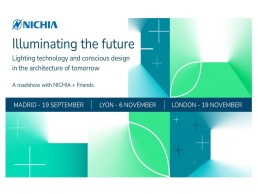
Nichia Announce 2024 European Roadshow
(Europe) - LED manufacturer, Nichia, launches sustainability focused roadshow across Madrid, Lyon, and London 2024.
This event will gather top industry experts, architects, lighting designers, and manufacturers to delve into lighting technology and conscious design to create spaces that enhance the way people live, work, and interact with their environments.
The roadshow will unveil sustainable lighting innovations leveraging the latest advances in LED technology, solutions that enhance light quality to engage more profoundly with human experience, cultural context, and biophilic principles, fostering a closer connection to nature within built environments.
Featuring a comprehensive agenda including a sessions that address local design challenges and opportunities along with hands-on lighting demonstrations to allow participants to engage directly with technology solutions both in architecture and automotive lighting.
The roadshow starts with a half-day forum on 19 September held at the Four Seasons Madrid. The programme includes conference-style presentations featuring contributions from Anoche Iluminación, Arkilum, ARUP, Estudio Lamela, Formula Luci, MadeinLED and sAtt. The presentations will explore luxury retail and hospitality lighting along with lighting design powered by Nichia in Centro Canalejas Madrid.
Attendees will also participate in a roundtable debate, led by a panel of industry experts and moderated by Lightecture, on the challenges and opportunities to promote sustainability and well-being in architectural projects.
Part two is held in Lyon on 6 November and will present topics including high CRI for indoor automotive applications, and the convergence between architectural and automotive lighting. Guest speakers include ENTPE, Cluster Lumière, Gaggione, Stilec, and Formula Luci.
Dr Ulf Meiners, Managing Director of Nichia Europe, says: “Nichia is dedicated to pushing the boundaries of sustainable lighting technology to achieve unparalleled light quality. Our roadshow is an opportunity to share this vision with the architects, designers, and innovators who will bring it to life. These events will not only showcase our latest advancements but also serve as an engaging platform for collaboration with our customers, as we work together to shape the future of lighting.”
www.nichia.com
Goldensea Acquires SGM
(Worldwide) - SGM Lighting AS, will be under new ownership of Goldensea.
Established in Italy in 1975, and now located in Aarhus, Denmark, SGM is a well-respected lighting manufacturer pioneering the use of IP65 moving lights before, more recently, focusing on architectural lighting. Both these aspects create strong synergies with Goldensea which is investing heavily in both entertainment and architectural IP65 solid state lighting products.
As a globally renowned brand, SGM has always focused on technological innovation, being the first in the industry to launch all-weather waterproof moving head fixtures.
SGM’s unique patented technology covers both the architectural and stage lighting portfolios, and its products are well-known in the industry for low maintenance costs, unique design, and consistent performance.
Recognising the qualities and potential within SGM, Goldensea identified complementary aims and philosophies between the two companies, and the benefits its financial investment can bring to SGM’s product development and growth.
“Our investment in SGM aligns with Goldensea’s future strategic and long-term development plans,” says Christopher Agius Ferrante, VP Goldensea.“The purchase of SGM is highly complementary to our existing business, and will help to enrich and strengthen the product range and expertise that we can offer all our clients – for both architectural and stage lighting equipment.”
Goldensea states that all SGM Denmark staff will remain in place. “We strongly value the whole SGM team and are excited to have them on board as we seek to invest and grow in our determination to make SGM sustainably successful,” continues Ferrante.
SGM Light has begun the process of reviewing existing orders and will be contacting all customers to discuss these orders, advise of new lead times and deliver other pertinent information.
Due to the necessary change in legal entity, all customers are advised that new orders will need to be placed in lieu of the existing orders for them to remain valid.
In the coming days, SGM will also be able to accept new orders for all current SGM products.
SGM also announces that all existing warranties which were valid under the old entity are to be honoured going forward.