
Nichia Announce 2024 European Roadshow
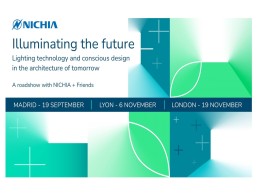
(Europe) - Nichia, LED manufacturer, Nichia launches sustainability focused roadshow across Madrid, Lyon, and London 2024.
This event will gather top industry experts, architects, lighting designers, and manufacturers to delve into lighting technology and conscious design to create spaces that enhance the way people live, work, and interact with their environments.
The roadshow will unveil sustainable lighting innovations leveraging the latest advances in LED technology, solutions that enhance light quality to engage more profoundly with human experience, cultural context, and biophilic principles, fostering a closer connection to nature within built environments.
Featuring a comprehensive agenda including a sessions that address local design challenges and opportunities along with hands-on lighting demonstrations to allow participants to engage directly with technology solutions both in architecture and automotive lighting.
The roadshow starts with a half-day forum on 19 September held at the Four Seasons Madrid. The programme includes conference-style presentations featuring contributions from Anoche Iluminación, Arkilum, ARUP, Estudio Lamela, Formula Luci, MadeinLED and sAtt. The presentations will explore luxury retail and hospitality lighting along with lighting design powered by Nichia in Centro Canalejas Madrid.
Attendees will also participate in a roundtable debate, led by a panel of industry experts and moderated by Lightecture, on the challenges and opportunities to promote sustainability and well-being in architectural projects.
Part two is held in Lyon on 6 November and will present topics including high CRI for indoor automotive applications, and the convergence between architectural and automotive lighting. Guest speakers include ENTPE, Cluster Lumière, Gaggione, Stilec, and Formula Luci.
Dr Ulf Meiners, Managing Director of Nichia Europe, says: “Nichia is dedicated to pushing the boundaries of sustainable lighting technology to achieve unparalleled light quality. Our roadshow is an opportunity to share this vision with the architects, designers, and innovators who will bring it to life. These events will not only showcase our latest advancements but also serve as an engaging platform for collaboration with our customers, as we work together to shape the future of lighting.”
www.nichia.com


Sofia Hagen designs installation for Spotlight 2024
(Austria) - From 9-12 October, Spotlight in Feldkirch by the Lichtstadt association, will showcase an installation by artist and architect, Sofia Hagen.
The London-based multidisciplinary artist and architect from Vorarlberg, Austria created the installation fusing art, design, and architecture. Crystaline features metres tall, illuminated salt crystal, prominently positioned in the historic centre of Feldkirch.
This central piece is accompanied by smaller crystals, all of which are crafted from recycled medical plastic waste using advanced 3D printing technology. These sculptures are not only visually striking but also incorporate specifically designed light and sound elements that interact with the surrounding architecture, creating an immersive experience.
The installation offers a blend of sustainable materials, technology, and artistic expression that harmonises with a historic context. The event is set to be a captivating experience, showcasing Sofia Hagen's talent in combining various artistic disciplines with a focus on environmental sustainability.
Hagen says: "Crystalline is a beautiful collaborative journey where we were able to explore the frontiers of cutting-edge technology, sustainability, and multi-sensory light art. The success of this project hinged on the dedicated teamwork involved: from my advanced 3D printing partners and software engineers who pushed their robots to the limit, to the structural, installation, and lighting engineers who transformed our innovative methods into a striking piece of art. And ultimately, turning the light art installation into an immersive experience, the ephemeral, poetic soundscape was composed specifically for ‘Crystalline’, perfectly complementing its context within Feldkirch's medieval centre.”
The light art installation is open to the public and is free of charge.
www.lichtstadt.at/en/spotlight-
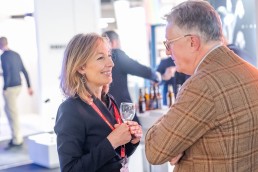
LiGHT 24 Welcomes All Designers
(UK) – The only trade show in the UK dedicated to lighting specification provides an incredible opportunity for designers to discover new technologies, solutions and inspiration.
Lighting is one of the first things that designers should consider when working on a project. The importance of working with the right tools and having the right knowledge to produce the best light – and in turn the best environment for the end user – is undeniable.
A common misconception is that trade shows dedicated to lighting specification are just for lighting specialists. Yet by bringing together architects, interior designers and lighting designers with innovative brands and suppliers, LiGHT 24 is the perfect opportunity to find the right lighting for your next project, whatever the role you play.
So, if you’re not a lighting designer, what does LiGHT 24 have to offer you?
If you are looking for ways to more seamlessly integrate the right lighting solutions into your project designs, you can learn more about the effects of lighting on design schemes and the end user. LiGHT 24 will feature 100s of high-end decorative and architectural lighting brands all under one roof. With brands from all over the world on show, it is guaranteed that there will be a product at LiGHT 24 that fits the brief for your next project.
A dedicated space for decorative and design-led lighting brands returns to the gallery level for a second year, focused on providing a space to collaborate, inspire and specify decorative, design-led lighting solutions all under one roof.
This year, the Associations Lounge will host a number of industry associations from the architecture, interior design, and lighting communities, providing a comfortable space for designers to meet with colleagues and gain vital information on the advantages of memberships with these associations.
Not only that, but the next [d]arc thoughts talks programme is taking place at LiGHT 24. This highly-regarded talks programme will feature experts from across the world of design and editors from speciality design magazines, while covering project highlights and topics that affect all areas of the industry. Watch this space for a full talks programme announcement coming very soon!
Are you ready to meet like-minded individuals and make connections in the lighting, interior design and architecture communities? LiGHT 24 offers visitors multiple unrivalled networking opportunities, including late-night welcome drinks during the first evening and the popular LiGHT LUNCH on day two of the event. This year, LiGHT LUNCH will be centred around a Women in Industry networking event – this brunch with representatives from Women in Lighting, Women Lighting Professionals, Women in Office Design, Women in Architecture, and the Women in Furniture Design Network, offers an in-person insightful opportunity to find out more about these empowering initiatives and how to get involved.
Another networking opportunity will be the Silhouette Awards event, which involves the entire global lighting community, featuring advice from the programme’s mentors and mentees, education insights, presentations, discussions, and all-important photo opportunities.
LiGHT WORK will also make a welcome return to the show, with visitors making good use of the dedicated workspace area to network, hold meetings, or complete office tasks, while offering dedicated wi-fi, free coffee, and charging points so that you don’t need to leave the show floor to do vital work.
LiGHT Expo values bringing together inspiring leaders and passionate people to share ideas and solutions to grow the future of the industry. For all visitor information, visit: www.lightexpo.london
Don’t miss your chance to be part of this inspiring and influential event! Registration is now OPEN > LiGHT 2024
Meet the New Designers: George Almond
In a special three-part Q&A series on the New Designers awards programme, darc magazine has spotlighted standout designers recognised for their contributions to decorative lighting product design.
New Designers is an annual exhibition that brings together graduate design talent from across the UK, which made its return to the BDC in London for its 39th year. The event featured the work of 3,000 graduates from over 100 universities.
For those of you who missed it, check out the first two designer interviews darc held with Oscar Parkinson and Holly Munro to discover more about their experiences of the event and their lighting creations.
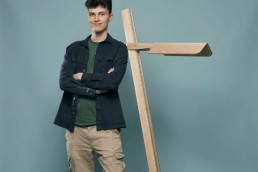
For our third and final Q&A, darc talks to Habitat award winner George Almond. Almond is an undergraduate from Nottingham Trent University where he studies Product and Furniture Design. His design won the Habitat New Designer award for his Dondo rocking stool and Lever floor lamp, which has gained him a mentoring programme from Habitat's design studio.
Can you share a bit about your background and what led you to pursue a career in design?
My background in design most likely stemmed from my family. We are all quite practical people and enjoy creating things. My parents built our house, so I grew up on a construction site; often playing around with offcuts and scrap material. I enjoy making things with my hands and so this led me down the road of designing and making. Over the COVID-19 pandemic lockdown, with the help of my dad, I built a small workshop in our garage so that I could do various woodwork projects in the ample free time I had. I liked learning new techniques and developing my practical skills.
What significance does winning the New Designer Award hold for you, and how will it impact your career?
Winning the Habitat New Designer Award has been a massive achievement for me. Being able to go and present my work was a fantastic opportunity in itself, but winning an award has allowed me to have more conversations and connections across the design industry than I ever thought I could. This award will be a great head start in my career in design and allow me to achieve my goals in the industry.
What inspired you to create a lighting collection specifically?
This project was an experimentation of materials and processes. The forms I was playing with and creating led perfectly into a light shade for an adjustable floor light. The process dictated the sizes and shape of the shade, making it most suitable for a larger floor lamp rather than a pendant or desk lighting.
Could you elaborate on the inspiration and creative process behind your award-winning design?
I find inspiration in mastering new skills and exploring innovative processes, driving me to push materials to their limits and forge innovative design solutions. This project was conceived with the aim of harnessing steam-bending as a process-driven design approach, leveraging the inherent properties of the material to their fullest extent. By capitalising on the natural tension generated during the bending of wood, I crafted a joint devoid of screws or glue, achieving both structural integrity and aesthetic elegance. The lamp's adjustability is facilitated through a clamp-like mechanism, strategically designed to utilise opposing forces, creating a lever that prevents the arm from sliding when angled.
With my work, I aim to provide new solutions to problems with an appropriate use of materials and consideration for manufacturing processes. I don’t want to design more of what is already available, it has to be unique and intriguing for the user.
Which environment is your product best suited to, and why? For example, the hospitality market, residential, somewhere else?
The functionality of the floor lamp leans itself to the residential environment due to its adjustability for different uses. At its maximum height, the lamp casts a gentle ambient glow, perfect for creating an inviting room atmosphere. Lowering the shade directs light into a focused area, ideal for illuminating workspaces or study areas. The versatility of the Lever Floor Lamp ensures its adaptability to various settings and applications throughout the home.
Does sustainability and responsible design influence your design choices and processes?
My main focus for sustainability with this project was to use materials as effectively as possible, reducing waste and unnecessary material usage. Through steam bending I was able to use a single piece of wood to form the shade, joint, and movement mechanism, reducing the need for additional materials and machine processes. Product end-of-life is also important, which is why each component of my light can be separated into single materials for recycling or reuse.
Do you see yourself continuing in the field of lighting design, or do you have other areas of interest you'd like to explore in the future?
Having studied Furniture and Product design, I don’t want to limit myself to a single niche aspect of the design industry. As much as I enjoy lighting, I would also like to continue in the field of furniture. Interaction with good design is something I enjoy, whether that be lighting or something else like seating, so in the future I will continue to put user engagement at the centre of my designs.
What are your aspirations for the next five years?
Currently, I don’t have a specific path I want to follow. I enjoy the practical side of design, being in the workshop making prototypes and experimenting with physical models. I would like to see myself working in a role that would allow me to continue my passion for designing through making. I know that I still have a lot to learn, so aspire to continue expanding my knowledge and developing my skills as a designer.
www.instagram.com/george.almond_design

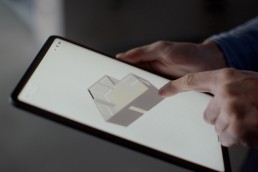
Metaroom and DIALux partner on 3D Modelling app
(Austria) – From mid-September, users can send 3D scan data from Amrax’s Metaroom solution directly to DIALux’s planning software, allowing precise light plans for each room.
The Metaroom app is an advanced 3D scanning app, driven by the power of AI, LiDAR (Light Detection and Ranging), and SLAM (Simultaneous Localisation and Mapping) technologies. This enables professionals in spatial planning industries to envision and redefine spaces.
The Metaroom solution is a workflow consisting of Metaroom app for capture and Metaroom Studio for optimisation before export, which is available on iPhone Pro or iPad Pro*. The scans are then uploaded to the cloud, generating true-to-scale 3D models within seconds. Users can then use Metaroom Studio, to enrich these 3D models with additional information before exporting.
DIALux is utilised by more than 750,000 active users to design, calculate, and visualise lighting for both indoor and outdoor areas. Featuring real luminaires from over 412 DIALux members, users can create unique atmospheres and generate comprehensive project documentation. Available in 26 languages, DIALux supports a worldwide network of lighting professionals and adheres to the open BIM approach. The integration with Metaroom is also based on open BIM and IFC standards.
Metaroom promises to save lighting time when designing and placing luminaires. Projects can be downloaded from Metaroom Studio and imported into DIALux. The planning results can then be exported as an IFC model for the Open BIM process or other programs, significantly reducing the workload.
Martin Huber, CEO of Amrax, says: “Advances in 3D modelling, software and AI are combining to democratise design. Lighting designers and electrical planners now have access to powerful tools that significantly enhance efficiency, enabling them to serve more customers in less time. This is going to lead to a revolution in how buildings are designed and how we all interact with our built environment.
Huber adds: "Partnerships between cutting edge solutions like Metaroom and DIALux are key to powering this change. By creating an extensive ecosystem of lighting design solutions, we will significantly improve accessibility, reduce costs and bring spatial design to the mainstream.”
Dieter Polle, CEO at DIALux, adds: “Simply scan the room with your smartphone and start planning right away. Wouldn't that be fantastic? By integrating Metaroom into DIALux, this is now possible. The time-consuming task of constructing the geometry before starting the actual lighting design is eliminated. Martin's team and their solution have convinced us. The integration follows our Open BIM strategy technologically. With this integration, we've made life a bit easier for lighting designers.”

DALI Alliance to Host First DALI North America Summit
(USA) - The DALI Alliance, the global industry organisation for DALI, announces its first North American DALI Summit, taking place on 30 October, 2024, at the Metropolitan Pavilion in New York City.
The Summit promises a range of topics surrounding sustainability, smart buildings, DALI-2 certification, D4i use, and the integration of DALI with building management systems.
Attendees will benefit from expert-led presentations, interactive workshops, and panel discussions designed to address the current challenges and opportunities within the lighting industry.
Key Highlights:
- Explore the Latest DALI Technologies and Applications: Gain insights into cutting-edge innovations and practical implementations in the field of DALI lighting control.
- Network with Leading Figures and Peers: Connect with industry experts and fellow professionals to exchange ideas and build valuable relationships.
- Earn Continuing Education Units (CEUs): Participate in selected sessions to earn CEUs and enhance your professional development.
Paul Drosihn, General Manager for DALI Alliance, says: “This is the first time we have brought the DALI Summit to North America, and we are excited to connect with our peers and friends in the industry to share knowledge and best practices. We have listened to the feedback from our members, and we are committed to opening up our knowledge base and sharing expertise on DALI technology. The summit is a key part of our efforts to expand the educational opportunities available to our members and other stakeholders. We are looking forward to sharing this special event with members of the lighting industry.”
Early bird registration is now open until September 1. More information can be found here.
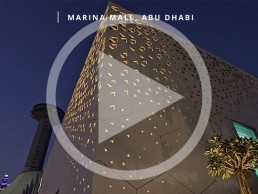
Marina Mall, Abu Dhabi - LEDFlex
https://vimeo.com/997713862
The newly refurbished Marina Mall, Abu Dhabi shines brighter with bespoke linear lighting solutions by LEDFlex. In collaboration with Nulty+, Huda Lighting and Bill Johnson Technical Services, the iconic façade has been illuminated into a visual masterpiece. A blend of art and engineering, the project demonstrates LEDFlex's comprehensive approach encompassing design, programming, and commissioning to redefine Marina Mall as the city's leading, modern and vibrant shopping destination.
Lighting Designer: Nulty+
Supplied by: Huda Lighting
Installation: Bill Johnson Technical Services
Meet the New Designers: Holly Munro
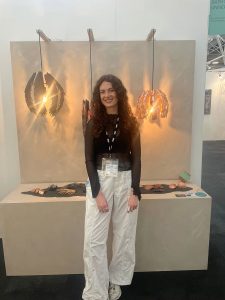
New Designers returned to the BDC in London for its 39th year, celebrating the best emerging talent in design. The show brought together 3,000 design graduates from over 100 universities, showcasing their work across a range of disciplines including Fashion and Costumes, Contemporary Design Crafts, Textiles, Ceramics, Glass, Jewellery, Furniture, Product Design, Industrial and Spatial Design, Graphic Design, and Modern/Digital/Motion Art and Illustration.
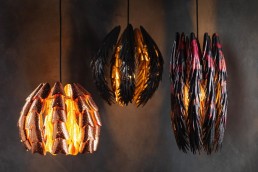
New Designers stands as a prime destination for discovering new talent and ideas, offering a glimpse into the future of design. darc magazine has highlighted three up-and-coming designers who earned recognition for their innovative lighting designs in a three-part series of Q&As. The first in this series features Holly Munro, a BA Jewellery and Silversmithing graduate from the Royal Edinburgh College of Art. Munro impressed the judges with her ‘Kerama’ lighting collection, inspired by the Kerama Islands in Japan. Her unique pieces are crafted from recycled metal, making them fully recyclable and easily disassembled.
Can you share a bit about your background and what led you to pursue a career in design?
I recently graduated from Edinburgh College of Art with a Bachelor’s degree after completing a four-year undergraduate program. Prior to university, I participated in a portfolio course at the Tramway Visual Arts Studio in Glasgow, which was a transformative experience. This course strongly encouraged me to pursue a path in Design, even though I initially intended to study Fine Art.
The Tramway course stands out as one of the most positive and influential experiences in my Arts and Design education. Navigating the challenges posed by the COVID-19 pandemic at the beginning of my degree and the RAAC concrete issues towards the end, I learned to think creatively and develop innovative solutions. These experiences, though challenging, ultimately enhanced my skills and made me a more resilient and adaptable designer.
In my third year at ECA, I participated and won a competition with the eyewear brand Cubitts. I designed a collection of eyewear using detailed CAD drawings to fine tune my designs, which led to one of my designs being selected to be produced and eventually sold to the public through the Cubitts stores. Additionally, I was chosen for an international exchange to Hiko Mizuno College in Japan, which was an incredible and enriching experience, which helped further my interest into design.
What significance does winning the New Designer Award hold for you, and how will it impact your career?
This award has significantly affirmed the positive feedback I’ve received from the public regarding my design work. After four years of hard work, this recognition is incredibly rewarding and supportive. It gives me the courage to keep taking creative risks and to continue working diligently and knowing that determination truly pays off and can be rewarding through public acceptance and acknowledgment as the New Designer Award has shown. I am hopeful that this award will open new doors and opportunities within the interior design industry.
I am keen to further my work through a design internship or design role where I can further hone my craft and contribute in the design process within projects therefore, the professional exposure will not only be a great learning experience but will further my growth as a designer.
What inspired you to create a lighting collection specifically?
Function has always been important to me, especially for environmental reasons. I believe that creating an object that is both beautiful and functional is a purposeful and meaningful approach to design. My interest in ambient lighting stems from its soothing and natural qualities. Unlike fluorescent lighting, which feels industrial and can give unsettling qualities, ambient lighting can enhance the overall mood and atmosphere of a space. The consideration of ambience and function is crucial in my design process, ensuring that my work appeals both aesthetically but equally contributes positively to the environment it inhibits and can appeal to the consumer.
I have always had a keen interest in interior design, but focusing on a specific aspect, such as lighting, has allowed me to delve deeply into a particular desired field of focus and aesthetic. This specialisation has given me the opportunity to thoroughly explore and refine my design approach. I have also produced design proposals for various other interior objects, broadening my experience and versatility within the field.
Could you elaborate on the inspiration and creative process behind your award-winning design?
During my third year of studies, I was accepted to study at Hiko Mizuno College in Tokyo. The work environment in Tokyo was vastly different from what I was accustomed to in Britain, presenting both challenges and many positive moments. I found solace and inspiration during a solo trip to Okinawa, a region known for its high life expectancy and unique way of living.
Their approach to work and craft deeply resonated with me. I visited the Yomitan Pottery Village and had the opportunity to work alongside local artisans for a day, which was profoundly enriching. The landscape and coastal forms in Okinawa were unlike anything I had ever seen. I made sure to go diving in the coral reef, a surreal experience that greatly influenced my research. I drew a lot of inspiration from the sea life, shells, and coral, which became integral elements in my design work.
Which environment is your product best suited to, and why? For example, the hospitality market, residential, somewhere else?
I envision my work being suited for high-end restaurants and hospitality venues. Venues that value high quality space making, where its elegant and poetic qualities would enhance the evening dining experience and high end hospitality functions. Additionally, I can see my collection fitting seamlessly into bespoke, unique coastal homes, where the designs and forms of the residence would work in harmony with my designs, and equally compliment the surrounding landscape.
Does sustainability and responsible design influence your design choices and processes?
Absolutely, environmental consciousness has been a significant influence in my life, instilled by my parents who imparted strong morals to my sister and me. Over the past two years, I have served as the student Ethical Making Ambassador for Goldsmiths, where I have deepened my understanding of the unintended consequences of design decisions.
With each design choice I make, I carefully consider the environmental impact, whether it involves the materials used or the production processes employed. While I have made strides in integrating sustainable practices into my work, I recognise there is always room for improvement. My practice is continually evolving as I explore new ways to minimise environmental footprint and enhance sustainability. For instance, in creating the Kerama collection, I utilised recycled copper for every individual element. Each piece was meticulously shaped using steel doming tools, pressed onto a flat sheet of cork. This approach not only reflects my commitment to sustainable design but also underscores my dedication to merging creativity with environmental responsibility.
Do you see yourself continuing in the field of lighting design, or do you have other areas of interest you’d like to explore in the future?
Absolutely, I am committed to pursuing a career in lighting design. My passion extends to all aspects of interior design, particularly focusing on creating objects with sculptural qualities. I am particularly drawn to combining diverse materials for lighting, such as ceramics with metal or ceramics with glass. As a designer led by materials, I thrive on working with mediums that allow for organic shapes and textures.
Looking forward, I am eager to explore innovative avenues in design. I am particularly intrigued by the prospect of utilising 3D printing technology to create larger interior objects, potentially using bio-resin materials or clay to push the boundaries of traditional design methods.
What are your aspirations for the next five years?
In the next five years, I envision myself working for an interior design or lighting company that shares my values and vision. While I am open to the possibility of eventually starting my own company, my current focus lies in thriving within a collaborative work environment alongside other designers and makers. I derive great satisfaction from pushing my creative boundaries in this field, as it aligns seamlessly with my passion and feels more like a rewarding pursuit than mere work.]
LIA launches updated website
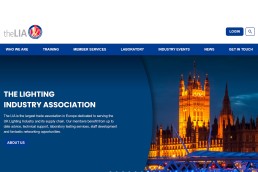
(International) - On 2 July, 2024, the Lighting Industry Association (LIA) launched its newly refreshed website. A significant milestone for the organisation, the launch went live marking its commitment to developing initiatives that enhance member experience and support personal development.
Megan Henshaw, Marketing Manager at the LIA, explained: “A fresh-faced website was imperative to our goals for 2024 as it became clear we needed a platform to better reflect The LIA as we are today and create a site that is easier to navigate for members and the industry.”
The website takes on a modern look while introducing two new features: an Online Learning Portal and a Member Engagement Platform. The former offers courses tailored from introductory to advanced technical skills, to behavioural and leadership development.
The Member Engagement Platform is a space for members to connect, share insights, and access exclusive content. This platform contains resources such as industry articles and webinars, while having the opportunity to interact with peers, gain knowledge, and find the latest trends within the sector.
Teresa Beazley, Commercial & Training Manager, commented: “It’s important to recognise the needs of people within the industry have changed, and offering learning opportunities that fit around busy work and life commitments is essential to bridging the emerging skills gap, while engaging and retaining talent. Our new online training portal brings a range of new content to life, while making it as accessible as possible.”
Ayça Donaghy, CEO of The LIA, added: “The launch of our new website, online learning platform, and member engagement platform represents a significant step forwards for The LIA. We are committed to providing our members with the best possible resources and a platform that supports their professional development and engagement within the industry. This new site is a testament to our dedication to continuous improvement and innovation.”
www.thelia.org.uk
Matt Waring - "The Light Within Us"
https://www.youtube.com/watch?v=-MwNfUyEl9M
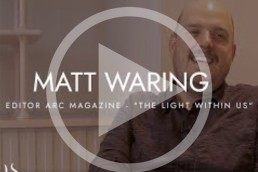
arc's editor Matt Warring sat down with Phos to discuss the importance of biophilic design, and Pho's new book "The Light within Us".

Steve Meadows appointed to Recolight Board of Directors
(UK) – Steve Meadows will represent Signify on the Recolight Ltd board.
Meadows has been with Signify since 2007 and recently took the role of Services and Operations Director for West Europe.
On joining Recolight, Meadows says: “I’m delighted to join the Recolight Board, taking over from my colleague Robert Sprott who represented Signify for over three years. I’m a champion of Recolight’s Circular Economy activity, and all they do to raise the profile of the need for action on sustainability in the lighting industry. I really look forward to getting to know and supporting the Recolight team.”
Nigel Harvey, Chief Executive at Recolight, says: “We are delighted that Steve has joined our Board. The breadth of his experience, and knowledge of our industry will be invaluable to us as we expand the range of services, we offer to meet the changing needs of our Producer Members and collection partners.”
Meadows joins as non-Executive Director representing Recolight’s founding members along with board chair Andreas Adam, Senior Director at LEDVANCE, and Andrew Clark, Financial Controller at Feilo Sylvania UK. Also on the board are Steven Reed, Commercial Manager at Trilux and Stephen Bell, Services Transformation & Compliance Director UK & IE at Zumtobel.
www.recolight.co.uk