
Hannover Congress Centre, Germany
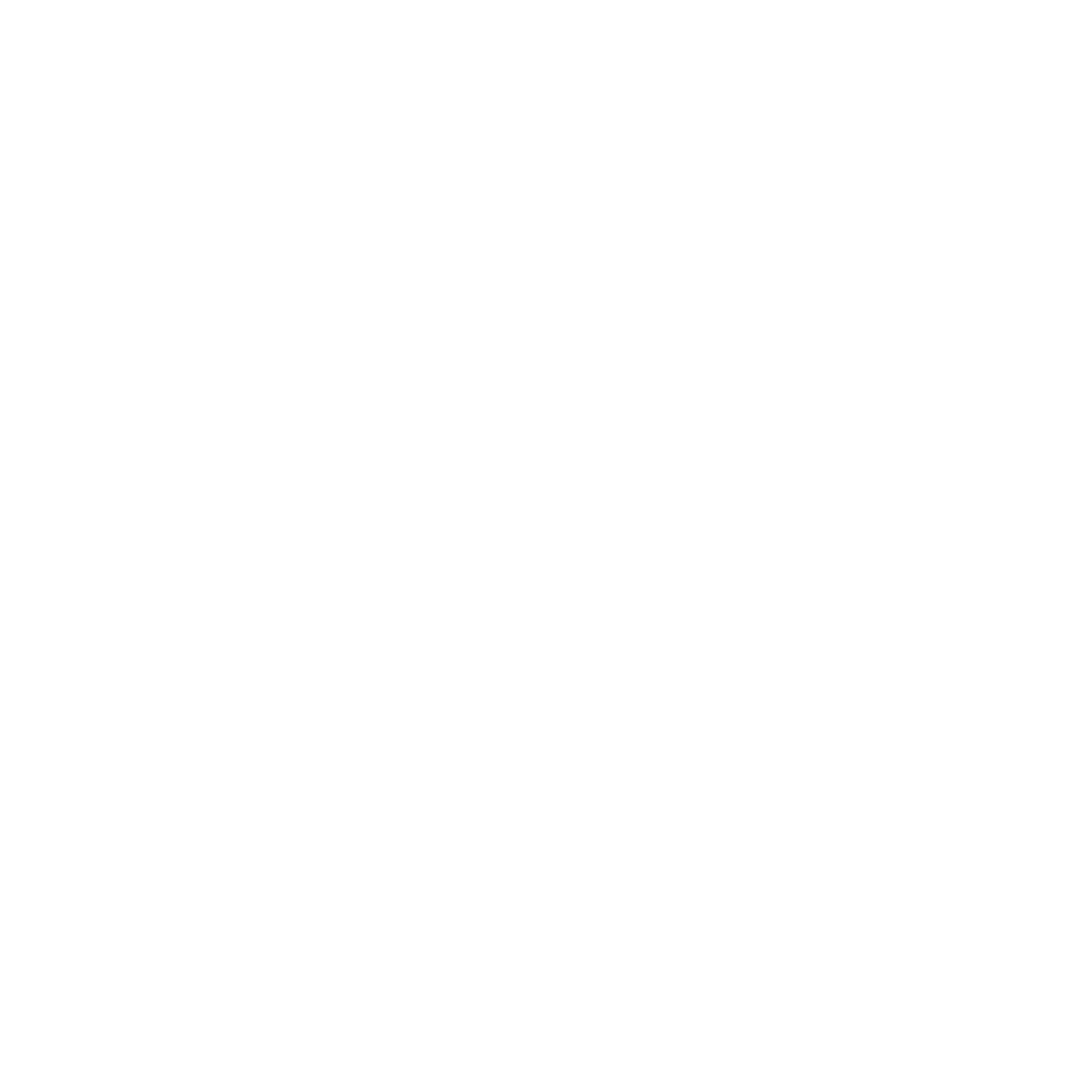
Highlighting the historic significance of the building's interior architecture, vogtpartner's lighting scheme combines the adaptability of modern technology and the illusionary power of colour at the Hannover Congress Centre in Germany.
The Hannover Congress Centre, together with its architects Woelk-Wikens Architekten BDA DWB, created a competition to which they invited six lighting design firms. After careful deliberation, Swiss lighting design studio vogtpartner won the competition.
Following this, the lighting of the Hannover Congress Centre was completely redesigned as part of the overall renovation of the building, which was inaugurated in April 2016 by German Chancellor Angela Merkel accompanied by US President Barak Obama. The new lighting design allows for greater flexibility in the use of the hall for both small and large venues and contributes to an entirely new experience of the space.
“The vastness of the historical space and having to create an atmosphere that did this historical space justice made this project different from others,’’ commented leading lighting designer on the project, Matthias Wilcken-Frey.
There were many demands presented to vogtpartner in the brief, but the most crucial one, expressed by artists themselves, was to make the enormous space feel smaller, for smaller events. “Artists don’t like to perform in venues when the upper levels are completely empty,’’ said Wilcken-Frey.
The speed with which the project and the entire interior renovations took place meant that the hall remained a construction site, filled with scaffolding, throughout the renovations. Therefore vogtpartner weren’t able to test its conceptual ideas on site. The only way around this was to do some tests at different locations and in simulations.
With the removal of former acoustical components above the stage area, the entire ceiling becomes more noticeable. Suspended above the stage are now freely arranged pendant luminaires that evoke the image of a transparent 'light cloud'. The luminaires can be lowered or raised as a group and are dimmable. Their highly specular surface reflects surrounding colours, making them almost invisible.
Audio requirements were fulfilled by suspending the necessary audio components between the pendant luminaires, integrating them perfectly in the light cloud. Additionally, the pendants are equipped with indirect light sources to brighten the ceiling above the stage.
The folded surface material of the stage backdrop is grazed with a gradient light that can change to any colour, including a glowing white. A perception of depth is consequently evoked in the beautiful background. The row of architecturally pronounced pillars can likewise be highlighted with either white or coloured light, bringing an additional, working layer of light to the overall lighting composition.
Carved reliefs, such as the zodiac signs and the so-called 'light goddess', which had been walled up for decades, have again been exposed on upper-level walls and accentuated with precise, focused light. These sculptured, historical reliefs complement the overall ambience, becoming festive, architectural elements that re-tell the historical origins of the building.
With the performers in mind, the vogtpartner team wanted to prevent the sense of emptiness when upper level seats were unoccupied. They thus installed blue linear LEDs to create, at the right luminance level, a transparent curtain of radiant blue, reducing dimensionality and making the hall feel smaller and more intimate.
Dimmable, brilliant light points that were added to the upper level railing frame the setting and add a festive ambience, especially for gala balls.
“The lighting for such events is different than for larger ones, as it’s different for gala balls, classical concerts, rock concerts or assemblies. Therefore the right lighting had to be flexible lighting,’’ explained Wilcken-Frey.
The seven historical chandeliers, each consisting of over 1,000 crystal elements, used to supply the hall with general ambient lighting. This role has now been taken over by newly installed down lights in the dome ceiling, allowing the restored chandeliers with their brilliant, sparkling points of light to act as decorative lighting creating a festive ambience.
The open ceiling in the middle of the hall is now illuminated with the soft glow of a twilight sky, giving the room a positive connection to the space above. This soft glow of blue above reminds visitors of the hall’s original cupola, now walled up, and thus builds a bridge from the present to the past.
The new lighting system is equipped with energy efficient LED technology. Special converters allow light level adjustments down to 0.1%, yet still guarantee flicker-free HD filming without shifts of colour. With the help of a lighting control system, different lighting moods can be easily programmed and realised depending on the occasion and use of the hall.
In total, more than 400 new luminaires were installed in the context of the renovation; all of which are 360° glare-free. The maximum connected load (excluding the large pendants) now lies at approximately 14kW. This translates into a reduction in connected load of around 16% with over a twofold increase in light intensity. The use of modern LED technology and custom fixtures has allowed vogtpartner to develop a scheme that is adaptable to fit purpose while highlighting the historic significance of the building's interior architecture.
Pic: Frank Aussieker

Čikat Bay, Croatia
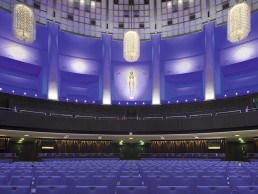
Working closely with the project's investors, lighting design practice Skira provided sophisticated lighting design in order to produce atmopsheric surroundings that highlight the natural beauty of Čikat Bay.
Čikat Bay in Mali Losinj, Croatia, was at one time, very well known as a luxury health and seaside resort for the continental upper classes during the 19th Century. Its charming surroundings and discreet nature of its location never actually changed this initial purpose and after recent revitalisation, this fascinating and beautiful location has become even more of a luxurious five star destination with attractions of an exceptional level.
The architectural lighting project from lighting design practice Skira, consists of a grand hotel, exclusive boutique hotel, two commercial villas, five private villas, connected green areas, public roads, driveways, a water park and promenade. In total, an area of 162,082m² has been illuminated (public space 16,230m², exteriors 87,596m², interiors 58.256m²), with the architectural lighting based on a holistic and methodical approach from the very early design stage. Not one space was seen in isolation and the strategy was based on various lighting diagrams and topographies developed especially for the project – taking care of the natural environment and the benefit of the whole community.
Taking a total of two years to complete, support from the client Jadranka Hotels was constant from the very beginning to the very end - even down to the smallest of details meaning Skira's initial design ideas could be realised as imagined.
Privately funded, the 2.3km long promenade at Čikat Bay has been carefully reconstructed and fitted with random effect, discreet lighting where visitors can take long, romantic strolls across the inviting pattern, installed directly to the stone pathway where the shadows and lights from the surrounding greenery give way to the architecture.
“The main challenge for us was, as usual, the budget,” said Dean Skira of Skira architectural lighting design practice. “Fortunately as we had contact with the client the entire time, we were able to explain the benefits of quality design by using high-end products – considering not only aesthetics but energy savings, long-term maintenance, the local climate, seasonal changes and so on.
“The client realised that our presence on site was absolutely necessary as the contractor was not familiar with most of the technology and control systems we had used. We adopted a strict and professional approach towards all parties involved in order to keep tight control over the entire process. By the end of the project we were managing 157 electricians in order to complete the work properly and on time.”
Medusa, the marine lighting project within Čikat Bay, required the lighting designers to take an artistic approach to the general lighting - highlighting an underwater network of luminous sculptures. This installation is rectilinearly connected to the main entrance of the hotel and dominates over the coastal terrace as a visual highlight for guests and an act of the unexpected sight, following the central principal plateau. The idea was to create a portal of light with ten-metre high, specially designed poles, inspired by pen shells. These poles are connected with the main jellyfish hub with thin LED lines. Positioning and connecting was a very challenging and technically demanding part of the project as the line is continuously integrated into the poles, floor and steps, creating visual connection between luminous underwater streams, physically ending in the jellyfish hub.
Medusa is an 80cm wide globe, illuminated with a fibre optics system of 200 luminous tentacles connected to it. The 60kg jellyfish hub is anchored to the sea floor and secured against tidal force and poor weather conditions, which while rare, are possible. The inviting and intriguing, magical but not deceptive design of Medusa is embedded into the seacoast and is a pleasant sight during the day as well. Underwater streams are made of light fibre optic cables with 20 illuminators and fourteen decorative submarine fixtures. They also radiate constantly changing light, which follows the sea current. Harmonised with the light from the shore this creates an unforgettable picture, an underwater visual experience for divers and spectacular attraction for the viewers. The entire system works on 24V with the power adaptors positioned inside the panel room located about 80m away from the longest illuminator.
The entire maritime project is a bespoke luminous installation which took six months to manufacture and two months to install with a professional team of divers, technicians, builders and engineers, closely followed by Dean Skira's overview and his close team of supervisors.
“Installing the jellyfish installation was a serious engineering venture since all of it was done for the first time and we needed survey engineers to position the exact location via laser instruments under the water,” said Skira. “Divers had to drill the anchors into the sea floor and then fiber optic cables were laid down and the jelly fish were anchored to the sea floor, so most of the work was done under water.
“We ourselves, put diving suits on to control the work right there on site. I must say it was quite fun, even if we did have the jitters as to whether it would all work in the end. Because of this, it was definitely our most challenging project so far.
“Added to this was the strip light that follows the massive steps going into the water, each step was made of solid stone with approximately 500kg to one tonne that had to be put into place right next to the strip light housings. The light itself was cut to millimetre precision to follow the form of the steps exactly.
“The rest of the public lighting was also challenging as I wanted to focus the reflectors to a precise location by creating a moonlight effect and shadowing of the branches onto the beach,” continued Skira. “The poles are seven-metres high, so there was no possibility of bringing lifts to adjust the reflectors so I ended up climbing on each one of the poles and adjusting them single handedly… All 100 pieces!”
The key lighting consideration on this project was for Skira to create a balance between interior and exterior lighting, between private and public areas. To create an atmosphere where the visual horizontal is full of light vertically and horizontally, but without seeing the light source or fixtures. In order to create an image of the bay that draws people at night to walk around and enjoy the landscape and the sea, a romantic atmosphere was desired throughout. Skira achieved this by considering the rhythm, postures and pauses of light, by illuminating everything that creates interest to the visitor during the daytime; the trees, waves, sea floor and so on. The simple pier became a gathering place and soon afterwards a lounge bar, because everyone wanted to be there at night. Decorative luminus five-metre high poppies became a meeting point and another unexpected scene in the public pathway.
“We wanted to extend the visible field so that all architectural or landscape elements are present at night and provide a nocturnal picture that is unique to all visitors,” said Skira.
In terms of natural lighting, Skira lighting design implemented a control system programmed to take into consideration the strong influence of daylight in some areas and practically no daylight in others. “Finding the right balance was a time-consuming process since we were directly involved in the programming of all scenes in all interiors and exteriors, for all buildings in the bay,” continued Skira. “This was a very unique and specific project for us and I believe it would be for any lighting designer as it was extremely complex. This lies in its many different architectural typologies that vary from 19th Century up to contemporary style.
“Defining the connection between private and public areas, where most of the time there was no clear division, also made this project unique; seasonal changes in landscape and density of the visitors were also considerations when we made energy saving plans. In the winter almost 90% of the system is automatically shut down, then in the summer months there is a change of scene after midnight and then again after 2am and so on.
“Maintenance was a big issue in this project because there was a large number of lighting fixtures to deal with, this made fluid, seamless scenes between all the variations extremely challenging.”
The Bellevue hotel at Čikat Bay was an existing structure that was partially changed to include two new floors. As part of this, and when considering the lighting scheme, the main structural elements needed to stay intact and so it was important Skira worked around them to create new spaces and install all HVAC, water and other infrastructure, which was very present yet invisible. The lighting needed to work around all of the constraints while still achieving the final intended result.
“I believe that our strongest force in realising this project was the creative approach that fell on a fertile ground of an enthusiastic investor who cared deeply about the project and is not about speculative short-term return investment,” said Skira. “Our presence with great energy and enthusiasm was transferred to all involved even the stonemasons and electricians. Everyone wanted to be part of this unusual story.”
The important elements of this project mostly lie in Skira’s personal approach towards all stages from sketches until the last switch was turned on. “We practically lived on the island for two summers and worked for two years without a vacation to accomplish and realise everything we had planned,” concluded Skira. “In my opinion this is a very unique project.”
Pic: Skira and Hrvoje Serdar
Box Park, UAE
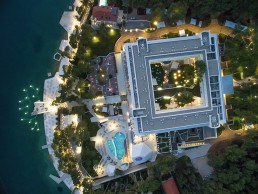
From its settled, minimalistic architecture during the day to a colourful experience at night, Box Park Dubai's many façades form a mosaic of colour created by Delta Lighting Solutions' ever-changing, dynamic lighting scheme.
Dubai Box Park, is a unique retail and F&B project that stretches around 1.5km along Al-Wasl road in Dubai, United Arab Emirates. The project has had the effect of encouraging local startups and revitalising the Al Wasl road area.
Designed by developer Meraas and the in house design team Studio M, the usage of modified and insulated shipping containers, which house many of the outlets, creates a unique impression and allows for smaller store foot prints.
Shipping containers were stacked together to form the stores and restaurants, and in many cases supplemented with concrete precast structures. The residential district in which the Box Park was built has been slowly transforming into a strong retail district, now becoming a Dubai landmark and attracting a younger, hipper client base.
Responsible for the development of the lighting scheme, international award-winning lighting design firm Delta Lighting Solutions, drew inspiration from the containers and the industrial feel of the architecture. As a consequence, theatrical lighting also had a strong role in design considerations whereby different layers of light provide depth to the project, just as stage lighting does.
“The Head of Architecture at Meraas, Zak Ayash, approached us for this project,’’ said Ziad Fattouh, Principal, Delta Lighting Solutions. “I have known him previously during the days when he worked at Foster and Partners - where he was a design partner. He informed me that they wanted to make the project a landmark and it had the direct attention of the top management of Meraas, so it was very critical to get the lighting right.’’
Delta was told to ensure that light levels on the walkways, roads and seating areas were at a sufficiently high level, and that the client wanted to create some excitement as well. The client was also interested in creating a strong visual landmark during the day and night.
Initially, the project consisted of primarily dark grey containers stacked on top of each other with very few of them painted in other colours. This was later changed with many of the containers painted in vibrant colours.
“Our inspiration for the façade lighting was to create a mosaic of colours often found in a container terminal,’’ explained Fattouh. “A lot of video projection and gobo projection was used to project imagery, faux graffiti and other effects that portrayed a certain character, drawing on inspiration from different city centres around the world.’’
Depending on the zone visitors are in, imagery and projection is in line with the character of that space. The combination of colour-changing lights, video and gobo projections and other lighting sources allowed Delta to create dynamic and entertaining façades that constantly change in mood.
“For the lighting of walkways and parking zones, we took inspiration from the I-beams seen in shipping yards and created a simple, family of poles, and painted these a storm grey similar to the containers. Some of the poles were used to mount Bega LED and metal halide light sources, which provided lighting for pedestrian and car park areas,’’ said Fattouh. Other poles were used to mount video projectors and gobo projectors. The poles worked with the theme of the project and looked to enhance its very industrial feel.
RGBW linear light sources are integrated seamlessly into the containers, creating a mosaic of colours during the night, as well as white light during off peak hours and single colour monochromes. The mutli-coloured scene seeks to recreate the image of the stacked containers in a shipping terminal, which are usually painted in various colours.
“The lighting creates various zones, each evoking the character of different industrial or retail districts within major cities: the bright lights and billboards of Broadway, New York; dotted light points adorning Harrod’s façades in London; Queen Street Toronto with its graffiti walls, neon, and tattoo parlours; and the theatre district in Paris,’’ described Eleni Savvidou, Design Director, Delta Lighting Solutions.
The unique lighting character of each zone supports way finding and also creates interest and excitement for visitors.
“In order to differentiate these zones with light alone - as the architecture remains constant - different colour palettes, along with themed gobos, projected imagery and high-resolution projections were selected for each zone,’’ Savvidou explained.
Video content and custom gobos were developed through inspiration gathered from graffiti, media screens and advertisement panel visuals that are often found above industrial areas.
Within the 'Harrods' zone, holes were bored into concrete panels to house a custom LED light fitting with a glass half sphere acting as a diffuser.
The most visually stunning and main light effect comes from the light towers, which is achieved through multiple rows of RGB linear lights, creating low resolution screens in five locations along the project. The media content developed for the light towers also helps differentiate the project into zones via the content that is displayed.
Custom poles and bollards have been developed with a very industrial feel, while faux steel I-beams with glare-free light heads illuminate sidewalks and parking zones. Sidewalk lighting provides horizontal and vertical illumination of the space, thus allowing for good facial recognition, creating a feeling of safety and comfort. Custom poles were also designed to host the gobos and 3D projectors where necessary.
When considering the lighting for the pedestrian zones, glare has been minimised through careful selection of light sources and shields, reducing angles of incidence onto the pedestrians or people dining in the F&B outlets. In addition, high colour rendering was achieved by using both metal halide and high CRI white LED light sources, while colour changing RGB LED light sources are used on the façade elevations, highlighting the architecture. Lighting uniformity along walkways is achieved through careful study of light fitting selection, pole spacing and utilisation of ambient lighting coming from other sources.
To control all the varying lighting elements, including all theatrical and architectural lighting, proved to be a challenge especially as the project was spread over several city blocks. The backbone of the light controls consists of an architectural control system, which controls the majority of the architectural light sources, including: street lights, pedestrian light poles, wall washers, tree uplights, external F&B area lighting spaces and other light sources, while acting as the master control for the other DMX controls, including the gobos, video and media controls. The system allows the lighting to create multiple scenes during the night, vibrant and dynamic scenes during regular working hours and subdued white and monochrome scenes during later hours and closing time.
Box Park is an inviting, comfortable and engaging place to visit. Residents and tourists can enjoy a fun shopping and eating experience.
“We worked directly with the client and not through a lead consultant, this allowed us to communicate ideas quickly and avoid things getting lost in translation. These two things, make for a design formula that magnifies creative thought and allows for great projects,’’ added Fattouh.
The Delta team explained how the main challenge was dealing with budget limitations that required the project to be built as designed in the concept phase but with a 40% reduction on lighting cost. “We have maintained the concept ideas but eliminated the areas of its application so that no specification changes occurred but only relocations of the effects,’’ explained Savvidou. “We were still able to use LED sources with up to 80% of the products being LED, and with careful selection of the surfaces to illuminate, minimised energy consumption to an average of 2W/sqm.’’
Another challenge the team faced was the long hours of programming. The project uses multiple light and media sources that require synchronisation as well as the project being divided into multiple themed zones, providing a further layer of complexity. For that reason, the gobo, video, and media had to be selected and uploaded by area. Gobos had to be installed on each projector on site, carefully selected to fit the surfaces and the distances focused on façade surfaces.
Delta's scheme ensures that lighting is a part of the architecture on this project. “The architectural façades are the canvas that we paint with light,’’ concluded Savidou. “Our intent was to provide visitors with an experience and a flair of an outdoor ambiance, reminding the character of industrial areas around the world, which we believe we have accomplished.’’
Pic: Florian Licht, Mohamed Medani
Bolon Eyewear, China
Utilising the properties of high-quality materials, pfarré lighting design's bespoke lighting scheme celebrates Bolon's eyewear products in a way that creates a unique visual experience for the Shanghai store's customers.
Bolon is one of the world’s largest spectacles manufacturers and China’s best-known sunglasses brand. The Bolon brand is positioned as a premium lifestyle brand in this segment, with the main advertising campaign, revolving around French actress Sophie Marceau, evoking French elegance and fashion consciousness.
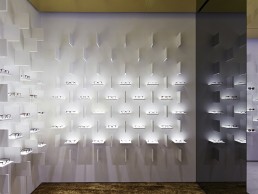
Its new store design in Shanghai, China offers a clear spatial interpretation of this attitude in a space that is barely more than 1,000sqft. Unique spatial elements that retell a narrative, such as iconographic shelves and a polished gold ceiling, vividly illustrate the brand’s realigned public image as a self-confident market leader.
The interior design centres around a clear, iconographic and instantly recognisable product presentation, created by Ippolito Fleitz Group. White square panels, set at right angles to each other, create a strict, three-dimensional grid on the presentation walls, where each pair of glasses sits on its own mini stage. The impression made by the product is further enhanced through a skilled use of directed lighting, designed by Munich's pfarré lighting design, who were recommended by Ippolito Fleitz Group and introduced to the client Xiamen Artgri Optical Co.
The pfarré team worked with no design brief and purely reacted on the display system/interior design created by Ippolito Fleitz. “We refined their design with light, presenting the products in the best possible way,’’ explained Gerd Pfarré of pfarré lighting design. “Carefully considering the general lighting and not disturbing the product presentation, we minimised the amount of fixtures in the ceiling, creating shadow, contrast and reflection where we wanted to have it.’’
Each pair of glasses is set against an illuminated background, thus highlighting the colour of the lenses. At the same time, a targeted LED spotlight is directed at the product from the vertical panel suspended immediately above it, giving it a subtle aural emphasis.
The shop space is characterised by the use of high-quality materials such as a white marble floor and black marble for the presentation cases and service desk. A leather-covered expanse of wall provides an additional focal point within the space, as well as creating a warm setting for in-depth consultations.
4,000K adjustable LED downlights create an evenly distributed glow on the white marble floors, which is then reflected on the gold ceiling. The gold-toned ceiling and carpet provide a contrast to the white backdrop of the main eyewear displays.
Initially, the panels started out with glowing edges but Pfarré and his team saw that it didn't highlight the eyewear, and thus moved the band of horizontal light to the back. They also needed to highlight the product from above, and help it shine without creating glare or shadow. Pfarré worked with the manufacturers on the shelf design to build a one-to-one mock-up and tried LEDs against a variety of shelving material, including tests with glass and samples using a translucent foil. After necessary trials, they decided to paint it in a solid white to prevent light penetration.
In order to achieve the correct balance of light levels throughout the project, selecting the correct colour temperature was very important.
“Generally, the taste in China is for a cooler colour temperature, especially in jewellery and retail,” said Pfarré. “In the end, we came up with 4,000K for the entire store, which is rather warm.” This temperature works best for both the products as well as the warm reflection generated by the gold ceiling.
The final result is a horizontal display lit by a 4W LED strip hidden behind the rear panel edge. The three visible edges are coated in a solid, high-opacity white paint. A vertical fin above uses a custom-designed 3W LED spot with a lens with an oval beam spread to further emphasise the product.
Elsewhere in the store, the free-standing vitrines are illuminated by off-the-shelf lightpads selected by the designers. They selected an evenly distributed 4,000K at approximately 200W per sqm. Adjustable 18W, 4,000K downlights with black anti-glare rings and an 8° beam spread illuminate the freestanding vitrines from above. The wall vitrines use the same off-the-shelf lightpads, except with a 6W version, and are paired with 4,000K downlights.
Pfarré explained how, in terms of integration and sensation, this project was very special. “I think we really squeezed out the potential of LED and optics - in order to create a truly minimised solution,’’ he added.
Upon reflection of the project and design process, the studio said the effect of the overall lighting scheme topped its expectations. “You think, yes, it’s a good idea, it’s feasible, all in budget and time, and then, when the lights have been turned on, there was this thrilling wow effect,’’ Pfarré concluded. “The sum of all displays together create this very special visual sensation, enhancing each pair of glasses, like in an exhibition, all together evoking this incredibly strong impact for the eye of the customer.’’
Pic: Shuhe Architectural Photography

Margaretha Stenmark
Lights in Alingsås festival started in 1999 when students from HDK, Jönköping University and Gothenburg University gathered in Alingsås to experiment with different lighting designs for public buildings. Continuing to grow year on year, the 2016 theme is ‘The Enlightenment’ concentrating on sustainability and environmental issues, as Workshop Manager Margaretha Stenmark explained.
For those not familiar with Lights in Alingsås, what is it all about?
It is an event divided in two parts; a workshop and an exhibition. The workshop is an educational part, to let students of lighting and architecture from all over the world learn more about architectural lighting in public spaces. All seven light-installations are built by these students led by experienced lighting-designers within a week. The workshop ends with a magnificent opening ceremony and the exhibition is open to the public for five weeks, with lots of activities around it.
This year’s theme focuses on sustainability – what will this involve?
We will focus on the seventeen sustainable goals compiled by UN 2015. All installations will illustrate one or some of the goals and we hope that we can enlighten visitors as to what is happening in the world and hopefully they will be inspired to do their small part to make it better.
Are you able to disclose which lighting designers will be involved?
Yes! We have Chiara Carucci from Italy; Carissa Brockway and Debra Gilmore from the US; Erik Hagström from Sweden; Ignacio Valero from Spain; Jytte Basler from Germany; Sabine De Schutter from Belgium; and Tad Trylski from the UK.
And how did they react to this year’s theme?
All the designers were very happy about the theme, it´s very current, but it’s also very hard to illustrate through illumination. The only thing I can say is, that it will be different to previous years and maybe the results will be different to observers in some cases.
Lights in Alingsås is working towards an environmental diploma as well. How is this helping to shape the event?
The event has to fulfil the basic regulations related to the environment and show that it is working with environmental issues. This influences the whole preparatory process, how we act during the workshop and the exhibition. For instance we have to consider everything that we buy, take care of what our sponsors standpoint is in this matter, transportation for all participants, waste sorting and so on.
In an intensive week before Lights in Alingsås opens to the public, the light trail is created by the international lighting designers, working with more than 60 students from all corners of the world. During the week the students will also have the chance to attend a lecture on sustainability and the environment with extra focus on global sustainability. The speakers will be Fredrik Bergman and Fredrik Wizemann (Sustainability Controllers at Alingsås Energy and responsible for ensuring that the festival receives its environmental diploma).
How important is it to educate on sustainability in terms of lighting design?
Lighting design involves a lot of respect towards sustainability, energy consumption, production of equipment, and also to consider equality and security when planning. Hopefully we can give the students some tools and new knowledge that they can use in their future work, which will contribute to achieve the three big issues over the coming fifteen years – to eradicate extreme poverty, to reduce the inequalities and injustices in the world and to solve the climate crisis...
Lights in Alingsås festival runs from 30 September to 6 November, 2016.
Thomas Mika
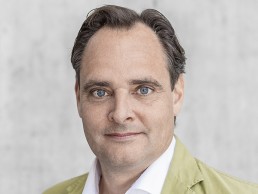
Reflexion is a leading design practice in Zurich, Switzerland. Helen Fletcher spoke with founder and lighting designer Thomas Mika to discover how this team of architects, interior designers, lighting designers and electrical engineers come together to offer a diverse mix of knowledge and capabilities.
Reflexion is a leading design practice in Zurich, Switzerland. Founded by lighting designer Thomas Mika in 2001, and now owned by Amstein Walthert Holding Group, the team of architects, interior designers, lighting designers and electrical engineers come together to offer a diverse mix of knowledge and capabilities. At Reflexion, extensive expertise and years of experience combine under one roof, with cross-divisional exchange and continuous training ensuring the practice keeps in line with the latest developments and technologies. Attaching great importance to project presentations and design workshops, the practice’s core competence is light.
With a degree in Economics, having graduated from the University of Zurich in 1995, Mika has somewhat of a unique perspective on the ‘business’ of lighting. Today, a member of the IALD and Swiss Lighting Association, it was time spent at a lighting manufacturer in order to earn some extra cash while studying, that ignited his passion for lighting. “It was never a natural progression or decision to be a lighting designer,” he tells mondo*arc, “it was a very simple start at a small company that supplied fixtures for places such as dentists, shops and other small projects – this was my first experience of working with light.
“A lot of my friends from university were heading into the banking business but this wasn’t for me, even though I had studied economics at university. I remember wondering what the value was in being a banker? If you provide a service, produce something or work in an industry then you can really say you’re contributing something to society, there’s an economic logic behind it.”
And so, Mika enlisted on Postgraduate courses in Lighting Technology and Photometry at the Technical University of Berlin; various courses at the German Institute of Applied Lighting Technology, Ludenscheid; and Digital Light Simulation, San Jose, USA.
“I was at university at a time when the world was open to anything,” continues Mika, “and honestly, my career in the industry started when I looked around and realised there was a real lack of lighting design in Switzerland. Because of my education background I am interested in both an economic and aesthetic approach – two extremes perhaps and very different perspectives – but you’ll see from my sketch book, this is what I love to do.”
For Mika, this passion for experimenting with different ideas through sketching at the initial design stage is something he is keen to instil in his growing workforce, which currently stands at 25, explaining to mondo*arc, that while 3D modelling might be involved later down the line, there always has to be a creative design stage.
“When I began to learn about the complexity of lighting it really started to intrigue me,” Mika says. “I wanted to be able to understand it and work with it. You can enter a room where you’ve placed the light in a certain position and you can feel the atmosphere, the quality of the room - the aesthetic of the room is apparent. There is so much behind lighting that it is important when working on projects to try and make sure your client understands the light and what it can do before you install it – this needs a certain capacity or vocabulary, otherwise you’ll never be able to explain the drama of light or equally, what you can produce with it, so it is imperative you have that knowledge in order to hand over the ideas and concepts.”
When Reflexion was established it was very much linked to a clear business mission from Mika, asking himself: “What do we really need?” “What is an architect asking for when it comes to lighting?”
“In the early days I was on a mission, selling my product, my brand and wouldn’t accept it when someone told me a lighting designer wasn’t needed.... But today, more and more, I respect when an architect says they don’t need a lighting designer. The more you learn about the language of light in architecture, the more you discover that it can be very simple and still very good. However, sometimes you require more and that’s when you have to be ready to emphasise all of your talent in the project, this is what makes you successful.
“If you end up trying to convince someone they need a new lighting system when they don’t, you’ll spend years getting nowhere. You have to consider the right projects – jewellery for example, it’s about getting the right light for the diamonds – once the client understands how complicated it is, it can make a huge difference to how good the items on show look, so it is about investing your knowledge in the right places.
“I think if you’re involved in a project then there is always a need for a certain amount of ambition. You have to question it, look at things in a different way and free yourself of previous ideas. Start with the task at hand and then open the field up to the design and technical elements, then make a decision and review. It is our philosophy at the practice to interact in a strategic way.”
When looking at the relationship between architects and lighting designers, it can be a mixed experience – with lighting design a fairly new industry, for Mika, the struggles he faced in the early days are not something that have entirely disappeared, as he explains: “It comes in waves… Sometimes it goes in the direction that lighting design is needed, but then there are small waves depending on the project and the architect, where you face an anti reaction against lighting designers, so there are sometimes opposite tendencies.
“So, in general, yes lighting design is becoming more and more established but sometimes we still face opposition – in terms of budgets, complexity and competition from electrical engineers. Then as well as this, you have the big lighting companies that have their own lighting design departments.”
Commenting on independent lighting designers that have since turned to work for a manufacturer, Mika continues: “Is this a trend that will continue? Yes and no... Sometimes it feels like the industry is heading in a certain direction. There was a time that the lighting industry didn’t use lighting designers so much, but this has since changed and manufacturers have realised we should work together. So everything took on a new direction… Today, they see that the job is more established and consider, well should we have them on board? It’s always an economical decision.”
Looking at some of Reflexion’s most notable projects, St Moritz indoor pool combines memorable architecture with a modern and efficient infrastructure, despite the unconventional appearence in the landscape and environment. Specifically with this project, Reflexion developed ceiling lamps that merged with the architecture and emphasised the lighting character of the building.
As part of overall renovation plans, Sacred Heart Church in Samedan saw Reflexion revise the lighting concept and optimally adapt to the interior of the Romanesque Church. The round shape of the direct / indirect luminaires connect harmoniously into the overall picture of the church. Through this project, religious, historical architecture and the latest lighting technology have been brought together and let the church shine in a new light.
Mika tells mondo*arc that when entering a project, there are many aspects that have to be taken into consideration: “If we’re working for an institutional client we have to look at the philosophy of the company and the job or the product itself. There are certain standards that come with certain businesses. Also, if you’re looking at a specific industry with set needs it is about understanding this and treating the project accordingly. How can you address them through your own perspective to give them the right light? Who is going to be using the space? What kind of people are going to be there? What are their backgrounds and their expectations of the architecture? It is about digging deep and asking these fundamental questions.”
One of the lighting practice’s most notable exterior projects is the Harbour of Lachen, Lake Zurich. The town of Lachen is 20 minutes outside of Zurich and reopened its harbour area in 2007. Reflexion was responsible for illuminating the dock and surrounding area in order to encourage the people of Lachen to dwell.
Moving forward, as a leader in the Swiss market, for the team at Reflexion it will be a case of maintaining its position while continuing to evolve as lighting designers working with new technologies, new markets and new demands from the world around them.
“The technical background of lighting has changed a lot,” concludes Mika. “Take the incandescent lamp, we had more than 100 years to develop chandeliers and so on, that work well with the lamp, however industry today has not yet learned how to handle a traditional function - such as providing light - with a new technology using existing design approaches. We have to work on a good combination between LED and lighting fixtures and there is still some work to be done. Lighting is a phenomenon that is very difficult to control.”
musson+retallick
With works that often incorporate an interactive use of light, sound or movement, musson+retallick's collaborative approach breeds ideas that use art as a driving force in the way we design public spaces.
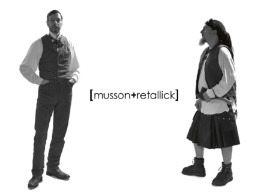
musson+retallick produce large scale artwork for architectural and exterior spaces. The studio is a collaboration between artists Neil Musson and Jono Retallick who share a desire to see artistic stories woven into architecture and public spaces to enhance a sense of belonging. Their innovative installations often incorporate an interactive use of light, sound or movement to change perception of space.
“We knew each other back in college days but lost touch for eighteen years after graduating,’’ Musson explains. “When we got back in touch, the work we were producing had similar themes and, despite our obvious differences, we found each other's company very agreeable.”
The duo are indeed different in character and were dubbed ‘The Viking and The Victorian’ while giving a CPD lecture at Jestico and Whiles. They cite their common interest as being the exploration of themes relating to journeys through time, emotion and landscape.
The work of musson+retallick is often collaborative and never repetitive, which Jono attributes to the dialogue between client and artist: “We are interested in notions of ownership and, while steering a project, we enjoy opening elements of it for debate and consider the client and the manufacturers part of our creative team”.
The studio has a wealth of experience producing artwork for both public and private sectors, including commissions for airports, hospitals, schools, galleries, hotels and events such as the 2012 Olympics. Community and shared experiences are central themes behind the artworks and several projects have resulted in the significant rebranding of the spaces in which they exist.
Retallick explains that the studio has a keen interest in the interplay between art and design: “There is an importance in creating something which answers a brief and serves a purpose whilst also having strong artistic integrity and an evolving narrative.”
The Beacons series of artworks re-evaluates the notion of the gallery by creating temporary neon fire beacons whereby the audience arrive out of curiosity rather than invitation. As dusk turns to night, visitors at the site of the beacon can see less of the landscape whilst the artwork becomes clearer to those looking from a distance.
Currently awaiting installation is a vast sculptural light installation for KAIA, the new airport in Jeddah, which will fill the departure lounge. The piece contrasts shapes abstracted from the movement of birds wings with the forms of gently drifting clouds. This installation defines the desire of musson+retallick to see their creations interwoven into the architecture of a space. Musson describes this synergy as: “The difference between art as an afterthought and art as a driving force in the way we design public spaces”. He concludes: “We are always happy to have conversations with specifiers, interior designers and architects to explore new and diverse ways of working.”
Mecanoo
Creating unorthodox designs born from a sensitivity to context and an interdisciplinary design process, the Dutch architectural practice Mecanoo finds its newest home in Manchester, UK.
Helen Fletcher discovers how Francine Houben’s ‘People, Purpose, Place’ philosophy transcends the Netherlands’ borders.
Mecanoo architecten was co-founded by Francine Houben in 1984. She has since led the firm to success in the Netherlands and abroad, amassing a portfolio of work that is wide ranging, inspired by global challenges and with a sustainable view on society. Mecanoo combines the disciplines of architecture, urban planning, interior design and landscape architecture to produce unorthodox design solutions born from a strong sensitivity to context and a highly interdisciplinary design process. Mecanoo’s projects range from single houses to complete neighbourhoods and skyscrapers, cities and polders, schools, theatres and libraries, hotels, museums and even a chapel. Some of its most notable projects include the Municipal Offices and Train Station in Delft; the Holland Open Air Museum in Arnhem; one of its latest projects, the Hilton Amsterdam Airport Schiphol hotel; the Library of Birmingham; and HOME Manchester to name just a few.
The practice is made up of highly multidisciplinary staff of over 160 creative professionals from 25 countries working in offices in the Netherlands, UK, US and Taiwan. Alongside creative director Houben, the company is led by technical director Aart Fransen and financial director Peter Haasbroek, who are joined by partners Francesco Veenstra, Ellen van der Wal, Paul Ketelaars and Dick van Gameren. Knowledge centres within the practice enable the team to stay up-to-date in technological and design innovations in sustainability, eco-engineering, technology, education and learning, high-rise and mobility. The extensive collective experience, gained over three decades, results in designs that are realised with technical expertise and great attention to detail.
Each of Mecanoo’s projects illustrate the three fundamental elements of Houben’s architectural vision: people, place, purpose. Discovering unexpected solutions for the specifics of programme and context is the foremost challenge in all of the assignments. Each design is considered in terms of its cultural setting place and time. Preoccupied not by a focus on form, but on process, consultation, context, urban scale and integrated sustainable design strategies, the practice creates culturally significant buildings with a human touch. Interweaving social, technical, playful and humane aspects together, Houben and her team form a unique solution to each assignment, embedded within its context and orchestrated specifically for the people who use it.
Houben maintains an active presence in academia and culture, regularly publishing critical works and giving lectures all over the world. She has performed in numerous academic and professional capacities throughout her career, including Chair of Architecture and Aesthetics of Mobility at Delft University of Technology; visiting professor at Harvard Graduate School of Design; and as director of the First International Architecture Biennale in Rotterdam. In March 2016, she was awarded an Honorary Doctorate from Utrecht University in the Netherlands. She has received honorary fellowships of the Royal Institute of British Architects, the American Institute of Architects and the Royal Architectural Institute of Canada. In 2014, she was elected Woman Architect of the Year by the Architects’ Journal and in November 2015, Queen Maxima of The Netherlands presented her the Prins Bernhard Cultuurfonds Prize for her wide-ranging career.
In 2011 the Mecanoo Manchester office was born – acting as a project office for HOME Arts and Culture centre, a project that in 2015 solidified Mecanoo’s position in the city of Manchester.
Headed up by Partner and Architect Francesco Veenstra alongside Associate Architect Ernst ter Horst, the Manchester office has grown significantly in the past four years and now has a strong team in place working alongside the duo. While the offices in Delft and Manchester are separated by water, they have a unified identity and thanks to the internet are in constant communication.
Having been with Mecanoo since 1995 and partner since 2007, Veenstra’s client-centred approach is underlined in the development of strong concepts that lead to both the satisfaction of the brief and the enhancement of community benefit. The strength of this is evident in the wide reception of numerous Mecanoo projects he has lead to completion, most notably the Library of Birmingham, HOME Arts and Culture centre, the Delft Municipal Offices and Train Station, and Texel Island’s Kaap Skil Maritime and Beachcombers Museum – all of which reach beyond the limitations of the site and the project to serve their communities.
Ernst ter Horst is Mecanoo Manchester’s frontman and he played an integral role in the delivery of HOME. Having worked for Ian Simpson Architects for over twelve years, he leverages a wealth of experience having worked on some of Manchester’s most significant construction projects over the last fifteen years. Born in the Netherlands, raised in Portugal and now living in Manchester, Ter Horst lends a rich cross-cultural background to the Manchester team, including his own experience as a student at The University of Manchester, where he graduated with distinction in 2003.
For Veenstra, what makes Mecanoo stand out from the crowd is its design philosophy, telling mondo*arc: “Some architectural practices have a very distinct separation between the various design disciplines, but we believe it’s a necessity to cross borders. Depending on the needs of a project, one or two partners lead a multidisciplinary team, ensuring cohesion in the work. There are no strict boundaries between architecture and design or way-finding or software engineering and so we always try to bring all the elements together and stitch them in – creating one holistic design.”
As part of this holistic approach, Mecanoo appreciates the relationship between architecture and lighting, with both daylight and artificial lighting being very important factors in the company’s philosophy and design methodology, as Veenstra and Ter Horst explain.
“The architectural design stage is very much dependent on lighting,” says Veenstra, “changes in light, changes the space.”
Using HOME as a reference, Veenstra continues: “if you look at the restaurant space (at HOME) which - together with Concrete architectural practice - we developed a lighting concept for, the luminaires are 3m above floor level, meaning the light almost becomes a second ceiling in the space. The use of artificial light really helps to create space and focus when needed. Artificial lighting is of great importance in our designs and ideally should be part of the very early design process.”
“We love light, it’s fundamental,” adds Ter Horst. “Working with daylight is a wonderful thing to be able to do. From a sunlight perspective on a larger scale, we’re always looking back at the design to maximise natural light into the project, landscape or the building and enhance this wherever we can.
“When you get to the medium level of design, you’re looking at how windows, roof lights or atriums can be designed to flood the building with daylight. You have to consider how the light is being used and how it is supplemented, asking questions such as ‘how can the details of the window frames be enhanced so even more daylight comes in, or is reflected, or is bounced around’. A micro level of this is the artificial lighting.
“The whole southern elevation at HOME is highly glazed to get as much daylight into the scheme as well as views out. We had to battle against solar shading and solar gains to prevent the building from overheating. Using fins helps to mitigate excessive solar gain but also, their orientation is such that you can still see outside,” continues Ter Horst. “I’ve been at HOME on warm days and have been surprised at how pleasant the temperature is. We’ve got the thermal mass of the concrete and lots of daylight flooding in, yet it feels absolutely fine which is really remarkable.”
“We worked with BuroHappold on the lighting at HOME, as well as other designers,” continues Ter Horst. “This helps keep the ideas fresh and new. This can be considered a trait of Mecanoo - working collaboratively with lots of other disciplines, not just lighting designers.
“Often there will be someone working on the project that approaches the lighting with a fresh pair of eyes and from a different angle - this makes you think differently about it and can make the project even better. Working with lighting designers is key as it can be really beneficial in specifying the right light fittings for reducing energy use, while getting the right quality of light.
“Francine’s view on lighting is very strong - the warmth of light you get at HOME is really key to her. In the Library of Birmingham for instance the large entrance space with the café is a wonderfully impressive environment, but a slight light adjustment in terms of warmth and tones could define the café in a better way. This is an example of where lighting designers can really enhance that level of specification and get the right feel in a space.”
Veenstra adds to this telling mondo*arc: “I think that up until about ten years ago we underestimated the importance of lighting design, the focus was more on daylight and artificial lighting was very much about choosing the right luminaire in the sense of aesthetics rather than performance.”
“This has radically changed since we started to work on larger scale projects,” says Veenstra. “It has become more obvious that we need to work with a lighting designer. Performance has become increasingly important, not only from a sustainability aspect but from a building management and healthy environment point of views. I think from that moment on, even on the smaller projects, having lighting designers on board became a real contribution to the Mecanoo team.”
Commenting on what lighting should bring to a project, Ter Horst again references HOME: “Lighting brings a great deal to a project. Take the HOME lighting sign for example that is suspended from the restaurant’s ceiling. We worked with a signage designer for this and it creates a different sense of scale inside and a distinct identity for the building.”
“We didn’t want to just stick a sign on the front of the building and neither did the client. We wanted to be restrained and subtle in our approach and this is one way we achieved this. The sign provides an identity for the project as well as creating an intimate sense of scale in the tall restaurant space.
“Intimacy, identity and warmth are unquantifiable. Lighting provides points of interest and gradation.”
Where as some architectural practices might come to the table with a fixed plan of what they want to do, this is where Mecanoo differs, preferring to present a less formal, structured idea so that it doesn’t become unworkable further down the line if it doesn’t fit the intended space. Instead of being form-based, each project is informed through open dialogue – all very diverse but all the while using Houben’s principle of ‘People, Place, Purporse’ to create unforgettable spaces.
Looking ahead, with the Manchester office now firmly established in the city, could the next step be London, something that would be considered an obvious move to some? “We do have projects running in the London area,” says Veenstra. “We’re currently working on the construction phase of a residential project in Cambridge, as well as a large-scale residential project in London for Peabody Trust. It’s a huge scale project, which requires a very local presence and as such, we are indeed planning a London office.
“Our main focus will remain on the projects we currently have, delivering what we’re supposed to – high quality architecture,” concludes Veenstra. “We manage to be a successful partner during the construction phase as well and this is something we want to build on to improve the architectural quality in the UK.”
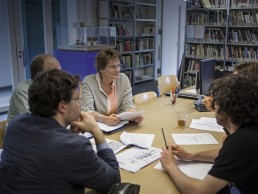
Pic: Harry Cock - Francine Houben with Mecanoo colleagues.
Light Collective
Light Collective are a bit of an enigma. Deliberately so. When they started out six years ago they thought it best to be cagey as they hadn't quite worked out what they planned to do - they always knew what they didn't want to do but that’s another story.
Light Collective consists of Sharon Stammers and Martin Lupton and is based in the UK, but their unique philosophy has seen them travel to most corners of the globe. Referred to variously as the ‘Daft Punk of Lighting’, ‘Light Collectors’, ‘Light Evangelists’ and (less flatteringly) ‘the Kirstie and Phil of lighting’, it’s hard to pin down how the practice works but work it does, as the pair pop up in the most unlikely of places, initiating the most unusual of projects.
However, in their own words, they still undertake some conventional lighting design: “When we set up Light Collective, we decided that we would continue to undertake architectural lighting design projects but that we wouldn't publicise them. After fifteen years talking about architectural lighting, we wanted to ensure the other stories we had to tell took precedence.”
Despite a secret portfolio of design work that spans private houses, shopping centres and hotels in the Middle East, Light Collective are much happier to talk about projects that see them providing opportunities for their peers or spreading the word about light in the wider design community and amongst the general public.
“When we set up Light Collective we took a deliberate decision not to work in the way other lighting consultancies work. We wanted our company to give us opportunities to collaborate with other designers and friends around the world. We looked at the conventional model for a lighting practice with its typical pyramidical hierarchy and decided to do the opposite. We decided not to have an office and not to expand. People said it would never work... but six years on there are still just the two of us, working wherever we travel.”
The kind of projects that unite the lighting community are ones where Light Collective create an opportunity for other designers to showcase their work and create a platform for the lighting industry to talk about light not just to peers but to the wider world, something that is often lacking. One Beam of Light was a photography competition that allowed 350 designers to be involved, resulting in a public exhibition at the ICA, London and Play of Brilliants was an exhibition in Paris that presented thirteen pieces of light art in a three month show. “Curation and initiation of ideas of this type allow us to present the work of others and show the public that what we know about light as a professional community is worth sharing.”
Light Collective are also big on community engagement and have produced projects where the general public help present a project based on light. This style of working has led to guerrilla events all over the world and the sort of interventions that have engaged 1,000 passers-by in New Zealand or 250 students with mirrors in Singapore. Education about light is a key to the Light Collective philosophy.
Light Collective could also be considered to be an underground consultancy as they are often content to quietly be the team behind an idea. Their logo can be seen subtly gracing many an event and going unnoticed by attendees. Maybe you attended the balloon party in Madrid, paint throwing in Copenhagen or one of their secret colour dinners around the world?
Light Collective are also long standing collaborators of mondo*arc and have curated the back page since 2010, a seven year stint that has created an opportunity for designers all over the world to present their inspiration to readers of the magazine. Their current collaboration is the darc awards with Light Collective as creative consultants to the event. The second round of the awards is in September and attendees can look forward to an even bigger and better event. “The darc awards meets the Light Collective collaborative agenda. It has turned the award format on its head and allowed us to put together a truly creative event that reflects the creativity of our industry. We have been able to involve the talents of many of our contemporaries in order to make this happen. Vote online to ensure you get a ticket.”
If you want to see more of Light Collective in action, check out their new YouTube channel. Its a home for all the films that they have taken on their travels over the last six years and includes videos about light in art, light in architecture, social light, guerrilla light, light events, light and people, daylight, sunlight and any other cool things to do with light that they come across. “Someone once referred to us as Light Collectors and we have been trying to live up to the description ever since. Light Collective TV is our opportunity to share what we have been doing and what we have seen. There are new uploads on Tuesdays and Fridays. We would love it if you would subscribe and share.”
New Minimise agreement brings OMS LEDs to UK
(UK) - Bringing full OMS product range to Minimise's UK clients, distribution deal opens doors to new markets and strengthens OMS's global reputation.
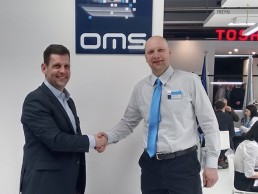
Minimise Energy has signed a UK distribution agreement with OMS, one of Europe's technologically advanced lighting manufacturers.
The deal will bring OMS lighting products to the UK, making the full range available nationwide from a single source. This will give architects, engineering consultants, contractors and lighting specifiers access to a progressive range of LED luminaires and lighting controls for both internal and external applications.
The distribution deal with OMS will significantly increase Minimise's lighting product offer. To reflect this growth, OMS lighting products and controls will be delivered through Minimise Energy Lighting Technologies and will benefit from the in-house lighting expertise, design and technical support available from within the broader Minimise Energy offering.
OMS products already have a strong presence in other European markets, in particular in France and Germany, where they are acclaimed for their combination of outstanding aesthetics, performance, efficiency and ease of custom design. They will now form Minimise Energy Lighting Technologies' core product range.
Manufactured to the highest technical specifications, and offering outstanding levels of efficiency, performance and reliability, the range includes:
- Ceiling recessed lighting
- Surfaced and suspended lighting
- Downlights and spotlights
- Track system lighting
- High Bay lights
- Wall mounted lighting
- Lighting controls
- Floodlights
- Street and residential lighting
- Emergency lighting
All products are available in a range of styles and finishes as standard, can be customised to individual requirements for a fully bespoke lighting design solution, and are stringently tested to ISO 9001 standards.
Commenting on the agreement with OMS, Sam Stageman, Sales Director for Minimise Energy, said: “We're excited to bring the full OMS product range to the UK. Since establishing in 1995, OMS has built a dynamic and innovative range which provides specifiers with an unsurpassed portfolio of quality lighting products to choose from. Combining both performance and style, the range is ideally suited to retail, commercial and industrial applications and we expect them to be extremely popular. This really elevates and widens the spectrum of Minimise Energy Lighting Technologies' proposition.’’
Commenting on behalf of OMS, Martin Sakmár, Sales Director, said: “We are very pleased that we have entered into a contract with Minimise Energy Lighting Technologies. We believe this will help us increase our reach within the UK market.
“We were impressed with Minimise Energy's high level of technical capability, detailed knowledge of market needs and competition, as well as their growing potential in the UK lighting market.
“We are thoroughly convinced that this partnership will bring highly effective lighting fixtures to Minimise Energy's clients, opening doors to new lighting and design markets, and strengthening OMS Lighting's global reputation as a manufacturer of high quality lighting fixtures.
“I truly believe that with Minimise Energy we will be able to create a successful and buoyant UK market, similar to those achieved in France and Germany.’’
www.minimisegroup.com
www.omslighting.com
iGuzzini expands Doha team
(Qatar) - As part of iGuzzini's continuous Middle East expansion, Steven Faulkner brings over 20 years experience to Business Development Manager role.
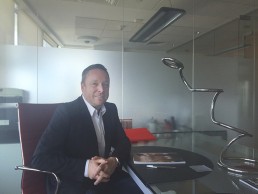
iGuzzini has announced the latest addition to the team for its operations in Doha, Qatar. Steven Faulkner, based in the region since 2005, has been recently appointed as Business Development Manager and will bring his experience of over 20 years in the world of sales and business development to support the clients on current and future projects and to help the business growing in the country.
The new acquisition is part of the long-standing and continuous iGuzzini’s commitment towards the Middle East and will be instrumental in ensuring all the specification clients and partners’ needs are fully and adequately met, significantly contributing to enable a stronger relationship with the key actors in the industry in Qatar.
Richard Homes, Regional Director at iGuzzini Middle East commented: “We are delighted that someone with Steven’s credibility, skills and experience will be joining our team. We are convinced it will be a fantastic asset and we look forward to welcoming in in Qatar.”
The latest recruit comes at a very exciting time, as the company’s operations in the Middle East continue to expand and build on its success. Since the opening of the Middle East’s branch in 2008, iGuzzini boasts a solid presence in the region.
The recent opening of the branch in Qatar, along with the establishment of a local management in Saudi Arabia and the recent acquisition of additional key markets in Eurasia and Africa, is part of the company’s strategy of internationalisation to secure a strong and significant presence in high growth areas and provide a full range of pre and post sales services from projects’ conception to completion.
iGuzzini opens Lyon office
(France) - Joining 25-year-old Paris subsidiary, iGuzzini's Lyon office offers place for meetings, networking and training dedicated to lighting community.
Italy-based lighting manufacturer iGuzzini has announced the opening of its new offices in Lyon, France.
When we talk about the city of Lyon, we inherently talk about light. Light is celebrated in this city as a regular occurrence, not only during the famous Festival of Lights held every year in the beginning of December. This event brings together millions of international visitors, enlivening the culture and beauty of the city.
The lighting community (lighting designers, architects, professionals and students) gets together in this city, and that is the reason why Lyon has become iGuzzini’s second home in France, joining the 25-year-old Paris subsidiary.
Choosing the location was easy. The nearby area of Croix Rousse is home to many lighting professionals, so iGuzzini found the ideal environment for its new venue in Place des Terreaux, a historic building, very accessible and close to the City Hall.
In Paris, iGuzzini offers a fully-equipped showroom located in close proximity to the Bastille. In Lyon, the company adds a place for meetings, networking, working and training dedicated to the lighting community that is large and active in this city.
The new offices occupy three levels. On one of the floors there is a dark room dedicated to light in all its forms: workshops and experiences, discovery and handling of the products that made iGuzzini successful. The main floor, serving as a meeting and greeting area, expands into a magnificent terrace overlooking the square, and offering stunning views of the Capital of Lights. Finally, the top floor houses the offices of the technical sales team that will support specifiers with their lighting projects.
The Rhone-Alpes region has always been a priority in the development of iGuzzini France. Several local distribution partners have been supporting iGuzzini's efforts to make this happen for a long time.
Numerous projects have been completed in this area, including the Museum of Fine Arts, whose entrance is located in the Place des Terreaux.
This is an additional building block for the actors of the world of light: lighting designers, architects, interior designers, urban planners, landscape architects, design offices, students, etc.
