
Filix Arpool

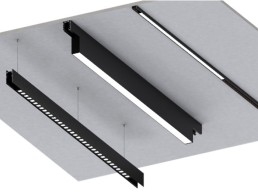
The Arpool Iris family of IP68 underwater adjustable luminaries brings a revolution in pool and water feature lighting design. With a 360° rotation and 20° tilt, the penetration of light through water goes beyond the optical capabilities. Multi-zoning, covering dark sports and creating depth illusions are easily achieved with vertical and horizontal installation. With a single IP68 connection feed, easy maintenance and replacement of engines is possible without removal from water.

www.filixlighting.com


LightGraphix Compact Downlights

LightGraphix has launched four new downlights - LD780, LD782, LD790, and LD792 - with single colour, 2-tone, fixed and adjustable options, rated IP65 for interior, exterior and marine applications. Bezel diameters start at 46mm, achieving an excellent size to output ratio delivering over 400lm. Colour temperatures range between 2200K-5000K and beam angles include several medium and a super tight 10° narrow. A single deep recessed optic ensures ultra-low glare, superior beam shape and no multiple shadows. 

www.lightgraphix.co.uk


Hacel Aart

The new Aart Power Spot range by Hacel combines a contemporary style and minimalistic design with powerful performance and functionality. Featuring an adjustable beam in midi and micro sizes, the Aart is ideally suited to retail and spotlighting applications.

Available in a choice of lumen outputs, delivering up to 3845lms, it features adjustable beam widths (10° 20° 35° 50° 60°) and tilt adjustment 0° to 90°.

www.hacel.co.uk


ELR Coin 24CV Recessed/Surface

Coin 24CV Recessed and Coin 24CV Surface puck lights are LED module hybrid luminaires derived from ELR’s Coin-24CV low height LED module, operating on 24V DC constant voltage that allows multiple luminaires to be driven by a single non-dim or phase/0-10V/DALI/DMX dimmable driver. These puck lights are equipped with built-in ATePSTM technology that protects LED lifetime against abnormally high temperature conditions and comes in ProART CRI~95, are especially suitable for applications within display shelves, kitchen cabinets, countertops, etc.

www.elr-group.com


CLS Ruby Series

With the introduction of the new Ruby Compact series and many new variants of the larger Ruby, CLS offers an incredibly wide and deep portfolio of surface mounted and suspended fixtures. No less than 40 different lighting sources are available including RGBW, RGBA, Tunable White and Dim To Warm versions. Control options are DALI, DMX 512, Wireless DMX and Casambi Bluetooth. The Ruby series are furthermore available in four different power and four different mounting versions. 

www.cls-led.com


Unilamp Micro Alpha/Kubik

The Micro Alpha and Micro Kubik are compact in size and provide an unobtrusive lighting solution that will enhance any exterior setting’s beauty.

Colour temperature choices include 2700K, 3000K and 4000K with narrow beam, medium beam, wide beam and elliptical beam distributions.

An earth spike and tree strap are available as standard accessories. With public safety always in mind, the Micro series operates with low voltage.  

www.unilamp.co.th


Parkroyal Collection, Marina Bay, Singapore

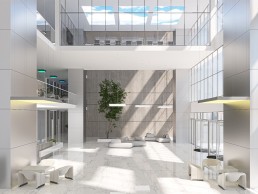
At Singapore’s Parkroyal Collection Marina Bay, Light Collab has used light to breathe new life into the vast atrium space, creating an energising space both for guests, and for the abundant plant life.

The recently-renovated Parkroyal Collection, Marina Bay (formerly known as Marina Mandarin) in Singapore has seen the remaking of neo-futurist architect John Portman’s spectacular hotel. Originally built in 1987, the existing hotel has been transformed, with its vast atrium now filled with plant life and vibrant light, thanks to a new lighting scheme designed by Light Collab.

On entering the hotel, guests are greeted by an abundance of lush greenery, most notably a 13-metre green wall, and cascading planters that create a scenic, 180º view of a forest. The journey into the hotel also includes entering a glass lift and, on reaching the fourth storey, crossing a gently lit bridge, flanked by more greenery, to the reception desk.

Light Collab became involved in this re-lighting project after the client recognised the need for a lighting designer, due to the complexity of lighting up the newly introduced greenery in a space with little natural light, along with the new interior design scheme.

The challenge for Yah Li Toh, Principal of Light Collab, was to introduce layers of light into the impressive atrium space, working with limited existing lighting points, integrating the new and old elements, as well as effectively illuminating the trees and planting scheme with healthy, biophilic light.

While grow lights are definitely needed to support the growth of the garden, achieving certain technical requirements of photosynthetic active radiation levels, the general concern was how the exposed grow lights would co-exist with the general lighting and impact on the desired ambience for the hotel.

Toh explained further: “The architect had a vision of bringing the garden indoors, so we did a site study and measured the amount of daylight and PPFD (Photosynthetic Photon Flux Density) available at different times of the day, and unfortunately we realised that there was little PPFD that would be able to sustain the life of the plants and trees – the PPFD measured as little as 2-6 µmols/sqm on average in the proposed plant positions, while the botanist recommended levels of a minimum of 150-200 µmols/sqm, after conditioning the plants to require less daylight, in comparison to outdoor conditions of more than 1,000 µmols/sqm. There was also a limited time of exposure to daylight too.

“Although in Singapore, there are examples of green walls with plants and ferns being lit by grow lights, this is the first time that trees were planted in an atrium with very little daylight - as little as 2 µmols/sqm - and where the plants would be very visible to hotel guests from all angles at all times. The higher the output of PPDF, the higher the light intensity naturally. This meant that we needed a strong concept to work with the grow lights – they needed to have very controlled optics, with optimum PPFD output so as not to ruin the ambience of the hotel, focused enough to optimise growth on the trees and shrubs, and also co-exist well, look good, natural, and not give out the purple hue commonly seen in grow lights. We also studied and tested many brands of grow lights available, and the cost and performance differs greatly.”

The overall lighting concept was to enhance and complement the built form with the soft forms of nature. To do this, Light Collab therefore sought to use very controlled optics, the highest PPDF per watt, high R9, colour rendering and tunable white solution of the grow lights; by keeping the colour temperature at 3800K during the day, it creates the feeling of being in a forest in daytime, while in the evening, the temperature reduces down to 3100K, transforming the space into an atmospheric gardenscape. Lighting levels change throughout the day, responding to the natural lighting environment and the needs of the greenery. The grow lights also double up to form part of the overall scenes and ambience of the atrium, which was originally too dark before the renovation, while also supporting plant growth.

Complementing the grow lighting for the plant life, Light Collab also developed the interior architectural lighting for the common spaces of the hotel. This has been designed to enhance and highlight the ambience of the space, as well as elements of the interior architectural features, to create more focus and emphasis on the gardenscape. Light Collab’s lighting design incorporated the overall lighting in the reception, atrium space, as well as the landscape lighting. Lighting in the dining areas was also designed at ambient levels, allowing the greenery to take centre stage.

The key architectural considerations for the new lighting, Toh explained, were to “respect John Portman’s original architecture, and the new interior elements, features by FDAT Architects and the landscape content by Ramboll Studio Dreiseitl”. 

Respecting the original architecture meant, for Toh, working around the huge, curving atrium space. Illuminating this vast space proved to be a challenge, but it was one that she relished. “In addition to the complexity of the 360-degree view, the growlights and plants, the upper guestroom corridors still had the original lighting strategy, which was implemented in 1987,” she said. “Some of the features were retained, such as the corridor lighting, which was kept darker so as to not gain too much attention. But the form of the atrium also posed challenges for light mounting options. It was interesting to try and work with the new elements, while respecting and balancing the existing elements.

“For the rest of the hotel, we also tried to balance the focus and bring attention to the atrium and the gardenscape,” she continued. “For example, in the all-day-dining restaurant, there were also special interior design features, but it was also about the view and the connection into the atrium. The interior design heavily used mirrors, reflective materials and curves, which all required careful integration.”

Throughout the project, Light Collab worked closely with the interior designers, along with the rest of the design team, to ensure that the lighting became synonymous with the wider design scheme. “For certain features, the other design consultants had an idea of how it should be lit, but it mostly required a vision to tie the concept together. There was a constant communication back and forth, and we hoped to be able to bring new perspectives to the space that the interior designers may not have thought about.”

Hanging in the centre of the atrium, suspended high above the plentiful plant life, is Orchidea, a sculpture created by American artist Richard Lippold. This sculpture was not previously lit with much consideration, instead just illuminated with some floodlights that had been in place since the 80s. Toh sought to use light as a means to breathe new life into the sculpture and make it the key focal point of the space. “We tried to bring new perspectives on how light can interact and bring life to the sculpture,” she explained. “Being metallic, it presented opportunities to create a shimmering effect.

“We used four narrow beam spotlights to highlight the sculpture, so that when the metallic parts move, they also create an interesting shimmer. We were limited though by the available positions to place fittings in the atrium without being too obtrusive and glaring to the hotel guests from various viewing points.”

In bringing new light to the Orchidea, Toh was presented with the opportunity to transform the sculpture into an integral feature of a light art show, interacting with its metallic forms and bringing extra life to the atrium each evening. The show, which runs hourly from 7-9pm, sees the atrium shift from a gardenscape into a futuristic space of light and sound, bringing out the artistic playfulness of the architectural elements within the atrium space.

The two-and-a-half-minute show has been designed to engage onsite volumes and planes with the Orchidea, enhancing the interaction of light and space with the suspended wires and geometric forms soaring through the atrium and engaging the space as a whole, further bringing out the mood of euphoric futurism and spiritual aspiration.

The combination of the artistic lighting for the Orchidea and the grow lighting for the plant life meant that this was a unique project for Light Collab, with a wide variety of challenges and hurdles that needed to be overcome. However, Toh explained that, with the support of an understanding client, they were able to comfortably overcome these challenges.

“It is the first project that we have completed where grow lights are used on trees in an interior space where there is not much daylight. The challenges are different, as we had to use artificial light to try and ensure the survival of the plants and trees, so my team and I felt a huge responsibility for this,” Toh explained.

“When we first conceived the idea of the various scenes in the atrium changing throughout the day, transforming from a “forest” to a “garden”, we also went further and looked at how we can possibly bring together all the elements in the atrium, together with the setting, the greenery, and the Orchidea sculpture, how we can transform the atrium with special scenes so that in this interior space, there is opportunity for variety, and things to happen. This is even more important, since there is no view out from the enclosed atrium, except for the skylight. Thus we felt it was important to create changes in scenes, to break the monotony at intervals. The client was very supportive with all of our ideas, allowing them to become reality.”

Since the project was completed last year, Toh has seen a swell of positive reaction to the new lighting within the hotel and how it serves to complement the overall space. She said: “We were excited and curious to see how people would react. Overall, we were delighted to see people taking photos and posting on social media, saying that it looks great at every angle, without having to add filters.

“We also noticed that people would come out of their guestrooms, and restaurant-goers would come in to see the Orchidea light show. Guests in the atrium would start becoming curious about the transformation happening.

“Lighting has brought life to the atrium for the people, while also doubling up as survival for the greenery – it is the perfect bridge for both people and plant life.”

www.lightcollab.com


Naera Hotel, Spa & Art Gallery, China

Merging art and light to create a beautiful feeling of escapism, Klaasen Lighting Design has helped to turn the Naera Hotel, Spa & Art Gallery in Xitang, China into a picturesque, relaxing retreat.

Born out of a passion for art, organic farming and international luxury travel, the newly-opened Naera Hotel, Spa and Art Gallery in Xitang, China, has been designed with rest and relaxation in mind. The resort, situated just over an hour’s drive from Shanghai, is the realisation of the childhood dream of owner and developer, Zhu Shu Lei of Xitang Zhidi Cultural Development, who, after failing to find an international operator brand that shared the same views and vision for his hotel concept, decided to create his own brand.

The resulting Naera Hotel is part of a wider redevelopment of East Xitang, and has been created to reflect his desire to provide a retreat based on top quality service, spa and wellness treatments, mixed with the beauty of art and the nourishment of organic farm food; around 2,000 different teas have been selected to be made available to guests, providing a different selection of teas in rooms each day.

A destination for escapism, from the moment guests arrive, they are transported into a different world. The drop off point is screened off from the busy main road by a dramatically illuminated wall, and guests enter through a “landscape portal”. From here, they travel through a meandering, uplit screen maze that leads to the reception. The deliberate maze walk is intended to wind people down on the way, centring their minds and spirit in calmness. Art works are also located along this walkway, and throughout the hotel, giving each journey a sense of exploration and discovery. 

The Naera Hotel, Spa and Art Gallery has been designed by Shanghai architects Leeko Studio to reflect a typical Chinese garden, with all public spaces located around a central courtyard. Lighting for the resort was designed by Martin Klaasen and Grace Eng of Klaasen Lighting Design, with the intention of being the “glue” that reinforces and brings out the uniqueness of both the architectural design, and the interior design of Horizonal Space Design’s Ju Bin, while also adding to the sense of exploration, showcasing the artwork and creating a peaceful feeling of calmness in the Chinese garden. Throughout the resort, Klaasen and Eng utilised warm colour tones, concealed lighting and controlled light levels, with accent lighting to highlight artworks, in a scheme that adds to the experience for visitors.

“We didn’t have a specific lighting brief, but our approach was implicitly based on my prior collaboration with the interior designer, who loves our approach of concealed lighting, focused accents and controlled lighting levels, bringing into value the key features of the overall architectural and interior design,” explained Klaasen. “Our design style and understanding of the lead consultant’s design philosophy was key.”

The prior relationship that Klaasen shared with both the architect and interior designer Ju Bin is something that he feels helped throughout the process, as there was an immediate, implicit understanding between their goals and ambitions for the project. “When Ju Bin was approached for this project, he insisted to the client that he wanted us to be appointed as part of the team as well,” Klaasen continued.

“The close collaboration that we had was key to the success of this project, but more than that, it was the mutual trust and respect, and the ensuing friendship between the owner and his consultants that created the base for the success. When each expertise is valued, respect and understanding is shown for each other, the results generally surpass expectations, as was the case in this project. It also makes the collaboration a joy and motivates each member of the team to put in the extra mile.”

The harmonious relationship that Klaasen has with Ju Bin helped to create a space in which the lighting is seamlessly integrated within the wider architectural and interior design. Light serves as a tool to enhance the interiors and bring extra focus on the smaller details within each area, whether this is one of the art exhibits on display, or the materials used by the interior design team. 

“Lighting is often called the glue that gels everything together, so the identity is created by the architect and interior designer, mostly. The lighting designer’s role is to create the appropriate lighting effects, moods, accentuation and dynamics that reinforce this,” Klaasen continued.

This is particularly evident in the entrance walkway, where the lighting is kept very minimal – there is no signage or downlighting, light is only used to illuminate the panelling that lines the corridor, with additional spots on the pieces of artwork on display. This minimalistic approach is something that was key to Klaasen’s lighting design, adding to the sense of intrigue and discovery for guests. “It was a deliberate choice, and one that came after close consultation with the design team and the owners to make sure that we were all on the same page,” he said. “As a general rule, lighting should have a supporting role, not a dominant or overpowering role. It’s about the space, and the experience of the space, not about the lighting itself.

“The intrigue and exploration of what the hotel has to offer is brought to life by the lighting, and by carefully choosing the lighting effect, the angles of impact and the moment of visibility as you move around. As the guest journeys around the hotel, the task of the lighting designer is to reveal the spaces, their architectural features, and art as a visual experience. It is planned, and it is timed.”

On practically every corner of every area throughout the resort, there are pieces of artwork – from guest rooms to the corridors, restaurants and even the washrooms. Klaasen Lighting Design therefore added focused spots of light to showcase each individual piece. However, this was not without its challenges, as Klaasen explained that going into the project, they didn’t realise quite how much artwork there would be. “We always knew that there would be art and artworks, but we never knew to what extent, how big, what shape, what size,” he said. “It was only in the last few months before the opening that we started to get a feel for what this fantastic art was going to be.

“We had to challenge ourselves to find solutions, because we had provisional lighting put in place, but it was without really knowing what was going to be put where, and I think even the artist only decided on some of the artworks once he was here. That meant that the infrastructure for lighting was there, but it was not perfect. We had to improvise along the way to bring in some additional lighting, move some lighting, maybe add in some conversion lenses or spread lenses – find ways to adapt to the situation that we had with the lighting that was already in place.”

The willingness and ability to adapt is something that proved beneficial for the entire design team throughout the project, as Klaasen explained that there were some instances where the interior designers would have suggestions for the lighting, while conversely, on other occasions, Klaasen posed alternatives for the interior design that would allow lighting to be better integrated.

Such examples can be found in the cove lighting, which required several adjustments to get just right, and in the recessed step lighting as well. However, despite these various challenges, Klaasen believes the strong sense of communication helped them through: “Like in all projects, your design is as good as the end result, so communication, supervision and site assistance to the contractors implementing your design are crucial to its success. Explaining and educating all parties involved in the realisation of your lighting design of the installation requirements and the intended lighting effects to be achieved is crucial.

“The challenges become even bigger if there are language barriers, but luckily our team was able to communicate our design intents in detail, and supervised to see the intended effects achieved.”

The desire to create a sense of wonder and discovery through lighting extended to the outside areas of the resort as well. The hotel is built around a central courtyard; inspired by typical Chinese gardens, this courtyard consists of a large body of water, punctuated with islands of trees and a central pavilion. The lighting here sought to utilise the reflections of the water to create a magical feeling of peace and calm.

This feeling was enhanced by the deliberate decision by Klaasen to avoid using any façade lighting on the hotel’s exterior. Instead, light emanates from within the building, where people are seen as silhouettes moving through the connecting corridors and walkways – it was a design decision that transforms the courtyard completely after dark. “During the day, the natural light lights up the building, you can see the architecture, you wonder what’s inside. After dark, it’s exactly the opposite,” he explained. “At night, the effects are practically reversed, with light radiating out from the interiors.”

This design decision meant that the lighting designers had to work hard to ensure that all outward facing areas had balanced lighting, with brightness kept at a level so that overall, it looked consistent and uniform – a difficult task when these areas, including the restaurant, bar, tea house, lobby and library, all had different lighting requirements. This was achieved though, through clever positioning of the lights and carefully managed dimming levels.

Because of the enclosed nature of the central courtyard, Klaasen had the opportunity to use the outward facing areas as elements in a special, colourful light show that can be viewed from all around the hotel. Playing at the top of each hour, sometimes with increased frequency, the show consists of carefully selected colours that slowly move or change. The play of colours has been designed to be non-intrusive, so that it does not interfere with the normal operations or public activities of the hotel, but instead creates a relaxing experience for guests to enjoy.

Since the hotel was completed, it has received a great deal of praise, from the staff at the resort who claim that the lighting design is some of the best that they have seen, to the interior designers who feel that Klaasen has truly captured the “Oriental” style of lighting. The client has also said that the lighting adds the “finishing touch to the hotel”, and Klaasen believes that the approach of the client was integral to the success of the project. “An understanding and respectful client that validates and trusts your expertise, mixed with a great vision and understanding of design and the design process, made a great difference,” he said.

“As a designer, a happy client is all you can wish for. It means you have more than satisfied their expectation, you validated their trust in you. If, as part of that, you also feel \you have fulfilled all your own design visions and expectations, you have realised a project close to perfection, something that does not happen often.”

He concluded: “The great collaboration, respect and understanding between the client and the design team has created a result beyond everyone’s expectation, myself included. It seamlessly integrates lighting, architecture, interiors and landscape as one overall experience.”

www.kldesign.co


Crown Sydney, Australia

The newly opened Crown Sydney is the latest landmark on the Australian city’s iconic harbour. Lighting design from both FPOV and NDYLIGHT help bring this landmark to life.

Opened at the end of 2020, the towering Crown Sydney resort is a marvel of modern design that brings bespoke luxury to the heart of the city’s harbour. 

Located in Barangaroo, Crown Sydney brings together a luxury hotel, apartments, restaurants, spa, retail and gaming under one roof in a new, world-class venue.

Designed by Wilkinson Eyre architects, Crown Sydney has been constructed not just to frame the views of Sydney Harbour’s icons, but to stand alongside them as a defining landmark of the city. The concept takes its inspiration from nature; composed of an elegant, curved geometry, the tower’s form is reminiscent of three petals that intertwine together towards the sky, and its sculptural shape maximises the opportunity for accommodation to make the most of the views of Sydney’s famous bridge and harbour.

Standing at 271.3-metres tall and spanning 72 storeys, it is the city’s tallest inhabited building, with only Sydney Tower, an observation tower, reaching higher at 305-metres. The curving geometry of the tower was derived using parametric 3D modelling and accommodates a 60º twist in the outer skin, with helical columns on the perimeter while maintaining a vertical core structure.

The curving façade is accentuated further by a series of tall, slender, curved elements pinned as an overlay to the glass and solid structure behind, known as ‘The Veil’. The original architectural concept for the resort included a lighting concept study, prepared by Speirs Major, that addressed intentions for the Veil façade at the lower levels of the development.

Having previously worked successfully with Speirs Major, lighting design studio NDYLIGHT was appointed by Crown Sydney to execute the design in 2015, a commission that not only included the Veil, but also guiding the whole authority lighting approvals process for the exterior lighting, which included aviation obstacle lighting and bringing together input from other consultants on external deck and signage elements to present authorities with consolidated approvals documents.

Steve Brown, Director of NDYLIGHT, explained further: “Not only did the Veil have to look great, but the lighting of it had to comply with AS4282 in terms of spill light, which was especially critical to both the residential developments across the road to the east, and to the nearby Sydney Observatory, with which significant discussions were held.”

With its slender, curving features, the Veil is almost whalebone-like in its colouration and structure, and its curvature made the modelling of the design, and the eventual illumination, an interesting challenge. Brown continued: “The conceptual design included a bit of a journey looking at whether we could affix luminaires to the Veil itself – which was quickly discounted – and studies whether some form of linear lighting solution at the base of the Veil would work; this was also discounted.

“After a serious amount of modelling, we decided that close offset individual luminaires with a significant amount of cross-lighting was the answer. As much as anything, this was driven by the available mounting locations: narrow canopies on the eastern and northern sides, and the glazed roof of the outdoor dining terrace on the harbour side.”

As the Veil is gently overhanging, it was possible for the lighting designers to employ uplighting from the canopies below, yet still terminate the beams of light in the structure by narrow lensing and tight focus, eliminating unwanted light spill.

Brown explained that it was never the intention that the Veil be evenly lit “as if it were a billboard”. But rather, it was felt that the lighting should support the organic semblance of its structure. “From concept through to execution, the goal was always to modulate the light to bring out the three-dimensional curvature of the Veil elements, and try to get some shadow play here and there,” he said. “In essence, the same as a lighting designer would try to do with a three-dimensional object on a theatre set.”

During the process of illuminating the Veil, NDYLIGHT worked with Illumination Physics, who approached the project at the time of tender with an alternative luminaire option that, Brown explained, “seemed to meet all the technical requirements needed for the successful execution”.

The luminaire option was its Circular Wash Series, fitted with asymmetric, Quattro lenses and glare shield accessories. However, as the designers sought to control unwanted light, Illumination Physics needed to design an elaborate anti-glare device. The design of the glare shield was complicated by the optics used, which produce a 60º beam in the long axis of the symmetric lens – honeycomb louvres cannot be used with wide-angle optics, and a standard snoot was also unsuitable as it too would interfere with the lighting effect.

Illumination Physics therefore designed a custom solution based on a full snoot with cut-outs to allow the 60º axis to function. Longitudinal louvres were also added in the same orientation, further reducing any view of the light source.

Brown continued: “The biggest issue was how to mount the luminaires above the canopies with a system that allowed the luminaires to achieve the requisite pan and tilt to ensure effective cross-lighting. A site mock-up was held, which confirmed both that the mounting would work, and the effect was ‘as expected’ – always an important milestone!”

The final installation of the Veil lighting was commissioned in December 2020, with the outcome looking “remarkably like the modelled version”. All the Veil lighting is dimmed, and runs at pre-curfew levels before 11pm, with a lower curfew level after 11pm to comply with light spill requirements.

Stepping inside the vast, curving tower, lighting designers at FPOV were tasked with designing the interior illumination. The studio has a long-standing relationship with Crown Resorts, dating back to its work on the City of Dreams project in Macau in 2005, and it has since worked on projects in Crown Melbourne, City of Dreams in Manila, and provided advice on projects in the UK and Sri Lanka.

In this instance, FPOV was asked to work with a team of various designers from around the world to make this flagship location “a benchmark project for the region”.

Mark Elliott, Global Creative Director at FPOV explained the interior lighting concept further: “Key to the client’s expectation was a feeling of drama, light and shade, all those tag words that we use in the description of what we deliver, but with a well-educated client, they really meant it and expected it to be delivered, and understood what was needed to deliver that.

“With a client like Crown Resorts, they are so knowledgeable about what the best in the hospitality industry are offering globally, why venues are successful and why some are not, that there is no hiding behind jargon or baffling with technology; you are pushed to deliver the best, anything less is unacceptable.”

Given that the project spanned five years from concept to completion, Elliott added that FPOV had to be careful in the initial design stage that what they were proposing would still be forward thinking when the project was complete and that “any of the innovations of iconic selections that were made would still be individual and not mainstream in the future”. As such, customised solutions for decorative equipment were fundamental, with a background of architectural lighting to support. Architectural lighting in this instance predominately came from IBL’s Lightkit, with additional fixtures from unonovesette and Intra Lighting complementing the statement decorative pieces throughout.

With the resort including a hotel, apartments and a spa, as well as a number of bars and restaurants, FPOV had the mammoth task of providing the lighting design for all client-facing spaces. However, while for some, such scope could be quite daunting, the FPOV team instead relished the additional challenges that a project of this size brings. “It was great because it meant that we were in control of the whole client journey from one space to the next, so we could create both harmony and contrast between spaces where appropriate,” Elliott said.

“The key challenge on a project of this scale is not necessarily the design, but the project management and the other 50% of what being a lighting consultant is about, a part of our job that is not only equally, but sometimes more important than the design: the consulting.

“The client takes many aspects of what we offer when selecting the right consultant, and sometimes the experience of ease of collaboration and coordination with a consultant can carry a heavy influence.”

The need for collaboration and coordination was intensified by the multiple design teams involved across the many aspects of the project. Elliott continued: “As with any large project, it’s a collection of smaller projects held together by the interconnecting transition areas, and there’s where the consistency comes in. The majority of our coordination was between Meyer Davis out of New York, which did the hotel and apartments, together with the MICE and some F&B spaces. Bates Smart worked through the gaming spaces and associated F&B venues, and then beyond that a series of specialist F&B design teams did the various venues across the tower.

“We were very lucky that we had worked with Bates Smart consistently on previous projects, and so there was a level of confidence in us that enabled us to make the suggestions we felt appropriate. They had specific ideas around what they wanted to achieve, especially in the decorative lighting arena, but we worked with them during mock-ups and samples.

“Meyer Davis were also a great team to work with, very calm and accepting of suggestions and input from other consultants. Their design is very personalised and far from a corporate approach to hospitality: layers of details, purposeful selection of materials for all applications, creating an accessible, luxury design aesthetic.

“They were both very collaborative and we all had to be that way on a project like this to ensure that we provided a fully integrated solution.”

Working with such a wide range of designers on the project could have created a series of headaches for FPOV as they sought to create a harmonious lighting scheme throughout the resort. But for the lighting designers, the challenge was working out when to create harmony, and when to do something different. Elliott continued: “With the plethora of interior designers on the project, and the variations in their styles, we needed to ensure that the lighting enhanced their aesthetic, while creating harmony throughout the project.

“We had to take prompts from the usage of the various spaces, together with the overall design aesthetic. An example of this would be in the Italian restaurant and the Nobu restaurant – the lighting techniques are generally the same, but there was a heavier focus on decorative lighting in the Italian restaurant to create a soft, warm ambiance, whereas in the Nobu restaurant, there was a much higher contrast, and it was more architectural.”

Integral to the building’s design is its twisting, curved form; while this is architecturally incredibly impressive from the outside, such a shape caused further complications for the interior design.

Elliott explained: “The building is effectively a twisting, irregular-shaped cone, so all the external walls tapered either in or out. Each of the hundreds of guest rooms were therefore not only a different size, but also a different shape, which meant that every room needed individual consideration. This is an epic task, given that in a typical hotel you would have a handful of room types, but here we had many.”

Alongside the many contrasting guest rooms, an integral architectural feature within the hotel is the vast, swirling podium spiral staircase, which forms a key focal point for the main entry. Although the staircase doesn’t extend into the lobby, visitors have a clear view through the void from the lobby space. Accentuating this iconic statement, FPOV used light to enhance both the form and volume of the staircase, while providing an additional layer of luxury that “only a hotel resort provides”.

“I’m particularly proud of the solutions we used for the focal staircase,” Elliott said. “Wilkinson Eyre created the space, form, volume and flow of the staircase through the 3-4 floors it transitioned as an architectural statement at the heart of the building, but a hotel resort demands some sparkle and luxury extravagance; so we designed what I would term as an “architectural chandelier”, fused into the structure of the balustrade so that the form wasn’t impacted, but the visual impact was definitely there when you needed it through the opportunity to create dynamic and colour changing solutions for special occasions.”

Following the hotel’s opening in December 2020, Elliott reflected on how this project, and in particular its sheer scale, compared to others that he has worked on in the past. “Years ago, during my time at Isometrix, I worked on the Hotel Puerta America in Madrid, which had a multi-faceted team of interior designers on a single project, but it didn’t quite have the scale of areas this project had.

“Subsequently, I have worked on a number of large hospitality projects, but this would be the first that brought the two challenges together on this scale.

“One thing that held this project apart from others, for me, was the quantity of custom-designed feature elements, driven by the need for individuality, that were always designed via a collaborative process between my team and the interior designers and clients – sometimes led by the interior design team, sometimes by our team, and sometimes by the client.”

The strong collaborative nature of the project is something that has stuck with Elliott since its completion and is one of the defining aspects of large-scale projects such as the Crown Sydney, maybe even more so than the design itself. “On a project of this scale, one that challenges you over a number of years, you can expect to form relationships with other consultants that will endure. And hopefully the design we delivered, and the process of our consultation and collaboration has formed these relationships to take forward to other challenges,” Elliott reflected.

“It’s an exercise in design, but also a journey to improve on your weaknesses and expand and take advantage of your strengths. At the end of a project like this, there is a feeling of relief, but also pride and gratitude that you have learnt something new in the process.”

While the strong sense of collaboration is one of the crowning achievements for Elliott, he and his team at FPOV have created a lighting design that beautifully complements the wider design of the Crown Sydney and its myriad areas. 

Looking back at the overall lighting design, Elliott concluded: “As with any project that is appropriately illuminated, lighting brings the project to life, enhances materiality and form, encourages clients to move through the spaces, to enjoy the venues in an environment conducive to a luxury experience and provides a multi-dimensioned, day-to-night, tailored and bespoke destination.

“You can tell very early on when a project is going to be one to remember, I have a few key projects that I think define my career, and this is now certainly in the fold.”

www.f-pov.com
www.ndylight.com


Brasserie Astoria, Sweden

Drawing inspiration from its cinematic past, the Brasserie Astoria in Sweden seamlessly blends lighting design from Paloma Design Studio with Joyn Studio’s rich interior design scheme to create a dramatic space. 

The Brasserie Astoria has been located in one of Stockholm’s ‘it spots’ from the early 20th century. Originally built as a cinema, the now restaurant, which is part of the Frantzén group, has undergone a design overhaul with lighting design by Paloma Design Studio and interior design by Joyn Studio.

arc caught up with Jenny Loqvist and Sofie Bamberg, two of three partners of Stockholm-based Paloma Design Studio, to find out more about their design journey and process for this project.

“During 2016-17 we worked with the client Frantzén Group on their flagship restaurant Frantzén,” Bamberg explained. “This restaurant went on to win both the Swedish Lighting Design award and also received three Michelin stars in 2018. Thanks to that successful collaboration, we got the opportunity to get involved with this new venture with them.

“Overall, it’s been a process of two and a half years from concept to a finished restaurant where we worked closely with Joyn Studio the entire way.

“We got involved in the project early on when the first design concept was set by the client and the interior designers. The venue is an old cinema originally built in the 1920s, so to create a cinematic feel was a natural starting point,” Bamberg  added.

Taking direct inspiration from the building’s history, the team was able to create a design scheme that played on contrasts, combining themes of “rustic elegance”, “relaxed but cheerful”, and “elegant but permissive”.

Spreading over two floors, the 1500sqm restaurant contains several spaces that allowed the interior design team to explore different moods and experiment with varied experiences, all whilst maintaining a common theme throughout.

Loqvist explained how the lighting concept was incorporated into these spaces and what they hoped to achieve: “Our idea was to create scenographic lighting where you would clearly experience different moods depending on the room you were in. Both the interior and the food offer the customer varying sensations and pace. The idea was that you should be able to dance in a shimmering and pulsating bar environment, but in the room next door be able to sit down for an intimate dinner for two and enjoy a candle-lit environment and a world-class meal. Our job was to enhance this and bring these ideas to life through light.

“Throughout the whole process we worked very closely with the interior designers, who in turn have worked closely with the client. In the original concept, from the interior design team and the client, there was an overarching idea of what the lighting should feel like. We were, however, given full freedom in how that feeling was translated into actual solutions and executed in the end. A continuous part throughout the collaboration was to ensure that the lighting highlighted all the materials and functions that were crucial for the interior design.”

Starting out, the team created detailed concepts with sketches and reference images early on that were verified against the interior design concept. Once both interiors and lighting landed on the same page, physical testing was carried out against various materials and colours selected by Joyn Studio’s team.

Furthermore, taking advantage of the pre-existing space, the team was able to complete onsite testing against real daylight conditions and room volumes. Nevertheless, working in a historic building also came with its challenges. “Working with a heritage building almost always means antiquarian restrictions to adhere to. In this case, this included some existing walls and architectural details that were to be preserved. So, the lighting in these areas had to be installed without interfering with the original structure.”

Further adding, in reference to the architectural considerations for the lighting, Loqvist said: “Then, we have the functionality of the space, which needs to work for both guests and staff. How do you create an inspiring light environment that also allows for the chefs to do a good job? This is always a fine line to walk, but we believe we have found a good balance here.”

The Brasserie, much like many hospitality spaces, incorporates a nice balance of architectural fixtures from XAL, Global trac, iGuzzini, Maxel, Delta Light, LED Linear, Ifö Elektriska, Flux Belysning, Flos and Orluna and decorative lighting throughout. Not only was it important for the overall design for pieces to cohesively fit, it was also integral for the light quality and form to feel consistent.

“Early on, we developed a train of thought as to how the decorative lighting should be implemented in the various rooms,” explained Bamberg. “We started with the functions we wanted the decorative lighting to have in order to best complement the technical lighting, for example ominous glittering light, shielded directed light, and so on. We always work with lighting in layers when we shape a room, and for us the technical lighting is always our focus and the decorative lighting is subordinate to this.

“The process of identifying the exact decorative lighting is one we always do together with the interior designers, since form and material are very important factors to take into consideration. Our main task in this stage is to assist with choosing the light sources that meet the quality specifications and to ensure they dim well with the given lighting control system. This always proves to be a challenge since decorative light sources are light-years behind the technology used in technical lighting.”

When it came to selecting fixtures that accentuated and complemented the restaurant’s bright and vibrant interior design, Bamberg said their focus was to ensure the lighting complemented the architecture and interior scheme by “using space, materials, colours and textures” as their starting point. “From this we decided what type of lighting principles should be used, which fixture is needed, what colour temperatures are the most advantageous and which beam angle would achieve the best result,” she continued. “Throughout the project we have continuously tested our lighting principles against materials and colours to ensure we stay on track to achieve the common vision.”

Upon completion during 2020, the team were fortunate to have not been heavily impacted by the effects of Covid-19; they only experienced minor delays to the opening date due to lockdown restrictions. “Moving forward, it will temporarily impact the number of guests and opening hours. Initially, it also means no dancing on the tables but hopefully this curfew will lift soon enough,” said Loqvist.

“We are thrilled to have contributed to creating a type of restaurant like this in the absolute centre of Stockholm. This is a big happening and a unique restaurant in the way that it has so much to offer purely in terms of experience,” she reflected. “It offers an experience that can last all the way from lunchtime into the wee hours of the night. In addition to this, they not only offer some of Sweden’s top chefs but also the opportunity to grab a drink and a spin on the dance floor in a really inspiring bar environment. We are hoping that this will be a well-visited place even for international guests once Covid-19 decides to leave us be.”

And, upon reflection of the completed project, Loqvist added: “We are very happy with the final result and most of all very proud that we got so close to the initial ideas and concept.

“The lighting really adds to the warmth and atmosphere throughout the whole venue. In many places the lighting is well integrated and hidden in the woodwork, and these elements create small pieces of jewellery and eye catching objects that really enhance the interior. Some examples of these are the glassware cabinets and the central staircase, and almost all fixtures have been painted in the same colour as the ceiling, which adds to a strong cohesive feeling and a calm and ordered sensation. This is quite a simple addition in the process but one that adds a lot to the overall feeling of the place.”

www.palomadesignstudio.se
www.joynstudio.se


Qistina Ahmad Ali

arc sits down with young lighting designer Qistina Ahmad Ali to discover more about her passion for lighting and her experiences of being a female designer in the New Zealand design community.

Qistina Ahmad Ali is a New Zealand-based lighting designer full of passion and enthusiasm for her profession. The ignition for this passion was triggered in 2014 when she attended the Light Show exhibition at the Auckland Art Museum. “My life changed after that,” Ahmad Ali told arc. “The exhibition was well balanced on the different lighting techniques ranging from the play of lighting intensities, colours and lighting scenes, which conjure aspects of the natural world. I felt an excitement that was new but hard to contain. It was like electricity running through my veins and I knew I needed to know more about lighting. At the end of the exhibition, I continued my newfound journey by watching a screening of a film called Impossible Light. It was a documentary about the design team behind the iconic lighting installation at San Francisco-Oakland Bay Bridge. The film was an adventure - full of creativity and innovation that wasn’t stifled from the design team. The process of how the installation came to fruition entranced me.

“I knew then and there I wanted to be involved in the process of lighting installations. I needed to learn about lighting as a subject on its own. How there are different lighting techniques that can change the experience and mood of a space and how lighting affects people.”

Since moving to New Zealand at the age of seven, Ahmad Ali has been brought up to believe that education is extremely important in order to become successful later in life. 

“My parents brought us up to believe that staying at school, getting good grades and getting a degree would lead to a well-paying job. [However], I did not receive advice on how to choose a career path that fits with who I am. I did not have any sort of direction on what I intended to do once I left university.” 

Ahmad Ali went on to study Electrical Engineering at the University of Auckland. She explains her degree choice further and how it led to her path in lighting design: “I did an engineering degree because I enjoyed practical science and it gave me the best possible opportunities to apply my problem-solving skills. I tried a variety of subjects in electrical engineering, but nothing sparked that fire in me until the lighting exhibition in the summer of 2014. That day was the start of my journey to pursue lighting design and to see where that led me. 

“I was afraid of my lack of understanding of what I should do to be a lighting designer. But my passion for lighting was much bigger than my fear of the unknown. In my last year of university, I applied for job positions in the hopes that someone would see the depth of my feelings about lighting. [Then], someone did recognise the depth of my passion and offered me a position at my current employer, BECA.” 

During her time working at BECA, an engineering consultancy with offices in the Asia-Pacific region, Ahmad Ali completed her IESANZ approved course in lighting design at Massey University in Auckland and graduated in 2019. 

“My projects started off with road lighting and industrial lighting designs, which were highly technical projects. It requires great communication skills and patience to convey technical lighting results and terminology into layman’s terms for clients who do not understand lighting. We started winning our own lighting design work in building services and urban design, which I thoroughly enjoy. I learnt to draw up lighting integration details to assist architects, communicate how the design team could achieve the lighting outcome they intend, while being mindful of what is available in the New Zealand lighting market. 

“Above all, I learnt how to create layers of lighting in a space and maintain balance. This last lesson has been something I have truly wanted to learn since I started my career, and I am happy to say I am a better lighting designer today than I was yesterday!”

When asked about her goals when she first started a career in lighting design, Ahmad Ali explained that it was fundamentally a desire to create beautiful lighting experiences. “My purpose as a lighting designer is to create truly beautiful lighting experiences for everyone to enjoy. In saying that, I am constantly thinking of new approaches to illuminate a space. This ensures that I am always striving for excellence in my design, as well as making sure that the design team is happy with my work. This is an ongoing learning process for me, because fundamentally I want to be a responsible and thoughtful lighting designer.”

Achieving this drive to become a responsible lighting designer, Ahmad Ali is continuously striving to learn the newest technology and knowledge within the industry. “I am a TechIES member of the IESANZ organisation, which gives me access to lighting training events and symposiums. I work hard to keep up to date with new lighting research and lighting technology in my own personal time,” she said. “I yearn to learn what I do not know and embrace every opportunity I can to improve myself to be an even better lighting designer.”

Despite being relatively new in the industry, Ahmad Ali has already made a huge impression on the New Zealand lighting community and is consistently receiving positive feedback from her projects. Some of her most notable projects that put her ‘on the map’ include her most recently completed DLA Piper, Minter Ellison Rudd Watts and PricewaterhouseCoopers, which are all fitout projects in the new Commercial Bay Tower in Auckland’s central business district. 

“Lighting design projects in the building services and urban design sector take roughly two to three years to see a project from a concept, to be fully realised in construction. The projects that I have recently finished are my proudest achievements thus far,” she commented. 

“I have received glowing feedback about how beautiful they are from clients and people who have visited these places. Each fitout had its own unique take on what an enriching work environment looks like, while still being true to the company’s identity. I am grateful that the people we have worked with continue to talk about the amazing work we do when looking for lighting designers for future work.”

It is evident her rapid success has been achieved through a dedication to her role, both professionally in terms of the technical aspects of the project, but also her attention to detail when it comes to understanding the ins and outs of a project and a client’s desires. “Every space that requires lighting has a story to tell. It is my responsibility to understand this story and do my utmost best to convey it with lighting,” she explained. “With each project, I take the time to understand the space from the architects’ concept report, which includes a pretext on the location, the client’s identity and drivers, proposed architectural finishes and desired lighting effect. I translate my understanding of these key components and bring up possible solutions to the design team. Being a good listener, understanding the project narrative and proactively suggesting possible solutions to each space is a lighting design philosophy I bring to the table. If I am not actively listening, I cannot do my best to make the client and architect’s story shine.

“Lighting can energise us or disrupt our mood. I feel it is important to understand the positive and negative effects lighting has on living things and use lighting well and responsibly. The considerations I take when planning lighting for any project are: What are we lighting and why? Have we minimised unwanted spill and ensured that the lighting is not obtrusive to neighbouring properties? Are the light levels we have designed to the lowest as practically possible for the application?

“I feel that when I take the time to think about these questions at the start and end of the project, I produce a much better and carefully considered lighting design solution.”

When comparing the New Zealand lighting community to the international market, Ahmad Ali observes it is a small, tight-knit group. 

“When compared to our neighbouring country Australia, New Zealand’s lighting design market is quite small. There are a handful of lighting design studios and engineering consultancies that offer lighting design services. These are mostly found in the metropolitan cities. 

“Lighting design is a well-established but niche profession in New Zealand. It is recognised as a separate profession from architecture and interior design. We work alongside architects and interior designers to achieve their vision of the lighting aesthetic, the mood of the space and ensuring that we are not compromising on lighting levels specified in relevant standards.

“There is only one approved lighting design course in New Zealand, which is not on the same calibre of education as you would find in the UK or other European countries. Lighting in these countries has been well established for much longer and the lighting community is a lot larger. There is a wider pool of lighting individuals to contribute resources into lighting research. This provides a better-quality education for people who want to become future lighting designers. 

“I feel that if we focus on improving the quality of education in a tertiary course to be on par with what is available overseas, and successfully market the pathway to become a lighting designer, we can significantly boost the profile of lighting designers in New Zealand.”

Further highlighting the small lighting community in New Zealand, Ahmad Ali notes that since the beginning of her career, she has had a very limited exposure to other female lighting designers. And, as with many things, the 2020 global pandemic hindered her opportunities to broaden her network and meet fellow female designers at international lighting events. As such, she has played an active role with the Women in Lighting virtual events to push herself into making new connections with like-minded designers. 

“I was adamant to meet new people as I (like many people in the world) was having difficulty dealing with the aftermath of the pandemic in both my work and personal life. Participating in the Women in Lighting Social Roulette last year was an eye-opener for what is going on outside of New Zealand and brought a huge awareness to the brilliant women in lighting. After each social roulette networking event, I felt like the weight of 2020 had been momentarily lifted and that I had an opportunity to heal when I talked about the challenges we have all had to overcome. 

“I am still in contact with these amazing women and being able to talk about how much we love lighting and how we work in our respective fields in different parts of the world made me feel included in a much bigger community. These women have been a positive and supportive force that has made me feel hopeful for what is to come in the upcoming year.”

Ahmad Ali continued, expressing her experiences of being a female in the lighting world in her home country: “I feel that being a lighting designer is not an easy profession - let alone a woman working in lighting. In my career I have heard people say to me that it is ‘easy to be a lighting designer’ and that ‘any electrical engineer can do my job.’ The short answer to any of those statements is that it is not true, and it breaks my heart hearing people say this. Everything I have done up to this point in my career has been a product of hard work and perseverance. 

“When I decided at university to become a lighting designer, I did not sit idly waiting for that opportunity to fall on my lap. I spent my time learning to use lighting software, reading books on lighting in architecture, finding images on the internet of beautiful buildings and outdoor spaces and evaluating where the lighting sources were hidden to achieve incredible results. My passion for lighting grew exponentially in my current position as I studied part time while working and attended lighting training seminars outside of work hours. I went to lighting supplier stores during my time-off to understand what new luminaires were in the market and where they stand price wise with their competitors. At work, I put my hand up to prepare and present to my colleagues about lighting and how we could improve our skills to deliver better lighting design solutions. I do all of this out of my sheer passion for lighting and being grateful that I can live a portion of my dream as a lighting designer.

“I have never had a lighting hero. I was intrigued and entranced by the process of what lighting designers can do and I wanted to be one. I have always been a big believer of marching to the beat of my own drum and that meant being true to myself as a creative and being the best version of myself as a lighting designer. I have had a lot of love and support from my husband, my family and my mentors who have helped me continue to blaze my own path regardless of how challenging it can be. With their love and support I can become a better lighting designer today than I can ever imagine when I first started down this path five years ago.”

International media often reports about the successes achieved by the New Zealand Prime Minister Jacinda Ardern. We asked Ahmad Ali whether having such a successful female leader has had or will have a positive impact on female empowerment across the country and how important it is to have a female role model like that. “I feel that Jacinda’s role as a leader and the journey she took to get to where she is today will resonate with a lot of women who aspire to be leaders in their desired industry,” she commented. “When you see other women achieve and overcome adversity, it makes you believe that you have the courage and resilience to step into the unknown. If these women can achieve their dreams, it is tangible for you to achieve yours. 

“As a mentor for the University of Auckland Women in Engineering Network, I have met some incredible women who are about to embark on their next phase in their journey - their professional work life. I have felt worry and anxiety from them about how overwhelming it can be to attain a graduate role, given the continued effects of Covid-19 on the economy. I try to provide confidence and advice that they should not stop pursuing their dreams because of this difficult but temporary setback from Covid-19. If you keep putting in the hard work towards your career aspirations and are open to new opportunities, it is possible to achieve your dreams. I am living proof of that.”

Looking ahead, Ahmad Ali continues to fulfil current projects that were temporarily put on hold during the pandemic. She is also looking forward to sharing these lighting experiences she has created with her new network and the lighting community as well as working hard to put forward a project for the IESANZ lighting awards this year. “My future plan would be to become a Senior Lighting Designer and manage my own team of lighting designers. I want to be able to mentor the next generation of lighting designers with everything I have learnt thus far and to help fulfil their dreams and aspirations to be their best self.”

www.beca.com

womeninlighting.com

@qistina.ahmadali


GreenLight Alliance: The Greater Good

In May 2018, LVMH Lighting and Temeloy created ‘Lighting for Good’ (LfG), an eco-design Think Tank, enlisting collaboration from more than 25 lighting suppliers. Its aim is to evolve innovation, services and reliability towards sustainability in the lighting industry. Lucent Lighting was one of these suppliers. 

Acknowledging the energy saving contribution of LEDs to the overall environmental impact of lighting, LfG aims to usher in a new phase of luminaire design concerned with a circular economy. An economy where efficiency in material usage, easier maintenance and plastics removal are the major headings. A LfG charter was written to judge eco-design credentials, with exacting requirements that often exceed the parameters of existing regulations. The principal partner in the writing of this charter was CIRAIG—The International Centre for Life Cycle of Products, Services and Systems. This research group is the centre of expertise on sustainability and life cycle thinking. It brings together the expertise of two universities in Montreal, Canada – Polytechnique Montreal and UQÀM, as well as two universities in Sion, Switzerland – HES-SO and EPFL.

The environmental impact indicators used in the LfG charter are inventoried into a Life Cycle Analysis, a method that quantifies the exchanges between the activities included in a product’s life cycle and the environment, related to the amount of service provided by a luminaire in terms of light output and lifetime. The Ecoinvent v3.6 Lifecycle Inventory Database, released in 2019, was used to generate the trade inventory for a typical fixture. To interpret this inventory, it is converted into environmental indicators, taking into account the potential of each substance concerned to generate an environmental impact. The IMPACT World + method, published in 2019, was used. It involves the calculation of four indicators: 

Human health (considering the effects of climate change, the use of water, and toxic substances that cause respiratory problems, ionising radiation and depletion of the ozone layer)

Quality ecosystems (effects on biodiversity of climate change, marine acidification, water and land use, ecotoxic substances and resultant terrestrial and aquatic acidification, fresh water and marine eutrophication)

Fossil and nuclear energies (use of natural gas, petroleum, coal, uranium)

Mineral resources (use of non-renewable mineral resources)

The packaging criteria were considered mandatory and were not included in the LCA. 

The individual criterion weight is calculated as the average of the percent reduction for the four environmental indicator scores between the baseline LED fixture system (having the worst value for

the criterion indicated in the charter) and the improved system (having the best value for the criterion), divided by the sum of the individual reductions for all criteria for each indicator. The system modelling considers the whole life cycle of the LED fixture, and a global grid mix for the electricity used during the use stage. 

“As a designer I find this new approach to design very interesting. It is not about the technology available, it’s about us changing our habits, our way of thinking, in this process there is a new paradigm possible,” said Treins.

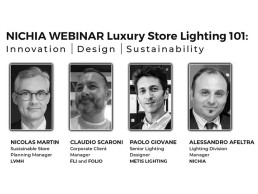
“Lucent Lighting is proud to have been one of the founding participants in Lighting for Good,” added Morris-Jones. “Originally our involvement was based around our ongoing relationship with the LVMH Group and the network developed by Nicolas Martin (Martin is the Sustainable Store Planning Manager for LVMH; a key role in LVMH sustainable policy. He originated the initiative Lighting for Good). However, over the last three years our participation has turned into something far more significant. 

The initiative has allowed us to use a measured framework based on technical attributes, which provide discipline for our designers, engineers and assembly staff: this has indeed been a company- wide effort. It has resulted in new product designs. We decided to test our progress by entering our newly enhanced MiniTRIM Round in the 2019  ‘Lighting For Good’ Awards.

Having made this decision we organised several design workshops with Tiphaine and decided to address three main topics: efficiency, materials and packaging. We applied for each of these different award categories. The design team, under Gary Parsons, Lucent’s Design Director, started extensive research to find the most efficient COB on the market (with a CRI 90+). Once we found it, we began to see that the design process would not increase our costs but it was an efficient way to analyse each component in our downlight. We simplified the design to be plastic free (except COB) and decided to use a ceramic connector. In doing this we managed to reduce the weight of materials from 310grs to 200grs.

The ‘Lighting For Good’ judging panel recognised the efforts made and we won the Award for ‘Best Materials’. However, the packaging part was one of the areas where we had to change the most. We were encouraged to be plastic-free, including tape, and to use bio-ink.

We are lucky to have a great relationship with our packaging supplier who was also investigating more sustainable materials to respond to the world’s growing demands. This enabled us to quickly respond and we changed not just the packaging but the whole process. We discovered that our normal practice of using two boxes to protect our fixtures was unnecessary with the new paper packing materials and different box sizes: less materials and less time to pack.

In 2020, most of the LfG Think Tank’s onging research was about modularity to encourage thinking about circular economy. So, for the LfG Awards in 2020 we decided to submit a prototype based on our TubeLed Mini spotlight series. We developed a ‘plug and play’ LED module with an easy-to-install system. This provided the first steps to creating more modularity and allowing the possibility to re-use or upgrade the light sources in different ranges of fixtures. For this we were rewarded with the 2020 ‘Lighting For Good’ Best Efficacy Award, which provides an efficacy of 117lm/W using only 5.6W of power.

For us this is a key moment in our design process. We are shifting towards implementing further modularity and designing parts that can be used in different fixture types. We now have the understanding that you do not have to compromise the aesthetics in order to incorporate sustainability and environmental awareness.

In conclusion, thanks to Lighting For Good and its Think Tank, we have been able to be innovative while reducing the environmental impacts of our fittings.

This year, Lucent is looking forward to the Think Tank’s next tranche of work: the financial model.” 

Treins picks up on this theme: “LfG knows that there is an ‘Elephant in the room’ that needs to be addressed. If the fittings can be upgraded or re-used, it is essential to find a new economic model that allows suppliers to continue to grow their business. We already know that it is not a leasing model but more B2B services. The scope of services proposed will probably vary from one client to another. This approach will allow suppliers to create a long-term relationship and adjust to the specific needs of their clients, focusing on reducing their environmental impacts. This new model, to be efficient, will need clients/designers/architects/suppliers to work together toward a remarkable transformation of our production systems and our design and construction process.

Wrapping up, the aim of Lighting For Good and our Think Tank has been to foster innovation whist at the same time reducing the environmental impacts of luminaires. We are seeing that proposing luminaires with LfG ratings in tenders is adding value and driving towards our goal.”

www.lightingforgood.org
www.temeloy.com
www.lucent-lighting.com

Reaction from GreenLight Alliance Members

Mark Ridler, BDP:

"Lighting for Good has much to commend it and its simplicity in output (fair, good, best) makes it something that you could envisage incorporation into other environmental schemes like BREEAM, LEED and WELL and it is great to see the balance between energy, other circular criteria, and quality. There is a danger that it will drive product into a regression toward the mean, for instance, certain beam angles are intrinsically less efficient and yet designers will continue to require a variety of tools in the box. LfG will not be alone in it being more easy to achieve in downlights and spotlights versus linear luminaries for instance, but it certainly challenges product design in a very positive fashion and its good to hear Lucent’s assertion that cost and aesthetics need not be compromised. To maintain a project’s ability to innovate and still keep to circular principles in the majority – it might be an evolution to give a project certification based upon a percentage of LfG product credits.

"To encourage designers to invest the time (and fee) in assessing LfG on a project, we will certainly need manufacturers to engage and readily provide the accreditation information, and so it will become imperative for LfG to grow outside the stable of the 25 early adopters. The LfG charter is open for all manufacturers to use and it will need more to engage if it is to have impact. 

"There are questions too about verification and unscrupulous competition diluting impact, but again this is not unique to LfG. This is a live debate about rigour versus cost of entry and adoption. 

"No walk in the park, “fair” is hard, and “best” is very aspirational. Just as BREEAM evolves its criteria and pegs its “excellent” against a year – so too LfG may need to adopt this to keep the challenge achievable."

Kevan Shaw, EFLA | Kevan Shaw Lighting Design

"It is encouraging to see initiatives like Lighting for Good emerging especially with both manufacturer and designer-oriented tools. Better still at Think Tank level, I feel there should be more lighting designer involvement as well as manufacturers.

"LfG is a scientific assessment of the different environmental impacts of luminaires. As a designer I want to go further and make a judgement not only on the thoughtful use of materials and energy consumption to make a new product, but on the real durability and options for end of first use. I think we need to get answers to questions such as the design life of a lighting product, how long the manufacturer will provide spare parts and any repair and refurbishment service offered beyond the guarantee period. If a refurbishment service is offered what will be the warranty for the refurbished product? Hopefully LfG will manage not only to capture the environmental impacts of a luminaire but also assess the benefit of circular design.  It will require cross-industry input to engage this discussion to develop creative approaches not bound by existing business models and practices.

"I would echo Mark’s comments about a focus on energy use (45.5% of the rating) driving towards a mean that will disadvantage some more useful products, where necessary optical inefficiencies or phosphor inefficiencies such as those that come with warmer colour temperatures, lower the score of a lighting product.

"LfG have boldly launched their charter before other regulations have been published on the quantification of environmental impacts in products. In future it will need to keep a weather eye on or preferably be in correspondence with the emerging thinking in the Directorate of Energy in the EU and BEIS in the UK. Circular economy factors will be included in the next round of lighting regulations, therefore a degree of coherence is required across all systems and metrics in this area to provide clarity to the market on the importance of specific factors and rating systems. The different organisations must coordinate with each other and ensure there is no chance that a product rates well on one and fails another."


Privacy Preference Center

Privacy Overview
arc

This website uses cookies so that we can provide you with the best user experience possible. Cookie information is stored in your browser and performs functions such as recognising you when you return to our website and helping our team to understand which sections of the website you find most interesting and useful.

Strictly Necessary Cookies

Strictly Necessary Cookie should be enabled at all times so that we can save your preferences for cookie settings.