Three Principles for Healthy Living with Light and Lighting

Amidst the growing awareness of the importance of light and darkness for human health, Asst. Prof. Dr. Karolina Zielinska-Dabkowska and Dr. Ruth Kelly Waskett offer some key advice on how the lighting industry can respond.

The lockdown measures applied to cities and towns during the worldwide Covid-19 pandemic have had a widespread impact on people’s lives. Some have found themselves confined to their homes, with limited social contact and a reduced quality of life. Others have found that the lockdown improved their wellbeing, as more time was spent outside, instead of commuting and working in an office building, plus the benefits of spending increased quality time with loved ones.

The pandemic raised public consciousness about the need to take control of our own wellbeing and health: in particular, to take greater care of immunity. There was also concern about the consequences of extended time spent in indoor spaces, which can create mental fatigue that can manifest itself in a number of ways, including reduced productivity, lack of concentration and in some cases, depression. Many people soon realised the simple things in life that had previously been taken for granted, such as access to daylight and contact with nature, play a vital role in mental health and wellbeing. 

Research in the past two decades has led us to a key moment, where we have a growing body of knowledge about (a) how important daylight exposure is for human health and (b) how damaging electric light exposure at night can be to humans and ecology. It’s now time to put this together and return to the bright day and dark night cycle that evolution engraved in us. 

In the developed world, it is recognised that sleep problems connected to increased light exposure at night are associated with exacerbating existing illnesses and many prevalent diseases. Of great concern is the fact that poor and insufficient sleep has increased significantly in children and adults. Technology, diet and low activity levels are undoubtedly to blame for this, but light is the thread that runs through all of them. During the daytime, not enough time spent outside results in not just low activity levels but also greatly reduced light exposure. At night, interaction with indoor lighting and digital technology leads to an excess of sensory stimuli and light exposure, leading to excess cognitive activity and disrupted hormonal balance before bed.

By and large, people have control over the lighting in their own homes, so it makes sense for lighting professionals to help them make their home lighting environment healthier. The three principles of Healthy Living with Light and Lighting, as introduced here, should support this quest.

What Next?

Lighting practitioners, manufacturers and researchers have an obligation to focus on how to facilitate the recommendations outlined here. We also have a responsibility to help people make healthier choices with light, in the same way that the food industry has a responsibility to help people make healthier choices with food. After many years of campaigning and government policy development, food products must now be labelled with calorie content and nutritional information. Armed with the scientific evidence and knowledge we now have about the impact of light upon human health, it seems logical that lighting products should also provide helpful guidance for consumers. In addition to lumen output, this should include spectral information (SPD), as well as colour rendering index (CRI), correlated colour temperature (CCT) and flicker metrics. Finally, the right to access daylight, coupled with the promotion of healthier light sources in the evening, needs to be implemented into government policies.

Three Principles of Healthy Living with Light and Lighting

Day - Bright Light

•  During the day, try to get exposure to daylight on your face/eyes before 10am, without wearing sunglasses or a hat, to activate your biological clock. This could be achieved by walking outside for a minimum of 30 minutes. Keep in mind that exposure to daylight in the morning will have a direct impact on your quality of sleep at night. 

•  Short-sightedness (myopia) has been linked with a lack of exposure to daylight and time spent outdoors. Exposure to outdoor daylight can also reduce the symptoms of Seasonal Affective Disorder (SAD).

•  As low vitamin D status can be associated with an increased risk of Covid-19 infection, from late spring to early autumn, try to gradually increase your skin exposure to direct sunlight for 5-10 minutes each day to produce vitamin D. Note that at high latitudes in winter, it is not possible to produce vitamin D from sun exposure, therefore supplementation with vitamin D3 is necessary.

•  In indoor spaces, try to rely on daylight as much as possible, and position your desk next to the window, preferably with a view out, especially when you have to work long hours. If daylight is unavailable, use electric lighting that provides a continuous spectrum of light with a high blue wavelength content, to mimic aspects of the spectral composition of daylight. 

Evening - Less Light

•  During the evening at home, use lighting with a warm colour appearance at night and a Correlated Colour Temperature (CCT) below 3000K. Allow for a mixture of ambient and focal lighting, ideally with a continuous light spectrum and very little to zero blue wavelengths of light. Use dimming to lower light levels and create a relaxing atmosphere.

•  Use LED light sources with continuous light spectrum, rather than compact fluorescent lamps (CFLs).

•  Blue light from electronic devices can supress the production of melatonin and adversely impact your sleep. This is particularly important in children, for whom sleep disturbances can severely impair and reduce the production of growth hormone, and hinder memory function. It is the interaction with technology, however, that matters most. Avoid using mobile devices such as mobile phones or tablets for two hours before bedtime. If available, features such as “night shift”, which reduce the blue energy content of the light emitted from a device screen, can be used. Such features, however, do not completely reduce the blue wavelengths of light, so will not completely mitigate the impact of such devices.

Night - No Light

•  Sleep should take place in complete darkness, preferably with no electric lighting. If any light trespass from street lighting is present in the bedroom, use blackout curtains or window shutters, or wear an eye mask to minimise it.

•  The National Sleep Foundation (NSF) recommends that the best time for getting ready for bed is between 8pm to 12am. The hours of sleep before midnight have been shown to benefit organ function.

•  If you need to use the bathroom during the night, use yellow, amber or even a red coloured light source with zero blue wavelengths of light in the spectrum, and ensure the light source emits diffused, low levels of light.

•  Try to get at least seven hours of undisturbed sleep. REM sleep phases last around 90 minutes, meaning four full sleep phases. Good quality sleep is particularly vital during illness, because the regeneration and repair of cells occurs during sleep. Sleep also boosts the body’s metabolic rate to facilitate weight loss, and several studies have linked exposure to artificial light at night to weight gain and obesity. 

References

• Argys, L.M.; Averett, S.L.; Yang, M. Light pollution, sleep deprivation, and infant health at birth, Southern Economic Journal 2021, 87, 3, pp 849-888. https://doi.org/10.1002/soej.12477

• Brown, T. et al. Recommendations for Healthy Daytime, Evening, and Night-Time Indoor Light Exposure. Preprints 2020, 2020120037 https://doi.org/10.20944/preprints202012.0037.v1

Changing perspectives on daylight: Science, technology, and culture. Science/The American Association for the Advancement of Science, Custom Publishing Office Washington, DC, 2017. 

• Commission Internationale de l’Eclairage (CIE). CIE Position Statement on Non-Visual Effects of Light. Recommending proper light at the proper time, 2nd ed,. CIE Publication: Vienna, Austria, 2019; Available online: https://bit.ly/2NysTq0 (accessed on 17 March 2021).

• Graw, P. et al. Winter and summer outdoor light exposure in women with and without seasonal affective disorder. Journal of affective disorders 1999, 56, 2-3,163-169. 

• Grubisic, M. et al. Light pollution, circadian photoreception, and melatonin in vertebrates. Sustainability 2019, 11, 6400. 

• Lagrèze, W. A.; Schaeffel, F. Dtsch Arzebl Int. 2017,  114, 575–580. https://doi.org/10.3238/arztebl.2017.0575

• Liu, N. et al. Low vitamin D status is associated with coronavirus disease 2019 outcomes: a systematic review and meta-analysis, International Journal of Infectious Disease 2021, 104, 58-64. https://doi.org/10.1016/j.ijid.2020.12.077

• McAlpine, C.S., Kiss, M.G., Rattik, S. et al. Sleep modulates haematopoiesis and protects against atherosclerosis. Nature 2019, 566, pp.383–387. https://doi.org/10.1038/s41586-019-0948-2

• Münch, M. et al. The Role of Daylight for Humans: Gaps in Current Knowledge. Clocks & Sleep. 2020, 2, 61-85. 

• Park, Y.M.M. et.al. Association of exposure to artificial light at night while sleeping with risk of obesity in women. JAMA Intern Med; 2019, 179(8), pp.1061–1071. 

• Wright, K.P. et al. Entrainment of the human circadian clock to the natural light-dark cycle. Curr Biol. 2013, 23, 16, 1554-1558.

• Zielinska-Dabkowska, K.M.; Xavia, K. Protect our right to light. Nature 2019, 568, 451–453. 

• Zielinska-Dabkowska, K.M. Make lighting healthier. Nature 2018, 553, 274–276. https://doi.org/10.1038/d41586-018-00568-7

• Zielinska-Dabkowska, K.M. Vitamin D. The truth about Vitamin D and sun exposure demystified. Finding the balance for personal health. Professional Lighting Design 2014, 93, 40-48. 

• Zielinska-Dabkowska, K.M.; Rohde, M.F. (Eds.) New Perspectives on the Future of Healthy Light and Lighting in Daily Life., 1st ed.; callidus. Verlag wissenschaftlicher Publikationen.: Wismar, Germany, 2017; ISBN 978-3-940677-61-7 https://bit.ly/3bWg5Dh

• Zielinska-Dabkowska K.M. Home Sweet Home. Connecting the dots for healthy evening residential illumination. arc magazine 2019, 111, pp.055-060. ISSN 1753-5875 http://bit.ly/30TqCss


On Guard for Lighting Quality: The establishment of the first association of professional lighting designers

Asst. Prof. Dr. Karolina M. Zielinska-Dabkowska IALD, IES, CIE, MSLL, RIBA, looks at today’s recognised lighting design profession and its historical formation combining aspects of science and art.

Not many people in the lighting community are aware of the fact, that after electricity was invented and in general use in the United States from the late nineteenth century, only electrical engineers were responsible for the illumination of architecture. After 1906, when the Illuminating Engineering Society of North America (IESNA) was established in the USA, companies and individuals professionally involved in the field of gas lighting and natural light, were first brought together. However, this new field quickly became dominated by people applying electric light in their projects. 

Members of this young discipline were mindful from the beginning, that a collaboration with architects was decisive and of great importance for the future development of lighting as a profession. One of the tasks that was set was the promotion of cooperation between these two professions in the field of architectural illumination. This included the presentation of completed projects, the monthly publication of articles in “Transactions of the Illuminating Engineering Society”, and the participation in annual conferences related to the topic of artificial illumination. In order to control the chaos of illuminated advertisement that began to flood New York, the first rules were introduced to regulate external illumination. However, architects of this period seemed rather reluctant to cooperate with illuminating engineers, as they did not want to bear the cost of additional consulting services. For many years, the relationship between these two groups was strained. Interestingly enough, the subject of architectural lighting initially did not appear in the architectural press at all. Instead, it was present on the front pages of journals and in technical journals related to the electrical industry. As the wave of lighting installations gradually spread across America, and later, also across Europe, even more of such publications were printed.

Meanwhile, on the other side of the Atlantic, in several other countries, similar associations of lighting specialists were established. First, in 1909, the Illuminating Engineering Society was founded in London, then in 1912, the German Society of Lighting Technology was established in Berlin. Later, the Illuminating Engineering Institute of Japan was founded in Japan in 1916, and then in Poland, in 1924, the Polish Electrotechnical Committee was created, which five years later, was transformed into the Polish Committee of the International Commission on Illumination.

In the IESNA professional press, there was a heated polemic between members of the association on the direction of the development of this new profession. Most wanted to follow the functional lighting path, including technical aspects, such as the amount of light and functional needs: “There is a large field for the illuminating engineer where aesthetics is only of secondary importance: in this field [he] may achieve success even though he does not concern himself personally with purely artistic side of the work.” [1]

In addition, some members believed that there was no need at all for an illuminating engineer to be creative: “An [illuminating] engineer, by reason of his education, is unsuited absolutely for the work [artistic illumination of architecture], which he sets out to do. 

“He has no conception of the effects desired. He has no creative ability, no knowledge of the history of architecture and history of ornamentation, and in fact, he is working in the dark absolutely.”

Some members of the engineering community thought the architect should impose his ideas on these matters in such a way that the engineer follows his recommendations, because such cooperation will bring the most effective results in accordance with the direction set by the architect: “[...] the architect feels he should dictate in such matters, and that the engineer should follow his dictates, and this will produce the most efficient results along the lines laid down by the architect.” [2]

However, there were also new and differing opinions. First of all, there was a call for quality aesthetic solutions in illumination design as well as an artistic design approach, built on understanding of the architectural concept: “This branch of illuminating engineering is unquestionably an art, and only a science in so far as an art is scientific in its method. The illuminating engineer who hopes to cope with the lighting features of architectural problems, must be familiar with architecture.” Some professionals were also calling for better education of illuminating engineers to perform their new duty: “How, then, is the illuminating engineer successfully to cope with his problem and advise with the architect as to the best means of achieving results, if the engineer cannot appreciate and understand the architect’s viewpoint? […]. It seems, then, that a very important, if not essential feature of the engineers’ preparations is a study of the history of illumination and its relation to architectural design”. [3]

People who preferred these ideas explored the art of “painting with light”. Their lighting projects stood out because they were unusual, aesthetically refined, and brought out the beauty of architecture during the night hours. It was believed that: “The illuminating engineer who considers only the scientifically practical side of the profession is necessarily doomed to ultimate failure, for he will not be able to obtain the recognition that the importance of his work deserves.” [4] 

There were also voices that postulated renaming the profession: “Viewed in its broader sense it would seem that the term <illuminating engineer> is not entirely suited to the profession, but that <lighting expert> or <lighting specialist> would more fittingly describe the broad scope that the profession should cover.” [5]

E.L. Elliott, one of the IESNA members, promoted the need for an architect to employ an illuminating engineer, explaining that “architect” means “master-builder”, and therefore, the building consists of many elements, the details of which, must be more or less known to the architect. The special task is to make all the pieces fit together, properly coordinated, so that the final result is successful and complete. In 1908, Elliott wrote: “The number of elements entering into the structure and design of modern buildings is vastly greater than anything conceived of in ancient or medieval times. With this great increase in the elementary problems has come a demand for corresponding greater knowledge of details, with the result that, in many cases, the requisite knowledge has broadened to such an extent as to render a sub-division necessary in order to leave the master-builder free to follow his legitimate office of co-ordinating the various details. This has given rise to an increased number of specialists, or engineers; and the latest among these is the illuminating engineer.” [6]

As a result of many activities undertaken in the 1920s and 30s, there was an unexpected change in the attitude of architects. This spurred a fascinating cooperation between illuminating engineers and architects. The illuminating engineers also understood that to better serve architects, they must have basic architectural knowledge. For the first time in 1930, two series of lectures related to the basics of architecture and field trips were organised for IES members in New York and Chicago, led by practicing architects and professors of the schools of architecture of the University of Illinois and the Armor Institute in Chicago and Columbia University in New York. [7] “The Illuminating Engineering Society believes that in order to be of real service to the architect, the illuminating engineer must know more about the architect’s problems and be able to talk to the architect in his own language. He should also be conversant with architectural terminology and have some knowledge of the fundamentals of that subject.” [8]

Professor Harold Vandervoort Walsh of Columbia University’s Department of Architecture described the relationship of these two professional groups: “Architects do not seek to light every corner of their building. Shadows to them are as important as light. The new movement in lighting has come about as the engineer, busy with his problems of lighting efficiency, has looked beyond and realised that the architect wanted this playfulness and emotional quality of light. On the other hand, the architect, seeing a friendly face, has turned away from his old-fashioned ideas about lighting and had awakened to the fact that the engineer has developed for him newer and finer ways of playing with light.” [9] 

Walsh also emphasised the expectations and concerns that architects usually have: “The [illuminating] engineer will not classify the apparently impractical and novel ideas of the architect as foolish, but will sit down and figure out how to do them. From the flights of imagination of artists come the problem for the scientists. [The architect’s] mind will be cantered upon the best way to bring out the forms he has designed by good lighting. He will not get far with an engineer who answers his questions with, “it can’t be done”. But great progress will be made with a sympathetic engineer at his elbow, interested in helping him achieve an ideal.” [10]

This first step in the cooperation process was pivotal. However, architects were still, in most cases, the originators of the illumination concept, and the illumination engineers supported them with advice on how to achieve a particular lighting effect. For instance, where to place the luminaires, what type of luminaires to use, and what materials on the façade will be the most advantageous. Special models were also created, so it became possible to present the effects of illumination. However, the services provided by the illuminating engineer were still limited to technical advice, not to independent, creative work.

There were two Americans in the early history of electric lighting who were pioneers of the newly emerging movement. One was Walter D‘Arcy Ryan, Director of the Illuminating Engineering Laboratory at General Electric who was known for his skyscraper illumination, as well as larger projects including the 1915 Panama-Pacific International Exposition in San Francisco, or the Century of Progress Exposition in Chicago (1933-1934). Another was Bassett Jones, who was a key figure among architects active in the 1920s and 30s. Jones was an all-round engineer, inventor, theatre and architectural lighting designer. He was also a member and founder of IESNA, and one of the first to speak about key issues involving architectural lighting. He insisted on the cooperation between an illuminating engineer and an architect. Thanks to the influence of both these visionary people, interest in lighting increased in the first half of the 20th century. Yet, despite their obvious success, the profession of lighting designer remained unrecognised as an established career.

When analysing the literature, it’s clear it was really only the architects of modernism operating in the second half of the 20th century, who considered illumination to be an important tool in creating an architectural form. Additionally, there was the need to create a new specialisation because knowledge about lighting technology became too broad for the architect of the building to study, or to rely only on consultancy from the illumination engineer, as had been the standard practice. 

The consequence of this was the conscious use of the services of a lighting designer where this professional would initiate the dialogue in the early stage of the design process. At that time, the style and trend of modernism proposed new, bold solutions with materials and technology, which formed an excellent contribution to the development of this new profession.

Although the number of people in America who dealt with the professional lighting of architecture continued to increase, it was only at the beginning of 1968, that the first attempts were made to institutionalise this field of lighting design. Even though many individuals created innovative work, the profession remained largely unrecognised. Initially, faced with the challenge of securing their future, a small group of passionate and inspired pioneers from New York, met monthly for informal gatherings in Manhattan restaurants, private apartments, and conference rooms, to define their new profession, and to set future goals for development.

The first meeting was at Richard Kelly’s home. The same individual known for his concept of “layers of light” or the approach of integrating three distinct types of lighting: ambient luminescence, focal glow, and play of brilliants. [11]

Most who attended had an architectural and theatrical training/background and were members of IESNA, yet they chose to connect in recognition of their unique position. Their services differed from those of electrical engineers or illuminating engineers, as their skills involved the design, application, and use of lighting that was in harmony with architecture - this was a combination of science and art. The initial goals of the emerging organisation were thus defined: “[…] to do all acts and things necessary to bring together practicing professionals in the field of lighting design; to define, develop, advance and maintain standards and excellence among Association members; and to communicate these ideas and the attendant benefits of designing lighting to allied professions and the public at large.” [12]

In 1971, the International Association of Lighting Designers (IALD) was officially incorporated, with its headquarters in Chicago, USA. Today, members of this professional organisation are designers with an education in the field of architecture, interior architecture, theatre, electrical engineering, as well as lighting design. The association unites more than 1,500 independent, professional lighting designers from all over the world. The association’s mission is to advance the global profession through advocacy, creating global standards for lighting design excellence. It promotes excellence in lighting design through the work of its members, who make a huge contribution by providing innovative and responsibile lighting solutions. These designers understand the role of lighting in architecture, interior design, and urban and landscape design, and they use their rich experience and knowledge to raise the profile of these projects. Today, as it was in the past, professional members of the IALD cannot also be involved in any way, in the sales of lighting products. Their earnings are derived from design services, which gives them complete independence in choosing the best aesthetic and technical solutions, whilst also supporting needs of humans and the external environment.

References

[1] Jones B., The relation of architectural principles to Illuminating Engineering Practice. Transactions of the Illuminating Engineering Society, 1908, vol. III, p. 9.

[2] ibid. p. 42.

[3] ibid. pp. 25-26.

[4] ibid. p. 9.

[5] ibid. p. 50.

[6] ibid. p. 55.

[7] Architect and Illuminating Engineers Break Bread together, Reflections. Transactions of the Illuminating Engineering Society 1920, no. 7, p. 749.

[8] Transactions of the Illuminating Engineering Society, 1930, no. 6, p. 535.

[9] Walsh H. V. An Architect’s reaction to the new movement in lighting. Interim Report –

Committee on Light in Architecture and Decoration. Transactions of the Illuminating Engineering Society 1930, no. 7, Vol. XXV, pp.

603–604.

[10] ibid. pp. 603–604.

[11] Zielinska-Dabkowska, K.M. Home Sweet Home. Connecting the dots for healthy evening residential illumination. arc magazine 2019, no. 111, pp. 055-060. http://bit.ly/30TqCss

[12] International Association of Lighting Designers (IALD). Celebrating 35 Years of Lighting Design Excellence, 35th Anniversary Yearbook, Chicago 2005, p. 4.


IALD: 3D Printing - an integral part of the luminaire design process

Frederik Friederichs, Group Manager at Light Bureau, explains more about his first steps into 3D printing luminaires.

It all started with a replacement part for a linear fluorescent tube. While browsing through a luminaire storage, checking for functional luminaires to salvage, I discovered a classic T5 luminaire with a missing end cap. It was a merely aesthetic flaw since the luminaire was functioning fine otherwise, and I was sure that this would be an opportunity to start investigating into 3D printing to allow me to reproduce this specific part of the luminaire. The scope was identified with a measurable goal and I tried to reverse the design process to build a duplicate from the existing end cap.  

In all beginnings and when entering a new production method with different workflows, roads are bumpy and the first steps are unavoidably subject to multiple trial and error processes. But I felt that 3D printing can become an essential part of our design exploration process to find suitable dimensions, shapes and forms and serve to understand the production and creation process better. 

From Idea to Form

Purchasing a sliding caliper immediately became useful when starting detailed measurements on luminaire parts. The end cap had a rather simple cylindrical shape with delicate mounting bits in the bottom to connect to the socket base. After reviewing the first 3D printed part from the 3D file I had generated, I was caught by surprise.  

The 3D printer is capable of spitting out a digital model, transforming data into a tactile product. But the quality of the result was far off from my expectations, with exception of form and material thickness of the generated object. This led me to analyse the piece in detail, revising the modelling workflow and the transition into the “slicer” (the programme that translates the 3D model attributes for the 3D printer). Following these steps, I was able to refine the surface structure and quality, optimise the necessary support structure to print this piece and get consistent results. It took a few attempts to figure out the correct tolerances to make the end cap snap onto the socket without using too much force. Simultaneously, I was interested in trying different material types with a variety of characteristics besides the polylactic acid (PLA), which is most commonly used in the FDM (fused deposition modeling) 3D printing process and engaging in online learning courses that helped me to calibrate and utilise the 3D printer more efficiently.  

It still feels like scratching the surface of options and opportunities connected to 3D printing, since the possibilities and knowledge exchange in the field of 3D printing are endless. But these first iterative steps to arrive at an adequate and bespoke 3D printing part made me more interested in more complex tasks. 

From Form to Fit 

My creative process was certainly boosted by changes around the office leading to closer cooperation with the architectural studio GPA (part of AFRY). In 2019, we started to extend the 3D printing hardware in our common workshop/light lab at the office, allowing faster and larger 3D prints. It helped us to react instantly on projects where we wanted to apply customised fittings. We were able to deliver mock-ups and conceptual solutions ranging from luminaire brackets to reflector parts. In this stage we mainly used the 3D printing capabilities to make tests and give clients an idea of scale and form of the final tailor-made product part. Due to its rapid and almost instant nature, additive manufacturing supported our decision-making process. The awareness of 3D printing was rising, and we even cooperated with manufacturers who sent us 3D data of additional luminaire parts for mock-up luminaires, since it was faster to produce these add-ons locally than to send the spare parts to us by post. This made me realise that 3D printing can become a major part of a circular economy system and a sustainable alternative for the existing linear production due to its decentralised production capabilities. 

The focus changed from just using the technology to replace or supplement parts to designing a 3D printed object first, which could then be produced in series.  

From Fit to Product

Materialising ideas and the production of custom-made parts has become significantly easier and more accessible through additive manufacturing. We are now able now to react and adapt to changes in the detailing stage and proactively find solutions for difficulties and issues at the project site. But to allow a higher print volume, more accuracy and sturdiness for the object, while reducing costs and production time per piece, we were looking for partners using suitable 3D printing technologies to cooperate with.

Ruten in Sandnes

One of the new signature structures in Sandnes, a city located on the west coast of Norway, will be Ruten, which has long been the region’s largest transit interchange point. The area has undergone an extensive infrastructural transformation, leading to a new key pivot point for the city featuring an urban park with a canopied ring structure. The design brief in this project, developed and designed by SpaceGroup Architects in Norway, was to install luminaires at predefined heights into approximately 60 round pillar cavities of a filigree bearing roof structure with an organic shape. The lighting concept for the urban area focuses on using mainly indirect reflected light from the canopied structure provided by the pillar integrated luminaires, resulting in a soft and diffuse lit area providing guidance and orientation while simultaneously highlighting the volume of the structure. 

We are currently in the final stage of completing this project – our first where 3D printing is a vital and integral part of the fixture design.

The diameter for the prefabricated cut-outs in the pillars was defined to be 10cm and the difficulty of this task was to create a luminaire component that seamlessly connects the convex shape of the pillar and holds an adjustable standardised exterior spotlight fixture firm in place. Additionally, other challenges, such as different material thickness of the pillars and the fact that all components needed to fit through the 10cm hole as only access point, influenced the design process for the prototype. 

After plenty of considerations and numerous design alternatives with regards to optimised light distribution, colour, fitting and installation, as well as in regard to the workflow for the electrician, were carried out and we arrived at a final design solution with a consistent and coordinated design for a prototype in January 2020. A mock-up was subsequently performed in a warehouse and all project participants were able to see this hybrid solution of a tailor‐made 3D printed secondary reflector and a standard exterior spotlight.  

Together, with the producer of the 3D prints, we discussed object joints and fillets, material choice and thickness as well as tolerances to be able to deliver a holistic and comprehensive design that is long lasting and easy to install and maintain on building site. Funnily enough, the producer is located 20km from the building site, a fact that became significant in the beginning of February 2021. 

After all components were delivered to the site, we received a phone call informing us that the cut-outs in the pillars were performed through a different method, resulting in higher tolerances of the cut out down to around 8cm. We managed to tackle this deviation by redesigning and adjusting the secondary reflector and could deliver new prototypes on site for fitting within three days, without the need to wait for a shipment from further away.  

We expect the project to be done in the first quarter of 2021 and are looking forward to the results. I am of the opinion that we have not yet leveraged all of the possibilities that lie within the 3D printing technology. We are on the verge of making 3D printing a powerful element in the lighting designer’s toolbox.

www.iald.org


David Morgan Review: LED Linear Ultima-P

LED Linear shrinks luminaire design to a new level with its latest range, Ultima. Originally due to launch during Light + Building 2020, the Ultima range has now been revealed virtually. David Morgan delves in to find out more. 

The world of lighting changes fairly gradually but one continuous trend that I have experienced over many years of luminaire design is the miniaturisation of luminaires and light sources. LED Linear has always achieved a high lumen output from small profile products and has now taken luminaire shrinking to a new level with its Ultima range.

LED Linear was founded by Dr. Michael Kramer, who was responsible for sales and marketing, and Carsten Schaffarz, who looked after innovation and production. They were colleagues at Vossloh-Schwabe Optoelektronik before launching LED Linear in May 2006, initially operating from a garage. The company has rapidly grown to become one of the most recognised brands in the specification linear lighting market, with 150 directly employed staff. The company was acquired by the Fagerhult Group in 2016 and, after three years transition, the two founders have now moved on.

LED Linear has based its systems on the use of flexible LED tape, which is assembled in-house, along with all the various luminaire types at a facility in Duisburg, Germany. Sales are global with branch sales offices in major markets and a network of distributors in smaller countries.  

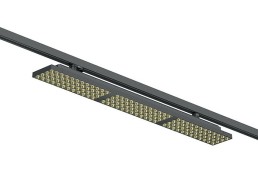
The latest luminaire series to be launched by LED Linear is the Ultima range that was due to be launched at Light + Building  2020 but which, due to the Covid pandemic, has been launched virtually.  The complete range, which has a very wide range of housing and mounting options, all incorporate an innovative, miniature, linear light engine and heat sink assembly only 13 mm wide x 10 mm deep.  The heart of the Ultima range is the light engine, which incorporates chip scale 1mm x 1mm 0.2W LEDs mounted on an 8.5mm pitch.  It is understood that LED Linear is the only manufacturer so far that  has been able to mount chip scale LEDs onto a flexible PCB with the required precision to work correctly with optics. The light output from the LEDs is controlled with a miniature moulded reflector, only 7mm in diameter, and a nano lens optical film combination. The light engine is mounted in an extruded aluminium heat sink housing onto which a moulded miniature glare control louvre is fixed, providing glare control up to UGI 13. The NanoRay 2 optical film used in the Ultima is understood to be a further development of the earlier nano optic system used in the LED Linear Mars system.

There are seven distributions available in the Ultima range, from a narrow 10º spot up to a wide 60º beam and an opal window option for a diffuse effect. There are optics for batwing and asymmetric distributions, allowing the system to be used in a wide variety of lighting applications.

Maximum output is 1,870 lumens from the 4,000 K 80 CRI version with a power consumption of 25W per metre. 

The Ultima S range - the stand-alone version - was the first to be launched in 2020. This is the basic 13mm x 10mm profile, which can be mounted with various clip designs and also magnetic strips that can be fixed with double sided adhesive tape to the body extrusion.  Specific clips allow this version to be mounted onto T-bar ceilings where the width of the luminaire fits unobtrusively between tiles

The Ultima T track mounted range was then launched. This combines a four conductor low voltage track system with the Ultima luminaires allowing them to snapped in and repositioned as required without tools. Suspended, surface mount, and trimless recessed versions of the track are also available.

The latest version is the Ultima P pendant version, which I was given to test. In this instance the linear strip is mounted in a robust steel U channel to provide additional weight thus making a very neat pendant. 

The samples I was given were the medium flood with a 40º beam and black louvre, and the batwing distribution fitted with a white louvre. The lit effect of the 40º distribution was fairly dramatic producing a high intensity cut off beam, which was uniform and has  almost no visible colour over angle issues. The batwing version was equally impressive with a wide clean distribution.  

One of the advantages in reducing the size of luminaires, in addition to production cost reduction, is to minimise the environmental impact and carbon footprint by reducing the weight of materials used. The Ultima range would fit well into a circular economy model as the mechanical and optical components all snap together very neatly. However, I am not sure how easy it would be to remove the LED tape from the heat sink extrusion after five or more years in use.

It is understood that the Ultima range was developed over a two-year period following discussions with lighting designers in various countries who expressed a strong interest in specifying smaller luminaires with high output and good optical control. The Ultima design and development was undertaken in-house with the top management team involved throughout the process. Franziska Heckmanns was the key product designer for the range,  I understand.

The company reports that feedback from lighting designers and customers has been positive to the Ultima range and a number of projects have already been completed. This latest example of luminaire miniaturisation has been well executed and looks set to be a successful addition to the LED Linear portfolio.

www.led-linear.com


Ruth Kelly Waskett

An Associate at Hoare Lea with a strong focus on daylight, Ruth Kelly Waskett will take over as President of the Society of Light and Lighting this May. arc speaks with Kelly Waskett about her ambitions for her Presidency, and the value of organisations such as the SLL to the lighting world.

How did you first get into lighting?

In a nutshell, I got into lighting via daylight. I studied building services engineering and after working in that discipline for a few years, I started to get involved with daylight modelling and it really captured my interest. I studied for an MSc in Light & Lighting at UCL and I just felt so at home with the blend of art and science that lighting is. 

Can you describe your career journey so far?

My career could probably be best be described as an “academia sandwich”! I spent the first 10 years or so working as an engineer and then lighting consultant, followed by a five-year period in academia where I did a PhD in daylighting and became a visiting lecturer at UCL. I joined Hoare Lea in 2017 and it is great to be back in practice again. There’s nothing like seeing your designs become a reality!

How did you first get involved with the SLL?

It is because of Liz Peck. I met Liz at an SLL conference in my hometown of Dublin, and before I knew it, I had agreed to join the Newsletter Committee! Liz’s enthusiasm was infectious, and she was great at getting people involved. I think many of us are still coming to terms with her untimely death earlier this year. She had such a big impact and will be greatly missed.

What has been your role within the Society since first getting involved?

After the Newsletter Committee, it was contributing to guides, and I led the revision of Lighting Guide 10 (Daylight) in 2014. I became a Vice President in 2016 and through this role I’ve been involved in various initiatives, including an overhaul of the Young Lighter competition which has been really successful.

What was the process for you becoming President-Elect? How were you chosen?

Every year, the SLL Nominations Panel meet to nominate an individual to join the SLL Executive as a Vice President, and joining as a VP puts you on a pathway to becoming President. The Executive nomination is presented to the SLL membership and they can put an alternative nomination forward, if this happens there is a ballot. 

When did you find out you were to become SLL President? What does it mean to you to be given this role?

The results of the nomination process are finalised at the SLL Annual General Meeting. So it was at the AGM in May 2020 that my role as President Elect was confirmed. It sounds like a cliché, but it really is a huge honour. Many of the past presidents are people I greatly admire and to be honest I can’t believe I’m next! 

What are your goals/aspirations for your tenure as SLL President? 

This role is a huge opportunity. I want to use it to recalibrate SLL, to get back to the basics of why it exists and what it is here to do. One of the key things I want to focus on is uniting diverse groups from across the industry, and I mean diversity in more than one sense – not just gender or ethn icity, but also how people identify within lighting. Some of us describe ourselves as engineers, some as designers, but we all love lighting, so let’s get together!

Have you received any words of advice from former Presidents or current President Bob Bohannon?

Bob is very supportive and has encouraged a lot of collaboration between all the VPs and the President each year, so that no-one feels isolated. It also ensures continuity in the work that Presidents do – there’s a limit to what anyone can do in one year. 

How important do you think organisations such as the SLL are to the lighting community? 

If you are interested in lighting, and especially if you work in lighting, then being part of a group of people with this common interest is hugely beneficial. You have direct access to not just the guidebooks but to the people who wrote them. There is a really diverse programme of events, all online at the moment obviously, which allows you to keep up to date with the latest research and thinking. Most of all, it’s a great way to connect with a group of people who share your obsession with lighting and who will not roll their eyes when you spend a lot of your time looking up at the ceiling when you go out somewhere! 

You have a particular focus on daylight in your position at Hoare Lea – how integral do you think daylight should be in lighting design? 

The importance of daylight is becoming more widely recognised in building design due to the drive for sustainability, and more recently because of the realisation of the crucial role of daylight to our health. But I would like to see more lighting designers integrate daylight with their practice. In the process of lighting design, we have a tendency to focus on what happens after dark and forget that for a huge chunk of the 24-hour period, buildings are illuminated by daylight as well as artificial light.

What do you think the future holds for the lighting industry? 

The pandemic has changed so much, and for the lighting industry we need to embrace the new fluidity between spaces for working, spaces for living and spaces for recreation. Lighting can facilitate a huge amount of flexibility to support this change. Another impact of the pandemic is a renewed sense of responsibility over our own health – mental and physical. And of course, light is key to health; we know we need high levels of light in the daytime and darkness at night to stay healthy. I think it’s vital that as an industry we respond to this.

www.cibse.org/society-of-light-and-lighting
www.hoarelea.com


Illuminated River launches new engagement programme as artwork is revealed

(UK) - To celebrate the completion of its nine-bridge artwork, the Illuminated River Foundation has launched a new programme of engagement activities.

Launched on 13 April, the programme will evolve throughout the year, and will support the artwork through a mixture of on-site and digital activities, with free and bookable options. The programme includes interactive art trails and guided walking tours, as well as a new phase of musical collaboration with students from the Guildhall School of Music & Drama.

Spanning from London Bridge to Lambeth Bridge, the Illuminated River artworks were created by internationally acclaimed artist Leo Villareal, with award-winning architectural practice Lifschutz Davidson Sandilands. With a minimum lifespan of ten years, it is estimated that up to 90 million people a year will see the artworks in situ along the River Thames.

The Illuminated River Foundation has also commissioned new music uniquely inspired by the artwork, the Thames and its bridges, from students at the Guildhall School of Music & Drama. In this second iteration of the collaboration, dozens of original music compositions, each focusing on a specific bridge, have been created to celebrate the artwork, as well as the social history behind the structures. These will be shared in a series of releases over the coming weeks.

For example the arrangement ‘Still We Move’ by Lillian Chan, for example, explores the under-recognised contribution of the largely female workforce responsible for completing Waterloo Bridge, also known as ‘The Ladies Bridge’ during WWII. Alluding to the sentiment in Maya Angelou’s 1978 poem, ‘Still I Rise’, Chan’s commission layers female vocals with strings to emphasise a message of solidarity among women.

Free audio guides created with City of London Guides also delve deeper into the rich history of each bridge, highlighting key sites of interest along both the north and south banks of the river, and elucidating Villareal’s artistic vision.

Meanwhile, a calendar of guided tours of the Illuminated River artwork is planned throughout the coming months, with some events reserved especially for key workers. The 90-minute tours, available to book online for groups of up to six, take place on Tuesdays (for Blackfriars to Lambeth Bridge) and Fridays (from London to Millennium Bridge) and comprise a gentle evening stroll along the river accompanied by an informative professional guide.

Sarah Gaventa, Director of the Illuminated River Foundation, said: “We are delighted to be developing this programme of engagement to celebrate the completion of the next five bridges in the Illuminated River artwork.

“This launch marks the culmination of five years’ work by the Foundation, and we’re very excited to finally share it with the public. Through various collaborations with some incredible partners, we are offering a stimulating, educational and accessible calendar of activities and resources for all to enjoy.”

www.illuminatedriver.london


Women in Lighting launch Gender Equality survey

Women in Lighting has launched #womeninlighitngUKfacts, a survey collecting data about gender equality in the UK lighting industry as a whole.

It welcomes participation from lighting consultancies and engineering practices, as well as manufacturers, educators, researchers, and related disciplines, which sometimes do not feel represented in the mainstream. The survey aims to find out quantitative and qualitative data. It will collect figures and facts about equal opportunities, sexism, pay gaps and company policies. Some questions will give the chance to expand on the answers if anyone wishes to.

The survey is completely anonymous, so it encourage participants to provide their honest opinion and was conceived by Carmela Dagnello, WiL UK Ambassador, with the support of a team made up of Amy Rennie (WiL Ambassador for Scotland), Carolina Sterzi and Sandra Babini. The survey can be completed here.

www.womeninlighting.com


Lam Partners Celebrates 60th Anniversary; Announces New Brand Identity

(USA) – New brand identity to commemorate past and look to future.

Lam Partners has marked its 60th anniversary with a rebrand to its visual identity.

“We are proud that we've been able to work on incredible projects with exceptional collaborators, clients, and friends for the past 60 years,” said Jamie Perry, Principal. “Our new identity is not just cosmetic – we’ve taken this opportunity to evolve our brand into something that represents where Lam Partners is as a company today – 60 years later.”

The Lam logo serves as the foundation to a dynamic, flexible visual system. It finds a visual language for light and mimics how light behaves in a space. The logo represents the interplay of light and shadow. The new typeface and vibrant colours reflect the company’s approach to its work: energetic, passionate, and innovative.

  
“2021 is a special year for us as it marks our 60th anniversary. What better way to recognise our history and legacy, while also focusing on the future, than with a new brand identity for Lam Partners,” said Paul Zaferiou, Principal. “The new brand identity is not only current and modern but continues to reflect the core values of our organisation – our collaborative spirit, supportive internal culture, and elevation of human spaces.”

William Lam Associates was founded in 1961 by William M. C. Lam, after he had worked in architecture and as a lighting manufacturer for many years. With a focus on the integration of lighting with architecture and urban design, Lam collaborated with many architects across the US and throughout the world, developing innovative lighting solutions and integrated system approaches for complex building designs. Lam retired in 1995 but continued to work as a consultant until his passing in 2012.

  
Today, Lam Partners is a 30-person firm, with eight principals across two offices. Its collaborative spirit, supportive internal culture, and elevation of human spaces shows that people are at the heart of what it does. They understand that the spaces they create will have a profound effect on those that live, work, and play in them. 

www.lampartners.com


Bega acquires majority stake of Aubrilam

(Europe) – Aubrilam to be French Bega location, will also continue as independent brand.

Bega has announced that it has acquired the majority stake of its French partner company, Aubrilam.

The luminaire manufacturer has already maintained a successful system partnership with Aubrilam and its street furniture solutions made of wood, for almost a decade.

As the future French Bega location, Aubrilam will remain present in the market as a brand with an independent product portfolio, with the same number of employees. Soufyane Miloudi will remain as Aubrilam’s Managing Director, with Turki Badeed remaining as partner.

“The expected further urbanisation with the establishment of leisure-focused lifestyles in growing cities will increase the demand for high-quality street furniture,” said Heinrich Gantenbrink, Managing Partner of Bega. “Wood as a very sustainable, natural material will play a major role in this, along with convincing lighting solutions.”

Gantenbrink added that the acquisition of Aubrilam was a logical step in this regard: “The philosophy of both companies that only extraordinary quality, as well as the durability of the products, are acceptable was the basis of our partnership. Now we are bringing this previous success story together under one roof.”

Soutyane Miloudi, Managing Partner of Aubrilam, added: “Our brand has been established in the market since 1978. Since the beginning almost a decade ago, our structured cooperation with Bega has grown very fruitfully. Now we are going to take the next step together.”

www.bega.com
www.aubrilam.com


LEDucation 2021 In-Person August Trade Show Cancelled

(USA) – Conference sessions to be moved online and held virtually.

Due to the uncertainty of New York local and state restrictions regarding mass gatherings in August, as well as government restrictions that impede international travel, the LEDucation committee has made the difficult but necessary decision to cancel the in-person trade show, scheduled for August 17-18, 2021.

However, LEDucation will offer a series of accredited virtual conference sessions in August 2021. Definitive dates and details are forthcoming.

“To accommodate scheduling efforts and critical deadlines in the industry, we have come to the unfortunate conclusion that an in-person LEDucation in 2021 is not feasible. The safety and protection of attendees and exhibitors is of paramount importance to us,” LEDucation Co-Chairs Burt Grant and Caroline Rinker said in a joint statement.

“We understand that this comes as an enormous disappointment to the exhibitors, buyers, and industry professionals who were due to attend the show. As we continue to tackle the unknowns and prepare for better days ahead, we look forward to dynamic and interactive presentations coming this August and look forward to seeing everyone in 2022.”

The next in-person LEDucation Trade Show and Conference is slated for March 15–17, 2022 at the New York Hilton Midtown in New York City. The event will include multiple exhibition halls featuring the industry’s top manufacturers and suppliers, as well as a dynamic conference programme. In a post–COVID-19 environment, LEDucation will continue to prioritise the health and safety of all attendees and will run in accordance with official government and local authority guidance, as well as New York Hilton Midtown health protocols.

The 2021 Online Marketplace is available through the end of the year along with on-demand access to the March 2021 educational sessions.

Details for the 2022 show will be posted in the coming months.

www.leducation.org


Linea Light Group collaborates with University of Strathclyde on antibacterial light source

(Italy) – Manufacturer’s new Environment Care Lighting range uses HINS light developed by Scottish university.

Linea Light Group has unveiled a new antibacterial technology range that could help to decontaminate surfaces and prevent infection.

The new Environment Care Lighting technology range uses High Intensity Narrow Spectrum (HINS) light, developed and patented by the University of Strathclyde in Glasgow, Scotland. The range enables the Woofer and Rollip appliances from Linea Light Group’s i-Lèd Professional collection to decontaminate surfaces and prevent infection, destroying up to 70-80% of bacteria with continuous use.

By using a light wavelength of 405nm, the Environment Care Lighting range can both light and decontaminate rooms, potentially avoiding the need for more expensive ultra-violet technologies that use frequencies between 240-260nm, require rooms to be empty during disinfection, and can cause degradation effects on photosensitive materials.

The action of two light sources – a violet-blue dominated LED combined with a white LED – enables the Environment Care Lighting technology to offer both lighting and disinfection at the same time.

The HINS-light technology was developed in the Robertson Trust Laboratory for Electronic Sterilisation Technologies (ROLEST) at the University of Strathclyde, thanks to the work of a team of experts led by Professor Scott MacGregor, Vice-Principal of the University, with Professor John G. Anderson, Dr Michelle Maclean and Professor Gerry Woolsey.

Linea Light Group will be the first European company to use the HINS-light patent in combination with lighting appliances, and looks to offer these fixtures for offices and public spaces, hospitals and healthcare settings, residential areas and multi-purpose buildings.

Gianluca Salciccia, Linea Light Group Sales Director, said: Linea Light Group’s products and projects put people in the spotlight. Lighting technology can be an important tool for wellbeing and improving people’s quality of life. Linea Light Group’s new Environment Care Lighting light range could also add a third dimension of physical wellbeing, with products capable of decontaminating the environments in which people live and work, protecting their health."

Professor John G. Anderson, Research Fellow in Electronic & Electrical Engineering at the University of Strathclyde and member of the HINS-light technology research team added: “The Environment Care Lighting represents a unique method of disinfection as it does not employ harmful chemicals or dangerous UV light, but instead uses only visible light that is harmless to humans.

“The system works by using selected visible wavelengths that activate light sensitive molecules contained within microbes. This process creates biocidal chemicals that are lethal to bacteria such as MRSA or C.diff. The process can be operated continuously to achieve whole room disinfection in both the presence and absence of occupants.”

Professor Scott MacGregor added: “The technology is harmless to people, so it can be used continuously in different spaces, thus improving disinfection and preventing the spread of infection. Linea Light Group’s new Environment Care Lighting products means that many more people in healthcare, public spaces and in commercial, work and residential environments can benefit from this technology.”

www.linealight.com


LEDforum.21 announces new dates

(Brazil) – Conference moved from August to early November 2021.

Organisers of the LEDforum.21 conference, scheduled to take place in São Paulo, Brazil this August, have announced that the show has been postponed until later in the year.

As a result of the restrictions imposed by the Covid-19 pandemic last year, LEDforum.20 was held in a digital format and, with 615 lighting professionals attending, it proved to be a big success.

However, as the world continues to face new outcomes, including vaccination programmes, organisers have decided that this year’s physical event, previously scheduled to take place on 19-20 August, will no longer be feasible.

They have therefore taken the decision to reschedule the event to later in the year, with the conference now slated to take place on 4-5 November. The hope is that the situation regarding the pandemic will have eased to the point that LEDforum.21 will be able to happen in a physical or “phygital” format. “Meanwhile, we will continue to monitor the situation in order to define the most appropriate version for the event, to be held in a safe and positive way for all participants,” organisers said.

“We are still working full steam ahead to offer our audience quality content – confirmation of the LEDforum.21 programme will be released shortly.”

Registration for the event is currently open, more information is available on the LEDforum website.

www.ledforum.com.br


Privacy Preference Center

Privacy Overview
arc

This website uses cookies so that we can provide you with the best user experience possible. Cookie information is stored in your browser and performs functions such as recognising you when you return to our website and helping our team to understand which sections of the website you find most interesting and useful.

Strictly Necessary Cookies

Strictly Necessary Cookie should be enabled at all times so that we can save your preferences for cookie settings.