

Smart lighting market value to hit $24bn by 2024
(USA) – The new research report from Global Market Insights predicts healthy growth in lighting control, LED and outdoor lighting markets as smart lighting becomes more prevalent.
According to a new research report by Global Market Insights, the smart lighting market is predicted to be valued at $24billion (£17.7billion) by 2024.
The smart lighting market growth is attributed to worldwide initiatives for smart city development and the growing popularity of home and building automation systems in residential, commercial, and industrial sectors.
Smart lighting products are used in different applications to enable highly connected and energy-efficient lighting solutions. These applications include commercial, residential, industrial, and outdoor lighting applications such dynamic traffic management systems employed in public places, highways and roadways, tunnels, and bridges.
In the light control market, sensors are expected to exhibit the fastest adoption over the forecast period. This accelerated adoption can be attributed to technological advancements in different types of sensors, such as occupancy sensors and motion sensors, which enhance the ability of smart lighting systems to effectively react to the surrounding conditions. Also, as these sensors enable remote operability of lighting systems through mobile devices, their utility in connected lighting solutions is likely to increase substantially over the forecast timeline.
With the rapid adoption of LED bulbs to replace traditionally used incandescent lighting systems, the LED market is projected to exhibit accelerated growth with a CAGR of more than 20% between 2018 and 2024. Their adoption in smart lighting systems is also expected to grow exponentially over the forecast timeline. Elsewhere, the outdoor lighting market is projected to register a fast growth over the forecast period due to the increasing popularity of intelligent street lighting systems in the smart city infrastructure.
Europe is projected to hold a dominant position in the market by 2024 with a market share of more than 30%. This market dominance is attributed to growing emphasis on developing smart city infrastructure in the region and the large-scale installation of smart lighting systems across the commercial and residential sectors.
However, the Asia Pacific smart lighting market is projected to witness the fastest growth between 2018 and 2024 due to the growing awareness among emerging economies including India, Japan, and Singapore regarding the efficacy of connected lighting systems in enabling significant cost savings through optimal energy consumption.
The full report is available to view online here.


IALD Nordic Chapter launched
(Europe) – The formation of the IALD Nordic Chapter follows the launch of IALD Netherlands and IALD Alpine in 2017.
IALD Europe has announced the formation of the IALD Nordic Chapter.
The new chapter covers Scandinavia and the Baltic States, including Iceland, Norway, Sweden, Finland, Denmark, Estonia, Latvia and Lithuania.
Its main objectives include strengthening the lighting community and increasing awareness of the profession of Lighting Design, supporting education as well as engaging with policy makers, stakeholder and other relevant parties.
Lead volunteer coordinators are Kristin Bredal, IALD (Norway), Chiara Carucci, Associate IALD (Sweden) and Jørgen Kjer, IALD (Denmark).
More information on the activities and events of the IALD Nordic Chapter can be found on its Facebook page here.
For more information on IALD Europe and its activities, please contact IALD Europe Manager Nele Devolder at nele@ialdeurope.com or via phone: +32 2 761 16 82.
New President calls on CIBSE to adapt to change
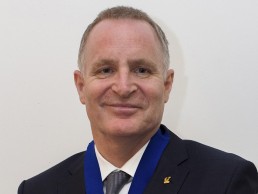
(UK) – Incoming CIBSE President Stephen Lisk gave a presidential address looking at the increasing rate of advancements in the construction sector.
Stephen Lisk, incoming President of CIBSE, has made a resounding call for the association to accelerate its evolution in response to a rapidly changing world.
During his Presidential address, Lisk focused on the pace of change within the natural world as well as the construction sector and the regulatory climate in which it operates: he stressed the vital importance of education and expert guidance to ensure that the built environment provides positive spaces for living and working into the future.
A major theme for Lisk’s year in office will be the importance of collaboration between all the professionals whose experience should influence the design of buildings. It is an appropriate focus for a non-engineer – Lisk is a ‘lighter’ – leading an institution with engineering at its heart.
It is in such collaboration that Lisk sees the value and relevance of a professional organisation such as CIBSE: constructive debate between like-minded profession producing the most comprehensive and practical solutions to building design challenges.
Lisk also commended the CIBSE Knowledge Portal and Build2Perform Live as excellent examples of initiatives that increase accessibility and fulfill the Institution’s aim of sharing its knowledge to the benefit of all.
The speech committed to continue and accelerate the pace of change within CIBSE with the objective of building “a virtuous circle of competency”. Members and, critically, the huge number of participants in CIBSE’s special interest groups who are not CIBSE members, should be prepared for some radical new thinking in the way CIBSE engages with and consults its unique corps of expert contributors.
Stephen Lisk, former president of the Society of Light and Lighting, and founder of One Eight Light, succeeds Peter Wong as CIBSE President and will, in turn, be succeeded by Professor Lynne Jack, Director of Heriot-Watt University’s Royal Academy of Engineering Centre of Excellence in Sustainable Building Design, who will be supporting Lisk in her capacity of President-Elect during the coming year.
Philips Lighting becomes Signify
(Netherlands) – Signify marks the first day under its new company name with the launch of its ‘Light for Better Learning’ campaign.
Signify has today [May 16th] officially launched its new company name, following the amendment of the company’s articles of association, changing its name from Philips Lighting N.V. to Signify N.V.
“The choice of our new company name originates from the way light becomes an intelligent language, which connects and conveys meaning,” said Eric Rondolat, CEO of Signify. “It is a clear expression of our strategic vision and purpose to unlock the extraordinary potential of light for brighter lives and a better world.”
Signify will continue to use the Philips brand for its products, the most trusted lighting brand in the world, under the existing licensing agreement with Royal Philips. The company expects the name change to be implemented in all the countries where it is active by the beginning of 2019.
Alongside the official announcement of its new name, Signify has revealed that it will light up more than 90 schools worldwide through its ‘Light for Better Learning’ campaign, in celebration of UNESCO’s first International Day of Light.
Through this campaign the Signify Foundation improves learning opportunities for young people in on- and off-grid communities by providing lighting to schools and workshops on energy efficiency and climate change.
Signify has already illuminated schools in China, Indonesia, Uganda and Morocco as part of the campaign and will extend support to more schools around the globe in the coming year.
"On our first day as Signify, we are proud to partner with UNESCO to light up schools around the world," said Shalini Sarin, Chair of the Board of the Signify Foundation. "Providing sustainable access to light to communities that are underserved by electricity is at the heart of what we do."
On May 7, 2018, approximately 60 volunteers from Signify Indonesia shared their knowledge on climate change with 10 classes of children aged 6 to 12 of the Bani Saleh 5 Elementary School, in Bekasi, near Jakarta.
"Our students learned a lot about the various aspects of climate change through games, songs and lively discussions with the volunteers," said Sudirno, Headmaster of Bani Saleh 5. "We had a lot of fun and I want to thank all the volunteers involved. I look forward to continue working with Signify in the future."
Registration for TAVA2018 is now open.
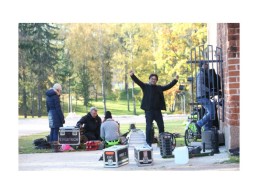
(Estonia) - Registration to participate in the programme of workshops and conferences at the TAVA2018 light festival is now open.
TAVA2018’s festival programme welcomes participants to take part in three different workshops during this year’s light event. IALD Architectural Lighting Design workshops will continue on from last year's success, and this year and will be lead by experienced international designers, including Dr. Amardeep M. Dugar (India), Johan Röklander (Sweden), Ruta Palionyte & Silmas Rinkevicus (Lithuania).
Sabine De Schutter, curator of the workshops, commented: “Lighting design workshops with hands-on methodology are quite rare in the world and we are expecting a big interest and lots of participants.”
Each participant will have a unique opportunity to work together with world-renowned lighting designers to co-create a lighting concept for three designated landmark buildings in the town of Tartu - the St. John’s Church, Tartu Toy Museum and Estonian Ministry of Education and Research.
The second part of the TAVA2018 event will include a mapping workshop, lead by video-artist Alyona Movko. Movko is most known for her video art and mapping including, most recently, the video mapping of Estonian singer Elina Nechayeva’s dress during the Eurovision Song Contest 2018.
Festival visitors can view the results of both of the workshops on October 25-28, at the TAVA2018 Lightpath.
A single day workshop on October 27 will be lead by Varvara&Mar, a duo of local active artists who will also curate the TAVA2018 cityspace light installations.
After the week of workshops, an international Lighting Design and Light Art Conference will take place. The speakers will include experienced professionals who are either working in, or researching in, the field of light, perception and public space. The first day will specifically focus on lighting design, whilst a lightfair will be running parallel to connect lighting companies, service providers and manufacturers together. The second day will host ‘ArtistTALK and LIGHTart’, an artistic and performance based day focusing on light-art.
Register now to take advantage of the limited early-bird prices that are on offer until the end of May. Most of the hotels and hostels of Tartu will support participants with special discounted prices for accomondation.
More information on the event, or how to get involved as a participant or sponsor, will be available in upcoming TAVA2018 newsletters or alternatively, visit: www.tartuvalgus.ee

Harvard Technology marks 25th anniversary with product development plans
(UK) – The investment in its R&D and new LED products comes as part of Harvard Technology’s 25th anniversary celebrations.
Harvard Technology is celebrating its 25th anniversary with a renewed investment in Research & Development (R&D) and plans to launch several new LED lighting products in 2018.
Over the past two decades, the company has launched a number of wireless connected lighting solutions including LeafNut, CoolLED programmable drivers, EyeNut and more recently the CoolLED Pro range - the next generation of the CoolLED range, which has achieved 10 million units sold worldwide.
Investing in R&D is a cornerstone of the company’s strategy, with Harvard Technology continuing its commitment to designing and manufacturing lighting solutions utilising leading edge LED technology.
The company will unveil a number of new lighting products throughout the remainder of 2018, including fresh additions to the CoolLED Pro range of LED drivers in the form of the CLi 40W DALI and the CLi15W Analogue drivers, as well as some significant enhancements to the emergency range, including the DALI self-test combined emergency driver and DALI self-test maintained emergency driver, plus much more.
Russell Fletcher, commercial director of Harvard Technology, commented: “During 2018 we will be investing heavily in new product development to increase the functionality and advanced features incorporated in our product ranges. This investment will give OEMs and specifiers more flexible lighting solutions that meet application-specific demands.
“We have also taken on board the feedback we have received from our customers and made a cultural shift back to our core values, which will focus on meeting customer requirements, developing quality leading edge products and delivering a best in class service for our OEM customers.”

Jonathan Speirs Scholarship Fund 2017/18 winners announced
(UK) – Two students, from the University of Belfast and University of Michigan respectively, have been awarded the 2017/18 Jonathan Speirs Scholarship Fund.
The winners for the 2017/18 Jonathan Speirs Scholarship Fund have been announced.
Katie Corr of Queen’s University, Belfast and Azadeh Omidfar Sawyer, currently a student at the University of Michigan are the recipients of this year’s fund.
John Roake, Chairman of the JSSF commented: “This year the other Trustees of the Jonathan Speirs Scholarship Fund and I wanted to broaden our ability to assist potential scholars. The additional generous support we have received from our Benefactors, Sponsors and Contributors has allowed us once again to award two scholarships for the 2017-2018 academic year.”
Roake and the other trustees were impressed by the high standard of entries from a broad range of students, at all stages of their courses, from many schools of architecture.
He added: “Despite the extremely strong competition we are happy to choose one worthy student from Queen’s University Belfast: Katie Corr and another from the University of Michigan: Azadeh Omidfar Sawyer. Whilst they come from different approaches, both scholars have that ‘special something’ we are always looking to find in the way they expressed their passion for light and architecture coupled with a clear financial need.
"We therefore heartily congratulate Katie and Azadeh and their respective institutions on being awarded the JSSF scholarships this year and look forward to following their future development and career progress.”
Corr is currently a Masters student at Queen’s University, Belfast. Her passion lies in rediscovering the ‘alchemy of light’, a term she uses to describe a rich understanding of how light evokes mood and influences the experience of space – something she feels has been lost in our obsession over light levels and performance.
Her exploration has involved modelling a scene from an Ingmar Bergman film in an effort to deconstruct the lighting composition, distilling the relationships that produce the mies-en-scene and give the film such character. She has studied the work of James Turrell and Luis Barragán and the way in which they carefully control light and use it to manage the effect of a space on people. This work has then informed the design of a small concert hall, and a lamp to be used within it; both with a strong focus on the experience of light. Her final thesis concerns the design of a music school centred on light, landscape and views, sited on the north coast of Ireland where the light is grey and even.
Corr plans to use her scholarship to help with the costs of completing her Masters, and in particular to create the models necessary to portray her ideas of the project.
Omidfar Sawyer is a PhD student at the University of Michigan. She has a focus on architecture that is highly integrative in design and performance, and her studies focus on how we can improve our approach to daylighting design, to balance occupant comfort and interest with sustainability concerns.
Her Masters thesis was completed at Harvard University, using advanced modelling technologies such as computational fluid dynamics and a five-axis robotic arm and castings to create integrated ornamental façade designs that increase indoor daylighting.
Her techniques showed a 35 percent reduction in energy use compared to ASHRAE standards, and her paper won the Daniel L. Shodek Award for Technology and Sustainability at the GSD.
For her doctoral work,Omidfar Sawyer is exploring the relationship between the objective quantifiable characteristics of daylight and the occupant’s subjective visual impressions.
Omidfar Sawyer plans to use the scholarship to travel to visit the buildings she has modelled as part of her work, to gain further perspective in comparing the simulated results with the actual physical environments.
ILP issue response to London Plan
(UK) – Following the release of the London Plan last December, the ILP has issued a response regarding its lack of lighting strategy.
The ILP has recently written a response to London Mayor Sadiq Khan about the lighting strategy outlined in his consultation for the ‘London Plan’ issued last December.
The London Plan is an important document for the English capital, as it outlines a vision for the development of London’s infrastructure over the next 25 years.
Of the plan, Khan said: “All planning decisions should follow London Plan policies, and it sets a policy framework for local plans across London.” It is also expected that other local authorities will refer to the London Plan when developing their own plans.
However, Graham Festenstein, Vice President Architectural for the ILP has raised his concerns with the plan, and its relative lack of reference to lighting. Across the document’s 526 pages, lighting is mentioned just six times, and according to Festenstein, these only address ‘relatively broad strokes’ regarding security, sports lighting and light pollution.
Speaking in the March edition of ILP’s Lighting Journal, he said that the London Plan “all but ignores the impact, and opportunity, of good lighting and lighting design, and fast-changing lighting technology.”
In response to the London Plan, the ILP has sent a letter to Sadiq Khan, written by Alan Jaques, President of the ILP. In this letter, Jaques says: “London is unusual as a major international city in that it does not have an overarching lighting strategy or masterplan for its public space, and although some London Boroughs have introduced lighting masterplans, notably the recent document prepared by the City of London, there is no strategic planning document that addresses the long term approach to public lighting across the capital.
“The London Plan is an excellent opportunity to rectify this, but unfortunately the present draft does not address many of the important issues and opportunities that could and should be included.”
The letter goes on to address areas in which lighting plays an important role throughout the city, from “creating a high quality public realm” and facilitating the night time economy, to aiding health and wellbeing. Jaques also discusses the rapid advances in lighting technology, particularly in energy efficient LED lighting, stating “it is critical that a long term strategic approach is taken to its selection and application”.
Jaques signs off the letter by saying: “We feel that lighting is too important to be consigned to the margins of planning policy. We wish to urge those with influence in policy making to move this essential element of our city life and health further up the agenda.”
Lightspace to launch book celebrating 20th anniversary
(Netherlands) – The crowd-funded publication will celebrate the works of Tamar Frank throughout the past 20 years.
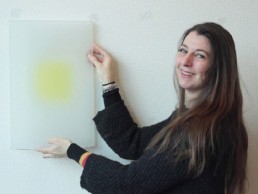
Tamar Frank, light artist and founder of Lightspace is celebrating the 20th anniversary of her practice with the launch of a new publication.
The book will serve as a retrospective, bringing together all of her work from the past 20 years, allowing readers the chance to see works that have since disappeared. “I make many artworks in public spaces, but even more temporary installations, where all that remains are the photos that I take,” Frank said. The centrefold will also feature a special artwork created by Frank that can only be seen in the dark.
While Frank has already received financial support from the Tijl Fonds – a Dutch culture fund specifically for female artists over the age of 40 – she has set up a crowd-funding page to raise the rest of the funds.
All donators to the campaign will have their name printed in the book, with increasing benefits for those who pledge more money, ranging from receiving a signed copy of the book, to attending a reception at the Angle Gallery in Amsterdam, to receiving a special, limited artwork created specifically for the anniversary: the multiple. This square light panel, limited to 20 signed and numbered pieces, slowly changes colour, and offers a unique opportunity, as it is the first time that Frank’s work has been available to buy.
Frank is expected to release the book in November 2018, at a special presentation at the Angle Gallery.
To view the crowd-funding campaign and make a donation, visit https://www.voordekunst.nl/projecten/6292-20-jaar-lightspace-het-boek-1
Lutron Electronics acquires Ketra
(USA) – The acquisition of Ketra by Lutron Electronics allows the firm to offer a more comprehensive light control solution.
Lutron Electronics has signed an agreement to acquire Ketra, whose Natural Light solutions provide light that seamlessly emulates daylight in interior spaces.
Founded in 2009 in Austin, Texas, Ketra offers lighting and control solutions that deliver customisable light in residential and commercial environments. Ketra’s selection of light sources creates high-quality white, pastels and saturated colours, which enhance the look of any space and allow you to tailor the light to meet the needs of the space.
“Our company started over 57 years ago with our founders innovating the electronic light dimmer – a device that delivered beautiful light controlled by the end user,” said Mike Pessina, co-CEO and president at Lutron Electronics. “Ketra’s range of quality light complements the Lutron light control product offering, and enables our customers to create a more comfortable, productive and pleasant environment at home and at work. We’re excited to deliver this expanded light control solution to the industry.”
Ed Blair, Lutron senior vice-president, said it was a natural extension for Lutron to expand its product portfolio with Ketra light sources and controls: “This acquisition allows Lutron to take care of its customers with the most comprehensive portfolio of light control solutions in the industry. Moreover, it uniquely positions Lutron for the greatest success in the market’s areas of growth, like simulated natural light, smart homes and buildings and tunable white.”
Nav Sooch, Ketra CEO, said the acquisition will provide numerous benefits to lighting professionals and homeowners alike. “Lutron’s global reach, unmatched service, support, and outstanding reputation offer new opportunities to expand the market for Ketra’s unique Natural Light offering,” he said. “We’re excited to join the Lutron family and together bring new solutions to our customers.”

Smart Energy from Zigbee Alliance chosen for Great Britain’s smart meter rollout
(UK) – As part of a drive for all homes to be fitted with smart meters by 2020, Great Britain has selected Smart Energy by the Zigbee Alliance as the solution.
The Zigbee Alliance, an organisation of companies creating, maintaining and delivering energy-efficient, open, global standards for the Internet of Things (IoT), has opened certification for its updated Smart Energy 1.4 application standard.
This new Certification Programme addresses the functionality needs that arose from Great Britain’s decision to mandate all energy suppliers to offer smart meters to every home by 2020 (a total of 26 million potential installations).
According to a report from Smart Energy Great Britain, there is rising national public awareness of the benefits of smart meters, from increasing billing accuracy to contributing to communities’ overall environmental efforts. The report states that 80-percent of people with a smart meter have taken steps to reduce their energy use, and more than 68-percent said they feel more conscious about their energy use.
To address this growing public awareness, Great Britain needed an existing, well-developed solution that is adaptable and easy to implement on an enormous scale, and Smart Energy by the Zigbee Alliance was chosen.
Last month, the Zigbee Alliance celebrated its first product to complete the certification programme and take on the benefits of the Smart Energy 1.4 standard — one of the Communications Hub solutions required for Great Britain’s smart metering programme, developed by Alliance member, smart energy solutions provider EDMI.
Some of the world’s leading utilities, energy service providers, product manufacturers and technology companies have deployed Zigbee Alliance Certified Smart Energy products, and are supporting its continued development as members of the Alliance. These include LG, EDMI, General Electric, Honeywell, Panasonic, Toshiba and Schneider Electric.
“Smart Energy delivers many benefits for its users,” said Victor Berrios, VP Technology for the Zigbee Alliance. “With Smart Energy Certified meters and consumption devices, our members empower utilities and consumers with the data necessary to make informed decisions about energy usage and help them meet worldwide energy challenges today and tomorrow.”
TAVA2018 announces workshop heads, artists and conference speakers
(Estonia) – Held from 20 October to 20 November, TAVA2018 will feature a number of IALD designers across its programme of workshops, conferences and installations.
Organisers of architectural lighting design and light art festival Tartu in Light have announced selected IALD architectural lighting design and mapping workshop heads, installation and indoor exhibition artists and conference speakers for this year’s event.
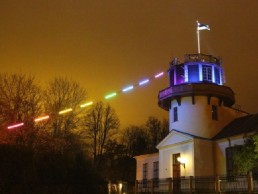
Held over a month from 20 October to 20 November, the second installment of Tartu in Light – TAVA2018 – will feature open-air installations, a lighting design conference and workshops, based around the themes of Radical Light and Resilient Design in a Changing World.
Elo Liiv, the main organiser of TAVA2018, said: “I am very happy that the TAVA festival has become popular among lighting design professionals and light artists.
“In total we had 93 applicants and it was quite difficult to make the final pick from such a good list of candidates.”
This year’s six open-air installations are curated by Varvara & Mar, with an aim to reconfigure and rethink six well-known places in the heart of Tartu’s Old Town. Participating artists include Immanuel Pax from Finland, Estonians Taavi Suisalu and Timo Toots, Mónica Ruiz Loyola from Mexico, Mischa Kuball from Germany, and Dane Jakob Tækker.
The lighting design conference, held on October 25, will feature such speakers as Amardeep M. Dugar from India, Claire Tomara from the United Kingdom, Turkey’s Emre Güneş, Johan Röklander and Lina Färje from Sweden, and Darío Nuñez Salazar from Iceland and Mexico.
The curators, Johan Moritz and Tina Wikström, said: “In a time of change we can all see that quality, sustainability and close connection to the end-user shows us that every shift of technology is finding its way back to its original purpose, that is the human itself.
“During this conference we will try to use examples of quality lighting design to showcase how it may have a lasting impression on the vision of future.”
One of the most exciting parts of TAVA2018 is the series of IALD architectural lighting design workshops. Held from October 20-24, the workshops will change the nightly appearance of three historical sites in Tartu: the buildings of Tartu Toy Museum, St. John’s Church and the Estonian Ministry of Education and Research.
Workshop heads Amardeep M. Dugar, Johan Röklander, Simas Rinkevicus and Ruta Palionyte will each lead a week long workshop for the sites. Sabine de Schutter, curator of the workshops, said: “The impact of lighting workshops is manifold. As we experienced in our last edition, they do not only create a beautifully lit city, they also spark interest in light design, and are, for many participants, an entry point into the profession. Here in Tartu, these lighting installations are regarded as prototypes for public lighting, and contributions to the development of lighting strategies and light awareness in Estonia.”
Indoor light art exhibitions under the theme of Vacuum as a School of Thought will run throughout the course of the festival. Curated by KIWA and featuring work from the likes of Cark Michael von Hausswolff, Liisa Hirsch, Tammo Sumera, Kristel Saan, Johannes Luik and Aivar Tõnso, the indoor exhibition will also feature the Dreamachine, a device causing hallucinations invented by Brion Gysein in 1959 and popularised by William Burroughs and Psychic TV.
Furthermore, the TAVA2018 programme will also feature a high-level mapping workshop, run form October 21-24, led by professionals from Limelight – a highly regarded artist group in the field of 3D art and light installations.
