Matt Waring - "The Light Within Us"

https://www.youtube.com/watch?v=-MwNfUyEl9M


arc's editor Matt Warring sat down with Phos to discuss the importance of biophilic design, and Pho's new book "The Light within Us".


Steve Meadows appointed to Recolight Board of Directors

(UK) – Steve Meadows will represent Signify on the Recolight Ltd board.

Meadows has been with Signify since 2007 and recently took the role of Services and Operations Director for West Europe.

On joining Recolight, Meadows says: I’m delighted to join the Recolight Board, taking over from my colleague Robert Sprott who represented Signify for over three years. I’m a champion of Recolight’s Circular Economy activity, and all they do to raise the profile of the need for action on sustainability in the lighting industry.  I really look forward to getting to know and supporting the Recolight team.”

Nigel Harvey, Chief Executive at Recolight, says: “We are delighted that Steve has joined our Board. The breadth of his experience, and knowledge of our industry will be invaluable to us as we expand the range of services, we offer to meet the changing needs of our Producer Members and collection partners.”

Meadows joins as non-Executive Director representing Recolight’s founding members along with board chair Andreas Adam, Senior Director at LEDVANCE,  and Andrew Clark, Financial Controller at Feilo Sylvania UK. Also on the board are Steven Reed, Commercial Manager at Trilux and Stephen Bell, Services Transformation & Compliance Director UK & IE at Zumtobel.

www.recolight.co.uk
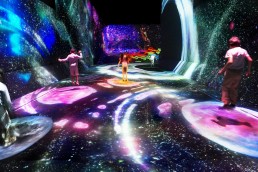

teamLab Planets earns Guinness World Record for most visited museum

(Tokyo) – teamLab’s immersive art museum, Planets, in Toyosu, Japan, welcomed 2,504,264 visitors from 1 April 2023 to 31 March 2024, earning a world record for the most visited museum in the single art group.

According to the Art Newspaper Visitor Figures 2023 survey, teamLab Planets surpassed other single-artist museums, such as the Van Gogh Museum in Amsterdam and the Picasso Museum in Barcelona.

This recognition is the second Guinness World Record, following the record set by teamLab Borderless: MORI Building Digital Museum in Odaiba in 2019, which attracted 2,198,284 visitors.

In 2025, teamLab Planets will expand with the addition of major new art space alongside the creative athletic space Athletics Forest, co-creative educational project Future Park, and more than 10 art installations.

Toshiyuki Inoko, Founder of teamLab, says: “Humans perceive the world with their bodies and think with their bodies. When you explore a complex, three-dimensional world with your own body, you physically perceive the world three-dimensionally and in turn your thoughts become three-dimensional. We started this project, Athletics Forest, with the hopes to enhance three-dimensional and higher-dimensional thinking.”

Inoko adds: “Spatial awareness is said to be correlated with innovation and creativity. I grew up in a rural area and played in the mountains, but in today's society and schools, the body is stationary. I think cities are surrounded too much by flat information such as books, TV, and smartphone screens. That is why we created a three-dimensional space that excessively demands the physical body. It is a space where people can perceive art with their physical bodies."

www.teamlab.art
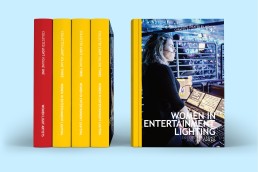


Light Collective announce third book in series

(Global) – UK-based Lighting consultancy Light Collective is set to release the third book in its series ‘Collected Light Volume three: Women in entertainment lighting’.

The new book focuses on women in the entertainment lighting industry, compiling stories worldwide that showcase their contributions and addressing the imbalance in the field. Light Collective will present the book in Paris, London and Las Vegas.

A launch party will be held at Aryton’s Paris showroom on 20 November. All 65 global contributors are invited to attend and will feature talks by Clementine Fletcher-Smith on light and architecture, Clara Daguin on light and fashion and, Christina Thanasoula on theatre lighting.

Ayrton, LED and laser lighting solution specialists, has partnered as sponsor, enabling the expansion of its focus from architectural to entertainment lighting and aims to support the next generation of women in the industry.

Contributors featured in the book include:  Alita Escobedo, Amy D Lux, Anna Turra, Anne Militello, Averil Bott, Bethany Gupwell, Beverly Emmons, Cara Hood, Cat Tate Starmer, Celine Royer, Christina Thanasoula, Danielle Feinberg, Daphne Ting-Yu Chu, Diana Kesselschmidt, Domino Mannheim, Elanor Higgins, Elena Armellini, Elisabetta Campanelli, Eliza Alexandropoulou, Ellen Ruge, Emily Bornt, Emma Weil, Erica D Hayes, Erica Lauren Maholmes, Eve Radwan, Fiametta Baldiserri, Heather Carson, Hema Maskowitz, Hetall Dedhhia, I – Hua Kao, Iga Pop, Jennifer Tipton, Jessica Greenberg, Jessica Hung Han Yun, Karla Lopez, Kat Borderud, Kathy A Perkins, Lauren King, Liliana Ladeluca, Lola Barroso, Lucy Carter, Luisa Fanciullacci Sodergren, Maria T Mendoza, Mary J Varher, Megumi Yatabe, Mildred M Moyo, Natalie Heckl, Natalie Wreyford, Paule Constable, Peggy Eisenhauer, Po- Hsin Liu, Randiane Aalberg Sandboe, Rie Uomori, Roma Flowers, Sian James-Holland, Sooner Routhier, Stacey Boggs, Subul Lodi, Susan M Nicholson, Tess Minor, Tiffany Spicer Keys, Yana Rits, Yang Yu, Zoe Dirse.

www.lightcollective.com


Workspace Design Show continues event growth

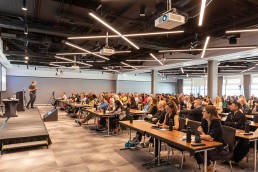
(Europe) – With eight months left to go, expansion continues to rise with a portfolio of international exhibitors for Workspace Design Show’s London and Amsterdam editions.

Taking place 26-27 Feb (London) and 5-6 November (Amsterdam) 2025, the show will feature a variety of brands that explore the latest trends in office specification from lighting, furniture, flooring, and more.

Using its platform in design knowledge exchange, the show is working with industry leaders to form an expert advisory group. Bringing expertise to its panel are Clare Bacchus, Global Lead at The Design House, Barclays; Collin Burry, Design Principal at Gensler; Allison English, Deputy CEO at Leesman; Gurvinder Khurana, Director at M Moser Associates; Matt Jackson, CEO at BDG architecture +design; Mark Simpson, Principal and Board Director at BDP; Dharshini Singh; Neil Usher, VP Places at Sage; and Dominic Williams, Interior Director of Ryder Interiors.

Esha and Charlie Bark-Jones, Founders of Workspace Design Show, say: “We are proud to work with such an exemplary community of international design brands and industry experts across both our London and Amsterdam shows. Providing a world-class platform that brings industry experts together to exchange knowledge and connect, with the goal of transforming the employee experience in our workplaces. We are excited to see the 2025 content developing so well with such amazing partners and design content—watch this space!”
 www.workspaceshow.co.uk


IALD Enlighten Europe welcomes international audience to London

(UK) – IALD Enlighten Europe drew 350 lighting professionals to London to discuss the latest research and perspectives in the industry.

Specifiers, manufacturers, educators, students, and researchers from more than 40 countries spent two days in educational seminars, roundtable discussions, peer networking, and social receptions.

30 professional development sessions were integrated into the schedule, allowing attendees to choose from various lighting design subjects from creative, technical, and ethical perspectives.

A theme throughout the conference was the relationship between lighting and the world it illuminates. From sustainability and respect for the environment to light poverty, representation, and light's physical and psychological impact on humanity, all of which encouraged conversations among all in attendance.

Andrea Hartranft, IALD President and design firm principal, says: “Seeing the energy this community demonstrates and its eagerness to continually progress the industry in practice, creativity, and ethics is genuinely extraordinary.

“So many different voices come together in these Enlighten conferences, and the exchange of ideas and perspectives is always positive. Particularly for a diverse European audience, opportunities like this to meet face-to-face and participate in such important conversations are invaluable. Nothing compares to being in a room or across the table from any number of peers from as many countries, hearing everyone’s opinions on globally relevant but regionally impactful issues.”

The next Enlighten conference will be IALD Enlighten Americas 2024, from 17-19 October in San Diego, California. Information regarding the schedule, sessions, speakers, and venue for that event is on the IALD website.
www.iald.org


Lighting Installation Workshop at ALBA: A Bright Success Beirut

(Lebanon) – The Interior Architecture section of the Lebanese Academy of Fine Arts (ALBA-UOB) in collaboration with Cherine Saroufim, hosted a dynamic interdisciplinary lighting installation workshop for students to learn lighting installation techniques and technologies.

Led by Dr. Amardeep Dugar of Victoria University of Wellington and Cherine Saroufim, MFA Lighting, Parsons - The New School, the event brought together students, professors, and industry sponsors for a unique learning experience. Students from the Dekwaneh and Koura campuses, coming from diverse creative fields such as architecture, interior design & architecture, animation, and visual arts, explored new concepts and experimented with innovative lighting techniques.

Participants were provided with a comprehensive understanding of the latest lighting installation techniques and technologies through interactive sessions, practical demonstrations, and collaborative projects; using theory and practice to examine the relationship between function, emotion, and context through real-life scenarios.

The workshop was sponsored by the IALD (International Association of Lighting Designers) and actively supported by WIL (Women in Lighting), their involvement emphasising the importance of diversity, sustainability, inclusivity, and high professional standards in lighting design.

The workshop highlighted the power of collaboration between educational, social, and professional communities. It was made possible through the support of a series of lighting sponsors, including Zumtobel Lighting, iGuzzini, Tridonic, LEDFlex Group, Lumiere Group Lighting, Linea Light Group, Simon Electric Center, Light Avenue by Debbas, and Unilux Group.

www.alba.edu.lb

www.iald.org

www.womeninlighting.com


Back from IALD Enlighten Europe

Last week, the 2024 edition of the IALD Enlighten Europe conference took place in Shoreditch, London. The highly anticipated event brought together hundreds of lighting professionals and leading industry members for two days of lectures, round-tables and interactive workshops on the hot topics from the industry's top researchers.

A total of 24 presentations were delivered including a key note presentation on the opening morning from Dr. Marco Bevolo - a leading researcher and Adjunct Professor of Design Futures at the World University of Design, India. In his keynote address, “The Future of Lighting Design Beyond Lighting Design,” Dr. Bevolo addressed emerging industry trends and provided a framework for urban futures and lighting design. He offered invaluable insights on how designers can appropriately integrate AI into the design process.

In addition to the conference sessions, the event featured excellent hospitality and social activities, including a boat party along the Thames, organised by LEDFlex Group.

Meanwhile, tune in to our social media channels and website for more information and an official recap of the event's highlights in our upcoming August/September issue.

www.iald.org


Martina Frattura - REBIRTH: The Elegance of Ukrainian Resilience in Couture

Martina Frattura tells arc about a recent collaboration that saw her illuminate a one-day fashion exhibition for luxury clothing brand Khris K.

This is the retrospective of last February’s one-day exhibition of the independent luxury clothing brand Khris K: a testimony to the unlimited potential of light as a means of expression; a bridge between people, disciplines, and emotions.

Originally from Ukraine, now based in Portugal, Khris K is a brand that conveys messages of strength and hope and stands for resilience and optimism. More than just illuminating garments, light becomes the vessel for the emotions and convictions of visionary designer Khrystyna Kurliak, embodying the brand’s dedication to natural materials, zero waste, craftsmanship and exclusivity, as well as the message of renewal in the new clothing collection.

Working with lighting designer Camila Grimaldi, when we were asked to join the event team last year, it was immediately clear that it would be more than just choosing and placing the lighting fixtures.

The nature of a one-day event enriched the work with new design details, requiring a more scenic than architectural approach, as well as much-needed new collaborations.

We were required to transport visitors into an environment that would allow them to resonate with the designer and her artistic message in an ethereal, all-white cultural space, the one chosen as the canvas on which to develop our vision.

Central to our concept was the notion of spiritual upliftment and healing through communion with nature. This is how ‘REBIRTH’ was conceived: an event with an approach as spectacular as it is functional, co-curated with the designer and her team, where light finds its stage.

Going out and subverting the schemes of the catwalk, we imagined a metaphorical river, where stories ebb and flow, reflecting the complexity of life itself. Imaginary waters, a non-linear body of water that breaks, meets roots, is sometimes shallow, sometimes deeper, and where light becomes the current that guides visitors along this journey. In the illuminated room, the audience is invited to explore, reflect, and stop as they walk along this imaginary ‘river’.

The audience is called to ‘return to the source’, guided by the verdant charm of a Ukrainian forest that materialises between the bare walls of the room, ceasing to be just a passive receptor, but becoming a co-protagonist, looking at the islands ‘on the banks’ that house the designed clothes.

One of the new design challenges was to work in synchrony with an ecological and sustainable floral design company, which was needed to transform the space into a forest of scents and shades, and with a company specialising in lighting supplies for events, which supported our concept and helped us to fit perfectly into the limited time allocated.

Even the realisation of the lighting scenarios, with assembly and disassembly in two days, would not have been possible without the guarantee of flexibility and adaptability until the last moments before the event.

These logistical constraints dictated the choice of lighting: battery-operated luminaries with Wi-Fi DMX control, supplemented by wired projectors.

While ‘the source’ was represented on a structure belonging to the space itself with a video projector, the river was suggested by a series of linear luminaires placed in sequence, where the same ‘chase effect’ became the guide to the route along the clothes.

The choice of the wireless power and control system, also for the lighting dedicated to the exhibited garments, proved to be a far-sighted choice that allowed us to integrate any modifications, as well as considerably shortening the installation time of the luminaires and the fluidity of our and the other installers’ work.

Light became the pivot linking fashion, nature and human emotions, casting a luminous spell that transcended the boundaries of physical space and remained in the hearts and minds of all who witnessed its splendour, all in the very short time of a single day’s event.

www.khrisk.com


Marcus Steffan - Clients: can’t live with them, can’t live without them

The dream project is often given to you by the dream client, but how do we find the right clients for us? Marcus Steffen breaks it down.

Clients are the ones who make our businesses work. It doesn’t matter if you dream of making the most amazing lighting design, if a client is not going to pay you to do it, you cannot realise that dream. But dealing with them can be difficult, and causes huge stress. So how do we find those dream clients?

Not everyone is a client

The first thing to realise, is that not every person is a client. Not every enquiry is the right one for you. As an example, MS Lighting Design specialises in residential and hospitality projects. If I get an enquiry for laying out a 600x600 grid in an office, or producing an external landscape design for a commercial property, I will tell them we are not the right designer for them. These are not right for us, and our service is not tailored to them.

This might sound counterintuitive for a person running a business, but actually it is essential to learn. You need to learn what you do and don’t do for your business, or who you are as a designer. Ask yourself, what do you enjoy doing? What kind of projects are you an expert in, more than anyone else?

It is often much better to be an expert in a small area rather than a jack-of-all-trades. Clients will often want to hire an expert if they value what they are getting. And the clients who do not value lighting design? They are not going to want to pay the fees you are justified earning.

Finding good clients

Finding the right client is not done when an enquiry comes in, but starts in your marketing and online presence. This can act as a filter to push away clients who are not the right fit before they even enquire, and attract ones who are a good fit. While this might reduce the total number of enquiries, it will increase the value and conversion of these clients. To go about this, you can do a number of things:

• Define what it is like working with your company. Show the client how it will be to work with you, the process you go through, and how you are organised. If they like the way you work, then there will be a lot less friction. If you work a four-day week, tell them, and then they cannot justify getting upset if you are not in the office on Fridays.

• Show your style. If you love colour in your projects, and big, flamboyant designs, then show this, so that you only get clients who want this style of design. Attract the designs you want, and say no to the ones that don’t align with what you love.

• Show off your values. What is it that you care about the most? Talk about that on your social and written media. If your company is focused heavily on sustainability and circular design, it is going to be challenging to work with a quick, cheap shop fitting company, which often has a lot of waste. Put these values front and centre and they will filter your enquiries to ones who want that expertise.

Avoiding bad clients

Finding good clients is often a case of being able to say no to the bad ones. The number one reason we say yes to bad clients is money. If you have no way to pay the bills at the end of the month, you will compromise. To really build those amazing partnerships, you have to wait for the right clients to arrive. To wait for them, you need to have money in the bank.

If you can cover expenses for at least three months (sometimes more depending on sector), you can say no to a project and reliably find something in the future. This is essential to both balance out the ebb and flow of work, and not be forced into accepting a poor project.

If you don’t have this buffer, the client can push down your fee, change the terms, etc, and you will still have a hard time saying no. This is also true if you are an employee looking for a job, where you need to be able to look for the right job, not a job right now.

Unfortunately, the other best way of avoiding a bad client is experience. Once you have had a few you start to recognise them. For example, if someone said to me that money is no object, I am going to run a mile. Money is always a consideration, so I am either talking with someone who has no control over the money, or no appreciation for it, and both of those are bad.

Keeping good clients

It costs on average approximately four times as much to acquire a new client as it does to keep an existing client. So, maintaining those relationships with good clients is essential. I have found there are three stages to knowing I am going to be able to work with someone long term:

1. First Impression

The first impression is important, so try to make one. All the cliches apply here (don’t be late, be prepared, etc).

2. First Invoice

When you send the first invoice, this is a key moment. We always take a deposit for starting a project, and how the client treats this is a good indicator of whether you will be working with them in the future. If it is argued over, paid late, etc, it is going to be difficult to work with them. There is no point doing the work if you are not getting paid on time. Conversely, those clients who pay the invoice immediately are often some of the best clients to work with. They appreciate your services, value them and want to make sure you are looked after.

3. First Mistake

This is a big one. There will be mistakes. We all work on hugely complicated projects which can take years to complete. If someone says that they never make a mistake, then they’re lying. Mistakes are a part of the work and working together to fix them is essential. How you approach the first mistake with the client will really define your relationship with them and this can come from both sides. If the first reaction is to blame someone and shift responsibility, then it will turn bad quickly. If the client engages with you and wants to work constructively to find a solution, then they have the potential to be a dream client.

www.mslightingdesign.co.uk


Dorothy Di Stefano

If you are a lighting, or design professional, and have been on LinkedIn at any point in the past few years, chances are high you will have seen a post from Dorothy Di Stefano. With a following of more than 70,000, the Australian art curator is something of a “LinkedIn Celebrity”, regularly sharing some of the most amazing and inspiring works of immersive art from across the globe.

Founder and Director of art collective Molten Immersive Art, Di Stefano has curated art events around the world, including the immense Noor Riyadh in Saudi Arabia, and stands as a leading authority in the captivating realm of narrative-based immersive and interactive art.

Following her star appearance at Light + Intelligent Building Middle East in Dubai at the turn of the year, arc was lucky enough to sit down with Di Stefano to find out more about her backstory, and what she looks for when curating immersive art events.

With a career that has spanned marketing and architectural drafting, to multimedia and audio engineering, Di Stefano describes her path as “more like a spontaneous dance than a meticulously planned journey”, but her fascination with immersive art has been there, in some fashion, since she was a child.

“My journey into the world of art and immersive experiences was fuelled by my love for the beauty around us and my unwavering passion for music,” she says. “My fascination with art, particularly at the intersection of technology, stems from a lifelong love of all things beautiful, and an innate curiosity about the world around me. Ever since I was a kid, I’ve been spellbound by the simple wonders of nature – the fluffy clouds, the crunchy leaves, and those breath-taking sunrises. These simple pleasures make me feel alive, and I found inspiration in the serene beauty of nature, the expressive power of music, and the captivating allure of visual art.

“However, it was the marriage of art and technology, including kinetic sculptures, robotics, and especially light art, that truly captured my imagination. I’ve always been drawn to the interplay of light and shadow, and how it can transform spaces and evoke emotions. Light art, with its ephemeral nature and ability to create an emotional connection, captivated me from the start.”

While Di Stefano’s career began in the graphic design industry, where she worked as a business development manager, she “seized the opportunity to expand the company’s horizons” as offshore design services became more accessible. As such, she transitioned the business into the space of video production and animation, a move she believes “opened up new avenues for growth and innovation”.

“I was on the lookout for our next move when I attended a speaker’s event where the topic of the power of experiences resonated deeply with me. It was a pivotal moment. The very next day, I redirected the studio’s focus, forging partnerships with cultural institutions in Australia to immerse ourselves in the art scene. It felt like the missing piece of the puzzle had finally fallen into place.”

This is where Molten Immersive Art was born; beginning its journey by focusing on crafting large-scale exhibitions primarily within Australia, Di Stefano soon envisioned a broader scope for the company, delving into curating events, festivals, and immersive art-based experiences, driven by a deep appreciation for the artists themselves.

“At the core of our vision is a belief that art is more than just the finished piece; it’s about the soulful, passionate humans behind the creations,” she continues. “Our aim is to amplify their voices and provide a platform for them to share their work with the world. Central to Molten’s ethos is the idea of integrating art into everyday life, making it an indispensable part of our existence, rather than a luxury.”

As it has evolved, Molten has expanded its horizons to include creative consulting and art direction, and is also set to launch an artist agency, serving as a hub for organisations, clients, and brands to discover the ideal artist for their projects. “Our strength lies in seeing the bigger picture and leading teams to manifest artistic visions, all while fostering relationships built on mutual respect and trust. Through collaboration and a shared passion for creativity, we aim to nurture an industry that fosters innovation and cultivates moments of pure magic.”

While Di Stefano hopes to bring art to the masses, a central focus for her is on the burgeoning world of immersive art, and the multi-dimensional experience that she believes “transcends the boundaries of traditional artwork” with a fusion of tangible and intangible factors.

She continues: “What truly intrigues me is the idea of making people not just viewers, but active participants in the artwork itself. The ability to blend artistic expression with cutting-edge technology to create immersive experiences that transcend traditional boundaries is what drew me into this field. Whether it’s the mesmerising dance of light and shadow, or the intricate choreography of a robotic installation, I’m endlessly fascinated by the transformative power of these art forms.

“At its core, immersive art is about more than just what you see or touch; it’s about engaging all the senses to create a truly transformative experience; it’s the interplay of visuals, sound, texture, and even scent, that transports viewers to another world, allowing them to escape the confines of their everyday lives and become fully immersed in the artwork.

“But perhaps the most ephemeral aspect of immersive art is the emotional connection it fosters. It’s about creating an environment where viewers feel not just like spectators, but like active participants in the artistic journey. Whether through interactive elements that invite viewers to become part of the artwork, or through the sheer power of the artist’s vision, immersive art has the ability to evoke a wide range of emotions, from awe and wonder to introspection and contemplation.

“Ultimately it’s about blurring the lines between reality and fiction, creating moments of wonder and connection that linger long after the experience is over, and tapping into the innate human desire for exploration and discovery, creating an environment where anything feels possible.”

As a medium that is built primarily on technology, and the participant’s interaction with it, immersive art has seen what Di Stefano refers to as “a remarkable evolution” over the past decade, which she believes has been “propelled by a convergence of technological innovation and a burgeoning appetite for more interactive and participatory experiences”.

Such innovation has seen the wide-scale adoption of technologies such as projection mapping, augmented reality, and interactive installations, which she adds have “revolutionised the way artists conceptualise and create immersive artworks”.

She continues: “Augmented reality, as an example, has opened up new possibilities for interactive storytelling, allowing viewers to engage with artworks in unprecedented ways and become active participants in the artistic experience.

“Artists are increasingly blurring the lines between physical and digital realms, integrating elements of both to create hybrid artworks that challenge our perceptions and expand our understanding of what constitutes art. From kinetic sculptures that come to life with the touch of a button, to interactive installations that respond to the movements of the audience, the boundaries of immersive art are constantly being pushed and redefined.

“Beyond LEDs, which have democratised access to lighting capabilities, artists have embraced a spectrum of new tools and techniques that have reshaped the landscape of light art. Advancements in sensors and other emerging technologies have expanded the repertoire of tools available to light artists, enabling them to push the boundaries of their craft and experiment with new forms of expression; whether it’s the integration of responsive sensors that interact with viewers, or the incorporation of kinetic elements that imbue artworks with a sense of motion and dynamism, these technologies have broadened the horizons of what is possible in the realm of light art, allowing viewers to actively engage with the artwork, influencing its behaviour and creating personalised experiences in real-time.

“Another significant change in the field has been the growing emphasis on inclusivity and accessibility, with artists striving to create experiences that are not only visually captivating but also emotionally resonant and socially relevant. There is a greater awareness of the power of art to foster connection, empathy, and understanding, and artists are harnessing this potential to create immersive experiences that address pressing social issues and promote positive change.”

One of the most significant developments in the field though, and one that is continuing to change, grow, and progress with each passing day, is the influx of AI. Although still in its infancy, we are already seeing how, working with AI, artists can revolutionise the way that they both conceptualise and execute their artworks.

Keeping a very keen eye on the ever-changing developments surrounding AI, Di Stefano is fascinated by the “plethora of possibilities” for enhancing immersive art installations, particularly in terms of interactivity and personalisation.

“By leveraging AI algorithms, artists can create dynamic and adaptive experiences that respond to the audience’s behaviour and emotions in real-time,” she adds. “For example, AI-driven systems can analyse biometric data such as facial expressions or heart rate to tailor the experience to the viewer’s mood, preferences, and physiological responses.

“It has also opened up new avenues for artistic exploration and experimentation, enabling artists to collaborate with intelligent systems to co-create artworks. Through techniques such as generative adversarial networks (GANs), and machine learning, artists can train AI models to generate novel and unexpected visual or auditory compositions, sparking new ideas and pushing the boundaries of traditional artistic practices.”

In her work as a curator of some of the biggest and best light art festivals around the world, Di Stefano has had a front row seat to witness some of the mind-blowing advancements in the field of immersive light art, and with this, has had the opportunity to work closely with some of the most sought-after names in the field – a privilege that she is acutely aware of.

“As someone deeply immersed in the industry, I find inspiration in the work of numerous artists and collectives who are pushing the boundaries of creativity and innovation, so to name a favourite artist is like asking me for my favourite sunrise.

“One artist whose work continually captivates me is Christopher Bauder, a master of light and sound whose installations are renowned for their transformative power and mesmerising beauty. His ability to create immersive environments that evoke a sense of wonder and awe is truly extraordinary, and his contributions to the field have been nothing short of groundbreaking.

“James Turrell’s ability to manipulate light and colour with precision and subtlety is truly inspiring, and his work serves as a constant source of fascination and inspiration for me.

“David Spriggs is one contemporary artist whose work continually leaves me in awe. His mastery of depth and transparency creates breathtaking three-dimensional installations that seem to defy gravity and perception.

“Projection and installation artist, Yann Nguema’s ability to seamlessly blend intricate visuals with captivating soundscapes, that transport viewers to otherworldly realms, is something to behold.

“I also love the work of SpY, with his thought-provoking urban interventions and playful subversions of public spaces that challenge viewers to reconsider their surroundings and question the status quo. His art installations prompt reflection on societal norms and expectations, sparking conversations and engaging communities in unexpected ways.”

However, while there are many established artists whose work deserves recognition, Di Stefano believes it is also equally important to shine a spotlight on emerging artists and lesser-known practitioners who are “making waves” in the art world.

In this regard, there are a few names for which she reserves special praise: “One such artist who I believe deserves more recognition is Chantal Matar, an architect and generative designer whose work blurs the boundaries between art, architecture, and technology. Her innovative approach to spatial design and her use of artificial intelligence to craft unique and captivating experiences sets her apart.

“Another emerging artist whose work shows great promise is Joon Moon, whose mastery of light and shadow creates enchanting narratives that linger long after the experience ends. His ability to fuse technology and art to create immersive experiences that resonate deeply with viewers is truly remarkable, and I believe he has the potential to make a significant impact on the future of immersive art.

“Additionally, I’m in love with everything created by Studio McGuire. Their ability to create rich and captivating narratives that transport audiences to new worlds is truly inspiring.

“I am always on the lookout for breakthrough artists who are pushing the boundaries of what is possible in the space. Whether it’s through experimental techniques, innovative use of technology, or thought-provoking storytelling, these artists are shaping the future of art in exciting and unexpected ways.”

One of the defining moments of Di Stefano’s career to date came in 2021, when she was invited to advise the Ministry of Culture in Saudi Arabia – giving her the opportunity to collaborate with other global experts representing a wide array of fields, from literature and performance to museums and music.

“Our mission was to craft concepts for future events and festivals in the region. Being part of such a massive project not only got my creative juices flowing, but also broadened my perspective on the arts.”

This collaboration led her to curating the 2022 edition of Noor Riyadh, the world’s largest light art festival, and working alongside a whole host of leading artists – including Christopher Bauder, Daan Roosegaarde, Yann Kersalé, teamLab, SpY, Arne Quinze, Grimanesa Amorós, and Pauline David. A landmark achievement, however looking back on the event, its scale is not what she is most proud of.

“Witnessing the moments of connection and collaboration that blossomed throughout the festival was immensely rewarding. Observing artists from diverse backgrounds unite, discover mutual admiration for each other’s work, and discuss future collaborations was truly inspiring,” she recalls. “These interactions not only facilitated creative exchange, but also forged enduring connections transcending borders and cultures.

“I am also extremely proud of the impact the artwork had on the local culture and community. Seeing how the beautiful artworks resonated with audiences, bringing profound wonder and joy to people’s lives, was deeply gratifying. It reaffirmed the transformative power of art to inspire, uplift, and unite people across cultural divides.”

Across the events that Di Stefano curates she primarily looks to commission artists to create site-specific, bespoke pieces that are tailored to the narrative and the unique characteristics and ambience of the venue in question. This, she feels, “allows for a deeper integration of the artwork with the environment, creating a more immersive and cohesive experience for the audience”. Commissioning new works also means that the artists can realise their vision in a way that is “harmonious with the space and the overall theme of the event,” she adds.

“While I do occasionally include existing installations that have appeared elsewhere [such as Daan Roosegaarde’s Waterlicht at Noor Riyadh], the majority of the artworks featured in our events are new commissions. This not only ensures that each event offers fresh and exciting experiences for attendees, but also allows us to support and showcase the creative talents of emerging and established artists alike.

“When commissioning new works, I prioritise open communication and collaboration with the artists to ensure that their vision is preserved, while also adapting the artwork to the specific site and context. This often involves conducting site visits, discussing the unique features and constraints of the venue, and exploring how the artwork can interact with its surroundings in meaningful ways.”

This interaction with its surroundings is an integral part of an installation’s success, Di Stefano feels, adding that the context and setting of a piece “significantly influences the way audiences perceive and interact with the artwork”, as the environment can profoundly impact the overall experience, shaping the mood, atmosphere, and emotional resonance of the piece.

“One of the key aspects of immersive art is the ability to engage with the surrounding space in a way that blurs the boundaries between the artwork and its environment,” she adds. “By considering the context and setting of the artwork, artists can create experiences that feel integrated and harmonious within the space, enhancing the sense of immersion and presence for the audience.

“Context and setting can also provide layers of meaning and depth to immersive artworks, enriching the narrative and expanding the viewer’s understanding of the piece. Whether situated in a historic building, a natural landscape, or a contemporary gallery space, the context of the artwork can evoke associations, memories, and emotions that add complexity and resonance to the overall experience. Setting can also influence the way audiences perceive time, space, and scale, allowing for a more dynamic and multi-dimensional engagement with the artwork. For example, an outdoor installation may evoke feelings of expansiveness and connection to nature, while an intimate indoor setting may create a sense of closeness and introspection.”

With the ever-changing nature of the medium, from the technical advancements, adoptions of new methods and concepts, and even the growing popularity of light art installations and events, immersive art as a whole is in a near-constant state of evolution. As part of this evolution, Di Stefano feels that the medium is moving beyond isolated visitor experiences, becoming more integrated into the wider urban environment – a shift that she believes reflects a growing recognition of the potential for immersive art to enrich public spaces, foster community engagement, and contribute to the cultural identity of cities.

“Traditionally, immersive art has often been associated with dedicated exhibition spaces, galleries, or temporary installations that offer immersive experiences for individual visitors or small groups. However, there is a growing trend towards integrating it into the fabric of urban environments, where it can be experienced by a broader audience in everyday settings,” she adds.

“One manifestation of this trend is the increasing use of public spaces such as parks, plazas, and streetscapes as venues for immersive art installations and events. By activating under-utilised or overlooked spaces with artworks, cities can create vibrant cultural hubs that attract residents and visitors alike, fostering a sense of community and civic pride, revitalising neighbourhoods, and enhancing the urban experience.”

As for the future of the medium, Di Stefano believes that there are several emerging trends that will reshape the landscape of immersive art and “chart a course for future evolution”.

One such trend that she predicts is the growing fusion of virtual and physical realms, “erasing the boundaries between digital and tangible encounters”.

She continues: “This integration offers a fertile ground for crafting immersive narratives that seamlessly blend the real with the virtual, providing audiences with captivating and deeply engaging experiences.

“Another notable trend is the surge in interactive storytelling, where participants actively shape the narrative and outcomes of their experiences. This trend reflects a rising demand for personalised and participatory encounters that foster deeper engagement and connection with audiences.

“Looking forward, advancements in technology such as augmented reality, virtual reality, and mixed reality, are driving innovation in the industry. These technologies are becoming increasingly accessible and affordable, democratising the creation and consumption of immersive experiences, while pushing the boundaries of immersion and realism.

“The industry is also poised to further embrace multi-sensory experiences that engage all five senses, offering heightened levels of immersion and impact. This shift will likely catalyse the development of novel technologies and techniques to incorporate tactile, olfactory, and gustatory elements into immersive encounters.

“I’m also expecting to see increased collaboration and convergence with adjacent creative sectors such as gaming, film, and live entertainment. This interdisciplinary exchange of ideas and expertise promises to spawn a new wave of ambitious and innovative immersive experiences that push the boundaries of storytelling and immersion, offering audiences unparalleled adventures and discoveries.”

As for any aspiring artists and designers wanting to enter the brave new world of immersive art and use light as a medium for artistic expression, Di Stefano has the following advice:

“Firstly, when delving into this world, it’s crucial to embark on a journey of experimentation and exploration. This involves fearlessly exploring various techniques, materials, and technologies to uncover your distinct artistic voice.

“Collaboration is pivotal, offering opportunities to work with fellow artists, technologists, and experts in related fields. By collaborating, you can expand your creative horizons, gain new insights, and embark on ventures that lead to innovative breakthroughs. Such efforts often yield unexpected discoveries, enriching your artistic practice and fostering community.

“Considering the audience experience is paramount when crafting immersive pieces. Factors such as space, scale, and interactivity play crucial roles in creating captivating experiences that resonate with viewers. By prioritising the audience’s perspective, artists can cultivate meaningful connections and evoke powerful emotional responses through their artwork.

“Embracing advancements in technology, such as interactive sensors, empowers artists to create dynamic installations. Technology serves as a tool for enhancing the impact and versatility of artwork, offering new avenues for creative expression, and pushing boundaries of innovation.

“Infusing immersive pieces with narrative elements adds depth and meaning, inviting viewers to engage emotionally. Whether exploring personal themes or addressing social issues, storytelling enriches the viewer experience and creates compelling narratives that resonate long after the encounter.

“Iterating and refining artwork based on feedback and personal vision is crucial for growth. Remaining open to feedback, embracing experimentation, and continued learning are integral aspects of the artistic journey. Through continuous refinement, artists can hone their craft and create impactful artwork.

“And finally, drawing inspiration from diverse sources fuels creativity and passion. Staying curious and receptive to new ideas cultivates fertile ground for artistic expression.”

Reflecting on her own personal journey, which has seen her become widely regarded as the leading authority on immersive works of art, and an internet celebrity in the design world, Di Stefano remains humble, but is glad that the journey that she has taken has led her to the position that she is in.

“From marketing and architectural drafting to multimedia and audio engineering, I’ve explored a wide array of fields in the constant search for ‘what do I want to be when I grow up’,” she concludes.

“Looking back, it’s crazy to think how every little twist and turn led me here. From my studies to picking up skills along the way, each step has played a part in shaping my career in this industry. And while it definitely hasn’t been smooth sailing, I wouldn’t change a thing. I’m pretty confident that I have the best job in the world.”

www.moltenimmersiveart.com


Islamic Arts Biennale Jeddah, Saudi Arabia

An airport isn’t typically somewhere you would expect to find an art gallery, but nestled within the illustrious Western Hajj Terminal at King Abdulaziz International Airport – a stunning architectural creation by SOM in 1981 – lies the Islamic Arts Biennale. Steeped in the cultural tapestry of Saudi Arabia’s heritage, the site, opened in 2023, looks to combine history and modernity to tell a captivating tale of past, present, and future.

Designed by Italian studio Gioforma Architects, with lighting design from GLARE, the project has been recognised throughout the design world, picking up a number of awards, including the Structures High category at this year’s [d]arc awards.

With such a significant cultural heritage attached to the site, Camila Blanco, Creative Director at GLARE, explains to arc why this was more than your average gallery lighting project.

“The Hajj Terminal at the King Abdulaziz Airport is not an ordinary airport terminal; it is well known because of its tent structures, designed to house the influx of religious pilgrims that stream into KSA as part of the annual Hajj pilgrimage to Makkah. The terminal was not designed to be a religious space, but is rather a space that evokes the spirit of the Hajj.

“The Islamic Biennale serves as a centre of excellence for fostering cultural dialogues and for presenting and disseminating ideas and practices in the contemporary arts world. The design itself is dynamically inserted into and beyond the vast tent structures through refined continuity, depth, and visual composition. Interconnected multi-level spaces effortlessly flow into one-another, all of which are conceived as intriguing and integral elements of the biennale experience.

“The internal spaces are immersed in a feeling of grounding serenity; the ideal blank spaces in which art can express itself without the limits of the external world. Material versatility, framed views, apertures and doorways foster moments of discovery and surprise as visitors encounter artworks in a narrative that moves beyond the boundaries of architecture. Our approach was to create a language that could pay respect to history, while welcoming the new architecture, creating a seamless integration in time.”

In order to achieve this goal, the lighting designers were provided with a comprehensive design brief by the architect, complete with renders and visuals, which were “instrumental” in getting the project’s envisioned aesthetic and mood, as well as showing how significant a role that lighting can play.

“The architects emphasised a minimalist and understated approach, with a strong emphasis on seamlessly integrating lighting into the architecture,” GLARE says. “They expressed a desire for concealed light sources to accentuate the building’s textures and facilitate a harmonious transition between indoor and outdoor spaces. Collaborating closely, we designed custom solutions to discretely incorporate lighting elements, ensuring they organically complemented the overall architectural vision.

“In addition to the aesthetic considerations, the client provided clear directives regarding the lighting requirements for the exhibition spaces, which were the focal point of the project. So, we had to deliver a versatile and efficient lighting solution, both indoors and outdoors, ensuring adaptability and functionality within these spaces.”

Central to the lighting design concept was the “delicate dance” between honouring tradition and embracing innovation. To do this, GLARE’s lighting design unfolds through three defining elements – Ethereal, Breathable, and Reflective.

GLARE explains further: “Ethereal is an intangible, airy, and subtle sense of the light, as the space would be heavenly lit. This was characterised by seamless lighting details spread to highlight the architecture, such as shadow gaps, coves, and trimless fittings that would subtly unveil the buildings, while drawing the eye with a mesmerising allure. Breathable, as spaces effortlessly blended indoors and out, transcending conventional boundaries; Reflective was the word we used to describe how the modern Mashrabiya alight from within, bestowing a floating grace upon the water plaza.”

To realise a lighting concept that would honour both the tradition and modernity of the space, GLARE strategically used three distinct types of lighting tailored to specific needs; functional lighting serves practical purposes, such as daily activities and exhibition setup, both indoors and outdoors. Architectural lighting was utilised to enhance building features, using techniques like cove lighting and downlighting. “In exhibition spaces, we implemented grazing wall lighting effects and focal point highlighting to accentuate artworks,” GLARE adds.

“Exhibition lighting was meticulously designed to illuminate artworks in galleries with different ceiling configurations, ensuring flexibility to accommodate varying exhibition setups. Indoors, exhibition galleries featured suspended fixtures for high ceilings and recessed tracks for low ceilings. We also enhanced the ambience with decorative chandeliers and other unique pieces, crafting distinctive focal points throughout the space.”

With the venue destined to host both annual and biannual art exhibitions, GLARE conceived of an adaptable indoor lighting system that empowers future exhibition designers with track systems and metal meshes for optimal light placement. Doing so meant that the team had to take a step back and show some humility.

“Lighting serves as a medium of communication between art and observer, providing ideal canvases for artwork to shine without overpowering it. To meet the diverse needs of hosting art exhibitions, we implemented a versatile lighting scheme tailored to adapt to various activities.

“We integrated metal grid ceilings as a prominent feature, serving a dual purpose of concealing structural and mechanical elements while hosting diffused lighting fixtures. This general layer of light ensures optimal illumination for artwork setup, maintenance, and other activities requiring higher lighting levels.

“For exhibition spaces, we used kinetic lighting tracks and bars specifically designed to showcase artworks. Utilising spotlights with exchangeable lenses facilitated effortless adjustment of light distributions to suit different exhibits. Precisely dimmed spotlights met both scenographic and conservation requirements, offering a flexible infrastructure. Additionally, a variety of beam angles provided versatility for accent lighting and floodlighting.

“Wallwashers were then strategically installed in exhibition galleries to achieve a uniform distribution of light across both vertical and horizontal planes. This enhancement significantly enhances the perception of the exhibition space, contributing to its overall ambience and appeal.

“By implementing these layers of light, we ensured the venue not only meets, but exceeds the demands of hosting diverse art exhibitions, transforming it into a dynamic cultural hub capable of showcasing paintings, sculptures, performing arts, and more, with sophistication and flexibility.”

Elsewhere, outdoor lighting was designed to highlight architectural features and create a distinctive night-time ambience. To do this, GLARE employed various layers of light to guide visitors and enhance visibility, while functional lighting was integrated for service areas and parking lots, striking a balance between functionality and aesthetics.

“We incorporated outdoor floor-recessed fixtures, strategically positioned to graze from the bottom to the top of the building, providing a glare-free illumination with a soft, inviting warmth. Furthermore, we utilised poles and bollards to accentuate specific elements of the landscape.”

Concealed façade lighting artfully minimises light pollution, preserving the night sky, while accentuating the architectural grandeur of the building. The adjacent water plaza serves as a “serene companion” to the architecture, creating enchanting reflections across its surface and helping to transform the plaza into a natural gathering haven. GLARE explains how the lighting helps in facilitating this captivating atmosphere: “The water plaza outside was a key consideration from the outset of our design process. The entire design team shared a vision for the plaza to serve as a reflective surface, enhancing the overall aesthetic by beautifully mirroring the building and its lighting.

“Achieving this effect was a point of pride for us, and we take great joy in witnessing the interplay of light and water. We were aware of the distance between the water and the buildings, which meant we wouldn’t achieve the caustic effect on the façades. Despite this, the reflective qualities of the water still contribute significantly to the visual appeal of the space, adding depth and dimension to the overall experience.”

The lighting designers also opted for warmer colour temperatures of lighting; considering the material finishes and the desired atmosphere, these were preferred outdoors to create inviting spaces while complementing the architecture.

One of the primary objectives for GLARE came in seamlessly integrating various surfaces – concrete, glass, and the intricate Arabic Mashrabiya – into a “unified, visually enchanting tapestry”; each element illuminated, each detail meticulously brought to life.

“Our philosophy centred on the idea of interplay, where lighting and architecture intertwine like a mesh or tapestry,” GLARE says. “From the very beginning, the design team envisioned the lighting as an integral part of the architectural concept. Just as the clusters rise from the sand, our lighting effects were designed to harmonise with the architectural elements, enhancing their beauty and creating a sense of cohesion throughout the space. From subtle uplighting effects on the façades, to carefully designed galleries, ensuring that every aspect of the project worked in concert to create a unified visual experience.”

Within this delicate interplay came the balancing act of merging the new, modern architecture with the historic pilgrim tents. To effectively do this, the designers aimed for the building’s illumination to serve as a “subtle backdrop”, rather than imposing its presence on the surrounding environment: “To achieve this, we opted for minimal and understated lighting, with static fixtures, with warm colour temperature, mostly recessed in the ground or custom-made coves, prioritising clarity and providing ample space for the exhibition, which held primary importance within the space.”

A defining factor in this fusion of new and old came in the modern Marshabiya – itself something of a contradiction, GLARE believes that this feature serves as a “connection element between antiquity and modernity.

“The Mashrabiya is easily recognisable to visitors and aids in the seamless transition between the two. In our approach, we leveraged lighting effects to accentuate the beauty of the Mashrabiya, creating captivating shadows and patterns that are projected onto the floor and contribute to the reflection of clusters on the main water plaza.

“Some elements were illuminated perpendicularly to highlight their intricate patterns, while others were gently washed with light to emphasise their overall presence and significance within the space. By employing these techniques, we ensured that the modern Mashrabiya not only serves as a design feature but also as a symbol of cultural continuity and innovation.”

The project was, of course, not without its challenges – scope, longevity, calculations, etc – but for GLARE, time was the biggest enemy. “Undoubtedly, working on a Design & Build project presented numerous challenges, with time constraints being one of the most significant hurdles. We had a mere four months to navigate the entire design process, from conceptualisation to detailing.

“However, the strength of our company lies in the cohesion of our design team. Despite geographical barriers, with team members stationed in both Italy and the UAE, our collective dedication and tireless efforts ensured we met the deadline with excellence. We leveraged our international presence to our advantage, enabling close collaboration with stakeholders and facilitating effective communication throughout the project. This collaborative approach and unwavering commitment were instrumental in overcoming the challenges we encountered, ensuring the successful realisation of our vision for the project.”

To that end, the team at GLARE can look back on the project with a great deal of pride, not least because of the accolades that the project has garnered since its opening last year.

Reflecting on the project’s culmination, GLARE says: “Witnessing the completion of the project and seeing our lighting design come to life evokes a truly magical feeling for us. It is incredibly rewarding to see the space teeming with visitors who are enjoying and appreciating what we’ve created.

“In terms of the lighting design itself, we’re delighted with the outcome. The lighting design serves as a component of the space, seamlessly integrated with the architecture to enhance the overall visitor experience. Outdoors, the lighting fulfils a crucial role in connecting the various clusters, guiding visitors along their journey through the space. As visitors move between the pavilions, they embark on an emotional pathway, each step revealing the beauty of a new building, illuminated by distinct lighting layers. This deliberate interplay between architecture and lighting elevates the ambiance, fostering a sense of wonder and discovery that enriches the visitor experience and leaves a lasting impression.”

www.glare.lighting