
Redefining Trade Show Booths: Top Sustainable Stands at Light + Building
The buzzword dominating conversations today is sustainability. As more brands commit to developing systems and products that are environmentally viable, the focus on sustainability is becoming increasingly more pervasive, even transcending into brands’ tradeshow initiatives. Messe Frankfurt has taken a proactive stance themselves in supporting sustainable events with the introduction of a new category in the DesignPlus Awards, honouring the best sustainable stands showcased at the event.
In our visits to Light + Building in recent years we’ve noticed the trend towards downsizing stands and downscaling grandiosity. However, what these stands may have lost in their physical size, they have gained in their positive impact. As observers, we were thoroughly impressed with the creativity and intelligence in many of this year’s efforts and have rounded up a handful of stands built with sustainability in mind.
Linea Light Group
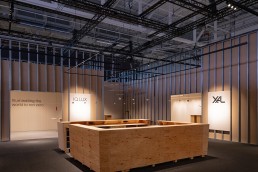
Linea Light Group this year wanted its stand to reflect its environmental efficiency and newfound philosophy: “Nothing is thrown away, everything is regenerated”. The structure of the stand is completely reusable, helping ensure to reduce environmental impact, use of resources, and promote an ecological and sustainable approach. At the end of the exhibition, the stand will be completely recycled: the wooden parts of the struct ure will be recovered and reused, while the separating and covering tarpaulins will be given a new lease of life by being transformed into clutch bags.
In recent years Linea Light Group’s primary objective has been to extend the product range using fewer components in an initiative to improve environmental impact. Reducing the complexity of the production system simplifies supply chain management and reduces the time and costs. By optimising production processes, the same level of output can be produced with less raw material, resulting in greater efficiency and less waste. Ultimately, minimising waste and working towards sustainable production and products.
XAL
XAL was, in previous years, renowned at Light + Building for its elaborate and resource-intensive trade show booths, which previously required up to 25 trucks for transportation. However, at this year’s show the company radically downsized to just three trucks. Its booth design, conceived with sustainability and longevity as its core, was the result of collaborative efforts across departments, aiming for a stand that could serve a second life with durability in mind.
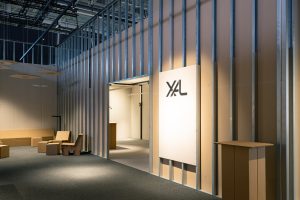
This approach included utilising non-cut, non-filled drywall panels to ensure their intact condition for potential reuse, repurposing transport crates as furniture inside the stand to reduce transport volume by 44% and prioritising reuse over constant recycling, exemplified by the repurposed kitchen from previous shows and modular, easily transportable bar and seating furniture made from undyed, interlocking cardboard. Additionally, existing furniture from past trade shows was also repurposed, while the carpet on the stand will go on to be installed in XAL’s Graz headquarter, or used as raw material for 3D printing.
By shifting from large stands to consciously designed, reusable structures, XAL sends a powerful message to the Light + Building followers: “Today, tomorrow and in the future”. Affirming its commitment to progress not just today but for the future and acknowledging its broader role within the context of humanity as more than just a lighting brand.
SGM Lighting
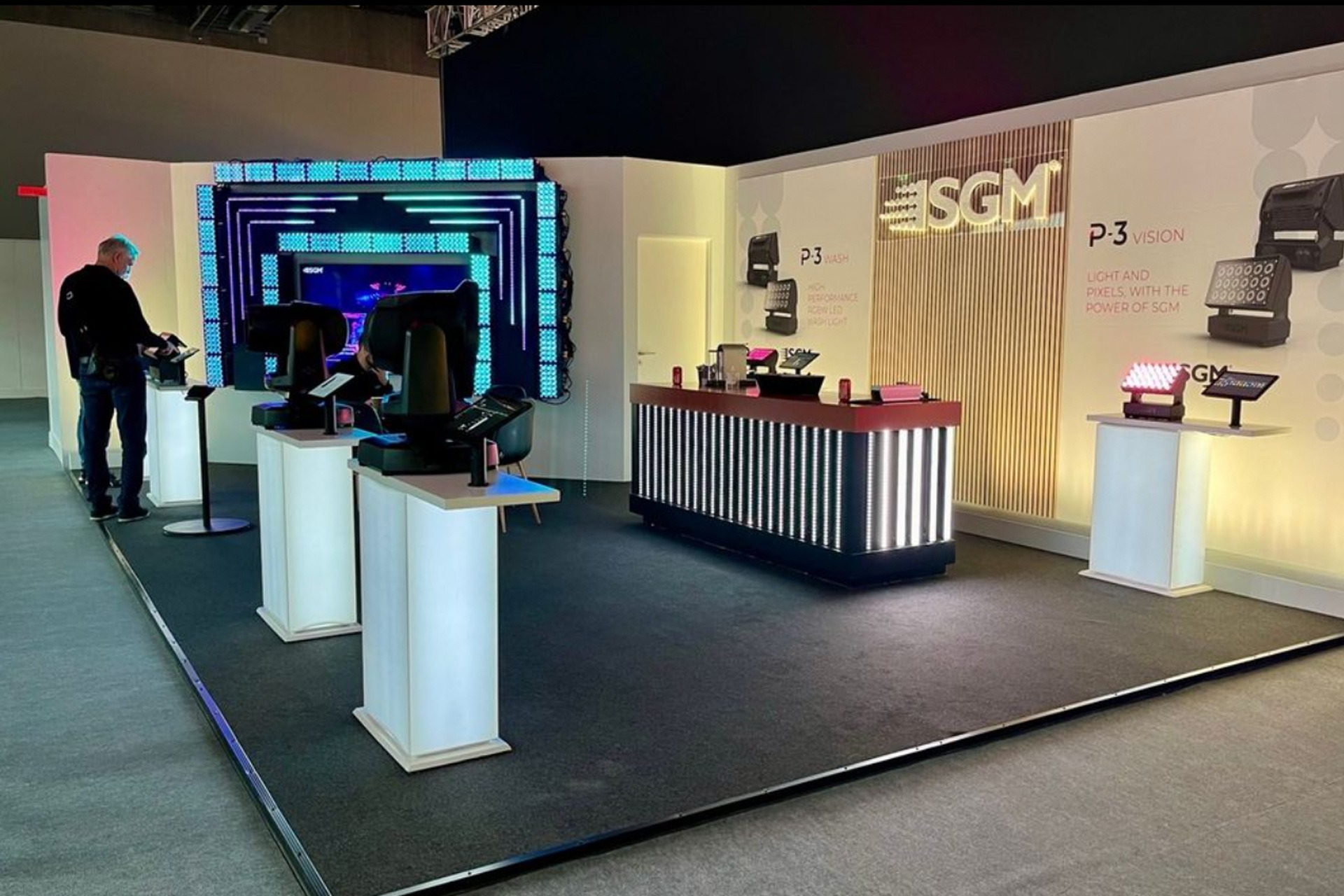
Continuing with the concepts around reuse, SGMlighting told arc most of the materials used for the stand were on at least their second to third use of at least four shows. Custom made by the in-house trade show team, all the materials were chosen to last for future-use purposes after the trade show.
The choice to be sustainable is a commitment and SGM’s seriousness towards that commitment is exemplified by including it as part of the company’s internal policy to create sustainable booth designs. The sustainability initiatives at trade shows are there to reflect the company’s approach in product development, to reduce emissions and waste wherever possible. SGM admits the design behind the stand is not just environmentally responsible but economically sensible. SGM says it prides itself on being able to offer sustainable and durable solutions, something that is quintessential when representing the company at Light + Building.

Design Plus Awards winners announced at Light + Building
(Germany) – Eleven brands were awarded the DesignPlus award during Light + Building’s opening day, at the show’s Design Plaza.
33 nominees were selected from 100 submissions, from which the winners were chosen. Both the nominated and the winning products were displayed in an exclusive exhibition in the foyer of Hall 5.1 for the entire duration of Light + Building.
Applicants submitted their solution in on one of three categories: Light + Creation PLUS, Sustainability + Efficiency PLUS, Smart + Connectivity PLUS. There was also a Sustainable Exhibition Stand category.
Light + Creation winners included: IXA Floor by Artemide, °plug by Eden Design, Munda Textile Lichtsysteme by Munda Textile Lichtsysteme, Junistar Bio by SG leuchten/ SG Armaturen AS, NS by Smarttech Group.
Winning lighting solutions across the two other categories included Blu2Light LED Treiber für Batteriesysteme und Solarleuchten, and Hecker EnergyVision Genll in the Sustainbility + Efficiency PLUS category, and Buscg art linear/ ALBA by Busch-Jaegar Elecktro in Smart + Creativity PLUS category.
Zumtobel Group, Midgard Licht, Sattler Leachten, Inotec Sicherheitstechnik and Schneider Electric were acknowledged in the Sustainable Exhibition Stand category – introduced this year as part of Frankfurt Messe’s responsibility in supporting sustainable events.
www.light-building.com/designplus
Casambi appoints new VP of Sales for EMEA
(Finland) - Casambi has appointed Mark Needham as Vice President of Sales for the EMEA region.
Needham brings 30-years of experience in the lighting industry, having previously served as the Managing Director at Lumineux Group. Other key leadership positions include Venture Lighting Europe Ltd, Harvard Power Systems, and Fulham Lighting Company, where he directed sales for the European market. The appointment marks another successful expansion within the smart lighting sector for Casambi.
Mark McClear, CEO of Casambi, says: “With a rich history in European sales leadership, Mark brings a deep understanding of the regional market. His lighting expertise spans both OEM and channel sales, offering a well-rounded perspective. He’ll play a crucial role in driving Casambi’s sales strategies, fostering partnerships, and implementing fresh approaches to meet the evolving needs of the smart lighting market. We’re delighted to welcome him aboard.”
Needham adds: “I am delighted to have been invited to join Casambi, working with an outstanding team and technology offering. Casambi’s remarkable success, first establishing itself as the defacto wireless lighting control standard with more than 5 million devices sold worldwide, coupled with imminent and exciting new product launches, all speak volumes about the company’s impact on the industry. I believe the market is ripe for the innovative solutions that Casambi brings to the table.”
www.casambi.com
Zumtobel win Guinness World Record for largest continuous light
(Germany) – Zumtobel has set the world record title for largest continuous ceiling light, measuring more than 200sqm.
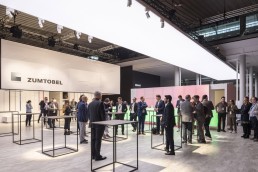
Debuting Ceiluma at the Light + Building show at Messe Frankfurt, Zumtobel and manufacturing partner Typico installed the 45.029m x 4.503m light above its stand for visitors to see.
Inspired by natural canopies, the LED was created to give a daylight-like illumination. It’s homogenic and frameless design displays no joints, splices, or disruptions to create the illusion of a piece of the sky.
The size was achieved using translucent fabric characterised by its low weight, acoustic effectiveness, and thermal permeability. With its sound-absorbing properties and various design options, Cieluma brings a new quality in the connection between light, acoustics, and space giving a positive impact on the human body to be focused, more motivated and enjoy a better workflow and sense of wellbeing.
Due to its modular design, the ceiling can be easily separated into its original parts and reused. Both companies will dismantle the components of the Cieluma installation and use it in upcoming lighting projects.
Thomas Ölz, VP Brand & Application at Zumtobel, says: “We’re very proud to have been awarded a world record title. First and foremost, we would like to thank our manufacturing partner Typico, with whom we have worked in close collaboration on the development and production of Cieluma for many years.”
Thomas König, Typico CEO, adds: "What’s exceptional about Cieluma is that its world record-holding size is not even the maximum possible. In a larger building, we could create an even bigger illuminated ceiling."
Wolfgang Marzin, CEO of Messe Frankfurt, says: "The world record set by Zumtobel is a real first for Light + Building and we are delighted the company chose our venue to do so. We would like to congratulate Zumtobel and Typico on this unique achievement. The Cieluma illuminated ceiling is an impressive light installation, which has given the exhibition hall a very special, welcoming atmosphere."
www.zumtobel.com
www.typico.com
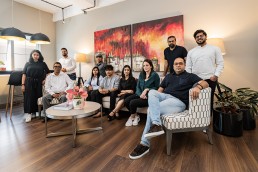
Studio Lumen Opens New Studio
(India) – Studio Lumen has opened a new premises in India to meet the rising demands of lighting solutions in the region and bring the studio closer to its clients.
The decision is part of an overall vision for Studio Lumen; with recent expansions in Dubai and the establishment of the new office in India, Studio Lumen is poised to create projects on a global scale.
Two key team members from the Dubai studio will be relocated to their roots in India along with six to seven newly recruited members with a mixture of fresh talent and seasoned professionals.
Siddharth Mathur, Founder and Director of Studio Lumen, says: "We are thrilled to further illuminate the design landscape in India and integrate our global experiences with the rich tapestry of Indian culture. The new office is not just a physical space; it is a canvas where heritage meets innovation."
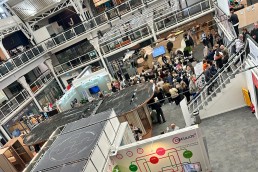
Record attendance for Workspace Design Show
(UK) – Workspace Design Show the trade show for workplace specification, saw more than 4,500 professionals attend for its return in February.
Held over two days in the Business Design Centre London, visitors from more than 40 countries attended, the show totalling more than 500 products and brands from more than 20 countries.
2024 included an array of features inspired by the theme of – ‘Bloom – Exploring the Thriving Ecosystem of Work Life’. Such features were the Talks Lounge designed by Gensler, an Insights Lounge designed by BDP, and an immersive entrance designed by TP Bennett.
The talks programme was a huge success pulling in architects, designers, and professionals to hear from leading industry experts in their fields. arc magazine’s editor Matt Waring led an insightful discussion on "the new aesthetic of repair and re-use in lighting design exploring why we need a mindset shift, with an industry expert panel of speakers including: Dan Lister, Arup; Ruth Kelly Waskett, Hoare Lea; Simon Fisher, F Mark; and Kristina Allison, Atkins Global.
Watch the full talk with Matt Waring and his guest panel here.
Esha & Charlie Bark-Jones, Workspace Design Show founders, said: “We’re absolutely thrilled that so many of the UK’s workplace interiors community came together to experience the fantastic speakers sharing their insights, transformative products from our exhibitors and stunning features experiences from our partners. We are delighted to see specifiers from Asia, The Americas, The Middle East, Africa and Europe also attending to join the celebration of the future of work in London. The spirit of collaboration at the show was evident for all to see, as people formed partnerships to transform the employee experience in these disruptive times for workplaces.”
This quote will look heavy online, so split it to look like this:
Esha & Charlie Bark-Jones, Workspace Design Show founders, said: “We’re absolutely thrilled that so many of the UK’s workplace interiors community came together to experience the fantastic speakers sharing their insights, transformative products from our exhibitors and stunning features experiences from our partners.
“We are delighted to see specifiers from Asia, The Americas, The Middle East, Africa and Europe also attending to join the celebration of the future of work in London. The spirit of collaboration at the show was evident for all to see, as people formed partnerships to transform the employee experience in these disruptive times for workplaces.”
The next UK show will be held on 26 – 27 February 2025 and the Amsterdam edition of Workspace Design Show takes place on 5 – 6 November 2025.
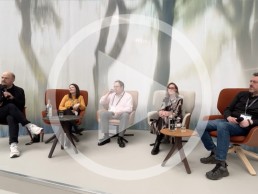
Workplace Design Show 2023 - The new aesthetic of repair and re-use in lighting design
arc's editor Matt Waring chairs an insightful discussion titled "the new aesthetic of repair and re-use in lighting design: why we need a mindset shift" with industry expert panel of speakers: Dan Lister, Arup; Ruth Kelly Waskett, Hoare Lea; Simon Fisher, F Mark; and Kristina Allison, Atkins Global.
Evoking Luxury with Light
In order to evoke luxury in a space the appropriate lighting design is essential to enhance the overall experience. Making reference to the xx Hotel, Sandra Brookes highlights how creating an exceptional atmosphere for guests is key to get them to stay and to entice them to come back again and again creating a continuous and successful business.
Messe Frankfurt acquires stake in LightFair
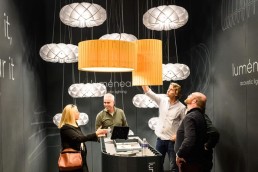
(Germany) - Light + Building brand network grows to 13 events worldwide with latest partnership.
Believed to be a 33% share, with Illuminating Engineering Society and International Association of Lighting Designers owning the rest, Messe Frankfurt will now organise the five-day trade fair alongside a conference.
With more than 500 exhibiting companies and thousands of top buyers, LightFair is the largest event for architectural and commercial lighting in North America. Focusing primarily on forward-looking innovations, an experience-oriented exhibition space, a great many new products, networking and a wide range of training opportunities, LightFair sets new standards for light design and innovative lighting technologies in the US.
Wolfgang Marzin, President, and Chief Executive Officer of Messe Frankfurt, says: “With the vast experience of our partners IALD and IES in North America and Messe Frankfurt’s track record as an organiser of leading international building technology trade fairs, we are pooling our shared strengths. This strategic decision also enables us to bring our expertise to bear in the USA.”
Constantin von Vieregge, President, and CEO of Messe Frankfurt’s US subsidiary Messe Frankfurt, says: “The signing of this agreement brings together the expertise of Messe Frankfurt – known for its successful track record in organising world-class trade events with Light + Building, the world’s leading trade fair for lighting and building technology – and the visionary approach of associations IES and IALD in the realm of commercial lighting. The synergies we share mark a significant step towards advancing the industry and promise an unparalleled platform for industry professionals, innovators, and stakeholders.”
Christopher Knowlton, Chief Executive Officer of the IALD adds: “The IALD is thrilled to partner with Messe Frankfurt for LightFair and is eager to reinvent the international trade show and conference. The partnership will amplify the event’s ability to showcase cutting-edge lighting innovations and connect directly with the lighting community in the United States and beyond. As this next evolution of LightFair opens its doors to broader audiences, the IALD welcomes the fostering of collaboration and inspiration within the lighting industry that will come from this international alliance. This new stage in LightFair’s development will open up new possibilities for reaching a larger audience. This is why IALD welcomes wholeheartedly the increased cooperation and inspiration within the lighting industry that this international alliance will bring about.
LightFair is now part of the Light + Building technology fairs around the world. The flagship fair is Light + Building, which takes place in Frankfurt am Main every two years and will open its doors between 3 and 8 March this year.
LightFair 2025 will be held in Las Vegas between 4 and 8 May.
Marcus Steffen - The Reluctant Businessman
When people ask me what I do, I usually say I am a lighting designer. That has been my profession for approximately 20 years, and it is a core part of my identity. But now I don’t think I can keep saying that. As I have built my own consultancy business over the last 10 years, I have had to focus on running the business. I have hired staff, I do training, I do marketing and sales; everything that comes with a business. It has slowly become apparent that I am a businessman first, and a lighting designer second. This was something I fought against for a long time, since my passion for light is still there, but I have come to realise that they complement each other in wonderful ways.
arc has been kind enough to give me the opportunity to write about the business of lighting design. With my series of articles, I hope to share what I have learned and why, even as I focus on the business side, I still feel the essence of a lighting designer inside me.
In the design world I often feel that we believe business, money, organisation, profit; these are all dirty words. As if thinking about these somehow sullies the creative process in which we work and that if we don’t focus on purely the design element, we are somehow not producing our best work. But over my journey from starting my own consultancy to growing with staff, number of projects and their size, I feel that the opposite is actually true. Every step I have taken to building my business and focusing on that side has resulted in better quality work, happier clients and allowed us to incorporate good lighting into many more projects. I believe that the two go hand in hand.
But why start your own business? I think most designers dream of the freedom of being their own boss. They really want to focus on producing the best designs they can for clients, and having control over their time, all the while supporting them with income. I know this is what motivated me to start my own business. I dreamt of a few well-paid projects, time to travel, and a comfortable place to live. Unfortunately, when you start out, it is hard work, and a lot of it is not related to design. There are accounts, endless admin, dealing with clients, trying to win projects, building processes and endless other tasks, pulling you away from your design work. This can take its toll, and generally leads to frustration, exhaustion and even burnout. You fall out of love with your dream and normally the business fails soon after. Many numbers fly around but generally half of businesses fail in the first five years, and 70% after 10 years. These are tough numbers to face.
The harsh reality is that if you want to spend your days creating the most amazing, beautiful lighting designs then your best option is to work as hard as possible to get a job that allows you to do this. Working in a company will give you the freedom to focus purely on design and being creative, while the company takes care of getting the projects and looking after all the admin.
Actually running a business is an entire other job from what the business actually does. I run a lighting design business, so we produce lighting designs for clients. I have lighting designers who work for me and produce the majority of that design work, and most of my time is spent on what happens around the lighting design. I am focused on ensuring the designs are delivered on time, where the new projects will be coming from when we finish those designs, looking to the future, and how we can improve the services that we offer. Almost none of that is doing actual lighting design. To run a business, you really need to have more than one person because there is just too much to do. If you start on your own, then it is almost a race to grow, expand and fill those roles before you burn out from exhaustion of doing 3-4 jobs by yourself.
Over the years I have had many lightbulb moments, but one of the key ones was thinking about what would happen if I got ill. If I was unable to do the lighting designs then clients would be upset, bills wouldn’t be paid, and I would be in a very tough position. This became even more relevant once I had employees since I wanted to ensure that they felt secure in their jobs. This fear (and fear can be an excellent motivator) led to me building a business that will not need me to function day to day. I want it to be able to produce incredible lighting designs that blow clients away, and can be easily delivered by contractors, but doesn’t rely on me to do this. My knowledge and experience isn’t used for dealing with projects day to day, but rather it is embedded in the training of designers and in the design processes and systems we have put in place to ensure good designs are produced. I balance the need to create and design (which is still a huge part of me as a lighting designer) with building a business that does what I love when I am not there.
I don’t want to put you off starting your own business, or if you are running one already, make out that it is hopeless. On the contrary, I think creatives can actually make amazing business owners. That problem solving, innovation and ability to create are all essential skills. The key is to remember to apply them to the business, as well as what it produces. For me, the ability to do many more designs as a team has inspired me, because that means there are less projects out there that are poorly lit, to the detriment to everyone who uses those spaces.
Hoare Lea
During our time as a publication, we have run interviews with practices from across the full spectrum of the lighting design world – from solo ventures to international studios, each coming to us to speak of their inspirations, design approaches, and overall appreciation of the power and beauty of light. Given the diversity of lighting design as a profession, it is always fascinating to see the differences, and similarities, in the way that these firms operate – from ateliers and independent studios, to lighting design divisions of larger multi-disciplinary and engineering companies.
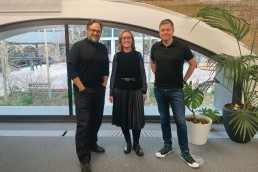
One such example of a lighting design studio within a multi-disciplinary operation is Hoare Lea. Formed in 2000 by Dominic Meyrick, the lighting design department has since grown from a small start-up to a major contender in its own right, with offices across the UK and beyond, and a number of award-winning projects to its name.
Now led by Directors Jonathan Rush, Juan Ferrari, and Ruth Kelly Waskett, alongside Meyrick, the company is leading the charge in sustainable practices, with its North Star initiative putting people and planet at the heart of everything it does.
Keen to learn more about how a lighting design studio operates as part of a wider, multidisciplinary offering, arc travelled down to Hoare Lea’s London office – just a stone’s throw from the trendy Coal Drops Yard – to sit down with Rush, Ferrari, and Kelly Waskett to talk people, planet, and more.
While Meyrick established the lighting design wing in 2000, Rush and Ferrari both came on board in 2005, having worked together previously at another lighting design practice. Kelly Waskett, by comparison, joined the team initially as Principal Daylight Designer in 2017.
As is the way with lighting design as a profession, each of the Directors arrived at the company through their own, unique route. Kelly Waskett recalls the journey that led her to Hoare Lea: “My path is like most people’s: it’s got lots of twists and turns, but broadly my background is mixed between engineering, architecture, and lighting. I started with a degree in engineering, and I worked as a building services engineering consultant for about five years. During that time, I felt a bit restless because what I was doing wasn’t satisfying me creatively, so then I did the MSc in Light & Lighting at UCL – that was around 2005.
“I continued to work for multi-disciplinary practices, and later did a PhD in Daylighting – and after that I started doing some work at UCL, because it was setting up a new degree in Architecture & Engineering Design. I wrote some of the material for the new module on lighting, and then Hoare Lea reached out.
“So, I came here, and I was absolutely delighted because at that point I’d realised that I didn’t want to go down the academic route. I’d done a bit of time in academia, and I’m really happy that I did – I’m still a visiting lecturer at UCL – as it brings something different to what we do here.”
Ferrari shares an equally convoluted route to Hoare Lea, although his took him down a much more theatrical path, as he recalls: “I started as an actor, then moved into directing theatre and teaching in schools. In doing that, I fell into musicals, and through them into lighting.
“Not being very good at playing any instruments but loving musicals, I could “play” a lighting desk – I thought that it was the way that I could express myself.”
“Long story short, I then trained in theatre lighting. I came to the UK and studied at the Royal Central School of Speech and Drama, and then decided I wanted to explore architectural lighting – I was fascinated that everything was lighting, but it was approached in very different ways. So, I started studying it, and through that I fell more and more into architectural lighting, and that’s how I’m doing architectural lighting now; by being curious, you fall into something, and you end up doing it.”
By comparison, Rush believes his story is “much more boring than all that”. He adds: “I did a furniture design degree, I needed a job and I needed to learn CAD, because my university all those years ago didn’t have CAD, and so I found a job, and it was at a lighting company that did sports shops. I did that and I thought it was quite interesting; I’d quite liked architecture before, and it seemed like a route to architecture without having to do any of the hard work, if truth be told. I worked for a series of practices, and then came here in 2005.”
These varying routes between Rush, Ferrari and Kelly Waskett are also reflected in the wider lighting design team, with members coming from paths as diverse as interior design, product design, theatre, engineering, and even psychology. It’s something that the team feels is only a good thing.
“It’s beneficial, because you end up with a very diverse way of thinking, not just one fixed route, but they always tend to be more human-centric and put people at the heart of things – even product design, everything about that is the user experience of that product. I think that’s probably where there’s a common thread between us all,” Rush says.
“We like to think that we can do everything related to lighting, and that comes from the fact that we have a team that has multiple backgrounds, and therefore can plug in different ways to whatever the requirements of the project are,” Ferrari adds. “I’m very proud of that fact, and that we have always balanced perfectly well the technical side and the aesthetical side of lighting, and we put that forward to all of our projects.”
While Ferrari leads the architectural lighting design element of the team, Waskett oversees the daylighting team – again demonstrating the diversity and scope of the practice. She explains: “When I joined Hoare Lea, it was mainly to develop the daylight offering that we have as part of the lighting team. It was recognised as a huge part of lighting, and that it deserves to have a place within the lighting service offering. Over the years, I’ve built up that team, and I’ve got a number of people whose sole focus is daylight, and integrating that with not only the lighting design service, but also with the other things that we do at Hoare Lea – it’s a huge part of sustainable building design.
“I’m really proud of the fact that we have daylight as part of our offering, because there are a lot of firms out there that do some beautiful work, but they don’t address daylight – they shy away from it and treat buildings as if it was just night-time all the time. You can have a lot of fun with that and do beautiful things, but there isn’t a recognition of the 24-hour life of a building, of people in that space, and the fact that most of us, in reality, experience light coming from multiple sources, natural and artificial. I love to embrace that, and that’s part of the reason why I’m here.”
Elsewhere, Meyrick looks after the environmental impact side of things, with Rush serving as Group Leader. However, he feels that despite the moniker, it is a much more democratic process.
“Everyone is massively autonomous, and there’s no dictation – it’s not hierarchical. We try and communicate most things, and most things that we do are discussed as part of the team; we try not to be authoritarian.”
This collective approach to leadership is something that ties into the overarching culture that Rush, Ferrari and Kelly Waskett are trying to instil within their team. “We want to provide good jobs for nice people,” Rush adds. “Work is work – we’d all rather be on a beach somewhere, relaxing and drinking mojitos, but we have to work, and therefore we prioritise staff wellbeing in what we do. We want to provide good jobs, challenging jobs, while giving people the root space to grow.
“Our design philosophy follows that because we want it to be relevant; there’s no point in doing something that the world doesn’t need just to hit the zeitgeist of the time.”
“And the new generation know that too,” Kelly Waskett continues. “From what I see, the people coming into the industry are looking for something that has a purpose and a meaning. Designing beautiful things without that purpose isn’t enough anymore, there’s a vacuousness to it. The world that we’re in today means that we cannot just get by designing beautiful things. We’re always looking for a greater meaning in what we do, a greater social and environmental impact.”
Taking a more socially and environmentally responsible stance is something that ties in with the wider Hoare Lea philosophy of people and planet. However, while there are a lot of companies operating under a similar “ethos”, Hoare Lea is striving to do more than just talk, taking tangible steps to improve their environmental impact. These steps vary from encouraging staff to commute via public transport, to an electric car scheme, to meat-free catering in the office, and measuring the carbon impact of everything it does.
And Ferrari adds that the firm is still eager to do more. He explains: “We have always been very conscious of the sustainable side of things, and this is continuing as we are learning. We know that we don’t know everything; we don’t have all of the answers, but we love the learning, both on the human-centric side and the planet side of things.
“With regards to sustainability, being a multidisciplinary company and having a sustainability team within our company that we can relate to and learn from is one of the very basic benefits of being part of Hoare Lea. That’s why you won’t hear us say ‘engineering company’. We talk about a multi-disciplinary consultancy as we’re constantly sharing with a wider range of professionals. It’s amazing the wealth of knowledge that you get to progress your own specialism from working in a firm like this.”
Kelly Waskett adds: “We’ve got people that are trained at doing embodied carbon assessments for the entire building, from start to finish. We have a huge amount to add to that in terms of the knowledge that we have about our bit – when I say “our bit”, it is significant, because we specify a lot of equipment, but that’s one of the benefits of being part of a wider firm.”
Having been with the company for nearly 20 years, Rush continues that the collaboration with the wider team is something that has grown stronger over time, particularly in recent years. “Historically, we considered ourselves as a studio that happened to be part of a bigger thing, although in the last five years or so, we’ve made real efforts to not be that, because we’ve seen the benefits of being part of a more collaborative unit,” he says.
“If you’re looking for influence and collaboration and innovation, what better way than just getting up from your desk and talking to someone from the Sustainability, Acoustics, or our Intelligent Buildings team. So many times, you can have a conversation and you’ll hear about one of your colleagues in one of the other teams that are doing something, and you’ll think ‘we’re not doing that, what do we need to do?’ And it drives you. You can talk to them, ask them how they approached it, and learn from that. It’s so easy to collaborate to drive innovation and thinking internally.
“We don’t really have a thing called ‘business as usual’; I believe that there are lighting design firms that are probably still doing exactly the same thing now that they were doing 10 years ago – except they now do it with LED. Whereas we now say, ‘what are we going to do?’ And we get so much more freedom to think about it because a lot more conversations are not just about what’s happening now, but what is coming, what is happening in five years’ time, where do we need to be then? We do what Ruth calls ‘Horizon Scanning’ – looking ahead. That comes back to employing good people, keeping good careers, because we want to be relevant in five years’ time, in 10 years’ time. We need to keep moving with the massive changes that are coming.”
Ferrari adds: “If you ask me, the future of Hoare Lea, of our practice lies not in the three of us, but in the younger members of the team; and they’re already actively involved in shaping our progress and moving us forward. There is one thing that you get in a multidisciplinary practice, or in a larger firm, time. You have time to think together about the future, you have time to help people develop.”
“As part of a bigger firm, we can afford to not be egotistical. If I was running my own practice, it might serve me better to keep my brand as me. Whereas our brand is not us, it’s a bigger thing. It’s bigger than me, it’s bigger than everybody. It’s quite a liberating thing,” Kelly Waskett explains. “On a slightly more banal note, we benefit from the fact that we’re part of a bigger organisation with infrastructure behind it. We don’t have to worry about accounts or HR or certain things that we’re not trained to do.”
Being part of the wider multidisciplinary network also means that opportunities can arise for the lighting design team to work on projects that they otherwise might not have been presented with. It gives the lighting design team an interesting mixture of projects to work on.
“It does open up our call to bigger projects, and projects that we might not get as an independent,” Rush says. “In addition to that, we work on projects just because they are fun, creative or engaging – for example, we do a lot of heritage buildings, which to some extent doesn’t quite fit within the mould of the bigger multidisciplinary practice. We have the ability to do our own small, unique pieces of artwork at the same time as larger infrastructure projects.”
As Kelly Waskett puts it: “One of the things that we’ve always tried to do is balance out the fun and unusual with more day-to-day projects. There will always be a flow of new-build projects, but then there’s also a recognition of the fact that we need to deal with existing buildings and retrofitting, and that has influenced the type of work that we do as well. There’s nothing that we would definitively say no to without evaluating it on its merits. We’re thinking about the fulfilment of our work as well, and the fact that we enjoy some smaller things, because we just want to have a bit of fun with it.”
Rush adds: “You have small studios, or you have engineering practices, and then you have the rest the lighting that goes on in the world, which is done by electricians and manufacturers. And it’s really rewarding when you can do something where you can say ‘we probably wouldn’t have been employed as a small studio to do this, but we’re actually using the skills that we have to make a space that’s better for people’.
“Healthcare is a good example of that. Typically, they wouldn’t employ a lighting designer or a small practice lighting designer, but we know that light has a huge power to make people’s lives better. There’s a lot that you can do within the healthcare sector to effect better outcomes for people. That’s one of the benefits of being part of a multidisciplinary company, you get to experience and influence a lot more buildings and spaces.”
Ferrari continues: “That’s one of the reasons that we tend not to say no to something, because there is always something to contribute. Whether that’s looking at the human side of data centres, or helping hotel clients to understand the sustainability side and be more efficient, while still being gorgeous, it’s fascinating. There’s always something to learn in every project.”
To that end, with the lighting design department forming just a small part of the overall offering at Hoare Lea, there are occasions where they won’t be directly involved in projects, but will instead guide and support the electrical engineering team to ensure that the highest standards of lighting are maintained.
“There is a lot of knowledge sharing with our electrical colleagues on that front,” Ferrari explains. “There are a lot of electrical engineers, not only in our company, but in every single company that does lighting, and they have a reason to do lighting, so we need them to do it in the most appropriate manner from a company perspective, because we have the same signature, and so it is always important that their level of lighting knowledge is paired to ours.
“This extends to the planet perspective as well – as an industry, we cannot judge ourselves for being energy efficient on a museum project or art installation, but then build schools, offices, hospitals, that are not efficient and doing everything wrong for the people that use them. It is important that we bring other people with us on our journey, and we start by bringing our own firm colleagues with us.”
Kelly Waskett continues: “We want everyone to start from a good level of quality as a minimum, and it’s about making sure that we’re not just designing sustainable lighting that’s horrible, and people don’t want to be in the space, and vice versa.
“Last year, Juan and I went on a roadshow around our offices, which was really fun, and it was about sharing knowledge. It wasn’t us talking at people and lecturing them, we had games, workshop activities, and we got lots of great engagement with electrical engineers and sustainability professionals around how we can do this better together.”
“It brings everybody to a higher level of lighting understanding, and therefore there is a better output for everything and everyone,” Ferrari adds. “Something I am very passionate about is the fact that the places we spend more time have the worst possible lighting, not only in the human sense, but in sustainability terms – schools, offices, even homes, have often been neglected of lighting design, and those are the things that we want to influence. And one of the ways of doing that is sharing knowledge, pushing together, upping our game.
This approach means that the team has a broad portfolio of projects to look back on, spanning across multiple sectors and specialisms – to the point that it is hard for the team to pick out landmark favourites.
“We’ve got a lot of great projects, but I always find it really difficult to separate them,” Rush says. “To some extent, the ones that you feel more fondly about are those that were smaller, where it was a really nice team, it was fun and you felt you were doing something that had a bit more value, or a bit more like you were having a cup of tea rather than a meeting.”
“It’s not always the glamourous, big, shouty projects,” Kelly Waskett explains. “When you say landmark projects, some of the things that come to mind are not the obvious blockbuster buildings.”
Ferrari, however, is a lot more romantic in his view: “I have a poetic vision, in that I see cities as our landmarks,” he says. “I think that’s what happens when you walk around a city like London, and you see your input on the landscape, it is quite telling.
“Using London as an example, when you arrive in London, if you travel by plane you might land in Heathrow Terminal Two, the Queen’s Building as it is called – that is one of our projects. You move into central London, you walk around, and you will see the Middle Eight hotel, Greenwich Market, Apollo Victoria Theatre, Kings Cross, NoMad London, the Grain House; The Bailey and so many others, it’s incredible when you start walking a city and you realise the volume of work that you have done. Picking up those landmark projects within our portfolio is quite difficult, but to look particularly in the cities that we have a lot of presence, is good because you can feel that you are working in your own house. We have done it internationally too – we have left an indelible mark in many cities and countries.”
Encapsulite joins LR Spektd
(UK) – Lighting Reality has announced Encapsulite has joined its lighting specification platform, LR Spektd.
The manufacturer joins the platform with 18 product families and 4,500 variants of its products listed, giving lighting designers the chance to discover and specify Encapsulite equipment via the use of LR Spektd’s in-depth search engine.
With more than 50 years of experience, Encapsulite, provide interior and exterior lighting products that are popular with architects and lighting designers.
The addition of Encapsulite to LR Spektd demonstrates growth to the platform, since its acquisition of Spektd in October 2023, when it was relaunched with a number of enhanced features, helping lighting designers and manufacturers achieve more, in less time, with fewer resources.
Richard Hall, of Lighting Reality, says: “Adding Encapsulite’s suite of products to LR Spektd provides users with an incredible opportunity to option the highest quality products for lighting projects, in just a few clicks. Designers have been coming to the LR Spektd platform to enjoy its ease of identifying products, which is helping to save them valuable time on projects.”
Jordan Waumsley, Managing Director of Encapsulite, adds: “LR Spektd is changing the game for both lighting designers and manufacturers, and we are excited to be a part of this productivity revolution. The depth and scope of information that designers can access is incredible and we are looking forward to seeing our products in action on the platform.”
