
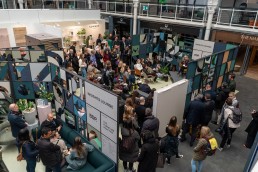
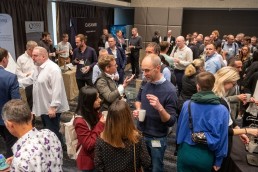
Workplace Design Show Unveils Talks Programme 2024
UK)- Workspace Design Show, taking place 27-28 February 2024, Business Design Centre, London, has announced more than 120 speakers covering four key elements of discourse during its talks programme.
The Workspace Design Talks programme, which will take place in the Design Talks Lounge, designed by global design and architecture firm Gensler, will feature sessions from leading industry professionals over the event’s two days.
Speakers include Helen Berresford, Head of ID:SR, Sheppard Robson; Alan Bainbridge, Director of BBC Workplace; Naomi Sakamoto, Principal, Gensler; Matt Jackson, CEO, BDG architecture + design and Grant Kanik, Partner, Foster + Partners. The latter will be speaking as part of a panel entitled “Insights and perspectives on the convergent future of workplace” which also features panelists Yasmin Al-Ani Spence, Director, WilkinsonEyre and Nicola Gillen, EMEA Lead, Total Workplace, Cushman and Wakefield, chaired by workplace design journalist and author Helen Parton.
During the talks programme, arc editor Matt Waring will moderate a panel titled “The new aesthetic of repair and re-use: Why we need a mindset shift”, with lighting experts Ruth Kelly Waskett (Hoare Lea), Kristina Allison (AtkinsRealis UK), Dan Lister (Arup), and Simon Fisher (F Mark).
Returning for both days of the show is the FIS Conference, an in-person gathering for the non-profit representative body of the finishes and interiors sector in the UK. Sessions will provide a platform for the latest industry thinking, supporting the organisation’s aims of improving safety, minimising risk, enhancing productivity, and driving innovation in the sector. The conference will include professional insight from the likes of Chris Webb, Head of Sustainability, tp bennett; Helen Gawor, Group Director of Strategy & Innovation, ISG; Vidhi Sharma, Creative Director, Modus Workspace and Ana Rita Martins, Sustainability Lead, MCM.
Sustainability Works returns for 2024 and is held on 27 February, bringing together a selection of key figures behind the workplace market’s leading sustainable initiatives and projects. Curated by Mick Jordan, Editor of Works magazine confirmed speakers include Golnaz Ighany, Sustainability Director, BDP; Gurvinder Khurana, Director, M Moser; Pernille Bonser, CEO, Resonate Interiors and Mario Viera, Head of Sustainability, Scott Brownrigg.
The Occupiers Forum, held on 28 February, is the complete “The View from HQ”. Located in the Insights Lounge, it will provide unique insights into what employers are doing to create an engaging workplace experience. The Forum’s speakers include Steve Wright, Director of Workplace Design & Change Management, GSK; Sarah Murdoch, Corporate Real Estate Director, Visa; Sue Glew, Programme Director, The Better Workplace Programme, BT and Kate Smith, Executive Director, Occupier Consulting UK, CBRE.
Both the Sustainability Works session and the Occupiers Forum will be held in the Insights Lounge, designed by BDP.
Registration information and the full talks programme can be found on the Workspace Design Show website.

Workspace Design Show
Register now for a complimentary pass via www.workspaceshow.co.uk

Recolight respond to WEEE Consultation
(UK) – On 28 December 2023, the UK government launched the WEEE consultation, where a range of measures were proposed within the joint UK Government, Scottish Government, Welsh Government and Northern Ireland Executive consultation.
The reform of the WEEE regulations is intended to encourage reuse and collection of waste electricals. And for products that cannot be reused, or remanufactured, proposals are in place to make it easier for consumers to recycle. Recolight has responded to the consultation and is said to be pleased to see that the initial policy proposals cover what had been expected.
There are two separate consultations – proposals for short term regulatory change, and a call for evidence in other areas to aid the development of new policy proposals.
Proposals for short term regulatory change include:
- Free of charge collection of WEEE for consumers.
In essence, providing householders with free of charge collection of both small WEEE, and also of bulky WEEE, financed by the producers of new products. - Enhanced options for consumer takeback via retailers.
This includes strengthened obligations on retailers, in particular free collection of used appliances when delivering new appliances, and simpler in-store take back options for consumers. - Tackling non-compliant product sold via online marketplaces.
The government propose a new class of producer. This would require online marketplaces to take on the financial obligations for collection and treatment of their overseas sellers. This would be consistent with the current packaging reforms. - New category for vapes.
Establishment of a new category for vapes to ensure the cost of collection and treatment of these products is correctly borne by vape producers – and not by other producers. - Setting up a new central WEEE administration body
This would manage several functions currently undertaken by various organisations, together with managing household WEEE collections, to control costs.
The call for evidence invites stakeholders to provide input into future policy development in a range of areas and measures to incentivise better eco-design of new products, requiring producers to finance fly-tipped WEEE, incentivising reuse over recycling, and providing business end users with easier to access WEEE collections.
The consultation will run for 10 weeks, as Recolight will be working closely with scheme members to gather views and to develop a response that seeks to ensure changes will work well.
Nigel Harvey , Recolight Chief Executive, said: “This consultation is long overdue, but it is pleasing that it has prioritised some ‘quick wins’ for early implementation. For the lighting industry, the most important is no doubt action to end the scourge of WEEE non-compliance through online marketplaces. Research has shown that the overwhelming majority of smaller electrical products, such as light bulbs, offered for sale through online marketplaces do not comply with the WEEE regulations. The proposed changes will require marketplaces to finance the WEEE obligations of products from outside the UK sold via their platform. For the lighting industry, this cannot happen soon enough.”
www.recolight.com
IALD Awards open for entries
(International) - Preparing for its 41st year, the IALD has opened the entries for the 2024 cycle of its annual IALD Awards.
Since 1983, the IALD International Lighting Design Awards has honoured lighting design that reaches new heights, moves beyond the ordinary, and represents excellence in aesthetic and technical design achievement.
Entries can be submitted for award consideration by any individual lighting designer or lighting design firm, provided they performed the design of the architectural lighting for that project. Eligible projects must be a permanent architectural lighting design solution for which construction was completed after 1 January 2022. Projects that were entered for consideration in the previous year can be resubmitted, so long as they adhere to the date requirements.
A seven-judge international panel spanning across professional disciplines will conduct two rounds of review, awarding points from a design criteria. The projects whose combined scores meet or exceed specific benchmarks can earn IALD Awards of Excellence or IALD Awards of Merit. IALD Special Citation awards may be given for a project that demonstrates a particularly innovative aspect of lighting design.
The IALD Radiance Award, the top honour of the IALD Awards, is presented to the project that yields the highest point score, thereby being considered the finest example of lighting design for the year.
IALD Awards Co-Chair Yah Li Toh, IALD and CLD said: “Given the success of the previous year, this is something to be excited about. Being presented with such a volume of projects that maintain a high level of technical and aesthetic mastery is an indicator of our strength as a profession.
“We’re proud to see the lighting design industry emerge so well from post-pandemic challenges. Around the world, designers and firms have adapted, evolved, and maintained integrity and excellence in their work. Our judges are eager to see and celebrate the results of that effort.”
Standard entries will be accepted from both IALD members and non- members through 26 February 2024, with a late-entry deadline of 17 March 2024.
Complete information on the guidelines for project submissions, required materials, and examples of the judging criteria are found on the official Call for Entries submission platform at www.iald.org

Martin Klaasen Launches Light Talk
(International) - Lighting industry expert, Martin Klaasen, has announced the launch of a new knowledge-sharing platform, Light Talk.
Light Talk is a digital hub of information, guidance, and advice for those engaged in the lighting profession or those looking to start their career in the sector. It has been curated by Klaasen, drawing on his four decades of lighting design experience.
Light Talk caters for a wide audience across different methods of learning by curating a range of media including articles and blog posts, podcasts, and video interviews under one roof. From lighting designers to manufacturers, architects and interior designers, or students of design-led disciplines, Klassen has ensured there is something for all the community.
There is also the option to sign up for Klassen’s masterclass for an annual fee, which offers access to a growing collection of learning modules covering a wide range of topics related to lighting and lighting design. The site also has Martin’s two books, which are available to download.
Martin Klaasen said: “Light Talk is an exciting venture for me as it allows me to share the knowledge I have built up over 40 years with those in the industry who can benefit from it. The lighting sector is known for being collaborative and welcoming, and I want to give back to the industry that has offered me so much. I hope my insights help those already working in the industry, as well as those just starting on their journey or even looking for a career change.”
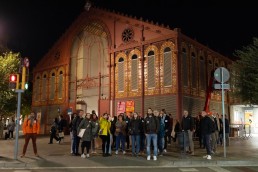
Urban Glow: Night Walks in Barcelona
(Spain) - SCEWC (Smart City Expo World Congress) and CICAT (regional Catalan lighting Cluster) hosted a Barcelona NightSeeing night walk, aiming to raise awareness of light and shadow in night time environments in cities for government and lighting decision-makers from Europe and America.
The night walk in Barcelona, Urban Glow, encouraged attendees to discover the nocturnal landscape of Barcelona's Sant Antoni neighbourhood. The event's walking route underscored the values of after-sunset experiences of visual quality by experiencing the streets, street corners, an evening market, neon signs, and eccentric streetlights.
The objective was for leaders in the lighting industry and governmental civil servants to return to their cities, companies, or organisations to influence and advocate for liveable and safe night time environments for businesses, late shift workers, night clubbers and those traversing the nocturnal streets and pavements.
The tour was conducted by New York-based urban lighting designer Leni Schwendinger, supported by the local context knowledge of Alberto Barberá, lighting designer of Anoche Iluminació. Schwendinger, known for her work in urban lighting, public art, and urban infrastructure, created NightSeeing, in which, through city tours, she shares her deep knowledge of light and dark in everyday life.
During the programme attendees learned how implementing a thoughtful urban lighting design helps prevent traffic accidents by improving visibility, while also increasing citizens' sense of safety. Creative and functional illumination in public space, such as the pavement and plazas, encourages after-dark space usage and facilitates orientation through illuminated accents, such as façades, monuments, and brightened street crossings. A well-lit environment can encourage economic activity through late open-hours and for the adoption of sustainability to ensure longevity.
During the walk attendees evaluated the lighting successes, missteps, and oversights in the city's nightscape. The journey was analysed and studied beforehand to elicit participant opinions on aspects of urban lighting – controversial, neglectful, or well designed. The route covered several streets of Eixample and culminated in the renovated Sant Antoni’s Mercat, which features a tactical urbanism approach.
As a result, quality urban lighting design emerged as essential to ensure the safety and welfare of the population. This also pinpointed was the need to consider the natural darkness dusk through dawn including the circadian cycles of biodiversity.
The CICAT Lighting Cluster promotes this type of initiatives with the aim of promoting an innovative, efficient, and healthy Light Culture. To learn more about their objectives through their website: www.clusteriluminacion.org
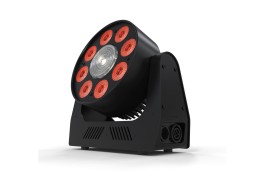
Krypton Red
The Krypton is the perfect lighting solution for large and high venues, controllable via DMX.A fixture is completely silent in use, as it uses no fans and is available with a single colour, AWB, Tunable White, RGB-W, and RGB-A LED modules. Due to its modular design, the applications are numerous. This is the ideal product for Concert halls, theatres, event centres, houses of worship, and other spaces where one wants to have high-quality white light with the possibility of creating different moods by programming colours.
Designed and made in the Netherlands.
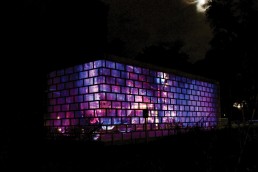
All about the journey: Silhouette Awards Fay Greenhalgh and Annabelle Hill
Ahead of the deadline for applications for “Season Three” of the Silhouette Awards, Mentor and Mentee Fay Greenhalgh and Annabelle Hill, who were paired for the 2023 programme, reflect on their experience together.
As the six-month mentorship programme for the second annual Silhouette Awards draws to a close, aspiring mentees for season three are encouraged to submit their applications to meet the December deadline for this fantastic mentoring opportunity.
Launched in 2021, the Silhouette Awards programme rewards and nurtures emerging talent within the lighting industry through recognition and mentorship. Through its selection process, the awards programme pairs promising junior designers with senior lighting professionals for a transformative six-month mentorship opportunity.
Established by Parrot PR and Marketing and Archifos, the Silhouette Awards are dedicated to enhancing the skillsets of talented individuals, advancing their career aspirations, and elevating the industry’s creativity. They aim to set new standards for industry leadership while facilitating learning from established figures in the field.
As the six-month mentorship programme for the second edition of the awards concludes, we take a moment to reflect on the journey of one mentor-mentee pairing, Fay Greenhalgh, Design Director, and Annabelle Hill, Lighting Designer.
Fay Greenhalgh
Having built a successful career in the lighting design industry, mentoring young talents has always been a fulfilling pursuit for me. The Silhouette Awards offer a unique platform for guiding emerging lighting designers in discovering their true paths. My mentee, lighting designer Annabelle Hill, possessed undeniable potential, with a diverse background spanning civil engineering, construction, project management, fine art, and lighting art installations. Our journey aimed to unlock her full potential and help her find her true calling.
Our collaboration was marked by shared enthusiasm, candid discussions, and a realisation that Annabelle’s true passion lay in her artistic expressions. We decided to shift our focus toward her artwork and entrepreneurial nature, a journey that showcased adaptability and the beauty of aligning with one’s true calling.
Annabelle has now founded Mindful Designs, unveiling unique surface design patterns inspired by her lighting research, and is crafting lighting art installations as an independent artist. Her story is a testament to the power of perseverance and the courage to make bold decisions.
Annabelle Hill
During my time in the Silhouette Awards programme, I had the privilege of being mentored by Fay Greenhalgh, whose experience and guidance were invaluable as I delved into the creative world of lighting design. While we explored diverse opportunities, my heart led me in a slightly different direction.
My artwork, a facet of my identity I’ve treasured, emerged as a newfound focus. Fay’s steadfast belief in my capabilities gave me the courage to pursue this path. A decision both challenging and rewarding. Throughout this mentorship I was also kindly sponsored by LED Luks to attend and present my lighting research on biophilic lighting projections and brainwaves at the CIE conference in Slovenia. Afterwards, I had the unique opportunity to be a part of the LED Luks 10-year anniversary, where I visited its manufacturing facilities and was also welcomed to present my research.
Under Fay’s mentorship, I learned it’s not just about a profession, but about aligning with one’s passions. Inspired and supported, I’ve now founded Mindful Designs, where I’ll be unveiling unique surface design patterns, inspired by my lighting pattern research, for many applications from lighting projects to interior decor.
Concurrently, I’m crafting lighting art installations, including the Watery Perceptions installation for the Aarhus Festuge, with preparations underway for the Copenhagen Light Festival 2024 as an independent artist, including installations Liminal Spaces and Our Consciousness.
Season Three
Applications for the season three programme closed on 11 December, with winners to be announced soon. The selected 20 mentees will embark on a six-month mentorship journey individually guided by one of the 20 mentors. With the support of the Silhouette Awards’ impressive array of sponsors and supporters, the winners will have the opportunity to enhance their skillset, pursue their career ambitions, and elevate the industry’s creativity.
Entries can be submitted by designers with eight years of experience or under within the lighting industry, who believe their talent should be recognised, and who wish to benefit from a bespoke mentorship programme led by an expert panel of judges. The Mentors comprise of senior influential lighting designers who are on the lookout to nurture young talent and help other like-minded individuals benefit from their own personal experiences.
The process for mentee applications is straightforward:
1. Complete the application form.
2. Upload a 3-minute (max) video recording.
3. Submit a short biography (max 200 words).
4. Upload your professional headshot.
The current mentees are receiving much-deserved recognition and publicity for their achievements to date, adding real value to the creativity of the industry while raising the bar for talent to steer and lead the industry in years to come.
www.silhouetteawards.com
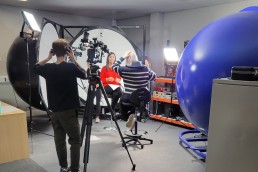
BBC calls on expertise of The LIA for SAD lamp investigation
(UK) - The LIA Laboratory has been showcasing its breadth of expertise as Ayça Donaghy, CEO of the LIA, recently featured on the BBC’s Morning Live to discuss Seasonal Affective Disorder (SAD).
The call to The LIA Laboratory came as the BBC set out to investigate the effectiveness of SAD lamps; a common technology used to counter the effects of the disorder. Known for its technical prowess, The LIA Laboratory was selected to test the products, with Donaghy taking to our screens to present the findings.
With more than two million people in the UK suffering with SAD, it is a vital topic to raise awareness of. SAD is a form of depression that occurs during the winter months when there is less daylight. SAD presents as persistent low mood, oversleeping and overeating, with fatigue affecting sufferers in their day-to-day activities.
Medical professionals recommend a higher dose of vitamin D alongside trying to get more sunlight during the day to treat SAD. Another tool used to treat the condition is SAD lamps. These are designed to deliver a dose of light that can potentially deliver the same levels of light as being in sunlight.
With a plethora of SAD lamps on the market, ranging in price from £10 up to £300, it is difficult for consumers to know where to start. This was the driving factor behind the BBC enlisting The LIA Laboratory’s expertise to test the lamps.
Any lamp can be marketed as a SAD lamp, and there is no requirement for them to be registered as medical devices. The three lamps selected by the BBC team and scrutinised by The LIA Laboratory are not registered, so the testing on these lamps is likely to be limited in its scope. The lamps spanned three price ranges – low, middle, and high.
First, the lamps were tested for their UV output. Donaghy revealed to viewers that all of the products were risk group zero, or exempt, which meant they could not cause any damage to the end-user.
Next, The LIA Laboratory tested colour temperature. Donaghy was able to confirm that all products were in 1% of their claims, meaning they are close to the natural sunlight levels they state they are.
Finally, lux levels were tested. It is recommended that SAD lamps have a brightness level of 10,000lx to mimic outdoor light. All three lamps passed this, however, The LIA Laboratory also tested how far users need to be from the lamp to benefit from the effects and receive the 10,000lx. Donaghy told viewers that it was actually the lowest price point product that performed best when it came to the lux levels. Users could sit as far away as 18cm from the product to get the 10,000lx. From the middle of the range, it was 13cm and the highest price point product, it was 8cm.
Overall, of the three products tested, Donaghy concluded for viewers that it was the lowest price point product that performed best. While the scientific evidence on the effectiveness of SAD lamps on treating the disorder remains limited at present, lots of users report strong success rates. The LIA Laboratory testing does conclude that price isn’t always the best indicator of effectiveness, which will no doubt be a useful message for those currently making a purchase.
Donaghy said: “We are honoured to have been approached by the BBC for testing, a testament to the excellence of our accredited laboratory and the expertise within the LIA Laboratory team. The positive collaboration has sparked a mutual desire to work together again, so watch this space!”
Donaghy advised: “Do your research, have a look at the instruction manual and what it says the correct distance to sit away from the lamp is to achieve the correct levels for the desired effect. If you want the extra reassurance, you can look for the ‘Class 2A Medical Device’ which means it has gone through third-party verification above and beyond what is required.”
Follow the link to watch the Morning live episode with Ayça Donaghy https://www.bbc.co.uk/iplayer/episode/m001sxwq/morning-live-series-5-29112023#t=09m50s
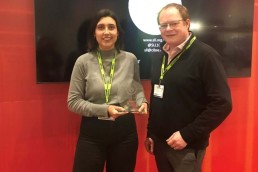
Teresa Aguilar Carrasco named SLL Young Lighter 2023
(UK) - Teresa Aguilar Carrasco was named SLL Young Lighter 2023 with her project, CircaLight, a new circadian light assessment tool for Grasshopper environment.
This year’s final was hosted by SLL President-Elect, Dan Lister FSLL and took place at LiGHT 23 on 21 November. All four finalists delivered their presentations to a live audience of their peers for the first time since lockdown. Aguilar was announced as the 29th SLL Young Lighter winner at Light2Perform on 5 December 2023 at ExCel.
Aguilar is an architect, who graduated from the University of Seville in 2019, and is now a researcher at the Department of Architectural Construction of the Higher Technical School of Architecture of Seville. Aguilar is studying for a PhD in Architecture. Her doctoral research includes lighting and energy efficiency, each focussing on the impact of natural and electric lighting, on visual comfort and the health of individuals regarding circadian rhythms. She is a member of the research group for ‘Architecture, Heritage and Sustainability: Acoustics, Lighting, Optics and Energy’.
Aguilar’s work brings new approaches to the challenges of integrating different metrics into an accessible and easy to follow workflow. The judges felt that this work collected different processes and presented a new way to tackle the challenges of undertaking the daylight assessment of different metrics, delivering a consistent methodology to present and communicate the outcomes in a consistent manner. An analysis tool that has the potential to bring much wider support to the lighting industry and increased implementation of good daylight design.
Other 2023 finalists and presentations were Anna Freiesleben, Michael Grubb Studio - Light Beyond Earth: Illuminating life on exoplanets; Irene Mazzei, Edinburgh Napier University / Stoane Lighting (Knowledge Transfer Partnership) - Improving sustainability in the lighting industry; Teresa Aguilar Carrasco - CircaLight, a new circadian light assessment tool for Grasshopper environment; Tom Ruddle, EGG Lighting - Lighting Remanufacture.
The judges have said to be impressed by the quality of entries from the initial entry stage, maintaining an exceedingly high standard throughout the competition. All the finalists received a cash prize, along with a year's free membership of the Society.
Dan Lister, SLL President Elect, said: “All presentations were fantastic, delivered in a confident and accomplished manner – the finalists should all be commended for the exceptionally high standard of work, commitment they have put into their research and preparation for the competition. Setting an incredibly high bar for the future.”
Lister adds: “Because of such a high standard of submissions all the way through from the initial submission, video submission and the final presentations; the judges were looking for very small areas of differentiation between the finalists. All four finalists showed a deep knowledge of their subject, presenting with confidence and in an accomplished way. In the end the judges looked to identify the submission that represented something new in the field, demonstrating an innovative approach with original thinking and a practical approach that could benefit the lighting industry now.”
The competition is open to anyone with an interest in light and is designed to test not just the finalists’ ability to develop a lighting project, but also their presentation skills. It provides a unique platform for young lighters aged 30 and under, and is open for all to enter, allowing entrants to illustrate their knowledge, research, or ideas on a lighting subject, hone their presentation skills, and raise their profile within the industry.
Anyone can enter with any light or lighting related topic, including photography, product design, light and shadow, novel approach to lighting, natural and electric light, light art or a piece of original/different thinking based on formal or informal personal discovery.
Previous winners include Seda Kacel, Christopher Knowlton, Sabine De Schutter, Rachael Nicholls, Janna Aronson, Youmna Abdallah, Sofia Tolia, Matt Hanbury, Emma Beadle, Anna Wawrzyniak, Aluwaine Manyonga, Maria Englezou and Scott Kluger.
If you would like more information about the SLL Young Lighter competition 2024 email sll@cbse.org.
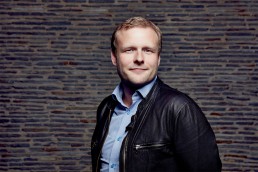
Ambient Communication - Tapio Rosenius
This is a two-part article on Ambient Communication, an innovative way of conveying information and influencing human behaviour through light in spaces. The first section serves as an introduction to the concept and its application in lighting design. The second part introduces a cutting-edge research framework designed to validate the concept in real-world settings. This framework is exemplified through the results of actual projects in workplace contexts. Our aim is to demonstrate how data-driven, dynamic, real-time lighting can quantifiably impact human behaviour when implemented within the framework of ambient communication. In doing so, we aim to introduce new value to building owners, operators, and lighting designers.
Changing the ambience to drive human behaviour
In 1997, psychologist Adrian North and his team conducted an experiment in a local supermarket, where they set up two identical wine shelves side by side. One shelf was stocked exclusively with French wine, while the other featured German wine. They played different styles of music during various time slots – one with stereotypically French music and the other with German music. When the French music played, sales of French wine increased by an astounding 330%. Conversely, when the German music played, the German wine outsold the French. This experiment vividly demonstrated the profound impact of ambience on our decision-making processes.
What makes this example so powerful is not that the ambience was changed, and not even that it triggered behavioural change, but rather that the ambience was changed in specific relation to the context with a goal to influence a narrowly defined aspect of human behaviour. Furthermore, it was done in a way that allowed the outcome to be measured passively. Here lies the power of Ambient Communication, achieving measurable change in narrowly defined sets of human behaviour. And we believe we can do the same with light.
Definition of Ambient Communication
Ambient communication is a way of conveying information and aiding human behaviour in a space in a peripheral, calm manner using real-time data feeds linked to controlled digital content running lighting, projections, screens, and sound. It allows spaces to sense and respond immediately to people, events, and other variables in a rich way to create engaging and informative environments that remain fresh and contextual.
Ambient communication is used to aid wayfinding, to illuminate invisible information, to encourage positive behaviour, to unlock hybrid uses to existing spaces and to enable designers to optimise interactions and outcomes remotely and in an automated way. Applying this consciously with clear targets to architectural lighting design from the get-go is nothing short of revolutionary.
How does it work?
There are many effects that can be considered as ambient communication, and equally many techniques and variables related to human psychology and physiology. However, we will focus on three technical pointers that can help you get started with applying Ambient Communication in your lighting design work:
Light as a Nudge
A nudge, as defined by University of Chicago economist and Nobel Laureate Richard H. Thaler and Harvard Law School Professor Cass R. Sunstein in their seminal book of the same name in 2008, is any aspect of the choice architecture that alters people’s behaviour in a predictable way without forbidding any options or significantly changing their economic incentives. To count as a mere nudge, the intervention must be easy and cheap to avoid. Nudges are not mandates. This makes the use of dynamic light in architectural context particularly well-suited for nudging. It is easy enough to ignore yet immersive enough to have an impact.
Imagine you are entering an office building. On the right-hand side, you see a bank of lifts going up; on the left, you see a large spiral staircase. In the centre of the staircase, a suspended lighting feature pulsates, signalling upward motion. That is a nudge. You can choose freely to take the lift, or you might be intrigued and choose to take the stairs instead. When you get to the stairs, the light responds to you, it flows towards you, stops, and makes it obvious you are now controlling it. Another nudge. You climb up a few floors, playing with the light as you go. The lighting influenced the choice architecture and altered your behaviour. Gently. It nudged you, and this can have massive positive consequences.
Pre-attentive Processing
Pre-attentive Processing
Pre-attentive processing is the subconscious accumulation of information from the environment. Ambient communication delivered with light and media can bypass attentive processing and instead focus on this fast, low-level, pre-conscious visual processes. This is information generated by the environment that is rapidly perceived and then converted to higher-level structured information only when necessary.
Colin Ware, in his book ‘Information Visualisation: Perception for Design,’ defines the four pre-attentive visual properties as follows:
• Colour
• Form
• Movement
• Spatial Positioning
They are all processed in our sensory memory without our conscious thought. Notably, all four of these visual properties can be influenced by lighting design and are readily controllable with real-time digital content when utilised for the purpose of controlling ambient lighting, accent lighting, projections, and screens. Layering meaningful lighting interventions that combine colour, form, movement, and spatial positioning is a guaranteed way to deliver subtle cues and nudges to people, but you need to know when.
Contextual Scheduling
For ambient communication to be meaningful and yield results, any change in the visual environment that signals specific information must be timely and non-repetitive. It needs to provide intrigue, surprise, or alternatively, appear so firmly tied into its context as to be intuitive.
To be successful, the effect cannot always be the same, nor can it happen at the same time. For this, Contextual Scheduling is needed. This means the control system must receive sets of live data from the particular space, as well as prompts such as time, and calendar events, and then be able to formulate a response designed to drive particular behaviours at that very moment. It is the combination of these data inputs that enables the scheduling to function in real-time and remain contextual.
In practice, the desired effect that represents the ambient information is generated by parametric digital content engines that must be fine-tuned and adjusted as part of the lighting designers’ work. This “artistic direction” is essential to convey the prompts within the overall design look and feel of the project. Similarly, the data inputs must be chosen by the designers to support the overall concept narrative and the desired behavioural outcomes. The data inputs can include, for example, live people quantity and movement directions, crowd density, demographics data, time of day, noise levels, daylight conditions, air quality, weather, and calendar events or client-specific data streams. The designers’ goal is to deliver a scheme that automatically understands what is happening in the space in the specific context and then serve optimised, right-on-time ambient communication interventions that meet the design goals.
Into the Future
In harnessing the power of Ambient Communication, we propose to embark on a collective journey towards not only transforming physical spaces, but also shaping human experiences. It offers a nuanced approach to influencing behaviour, seamlessly integrating with the architecture. As we continue to delve into this innovative realm, the potential for creativity and impact appears limitless. Lighting assumes a new role, a new reason to exist. The lighting designer’s role evolves and pivots toward higher value. The fusion of technology and design, as exemplified by Ambient Communication, paves the way for a future where our environments become dynamic, responsive companions in our daily lives. And we believe we can do this with light.
Ambient Communication: Part two
In the second of a two-part series on the subject, Tapio Rosenius demonstrates how Ambient Communication strategies can lead to a tangible change in human behaviour and architectural interaction.
Ambient Communication is a novel approach to influencing human behavior through light. Our goal is to revolutionize how architectural spaces are strategically optimized to impact human decision-making processes. We aim to demonstrate the influence of connected and real-time lighting as a new tool for lighting designers, bringing added value to building owners, operators, and users.
In the first part of this two-part article, we introduced the concept and its application in lighting design (see arc #136). In this second part, we will describe a new research framework developed specifically to deploy and validate the concept in real-world settings.
For the development of this new research framework, Skandal Technologies, a technology startup, and the developer of the Poet Creator Software, joined forces with The Center for Behavioral Decisions. This established research and consulting firm specialises in the application of behavioral science, combining behavioral insights with strategic lighting innovations.
Introduction
The interplay between human behavior and the surrounding environment has been a focal point for researchers, architects, and designers. At the core of this exploration lies the concept of behavioral interventions – strategies or treatments introduced to groups or individuals to change certain behaviors.
Ambient communication refers to the subtle cues that an environment provides, influencing behavior through gentle nudges rather than direct instructions. Given our continuous interaction with the environment, the potential of ambient communication as an intervention mechanism is immense and untapped.
Within ambient communication, lighting emerges as a significant and potent medium. The omnipresence of lighting in our daily lives underscores its potential as a powerful tool for behavioral influence. Through nuances in intensity, colour, and pattern, lighting can shape decisions, encourage actions, or evoke specific emotions.
By merging insights from behavioral science with the art and science of lighting design, we embark on a journey to redefine spaces and positively influence the choices and behaviors of occupants.
Our Goal
Primary Goal: Utilise lighting as a dynamic tool to encourage healthier decisions, such as staircase use, and enhance workplace productivity.
Secondary Goal: Adapt lighting ambiance to specific tasks, events, and situational needs, fortifying an environment that continuously boosts human performance.
Unique Approach: Employ an adaptive method to fine-tune interventions, setting a novel standard in integrating behavioral insights with ambient cues.
Introducing JITAABI
The adaptive approach, exemplified by Just-In-Time Adaptive Ambient Behavioural Interventions (JITAABI), marks a groundbreaking shift in behavioral interventions. JITAABI is a nuanced adaptation of the Just-In-Time Adaptive Intervention, tailored specifically for ambient communication through lighting.
Significance and Benefits Over Traditional Methods:
Traditional behavioral interventions often assume static human behavior, employing a generalised strategy. In contrast, the adaptive method, particularly JITAABI, recognises and adapts to the dynamic nature of human behavior. JITAABI undergoes numerous trials, utilising momentary passive-assessed data from embedded sensors to determine the most opportune intervention – both in terms of timing and type. This process ensures greater efficacy and minimises counterproductive actions.
Ability to Identify the Best Intervention:
JITAABI integrates several components like tailoring variables, decision points, and a range of intervention options. Through continuous evaluation and real-time feedback from embedded sensors, JITAABI refines its strategies, swiftly identifying and implementing the best interventions. This iterative process, backed by real-time sensor data and realised by the Poet Creator real-time content and control system crafts environments that adaptively and positively influence individual behaviors, seamlessly marrying ambient communication through lighting with behavioral science insights.
In essence, the adaptive approach of JITAABI offers a pioneering roadmap for the future, delivering precise, effective, and timely interventions. Through this innovative methodology, it heralds a transformative era in environmental design, seamlessly integrating behavioral science.
Early Findings
A dynamic pixel-controlled luminaire was suspended in an existing spiral staircase for an office building refurbishment project in Zurich, Switzerland. The lighting, controlled by the Poet system and treated as an ambient communication intervention, was tested using the JITAABI research framework to explore its influence on building users’ choice architecture and stair usage.
Specialized 3D AI sensors were installed at each floor level to record stair use, with separate data collected for each flight of steps in both up and down directions. The data was fed live to the control system that in turn generated real-time visual content controlling the fixture. A six-month control period with the luminaire in a static white setting provided a baseline of stair usage.
Observed Benefits
For a controlled period of six weeks, the lighting setting was changed to generative upwards light movement, resulting in a 6% increase in stair usage. A second 12-week period with interactive lighting behaviors, where white light patterns responded to people on the stairs, led to an additional 8% increase compared to the baseline.
Dynamic & Interactive lighting increased stair usage by: 14%
From research literature, we know that:
• A single step up burns approximately 0.17 calories.
•A single step up extends life by approximately four seconds.
We can also observe that each time the stair is used, an elevator trip is saved.
During the six-month period of dynamic and interactive lighting control with real-time data collection, we deduced:
• 78,342 extra calories burned by building occupants
• 21 days of life extended
• 11,549 elevator trips saved
Conclusion
This pioneering study underscores the transformative power of combining behavioral science with strategic lighting design. The innovative JITAABI mechanism highlights the immense potential of adaptive ambient communication through lighting to influence human behavior in real-time. The future beckons a new era where the subtle cues from our surroundings play a pivotal role in shaping our decisions and actions. This adaptive approach positions lighting not just as a medium of illumination but as a dynamic tool for efficient behavioral intervention and enhanced environmental design.
www.poet.software
www.becisions.com