

Casambi appoint Mark McClear as the new CEO
(Finland) – Global smart lighting control company, Casamabi, have announced the appointment of Mark McClear as its new Chief Executive Office. McClear will be taking over from Kari Mettälä, who has stepped down to pursue other opportunities, after five years as Casambi’s CEO.
McClear joined Casambi in February 2022 as the General Manager for North America, bringing a 20-year legacy and reputation in the LED and SSL sectors across more than 35 countries in Asia, North and South America, and Europe. With experience managing large organisations and P&Ls of up to $800 million.
Mark McClear, CEO, commented "It’s an honour to lead Casambi. This is an exciting juncture in the lighting industry as luminaires become increasingly smarter. From stamped metal and screw-in lamps, we've advanced to integrated LEDs, and it's now inevitable that all luminaires will soon feature embedded Bluetooth Low Energy radios and sensors. Casambi is poised to lead this transformation as the sole international lighting control platform. Our open ecosystem architecture represents a pioneering leap, surpassing the proprietary legacy systems prevalent in today's market.”
Antti Kokkinen, Chairman of the Board of Directors for Casambi, added "On behalf of the Board, I express deep gratitude to Kari Mettälä for five years of outstanding leadership. His contributions have transformed Casambi into a widely recognized international brand and have laid the foundations for Mark's work. Looking ahead, Mark is the right person to guide Casambi into the future, given his strong ability to drive results in our fastest-growing markets. His talent for fostering global collaboration will undoubtedly ensure a seamless transition and continued success for the company."

Nulty launches second studio in India
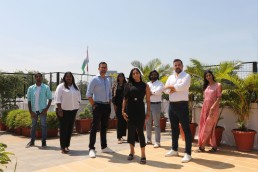
(India) - International lighting design consultancy Nulty has opened a new studio in Bengaluru, its second Indian premises and seventh international studio to date.
A year on from the launch of its Pune studio, the new studio will see the appointment of three new designers and Managing Director Harshita Shetty, who will move up as the head of the India division. The move comes as Nulty looks to build on its portfolio of work, which includes large-scale mixed-use schemes in Hyderabad and Mumbai, a renowned F&B outlet in Goa, and a destination resort in the Maldives.
Shetty re-joins the Nulty team as Managing Director of Nulty India, after previously working with the company in 2016. With a decade of experience of working in India, and as a lighting designer and architect, Shetty will bring an extensive network that she has developed with developers, architecture practices and interior design firms based in and around Bengaluru. In her role at Nulty she will manage the day-to-day running of the Pune and Bengaluru studios and work closely with her team to create unique design narratives and architectural lighting schemes.
Paul Nulty, Founder of Nulty, says: “It feels like the right time for a forward- thinking lighting design practice to make its mark in Bengaluru. The India growth story is a compelling one, and as the complexity of architectural projects grows and more clients make commitments to sustainability, we want to provide local expertise and Nulty’s collaborative approach, backed up with the creativity, knowledge, experience, and ambition that a global lighting consultancy can provide. We’re delighted to have Harshita on board to champion the importance of great lighting design in India and grow our brand in key investment cities.”
Harshita Shetty, Managing Director of Nulty India, adds: “I’ve already been witness to the vision, storytelling, and dynamic energy that Nulty brings to every project, so I’m delighted to be back. As an organization that’s now in seven cities with more than 80 staff, what excites me the most is the active involvement and close communication that we’ll have between teams. This kind of dedication, collaborative effort and knowledge sharing will add great value to the projects that we work on and help us fit perfectly into the Indian context. I look forward to cultivating strong client relationships and working on some exciting projects in India.”
LiGHT23 sets record attendance
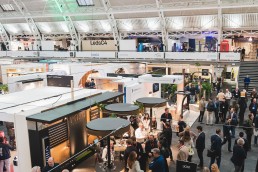
Held over two days at the Business Design Centre, London with 4776 attendees passing through the doors to see the latest offerings from more than 150 high-end international lighting brands and engage with 22 talks and presentations from design experts working with light.
Attendees at the show included designers working in architecture, interiors, lighting, and product design, as well as engineers, end-users, and specifiers.
LiGHT 23 saw several new features introduced this year which included the new darc space decorative lighting area, which saw high-end lighting brands for the interiors market exhibit for the first time – names such as Empty State, Marset, Nexia, Artemide, Ebb & Flow, Lodes, and Quasar to name but a few. The brands presented their latest decorative and bespoke lighting collections to designers keen to find inspiration for their next projects.
One of the new additions to the show included the Associations Lounge, designed, and furnished by leading Danish brand Muuto, providing a comfortable space for designers to meet with colleagues. The International Association of Lighting Design (IALD) and the British Institute of Interior Design (BIID) invited existing members, along with potential new ones, to enjoy the space and make the most of the complementary refreshments.
The [d]arc thoughts talks programme, in collaboration with lighting control specialist Lutron, again attracted a steady stream of guests across the two days, keen to learn hot topics in lighting. The programme included a variety of presentations and panel discussions covering topics such as sustainability and circular design; designing for global brands, healthy office spaces, and restaurant / bar design. As well as a project Q&A from interior design studio SpaceInvader and a special look at the bespoke lighting piece from Quasar, featured in the Netflix hit Glass Onion, the programme was topped by a keynote presentation from Peruvian New York-based light artist Grimanesa Amoros.
LiGHT 23 also provided a platform for the latest instalment of the ILP’s ‘How to be Brilliant’ talks, with Light Bureau’s Paul Traynor taking to the stage, while the very first Lighting Police walking workshop also took place on the final evening.
LiGHT WORK made a return, with show visitors making good use of the dedicated workspace area. Illuminated by table lamps from British lighting brand Tala, creating a relaxing space allowing show attendees to complete office tasks. The area also offered dedicated wi-fi, free coffee, and charging points.
Paul James, [d]arc media Managing Director said: “We are thrilled with the overwhelming response to the show. The massive increase in exhibitor and visitor numbers confirms that London, and the UK, has been craving a trade show that serves the lighting specification market. We have seen a 40% increase in attendees this year and it’s only year two.”
James adds: “With an almost 100% rebook rate from exhibitors during the show itself, this is just the beginning for LiGHT Expo in London, and we’re excited to see what the 2024 edition will bring, as we expand further into the Business Design Centre. We have had nothing but positive feedback from exhibiting brands and visitors alike.”
Dates for next year’s show are now confirmed as 20 & 21 November 2024 and will be free to visitors.
Gustavo Avilés inducted into the IALD College of Fellows
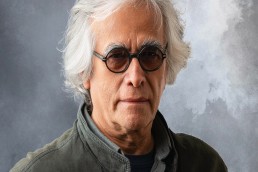
(Canada) – Gustavo Avilés was inducted into the IALD College of Fellows by the International Association of Lighting Designers during the opening session of the IALD Enlighten Americas 2023 annual conference in Banff, Canada last week.
IALD Fellows are recognised for their achievements in lighting design and education and their service to the profession and the association. Those awarded with the designation must have been professional members of IALD for 10 years, have made significant contributions to the IALD, demonstrated leadership in the profession through a robust body of work and advanced knowledge of lighting design.
Avilés is known worldwide for his influential work in the field of architectural lighting. With a career spanning over 40 years, Avilés is the founding director of the multiple award-winning architectural lighting design studio Lighteam, a member of the National System of Creators, the National Academy of Architecture, and a core member of The Lighting Detectives. He also founded the Postgraduate Lighting Design Program at the National Autonomous University of México and was the IALD’s opening speaker for the 2015 International Year of Light conference in Paris.
He has served on the IALD Board of Directors for two terms, been a member of the IALD Education Trust, a champion for the establishment of the IALD México Chapter, and a two-time winner of IALD International Lighting Design Awards, in 2011 for the Hotel Encanto project, and in 2014 for the Memorial to the Victims of Violence project.
Avilés has made significant contributions to the way light is used in various environments, ranging from public spaces to private residences. His exceptional designs are characterised by their ability to enhance the aesthetics and functionality of spaces through the thoughtful application of light.
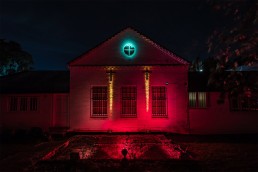
Lighting designers celebrate 20th annual Ready Steady Light competition
(UK) - The Society of Light and Lighting (SLL) held its annual Ready Steady Light competition on 17 October, in partnership with Rose Bruford College and the International Association of Lighting Designers (IALD), in London.
Hosted at Rose Bruford College, the competition attracted a range of lighting designers from students to company directors. 15 teams competed against each other to design and create an exterior installation with a limited range of equipment in 180 minutes. The teams were tasked with lighting their site in its natural state with the equipment provided. Each team had to overcome challenges without a budget and within the time constraints.
The Technical award was judged by Andrew Bissell from Ridge and Partners, SLL’s Immediate Past President, and Kael Gillam and Juan Ferrari from Hoare Lea. The artistic reward was judged by Emma Cogswell and Beatrice Bertolini from the IALD, alongside Sofia Alexiadou, the Programme Director BA Creative Lighting Control, Programme Director MA Light in Performance and freelance Lighting Designer. The much-coveted Peer Prize award was judged by the contestants taking part.
Xavio Design was awarded the Artistic Award and the Peer Prize for its installation, which took inspiration from the Mexican holiday Day of the Dead. The team lit the façade of one of the oldest college buildings, accentuating its cross-like anchor plates and window frames in the shape of a cross. They used playful colours to create a joyful message to reflect the colourful Mexican celebration.
Senior Lighting Designer at Xavio Design, Alessandra Bertolini said: “We were thrilled to win. I was so proud of my colleagues and the way each individual contributed to the project. It was the most amazing piece of teamwork I’ve ever experienced. To win the Peer Prize was particularly rewarding as there were some great installations from the other teams, so we really didn’t expect to win.”
The SLL Technical Award was presented to Arup, for its installation representing the four seasons. Graduate Lighting Designer at Arup, Coleman Deady Ridge, explained: “Rather than creating one large lighting installation we decided to use our luminaires to form four small scale, theatrical installations based on the four seasons. We used different lighting techniques and colours to express the feelings and emotions of each scene.”
Ridge continues: “Our team was made up of early careers people from Arup, with four of the five team members having only joined the company in September, so we were really proud to win the Technical Award. It was a really fun chance to explore how lighting can be used and a fantastic team building experience for us all.”
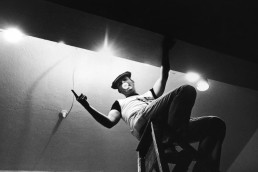
Robert Irwin dies aged 95
(USA) - Renowned artist and monumental figure in the California ‘Light and Space’ movement, Robert Irwin has passed away aged 95. Pace Gallery, who represented Irwin for many years, formally announced his departure this week.
Irwin made innovations across his artistic career that span for nearly seven decades – often expanding contours of the canon and pushing the limits of what art can be. He will leave an incredible mark on all realms of art from painting, sculpture, and light installations. His method towards art would consider him a visionary in the way he used light and space and were fundamental materials to his style.
Born in Long Beach, California in 1928 he began his career as a painter in the Los Angeles ‘Cool School’ scene of the 1960s. It was towards the end of the 60s when Irwin delved into a long-term love affair with light, space, and perception as his medium. He developed ‘conditional art’ involving installation-based works, using various media to respond to specific environments.
In 1997 Irwin unveiled ‘1° 2° 3° 4°’ for the Museum of Contemporary Art San Diego marking his first permanent art installation. A decade later he created Light and Space III for the museum’s Pulliam Great Hall with a unique arrangement fluorescent light in a by semi-transparent fabric scrims. In the last decade of his career, Irwin returned to his studio working on sculptural works with fluorescent lights and acrylic – which led to his Sculpture /Configuration works in 2018 and Unlight Series in 2022– both presented by pace gallery.
The last piece of the ‘Unlight Series’, exhibited in Kraftwerk, Berlin in 2022 was featured in arc 126. It was the largest installation Irwin had displayed in Europe during his six-decade career. ‘Light and Space’ in Berlin was exhibited in a former powerplant, where the installation worked with the architecture using fluorescent tubes in rhythmic patterns. The light in turn lit the interior prompting visitors to interrogate the notion of perception itself.
Irwin’s innovations and unparalleled creativity have left an indelible influence on the both the art and lighting spheres. His work will continue to be an enduring source of inspiration for future generations as his work continue to be displayed in major galleries across the world. To delve deeper into Irwin’s ‘Light and Space’ be sure to explore the full article by following the link: https://issuu.com/mondiale/docs/arc126/56.
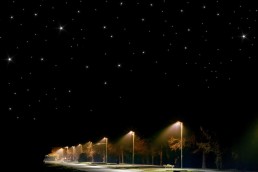
Forge partners with Lumileds on preserving dark skies
(UK) - Forge is partnering with Lumileds to provide outdoor lighting solutions dedicated to preserving dark skies.
The partnership between the two leading companies will combines their expertise with LED innovation, creating product designs that help to combat the impact of light pollution. It will also see the creation of turnkey solutions for professional lighting products, combining Lumileds’ LUXEON NightScape technology with Forge’s rapid product realisation capabilities.
The effects of blue light on human melatonin and sleep regulation are well documented however, as the world comes to a greater understanding of the devastating effects of this blue component on nocturnal wildlife, legislation has been implemented to seed real change.
In the UK the ILP’s GN08/23 gives guidance on mitigation steps to help preserve bat populations and in Hawaii, Bill 21 Maui Ordinance restricts blue light content in new exterior lighting installations to under 2%. The regulatory shifts being made have placed the onus on manufacturers to limit blue wavelength emissions and tackle light pollution head-on.
The British Astronomical Association’s Commission for dark skies suggests that 90% of the UK population has no access to the starscape above, due to light pollution, or “skyglow”.
Lumileds’ LUXEON NightScape technology provides a unique spectral distribution that delivers high-quality white light at the highest flux while emitting less than 2% of blue light in the 400-500nm spectrum. This allows for compliance with emerging regulations while maintaining desirable aesthetic and performance characteristics.
Forge Managing Director, David Scott-Maxwell commented: “This technology is a revolutionary moment for outdoor lighting and its ability to support the nocturnal environment. NightScape is a world-class LED innovation and Forge can rapidly integrate it into lighting products. Our global experience in LED product manufacturing delivers finished components, assemblies, or luminaries, wherever and whenever they are needed, which means that we can drive forward the adoption of this important new technology around the world.”
Director of EMEA Distribution for Lumileds, Allan Horn added: “Lumileds LUXEON NightScape technology and the partnership put us on the cusp of creating sustainable and compliant lighting solutions that will keep customers and end users ahead of the curve as regulation evolves. This truly is a powerful collaboration and sets a new standard for intelligent, sustainable exterior LED lighting.”
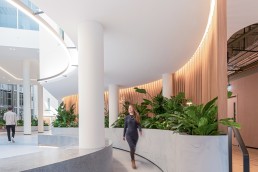
The Ark, UK
One of the most iconic buildings in London’s Hammersmith borough, The Ark has recently undergone a refurbishment, spearheaded by architects at Gensler.
The intent behind the redevelopment was to bring a fresh contemporary feel to working spaces, giving it a hospitality feeling.
Central to this approach was the lighting design, created by Lichtvision Design. After being approached by project manager Gardiner & Theobald, Lichtvision worked with the architects to develop a lighting strategy that would complement the wider architectural concept.
Laura Cizauskaite, Senior Associate and Project Lead at Lichtvision Design, explains how the original design brief shaped the lighting scheme: “Gensler’s design narrative explored the journey, theatre, and compress/decompress concepts. We took those concepts on board, engaged with the building’s history, and how those storylines can be addressed with the lighting.
“For the journey theme, we looked at the location – the building is set back a couple of minutes away from Hammersmith train station, surrounded by train lines and the Hammersmith flyover. The entrance is also set back, surrounded by a courtyard. As you come in, the main reception is located centrally to the core area. Naturally, a ribbon-journey theme developed, helping to invite and lead people into the building and the reception. The oval façade structure was followed with the curvature used in the interior spaces to guide people in, and the use of concealed lighting helped to achieve that.”
The compression/decompression theme, Cizauskaite continues, was led by the building’s varied interior heights – shallow ceilings in the entrance, lift lobbies, and café area contrast with the double height reception space and two eight-storey height atria with lightwells. The lighting therefore aimed to balance the contrast between the suppressed and heightened areas, creating continuity and harmony.
The theatrical element plays on the building’s history and standing within the area, while also capitalising on the current trends of workplace design, incorporating F&B and hospitality facilities. Both the building’s entrance, and its rooftop “Crow’s Nest” VIP area has a strong expressed geometry which we wanted to highlight giving it a “graphical” approach, as Cizauskaite adds: “We framed the entrance, atria windows, and geometrically shaped Crow’s Nest with colour changing, edge-lit lighting.
“We aspired for The Ark to be a landmark in the Hammersmith area, much like the Oxo Tower – visible from far distances at night.”
Across the site, therefore, Lichtvision Design merged the various themes and concepts – the fluidity and curvature of the façade and architectural shapes resemble the journey experience, compression and the graphic approach.
Cizauskaite continues: “To tell a story of a journey, we integrated linear lighting to both the exterior and the interior, leading the visitors right into the reception. The decompression theme was resolved by balancing natural daylight and artificial lighting, giving it a light and airy atmosphere. The graphic approach was applied where architecture had sharp and strong geometry – the entrance frame, lightwell windows, the Crow’s Nest’s geometrically shaped perimeter with ceiling lines.”
With a lighting concept that is so engrained in the architectural approach, Lichtvision Design worked in close collaboration with Gensler throughout the project; at the concept design stage, the lighting designers and architects held multiple workshops with the client and the heritage consultant to ensure that lighting is respecting the historic nature of the building and complements the interiors.
“For example, only the entrance courtyard had been refurbished, with the rest of the exterior lighting due to remain. Hence, we maintained the existing original bollard perimeter lighting, allowing for redistribution and refurbishment to them,” Cizauskaite adds. “The colour temperature of the fixtures was changed from 4000K to 3000K with dimmable LED modules, connected to a lighting control system for optimum operation.”
Inside, the collaborative approach was particularly essential, in no small part because of the abundant daylight on offer. Marrying this natural light with an effective artificial lighting scheme was one of the core set-out goals for the project.
Cizauskaite explains: “At the start of the project, we completed a survey to analyse the light levels from the natural daylight coming through the glazed façade, the lightwells, and the existing artificial lighting levels. The light levels were very varied as you navigate through the space – a very bright daylit entrance foyer, while moving into a double-height reception area was left with very little daylight. Two lightwell atriums eight storeys high contributed some daylight, but due to their different sizes, the light levels were also inconsistent.
“Our aim was to balance the inconsistency of daylight and artificial lighting in order to create more uniform, balanced spaces. An increased level of artificial lighting was used in the reception to allow for a smooth transition from the naturally very bright entrance.”
A good amount of artificial light had to be integrated into the daylit entrance as well, to ensure the bright ambience is not affected in the evenings and wintertime. The building operates standard office hours, with café facilities closed in the evening, whilst allowing 24-hour access nighttime security. To that end, Lichtvision Design designed lighting controls with circadian rhythms in mind; communal spaces that are bright and energising during the day and softly reducing the light levels in the evening and nighttime.
Alongside the circadian considerations, the lighting scheme also plays up to the more “hospitality-oriented” office space feel. A recurring trend in modern workspaces, The Ark has been designed to be a welcoming and invigorating space. Cizauskaite explains the benefits that such a design can bring, and how the lighting design contributes to the hospitality feel: “There is a lot of research on how the environment affects our mood and productivity, and how colour of lighting, biophilia, and art can influence and stimulate it.
“As post-Covid employers are still trying to get staff back into the office, it needs to be a more appealing and exciting place to come back to. Also, with hybrid working days, the office became not only a space to work, but also a place for
social gatherings, meetings, and connecting with colleagues. Taking a hospitality approach to the workspace helps it to be a more enjoyable, welcoming, and exciting place to attend.
“In the design of the space, the hospitality approach included complementing the biophilic design features, such as lush greenery, rich wood finishes, etc. The café features a signature bar, and the use of decorative focal lighting to the main reception and staircase. Integrated low-level lighting also helps to create a more human-scale, intimate atmosphere.”
“After careful consideration, we selected 3000K colour temperature throughout the communal spaces – we wanted to create a welcoming, fresh, and consistent atmosphere. It works well for general lighting and naturally appears warmer where wood finishes are used to give more of a hospitality feel.
“Prior to the refurbishment, a 4000K colour temperature was used for the general lighting, and during the initial site survey, we felt it looked too cold and uninviting – we wanted to soften it up while maintaining the workplace environment,” Cizauskaite adds.
While the project was part of a wider refurbishment of the building, Cizauskaite explains that, with detailed 3D modelling in place, any potential issues or challenges were easily bypassed, although there were several considerations that still had to be made.
“The project was delivered using 3D Revit BIM software, allowing good services coordination and ability to spot potential clashes,” she says. “Design had to consider accessibility for the future maintenance to the double-height spaces and atria. We ensured that atria window lighting can be accessed via individual floor levels, without the need for a cherry picker or scaffolding and that long-lifetime LED luminaires were used for the general lighting in the double height spaces.
“The biggest difficulty was to fully conceal some of the lighting when working with the existing structure. In those instances, a more exposed lighting approach was undertaken, complementing the graphic approach strategy which is designed to be used during the dark hours of the day or for special events as a feature lighting.”
With the goal of revitalising one of Hammersmith’s most iconic buildings and creating a location that blurs the boundaries between workspace and hospitality, Cizauskaite believes that she can look back on a job well done. She reflects: “Both the vision of the architecture and lighting approach were maintained from concept to completion; looking at the building today, we see our concepts visualised into the space and how it complements the refurbishment. We are happy to see that close team coordination throughout the design and construction stages allowed us to bring this vision to life.
“The lighting design successfully achieves our set out goals: to be an inviting and enjoyable workspace with its feature highlighted architecture being an iconic building in the area.”
Snapshot - Studio Mark
Since its formation in 2019, Dubai-based Studio Mark, established by Courtney Mark, has built up an impressive array of projects, with a specialism in high-end hospitality design. Here, we look at some highlights from across Studio Mark’s portfolio.
Hotel Indigo Business Bay, Dubai, UAE
Hotel Indigo Business Bay is Dubai’s first boutique hotel contained within a 20-storey tower located in the heart of the city’s new buzzing Creekside destination next to downtown Dubai.
Think Dubai is all sand dunes and chrome? Think again. It’s stories that make this city tick – and Hotel Indigo’s story is extraordinary. It’s here by the Creek where the tune of the old city meets the beat of the new. Dhow boats and souks clash with mega-malls and global influences, creating an explosion of intricate multicultural – and it’s from this, that this hotel was born.
With the story of the neighbourhood in every thoughtfully designed detail and local influence in every taste and twist, the property helps you see the city through a different lens. Lighting is dramatic, thoughtful, and unveils new twists and turns as you travel throughout the property. Evoking discovery and forever changing perspectives as the spaces transform from day into late night.
The guestrooms provide epic views of the city skyline through floor-to-ceiling windows and a space punctuated with unique local art pieces. Dramatic lighting effects draw you in and take you on a transformative journey from one area to the next. Gram-worthy Moroso chairs and mother of pearl inlaid bathrooms provide cultured class as you chill down and relax from your busy day.
Off The Wall is a slick cocktail bar inspired by the culture clash of nearby Satwa. The day’s flavour here is gritty and urban, with riffs on traditional flavours alongside works by local artists. It is the perfect place to sit back, relax, and drink it all in.
W Hotel Yas Island, Abu Dhabi, UAE
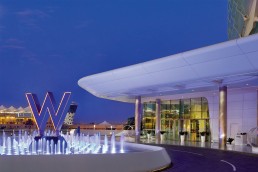
W Hotel Yas Island is a luxury playground spread over two buildings, revealing the best of Abu Dhabi’s history, heritage, and culture.
As the ultimate dining and nightlife destination, this property embraces six unique restaurants and bars ready for guests to steal the scene, push the boundaries, and create fashionably unforgettable experiences at every turn. The interior design draws inspiration from traditional and artistic surroundings, complementing the landscape with architectural elements. The deeper you see, the clearer Abu Dhabi reveals itself within this property’s DNA.
The lighting design utilises a multi-layered lighting approach that is designed to embrace the intricate detailing, enhance the bold colours and textured materials, and amplify the many optical illusions created by a play of light and shadow; reminiscent of the natural lakes, wetlands, salt flats, and fossilised sands and dunes – all of the hidden gems of the UAE.
Culturally awakening, the soul of W Abu Dhabi runs deep throughout this property. Inspirational architecture unravels in the form of a bold welcome area, bespoke welcome desks in the shape of oil drops, to jewel-tone furnishings depicting the colours of liquid gold. The themed restaurants within the Food Garage draw inspiration from the urban streets of China, the Utopia that is Peru, and the Jewel of Beirut’s famously abandoned and then reopened - La Maison Rose.
Radisson Blu Deira Creek, Dubai, UAE
The Radisson Blu Deira Creek was the first 5-star hotel in Dubai. Since its opening in 1975, it has remained a much-loved old friend of the Dubai Creek community. To best revitalise this historic property Radisson have selected a team of seasoned hospitality design experts to refurbish the interiors and lighting of the public spaces; including the entrance lobby, reception, lobby lounge and cafe, new spa facilities, rooftop pool deck, bridal suites, executive lounge, event spaces, and six of their 15 award-winning restaurants, including Boulvar, the Fish Market, Minato and Marbles Bar, and China Club.
Radisson Blu Hotel Dubai Deira Creek is the first true heritage hospitality refurbishment opportunity for Studio Mark in the Middle East since coming to the region in 2013.
The design approach was to refurbish yet retain the historic and unique backdrop for today’s discerning guest while retaining all its heritage and colourful character. Designs considered retaining the existing timber marquetry wall paneling; water jet cut marbles inlaid with brass and timber coffered ceilings and are sensitively layered with contemporary joinery, furniture pieces, vintage carpets, artwork, and decorative lighting feature statements.
Lighting is crucial in achieving a harmonious environment for guests in any hotel property. In a heritage hotel refurbishment of this stature, the stakes are high for the owner and entire design team to get this right. The owner and operator are acutely aware of the importance that light plays in being able to see these culturally, vintage, interiors in their full glory.
Nebula, Dubai, UAE
The ‘Nebula’ marked the entrance to Dubai Design District (d3) for Dubai Design Week. At night, the space was transformed. To quote the installation’s conceptual artist Vibhor Sogani: “Each of us is an entire universe and the Nebula echoes the hopeful promise that even when we catch ourselves desolate under a sombre rain cloud, it is but a mere mirage, for reality lies in looking up”. Looking up is the effect that transpired. At night, the space attracted and lifted eyes of passerby like a moth to a flame – a visceral impulse. Those who looked upon the metal baubles would be met with an unmatched reflection forever changing in shape, colour, and space. In line with Sogani’s artistic expression, the overwhelming perspectives that radiate from Nebula surfaces are “imperative reflections of the deeper self.”
Nebula’s presence was a sign of leadership and comradery within Dubai’s lighting industry. The project was showcased in November 2020 at Dubai Design Week when the Covid-19 pandemic was in full swing impacting every region and industry. The public installation presented by Wilson Associates in collaboration with Studio Mark and internationally acclaimed artist Vibhor Sogani, is passion defined. This project was a masterclass in a successful design collaboration to ensure the best possible project outcome. From initial inception to the final programming, the team worked together.
Lighting design binds people to a place and to each other. When light meets people where they are, magical things can happen. Founded by Courtney Mark in 2019, Studio Mark is an independent architectural lighting design practice specialising in hospitality lighting design and refursbishment in an era of wellness and eco-conscious consumerism. The move to launch her own studio came after Mark witnessed first-hand the shifts in the local design market over the years, and an intrinsic need to be more flexible and adaptable to meet the expectations of her clients.
A third generation architect, Mark actively partners with top forward-thinking creatives from the architecture, interior design, and construction industry, prioritising sustainability. Studio Mark is currently designing for a new age of sustainable hospitality with a distinctive vision of authentic cultural immersion and site-specific lighting design. Crafting tranquil and stimulating sensory experiences is at the centre of the studio’s design approach.
Through the team’s collective backgrounds in architecture, interior design, project management, and the fine arts, Studio Mark contributes a comprehensive, hands-on design approach that is aesthetically grounded in international architectural visual design vocabularies.
Mark says: “Creativity is a lot like looking at the world through a kaleidoscope. You look at a set of elements, the same ones everyone else sees, but then reassemble those floating bits and pieces into an enticing new possibility.”

Osvaldo Sepulveda
It’s no big secret that lighting design is a profession that welcomes people from all walks of life – from architecture and interior design to theatre production, product design and even, as we learnt in a recent interview with Panos Ferentinos, graphic design. It is a testament to the lighting design community that such a diverse array of backgrounds can be brought together and succeed, so long as they share a passion for design, and for creating moments of inspiration.
In a bid to continue celebrating these unique pathways into the world of lighting, arc caught up with Osvaldo Sepulveda, Senior Lighting Designer at Toronto-based Mulvey & Banani Lighting. Before joining Mulvey & Banani in 2016, Sepulveda was pursuing cinematography and working in the world of filmmaking.
It was a world that had fascinated Sepulveda from an early age, when he used to go to $2 Tuesday specials at the cinema with his father (“Toonie Tuesdays”, as they were affectionately known). “I come from an eccentric, busy Chilean family household, so I would always beg my dad to take me to the movies,” he recalls.
“Movies like Cinema Paradiso, Back to the Future, and The Godfather really hit me as a kid – I was watching them and not knowing that they were movies, I thought they were real life. My parents told me that no, people work to put this together as a visual art, and so I needed to know everything that goes behind it. Whatever the magic is, I needed to know it.”
This kickstarted a passion for acting that eventually led Sepulveda to study theatrical performance at Toronto’s Humber College, where he got an advanced diploma. He then spent some time in New York, taking part in some physical workshops to further pursue acting.
After a few years, he wanted to “improve his skillset” and learn more about what goes on behind the camera. “I did a few more years at Sheridan College, Ontario, but this time it was specifically for cinematography and production design. That was the introduction of lighting and camera work. I’ve always loved movies, but this was the first time where I actually got to see how things were put together.”
Following his years studying cinematography at college, Sepulveda joined the union I.A.T.S.E (International Alliance of Theatrical Stage Employees) – one of the main unions for film crews in North America, and moved his way up from camera trainee to a second camera assistant. Alongside his work in the camera department, working with directors of photography and camera operators, he also took on work in the lighting department and grip department. “These three departments help the cinematographer, so I thought that I needed to know these things if I wanted to become a cinematographer myself,” he says.
“I didn’t want to just know about the camera, I wanted to know everything so that I could be a master, be prepared. I had a lot of fun doing that, and that also took me to different avenues too. So, after a few years of working in the film industry, I wanted to learn more about lighting, but from a different perspective. I was looking for workshops and I found Ryerson University in Toronto, which had architectural lighting, so I took that, and that opened up a whole new industry for me, a new playground.”
Although this venture into architectural lighting was, as is so often the case in our industry, by accident, it led Sepulveda on a journey of discovery, opening his eyes to a brave new world.
“I wanted to improve my filmmaking and thought that, by learning what architectural lighting is teaching, I can take that back to set and be better prepared, but I discovered a whole new world and I thought ‘this is really cool’.”
It was during this course on architectural lighting that Sepulveda discovered Mulvey & Banani Lighting while looking for a field placement option. “When I researched them, I saw some really great work, and I really saw the benefit of permanent structures being lit. I had seen that myself in the city, and I was always curious how it was done and who did it. But these classes put the connections together for me, and I thought that maybe I could take this leap and give it a try – it was something worth doing that I was really excited about, so it just naturally went from one thing to another.
“I also took it as a complement to what I did before. So, instead of feeling like I had to do one thing over and over, or replace a career, I was looking more at using this as an extension of my toolset – if I want to become a master in lighting, it would be nice to become flexible in different platforms, like photography for example, or cinema, or architectural lighting.”
As well as being impressed with the work that Mulvey & Banani was doing at the time, Sepulveda believes that the diverse nature of the company, and the supportive nature of the staff, helped the company to stand out.
“Mulvey & Banani Lighting is a subsidiary and division of Mulvey & Banani. When I joined the lighting team, I was immediately struck by the diversity of expertise – from architecture and theatre to interior design and filmmaking. It’s this eclectic mix that infuses our designs with creativity and innovation. We’re not just lighting designers; we’re storytellers, and our narrative is shaped by every unique background within our team. Driven by a shared passion, we often collaborate with each other, as well as the other engineering and design divisions at Mulvey & Banani.”
During his transition into the world of architectural lighting, Sepulveda adds that his life was “quite the costume change”, as he found himself switching between various roles – and industries – day by day. “When I was studying part-time for a few months, my weeks were a combination of Mondays on film set, in the camera department; Tuesdays at Mulvey & Banani interning; Wednesdays back on the film set doing grip work and rigging work; Thursdays back at the studio; and then on Fridays I could have been doing extra work on a movie. That happened for months, and people were shocked by this, but it was a fun time jumping from one industry to another.”
While he recalls it as a fun period in his life, Sepulveda adds that the initial transition from the fluidity and immediacy of cinematography to the slower pace of architectural lighting took some adjusting. “It was a difficult transition because on film sets, we actually see the results of our lighting in the moment; and then in architectural lighting, it’s not until months or maybe even years later that the spaces comes to life and you understand what the concept actually looks like in real life. So, I had to develop a bit of patience.
“Also, understanding and navigating through architectural drawings, RCPs, and details, that was a challenge for me because I knew lighting effects, but I didn’t particularly know how they were permanently mounted or the attention that went into these details. That was a challenge for me, and I knew that I had to fill in these knowledge gaps, and that inspired me to go back to school on a part-time basis and pursue a postgraduate certificate in architecture and landscape design. There were a few gaps, but the challenge was worth it, and I’m glad that I did it.”
There was also a period of adjustment creatively for Sepulveda, particularly given the permanence of architectural lighting. “I had to think about how things can survive on a long-term basis. The types of fixture bodies are different to studio bodies – studio lights are rugged, and they’re meant to get banged up, and then in architectural lighting they’re more sophisticated and polished,” he says.
“Other challenges came with the computer programmes – CAD and programmes like Revit and Photoshop were big learning curves, but something that I learned on the job over time. I’m still not an expert, but I can get through and design in quite an artistic way. Learning all of the different control protocols was difficult too – I was used to just using DMX, but then I was introduced to DALI and 0-10, it was something that I had to just get over and learn and fill those knowledge gaps.
“But the theory of lighting and the design of lighting, direction and quality of light is all the same, it’s just the application that changes. We think about point of view of a camera on set – we light the space according to the position of the camera, so if the camera were to pan somewhere it isn’t supposed to, we would see a light that we’re not supposed to see.
“I try to take that idea to architecture now, and I say, ‘if a person is standing here, this is their viewpoint’. What do we want? How do we want them to observe the space? How do we want them to observe the farthest wall? Is there a highlight? How do we create depth? I use that idea of point of view between cinema and architecture, the only difference is that where one is a camera, the other is a person.”
He adds that some of the other parallels between cinema and architectural lighting come in the lighting techniques – things like the aforementioned direction of light and quality of light, as well as the psychology of colours and the feelings that these can bring in the viewer.
“I like to think that the director on set is the architect, they share the same role; lighting technicians are like the electrical contractors, and the production designers are similar to interior designers. There are relationships that are very common between the two.
“Another parallel comes in storytelling – we like to tell stories, and telling a story in architecture is a magical thing. It’s very hard to do because you’re not dealing with dialogue, you’re not directing the person where to walk or what to see at a given point in time, but we’re telling the story of the material, of the history, and trying to convey or invoke a certain emotion or a certain mood for the individual.”
This personal, emotional approach, of putting oneself into the point of view of the audience, is something that Sepulveda feels is one of the most important, both in his former work as a cinematographer, as well as in architectural lighting now. “I like to put myself in the point of view, and not fall into the trap of just looking at the RCP from a bird’s eye view, but being in the space, imagining walking through the space and how I want to feel.
“I also like to have a really close relationship with interior designers – they are such a key role in my work. Cinematographers lean heavily on production designers, they want to know what the material will be, the colour, the finish; and I think that kind of attention is what I like to carry in this work, to collaborate with interior designers and not wait until the very end, and to be fearless of asking silly questions – what do you think this material might do? Something funny? Once we hit a light on it, is it going reflect and do something interesting? Just giving more attention to different materials, fabrics, glazing, it’s that kind of attention to detail that I like to transition.
“On set, it was very physical, I had to carry lights with me, and that’s what I like to do in the office now – play around with different lights. I have a little notebook that I carry around with me that I call the Journal of Observations. When I see anything interesting, I take a photo, I question where the lighting effect is coming from – prismatic reflections, rotating fan blades that catch the light sequentially – I note it down in my journal and have this collection of observations.”
What this means is that Sepulveda has a very cinematic approach to architectural lighting design, bringing his experience from both realms together. A recent example that he cites is the lighting of Assiniboine Park Conservancy in Winnipeg, Canada. A plant conservatory, housed in a large glass biodome, the project called for a landscape path that would lead visitors around exotic plants and a waterfall. One of the parameters for the client was that they didn’t want direct light sources, so instead Sepulveda and the Mulvey & Banani team looked to light the space indirectly with reflectors. “That was something that I’d seen from my experience working in movies – using xenon lights, hitting them off a mirror so that they create a shaft of light in the atmosphere. So, we played with this idea, we did some tests and depending on the texture of the reflector it would either narrow the light or disperse the light. We picked two that we liked to provide coverage and added colour to these; they were then programmed to do certain scenes like a sunrise, a glowing, warm orange hue across the area, and then transition to a blue hue or even lightning.
“We got to play with the control aspect of it, creating lightning cues and playing with the saturation and exposure levels, manipulating the lights to create these effects. We also added classical music to it – a piece by Vivaldi, recomposed by Max Richter [film composer]. This is a great example of taking an idea that I got from being on set and bringing it to the architectural realm.”
Other landmark projects that Sepulveda has worked on in his time in lighting design include the lighting of Niagara Falls (completed while he was still interning) – here, his filmmaking background came to the fore once more as he created a complementary documentary, recording the behind-the-scenes work behind the project. Another example he cites is the TD Conference Centre; although a two-level, sub-ground site, the challenge was to introduce lighting to make visitors forget that they were underground. “We had these special linear lights on the side of the wall that were custom made to give the impression that natural light was punching in through these slots,” he explains. “The CN Tower Observation Deck was another high-profile project where I used my theatre background to design custom deep louvres to control light distribution.”
Through his time at Mulvey & Banani though, while he was relatively inexperienced in some of the technical intricacies of lighting design on joining the team, Sepulveda feels he has had a lot of support and patience from the team, led by mentors Paul Boken and Stephen Kaye. “They gave me a shot, and I remember saying to them at the time ‘I don’t know CAD’, and they said to me ‘but you know lighting, and that’s one of the hardest things to learn. We can teach you the programmes, just focus on your design and keep having fun with light, and the rest will take care of itself’. They were very supportive. They showed me the ecosystem of architectural lighting, the procurement channels and so on. It was a process for me to understand where things come from and how to talk to contractors or sales reps, or even clients. There were a lot of big learning curves.”
With a career that has spanned various industries, Sepulveda has a lot of role models that he takes inspiration from in his work – from filmmakers and cinematographers to lighting designers, artists, painters, and photographers – and he says that he is always researching new names to be inspired by. “In terms of filmmakers, Charlie Chaplin shaped early cinema; Alfred Hitchcock, for his storytelling and how he used certain colours to pop in scenes was really interesting. Photographers Sal Leiter and Vivian Maier; cinematographer Hoyte van Hoytema – he raises the bar with technical innovations. Another one is Dan Laustsen, who I worked with and shadowed on Crimson Peak; Roger Deakins, George Willis (CSC), my current mentor for cinematography.
“I also have favourite lighting designers too – people like Steven Knapp, Olafur Eliasson, and Helen Pashgian. Painters too – Rembrandt, Edward Hopper, or the American James Gurney. It’s interesting because I have a list that I call a Chronology of Artists, and I break it down by different platforms of lighting – sculptors, painters, photographers – I have them all in front of me, and I have my favourites, and every now and then I will go into this database that I have and research them. I look for inspiration, find out where they come from and what kind of work they did.”
This ongoing search for inspiration is something that Sepulveda strongly recommends for others out there who may be looking to make the move into architectural lighting design, whether that be from cinematography, or other fields. As he looks forward to the future – a future that will shortly see him speak at IALD Enlighten Americas in Banff – he offered some advice to other budding lighting designers.
“I would start reading books on architectural lighting design – Light for Visual Artists by Richard Yot; Architecture Lighting Design by Gary Steffy; Daylighting by Peter Tregenza; the Art of Landscape Design by Janet Moyer – read these textbooks specifically on architectural lighting design and find out where there are universities or courses, or even events where they can attend and see for themselves whether they want to pursue this or not,” he says.
“But I think what is most important is to know that a background in cinematography is an incredible, valuable tool for being a lighting designer. So, already they should feel empowered and feel like they have the basics to take this leap and not be afraid to experiment with light on their own.
“Observe the lighting around you, make your own Journal of Observations, start to look around at the spaces that you are in and take in the light, and be fearless.”
“I try to take that idea to architecture now, and I say, ‘if a person is standing here, this is their viewpoint’. What do we want? How do we want them to observe the space? How do we want them to observe the farthest wall? Is there a highlight? How do we create depth? I use that idea of point of view between cinema and architecture, the only difference is that where one is a camera, the other is a person.”
He adds that some of the other parallels between cinema and architectural lighting come in the lighting techniques – things like the aforementioned direction of light and quality of light, as well as the psychology of colours and the feelings that these can bring in the viewer.
“I like to think that the director on set is the architect, they share the same role; lighting technicians are like the electrical contractors, and the production designers are similar to interior designers. There are relationships that are very common between the two.
“Another parallel comes in storytelling – we like to tell stories, and telling a story in architecture is a magical thing. It’s very hard to do because you’re not dealing with dialogue, you’re not directing the person where to walk or what to see at a given point in time, but we’re telling the story of the material, of the history, and trying to convey or invoke a certain emotion or a certain mood for the individual.”
This personal, emotional approach, of putting oneself into the point of view of the audience, is something that Sepulveda feels is one of the most important, both in his former work as a cinematographer, as well as in architectural lighting now. “I like to put myself in the point of view, and not fall into the trap of just looking at the RCP from a bird’s eye view, but being in the space, imagining walking through the space and how I want to feel.
“I also like to have a really close relationship with interior designers – they are such a key role in my work. Cinematographers lean heavily on production designers, they want to know what the material will be, the colour, the finish; and I think that kind of attention is what I like to carry in this work, to collaborate with interior designers and not wait until the very end, and to be fearless of asking silly questions – what do you think this material might do? Something funny? Once we hit a light on it, is it going reflect and do something interesting? Just giving more attention to different materials, fabrics, glazing, it’s that kind of attention to detail that I like to transition.
“On set, it was very physical, I had to carry lights with me, and that’s what I like to do in the office now – play around with different lights. I have a little notebook that I carry around with me that I call the Journal of Observations. When I see anything interesting, I take a photo, I question where the lighting effect is coming from – prismatic reflections, rotating fan blades that catch the light sequentially – I note it down in my journal and have this collection of observations.”
What this means is that Sepulveda has a very cinematic approach to architectural lighting design, bringing his experience from both realms together. A recent example that he cites is the lighting of Assiniboine Park Conservancy in Winnipeg, Canada. A plant conservatory, housed in a large glass biodome, the project called for a landscape path that would lead visitors around exotic plants and a waterfall. One of the parameters for the client was that they didn’t want direct light sources, so instead Sepulveda and the Mulvey & Banani team looked to light the space indirectly with reflectors. “That was something that I’d seen from my experience working in movies – using xenon lights, hitting them off a mirror so that they create a shaft of light in the atmosphere. So, we played with this idea, we did some tests and depending on the texture of the reflector it would either narrow the light or disperse the light. We picked two that we liked to provide coverage and added colour to these; they were then programmed to do certain scenes like a sunrise, a glowing, warm orange hue across the area, and then transition to a blue hue or even lightning.
“We got to play with the control aspect of it, creating lightning cues and playing with the saturation and exposure levels, manipulating the lights to create these effects. We also added classical music to it – a piece by Vivaldi, recomposed by Max Richter [film composer]. This is a great example of taking an idea that I got from being on set and bringing it to the architectural realm.”
Other landmark projects that Sepulveda has worked on in his time in lighting design include the lighting of Niagara Falls (completed while he was still interning) – here, his filmmaking background came to the fore once more as he created a complementary documentary, recording the behind-the-scenes work behind the project. Another example he cites is the TD Conference Centre; although a two-level, sub-ground site, the challenge was to introduce lighting to make visitors forget that they were underground. “We had these special linear lights on the side of the wall that were custom made to give the impression that natural light was punching in through these slots,” he explains. “The CN Tower Observation Deck was another high-profile project where I used my theatre background to design custom deep louvres to control light distribution.”
Through his time at Mulvey & Banani though, while he was relatively inexperienced in some of the technical intricacies of lighting design on joining the team, Sepulveda feels he has had a lot of support and patience from the team, led by mentors Paul Boken and Stephen Kaye. “They gave me a shot, and I remember saying to them at the time ‘I don’t know CAD’, and they said to me ‘but you know lighting, and that’s one of the hardest things to learn. We can teach you the programmes, just focus on your design and keep having fun with light, and the rest will take care of itself’. They were very supportive. They showed me the ecosystem of architectural lighting, the procurement channels and so on. It was a process for me to understand where things come from and how to talk to contractors or sales reps, or even clients. There were a lot of big learning curves.”
With a career that has spanned various industries, Sepulveda has a lot of role models that he takes inspiration from in his work – from filmmakers and cinematographers to lighting designers, artists, painters, and photographers – and he says that he is always researching new names to be inspired by. “In terms of filmmakers, Charlie Chaplin shaped early cinema; Alfred Hitchcock, for his storytelling and how he used certain colours to pop in scenes was really interesting. Photographers Sal Leiter and Vivian Maier; cinematographer Hoyte van Hoytema – he raises the bar with technical innovations. Another one is Dan Laustsen, who I worked with and shadowed on Crimson Peak; Roger Deakins, George Willis (CSC), my current mentor for cinematography.
“I also have favourite lighting designers too – people like Steven Knapp, Olafur Eliasson, and Helen Pashgian. Painters too – Rembrandt, Edward Hopper, or the American James Gurney. It’s interesting because I have a list that I call a Chronology of Artists, and I break it down by different platforms of lighting – sculptors, painters, photographers – I have them all in front of me, and I have my favourites, and every now and then I will go into this database that I have and research them. I look for inspiration, find out where they come from and what kind of work they did.”
This ongoing search for inspiration is something that Sepulveda strongly recommends for others out there who may be looking to make the move into architectural lighting design, whether that be from cinematography, or other fields. As he looks forward to the future – a future that will shortly see him speak at IALD Enlighten Americas in Banff – he offered some advice to other budding lighting designers.
“I would start reading books on architectural lighting design – Light for Visual Artists by Richard Yot; Architecture Lighting Design by Gary Steffy; Daylighting by Peter Tregenza; the Art of Landscape Design by Janet Moyer – read these textbooks specifically on architectural lighting design and find out where there are universities or courses, or even events where they can attend and see for themselves whether they want to pursue this or not,” he says.
“But I think what is most important is to know that a background in cinematography is an incredible, valuable tool for being a lighting designer. So, already they should feel empowered and feel like they have the basics to take this leap and not be afraid to experiment with light on their own.
“Observe the lighting around you, make your own Journal of Observations, start to look around at the spaces that you are in and take in the light, and be fearless.”
Less is More with David Morgan
The latest discreet architectural lighting fixture from KKDC, produced earlier this year, is the TANA Asymmetric. David Morgan puts the angled linear luminaire under the microscope.
KKDC has always focused on the ‘less is more‘ approach to luminaire design, with the development of miniature linear LED lighting systems for installation into discreet architectural details for high end projects.
The company was founded in 2005 by Jack Choo, who first encountered LEDs in the early 2000s while working for Toyoda Gosei in technical sales. He was able to persuade Samsung to use blue LEDs for mobile phone keypad back lights. In 2003, Jack and his brother Konkuk started a company to produce their own innovative LED arrays from scratch. Moving to Sydney, Australia in 2005, he founded KKDC to focus on the architectural lighting market. The company has since grown significantly with worldwide sales and a staff of around 100 people.
Research, development, and manufacturing take place at the KKDC R&D Centre in Seoul, South Korea. The company has 19 branch offices in major markets including a marketing and design office in the UK.
The first three KKDC systems, launched in 2005 and 2006: TIMI, MIMI and MOMO established the market niche for the company with small, well-engineered products for both interior and exterior applications. The 6mm wide Groove system was developed more recently based on a request from Philippe Starck as part of a hotel project to illuminate whisky shelving with the smallest dot free output luminaires.
The latest system introduced by KKDC earlier this year is the TANA Asymmetric.
The product name derives from the Japanese word for shelf and the original TANA system was an angled linear luminaire, designed by Tim Young from the KKDC Design House in the UK, for shelf illumination.
Apparently research with architects early in the life of KKDC had identified linear shelf lighting as a good potential market application that seems to have been an accurate prediction.
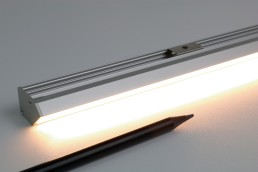
The TANA Asymmetric range incorporates a faceted extruded housing design with useful internal space for through wiring and connectors, an asymmetric linear optic and a new high output LED light engine.
KKDC design and development is undertaken as a collaborative in-house effort, with engineering design at the R&D Centre in Seoul and design input from KKDC Design House in the UK, plus global market feedback from KKDC sales branches. Jack Choo oversees the whole process and makes final decisions about timing and project priorities.
For them, the most challenging part of the luminaire development was the custom asymmetric lens design. This was designed in-house by the KKDC optical engineering team in Korea. Based on the test sample I was given to review, they have been able to produce a good quality textured extruded lens that produces an asymmetric beam without any significant striations in the beam or any colour over angle distortions or colour shifts. The beam does seem to split slightly between the major asymmetric beam and a secondary more vertical one.
The complete product development process took around two years, with much of the time devoted to the linear lens design and development.
The KKDC A Line LED light engine incorporates mid power 94 CRI LEDs on a 4.8mm pitch and the luminaire produces up to 2,970lm with 3000K LEDs and a power consumption of 30W/m. The range includes 2700K, 3000K and 4000K LED options with three-step MacAdam’s colour binning. The system works with a remote 24 VDC power supply and dimming options include 1-10V, 1-10V, DALI and DMX. The cutting module for the light engine is 38.46mm.
The TANA luminaires are produced with a nicely finished anodised satin silver aluminium extrusion, with the matching end caps fixed with neat machine screws. Available lengths range from 90mm up to 1,013mm. Concealed stainless steel spring clips fix the system to the mounting surface invisibly.
The company manufactures most of its components in-house either in Korea or in the UK. Aluminium extrusions are made with recycled aluminium and KKDC is aiming to move towards a circular economy approach.
The KKDC A Line light engine are constructed with FR4 PCB material, which is bonded to the extruded aluminium heat sink. As the company is moving towards a circular economy approach, the PCB material may need to change to aluminium, which can be recycled and the fixing method changed to allow easier on-site replacement.
The TANA range is a good quality system with an impressive light output for its small size. The asymmetric distribution provides a useful punch for use in applications including retail and display where high ambient lighting levels are required.
What exactly is “good quality” commercial lighting?
Natalia Duffy, Lighting Associate at Cundall, shares her thoughts on the best, most responsible, lighting for workspace environments.
Good lighting is not something people often notice immediately; our attention generally gravitates to architecture and interior design – unless, of course, you are a lighting designer.
Indoor lighting is a subtle yet pertinent element that complements interior design. Like a person in a nice outfit, we notice the person first and the outfit’s ability to enhance their beauty second. The effect of lighting goes beyond creating aesthetic spaces and allowing us to see. Light has been integral in shaping the trajectory of evolution and acts as a cue for activity and rest.
In contemporary life, the average office worker spends 60-70% of their lives in the office, thereby creating a responsibility for developers and employers to create workspaces that are healthy and encourage productivity. Light is proven to have a huge influence on our health and wellbeing, and as a result, lighting design cannot be left behind amongst the plethora of design considerations for a healthy office.
Gone are the days when offices were fitted with energy-guzzling, lacklustre tube lights that stayed at the same intensity for hours on end. They are not sustainable, nor healthy. Yes, our surroundings should be well lit, however, lighting should take advantage of the benefits of natural daylight and adapt itself accordingly. Such daylight design strategies involve relying on the available natural light alongside electric lighting. The trend is intuitive: when light is available externally, the reliance on electric lighting should decrease and in the darker hours of the day we shift to artificial lighting. This ensures spaces are well lit throughout the workday in a sustainable fashion as there is a lower energy need when natural light is available.
It might seem unlikely that such a minor design choice could have a significant influence on sustainability. Cundall’s Manchester and London offices conducted a study as part of the Building Energy Exchange’s Daylight Hour 2023 campaign, which calculated the energy saved when the lights were turned off for an hour. Turning off the lights for an hour in the Manchester office saved 9.19kWh, and in London it saved 28.32kWh. This equates to 2,307kWh and 7,108kWh per year respectively. Clearly, reducing the intensity of light for a few hours when it’s bright outside can have a considerable influence in reducing energy.
Employers may often be under the perception that keeping an environment bright throughout the day allows people to stay ‘awake’ and hence productive. However, how ethical is it to keep someone’s environment ‘well-lit’ for eight hours continually during each day of the working week?
Natural light, and its colour and intensity, varies throughout the day, and helps in the alignment of circadian rhythms. Cooler light colour temperatures are produced when the sun is shining at its brightest around noon, while warmer colour temperatures are emitted during sunrise and sunset. This influences energy levels through the day – with unconscious cues for staying active and resting.
In a workplace environment, where lighting is bright and constant, a lack of variation can negatively impact wellbeing, for example through burnout. To combat this, circadian lighting design strategies, where light intensity and colour temperature changes according to the time of day, are better for occupiers’ wellbeing. A lighting design strategy that alternates between cooler and warmer light colour temperatures can essentially imitate daylight by creating an outdoor light environment indoors.
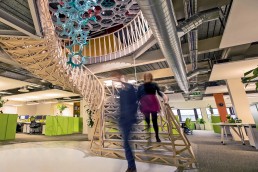
Cundall’s Birmingham office was designed to centre around a spiral helical timber staircase that is fitted with twelve spotlights, which follow the path of the sun through the course of the day. The result is a subtle change of shadows cast by the staircase around the office throughout the day – a good example of artificial lighting being used to imitate daylight.
The International WELL Building Institute has devised guidelines for lighting design to meet standards of comfort and wellbeing for occupants. The guidelines address the initial necessities of office lighting such as light that allows people to read and see clearly. Alongside that are considerations for ensuring people remain healthy, such as circadian lighting design strategies. When it comes to office lighting, striking the balance between productivity, wellbeing and sustainability is an important consideration. Ultimately, ensuring daylight is utilised to its maximum ability whilst simultaneously imitating patterns of daylight indoors seems a reasonable ideology for lighting designers. Using light colour temperature variations is a valuable tool to achieve this.
In terms of putting sustainability at the heart of lighting design, the best advice we can give as lighting designers is to do it right the first time and you won’t have to do it again. Once the occupants’ needs are satisfied and their wellbeing has been improved by a good lighting system, they are less likely to need replacing continually. The objective of investing in ‘good quality’ lighting is to ensure that we are designing sustainably, saving energy, and saving money as well.
Moreover, good lighting schemes must account for future proofing. In recent times, we have seen massive changes in how office spaces have been adapted to staff needs. The acceleration of hybrid working has created a new realm of opportunities for office spaces, with the introduction of breakout spaces, wellness rooms and collaborative workspaces amongst other things. When it comes to lighting, flexible or modular lighting systems that can be easily configured to adjust to changes in office areas or layouts can be a sustainable alternative.
With workspaces increasingly focused on staff wellbeing, elements such as indoor air quality and the creation of greener environments for mental wellbeing have been in the spotlight. However, lighting design must not be forgotten in the much-required push towards a healthy and sustainable office. Wellbeing and sustainability in lighting design need to work in tandem to create a holistic lighting system. Lighting designers have a responsibility to adapt and put people and their wellbeing at the heart of our design decisions, because ultimately, we are creating these spaces for people.