

DALI Alliance Announces the 2026 Lighting Awards
(UK) – The DALI Alliance announce that entries are now open for the 2026 DALI Alliance Lighting Awards.
Submissions will be accepted until 19 December 2025. The annual awards remain free to enter and continue to be an opportunity to be recognised for excellence and innovation in DALI-based lighting control solutions from across the global lighting industry. Awards will be given for both the Application and Innovation categories.
The application categories for 2026 are as follows:
- Residential
- Commercial Interior
- Commercial Exterior
- Industrial
- Smart Cities and Infrastructure
Innovation-focused award categories include:
- Best Use of D4i – Celebrating innovative applications of DALI D4i technology, including enhanced data communication, energy management, and advanced control capabilities.
- Best Emergency Lighting Integration – Honouring designs that effectively incorporate emergency lighting to ensure safety, reliability, and standards compliance.
- Best Human-Centric Design – Recognizing lighting projects that support health, comfort, and productivity through adaptive and dynamic lighting.
- Best Integration into Other Systems – Highlighting projects that successfully integrate lighting with systems such as HVAC, security, and energy management.
- Innovation in Lighting – Acknowledging cutting-edge technologies and advancements in lighting control.
- Sustainability and Energy Efficiency – Celebrating projects that demonstrate outstanding environmental performance and energy conservation.
- Best use of DALI+ or DALI Gateways(Parts 341 & 342) – Recognising expert application of DALI+ or DALI to wireless networks across various applications and environments.
Following last year’s success and feedback, participants will no longer be required to select a specific category when submitting their entries. Instead, the Awards judging panel will review each submission and assign it to the most appropriate primary category. Judges may also consider entries for additional categories where relevant, giving projects the opportunity to receive multiple forms of recognition.
Paul Drosihn, General Manager of the DALI Alliance, comments: “We are very excited to launch the 2026 DALI Alliance Lighting Awards. The simplified entry process that we adopted last year provides greater opportunities for organisations and their projects to be recognised. The awards are already highly respected, and we anticipate that the 2026 edition will see a further increase in entrants showcasing the possibilities and benefits of DALI”
Award winners will gain international exposure through promotion by the DALI Alliance, receiving strong visibility and association with the certified global lighting protocol standard.
For more information or to enter the awards, visit The DALI Alliance Lighting Awards 2026

David Village Lighting becomes Official UK Distributor for Artemide
(UK) - David Village Lighting (DVL) has announced a new UK distribution partnership with Italian lighting manufacturer Artemide, covering its architectural lighting portfolio, including the Alphabet of Light collection.
The agreement marks the latest development in a relationship that spans nearly 50 years, during which DVL has collaborated with Artemide across both decorative and architectural product lines on a wide range of project types. The new distributor status is intended to enhance visibility of Artemide’s solutions-focused architectural offering in the UK, as well as strengthen local support for the architecture and design (A&D) community.
DVL’s recently expanded business-to-business team will assist in the specification process for the Artemide Architectural range, working in close coordination with Artemide’s head office in Milan.
Founded in 1981 and based in Sheffield, David Village Lighting has established itself as a specialist in architectural and decorative lighting within the UK market. The company supports projects from the initial design concept through to product specification, procurement and delivery, across commercial, hospitality, residential, education and healthcare sectors.
The Artemide Architectural range comprises a variety of solution-led luminaires designed for precision and flexibility, including directional spotlights and adaptable profiles. Products are available in a range of colour temperatures, dimming options, CRI values and UGR ratings to meet diverse project requirements.
www.davidvillagelighting.co.uk
Countdown to LiGHT 25: Discover the show's new features
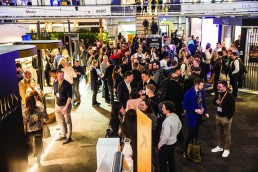
(UK) - The countdown is nearly over, with just one week to go before visitors and exhibitors gather for the 2025 edition — an expanded showcase of innovation, education, and networking opportunities. This year’s highlights include the launch of the brand-new Technical Zone, the much-anticipated return of the Associations Lounge, and an exciting new immersive light art installation.
Launched for the first time at LiGHT 25, the Technical Zone will provide a dedicated showcase for brands at the forefront of urban lighting, commercial lighting, control systems, components and OEM, lamps and gear, and emergency lighting. With advanced controls, emergency systems, and components playing an increasingly important role in sustainable and human-centric design, the Technical Zone offers both exhibitors and visitors a vital platform to exchange expertise and explore the latest developments.
Supported by Studio Due, the Associations Lounge will once again act as a shared hub for leading industry bodies, including the DALI Alliance, The LIA, ILP, SLL and the IALD. Located on the Gallery Level, the lounge will provide visitors and exhibitors with a comfortable environment away from the show floor, complete with complimentary refreshments, networking events such as the in-person Silhouette Awards celebration, the LiGHT Lunch with Studio Due and speaker David Atkinson, DALD, and a dedicated talks programme. It also offers the opportunity to learn more about association initiatives and membership.
Central to the educational element of the show programme is the CPD-accredited [d]arc thoughts talks series in collaboration with Lutron. Curated and moderated by editors of arc and darc magazines alongside guest moderators, the two-day talks programme will bring together global experts to address themes ranging from sustainability and circularity to wellness, health, and the business of design. Topics and highlights include Out of Our Lane: What Lighting Designers Must Learn from Medicine, with speaker Willie Duggan (Lighting Designer), which calls on lighting professionals to step beyond the silo of the industry. Plus, True Luxury is Handmade: Crafted for Connoisseurs of Light, with speaker Surbhi Jindal (Da Light Hub / Women in Lighting India Ambassador), exploring the creativity that brings bespoke lighting designs to life.
LiGHT 25 will also feature a new light art installation with Speirs Major Light Architecture, who have partnered with formalighting to present Re:Vision. Exploring the theme of colour perception across species, Re:Vision uses custom spectral profiles and reimagined Ishihara colour blindness test patterns to reveal the diversity of visual experience across the natural world. LiGHT isn’t just a trade show made up of rows of exhibitors. It’s a chance for designers, engineers, and architects to really immerse themselves in light, learn more about how light shapes the design industry, and make new connections through our varied features.
In addition to these new features, LiGHT 25 will bring together thousands of architects, interior designers, lighting designers, engineers, and specifiers, alongside hundreds of leading architectural and decorative lighting brands. Visitors can also take advantage of networking opportunities throughout the event, including a late-night drinks party, a networking lunch, and a dedicated co-working space.
LiGHT 25 is a must-visit event for anyone involved in lighting, architecture, interior design, engineering, and beyond. The show has a perfect mix to discover new ideas, strengthen professional relationships, and stay at the forefront of the lighting industry.
Visitor registration is free. To register and for more information, visit: https://www.lightexpo.london/
formalighting awarded the EcoVadis platinum medal
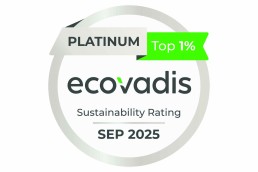
(Global) – Italian lighting manufacturer, formalighting, announces that it has been awarded the EcoVadis Platinum Medal, achieving a score of 95/100 in its latest assessment. This result places formalighting within the top 1% of companies worldwide assessed by the sustainability assessment platform over the past twelve months.
The Platinum Medal reflects the brand’s unwavering commitment to sustainable business practices and responsible growth. The company achieved a perfect 100/100 in Environment, 94/100 in Labour & Human Rights, and 99/100 in Sustainable Procurement, demonstrating its strong environmental management systems, people-centred policies, and responsible supply chain practices.
The result follows continuous improvements in sustainability governance, with strengthened policies, ambitious measurable objectives, and ISO 14001 certification across its operations. The award also reinforces the company’s ongoing collaboration within international supply chains, demonstrating that formalighting meets and exceeds the highest environmental and social responsibility standards expected in the industry.
EcoVadis is the world’s most trusted provider of business sustainability ratings, assessing companies on international sustainability standards, including the Global Reporting Initiative (GRI), the United Nations Global Compact, and ISO 26000. The platinum medal is the highest recognition, reserved for companies demonstrating outstanding sustainability performance and transparent reporting.
Michael Monsonego, CEO of formalighting shares, “We are truly honoured to receive the EcoVadis Platinum Medal. This recognition reaffirms our ongoing dedication to embedding sustainability into every aspect of our business - from energy efficiency and responsible sourcing to employee wellbeing and community engagement. It is a testament to the collective efforts of our global teams and their commitment to a more sustainable future.”
“Achieving the Platinum rating is both a recognition and a responsibility. We remain determined and committed to building upon this success, continuing to innovate and lead with purpose as we work towards a brighter and more sustainable future for our wonderful lighting industry,” concludes Sharon Maghnagi, Global Operations Director at formalighting.
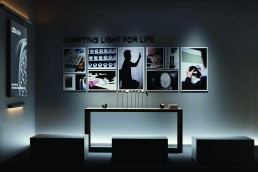
L&L Luce&Light opens it first Asian showroom
(Vietnam) – On 4 August, Italian lighting manufacturer L&L Luce&Light opened its first exhibition hub in Asia. The new space is located within LightHub – LK Technology Smart Lighting and Smart City Experience Center in Ho Chi Minh City, Vietnam.
Vietnam has become an important market for the company, given its strategic location and rapid growth. In recent years, L&L Luce&Light has taken part in several projects in hospitality, retail and contemporary architecture, including Lim Tower 3 and Park Hyatt Saigon in Ho Chi Minh City, the Salvatore Ferragamo flagship store in Tokyo, and the Rosewood Hotel in Bangkok.
“We were eager to open this showroom because it marks a key step in consolidating our presence in this area,” says Marco Celsan, CEO of L&L Luce&Light. “This milestone was made possible through our collaboration with LK Technology, a partner with whom we share a vision of innovation, quality and the integration of light, architecture and smart technologies.”
The new hub has been designed as a permanent space for exchange, learning and dialogue. Aimed for local lighting designers, architects and professionals, it offers the opportunity to explore a range of LED lighting solutions up close and to directly put their performance and potential to the test. This meeting point will foster collaborative design and provide tailored support, with direct assistance from the L&L Luce&Light team.
The Vietnam hub represents a further step in L&L Luce&Light’s global strategy to promote high-quality, design-led lighting systems for projects around the world.
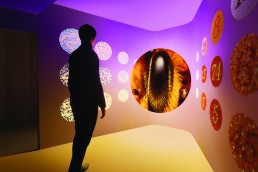
Speirs Major explores how other species see the world
(UK) – After last year’s mesmerising Intra-Spectrum by light artist Frankie Boyle, LiGHT is once again set to captivate audiences with another immersive installation. This time, by renowned lighting design studio Speirs Major Light Architecture, who, in collaboration with Italian manufacturer formalighting, will unveil an immersive new experience titled Re:Vision.
Re:Vision invites visitors to step into a world of light and perception - a sensory journey that challenges how we see and understand the visual experience of other species. Using custom spectral profiles and reimagined Ishihara colour blindness test patterns, the installation explores how different life forms perceive colour and light in ways entirely distinct from our own.
Speirs Major explains, “We’ve always been fascinated by how each species experiences a completely different version of reality, despite sharing the same planet. When you begin to understand this, you start to think about the impact we as lighting designers have on those experiences through artificial light. This installation is intended to open minds - to start a conversation about designing not just for humans, but for the many other living beings that share our spaces.”
To translate complex scientific research into an accessible experience, Speirs Major and formalighting have crafted a series of environments, each based on the spectral vision of different animals. Within these spaces, visitors encounter Ishihara-style colour charts - familiar to many as tests for colour blindness - which appear or vanish depending on the available spectrum. The result is both playful and profound: an artistic incitement that makes us question how others, human or otherwise, perceive the world.
Speirs Major goes on to explain, “It’s not about simulating another species’ vision, but about creating a spark - an opportunity to see differently, even for a moment.”
Through their partnership with formalighting, known for their innovation and precision in light control, Speirs Major were able to bring this vision to life using advanced luminaires and motorised systems that enable dynamic spectral shifts and subtle changes in atmosphere.
At its heart, Re: Vision is a call for empathy and imagination. Inspired by philosopher Thomas Nagel’s essay What Is It Like to Be a Bat?, the installation embraces the impossibility of truly seeing through another creature’s eyes - and yet, in doing so, invites us to reflect on how we design for a world of difference. “Humans are the only species that truly needs artificial light,” says Speirs Major. “Yet our use of light affects every other species. Birds stay awake longer under urban lighting, nocturnal creatures lose darkness, and ecosystems are disrupted. This project asks us to think beyond ourselves.”
The designers say Re:Vision also connects with broader discussions about accessibility in design, noting that perception can vary significantly between individuals. As Speirs Major explains, “Even within our own species, perception varies - ageing changes how we see, and those with colour blindness experience the world differently. Re:Vision is a reminder that design must account for those differences, cultivating awareness and empathy along the way.”
For visitors to LiGHT 25, Re:Vision is more than an installation - it’s an experience that stays with you. It will make you pause, question, and perhaps even see your own work differently. LiGHT 25 will showcase a range of innovations and artistic works within the lighting industry, continuing its focus on both the technical and creative aspects of illumination.
https://www.lightexpo.london/

Canada Light Expo returns for 2025
(Canada) - Canada Light Expo is set to return for its second edition from 12–13 November 2025 at the International Centre in Toronto. Organised by MEX International, the event will bring together brands, professionals, and innovators from across the lighting sector to explore the latest technologies and trends shaping the industry’s future.
The 2025 edition will feature more than 80 leading brands and 1,000+ innovative products, spanning architectural, landscape, smart, energy-efficient, human-centric, horticultural, and decorative lighting solutions. Visitors will witness how design, technology, and sustainability will transform the lighting landscape, reflecting Canada’s growing commitment to energy efficiency and sustainable infrastructure.
The Advisory Board of professionals from the lighting sector has been assembled to support the 2025 programme. Some of them include Alana Punit (Salex), Carl Huestis (Axis Lighting), Cindy Foster Warthen Director of Event Strategy (Canada Light Expo), Dan Hadash (Light Space), Dayna Bradley (Bradley Consulting), Deborah Gottesman (Gottesman Associates), Dawn Brown (OALD), Eric Teacher (STL Lighting Group), Joan Orgel (Electromart Hamilton), Martha MacEachen (Dubo Électrique), Michael Jennison (Omnilumen Technical Products), Paul Boken (Sourcery), Rozlyn Mead (Student Advisor), Shirley Coyle (Cree Lighting), and Tom Butters (The Lighting Agora).
Himani Gulati, MEX International Director of Sales- International Markets, comments: “With the second edition of Canada Light Expo, we continue our mission to advance Canada’s lighting sector through knowledge, networking, and innovation. The event reflects our commitment to creating a global-standard platform that empowers professionals to explore emerging technologies and redefine the way the world experiences light.”
The 2025 event will be supported by several sponsors and partners, including Axis and Cree as Silver Sponsors, Salex, Omnilumen, and TPL as Official Agency Partners, Sourcery as Mobile App Sponsor, and Rosco as Bronze Sponsor. Knowledge partners include The Lighting Agora and SARA National, with media support from publications such as arc Magazine, Designing Lighting, Light No , and Light Directory.
A key feature of the show will be Canada Light Talks 2025, a two-day conference comprising presentations, workshops, and panel discussions. Topics will include advancements in LED technology, human-centric design, smart lighting, sustainability, and exterior applications. The programme seeks to encourage collaboration and the exchange of insights among industry professionals.
The conference will also feature a keynote session, Integrating Lighting into Health and Wellness: Looking Beyond Circadian Mechanisms and Applications, presented by Douglas Steel. Other confirmed speakers include Dan Hadash, Dayna Bradley, Alan McIntosh, Marcel Dion, Michel Arcand, Peter Brown, and Tom Butters.
Complementing the exhibition and conference is a series of exclusive networking. The Lighting Workshop offers hands-on sessions led by experts, enabling participants to gain practical knowledge and technical insights. Enhancing the networking experience, the Lovers of Light- Canada, Cocktail Reception + Networking Game Show, moderated by Dave Young, brings together entertainment with professional interaction through two exciting rounds of themed discussions and challenges.
Adding to the lineup of interactive experiences, attendees can also participate in the Networking Luncheon sessions including Luncheon Panel on Better By Design: Why Lighting Interior and Lighting Design Collaboration Creates Better Spaces sponsored by Association of Registered Interior Designers of Ontario (ARIDO), Luncheon Panel on AI and Lighting Specification- Pros and Cons, and Breakfast Networking Interactive Workshop on Unplugged but Illuminated: Finding Balance in a Technological World by ATLA (All Things Lighting Association), and the Lighting Workshop, featuring expert-led, hands-on sessions designed to share practical knowledge and insights from the field.
A new feature for 2025, the Connections Section, will serve as an exclusive roundtable networking area, providing lighting industry professionals a dedicated space to engage and network with like-minded people. This premium feature fosters targeted discussions and meaningful collaborations. Participating associations include Lighting Agora, NLB, Nuckolls Fund, IALD Canada, IES Toronto Section, International Commission on Illumination (CNC-CIE), WILD, NEMRA Lighting, ARIDO, and WIL.
With the Canadian government’s strong push toward energy efficiency and sustainability, the country’s lighting sector is witnessing rapid transformation. The rising adoption of smart lighting technologies, supported by national initiatives and incentive programs, continues to drive innovation and demand across the industry. Canada Light Expo 2025 offers the ideal platform for architects, lighting designers, engineers, consultants, and contractors to connect, explore, and contribute to shaping the future of Canada’s smart and energy-efficient lighting landscape.
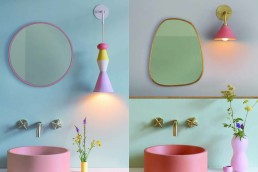
In Focus - Pastello by Curiousa
 darc caught up with Esther Patterson of Curiousa to talk about the brand’s latest launch, Pastello. A beautiful collection of porcelain lights in a mix of signature and new colours that are quickly becoming a signature aesthetic of the studio. Discover details of Patterson’s inspirations behind the collection and the manufacturing processes the pieces went through to create the desired finishes
What is the concept behind this new collection?
Drawing on the studio’s signature colour palette from the award-winning Maya and Carnival collections, Pastello pairs hand-crafted ceramic and semi-opaque glass shades in a spectrum of pastel tones.
The inspiration behind the range’s palette harks back to the playful, optimistic colours of 1950s and 60s melamine tea sets, picnic scenes and coloured bathroom suites — a celebration of bravery, joy and the desire to brighten life after dark times.
We’re inviting homeowners and designers to channel that same boldness, creating bathrooms that lift the spirit and inspire the day ahead. This range embodies my love of colour, texture and playful form, bringing a sense of joy and individuality to any bathroom.
How long have you been working on Pastello for?
I’ve been experimenting with the shade shapes for the last 18 months. I make the original shape on the wheel; in ceramic slip-casting terms we call this the model or master. I create a solid shade shape in brown clay, then cast from this using plaster. I use this plaster mould to slip cast my ceramic shades using a beautiful porcelain clay called Parian. This clay was originally used for Victorian doll heads in the 18th century as it self-glazes and has a smooth, slightly translucent glowing finish.
What challenges did you face when producing this collection?
The first shades I made were cone-shaped, but when lit, there was a horrid shadow at the top and the shade wasn’t evenly lit. The lamp holder was creating a shadow, so I decided to start again and create a space at the top to allow room for the holder and to light the shade more evenly.
It worked. I made a simple dish and bowl shape – the Ciao and Hola – in this style. Originally, I experimented with using these for our Siren wall lights but then realised the potential for a simple spotlight-style light, so I created one with a swivel to make it directional.
I could really see the potential for these in bathrooms or bedside lighting – a simple and versatile visual addition to a room, using colour to create a pop of interest without taking up much space.
Tell us more about the materials and how you work with ceramics and glass in your studio.
What’s great about slip-casting is that you can make many pieces from one mould, and I can keep experimenting with each one. I’ve started painting some of the surfaces too. For instance, for the Hola, I decided to paint a layer of colour on the inside of the shade while it was still in the mould. I was just playing, but it turned out so well that I decided it would become part of the Pastello range, creating a simple two-tone shade. I’ve also started hand-painting designs on the shades and I’m thinking of bringing out a range of these next year. Because I make the models myself on the wheel, the final shades still carry the maker’s marks and impressions. I don’t want them to look factory made, but handmade.
What inspired you to introduce new colours into the collection?
It often starts with the colour and I work from there, sketching silhouettes in my pad first. Most of the palette stems from the previous Maya Collection, but I’ve added one more – Eggplant. The deep purple is an interesting mix with the diffused glass and ceramic pieces.
For me, colour is the stuff of life. It brings me joy, and I love the art of combining colours in a daring way. It’s a challenge sometimes to bring so many colours together, but when it works, I love it. We’ve even created a new strapline for ourselves: The Colour Lighting Company.
What makes these products different to other lighting pieces on the market?
All the prototype lights are made in my ceramic studio in Wirksworth, Derbyshire. For larger orders, I work with George Woolley (DINK), who used to work for Curiousa but now runs his own ceramic studio in Sheffield. I love that we keep things local and handmade to order.
There are a lot of white porcelain lights out there, and some of them are very beautiful, but not many coloured. My gut tells me we’ll see more of them soon, as I think this style will catch on. But for now, I believe we’re one of the first among my UK design contemporaries to offer porcelain shades with such a broad colour choice, all made to order.

Krishna Mistry
This year, UK-based lighting design practice Mistry Lighting celebrated its fifth anniversary. Founded and led by designer Krishna Mistry, this small studio has grown extensively in its infant years, not so much in physical size, but in reputation and calibre of projects.
darc editor, Sarah Cullen, took the opportunity to sit down with Krishna Mistry to discuss her career journey so far, her transition into business ownership, and to understand her studio’s approaches to design within the hospitality sector – a field in which it excels.
Born and bred in Northwest London to immigrant parents – her mother from India and her father from Kenya – Mistry went against the family’s wishes for her pursuing a career as a doctor, lawyer, or accountant. Rather, she went on to chase her dreams to study interior design. “Telling them I wanted to study Interior Design at university came as quite a shock! Though they soon came around once I promised I’d get a “proper job” at the end of it.
“I wanted to study Interior Design because I’ve always loved art, it’s something that’s always come naturally to me. My grandparents were carpenters who would carve the most intricate designs into wood, so creativity and craftsmanship have always been part of our family.
My sisters and I grew up painting all the time, it was how we expressed ourselves. My favourite hobby growing up and I’ve never let that go.”
It was at this time that Mistry’s love for lighting design was sparked. “During my degree in Interior Design at the University of Portsmouth, I used to play with light and shadow a lot, focusing particularly on how shadows could create drama and depth within a space. That experimentation fuelled my fascination with lighting. I realised that light has this almost invisible power to shape how people experience a space. A well-lit room could feel warm, intimate, or expansive, and I wanted to understand why. That curiosity led me to Buro Happold, an international integrated consulting, engineering and advisory firm, where I discovered both the technical and creative depths of architectural lighting.
“I started as a junior lighting designer at Fagerhult. That was my first step into the world of lighting. I worked on a range of retail projects and the company really spent time training me, but after a couple of years, I was ready for a change and found an opening at Buro Happold. I knew the projects would be larger and I was ready for that next step up in my career. I started working there in 2012 and it was from that point, I was hooked; lighting became my language.
“Working at Buro Happold exposed me to large, complex projects that involved multiple disciplines and often took years to move from concept to construction. It was an incredible training ground, I learned very early on how essential teamwork and clear communication are when so many specialists are involved.
“Every project required close collaboration with structural engineers, MEP consultants, acoustics team, architects, and, of course, the client team. Lighting design had to be deeply integrated, every detail mattered, from coordination with ceiling systems to the precision of mounting positions and glare control.
“Those early years taught me not just about the technical side of lighting, but also about patience and coordination.”
In addition to her passion for design, Mistry is also a worldwide traveller who seeks adventure and inspiration from all corners of the globe. “In 2016, I took a sabbatical from work and backpacked around the world for a year. It was truly the trip of a lifetime. Travelling is still my biggest source of inspiration; I love experiencing food, culture, and how different places use and perceive light. And yes, sometimes you’ll find me jumping out of planes too!
“Nowadays, when I’m not travelling, I’m mothering a very energetic toddler who keeps me on my toes and shows me what real multitasking looks like.”
Reflecting on her earlier days as a designer, Mistry reveals that she was fortunate to work with some of the biggest names in the architectural industry from an early stage. “I was lucky enough to work with architects such as Zaha Hadid, Richard Rogers, and Adjaye Associates, names I had studied and admired for years. To be involved in their projects so early on was a real honour.
“It was Tadao Ando’s work that truly caught my attention; his use of daylight is so powerful yet executed with such simplicity. That balance between light, form, and emotion was where my inspiration really began.
“I was quite lucky to have joined a team at Buro Happold that was already working on some incredible, high-profile projects. One of the first was the King Abdullah Financial District (KAFD) Metro system in Riyadh with Zaha Hadid Architects, an extraordinary building with complex, organic forms. It was a real challenge to light a space like that, especially at a time when flexible LED technology didn’t yet exist. It pushed us to be inventive and precise.
“With Richard Rogers, I worked on the Maryah Plaza development in Abu Dhabi, where we were involved in the lighting for the penthouse, façade, and external landscape, all of which demanded a balance between architectural integration and visual impact.
“One of my personal favourites was the Latvian Museum of Contemporary Art with Adjaye Associates. I had never lit an art gallery before, so I spent time visiting galleries around London to study how artwork was illuminated. The building had pitched ceilings, which made lighting the art particularly challenging. We modelled the space extensively and produced numerous lighting calculations, using different products to find the best solution.
“Today, I’m inspired by collaboration, whether that’s architects, artists, or even chefs. I love how each discipline has its own rhythm, and lighting has this unique ability to tie them all together. Travel continues to be a huge influence, too. I’m endlessly fascinated by how light takes on a different character wherever you go, the gentle warmth of daylight in Asia versus the cooler, more restrained tones that play across London’s architecture.”
Following her time at Buro Happold, Mistry went on to be Senior Lighting Designer at Light Corporation Group for a couple of years before the world changed drastically for all.
“In 2020, I was working on a series of restaurant projects (lots of Nando’s) when I was made redundant due to widespread restaurant closures during the global Covid-19 pandemic. It was such a surreal time with the industry at a standstill; I didn’t think anyone would be hiring. So, I decided to take a leap of faith, set up on my own, and see what happened.
“It was a life-changing two weeks. I lost my job, got married, and then set up Mistry Lighting!
“Work came very organically, mostly through word of mouth. I reached out to everyone I knew, setting up Zoom calls when we couldn’t meet in person. I’m extremely grateful to all the clients who trusted me with their projects; their support is what got me here - along with my family, especially my husband, who’s my constant sounding board.
“One project led to another, and within two years, I was at full capacity, even turning down work. I eventually started working with a business coach because, truthfully, I had no idea about the business side of running a business. It has been a steep learning curve, but a rewarding one.
“I still have moments of imposter syndrome, but looking back at everything that’s been achieved - the projects, the collaborations, the growth - I feel incredibly proud of how far I’ve come.”
Discussing this pivot in her career to becoming a studio owner, Mistry tells darc about her initial goals, expectations, and realities. “When I started, my goals were simple: to build meaningful relationships, create work I’m proud of, and keep learning. I didn’t set rigid targets, but I did hope to reach a point where people came to Mistry Lighting for its distinctive approach. I’m proud that we’re at that stage now, and are recognised for a thoughtful, personal way of working.
“The learning curve has been steep, and I’m still learning every day! When you run a small studio, you wear every hat: designer, project manager, business developer, social media manager, and accountant. It’s a lot to juggle.
“One big realisation for me was that a business isn’t truly sustainable if it can’t run without you. I’ve learned to lean on freelancers and collaborators more, bringing in support when needed. You really can’t do it alone, and that’s been a huge shift in how I operate.
“Running your own business can also be quite lonely at times, but I’m grateful to be part of an industry where people are genuinely supportive and generous with their advice. Having that network makes such a difference; it reminds you that even if you work independently, you’re never really on your own.
“We’re really lucky to work in such a social and supportive industry. There are so many opportunities to stay connected, through communities like Women in Lighting, the SLL, and the ILP, as well as events hosted by Light Collective. The [d]arc awards and LiGHT expo are also brilliant occasions to catch up with fellow designers and celebrate great work.
“It’s not just about the lighting industry, either. Attending wider networking events is so important, especially when you run your own business, you never know who you might meet or where the next collaboration or client opportunity will come from.”
Looking through Mistry Lighting’s portfolio, it’s clear to see that hospitality projects are a strong offering. “Some of my hospitality projects capture what I love most about lighting - spaces where light supports the brand story without overpowering it. One that stands out is Cut & Craft Manchester, a Grade II-listed restaurant where we layered soft, concealed architectural light with decorative fittings to create warmth and rhythm within the heritage fabric.”
When asked whether Mistry Lighting has a particular design identity when it comes to hospitality projects, Mistry says the studio doesn’t necessarily have “a single signature style”. “Each space is different, and that’s what keeps it exciting. I take the time to understand the client’s vision and the story they want to tell, then tailor the lighting to suit. It’s always a collaboration.
“Our approach is architecturally sensitive and emotionally driven. Every project begins with understanding how the space should feel, the story it wants to tell, and then we build layers of light to support that. It’s all about balance: atmosphere and function, beauty and efficiency, creativity and control.”
When it comes to balancing storytelling, functionality, and guest experience, Mistry Lighting implements a state of hierarchy. “Every space has a heartbeat, a focal point, and a rhythm, and lighting helps orchestrate that. Functionality underpins everything, but storytelling gives it soul. The best results happen when those two aspects are inseparable.
“It also comes down to really understanding the space, how it makes you feel, and how you want others to feel within it. That emotional connection guides every design decision.
“I believe lighting should feel effortless. In hospitality, people remember how a place made them feel, not what fittings were used. I aim to create atmospheres that are warm, authentic, and aligned with the brand identity, where lighting enhances mood, complements food and music, and shapes a complete sensory experience.”
Working across both architectural and decorative lighting design and specification, Mistry sees the two components as equals in a project setting. “Architectural light defines the structure and function, while decorative light brings intimacy and character. The key is restraint, using decorative pieces with purpose, not as embellishment. It’s about layering what’s revealed, what’s hidden, and what’s left in shadow.”
Noting one particular project in which decorative lighting made a transformative impact on the overall design narrative, Mistry reflects on her work for Gina, a small restaurant in London, which was completed earlier this year. “I worked closely with the clients, who are also the chefs, to shape the lighting narrative. The interiors were stripped back and crying out for feature pendants, so we collaborated with designer Naomi Paul to create beautifully hand-woven lights that complemented the space without distracting from the artwork on display. Without them, it would have looked more like an art gallery!
“The decorative lighting was crucial in creating a rich, intimate dinner-time ambience, paired with handmade wall lights. Using tactile, crafted materials brought warmth, texture, and depth to the interiors, transforming what was a simple space into one that feels layered and inviting.
“In general, clients today are more design-literate and value-driven. Guests expect environments that feel considered and personal, not just “Instagrammable.” There’s a real appetite for warmth, tactility, and authenticity, and lighting plays a huge role in creating that.”
Looking ahead, Mistry delves into the current industry trends that are influencing design. Examining the roles of technology, wellness, and sustainability and their abilities to shape the future of design, Mistry says: “These are no longer separate conversations; they’re intertwined. Technology allows us to be more precise; sustainability keeps us accountable; wellness reminds us why it matters. The future lies in subtlety, designs that are smarter but quieter, where technology serves human experience rather than spectacle.”
Innovations and attitudes that Mistry is particularly looking forward to for hospitality design touch on the controllability of lighting and local craft. “I’m excited about the growing accessibility of tunable white and adaptive lighting systems in hospitality, tools that genuinely enhance mood, comfort, and energy. At the same time, I love seeing a return to craftsmanship in decorative lighting.
“We’re working with clients who really value handmade light pieces and understand the meaning they bring to a space. There’s something so special about that; it creates a deeper connection between the design, the maker, and the atmosphere of the room.”
Regarding what we can expect from Mistry Lighting over the coming years, Mistry discusses her dream job, growth opportunities, her measure of success, and the advice she would pass on to anyone considering starting their own lighting design studio. “There’s so much potential in smaller, experience-led spaces, independent hotels, cafés, and cultural venues that prioritise intimacy and storytelling over scale. Working with a small bakery chain recently, for example, showed how good quality lighting can transform everyday spaces, creating warmth and a genuine sense of home.
“I’m excited about continuing to collaborate with passionate clients and exploring new sectors while staying true to what we love. The unknown is the exciting part; I put no limits on where we can go next. I want to keep the studio small enough to stay personal, but ambitious enough to keep evolving. Anything is possible.”
If the sky were the limit? “I’d love to design lighting for a boutique hotel. I’m a sucker for a good hotel, so lighting one would be an absolute dream! And, if I’m really dreaming big, a superyacht is also on the bucket list. I love a challenge.
“For me, success isn’t measured in money. It’s about the projects I get to work on and the people I collaborate with. As a British Asian woman running my own business, with a steady stream of meaningful work, all while raising a small family, I feel proud. That balance, however imperfect, is success to me.”
If you want to start out on your own, “know your why”, she states. “It’s easy to get caught up in what you think you should do, but the most sustainable path comes from being authentic. Be patient, stay curious, and build genuine relationships; that’s where the best work comes from.”
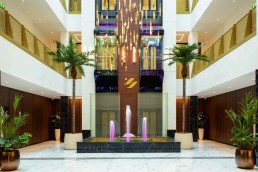
Royal Nawaab
Once a striking yet misunderstood local landmark, the long-quiet Stockport Pyramid has now found new life in a true architectural transformation. Today, this iconic structure has evolved from a dormant relic into a landmark dining destination – a restaurant where grandeur meets genuine warmth, and where the clatter of plates and laughter fills its vast, gold-toned halls.
You’ve probably heard of the Pyramids of Giza, and some of you might even know a little bit about the Pyramid of Teotihuacan. However, I wager that very few of you are aware that Greater Manchester has its very own pyramid. Tucked away just off the M60 in Stockport (the homeland of darc HQ), stands the Stockport Pyramid.
A four-sided blue-glass monument to 1990s ambition, it has loomed over the town since 1992 – residing for most of its existence in a derelict wasteland, the Pyramid is our very own “King of the Valley” despite only ever standing alone. Over the years, the building itself has split opinion: clunky, awkward, and ostentatious in every way. Yet, against all odds, the building that was once dismissed as an architectural eyesore has developed an interior to match its local iconic status.
After its original developers went bankrupt, the Pyramid stayed lonesome before being repossessed by the Co-operative Bank, who financed the original development and moved in from 1995 until 2018. Since then, the Pyramid lay dormant and derelict – until now. Today, it has been reborn as the spectacular new home of Royal Nawaab, a vast restaurant and events venue blending cultural tradition with bold, contemporary design.
At the heart of the transformation is Manchester-based design studio WDC Creative. Best known for retail and hospitality projects across the UK and Europe, the practice was tasked with reimagining the Pyramid’s cavernous interiors and creating a vision that could match the ambition of its owner, restaurateur Mahboob Hussain. From bespoke lighting installations to grand wedding halls, WDC’s design process was as much about storytelling as it was about space planning.
The studio’s involvement on the project occurred after the client had come across their work at the Carden Park Hotel in Cheshire. The project was a key turning point in the company’s portfolio. WDC helped reposition the hotel within the luxury market, redesigning facilities such as the gym, restaurant, and a new cocktail bar called Goldies. It was through their online presence that the client was struck by their work and was compelled to contact them directly.
“The client saw our work at Carden Park on Instagram and said, ‘We want what you’ve done, but bigger, bolder, and better.’ That’s how the Pyramid project began,” tells Jason West, director of WDC Creative.
The project began with a site visit to the Pyramid, untouched for more than a decade. The building was in disrepair, occupied by the ghosts of its corporate past. “When we first walked into the Pyramid, it felt as though no one had touched it for 10 years. There were old desks, cables, a huge security reception from when it was an office, almost like people had just walked out one day and left it. But beneath all that, we could see the potential. It’s an incredible space, with this vast atrium that goes right up to the top of the Pyramid. You could instantly imagine the drama of transforming it into something extraordinary,” adds West.
The client already had architects involved in planning kitchens and basic layouts, but the client wanted WDC to create the overall vision and interior concept. To do this, WDC built an enormous 3D model of the Pyramid, covering almost every space, from lobbies to wedding suites. They started with mood boards and AI-generated imagery, then developed full vitual 3D model walkthroughs to help the client, and the wider team visualise the transformation. This vision was critical for securing approvals, investment, and buy-in from stakeholders.
The transformation of the Pyramid started from the entrance. As a multipurpose event venue, the building had to be striking from the moment guests arrived. WDC designed a new gold-toned canopy to give the building a true sense of drama. Standing at two storeys high, the canopy acts as a gateway for wedding parties and a theatrical threshold for restaurant guests. Visitors then pass through the compressed tunnel clad with laser-cut metal screens that are illuminated with LED back panels before emerging into the atrium. Here, the design team layered warmth and detailing with walnut panelling, a bespoke water fountain, and cascade statement lighting. However, the most spectacular moment that draws any visitor’s attention is the atrium. Emerging from the soaring central atrium is a beautiful statement light installation, made from hundreds of glowing suspended pendants sourced from the client’s own network.
West comments: “We didn’t want it to feel like an office that had been turned into a restaurant; it had to feel completely reborn. The ambition was always to create luxury and spectacle, but never in a showy or ostentatious way. It’s about atmosphere, about theatre, when guests walk in, they should feel a sense of arrival, but also warmth.”
That balance between ambition and restraint defined the entire project. Owner and restaurateur Mahboob Hussain brought deep cultural insight and a clear vision of five-star quality; WDC translated that into built form through mood boards, samples, and immersive 3D visualisations. Every decision was collaborative, shaped by ongoing dialogue and mutual trust. Cultural authenticity remained central throughout: the design team avoided obvious motifs or clichés, instead consulting the client to ensure every pattern and detail felt respectful and true. Wherever possible, WDC and the client specified local makers and suppliers, grounding the scheme in regional craftsmanship as well as cultural meaning.
The entrance lobby, once an austere office reception, is now a hotel-style lobby complete with more bespoke lighting and coffers, rich curtains and comfortable furniture to boot – providing a calm and intimate space for restaurant visitors, while waiting for their booking. Inside, the dining hall is vast yet carefully zoned with banquettes and feature lighting by Chantelle Lighting. At its heart sits an open kitchen anchored by what is proclaimed to be the longest extraction hood in the UK.
The material palette continues the language of warmth and refinement, walnut and gold paired with marble surfaces, lifted by subtle gold accents. Lighting plays a crucial role in setting the tone, striking a delicate balance between intimacy and exuberance. The atmosphere invites private conversation yet celebrates the energy of communal dining, echoing the spirit of South Asian hospitality that brings together guests of all backgrounds from across Greater Manchester.
“When you go there now, you see such a wonderful mix of people from a wealth of different backgrounds enjoying it together. It’s brilliant,” says West.
A dynamic staircase leads to the upper levels, where weddings take centre stage. Suspended above is a bespoke chandelier of glass petals, again by Chantelle Lighting, a floral interpretation of modern grandeur. The Royal Suite, the largest of the event spaces, orients around a stage for the bride and groom, and can host hundreds of guests. Its walls are lined with illuminated fabric panels that can shift in colour or display graphics, allowing the space to flex between traditional ceremonies and contemporary corporate functions. Smaller suites on higher floors echo this adaptability, positioning the Pyramid as a multi-purpose venue for weddings, banquets and business events alike.
Turning the vision into a reality wasn’t always straightforward. Beneath the glamour of the marble, gold, and light, the project demanded significant intervention and willingness to solve problems in real time. One of the most dramatic moves was cutting through the existing floor slabs to open up sightlines and create vertical connection with an elegant staircase – a bold operation in a building defined by its geometry. “That was a big one,” recalls West. “You don’t take a saw to the Pyramid lightly.” Lighting was also part of the heart and the headache of the project. While bespoke pendants brought sparkle to the space, there were moments where lux levels were off balance or simply didn’t behave as planned.
“In hindsight, we could have brought in a lighting consultant earlier,” admits West. “We fixed it in the end, but I think there’s a lesson in that – big spaces need technical expertise.”
Yet for WDC, the project’s greatest technical achievement wasn’t just in its construction – it was the collaboration itself. The client, unaccustomed to working with external designers despite having owned a number of successful restaurants already, was forced to embrace a steep learning curve resulting in a special working relationship.
“We don’t create divides,” West explains. “We get under the skin of every client and work as part of their team. This is how the best ideas happen.”
Today, the process of refinement continues, with new wallpapers, improved signage and subtle lighting adjustments enhancing the experience. But the doors are open, and the affection long held for the Pyramid from afar can now be felt inside – perhaps best over a hot, spicy curry, if that’s your preference.
Beyond its transformation from local curiosity to grand multi-functional venue, the Pyramid’s significance runs much deeper than its physical form and is more than just a restaurant. It has become a place where people of all backgrounds and communities come together – a shared space for celebration, family and connection. During an increasingly polarising time in British society, the rebirth of the Stockport Pyramid feels both timely and hopeful: a symbol of hospitality, inclusivity and new life for one of Greater Manchester’s most recognisable landmarks.
Interior Design: WDC Creative
Architect: NK Architects
Lighting Specified: Chantelle Lighting
Images: Louis Cannell
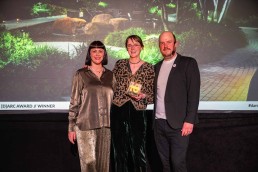
A decade of [d]arc awards Best of the Best winners
(UK) – The [d]arc awards, the world’s only peer-voted celebration of creativity in lighting design, has officially reopened entries for its 2025 edition! As we gear up for another dazzling year, we’re taking a look back at some of the past “Best of the Best” winners – the ultimate accolade, awarded to the project that received the highest number of votes across all categories.
Each of these projects has pushed the boundaries of imagination, technology, and storytelling through light. Maybe this year, it could be your turn to take the spotlight…
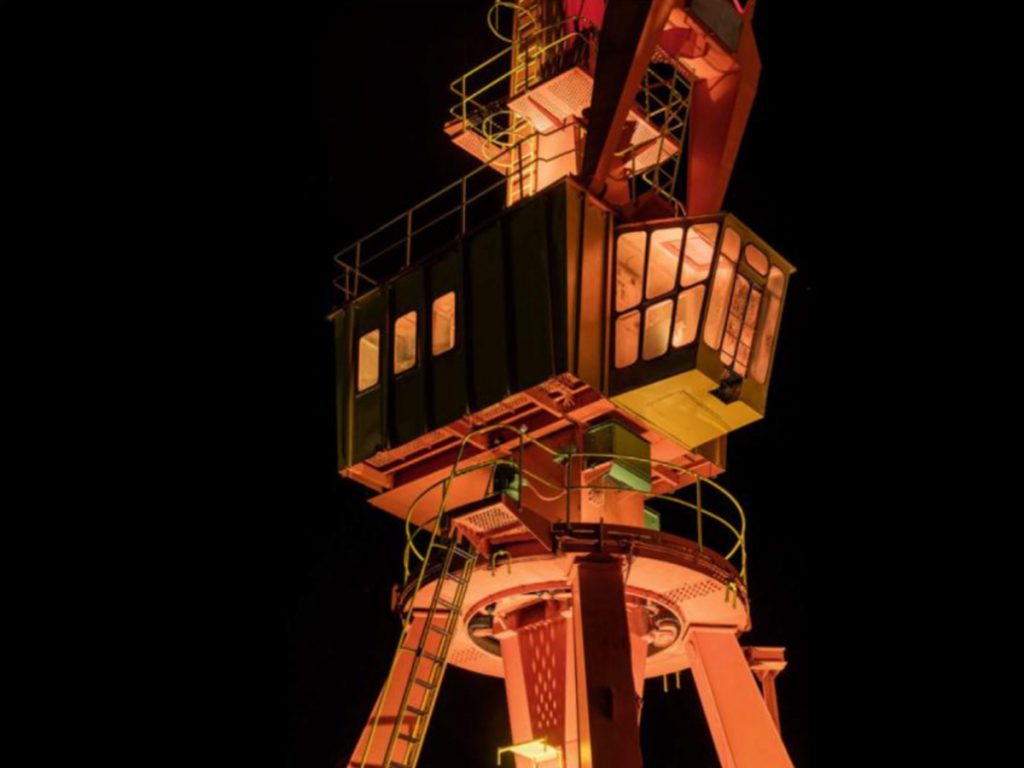
2017 – Pier Mauá Cranes by LD Studio
The Pier Mauá cranes are iconic cranes in Rio de Janeiro, Brazil, which are now a centrepiece of the city's waterfront regeneration project, called the "Porto Maravilha". They are a popular tourist attraction and cultural landmark, used for various events and lighting displays. The cranes have a history as working docks and have been preserved to add a historical element to the new urban space. Brazilian-based LD Studio provided the lighting concept to the metal structures in a way that allows people to go back to childhood and give wings to their imagination. The designer’s approach consists of revealing the main structure, the ‘animal’s legs and upper body’, using warm white LED flood lights with different intensity and beam angles, while taking the opportunity of the existing transparency of its operator’s cabins and along the crane’s ‘arms’, using LED RGB technology.
https://issuu.com/mondiale/docs/daawards17_digital_issuu/4
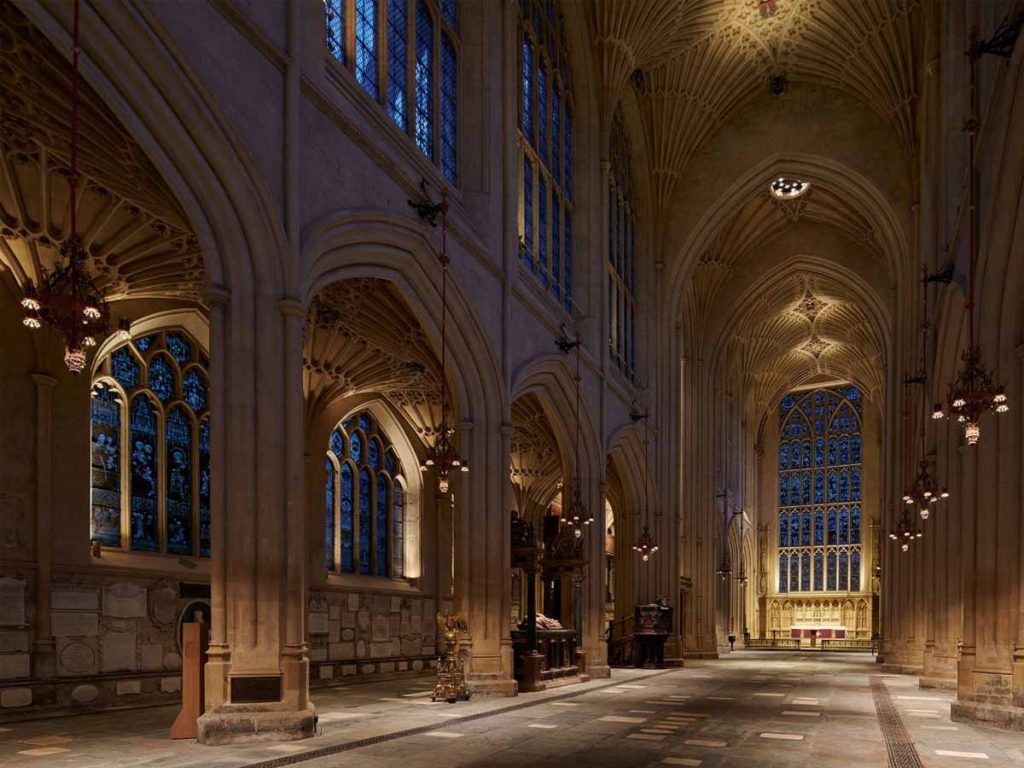
2021 – Bath Abbey by Michael Grubb Studio
Winner of the 2021 [d]arc awards was a £19.3 million restoration and transformation programme designed to preserve Bath Abbey’s heritage while introducing sustainable, modern solutions. Led by FCBStudios and Michael Grubb Studio, the project features an innovative lighting design that highlights the Abbey’s intricate architecture - from the fan vaulting to Georgian memorials, through energy-efficient LED systems and advanced DMX controls. The scheme not only enhances the Abbey’s spiritual ambience but also provides flexibility for diverse events.
https://darcawards.com/best-of-the-best/
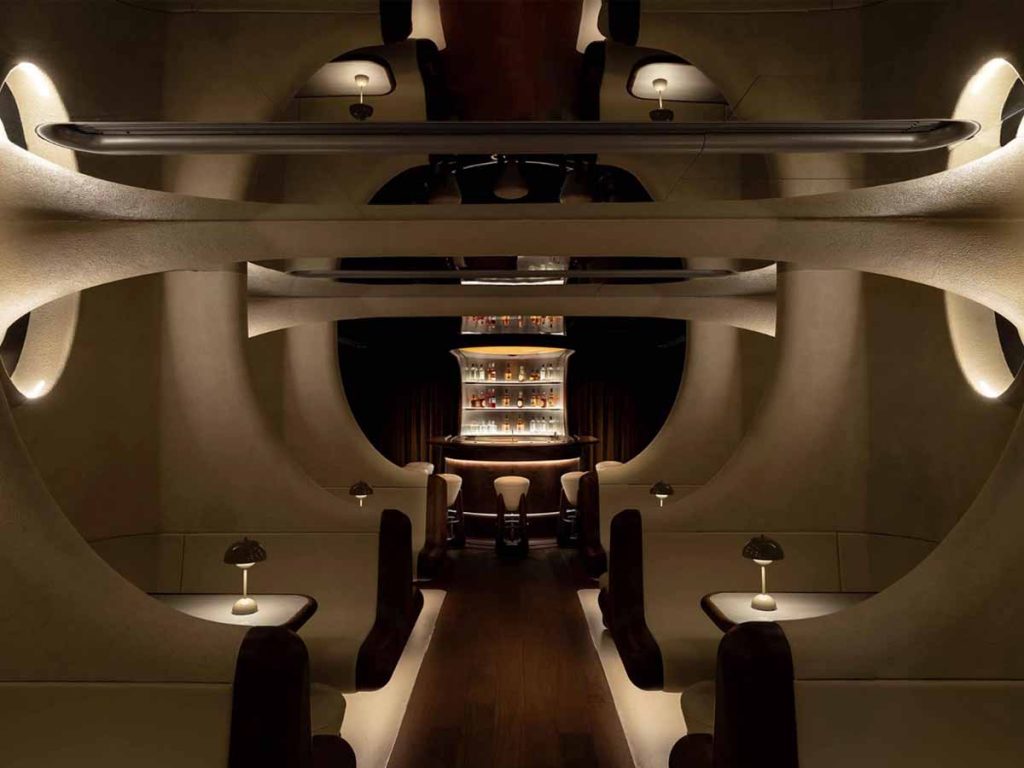
2023 – Artifact Bar by Light Origin
Winner of the Structures - Low category, and Best of the Best winner 2023, is a hidden speakeasy bar located in the basement of BaseHall Central, Hong Kong. The bar draws inspiration from the rhythmic patterns and serene yet dramatic ambience of underground cisterns. Guests enter through a secret passage featuring industrial pipe-like windows and digital light art that sets a mysterious tone. Inside, a mirrored ceiling creates an illusion of infinite height, while sculptural rib-like forms and a glowing circular skylight evoke the warmth of a sunset. Intimate booth lighting and soft under-seat illumination enhance the space’s immersive and dreamlike atmosphere. Despite challenges such as limited ceiling height, the team cleverly integrated lighting within architectural details to achieve both function and artistry. With 90% of fixtures locally sourced and LED-based, combined with efficient dimming controls, Artifact exemplifies how sustainable lighting design can elevate ambience and imagination in equal measure.
https://darcawards.com/best-of-the-best-2023/
2024 – Thames City by Foundry
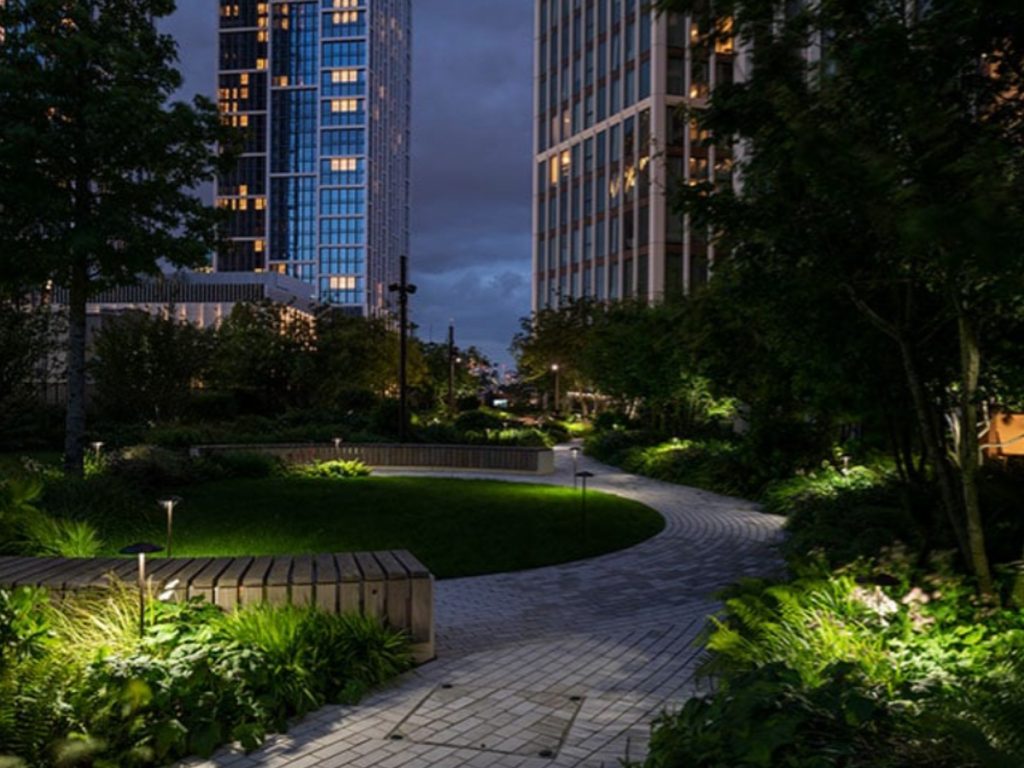
Winner of both the 2023 [d]arc awards Spaces category and Best of the Best, Thames City is a landmark redevelopment transforming 10 acres of former industrial land in Nine Elms into a vibrant, mixed-use riverside destination. Designed by Foundry, the lighting scheme enhances the sensory experience of the landscaped courtyards, podium gardens, and linear park, using a delicate balance of warm light and shadow to reveal textures of stone, foliage, and water. Low-level and column lighting create intimacy, guide movement, and highlight architectural features, encouraging visitors to slow down and engage with their surroundings. The result is a refined, atmospheric design that celebrates both nature and urban life after dark.
https://darcawards.com/portfolio/thames-city-uk/
The 2025 [d]arc awards are now open for entries! Whether you’ve created a ground-breaking architectural lighting scheme, an experimental installation, or a beautifully crafted product, this is your chance to be recognised on the global stage.
Winning Best of the Best means joining an elite group of designers and studios whose work has inspired the industry worldwide. The 2025 celebration will once again take place at Woolwich Works, London, bringing together professionals from across the international lighting community for an unforgettable night.
Enter your project now and you could walk away with not one, but two [d]arc awards.
www.darcwards.com/enter-the-awards
IALD Enlighten Americas Illuminates Tucson
(USA) – The International Association of Lighting Designers (IALD) held its annual Enlighten Americas conference on 9–11 October 2025, bringing together more than 350 lighting professionals, educators, students, researchers, and manufacturers from 18 countries.
Held in Tucson, Arizona, the three-day event offered an extensive programme of seminars, roundtable discussions, and networking opportunities. More than 30 sessions explored a range of creative, technical, and ethical topics aimed at advancing knowledge and collaboration within the field of architectural lighting design.
A recurring theme throughout the conference was the growing global conversation surrounding light pollution and the ‘dark sky movement’. The issue featured prominently in several sessions and informal discussions among delegates.
IALD President Andrea Hartranft noted the significance of addressing these topics in a location renowned for its observatories and commitment to preserving the night sky.
Hartranft comments: “From the opening keynote with an incredible light pollution scientist to the closing session with DarkSky International’s top executive voice, our agenda makes clear the importance of the natural world in a profession built upon artificial light. Here in Tucson, the city where the ‘dark sky movement’ was effectively founded, that’s no small statement.”
The conference opened with a keynote address from Amy C. Oliver, Public Affairs Officer and Science Centre Manager at the Fred Lawrence Whipple Observatory. Her presentation, Glow Responsibly: Honouring the Beauty of Human Design and Natural Darkness, explored the effects of artificial light on ecosystems and urged designers to adopt responsible lighting practices ahead of regulatory requirements.
The closing keynote was delivered by Ruskin Hartley, CEO of DarkSky International, who emphasised the need to design lighting that is “smarter, not brighter”. He highlighted the environmental impacts of excessive illumination and left attendees with a call to action: “What are you going to do about it?”
The event also recognised outstanding contributions within the lighting design community. Five professionals – Teal Brodgen; Jill Cody; Ron Kurtz; Aram Ebben; and Mônica Luz Lobo – were inducted into the IALD College of Fellows for their significant achievements and service to the profession.
A highlight of the ceremony was the presentation of the IALD Lifetime Achievement Award to Randy Burkett. The honour acknowledged his extensive career in architectural lighting design, longstanding volunteer service, and dedication to the advancement of the field. In his acceptance remarks, Burkett expressed gratitude to his peers and reflected on his journey from small-town beginnings to working on some of the United States’ most recognisable landmarks.
The IALD Enlighten conference series will continue in 2026, with Enlighten Europe taking place in Paris, France, from 17-19 June, followed by Enlighten Americas in Austin, Texas, from 15-17 October.