
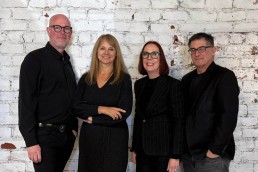
Dark Light welcomes Gabler Youngston Lighting Design to the team
Gabler Youngston Lighting Design is joining Dark Light Design to work together on their expanded portfolio of work and a stronger national presence.
With offices in Seattle, St. Louis, and Atlanta, the combined team now offers a variety of resources and a broader geographic reach. Combining their extensive experience across a broad range of project types, aims to support clients at every scale, from finely detailed, high-finish environments to city-scale infrastructure programs.

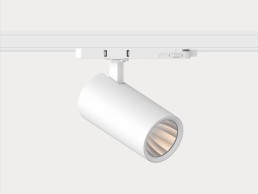
Neko - Mission S
A refined, in-track profile crafted in a smooth, architectural finish, designed to deliver efficient and controlled illumination. With flexible driver options and full 3-circuit compatibility, it delivers a clean, confident beam suited to retail displays, gallery pieces, and hospitality settings where precise accent lighting shapes the atmosphere.
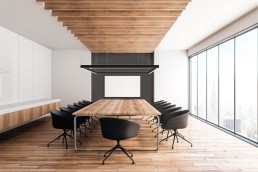
Illuminating the Path to Sustainability with Signify
As the construction industry faces mounting pressure to reduce emissions, energy consumption, and waste, the race to implement efficient building technologies has become more critical than ever in achieving net-zero targets by 2050. Lighting, when inefficient, can be a major contributor to energy consumption in buildings, leading to increased energy costs and unnecessary carbon emissions. Hence, lighting too had been going through its ‘transformation’ to become more sustainable.
However, the push for sustainability in lighting extends well beyond energy efficiency. It involves considerations such as product durability, embodied carbon, reuse, and repairability - factors that collectively shape the lifecycle of lighting products. Sustainable lighting isn’t just about using energy-efficient light sources; it’s about addressing every stage of a luminaire’s lifecycle, from design and manufacturing to installation, operation, maintenance, and disposal. The lighting industry has undergone significant transformations in recent years, driven by technological advancements and a heightened awareness of environmental impact. These changes are influencing lighting designs for projects across diverse sectors, whether it’s a school, hotel, hospital, or office.
Collaborating for a Brighter Future
For specifiers and designers, sustainable lighting design trends are now a central focus. Clients are increasingly prioritising solutions that reduce environmental impact and operating costs while creating healthy, comfortable spaces for occupants. Yet, specifiers often face challenges in finding lighting solutions that strike the perfect balance of commercial viability, sustainability, human-centric design, compliance with regulations, and integration with advanced control systems.
Lighting designs are becoming more ambitious and innovative, driven by the growing demand for solutions that address all pillars of sustainability. This complexity underscores the need for tools and resources that simplify the specification process while enabling creative, impactful designs.
Recognising these industry challenges, Signify introduced the Pioneers of Light portal. A comprehensive platform offering access to cutting-edge lighting innovations, intuitive tools, and a wealth of resources tailored to the needs of the lighting design community.
A Portal Designed for the Lighting Design Community
Launched in 2025, Pioneers of Light is a dedicated portal that empowers specifiers with the tools and information they need to design with confidence. The platform addresses the unique workflows and challenges of the lighting design community, ensuring that professionals remain up to date on the latest industry trends and advancements.
Since its launch, Pioneers of Light has introduced several features to streamline the specification process and enhance the user experience:
- Improved Data Flow: The portal simplifies the journey from product discovery to specification, making it easier than ever for users to find and order the right lighting solutions for their projects.
- Application-Based Solutions: Whether designing for a classroom, auditorium, healthcare facility, or office space, Pioneers of Light provides tailored lighting solutions for various application areas. For instance, specifiers working on educational projects can explore products specifically designed for schools, ensuring optimal performance and sustainability.
- Advanced Product Selection Tools: The Pioneers of Light product configurator allows users to browse, configure, and specify lighting products with ease. Selections can be based on basic photometric parameters or detailed configurations, providing flexibility to meet diverse project needs.
- Expanding Knowledge Resources: Signify continues to enhance the portal’s knowledge hub, offering insights, trends, and educational resources to help specifiers stay informed and make well-rounded decisions.
Lighting the Way Forward
Pioneers of Light represents Signify’s commitment to supporting the lighting design community in addressing the complexities of modern sustainability demands. By providing access to innovative solutions, intuitive tools, and expert knowledge, the portal empowers specifiers to create lighting designs that are not only efficient but also aligned with broader environmental goals.
Whether designing for schools, cities, manufacturing facilities, or sports venues, Pioneers of Light enables specifiers to illuminate spaces with confidence, creativity, and sustainability at the forefront. With this platform, Signify continues to lead the charge in transforming lighting design for a better, brighter future. As Pioneers of Light continues to grow closer to the specifier community, answering their needs from sustainability to specific applications, Signify will continue to enhance the user experience on the portal. These enhancements will not just make products easy to discover but will also ensure the perfect design for every application.
Discover more about Pioneers of Light and explore a world of possibilities at Pioneers of Light | Signify

arc to attend Light + Intelligent Building Middle East
(UAE) - arc’s Editor, Matt Waring, will represent [d]arc media at Light + Intelligent Building Middle East. As part of the programme, Waring will moderate two sessions on the InSpotlight Stage, contributing to discussions around professional practice and lighting design culture.
In the first session, Waring will host a panel discussion focused on multidisciplinary approaches to mentorship, collaboration and technical excellence. The panel brings together Kristina Allison (SLL), Jared Smith (CBCL), Robert White (Illuminart) and Majeed Uz Zafer (Light Factor), who will share perspectives from across lighting, engineering and the built environment.
The second session will see Waring in conversation with lighting designer Michael Grubb. The discussion will centre on Grubb’s recent book, Stories With Light, exploring the ideas behind its creation, the development process and its reception since publication six months ago.
Light + Intelligent Building Middle East brings together professionals from across lighting, architecture and building technologies, and serves as a platform for dialogue on design, innovation and industry practice within the region and beyond. The talks are free to attend for all those registered to visit the show.
www. light-middle-east.ae.messefrankfurt.com/dubai/register

Arkoslight achieves carbon neutrality
(Spain) - Arkoslight has reached carbon neutrality after calculating, reducing and offsetting its direct and indirect greenhouse gas emissions (Scopes one and two) for the year 2024, making it the first company in the Spanish lighting sector to achieve carbon neutrality.
The company’s carbon footprint has been verified by the Carbon Footprint, Offsetting and Absorption Projects Registry of Spain’s Ministry for Ecological Transition and Demographic Challenge (MITECO). Following this verification, Arkoslight received the official “Calculate, Reduce and Offset” seal.
Between 2021 and 2024, Arkoslight measured its corporate carbon footprint in line with internationally recognised standards. The assessment covered Scope 1 emissions, generated directly by the company’s activities, and Scope 2 emissions, linked to electricity consumption. The calculations apply to the company’s headquarters in Ribarroja del Túria, Valencia.
Over this period, Arkoslight reports a 12% reduction in CO₂ emissions. Measures contributing to this reduction include energy efficiency initiatives, the installation and expansion of photovoltaic panels with a capacity of 100 kWp, and the purchase of carbon credits. The credits were sourced from a certified reforestation project located in Valdés, Asturias (project code 2024-b440), enabling the offsetting of remaining emissions.
The achievement comes alongside continued business growth and the expansion of the company’s headquarters in 2024, which coincided with Arkoslight’s 40th anniversary.
According to the company, carbon neutrality forms part of a broader long-term decarbonisation strategy aimed at maintaining this status over time. The approach also extends to other areas of the business, including human resources, supply chain management and corporate governance.
Commenting on the milestone, Arkoslight CEO, Luis Latrás states: "Arkoslight’s DNA includes attention to detail in its products, quality and continuous improvement. These are values that have inevitably placed sustainability at the heart of our strategy, both in the medium and long term. Being a carbon-neutral company is a milestone that we celebrate and which, at the same time, prompts us to think about a future in which values will be intrinsically linked to growth."
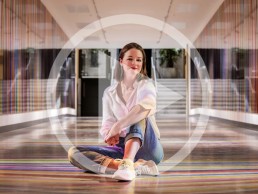
[d]arc discussions: Liz West - Double Fizz
https://vimeo.com/1147825722?share=copy&fl=sv&fe=ci#t=0
[d]arc media editor Matt Waring talks to artist Liz West at her home studio in Macclesfield, UK, about her latest, immersive work of light art, Double Fizz, which is located at No. 1 St. Michaels in Manchester city centre.
The permanent installation comprises thousands of vibrantly coloured, vertical triangular stripes in polyester vinyl, overlaid onto a mirrored surface, creating a rich mix of reflected hues.
Over the course of the interview, West tells [d]arc media of the inspiration behind the piece, the challenges that came in bringing it to life, and the collaboration with formalighting to illuminate this beautiful new work of art.
Video filmed at edited by [d]arc media
Double Fizz images: Charles Emerson
Women in Lighting event images: Harley Bainbridge
Additional project images: Charles Emerson, Hannah Devereaux,
Music: FMS Team, courtesy of www.free-stock-music.com

Sustainable standout stands at LiGHT 25
LiGHT Expo London returned this November for its fourth, and most successful year to date, drawing thousands of visitors to the Business Design Centre over its two-day run. The event continues to expand, with a third hall introduced this year dedicated to technical products within the lighting sector. With this growth comes an inevitable increase in stands, materials, labour and energy required to build and dismantle installations.
Since Covid, however, the appetite for extravagant, show-boating stands – once a hallmark of trade shows such as Light + Building – has noticeably diminished. Designers are now prioritising the products themselves, while many exhibitors are looking to gain extra credit for embracing sustainable practices in their approach to trade shows. At LiGHT 25, several brands placed sustainability at the very heart of their stand design. Here, we highlight just a few of the exhibitors who championed renewable, responsible and eco-friendly solutions on the show floor.

formalighting’s stand at LiGHT 25 offered a masterclass in sustainable exhibition design, guided by a simple but powerful principle: toolless construction. As explained by Sharon Maghnagi, the company’s Global Operations Director, the entire structure was conceived to avoid drilling, painting or any chemical treatments that would limit the reuse of components.
“The main idea was no drills – toolless,” says Maghnagi. “Once a component is drilled for one configuration, you can’t recycle it for another.”
This pursuit of reusability shaped every element of the stand. Height adaptability was built in from the outset: a central post could be swapped out to move the structure from three metres down to 2.7 or 2.5-metres without altering the rest of the frame. Pre-existing holes within the framework allowed the ceiling height to be adjusted cleanly, eliminating the need for invasive fixes on-site.Even the finishes reflected this flexible, low-impact approach. Rather than using adhesives, the fabric walls were tucked into the edges of the frame. “It’s basically just fabric that’s tucked in… it’s not glued, it just slides in,” says Maghnagi as she demonstrated the mechanics of the frames. This allowed the stand to be assembled, dismantled and reassembled with minimal waste – and without compromising its crisp, modern appearance.
Despite a brief setback during build-up, when a structural engineer queried the stand’s freestanding design, the team resolved the issue quickly with support from neighbouring contractors. The experience highlighted not only the adaptability of the system but also the collaborative spirit of the show floor.
Where many exhibitors still default to single-use construction, Mesh took a refreshingly resourceful approach to their stand at LiGHT 25, one that embodied circular design in both concept and execution. Speaking with Mesh’s Director, Matilda Tierus, it was clear that their guiding principle was simple: nothing should be built for the bin. 

The stand’s most striking feature was its perimeter of rented living hedges, forming natural green walls that required no construction materials at all. Delivered, installed, and later collected by the rental company, who care for the plants year-round before ultimately selling them on for private gardens, they created a fully circular system with virtually zero waste. As Tierus notes, this effortless solution replaced the MDF (medium-density fibreboard), carpet, and paint she had seen discarded in vast quantities at major European trade fairs throughout her career.
Inside the stand, the philosophy continued. The central storage and display units were standard IKEA cupboards, chosen precisely because they could be reused rather than disposed of. Once the show closed, the pieces were immediately rehomed, this year the cupboards will be rehomed to one of her staff’s family garages to become long-term storage. Mesh’s vertical lighting columns also followed a low-impact lifecycle, constructed from 75% recycled aluminium and reused each year, with only the internal optics upgraded to showcase the latest technology.
Far from being a compromise, this sustainable approach proved to be a practical advantage. The hedge walls were installed in around 45-minutes, a fraction of the time required for a traditional build. The entire stand system was modular, making it easy to refresh year after year without scrapping materials. As Tierus explains, their intention was always “to reduce having anything on the stand that’s just going to get chucked away afterwards,” and LiGHT 25 showed how seamlessly that ambition could be achieved. 
Mesh’s stand was calm, green, and deceptively simple, but beneath that simplicity lay thoughtful, clever design. It demonstrated that sustainability need not be complicated, expensive, or showy; it can be quietly effective, delightfully practical, and, in Tierus’ words, “so cyclical and friendly.” It was a compelling reminder that exhibition architecture can be beautiful, responsible and sincere.
For XAL, sustainability is not a marketing veneer, but a structural principle woven into every element of their exhibition presence. As commercial manager, Joanne Welbon explained, the stand at LiGHT 25 had already lived a full life before arriving in London. Originally built for a show in Pakistan, it was simply reconfigured for this event, with new graphics and lighting applied to the original framework to reflect the IQ Lux brand, part of the group’s wider family. Rather than building afresh, XAL chose to rebuild again, extending the lifespan of a stand designed from the start to be reused.
That ethos echoed through their product display. One of the core fittings on the stand was designed under a ‘cradle-to-cradle’ philosophy, using no glue and requiring no tools for disassembly. If a component breaks, it is removed and replaced, rather than the entire fixture being discarded. “It just keeps going round and round,” Welbon notes proudly, an ethos the company clearly takes beyond the showroom and into its exhibition architecture.
 Material sourcing was equally intentional. All the timber used on the stand came from certified sustainable forestry, ensuring that even the structural elements carried an ethical footprint. The logistical footprint was kept deliberately light too: the stand is stored locally rather than transported long distances, reducing emissions and avoiding unnecessary shipping. For international events, the company avoids sending the UK structure altogether; instead, overseas stands are managed and sourced through headquarters to prevent wasteful freight.
In one of the most charming examples of circular thinking, the packing crates used to transport the stand were simply turned upside down and repurposed as tables on the show floor. The only genuinely new additions were the graphics, freshly printed and applied to the existing boards after the originals were peeled away.
Transparency is another part of XAL’s sustainability identity. Their eco-pattern certification, an accolade held by just 1% of companies, was highlighted on the stand, alongside a QR code that linked directly to their publicly available sustainability report for independent scrutiny. Even a previous German stand has avoided the skip: once dismantled, its components were rebuilt into the company’s new showroom.
At LiGHT 25, XAL demonstrated that sustainability is not a standalone initiative; it’s a system. A structure reused across continents, products designed for endless repair, timber sourced responsibly, transport minimised, and even crates given second lives, all these gestures combined to create a stand that exemplified longevity, transparency and circular thinking. In a world where waste is often accepted as the cost of doing business, XAL offered a compelling alternative. 

XAL, Mesh and formalighting are just a few of the exhibitors who placed sustainability and adaptability at the forefront of their stand design this year. Honourable mentions also go to Phos and Stoane Lighting, both of whom consistently reuse materials and source ethically across every trade show they attend.
As LiGHT continues to grow, so too does its commitment to sustainable practice, extending even to its own reusable light-art installations, which return each year in new and imaginative forms. With the industry increasingly embracing circular design and low-impact thinking, there is every hope that LiGHT London may one day be recognised as the most sustainable trade show in the country – perhaps even the world – if the lighting community continues to build upon its collective eco-conscious foundations together.


HIX to launch HIX Europe in 2026
(UK) - HIX will relocate to ExCeL London from 2026, marking the next stage in the event’s development with the introduction of HIX Europe. The new format will take place on 25–26 November 2026 in East London and will bring together hotel design brands, professionals and ideas from across Europe.
HIX Europe is planned as a connected and curated campus-style event focused on hotel design and hospitality. The move to ExCeL London is intended to support broader European participation and improved accessibility for international visitors.
ExCeL London is served by the Elizabeth Line, providing direct connections to central London locations including Farringdon, Tottenham Court Road, Bond Street and Paddington. The venue is also accessible from Heathrow Airport and London City Airport, which offer direct flights to a number of European cities.
The event programme will include exhibitions, installations, talks and on-floor activations. Speakers will be selected by Sleeper Magazine from the AHEAD Awards’ international panel of judges and shortlisted hotel projects, with discussions expected to address design, development and wider hospitality trends.
As part of the wider campus, AHEAD Europe will take place at Magazine London on Thursday, 26 November 2026. The awards venue is located in Docklands, a short journey from ExCeL London by road or cable car. The proximity of the two events is intended to encourage crossover attendance among designers, operators, and developers.
ExCeL London is located within an area of East London that includes hotels, restaurants and riverfront venues, while Magazine London sits alongside the O2 Arena. Together, these locations will host HIX Europe and associated events across November 2026.
CSI marks Hamburg 2025 edition
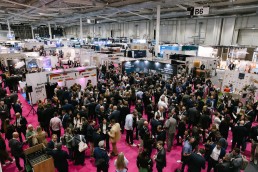
(UK) – Cruise Ship Interiors Design Expo Europe (CSI Europe) brought the 2025 cruise interiors calendar to a close with its first edition in Hamburg, marking a significant geographical shift for the event into the heart of the European cruise market.
The show opened with an industry networking reception at Hamburg’s Former Mains Customs Office. The venue reflected the city’s seasonal atmosphere, with a heated outdoor area featuring traditional Christmas market stalls serving food and drink. Exhibitors, designers, cruise lines and shipyards attended the event, which set the tone for two days of meetings, presentations and knowledge exchange.
More than 300 suppliers, outfitters and design studios exhibited at CSI Europe, including over 100 companies new to the event. Exhibitors represented a broad cross-section of the cruise interiors supply chain, from furniture and materials specialists to shipyards and design consultancies. Companies in attendance included Zenko HF Interiors, Marine Interiors (Fincantieri), Crivellari Divani & Poltrone, Harmony Marine Solutions, Ekornes, Tuuci, Pooky and MEYER Re.
Several exhibitors highlighted the importance of craftsmanship and specialist skills within the marine sector. A number of national and regional groups participated, including Finnish Marine Industry, which organised a photoshoot to recognise its contribution to cruise shipbuilding and outfitting.
Interactive features returned to the show programme, including Pitch and Pint, where first-time exhibitors delivered one-minute presentations to an industry panel. Panomax Cruises & Yachts was selected as the winner following its presentation.
Sustainability and repair were also reflected on the exhibition floor. Oceancircle hosted bracelet-making workshops using recovered ocean waste, while SD Marine Interiors ran a live repair challenge for visiting buyers. Awards for exhibition stands were presented during the event, with Oceancircle receiving the most sustainable stand award, HEWI recognised for accessibility, and Zenko awarded best stand design.
CSI Europe hosted multiple structured networking sessions, including speed networking and peer-to-peer meetings. In total, more than 1,000 meetings took place over the two days, enabling suppliers and buyers to discuss new projects, refits and future requirements.
The second day placed a particular focus on shipbuilding, featuring CSI Europe’s first shipyard-focused panel. Furthermore, the Sustainable Design Summit returned as part of the programme, with more than 130 attendees taking part in an interactive discussion on ESG integration, sustainability challenges and future expectations.
The event concluded with the Cruise Ship Interiors Awards ceremony, recognising achievements across cruise interior design, products and shipbuilding. Winners included:
- Best Cabin (Premium Suite): Partner Ship Design GmbH, AIDAdiva (AIDA Cruises)
- Best Dining Space: Plaza de Coco, Walt Disney Imagineering, Disney Cruise Line
- Best Public Space: Haunted Mansion Parlor, Walt Disney Imagineering, Disney Cruise Line
- Best Crew Area: Crew Neighborhood, Royal Caribbean International, Star of the Seas
- Best Wellness Space: Grand Spa, SMC Design, Asuka III (NYK Cruises)
- Best Entertainment Space: Disney The Tale of Moana, Walt Disney Imagineering, Disney Treasure
- Best Refurbished Space: French Kiss, East Fusion & Tokyo Bar, SMS Group, AIDAdiva
- Concept of the Year: REI, Viken Group
- Best Brand Original Project: Transforming Carpet Waste, Holland America Line
- Interior Product of the Year: PermaFit Solutions, Bath Fitter Commercial
- Sustainable Product of the Year: Waste Management, Oceancircle GmbH
- Galley Product of the Year: Waste Less, Generation Waste, Aroya
- Shipyard of the Year: Meyer Wismar
- Design Team of the Year: SMC Design
- Legend of Design: Kai Bunge and Siegfried Schindler, Partner Ship Design
CSI Europe will return to Hamburg Messe + Congress on 2–3 December 2026, continuing its presence in Germany as part of the global Cruise Ship Interiors portfolio.
www.cruiseshipinteriors-europe.com
Casambi Awards
Celebrating the “transformative influence” of Casambi across the international lighting industry, the winners of the 2025 Casambi Awards have been revealed.
The Casambi Awards, now in its fifth year, showcases the transformative influence of Casambi across the international lighting industry. This event celebrates the seamless integration of Casambi technology into both products and projects, pushing the boundaries of what is possible in smart lighting control.
For the 2025 Casambi Awards, an internationally recognised panel of judges brought together a wealth of global expertise. Yusuke Hattori, Lighting Designer and Founder of ambiguous, Singapore; Paula Longato, Regional Head of Lighting at Buro Happold, Germany; Javier Carracedo, Head of Indoor Product Management at Tridonic; Simon Grennborg, Lighting Designer at Fagerhult, Sweden; and Randy Reid, Editor, EdisonReport, Designing Lighting (dI) Magazine & LM&M, USA; formed a diverse jury that ultimately selected two exceptional winners.
Product of the Year: Choir
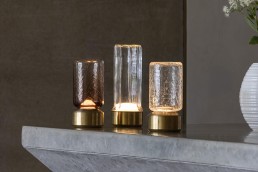
The 2025 Casambi Product of the Year was awarded to Choir, a portable luminaire by ADesignStudio, developed under the creative direction of Alex Fitzpatrick. Wireless, battery-powered, and beautifully refined, Choir represents a new chapter in intelligent, flexible lighting for residential, hospitality, and commercial environments.
Entirely Casambi-enabled, Choir delivers smooth dimming, tunable white from 1800–3500K, and dual battery performance for extended use. Dual charging options – USB-C for single units and a custom multi-unit charging tray – ensure operational ease, making the luminaire as practical as it is elegant.
Sustainability is embedded in the design through its modular, serviceable construction. Interchangeable diffusers and replaceable components enable easy repair, reuse, and long-term longevity. As Fitzpatrick explains: “Wireless technology is about freedom – freedom from fixed infrastructure, freedom to adapt, and freedom to imagine new possibilities.”
Choir has already proven its value in a rooftop restaurant project, where lighting designers sought to create a layered, intimate atmosphere across indoor and outdoor zones. Integrated seamlessly with the venue’s DALI system, each luminaire contributed to a cohesive ambient scheme. Even the product’s M6 threaded detail – originally intended as a theft deterrent – demonstrated functional ingenuity by stabilising fixtures against rooftop winds.
One judge praised its balanced intelligence and design clarity: “I selected Choir for its refined approach to portable lighting. It brings wireless intelligence to battery-powered luminaires with precision and simplicity, while its modular architecture reduces waste and extends lifespan.”
Another highlighted its practical contribution to hospitality environments: “The clean design and rooftop application clearly demonstrate why Casambi is relevant. It contributes to ambient lighting in a wireless, controlled manner, while simplifying recharging and saving staff time.”
A further judge noted the discreet user experience: “It’s awkward when a waiter manually adjusts your table light. With Casambi, that moment disappears. I’ve seen similar products before, but never one that integrates wireless control so seamlessly.”
From its tunable white performance and dual charging system to its repairable architecture and Casambi-enabled intelligence, Choir redefines what portable lighting can be – sustainable, intelligent, and emotionally resonant. As one judge concluded: “A luminaire that sings its own freedom – battery, wireless, and beautifully built.”
Project of the Year: Home House
The 2025 Casambi Project of the Year award was presented to the Home House Private Member’s Club in London. Led by Jamie Weakner of Minlec, in collaboration with lighting designer Victoria Jerram, chandelier specialist Madson Black, interior designer Russell Sage, and the Home House engineering team, the project is an exemplary demonstration of how wireless lighting control can transform a historic landmark – without disturbing its fabric.
Located at 20 Portman Square, the Grade I listed Georgian townhouse dates back to 1773 and remains one of London’s most distinguished private members’ clubs. Its recent refurbishment sought to enhance atmosphere and comfort while preserving its heritage. Lighting played a central role in guiding each space seamlessly from bright daytime settings to intimate evening scenes.
With original wiring untouched for more than four decades and ornate finishes protected throughout, conventional rewiring was impossible. Instead, Minlec integrated 38 Casambi nodes to connect chandeliers, wall lights, bespoke joinery lighting, and antique table lamps – entirely wirelessly. The result is a fully adaptable lighting environment that feels effortless and authentic to its historic surroundings.
One judge praised the project’s sensitivity and sustainability: “By retaining existing wiring and minimising invasive work, the team achieved true sustainability – preserving the past while introducing intelligent lighting for the future.”
Victoria Jerram’s lighting concept was rooted in drama, elegance, and respect for heritage. Working with Madson Black and Minlec, her vision allows staff and members to subtly adapt the mood of each space. Refurbished chandeliers now dim gracefully, bespoke joinery glows with warmth, and antique lamps respond to touch and automation – all controlled effortlessly through the Casambi App.
Beyond aesthetics, the system’s seasonal time-based scenes, remote support, and emergency lighting integration demonstrate the depth of Casambi’s wireless capability. As one judge observed: “Where history meets technology, and no one sees the seam, an 18th-century palace now breathes intelligent light without touching a single wall.”
Another highlighted the technical achievement through historic construction: “Casambi is a natural choice for buildings of this age, but I was impressed by how well it performs through thick walls. The chandeliers look incredible – proof that wireless control and heritage elegance can coexist beautifully.”
Now extended through additional areas of the club, Home House stands as a powerful example of how modern intelligence and historic architecture can illuminate each other with subtlety and grace.
David Morgan Review - Magnetic Force
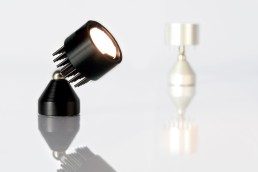
Following a collaboration with Luc Bernard of Licht Kunst Licht, German manufacturer ADO Lights developed the LED Luc – a spotlight whose clever use of magnets allows for enhanced flexibility. David Morgan takes a closer look at this innovative product.
Permanent magnets have the almost magical quality of providing force over distance without needing any power source. The magnetic force falls away quickly with an inverse cube or fourth power law, which makes it an ideal way to hold together those components that also need, from time to time, to be easily separated or moved. Examples are track adapters and adjustable spotlights.
Using one magnetic detail in a luminaire design might be considered a standard approach but it is unusual to discover magnets being used to achieve two different functions in the same product. The LED Luc miniature spotlight range from ADO Lights does exactly that, so I thought we should investigate the product range in more detail.
The third-generation family company who developed the LED Luc system was founded in Germany and originally manufactured roller grilles for heating and cooling convectors under the ADO Roste brand. The next generation was keen for the company to work with architects and moved into the high-end architectural metalwork market, and also diversified into custom architectural lighting with a new company called TTC Timmler Technology. The company is now run by Patrick Timmler, the grandson of the founder, and now uses the ADO by TTC Timmler Technology brand to market their lighting products around the world.
The original business model was based on creating custom lighting systems for specific projects based on the requirements of architects and lighting designers. These designs were then developed and refined and marketed as standard ranges. We use a similar approach at Radiant Architectural Lighting and know that it can be successful as all of our most successful product ranges started life as custom solutions.
The LED Luc spotlight was originally developed for use in a project with lighting design by Luc Bernard from Licht Kunst Licht, who worked frequently with ADO lights at that time. He was working on the lighting design for the St. Petri Church in Dortmund, where a miniature adjustable spotlight was required to light the restored 1531 Antwerp high altar; and so the LED Luc projector was developed as a custom solution for the project.
One hundred and fifty LED Luc projectors were mounted in vertical steel channels to light both sides of the altar. In the first design iteration for the project, screws rather than magnets were used to fix the spotlights in place. Once it became clear that the projectors would need to be easy to reposition to achieve the optimum lit effect, the idea of using a magnet to hold the spotlights to the channels was introduced. The projector was named after Luc Bernard in recognition of the effective collaboration between ADO Lights and the lighting designer.
The LED Luc adjustable LED IP44-rated spotlight uses magnets twice in the design firstly to fix the luminaire base in place on a steel surface, and secondly as the force that holds the adjustable ball joint onto the base. The miniature magnets used are powerful and ensure that the projector head does not droop in use while allowing easy aiming, adjustment and repositioning. A soft flexible cable runs from the body to a remote driver with a jack plug connection.
The sample I was given to test has a high-quality machined aluminium construction with an effective pin type heat sink. A single 3W LED is bonded to the heat sink and the 20mm TIR lenses can be quite easily removed from the injection moulded holder on site with a tool. The light engine produces a nice beam quality with a range of beam angles including 10, 25 and 50°. The LED colour temperature options include 2,600, 3,000, 3,500 and 4,000K, all rated at 90 + CRI. Standard metal work colours are satin silver anodised aluminium, black anodised and powder coated satin white RAL 9010. Accessories include a screw-in honeycomb louvre and a screw-in cut angle anti-glare snoot. It is not possible to combine both snoot and honeycomb. An IP65 glass window accessory is also available to allow the projectors to be used for exterior applications.
In addition to the original 30mm diameter size, a 40mm diameter version has been developed by Patrick Timmler. With this larger design, the LED can be replaced to extend the working life of the luminaire and all the components can be disassembled, using a screwdriver, for ease of recycling at the end of life or for remanufacturing. A zoom optic is available for the 40mm version in addition to the various anti-glare and IP65 accessories.
The LED Luc range has been used on a wide variety of projects, often in combination with custom housings, where the ease of adjustability and miniature size is required. Notable projects where the LED Luc has been used so far include Castle Hohenschwangau, Museum Marseille, and the Richard-Wagner-Museum in Bayreuth.
It is always good to review lighting products that incorporate simple innovations which are used to offer tangible benefits and differentiate products in a crowded market. The LED Luc range meets those criteria extremely well.
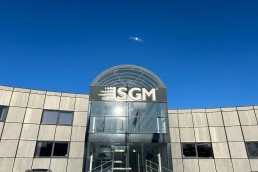
SGM
In 2025, after a transformative year in which it was acquired by Golden Sea, SGM celebrated its 50th anniversary. To mark the occasion, arc travelled to the Danish town of Aarhus to meet with the SGM team, take a tour of its facilities, and find out what the company has planned for the future under its new ownership
A company celebrating its 50th anniversary could, and should, be a moment of celebration; a chance to take stock of where you have come from since your humble beginnings, while looking to the future and planning where your next steps will take you. However, for Danish lighting brand SGM, it is a celebration that marked the beginning of an exciting new chapter.
In August 2024, the company was placed into administration, putting the livelihood of everyone at its Aarhus head office at risk. But, from out of the darkness, SGM was reignited, becoming acquired by Golden Sea, a globally recognised leader in lighting manufacturing. In just two weeks, Golden Sea took the company on board, and retained its building, manufacturing lines, and most importantly, all of the staff, meaning that SGM could continue onwards and celebrate its landmark anniversary this year.
It’s a connection that was not formed out of nowhere, as Golden Sea – itself celebrating 30 years in business in 2025 – has a longstanding history with SGM. As far back as 2004, Mr Jiang Weikai, President and Owner of Golden Sea, visited the original SGM factory in Italy.
As a company, Golden Sea has specialised in entertainment and stage lighting since its inception in 1995, owing to Jiang’s experience in computer engineering and automated controls after university.
With a goal to combine his technology background with art and culture, his aim for Golden Sea was, as he told arc at the company’s Guangzhou headquarters earlier this year, “to make the stage better, and to make life more beautiful”.
Originally working within China, Golden Sea began to expand further afield, at first into Asia, and then reaching Europe in the early 2000s, taking part in industry events such as Plasa, Prolight + Sound, and LDI. Shortly after this, Golden Sea established a connection with SGM, assisting in manufacturing its products from 2004 until 2014.
Speaking of SGM as a company, Jiang said: “They’re working really hard, doing really good work in combining entertainment technology with architectural products, and changing many traditional ideas of what lighting products can do. True innovation, in our opinion.
“We have 20 years of experience with SGM, and they have a good command of the industry, so we decided to invest, and in 2024, became the 100% owner.
“We think that lighting is one of the core elements to make people’s lives better, lighting up spaces where they live, and not only where they go, and we believe that with SGM, they have the technology, the platform, and the knowhow to do very good things in the future. Now, with our supply chain at Golden Sea’s three factories, and a full capacity totalling more than 1,800 people, we have the capabilities to assist SGM globally. By continuing to use new technology, based on the original background and DNA of the company, we think that SGM, together with our mother company Golden Sea, can provide the best architectural lighting in the world.”
There is a natural, emotional connection between SGM and Golden Sea, and Jiang is enthusiastic to continue the story, now that SGM is part of Golden Sea’s broader portfolio of brands, which also includes entertainment lighting manufacturer Ayrton, one of the global leaders in professional entertainment lighting.
Keen to learn more about this relationship and SGM’s new vision for the future under Golden Sea, arc travelled to the Danish town of Aarhus to take a tour of the brand’s facilities, and meet with its senior management team.
During our visit, Christopher Agius Ferrante, CEO of SGM and Vice President of Golden Sea, dove deeper into the conversations that surrounded the acquisition.
“Mr Jiang likes football, so he came over for the European Championships in 2024. Whenever he travels, he likes to visit factories and companies, both to get to know people, and also with an eye for acquisition. We got in touch with SGM to see if they would be interested in saying hello, and Ulrik Jakobsen, Director of Operations, got back to us and invited us here.
“We were very impressed by what we saw; the building felt nice, well laid out, the manufacturing line was very impressive. From there, I went on vacation, and came back to an email from SGM’s lawyer with an option to acquire the company and all its assets. We were essentially given two weeks to make an offer, which we did.”
And so, from an innocuous visit in July 2024, less than two months later, SGM was part of the Golden Sea family.
It is not the first time that there has been a shift in leadership for a company that has changed significantly since its humble beginnings in 1975. Originally based in Italy and founded by Gabriele Giorgi and Mauricio Guidi, the company’s name – Società Gabriele Maurizio (SGM) – reflected a close partnership that fuelled the pair’s vision of technological advancement.
Giorgi, an electronics engineer with years of experience in manufacturing electronic circuits, recognised early on the immense potential of the emerging lighting market. In the early days, the company combined cutting-edge technology with in-house development to create fixtures such as the Galileo, Palco, and Giotto series, which stood out for their performance and durability.
From the 1980s to the 2000s, SGM initially produced lighting effects for the nightclub scene in Italy.
However, as this market began to decline, the company made a pivotal decision to shift its focus; recognising the growth potential of the professional lighting market, SGM redirected its resources towards designing intelligent lights, setting the stage for future growth in the professional sector.
In late 2010, Peter Johansen – originally founder of Martin Professional – joined SGM in Italy as head of R&D. In 2012, he purchased the company and relocated it to Denmark. Since then, the brand has expanded internationally, with products gaining recognition for their performance, reliability, and ability to withstand the harshest conditions, including in 2013, being the first company to develop and sell a fully IP-rated moving head – something that at the time was seen as true disruption to an entertainment industry trying to find its foothold after the global financial crisis.
From these beginnings in the entertainment lighting sector, SGM as a brand has developed into a strong player in architectural lighting for permanent outdoor installs, taking the model of sturdy, good quality, exterior-rated construction and transferring this to a new range of architectural fixtures.
Willem De Plus, Product Manager for SGM’s Architectural division, speaks more on this development: “After the acquisition from Peter Johansen, we came out with the world’s first IP-rated moving head. We started doing IP-rated wash lights, making products that were very rugged, and here we saw great potential to work on cruise ships. This meant taking product technologies from our entertainment range, stripping them back, removing control displays, reducing the amount of connectors and cables, and meanwhile investigating corrosion resistance; we developed a very strong treatment that would last on cruise ships, that today offers a full six-year warranty.
“At first, we developed an entertainment product, and then we created what we called a Permanent Outdoor Installation (POI) version of it. Firstly, for cruise ships, but it worked very well, and through our connections in the US, particularly in Las Vegas, we had opportunities to use these products on buildings as well. It made sense because if they were built to last on cruise ships, they would also last on land as well. The Circa casino in Las Vegas is a brilliant example of exactly this, and continues to dazzle visiting spectators today.”
While original forays into architectural lighting were, as De Plus explains, modifications of products designed towards entertainment, this has since organically evolved, particularly as architectural lighting designers become more interested in dynamic lighting and media façades for their external lighting projects.
“A cool thing for us, when you move into façade lighting and exterior architectural lighting from entertainment-style products, a lot of the technology is already there, and the technology that we have developed over the past 12 years is now completely usable. Our primary colour mixing, colour calibration, and creating white light through RGBW sources dates back to our P5 entertainment fixtures; our Dry Tech technology, which we have a patent on, features active dehumidification, actively drawing moisture out of the fixture but keeping the air in. All of this technology we have been developing over time, and it still adds so much value.”
As well as building on its existing tech, in a post-acquisition world, SGM is benefitting from the extended pool of R&D engineers that comes with being a part of Golden Sea – expanding from in-house R&D engineers based in Aarhus, to a team of more than 200 at Golden Sea. Alongside this, Ferrante explains that the full engineering process, across the entire supply chain, is “completely internal”.
“We do not use external optics consultants, we do not go to others for firmware; there are thermal engineers, optic engineers, firmware, software, mechanical industrial design, we even make our own glass optics – we have the entire gamut.
“As part of Golden Sea’s overall business strategy, we want to own the core technology that lives within our lights. Optics is one of these technologies. So, we have an optics factory where we do all the polishing, grinding, coating in-house, and we take the same approach across all factors, including mechanical design and thermal design.”
With such extensive in-house capabilities in place, what this means is that, for SGM, the speed in which new product lines can be developed, sampled, and brought to market, has rapidly increased. Within the past year alone, the company has conceived, trialled, and launched three new architectural product lines in its POI series – impressive by architectural lighting standards, but Ferrante is used to the speed at which Golden Sea can work.
“With an R&D team totalling more than 200 people, we can do everything faster. At Golden Sea, we’ve got an entire, 4,000sqm R&D workshop. This is only a fraction of the 160,000sqm Golden Sea facilities. This means that when you want to mill out a new product sample, it is done in two days’ time. If you see a prototype and don’t like it, you can ask for changes, and when you go back the next day, it has gone through the engineering process, been reworked, and a new prototype is ready to view.”
Ulrik Jakobsen, Director of Operations at SGM, adds: “The role of R&D is changing. We’ve always done everything in-house, from the first pencil sketches, right to the finished, manufactured product, and if there are any problems, everyone is two minutes away. Now, we’re 4,000 kilometres apart, and the R&D department here is now collaborating with Golden Sea. It’s a new challenge, but one that has been successful. And while SGM typically launched 2-3 products a year, Golden Sea can launch 10 product lines a year – it’s impressive what they are capable of.”
A further benefit of this combined, international R&D process, De Plus adds, is the combination of cultures from Denmark and China, and how these can combine in incredibly effective ways.
“Typically, people here in Denmark are trained to be more creative, less ‘by the book’, where engineering is based on finding creative solutions. The people here are insanely good at this; our colour collaboration, as an example, is pure innovation.
“What the Golden Sea engineers bring is a persistence in ensuring that everything is super correct, so that when you do develop something that is creative, they can turn it into something real and manufacturable, that you can create by the thousands. And they can do it way more efficiently than we ever could. It’s a lot of fun, because we have the best of both worlds, and it opens up so many new possibilities.”
On the subject of new possibilities, since the acquisition, SGM has been busy assembling a veritable who’s-who of lighting talent to join the team as it looks to expand on its architectural lighting offering. From local talent Leif Orkelbog-Andresen and Sascha Johnsen, who joined the team 12 months ago as Global Sales Director and Marketing Manager respectively, to Gé Hulsmans and Christopher Burridge, who both joined the company in 2025 as Global Specification Manager and EMEA Account Manager. Most recently, Jesse Lilley was appointed by SGM as Managing Director in October, just two weeks before arc’s visit to Aarhus.
Reflecting on these new appointments, Ferrante says: “We’re very, very lucky. We’re a Danish lighting company, and to have Leif based down the road in Copenhagen, Jesse and Sascha literally round the corner in Aarhus, if you were sitting at a drawing board trying to find people to inject new life into an organisation, to have this level of quality here, you couldn’t make it up.
“Having Golden Sea in the background may help in giving people the confidence that the business is well looked after and well-funded. Having been through a similar situation with Ayrton already, there is a blueprint for it, in that Golden Sea was always very clear about growing the team at Ayrton and not just moving operations overseas. We are doing the same here.”
De Plus, who has been with SGM for eight years, adds: “It is cool to see the people that are joining the team, not just the amount of people, but the specific hires we are making – Chris Burridge and Gé Hulsmans are just two examples – and Jesse joining, being able to tick the boxes of living in Denmark, coming from architectural lighting, when I was told they were joining, I thought ‘this is amazing’.”
Lilley’s experience in architectural lighting is extensive, having worked with the likes of Martin Professional, Lumenpulse, and on the design side, Speirs Major Light Architecture, over the past 20 years.
During arc’s visit to Aarhus, he told us of his excitement at being a part of this new journey for SGM.
“A lot of what is happening is familiar to me from my time at Martin, when it expanded from entertainment to architectural lighting. I’m very excited to be in a similar situation again where we’re building up the architectural side. I love what I’m discovering in the company.
“I’m discovering some amazing technologies that I don’t think are being used enough yet, because they can create some amazing products in terms of the finesse of control, the light quality, and colour calibration.
“There is some very clever technology in this company that has not properly seen the light of day, so I see huge potential. The people here have a lot of experience, and if we can choreograph the dance in the right way between Denmark and China towards a global market, I think we could have an amazing winning formula.”
When a company reaches a landmark anniversary, particularly one as significant as a 50th, there can be a tendency to look back on where you have come, and reflect with nostalgia on past glories. For SGM though, it became very clear during our visit to Aarhus that the focus is very much on the future. From some very exciting, potentially game-changing new product developments that, for now, remain highly confidential, to expansion plans at their head offices in Denmark, as well as around the world, all with the full collaboration and support of Golden Sea.
Reflecting on this, Ferrante says: “There is a lot of vision, and a lot of forward thinking and long-termism. Not just for tomorrow, but a lot longer down the road.”
And so, with all of this in mind, it will be exciting to see what the next 50 years will bring.