
David Morgan Review: SGM i-1
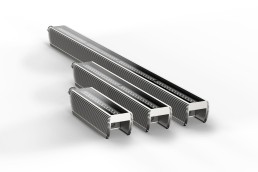
The latest product in the SGM range is the i-1 Linear architectural lighting system, designed for use on a wide range of façade applications. Here, David Morgan takes a closer look.
It is unusual for a company founded in Italy producing products for the disco market to end up, as a Danish high end technical lighting company.
Yet this is the route that SGM has travelled. Originally founded in Pesaro, Italy in 1975, it is now based in Aarhus, Denmark, after being restructured in 2015 and relaunched under a slightly different name.
The SGM product range includes advanced products for entertainment and architectural lighting applications with a particular expertise in moving head luminaires. The company was the first to develop an IP rated exterior moving head luminaire, which was introduced in 2013. Notable UK projects include lighting the chimneys of Battersea Power Station using the i·2 RGBW POI wash light.
SGM designs, develops, tests and assembles all products in house with an emphasis on high performance, repairability, and durability. The latest product development in the SGM range is the i-1 linear architectural lighting system.
This range is designed for wide range of façade linear lighting applications and incorporates some innovative and patented features to ensure a long working life and high performance.
The i-1 range is based around an attractively styled and solid looking ribbed body extrusion, which gives the range a strong visual identity while also acting as a passive heat sink. Both ends of the body extrusion are machined to produce a distinctive curved profile.
SGM puts considerable emphasis on the quality of its optics and the efficiency of its luminaires. I was rather surprised to see that individual lenses for each LED were used in the RGBW samples that I was given to review. This approach means that the various colours do not blend together to create a fully homogenous output for some distance from the luminaire, which causes issues for surface grazing. However, it turns out that SGM has launched the highest efficiency versions first and that i-1 luminaires with colour mixing optics will be available in the future. The lumen output was high and colour blending was very good on the sample when the beam was projected over a distance of three-metres or more and so for many applications it should work well.
Six distributions are currently available. These range from 8.5º narrow up to a 60º wide option; an elliptical 12 x 39º version; and an asymmetric elliptical 13 x 38º option.
The i-1 system is available in three lengths with two power options: standard and X for the high-power type. The lengths are based on a 1ft module. The longest size is 1,220mm (4ft) with a maximum power of 115 W, 610 mm (2ft) with a maximum power of 60W and 305mm (1ft) with a maximum power of 35W. The RGBW version has been launched first with a tuneable white type to follow.
Lumen output for the high output version is over 1,500lm/ft, with all LEDs on full power, giving an efficiency of around 60lm/W, which is high for an RGBW luminaire.
The integral DMX RDM line voltage drivers work with a universal voltage range from115V to 277V 50 or 60Hz so can be used in any country. The drivers are designed in-house and incorporate a variety of custom features The first of these features, which SGM has branded DynaMix, maximises the lumen output for RGBW and tuneable white light engines. DynaMix is a SGM point of difference, which boosts lumen output where the power of each colour channel is scaled in a ratio to the maximum luminaire power. For example, if only the blue LEDs are lit, then in theory these can be run at the maximum luminaire power. As other colours are added to the mix then the blue power will be reduced so that the combined power equals the maximum for the luminaire. Eldoled drivers offer a similar control feature but only a few other luminaire manufacturers seem to have adopted this idea so far.
The i-1 luminaires are designed to operate in a wide thermal range from – 40°C up to 50°C, and incorporates a proprietary branded thermal control system ThermalDrive that ensures that even in very high ambient conditions the LEDs operate at a safe working temperature. With an IK rating of 09 and corrosion rating of C5, SGM luminaires are designed for a long working life even when exposed to harsh conditions.
The range also incorporates a patented dehumidification system that I have not previously seen on other products. Branded DryTech, this system of inbuilt dehumidifiers constantly removes trapped hydrogen from the luminaire using a solid-state electrolytic process, with no moving parts, which reduces the risk of corrosion. An IP rated pressure equalisation vent is also incorporated to minimising negative pressure when the luminaires are turned off pulling moisture in the LED area or driver electronics.
The i-1 system has been thoughtfully designed throughout, including the mounting brackets, which come in three types. The mounting for brackets can be located at any point along the body extrusion and the spacing from the mounting surface is adjustable and lockable. The luminaires can be angled in the vertical plane and can also be mounted at an angle to the wall surface in the horizontal plane.
Glare control accessories include a linear shield that incorporates an adjustable louvre for fine control of the cut-off. An anti-glare cover is also available in modular lengths and this clips on to the luminaires without tools.
Each luminaire comes fitted with a flexible link cable and IP rated multi way connectors with mating sockets for ease of connection on site. The connector fits into an open area at the back of each luminaire allowing the luminaires to be joined together with a minimum gap between them. A flexible cable extension is available that allows the luminaires to be spaced more widely.
SGM has also developed its own colour light engine software branded as TruColor+, which enables advanced control of the colour output. Each luminaire is calibrated at the end of the assembly process and the data stored on board. This data can be used to programme a replacement luminaire on a project to match the original colour profile and to allow for the lumen depreciation that will have occurred. The i-1 system incorporates 3, 4, 6, 8 or 10 DMX control channel options to enable the luminaires to be operated in many different colour control modes. TruColor allows all SGM luminaires to be matched for colour consistency across the SGM Colour Pallet and to produce high CRI (90+) white light output from 2,000K up to 10,000K.
Another branded software control option, VersaPath, enables colour filter emulation to react to colour temperature adjustments, similar to the effect of using a tungsten/discharge or xenon light source.
The SGM i 1 range is impressive in terms of its features, performance and overall construction. In a crowded market for linear façade lighting products, this range does stand out with its numerous distinctive design and performance features. I look forward to seeing the lit effects when used on projects in the future.

Speirs Major
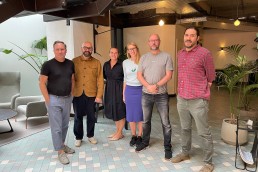
In a special round-table discussion, arc caught up with the senior design team at Speirs Major to discuss how the practice has grown over the past 30 years, and where it sees itself going in the future.
Speirs Major is a lighting design studio that needs little to no introduction. With an expansive back catalogue of awe-inspiring, award-winning projects to its name, the practice is one of the most highly regarded and well-renowned design studios in the lighting sphere.
Established in 1993 by Mark Major and Jonathan Speirs, originally under the name Speirs and Major Associates, the studio works across the full gamut of architectural lighting design, with projects across the world spanning infrastructure, heritage, hospitality, public realm, retail, cultural and places of worship, to name but a few.
Both Speirs and Major originally trained in architecture before making the switch to lighting design, and this background meant that they shared a belief that lighting should be an integral part of the architectural design process, rather than a secondary addition. As a result, the studio used the term “Light Architecture” to describe its work – an expression that it believes “underscores our ethos, rooted in a fascination with light, form, space and time”. With this in mind, Speirs Major describes its approach to lighting design as “progressively and responsibly using light to improve the experience of the built environment, promote wellbeing, and generate a unique sense of place”.
The company rebranded to Speirs + Major in 2010, shortly after Keith Bradshaw was appointed as Principal, but in 2012, Jonathan Speirs sadly passed away at the age of 54 after a two-year battle with cancer. Speirs had led the design for a number of the firm’s most high-profile projects to that point, including the IALD Radiance Award-winning lighting for the Sheikh Zayed Bin Sultan Al Nahyan Mosque – the Grand Mosque, in Abu Dhabi, UAE, and is widely remembered as a pioneer in the lighting design profession.
After the passing of Speirs, the company continued under the tutelage of Major and Bradshaw, adding yet more award-winning projects to its repertoire, until another rebrand in 2020 that reflected the studio’s evolution from an atelier practice to a broader organisation, headed by several Partners. Now operating under the name Speirs Major, the company is led by Major and Bradshaw as Senior Partners, alongside Clementine Fletcher-Smith and Carrie Donahue Bremner as Partners, and Associate Partners Benz Roos, Philip Rose, Iain Ruxton, and Hiro Toyoda, who leads its Tokyo office.
As the company now looks to the future under this new, democratic leadership group, arc editor Matt Waring led a round-table discussion between the Senior Partners, Partners and Associate Partners to learn more about how the firm has changed over the past 30 years, and where it will go in the future.
What immediately becomes evident is that each of the Partners in the discussion has been with the company for a long time – from Ruxton and Rose’s more than 25 years, to Toyoda having been part of the team for 12 years – the first eight of which in London, before moving to Tokyo four years ago. But within this, there is a longevity that has, in some instances, seen people join the company as juniors fresh from university, and rise through the ranks to the positions that they are in today.
This is something that Fletcher-Smith – one of the self-confessed ‘lifers’ – believes stems from the overriding culture of the company: “I think it’s that we never stop being ambitious,” she says. “It’s not like you get more senior and things become easier, it’s always a challenge, but in a stimulating way. We push ourselves really hard to do something different and think about projects differently. We work on such a diverse range of projects that you never get bored because you’re not only doing one type. There’s always something that continues to challenge you creatively. That’s certainly what has kept me through the years.
“I imagine other people might have considered wanting to work elsewhere, but we have such an amazing thing where we are. As you become more senior, the opportunity to have more of a say in the direction that we go collectively, makes it worth it, because you can help to steer the ship.”
Rose, another lifer who has been with Speirs Major for the past 25 years agreed that the variety of work plays a key role: “We’re not just restricted to one sector or another, and that keeps it fresh, keeps it interesting, and keeps us creative,” he says.
“It’s also a challenge, in a way, because designing a product is really different to creating a masterplan,” Roos continues. “They have very different needs, but at the same time, it keeps us fresh because we are still focusing on light as the main target.
“Another thing that I think is interesting is that we’ve never stopped exploring new ways of delivering our designs. We’re always trying to gauge new technologies and pick up on how the latest technology keeps improving outside of our industry.”
Major and Bradshaw have been keen to facilitate the culture of promotion from within and rising through the ranks, particularly over the past 10 years as the studio shifted from a singular, atelier approach to the team effort of today. Bradshaw explains: “The practice has changed hugely in the last 10 years, and what we’re determined to make happen with everybody else is that we remain fit for purpose.
“One thing that the practice has never shied away from is having a good look at itself; we’ve never sat back, and that requires a certain energy. We recognise what it is to support a very talented senior group of people to fulfil their career ambitions, and ultimately if they’re succeeding, the practice will succeed.
“Lighting design practices used to be ateliers – a lot of them still are – but we’ve gone through a really interesting phase where we’ve matured from that into much more of a team effort now. I liken it to going from being a singles sport to a team sport – we are genuinely a team now, in that if you take one of those pieces out, it doesn’t work as well.”
“Like all good design companies, we’ve been through several evolutions where I wouldn’t necessarily say we’ve reinvented ourselves, but there are recognisable periods of change within our history,” Major adds. “One of those moments of change to the paradigm was when Jonathan retired and then passed away. For Keith and I, that was a very profound moment where we certainly got together, and the practice evolved into a new form.
“More recently, it’s built upon that and evolved again.”
Iain Ruxton has been present for every evolution of the practice, and he feels that each iteration resulted from “adapting according to what was needed at the time”.
“We’ve adapted in terms of not just the type of projects and the scale of projects – that’s certainly been significant in some of our changes – but also the way that lighting technologies have changed, and design and construction have changed, the way that buildings are procured, how things have changed commercially, the way all these things are done, we’ve had to respond to that as we go along.
“We’ve been pretty good at it, to be fair. Many of these things are not just about us deciding what we need to do; it’s all these external pressures that we have zero control over – they have been a big part of how and why we’ve changed.”
Adding to Ruxton’s comment, Carrie Donahue Bremner believes that whatever the adaptation within the practice, creativity has always been at the forefront of the change. She says: “For me, it has fundamentally always been about creativity. Whether this has been taking a step back and asking how we should address things, or opening this up to a wider conversation through the different pools of knowledge in the office so that we can throw ideas around and talk about how we think as a group, it would work, based on some really solid foundations with Mark and Jonathan originally, and then Keith building on that. But at every point, it has always come back to creativity – even if it’s the most mundane thing, it’s just taking that tiny bit of pause and finding a creative approach to those pressures that has made us stronger and allowed us to adapt.”
“Like any creative personal group, you get better by working through things,” Bradshaw continues. “We’ve never stopped, and if we’ve ever felt that we haven’t pushed ourselves, there’s been a collective feeling that it’s not good enough, and we need to do more. Anyone’s work that you are going to respect over a long period of time isn’t just a few freak successes.
“In many ways, whether you’re a recording artist or a visual artist, you begin to worry that it will not be as good as that moment you were most known for. So, we carry with us the burden of success to some extent, but we are also confident about is that if we worry about things enough and think about things enough, we will find what makes it a relevant solution.”
This process of “over-thinking” extends to the way that the practice prepares for projects, taking a broader, macro approach when entering discussions with the client. Toyoda explains: “When we get appointed, it might sound silly, but we often don’t really think about lighting in the first instance. We take not just one step, but 10 steps back to look at what the job is about. Many of the early presentations and conversations that we have with the client have very little to do with light – we talk about people and experience and what the job could be. That helps our clients realise the project’s potential and establish ambitions for what it could be. We don’t have a design template because it’s all contextual. Like architecture, working with light is totally contextual, so understanding the context, not only the geographical context but understanding the people and the culture, and ultimately the users, is fundamentally important.”
“The architectural approach, right from the outset, was very much one based on what architects refer to as genius loci,” Major adds. “In other words, we look at each individual project entirely separately, coming at it with completely fresh eyes. Even if you’ve worked on something similar before, you have to mentally set that aside and draw upon your experience as you go through the project. It’s been one of the founding principles of the practice and how we have worked from the outset. It’s why we’ve never done rollouts.”
Bradshaw continues: “You might think that there’s something commercially naïve about that, but it’s because we constantly try to stay excited by the work. I wouldn’t say that we are post-lighting, but the reason why we delve into the fundamentals of what a project is about at night and stop using the word ‘light’ is because you can then have a much more profound conversation with the client that they weren’t expecting to have. We try to open up the possibility of enriching the project by understanding where it is, what it is for, and what it willbe for in the future. Those conversations can lead to a much more dynamic expression of what we might do in response.”
“Part of it is that we’re good at questioning other people, whether it’s the client or the architect or whoever,” Ruxton adds. “Not in a bad way, but we’re quite good at being disruptive in the design team, shaking things up and looking at things more deeply. Sometimes people aren’t receptive, but other times we’ve made some significant inputs to projects that were not directly down to lighting, just by turning up with a different way of thinking.”
“It’s understanding the nature of each individual project,” Rose continues. “There have been occasions where we have actually talked ourselves out of projects because having considered it fully, ultimately, we felt it was not the right thing to do.”
Fletcher-Smith comments: “The initial research phase is so interesting for all of us. Exploring a new avenue or discovering something new about an industry or a type of building or area gives you a greater affinity with the project and the confidence that you’re doing something with value; it isn’t superficial; it has meaning. This understanding is something we can hold on to for the entire duration of the project, which in some cases is many years. It helps guide us as the project evolves, and difficult decisions need to be made because we continually come back to the project’s essence and try to remain true to that.”
“And of course, It needs to be done but it still needs to look and feel brilliant as well,” Bradshaw adds. “It’s a very fine line, but we still live and work in the visual arts, and there’s still an excitement and joy in light. We have to be mindful that we are trying to fulfil lots of things. Success means something quite different now from what it used to.
“When we talk about projects, people’s experience is fundamental. Of course, the images still look great, and we still get James [Newton, photographer] to take amazing pictures, but what I always think is great is when you look at the people that are there and what they are doing, you can see they’re having this wonderful, passive experience. It isn’t just about whether a detail is quite right, it’s whether the space feels good.”
While the idea of treating each individual project as its own separate entity may seem like a challenge, the team explains that it is possible to use previous experiences as a guide to try something new, or bring something new to a different sector.
Fletcher-Smith says: “You learn what the basis of the needs of a project might be, but then you focus your energy on the bits that could be unique or different. It’s a valuable experience you don’t entirely disregard, but rather look at what you could do that is different.”
“The variety of projects that we work on means that they actually inform each other,” Rose adds. “For instance, you might be working on a heritage project alongside a large airport, and you might be inspired to use one or two details from the heritage project in the airport – that crossover of thought is really important.”
Donahue Bremner comments: “One of the things that means it is never the same is the palette of what we work with. It’s not just light, and it’s not just the details. If we dig into the archives, we might see that we have used the same type of detail dozens of times, but with each project, the result is influenced by the team, the aesthetics, the history, the research, and then the way the light works differently with the different materials. It’s not just one thing; we’re not just working with light and dark; we’re working with a whole series of other, ephemeral ideas.”
“It has to do with self-discipline as well,” Roos adds. “It is much more straightforward to do a rollout if you have a pile of details, and using those would make life easier, faster, more efficient. But we’ve never gone down that ‘efficient’ route because of the philosophy of the practice. We know that as soon as you remove the creativity, you lose that naïve approach to the world where the magic lies. But it’s a constant battle, and we naturally question ourselves all the time.”
Looking to the future, both of the lighting design profession, and of Speirs Major as a practice, the team agrees that there are many areas in which it could, and will, change.
In keeping with the studio’s recent restructuring, Roos believes that the world of design will move to a more democratic setup. “It’s a very interesting time to be a designer, because if you look broadly, not just at lighting, and not just us at Speirs Major, I think design is shifting away from the idea of central egos, the world of star architects and atelier super designers, to a world where design is more democratised, and influenced by different factors, by collectives, by groups that draw from an incredible range of factors.
“Each of us needs to listen, to set our own ego aside – it sounds easy, but it is not always easy, I can admit – but it has to happen because the world is different. I think the star architect is on a path to extinction; it will be replaced by something else.”
As for design as a whole, there are several different areas in which Speirs Major expects change. Roos continues: “We need to keep developing research because the design world is changing so much. At the moment, it is all about circularity and being better for the planet, and light is at the centre of that.
“For us, we have to look at what we can do that makes a difference, what makes an impact, and balance that. We still have a huge creative input to make a space that everybody can enjoy because there’s absolutely no point in making spaces that nobody enjoys, but we have to think about how you do that in a more progressive way.”
Major adds: “What we find challenging at the moment is the amount of complexity and contradiction in the world in which we’re living and working. We’ve got a long history of working with urban lighting and challenging lighting standards, driving lighting levels and therefore energy and light pollution down, and working hard to talk about retaining dark spaces – things that aren’t always popular when you talk about other conflicting issues such as safety and security.
“But the other part of what we do is about creating joy, magic, and something special. We don’t want our clients to say, ‘All the boxes have been fantastically ticked, but actually, it’s a miserable experience you’ve created after dark’. Even if they check all the necessary and fundamental boxes, a lot of lighting schemes can end up less than they should be. So, that aesthetic side of our work is something that we are trying to continue to explore.
“Basically, we’re asking, ‘Can we have our cake and eat it in a world facing climate change?’ That’s what keeps us buzzing at the moment, and the fact that we don’t have all the answers is exciting in a way, and we are constantly seeking to find those answers on every project.”
“You can boil it down simplistically to ‘do good’, don’t just minimise harm,” says Fletcher-Smith. “We ask ourselves, can we contribute something good rather than just preventing damage? That comes into light and health a lot, certainly in the biological side of things – the increased awareness of circadian rhythms. But what about bringing joy? What psychological impact will you have on people, and how can we contribute to that so that there is an overriding good to our projects?”
“The issue is evidence,” adds Bradshaw. “We live in an age where evidence or data seems required to prove everything. But what is the evidence of joy on a scale of one to 10? It’s so subjective. But if we keep that in the vocabulary as we go, we’re not scared to say, ‘We did everything that we were meant to do, but look what we got for it’. That’s where we’ve always demonstrated the few extra things that we’ve done to bring a bit more life to it. For me, that way that we communicate and collaborate has always been super important.”
Roos continues: “It’s a very exciting time to be a designer, because we know that in five years, the world of design will be very different, but we do not know how. That goes for all design professions, which is exciting because we don’t know where we will end up being. It’s an outstanding, hugely complicated puzzle.”
“We must remember that we work for humans; humans are our clients – they’re the population of the spaces that we work within,” adds Bradshaw. “And humans are very complicated moving targets. They change, they evolve, and they find pleasure in changes. The more that we can remain empathetic as designers, it will lead to an appropriate result. We’ve always been good at collaborating, understanding, and looking deeply into things; the more we continue to do that, we will stay relevant to what people want and then write that large into what a public space needs to be or what a developer wants their building to look like.”
“Once upon a time, there was an original question of what are we going to be, and if you synthesise all of that together, the answer is we don’t know,” comments Ruxton. “But the point is what we will do is we will keep on listening, keep on looking, and keep on being open. As Benz says, things will be very different in five years; we know what many of the important challenges are now in sustainability and circularity, AI, and various technological things. We know what’s going on at the moment, but whatever is going on in five years, we’ll be ready for it. We’ll be open to it as soon as we see it peeking over the horizon, we’ll work to get our heads around it. We’ll continue to be open and flexible and hungry for knowledge, and able to respond appropriately.”
For Toyoda though, as he looks to the future, there is another important, but equally difficult, question to ask. “There are a lot of questions that we need to ask ourselves, but the most important one will always be ‘why’,” he says. “What we do can often become a bit distracting to the process, but the fundamental question is why we do what we do. If we can answer that question confidently, then regardless of where the solution comes from - our creativity or AI or wherever we know that we are doing the right thing. It’s not just about finding the best way to make a project look good or any other conflicting issues we must address. By asking why, then we can make a judgement as to how far we want to go with a certain idea. It’s an essential part of the process.”
While ‘why’ may seem on the surface to be an introspective, philosophical question, Bradshaw says that over the past few years, particularly in the depths of the Covid lockdowns, it became necessary for the practice to assess its position, look at the work that it is doing, and prepare for the future.
“Why has been a question that has always been a part of the practice. We know how; if you’ve been doing it for as long as we have, it isn’t that complicated,” he explains. “Being a lighting designer isn’t like being a furniture designer, or even being an architect or a landscape architect, in that the ego doesn’t exist in the same way.
“If you look at our projects over time, if you’ve got an expert eye, you could recognise not necessarily a house style, because you can’t have a house style when you work on all these different things, but there’s definitely an attitude to projects.
“I enjoy looking through our old projects because it focuses my mind, and you boil down to the essence of what we are as a practice. This phase is something that we have been thinking about this phase for a long time, but there was a lot of deep thought over that two-year lockdown period where we were working out if there was such a thing left as lighting design. What is it that we are excited about?
“Like most traumas, it gave us a great sense of renewal, to ask what we are going to do with this new lease of life, this new opportunity.”
So where does Speirs Major go from here? What does the future look like for the practice? As Roos and Ruxton speculate, nobody knows what the lighting design world will look like in five years. However, you can be sure that Speirs Major, under its new, democratic stewardship, will still be at the top of its game, continuing to produce outstanding works of lighting design that will delight and inspire, as it has done for the last 30 years.
Atlantis The Royal, UAE
With its unique façade, the Atlantis The Royal hotel is the latest addition to Dubai’s ever-expanding skyline. Light Touch PLD was tasked with illuminating the mega structure and its luxurious interiors.
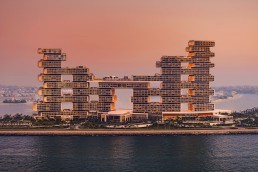
At the edge of Jumeriah Palms, the extravagant Atlantis The Royal Hotel crowns the shoreline as the newest landmark of luxury resorts of Dubai. Its peculiar shape of bridging towers contests the more conventional neighbouring buildings that comprise Dubai’s skyline. Designed by some of the world’s greatest designers, architects and artists fashioned the building on the myth of Atlantis, an underwater world, to create a narrative in conjunction with its sea-front location.
The hotel takes the luxury resort experience to new heights, spanning 406,000sqm across 46-storeys. This is the hotel where guests can live among the clouds in its expansive terrace space, private balconies and pools, and a sky garden supported by the 500-metre-long and 178-metre high “mega” structure positioned on the outer crescent of The Palm Island. Within, the building offers various eateries and leisurely spots among its 795 rooms, suites and penthouses.
A design of this magnitude and grandeur needed a lighting design company familiar with such large-scale projects. Light Touch PLD fit the profile, with an extensive history of resort experience across the Middle East, therefore knew they could be trusted with the brief.
Paul Miles, Partner and Principal Lighting Designer at Light Touch PLD, says: “We received multiple briefs on the basis of the scale and various components of the project, working with a number of world-class architects, interior and landscape designers. KPF New York was the lead architectural firm that had an initial aspiration on how the building should appear by night.”
With water being the focal idea of the building’s design, the lighting design needed to not only coincide with the concept but also link features, aspects and even people in connection with the narrative. Working with globally renowned architects like KPF New York required a close collaboration, therefore the night-time appearance was integral to bring the architect’s vision to life. The hotel has an incredible, unique façade that lends itself well to the use of linear lighting along the straight edges. The lighting is therefore designed to develop layers, to simply light the forms of rectilinear stacks, with the ability to adapt the colour as necessary.
“There was a big reliance on the balcony lighting to offer life and activity on the block ends,” Miles adds. “Due to the organic nature of the building, our role was to offer depth and life to these facias to give the impression that there was life beyond considering these are actually sheer walls. Three lighting treatments were offered to achieve this: the outline to offer the far vista accent, a subtle wall wash to the front of the terracotta slats and integrated LED to the false vision panels to offer depth and life to the facias.”
The building’s balconies played a huge role in how the light was perceived at night. Light Touch PLD created a bespoke product to achieve a soft indirect wash to each partition sheer, where each balcony is naturally controlled by the in-house guest. GRMS systems within the building give the landlord and client the ability to override the local control and have access to change the balcony lighting for specific events.
The Myth of Atlantis was the central theme across all aspects of the project, a task that can be conflicting when trying to harmonise both a theme and an ultra-luxury feel. However, the attention to detail was quintessential to create an experience for everyone inhabiting the hotel, this includes back of house and staffing areas. Light Touch PLD credits both the owner and the developers of the property, ICD and operators Kernzer, who felt the staff areas were just as key as the guest experience.
A project that has been 10 years in the making was bound to face a multitude of complexities and challenges throughout. For instance, time is arguably intrinsic to change; team members and management evolution was inevitable, each bringing new designs and protocol to be implemented and adapted. Time also allows external factors to come into play such as construction complexities and, of course, the pandemic. However, this unconventional project would have the material to create solutions in unconventional circumstances.
Teresa Enroth, Principal Lighting Designer at Light Touch PLD, says: “At the time, developing the lighting market was both a challenge and an opportunity. The main design phases lasted from 2015 to 2019, with updates and changes continuing into 2022. The opening date was pushed back due to the complexity of construction coordination and the pandemic, but Light Touch PLD was present on site with dedicated personnel from 2018 until after the opening in 2023. Having dedicated lighting design construction administration is uncommon but critical for a project of the size and scope of Atlantis The Royal. Considering the specifications were created six to seven years prior to the opening, we are very proud that the outcome still reflects a new project as if it was specified yesterday.”
The other-worldly nature of The Atlantis meant extravagance was taken to max, which came with the biggest challenge for the lighting designers – scale. Miles explains: “Whether it’s lighting the world’s largest jellyfish tank, illuminating a skull DJ booth, or figuring out how to illuminate an acrylic pool... this is only to name a few, as there are so many unique aspects to this project that we could go on forever. With years and years of experience in the market now, overcoming challenges is what we like to do best.”
Sophia Stezenko, Principal Lighting Designer at Light Touch PLD, adds that the nature of the curving architecture, and thus the interiors, required some diligence in alignments and fixture selection. She says: “Some structural constraints, particularly during the post-contract stage, necessitated additional reviews and re-design in some areas, such as the façade and sky pools, to accommodate placement issues.”
Light Touch PLD has said its philosophy is that lighting design is a complimentary factor and that its job is to create an atmosphere and highlight the elements. With more than 40 manufactures supporting the project and hundreds of product types due to the diversity of the design styles within the building, this meant extensive testing of a multitude of aspects in finding the right fixtures. Miles believes that the dimming stability was critical and a major challenge with LEDs. The key was conducting extensive tests on a range of devices to ensure smooth dimming.
After 10 years of diligence, obstacles and external setbacks Light Touch PLD ensured the initial design was achieved. Not only has the lighting designed fulfilled a very happy client’s wishes, but also illuminated the hotel to create the grand palace the designers had envisioned. Located 5km off the coast then, the hotel is a visible focal point from the Dubai Marina, thus taking the crown from the original Atlantis hotel as Palm Jumeriah’s focal landmark. When asked which of the lighting aspects impacts the grandeur of the hotel, Miles says: “It’s difficult to pinpoint one particular component that highlights this building; however, a common hidden compliment is when the most promoted images of the project are at night; the façade tips the balance here.”

Key team promotion for Lighting Design International
(UK) - Lighting Design International has announced the promotion of one of its team’s senior designers, to the role of associate. Sandra Brookes will assume the role with immediate effect, strengthening the practice’s 20-strong senior management team.
A trained architect and lighting designer, Brookes has more than 20 years’ experience in the lighting industry. Since joining LDI in 2017 she has worked on a diverse range of projects, from luxury residences, superyachts, high-end restaurants and exclusive 5-star hotels worldwide.
Brookes trained at The Bartlett School of Architecture and – being fluent in Spanish – studied at the Unversidad de Los Andes, Colombia, where she gained valuable insights in her architectural studies. Brookes was given the opportunity to study in the Danish Royal Academy of Arts, where she continued her architecture training.
It was in Denmark that she decided to pursue a career in lighting design, as the Danish sensibilities to light made her aware of its subtle yet powerful ability to change and enhance architecture.
Her notable projects include the Four Seasons Astir Palace Hotel in Greece, which won the Best lighting for the Bar & Restaurant Awards for the Avra Lounge, and the newly opened Four Seasons Hotel Doha, Qatar.
Sally Storey, Founding Director of Lighting Design International, said: “We are exceptionally fortunate to have Sandra as part of our team. Her international experience on a range of complex, high-profile projects, along with her unique talents and conceptual expression in lighting design, make her a real asset to the team. I would like to extend my personal thanks and congratulations to Sandra for a job well done and I look forward to seeing her take flight in her new role.”
On her promotion, Brookes said: “I’ve always had a passion for lighting design and have relished the opportunity to work on some fantastic projects that have indulged my creativity and problem-solving. I feel very much at home here at Lighting Design International – the team is so friendly, talented and passionate, it really does feel like we are part of something special.”
www.lightingdesigninternational.com
Grimanesa Amorós to headline LiGHT 23
(UK) – Internationally renowned light artist, Grimanesa Amorós will headline the [d]arc thoughts talks programme at LiGHT 23.
Taking to the stage on Tuesday 21 November, Amorós will present 'Illuminating Boundaries: The Exploration and Creation of Art Through Light', followed by a Q&A session with arc magazine's editor, Matt Waring.
Amorós is a Peruvian-born American multimedia creative whose work explores community connections intersecting history, technology, and architecture. Her keen understanding of structure enables her to create monumental sculptures incorporating various elements such as video, lighting, and electronic components to create immersive environments and connect the viewer to their surroundings.
Technology complements the concepts of her work without defining it – a medium of expression. Describing her work as a "constant romance with the unknown", Amorós first incorporated light into her practice following a fated trip to Iceland. While there, she saw the Northern Lights and realised the powerful ephemeral magic light held. She discusses light's ability to transcend social and geographic boundaries "we all connect to light."
Drawing upon critical cultural legacies and landscapes, Amorós is inspired by the communities she creates within. Installing and programming each piece on-site, direct interaction with the surrounding architecture is key to creating her work. "Ultimately, the piece connects the viewers, space, and light sculpture, merging them into one." Grimanesa Amorós' artwork ties the past, present, and future – pushing viewers to think beyond and challenging their initial perceptions.
Commenting on her involvement in the UK's only exhibition dedicated to lighting specification, Amorós said: "LiGHT 23 will be where those who love light can unite and convene about the latest tech and how light is being used. Join me for this year's LiGHT 23 to learn how light and art intermingle and how to live in 'A constant Romance with the Unknown'. I am looking forward to seeing you all.”
[d]arc thoughts, in collaboration with lighting control specialist Lutron, will take place on the Gallery level, in a dedicated conference space. Running for two-days as part of the wider LiGHT 23 exhibition, talks and presentations will focus on trends and innovation within lighting, while being moderated by arc and darc magazine editors as well as guest editors. All talks are completely free to attend, and the full talks programme will be announced in coming weeks.
Registration for LiGHT 23 is open now. Information on how to attend can be found here.

New Parents in Lighting initiative launches
(UK) – Parents in Lighting is a UK-based initiative aimed at creating a peer support network to provide assistance and resources for expectant and current parents in the lighting industry.
The initiative was established by Chloe Salvi, Lighting Designer at LightIQ, and Ruth Kelly Waskett, Project Director at Hoare Lea.
“It can feel challenging to navigate personal and professional life during some stages of parenthood. Having a support network of peers in the industry that have walked a similar path can facilitate this balance and assist individuals with their career growth,” says Co-Founder Salvi.
The pair are calling for parents and soon-to-be parents in the lighting community to take a short, five-minute, survey to gather more information and statistics on those with children in the industry. The survey can be found here: https://lnkd.in/eHYBmWrk
The initiative is also keen to hear of positive experiences from parents in lighting to be featured in a short issue of good practice examples. Email Salvi and Kelly Waskett at parentsinlighting@gmail.com to be involved.

IALD announces new Southern Europe chapter
(Southern Europe) - In ongoing efforts to support and advocate for lighting designers worldwide, the International Association of Lighting Designers (IALD) has established a dedicated chapter for Croatia, Greece, Italy, Portugal, and Spain, encouraging professionals in those countries to take part.
Joining more than 35 other chapters in the association’s network, IALD Southern Europe invites interested designers to become members of the IALD community and gain access to its array of programmes, events, and networking among over 1,500 industry colleagues.
Mônica Luz Lobo, IALD President, said: “The Association is thrilled to have a dedicated chapter serving these European countries and their immensely talented designers. We are certain that those who elect to take part in the IALD’s many conferences, seminars, educational opportunities, and professional gatherings will quickly recognise the value and benefit of membership.”
The new chapter will be overseen by four exemplary designers and members of the IALD community: Chiara Carucci, Associate IALD, from Italy; Anna Sbokou, IALD, from Greece; Dean Skira, IALD, from Croatia; and Martina Frattura, Junior Associate IALD, from Portugal.
Speaking from Salerno, Italy, Carucci said: “On behalf of the other four lead volunteer coordinators, I'm pleased to share news of the formation of the IALD Southern Europe Chapter.
“As IALD lighting designers, we recognise the role of our local associations, and by supporting them we aim to increase awareness of the profession of Lighting Design in our regions. The IALD chapters are inclusive groups that provide a platform for all involved – members or not – where they can engage and share to develop our community further, as this is everyone’s ultimate goal.”
In special recognition of this expansion, the IALD will celebrate the newly established chapter at IALD Enlighten Europe 2023, the upcoming lighting design conference event taking place from 30 June – 1 July in Berlin, Germany.
Designers interested in becoming members of the IALD and joining the new Southern Europe Chapter can find further details on the IALD website.
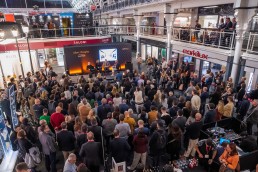
Registration opens for LiGHT 23
(UK) – Following the popularity of LiGHT 22, which saw more than 3,500 visitors attend to discover over 100 high-end international lighting brands, registration for LiGHT 23 is now live.
Taking place on 21-22 November 2023 at London’s Business Design Centre, LiGHT 23 will see even more exhibitors taking part than last year, with new spaces and exciting additions to the [d]arc thoughts talk programme. The show is brought to the industry by [d]arc media, built on the company’s and the team’s knowledge and experience of the lighting specification market that spans more than 20 years.
This year will see an increase in interior designers and decorative lighting brands both attending and exhibiting, providing an incredible opportunity for interior and lighting designers to discover new technologies, solutions and inspiration.
To fully embrace this design focus, an exciting new area for the 2023 show has been announced – darc space. The darc space focuses on decorative lighting in architecture, acting as the perfect place for interior designers and lighting designers to network, collaborate, provide inspiration and specify decorative lighting brands for their projects.
Situated in a prime position adjacent to the main conference room where the [d]arc thoughts programme will take place, darc space gives decorative lighting brands a dedicated area to shine. darc space will provide designers and specifiers looking for their next stunning light feature a one-stop-shop of decorative lighting brands to choose from. Acting as a key networking and meeting point throughout LiGHT 23, darc space will also feature a dedicated bar for the late night opening on the first day of the show, while hosting a complementary LiGHT Lunch on the second day.
LiGHT is overjoyed to be partnering with the British Institute of Interior Design (BIID) for the second year running. As a partner of LiGHT 23, the BIID team will be hosting a meet and great for their members and prospective non-members in the Associations Lounge on Wednesday 22 November. This is an incredible opportunity for those attending LiGHT 23 to meet with the team and harness the benefits that BIID can offer to interior designers.
BIID works with interior designers to offer professional guidance, educational and development support, speaking opportunities and networking events. BIID is the UK’s only professional institute for interior designers, representing both the commercial and residential sectors, from heritage to cutting edge.
Paul James, Managing Director from LiGHT 23 said: “We are incredibly excited to see what this year’s show will bring, following the resounding positive feedback we received last year. We are delighted to be working closely with the BIID team to offer fantastic opportunities to interior designers attending the show.
“LiGHT 23 is set to be bigger and better than before, with more brands, exhibitors, visitors and talks. We have a strong line-up of companies and speakers joining, with support from renowned partners. The show is a key destination for those with a passion for design and specification, including architects, interior designers and lighting designers.”
Register here.

CIBSE and LIA launch Product Verification Scheme for circular economy
(UK) – The LIA (Lighting Industry Association) and CIBSE (Chartered Institution of Building Services Engineers) have joined forces to introduce a product verification scheme aimed at promoting circular economy practices within the lighting industry. The scheme, known as TM66 Assured, will provide independent verification of lighting manufacturers’ circularity claims, ensuring accuracy and credibility.
The TM66 Assured product verification scheme, developed by the LIA and endorsed by CIBSE, is an essential component of the comprehensive TM66 toolkit to assess the circular economy credentials of lighting products throughout the supply chain. It leverages CIBSE’s TM66 Creating a Circular Economy in the Lighting Industry guidelines and the TM66 Circular Economy Assessment Methods (CEAM) developed by a cross industry team of manufacturers, specifiers and associations whose insight and ideas ensured TM66, published in 2021, would be both easy to use and widely applauded.
TM66 offers practical guidance and tools to enable the lighting sector to adopt sustainable, circular practices and has already gained recognition and adoption by major specifiers and organisations within the industry. In the future, it is envisaged that this will be extended to cover other areas of building services engineering beyond lighting products.
The collaboration between CIBSE and the LIA combines the power and expertise of CIBSE with the robust quality assurance, certification systems, and UKAS accredited laboratory of the LIA. Manufacturers are already providing ratings for their luminaires, and with the TM66 Assured Scheme, they can now seek third-party verification ensuring the credibility, objectivity, and consistency of these ratings. This partnership ensures the reliability and integrity of the TM66 Assured Product Conformity Verification Scheme.
David Barnwell, Managing Director of Holophane Europe Ltd., expressed his support for the initiative, stating, "Anything that helps drive greater awareness of the environmental benefits associated with a circular economy approach is a positive step forward. The TM66 Assured Product Conformity Scheme allows participating manufacturers to demonstrate their sustainability efforts, providing clear differentiation from unsubstantiated greenwashing."
Helen Loomes, President of the Society of Light and Lighting, highlighted the importance of sustainability in lighting practices and the need to evaluate products based on their whole-life carbon impact and material life cycle. She praised the TM66 and CEAM frameworks for enabling informed specification decisions. With the introduction of the TM66 Assured Product Verification Scheme, decision-makers can now have confidence that circular economy claims are robust and comparable between products, providing protection throughout the value engineering process.
Ayça Donaghy, CEO of the LIA, emphasised the lighting industry's commitment to delivering net-zero solutions and the necessity to address environmental impact comprehensively. Transitioning from the unsustainable linear economy to a circular economy, where resources in luminaires are conserved, valued, and their life extended, is the next logical step. Donaghy expressed her delight at the partnership between CIBSE and LIA, which brings together both organisations' strengths to establish a much-needed level playing field in sustainability ratings.
Find out more about the initiative here.
www.thelia.org.uk
www.cibse.org.uk
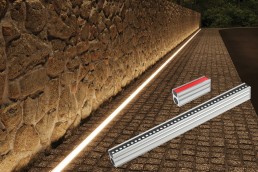
Acclaim Lighting - Terra Linear
Terra Linear is the new in-ground linear series powered by Acclaim’s XTR technology allowing for linear runs of up to 1,400ft from a single driver and automatically adapts to any voltage (100-277 volts AC). Featuring a low profile design of just under three inches wide, it is drive-over and walk-over rated, and includes a standard anti-slip coating. The direct-view version offers an incredibly clean, dot-free LED marker light for pathways and driveways.

Recolight applauds lighting industry’s adoption of circular economy
(UK) - At a press and stakeholder association event, Recolight CEO Nigel Harvey applauded the huge steps taken by the lighting industry in adopting a circular economy.
“Over the last three years, we have seen a step change in action on the circular economy in the lighting industry. And Recolight has been delighted to be a contributor to that transformation,” he said.
“Many more lighting industry companies are now active in the circular economy. Our recent Lighting Remanufacture conference had more than 70 attendees. A significant number of producers are now actively in remanufacture and upgrade of existing lighting – rather than just the supply of new lighting. That is a huge change. The needle is moving in the right direction.
“At Recolight, we’ve been proud to be a part of this revolution. Over the last three years, our circular economy webinars have been joined by 3,500 attendees, with a further 4,450 listening in afterwards. We have been delighted that more than 50 of the lighting industry’s most influential sustainability leaders have presented on the webinars.
“And in September last year, Circular Lighting Live, the UK’s first conference and exhibition on sustainability in lighting was a sell-out success. We were so delighted with the feedback we have received, that the event will be some 30% bigger in September 2023. What was most heartening was the number of attendees who said that the event had spurred them into action.
“We’ve also been thrilled by the take up of our workshops on lighting product design for the circular economy, joined by around 100 attendees from a wide range of lighting manufacturers. For 2023, new workshops looking at the practical guidance on how to validate sustainability of lighting products.”
Commenting on growth opportunities for Recolight, Harvey said: “We have sought to encourage and drive action on the circular economy in the lighting industry, because it is the right thing to do. It is part of our response to the climate crisis. But we are thrilled that it has also contributed to the attractiveness of Recolight as a compliance scheme – we have a record number of companies are considering joining Recolight at the end of 2023.”
Harvey concluded: “The changes we are now seeing have only been possible because of the effective partnership approach that has built up across the industry. Recolight are proud members and contributors to the LIA, the ILP, and the SLL, and we are delighted to work collaboratively with our friends and partners in the press.”

Preserve and Protect
Will Salter, Senior Designer at dpa lighting consultants discusses the importance of designing lighting for museums that preserves the artefacts on display, as well as enhancing the visitor experience.
The purpose of museums and galleries is to collect, preserve and display objects of cultural, artistic, or scientific significance for the education of the public. However, finding a balance between the two key objectives; display and preservation, is often hard to achieve.
This is because when a decision is made to exhibit an object it may be detrimental to its visual and physical integrity, cause ageing or fading of its materials or impact the significance or value of the piece. Therefore, it is imperative to understand the environment of the space the object will be displayed in, so that it can be exhibited under ‘safe’ gallery conditions while optimising the visitor experience.
Lighting is essential and plays a crucial role. A considered lighting scheme helps to create an atmosphere that complements the artwork, making it more engaging and immersive for visitors. Additionally, lighting can be used to highlight specific aspects of the artwork, such as colour, texture, and detail, making it easier for visitors to appreciate and understand the work.
Today, great thought and consideration is given to elements such as humidity, temperature, air quality and lighting to create a suitable environment for displaying objects to the public. Each has its own set of guidelines that museums follow during the installation and then continue to monitor during the entire time objects are on display.
The current lighting conservation guidelines for sensitive artifacts groups display objects in to three categories. These are: Sensitive Collections (works on paper, photographs, textiles) 50 lux max; Less Sensitive Collections (oil paintings, wood, leather) 150 lux max; Least Sensitive Collections (metal, ceramics, stone, glass) 300 lux.
Currently, there is an assumption that when the museum opens, the lights turn on and when the museum closes, they turn off. This means, for the most part, that the artwork on display is lit to the same lux level all day, every day – and then sometimes for longer due to out of hours events and viewings.
Display objects are assigned annual light exposure levels. An example of how this is measured is by calculating the usual opening hours of a museum, seven hours a day for six days a week over 52 weeks, therefore resulting that an item can be exposed to light 2,184 hours a year. This figure is then multiplied by the recommended light intensity to give the lux hours. So, a sensitive item with a maximum of 50 lux will have a rough total of 100,000 lux hours.
Some institutions have already started to rethink their approach to object rotation to reduce the total time of exposure to light. These include rotating items from storage or turning pages of books or manuscripts on display.
The most effective strategy in reducing light damage is to reduce illuminance and time of exposure. The longer you leave an item exposed to light, the more damage it will do.
An example of this is at The Edvard Munch Museum in Oslo, where there is an installation displaying three versions of ‘The Scream’: a painting, a print, and a drawing. To protect the works only one is displayed at any one time, whilst the other two are covered. It is programmed to automatically rotate hourly to reduce exposure (lux hours) to each piece whilst creating a sense of mystery and intrigue at the same time.
A similar approach should become more widely adopted in museums because when implemented in this way it does not only benefit the artwork but also the visitor.
Using lighting control systems linked to sensors and timers will reduce total exposure time as the display object will only be illuminated when someone is in the gallery or viewing the display object. Turning off or dimming luminaires that are illuminating artworks will also reduce the energy consumption of galleries throughout the show, therefore not only protecting the works but also resulting in lower energy consumption.
Another benefit from the advances in lighting control technology is the use of digital controls, such as smartphones, tablets, and computers, to manage lighting systems remotely. This allows lighting designers to adjust lighting levels and colours from anywhere, making it possible to tailor lighting to specific needs and preferences. Also, it allows curators or gallery assistants to recall pre-programmed scenes that could, for example, raise the light level on a particular artwork whilst giving a talk or tour.
Perhaps with the recent technological improvements within the lighting industry, such as the seamless incorporation of digital motion sensors, timers, and in particular smart control systems, a case can be made to encourage museums to begin to adopt such elements. Along with the move away from halogen light sources, is it now time for the lighting conservation guidelines for sensitive artifacts to be re-written?