
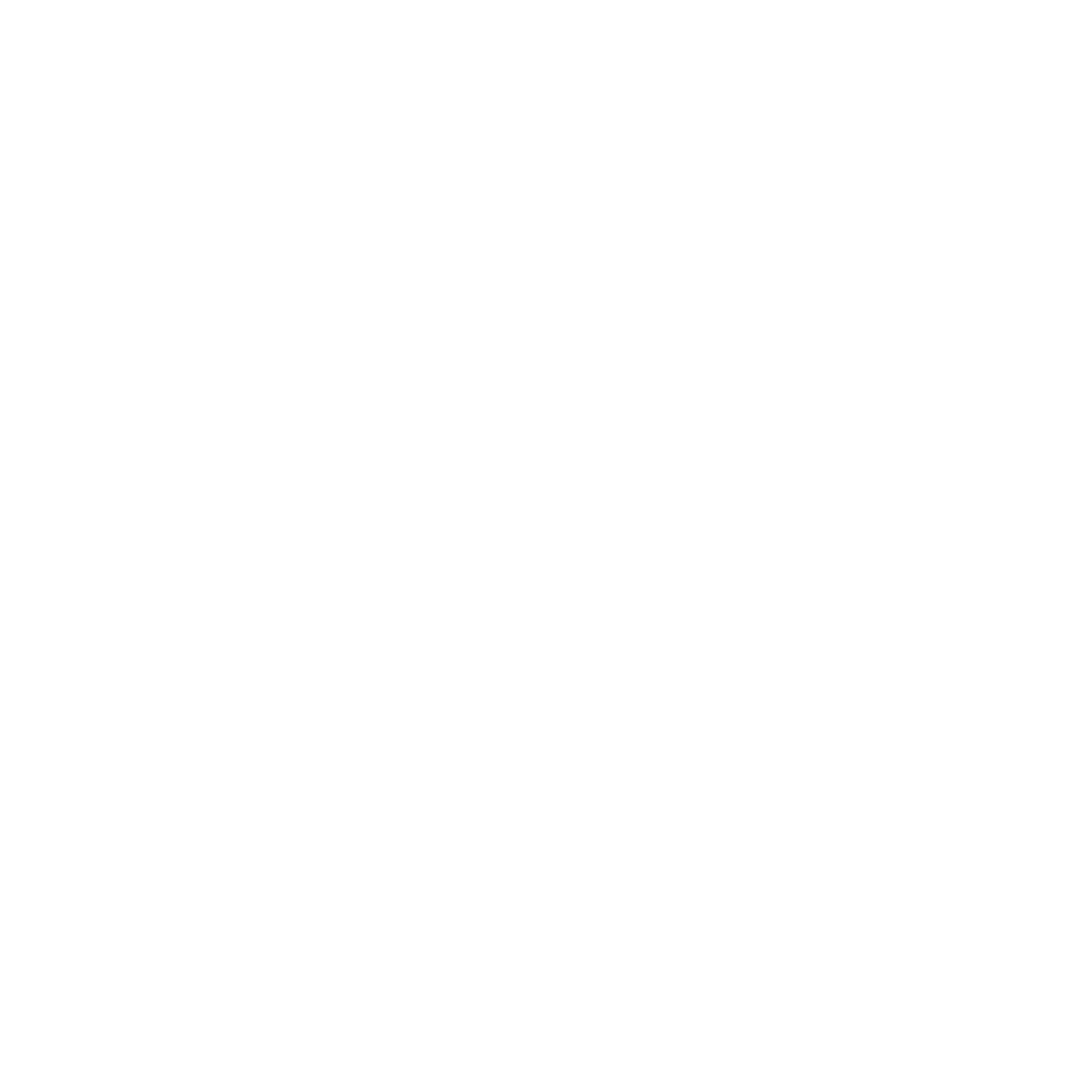

Nulty appoints new Business Development Director for Middle East
(Dubai) - International lighting design practice Nulty has recruited Lama R. Arouri as Business Development Director for the Middle East to drive expansion across the region.
Her appointment comes off the back of a sustained period of growth for Nulty Dubai, which has seen the studio establish itself as the largest independent lighting practice in the area, and cultivate a diverse portfolio of projects including Gate Village at the DIFC, Bloomingdale’s at Mall of the Emirates and the Dubai Festival Plaza.
Based within the Dubai team, headed up by Director Mark Vowles, Lama’s remit will see her develop growth strategies and widen Nulty’s network across the hospitality, retail, commercial and residential sectors.
Founded in 2011, Nulty is a lighting design consultancy renowned for delivering immersive lighting projects for global brands such as Nike, Samsung, Harrods, Bloomingdale’s and Burberry. The studio’s international footprint covers Europe, the US, the Middle East, North Africa and recently Asia, following the recent launch of a Bangkok office at the end of 2019. Recent projects within the Middle East include the JA Lake View Hotel, Hakkasan Terrace in Abu Dhabi and Yauatcha in Riyadh.
With business development experience spanning both industrial and architectural lighting, Lama brings strategic planning and local market knowledge to Nulty’s Middle East division. Her ability to marry specialist knowledge with multicultural insight and professional networking, has seen her build client relationships across the MENA region.
Previous roles have see her gain expertise in architectural and customised lighting solutions for hospitality, residential and commercial projects throughout the Middle East and Northern Africa.
Mark Vowles, Director for Dubai said: “Lama’s impressive career in business development immediately marked her out as a valuable addition to the Dubai team, at a time when we are looking to maximise opportunities in a rapidly-developing market.
“She has exactly the right strategic vision, technical lighting knowledge and industry awareness that we need to increase work across the Middle East. Her appointment underlines our commitment to diversifying talent globally, to offer clients a regionalised, face-to-face approach, supported by the design talent and experience an award-winning international lighting studio can offer.”
Lama R. Arouri, Business Development Director, Nulty said: “Nine years in the lighting industry has really allowed me to get under the skin of developers, architects and designers to understand the complexities of their needs. I’m delighted to bring this expertise to Nulty and am looking forward to working with Mark and his team to spearhead their ambitious Middle East growth plans.”


IALD launches WELL Guidelines for manufacturers
(USA) - The WELL v2 pilot focuses on improving comfort and enhancing health and wellness.
The International Association of Lighting Designers (IALD) and the International WELL Building Institute (IWBI), has issued guidelines for lighting manufacturers to help designers determine if their designs meet the WELL Building Standard criteria.
The WELL v2 pilot is the latest version of the WELL Building Standard, a rating system that focuses on the way that buildings and everything in them can improve our comfort and enhance our health and wellness.
“Well-designed lighting systems can help improve productivity, support a restful night’s sleep and enhance the overall experience of being in a space,” says IWBI President Rachel Gutter. “Through WELL, and with the support of industry leaders like IALD, we aim to make it as easy as possible for designers, manufacturers and building operators to create spaces that help people thrive.”
The WELL v2 pilot was launched in 2018 and included a revised section for Light, one of the ten concepts covered by the standard. The WELL Light concept promotes exposure to light and aims to create lighting environments that are optimal for visual, mental and physical health.
Eight features (L01-L08) comprise the Light concept and define specific technical requirements. Some of these features require documentation and validation from lighting manufacturers to assist lighting specifiers in determining if their designs will meet the criteria.
The IALD and the LIRC provide guidelines for best practices on technical requirements of four features that require documentation: circadian lighting, glare, colour rendering and flicker.

Arup Launch Luminaire Broker
(UK) – The service simplifies specification process for
lighting designers.
Arup has unveiled Luminaire Broker, a new online service aimed
at connecting manufacturers and lighting designers to streamline the specification
process.
The service, which is free to use, allows a specifier to
search for the most appropriate lighting product for their live projects, and
for suppliers to match their products directly to specifiers’ requirements,
facilitating the search for luminaires and providing a direct link to broker
the optimal product for each specification.
“Like every business, we often think about what the future
looks like, what services we need to develop as a business,” said Arfon Davies,
Director and UK Lighting Design Leader at Arup. “At Arup we are always considering
how we develop and transform the services that we offer clients, as well as how
we can transform the way that we work. We thought that the process of
specification was something that was quite time consuming, and a task that could
potentially be applied to automation of some description, creating more
efficiency and giving our designers more time to work with our clients and
architects doing what they do best and enjoy: designing and being creative.
“We pride ourselves on being an independent design practice,
and we wanted a way to be more transparent and open to our clients, and also
our collaborators and suppliers, both about knowing what is in the market, but
also making sure that the market is aware of what we’re doing.”
Once signed up to Luminaire Broker, manufacturers and suppliers
are able to see requests from designers for luminaires, each with a given set
of requirements for their application. They can then submit specific products
to match these specifications for the designer to assess whether they meet
their particular needs. It is not an online catalogue or database – suppliers have
to actively offer matching product from their current range. It is intended to
be a live-updating service that allows for more transparency, and can help to
introduce designers to products and manufacturers they may have otherwise not
been aware of.
“What we know is the manufacturers who are best at speaking
to us, to some degree,” added Jeff Shaw, Associate Director at Arup. “We rely
on the information that we’ve been given in an analogue way, whereas the idea
with Luminaire Broker was that for each project, we could look at every
luminaire in the world and see what was right for the job.”
Although the service has only been live for a matter of weeks,
Davies said that the reaction has been “extremely positive”.
“I’ve had a couple of interesting comments on my LinkedIn
feed, and plenty of comments from suppliers, but also from other designers,” he
said. “I think it’s clear that what we’re trying to do is something very
different and very transformative.
“We have been having many discussions with suppliers and
representatives to better understand what this proposed new way of working
means. What became clear from this is that the intent of Luminaire Broker is
not to remove the need for strong relationships between designers and suppliers
– in fact it should give us more time to build relationships with each other.
“Luminaire Broker is a mechanism for us to communicate what
the project needs are, but as part of the selection process, we’re not going to
select something based just on what we see on a screen. We still need the
relationships, we still need to test and see samples, we still need that trust.
The aim of Luminaire Broker is to give suppliers more time to do these things,
and to spend less time responding to calls and emails that are quicker to deal
with via Luminaire Broker.”
“It improves the quality of the work that we achieve
together. It also improves the manufacturers’ ability to reach us, in the sense
that their time could be spent in more judicious ways, because they know that
requests for specifications will come through,” Shaw added.
Currently only available to Arup’s UK team, Davies and Shaw
hope to roll Luminaire Broker out across Arup worldwide by the end of the year,
but they added that there are plans in place to introduce it to the lighting
industry as a whole.
“I think the value to us as a lighting design practice are
things like automation, efficiency, saving time and releasing our designers to
do things that really impact projects and clients – design work,” explained
Davies. “I see that being of value to anyone in the creative or design
industry.
“Our values and beliefs are very much about openness and
transparency. We want to be open to the market, we want people to know what
we’re doing, but we also want to know what the industry are offering, beyond
what we already know. In terms of efficiency gains and allowing designers to do
what they do best, I think that this would apply to anyone.”
“We want to make it a good product, and we’ve got enough
people in Arup to help build the network from our side, and then build up that
network of manufacturers, while at the same time improving the software as we
go,” Shaw added. “So I think by the time we’re ready to think about launching
beyond Arup it will be a very compelling product indeed.”
Luminaire Broker is free for manufacturers to sign up to.
Visit www.luminairebroker.com for
more information.
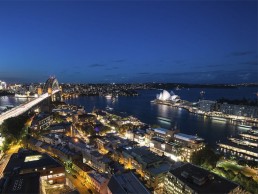
Schréder acquires Sylvania and Austube
(Belgium) – The acquisition sees Schréder strengthen its
position in Australian market.
Schréder has announced that it has entered into an agreement
to acquire two Australian lighting divisions – Sylvania and Austube – of the
Gerard Lighting Group (GLG).
Based in Sydney, Sylvania is one of the leading outdoor
lighting brands in Australia, designing and manufacturing outdoor lighting with
applications in roads, tunnels, decorative lighting, recreational sports and
smart lighting connected solutions.
Austube, also based in Sydney, designs and manufactures indoor
linear lighting solution for applications in railway, airports and commercial
infrastructures.
The acquisition marks a significant milestone in Schréder’s
evolution, and will give the company a stronger market position in Australia.
Sylvania and Austube will serve as a new base for Schréder
Australia, while both businesses will continue to operate under their existing
names and brands; the current Schréder Australia organisation will be
integrated into Sylvania.
Existing management at Sylvania and Austube will remain in
place after the acquisition; Schréder’s plans are to continue to operate the businesses
in their current configuration, while bringing innovation synergies.
“Sylvania and Austube are great businesses to add to Schréder.
Their customer relationships and market position in Australia are outstanding.
Combined with Schréder’s product portfolio and innovation pipeline, and our
joint passion for lighting solutions, we will be able to delight our customers,”
said Werner de Wolf, Schréder CEO. “This acquisition will be a great example of
Schréder’s ‘local strength with global reach’ strategy.”
GLG Ceo Les Patterson added: “Schréder is a natural home for
Sylvania and Austube for the long term. The two businesses have a lot in common,
including a long and proud heritage, a commitment to innovation, and leadership
positions in their respective geographies and product segments.”
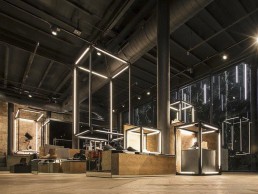
Nemo expands into architectural lighting
(Italy) - Nemo has acquired Ilti Luce from the Signify Group, a Turin-based architectural lighting company specialised in offering customised lightings for high end niche applications in retail, hospitality, museums and architectural outdoor sectors.
Ilti Luce, was among the first Italian companies to use LED lighting over 20 years ago and the optical fiber, with which it participated in the construction of the Egyptian Museum in Turin.
Over the years, Ilti has been working on signature projects such as: the Smithsonian Institution in Washington, La Venaria Reale in Turin and the Armani / Silos in Milan.
This transaction is in line with Signify’s strategy to focus its Prof business on LED and connected lighting products, systems and services for broad applications. "We are very satisfied with the acquisition of Ilti Luce and the relationship that has been established with the Signify group," said Federico Palazzari, CEO of Nemo.
“Ilti's entry into the Nemo world represents an important development, thanks to Ilti's unique and sophisticated know how in architectural and outdoor lighting projects. We are interested in continuing to grow in the museum, retail and outdoor sectors, which has brought Ilti to such important results.”
Lighting For Good Charter unveiled
(UK) – Charter proposes re-design of light fittings to be
more eco-friendly
Lighting designer Tiphaine Treins, alongside Nicolas Martin,
Manager of LVMH Lighting, has released the Lighting For Good Charter – a new
initiative that seeks to make light fittings more environmentally friendly.
Unveiling the Charter at the end of 2019, Treins said: “The
contribution of LED technology to energy savings has been huge over the past 20
years – around 30% compared to older technologies.
“Now, because everybody is running LEDs in lighting, this is
the time to enter into the phase of re-designing the fittings, taking care of
the environment. This is about circular economy, easier maintenance and
removing plastics from this field.”
To begin this initiative, Treins and LVMH created a think
tank in May 2018, featuring more than 25 LVMH suppliers. It was during this
think tank that they put together the guidelines and listed the criteria that
allow the rating of any lighting apparel – this then became the Lighting for
Good Charter.
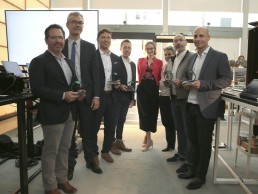
To mark the occasion, Lighting for Good presented awards to a
number of manufacturers for their work in creating eco-friendly luminaires, as
selected by members of the think tank.
The winners of these awards were:
Best Efficacy: formalighting
Best Materials: Lucent
Best Maintenance: formalighting
Best Driver: Bluelite
Best Packaging: Deltalight
After presenting the awards, Treins added: “It’s amazing to
see that we are all concerned with our environmental impact, but most of us don’t
know where to start. Lighting for Good aims to propose a scientific process to
assess luminaires and reduce the waste created by the lighting industry.
“Creating eco-friendly fittings has shown us that it is a
unique opportunity to question the production processes and create opportunities
for innovation.”
For more information on Lighting for Good, email: lfg@temeloy.com

Emad Hasan named Principal of The Lighting Practice’s NYC office
(USA) – Hasan relocates from Philadelphia to head The
Lighting Practice’s New York team.
The Lighting Practice has announced that long-time team
member Emad Hasan has been appointed as Principal of the studio’s New York
office.
Relocating to New York City, Hasan will facilitate
day-to-day operations, oversee project design direction and pursue new project
opportunities through marketing and business development in his new role.
“Philadelphia has been home for so long, and I appreciate
how the community has helped me grow as a designer,” Hasan said. “I’m looking
forward to a new adventure in life, building upon the foundation that has
already been set in our New York office.
“I’m eager to contribute to the New York design community,
so that I can continue to develop relationships that will foster thoughtful
lighting design.”
Since joining The Lighting Practice in 2005, Hasan has had
an integral role in the firm’s success; his technical knowledge, paired with a
passion for lighting design, has informed his project work in a variety of
market sectors including academic, corporate, healthcare, hospitality, historic
and exterior façades.
Hasan’s notable projects include the Maltz Performing Arts
Center at Case Western Reserve University in Cleveland, The Church of Jesus
Christ of Latter-day Saints Temple in Philadelphia, Nasdaq PHLX in
Philadelphia, Henry J. Carter Specialty Hospital and Nursing Facility in New
York, and most recently the façade for the New York Life Building at 51 Madison
Avenue in New York.
Alfred Borden, Founder and Principal of The Lighting
Practice, said: “Emad’s innovative thinking and leadership have been integral
to the success of our firm. We are delighted that he will have a more active
part in the growth of TLP’s New York office as Principal.”
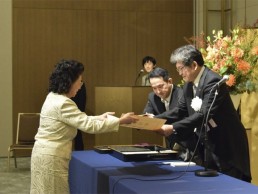
Motoko Ishii honoured as 2019 Person of Cultural Merit
(Japan) – Ishii is the first lighting designer to receive
the award.
Motoko Ishii has been honoured by the Japanese Ministry of
Education, Culture, Sports, Science and Technology as a 2019 Person of Cultural
Merit – the first lighting designer to be awarded with this distinction.
The presentation, held on 5 November 2019, honoured 21
Persons of Cultural Merit, selected for their cultural and scientific
contributions to society. Other recipients included Akira Yoshino, one of three
winners of the 2019 Nobel Prize in Chemistry; movie director Nobuhiko Obayashi;
manga artist Moto Hagio; and Shigeru Miyamoto, director at Nintendo and creator
of video game franchises such as Mario, Donkey Kong and the Legend of Zelda.
MEXT Minister Hagiuda Koichi commended the winners for their
outstanding achievements and tireless efforts, which have contributed to the
advancement and development of Japanese culture, along with their devotion to
teaching and fostering the younger generation.
The minister also expressed his deep respect for the
awardees’ family members, and others who supported their efforts and
achievements. He added that he hopes the awardees will continue advancing their
work, and asked for their dedication to further the development of the nation’s
culture.
The Persons of Cultural Merit system, established in 1951,
selects people who have made outstanding cultural contributions for the
advancement and development of Japanese culture.
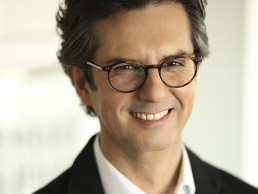
Douglas Leonard begins IALD Presidency
(USA) – Leonard follows David Ghatan as President of the IALD.
Douglas Leonard, Director of DLLD, based in Santiago, Chile,
has assumed the presidency of the IALD, replacing former President David Ghatan
at the beginning of the year.
In a welcoming letter, Leonard said: “It’s my pleasure to begin
the year by assuming the presidency of the International Association of
Lighting Designers. While reflecting on the journey of IALD and its members
over the last 50 years, I am excited and hopeful for the growth and challenges
we face as a profession as we move into the next 50 years.
“The scope of lighting design work has continued to expand
and the complexity of that work has increased,” he continued. “Lighting designers
have multiple responsibilities they did not have 50 years ago, and must manage
across a variety of platforms and engage large and changing groups of
stakeholders.
“Clients are expecting services beyond lighting design,
which can impact how services are delivered and how a business is structured. As
in other professional fields, there is more work – but it is more complex and
requires more technical knowledge and soft skills.
“The work of the IALD keeps us at the forefront of these
changes, while continuing to excel at serving our members.”
Leonard, who has served on the IALD Board of Directors for
the last three years, will stand as President for the next two years.

OCL Architectural Lighting appoints new President
(USA) – Jimalee Beno appointment
hopes to continue growth for OCL.
Jimalee Beno has joined OCL
Architectural Lighting as its new President, the company has announced.
Beno
comes to OCL with extensive experience in the architectural linear, decorative,
and downlighting space. Most recently she was with Acuity Brands, where
she served as Vice President of Customer Engagement and before that in several
senior specification sales, marketing, and product management positions.
Prior to Acuity Brands, Beno
held the position of Vice President Sales and Marketing for Visa Lighting.
A
graduate of Kent State University, Beno is very active in key industry
associations such as IES and IALD. She is currently the President of the
IALD Educational Trust Board of Directors and has a long history of supporting
industry education and mentoring programs.
OCL has experienced solid
growth in share and customers since becoming part of Legrand North America, and
Beno’s strong design orientation and deep network in the lighting industry,
particularly with the agents and designers, will help the OCL team continue
this momentum.
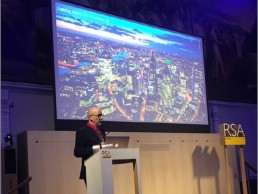
Mark Major announced as Master of Faculty of RDI
(UK) – Major was made an RDI in 2012 for his ‘innovative
use of light to create public space’.
Mark Major has assumed the role of Master of the Faculty of
Royal Designers for Industry, taking over from Tristam Carfrae at a ceremony at
the Royal Society of the Arts towards the end of 2019.
Commenting on his election, Major was keen to highlight the
importance of the recognition of his profession and to emphasise the role of
social and environmental responsibility in lighting design.
“I am hugely honoured to have been elected to the role of
Master, not least because it allows me to act as an ambassador for what can
still be considered a nascent design profession – architectural lighting,” he
said. “In this sense, my appointment recognises the widening and evolving scope
of design professions that have both aesthetic value and are of benefit to
society.
“Lighting impacts everyone, and it has always been a major
focus of my work to improve the quality of light for people within the urban
environment. I am excited to have the opportunity to continue my work with the
Royal Society of Arts to promote the importance of socially and environmentally
responsible design and design education.”
www.speirsandmajor.com
www.thersa.org
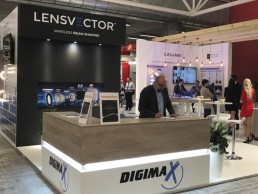
LensVector enters franchise agreement with Digimax
(USA) – The agreement will boost LensVector’s presence in
the Italian market.
LensVector and Digimax have entered into a new franchise agreement
that will aim to enhance the availability of LensVector’s dynamic beam shaping
lenses to luminaire manufacturers throughout Italy and the Balkans.
“We’re excited to have Digimax’s energy and technical
talents committed to the adoption of dynamic beam shaping,” said David Kriebel,
VP of Sales and Marketing at LensVector. “Digimax can provide all of the
ecosystem components and technical knowledge necessary to integrate LensVector
quickly and efficiently.”
“We’ve already seen several leading Italian luminaire
providers deliver dynamic beam shaping, and we believe that it is one of the ‘must-have’
capabilities for most if not all LED spot lighting solutions,” added Massimo
Tirapelle, CEO of Digimax. “Our service in Italy, technical capabilities, and
complementary components make it simpler for luminaire manufacturers to
implement quickly.”
www.lensvector.com
www.digimax.it
