
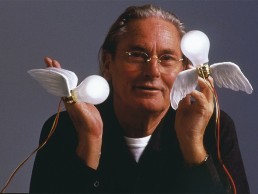
Ingo Maurer passes away aged 87
(Germany) - On
October 21, Ingo Maurer died at the age of 87 in Munich surrounded by his
family.
The luminaires and light objects of Maurer are regarded as pioneering in design. Among his most famous designs are his first work, Bulb (1966), the low voltage halogen system YaYaHo (1984), the winged light bulb Lucellino (1992), the pendant lamp Zettel’z (1997), One From The Heart (1989) and Porca Miseria! (1994).
His designs can be found
in the collections of the world’s most important museums, including the Museum
of Modern Art in New York. An exhibition is currently being prepared at the
Pinakothek der Moderne in Munich, which from November will provide new insights
into his work.
Maurer has received numerous
prestigious awards, including the Design Prize of the Federal Republic of
Germany and the Compasso d’Oro for his life’s work.
Considered a pioneer in
the development and use of the latest lighting innovations, Maurer was a great
admirer of the light bulb, which he described as the “ideal symbiosis of poetry
and technology”. He used low-voltage halogen systems in the 1980s, and produced
the first LED desk lamp in 2001.
Born on the island of
Reichenau on Lake Constance in 1932, Maurer went to the USA in 1960 after
completing an apprenticeship as a typesetter and studying commercial graphics.
Until 1963 he worked as a freelance graphic artist. After returning to Munich,
he travelled extensively in Japan, Brazil and other countries, especially the
USA, eventually living in New York for more than 40 years.
Together with his
long-standing colleagues, he developed iconic lamps that blur the lines between
utility and art objects in the Designerei in Munich-Schwabing. The special
mixture of poetry and technology, pointed with an ironic twinkle in the eye,
characterises Maurer’s designs. His development processes were playful and unconventional,
always in search of an extraordinary solution.
Describing the creative
process, he said: “First, the idea of an object arises in my head – like a
dream. Only in the next step I search together with my team for ways for the
realisation. Sometimes it takes decades until the technical developments make
our imagination possible.” In order to realise this vision, Maurer decided as
early as 1966 to manufacture all of his own products, and to this day, all Ingo
Maurer luminaires are manufactured in Munich.
Maurer set international
standards with design commissions in both the private and public sectors. The
lighting of the underground stations Westfriedhof (1998) and Müncher Freiheit
(2009) in Munich, as well as the pendulum Flying to Peace for Messe
Frankfurt (2018) are just some of the highlights of a long list of commissioned
works. In 2018 he completed one of his most multifaceted projects – an overall
concept for the Tsinandali Winery in Georgia. Since 19th October,
the Residenztheater in Munich has been shining in a new light with the Silver
Cloud, the latest iconic work from the light artist.
A statement on his
company website reads: “We mourn our founder and mentor. The company was his
family, and so we always felt. We will always remember him and continue his
work in his spirit.”

Signify to acquire Cooper Lighting Solutions
(USA) – The acquisition sees Signify strengthen position in US market.
Signify has entered into
a definitive agreement with Eaton to acquire Cooper Lighting Solutions for $1.4
billion, the company has announced.
Closing is subject to
regulatory approvals and other customary conditions, and is expected to take
place in the first quarter of 2020.
Headquartered in Peachtree
City, GA, Cooper Lighting Solutions provides professional lighting, lighting
controls and connected lighting. The business offers a large breadth of
products and applications, both in the indoor and outdoor markets, sold under
brands such as Corelite, Halo, McGraw-Edison and Metalux. The business
generated $1.7 billion in sales in 2018, of which 84% were LED-based.
“Today’s announcement
confirms the strategic importance of the North American market for Signify.
This acquisition will substantially strengthen our position in this attractive
market,” said Eric Rondolat, CEO of Signify. “We look forward to welcoming the
team from Cooper Lighting. They have built a high-performance company based on
professionalism, truly innovative offers and a long and strong relationship with
their customers.
“We will join forces to
further develop connected lighting and provide our customers with the highest
level of service while optimising operational efficiencies.”
The acquisition is in
line with Signify’s wider strategy to expand in attractive markets, enhancing
its position in the North American market, and improving the business mix.
Together, the two businesses will be better positioned to benefit from the
growing professional lighting market in North America, driven by the continuous
conversion to LED and the increased demand for connected lighting systems and
controls.
Signify and Cooper
Lighting will maintain separate front offices: sales forces, agent networks,
product and brand portfolios, marketing and product development teams. Both businesses
will be able to strengthen their respective product portfolios, benefitting from
an increased power of innovation, as well as more competitive and
cost-effective offerings.
www.signify.com
www.cooper-ls.com
David Morgan Review: TLS
Following on from its appearance at [d]arc room last month, David Morgan delves into the TLS portfolio, examining its flexible backlighting systems and light boxes.
Lighting companies come in many forms and develop from a variety of starting points. In the case of TLS, its parent company Media Graph, a printing company, identified the need for a flexible backlighting system to work with the large-scale fabric printed graphics it produced for its retail and advertising customers.
From an early stage in its history, Media Graph – a 25-year-old company based in Montreal with more than 50 staff – had started to develop and market non-LED backlighting systems and extruded frame systems. The company founders David Sellam and Orit Toledano identified the need for more flexible systems to create light boxes in a range of sizes and spotted the potential in using LED light sources. The TLS system was first introduced in 2008 and has been continuously developed since then. In 2010, TLS was spun off as a separate company in order to develop other markets beyond retail and advertising display.
The core of the TLS business is its innovative, patented lighting system which is used to create light boxes in a wide variety of sizes.
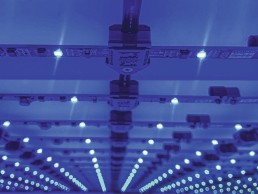
TLS stands for Tension Lighting Systems, which describes exactly how the system works. The key innovative design feature of the TLS system is the way the light engines are mounted into the light boxes onto tensioned stainless steel wires, which carry power and data to the LED boards. This wire suspension system can be used in conjunction with one of the TLS extruded housings, in other frame systems or fixed direct to the building surfaces. A neatly designed mechanism allows the wires to be easily tensioned after installation in the housing, while a series of anchor components support and fix the tensioners to the mounting structure and provide connections to the low voltage power source and dimming system.
The LED light engine boards snap onto lockable holders mounted on the suspension wires with an ingenious series of cut-outs along the side of the boards, which ensure the correct polarity connections are made. Because the wire suspension system does not block light output in any direction, the TLS system can be used to create both single and double-sided light boxes.
Standard LED pitch on the light engine board is 60mm for the fixed white and RGBW light engines. For the digital control pixel system four spacings are available from 40mm up to 150mm. TLS offer two different light engine spacings on the suspension wires; premium configuration with boards spaced 60mm apart and standard configuration with boards spaced 120mm apart. The light engine boards are segmented and can be cut to length on site to fit any size of light box.
The standard distance from the light engines to the lit diffuser surface to avoid any hot spots is 60mm but TLS also provide a snap-on wide beam lens that allows this distance to be reduced. TLS provide a neatly designed test kit to allows designers to experiment with light engine types and spacing to the diffuser surface before making a final specification.
Currently TLS offers four different types of backlight LED light engines and controllers that are integrated in their light boxes. Simple fixed white light in six colour temperatures; tuneable white light from 2700K to 6500K; RGBW to create more than 16 million colours with DMX control; and most recently a pixel digital system, Media Pix, with Artnet control to create dynamic video-based displays.
The LEDs used on the TLS light engines are only run at up to 0.2 Watts each, although rated for higher power use. This ensures very long life and reduces the need for heat sinking within the system. TLS provide their own design of DMX controllers for the colour changing and digital systems. One particularly nice design feature is an indicator light system which helps to identify the source of any problems.
The flexible cable system is not only suitable for flat displays, it also allows the system to be used on curved surfaces including columns to create evenly lit backlit architectural surfaces. Wrapping the TLS array around a column can create surface lighting and be installed without needing to fix into the column surface.
TLS aims to provides a complete turnkey light box system including installation where required. The range includes a variety of aluminium extruded frame types to create display light boxes, which are also used for architectural lighting.
The 100mm deep Lumicloud system is used to create large-scale illuminated ceilings or suspended light boxes. Sales of complete Lumicloud installations now make up around 80% of TLS sales. Rectangular and curved shapes can be produced with this system by forming the extruded sections. Lumicloud enclosures include a back reflector which increases downward light output and also prevents debris entering the light box.
It is understood that the installed cost and installation time of a Lumicloud ceiling is significantly lower than using separate lighting and stretch ceiling elements, which is a clear benefit. The Lumiline system is used to create narrower suspended light boxes or continuous lines of light is available in 125mm and 25mm deep sections.
A very wide variety of materials can be used as the front surface of TLS light boxes and ceiling luminaires, including the printed foils produced by Media Graph. It seems that TLS always try to incorporate innovative design details in its systems, and the company has created a very neat method to hold the stretch fabric diffuser to the extruded frame with a snap-in extruded polyurethane extrusion. This allows the diffuser to be easily replaced or upgraded. The polyurethane extrusion creates an IP65-rated seal to the extruded frames, ensuring that the light boxes can be used in exterior applications.
TLS may have started life in an unusual spot in the lighting world but has now grown into a company able to offer a range of innovative solutions for retail and architectural applications, while collecting design awards and high-profile brand customers along the way.
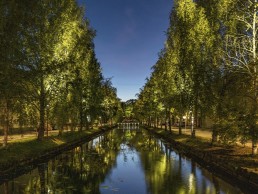
Lights in Alingsås, Sweden
This year’s Lights in Alingsås festival welcomed participants from 27 different countries: ten workshop heads from seven countries, 45 student designers spanning across 23 countries and 25 electrical students from the local high school, Alströmergymnasiet. The event was again organised by Alingsås Energi, who took over the festival in 2017, and the route for this year’s event took visitors out of the town centre and into the wilderness of the Nolhaga park. This route has returned by popular demand from both residents and visitors alike, after first appearing in 2014. The theme for this year’s installations was based around Be The Light – a chance for designers to interpret as they wish a message of how each of us can make the world a brighter place by being the light, whether on a small or large scale. “We had excellent feedback from this year’s workshop heads. We’ve firmly convinced them that it’s easy to make the world a little brighter through small, consistent efforts, and we hope that our Be The Light theme will spread that idea far and wide,” explained Event Manager at Alingsås Energi, Angelica Larsson.
“Be The Light was a concept developed by advertising agency Femti5 and is a manifestation of the Eleanor Roosevelt quote about how it is better to light a small candle than to curse the darkness,” added Creative Director Christer Andersson.
“It’s a powerful and evocative idea that we believe can spread and be very effective. Even if only a few percent of the 70,000 visitors make an effort to ‘Be The Light’, it could have a significant impact locally as well as globally.”
As part of this year’s anniversary celebrations, two lighting designers who helped launch the event back in 2000, Kai Piippo, Head Designer at ÅF Lighting, and Torbjörn Eliasson, Lighting Designer at White Arkitekter, returned to the Swedish town again to present a permanent Jubilee lighting installation in the heart of Alingsås. Along with the help of ÅF Lighting colleagues Seren Dincel and Helena Johansson, the team installed multiple fixtures along the river Lillå, which runs through the central town square.
The annual festival, with its many visitors, is close to the hearts of the two designers and has helped them build their professional network and spread light culture in Sweden. The inspiration for the installation came from the site itself. It is a defined space without invasive light from buildings, shop windows or glaring street lights.
It was important that the installation was to make better use of the space, both aesthetically and for safety. The sides of the poles that the fixtures are mounted to have highly polished steel on each side that mirrors the nearby trees and water, allowing the whole installation to blend seamlessly into its surrounding environment.
Sustainability was also high on the priority list, with sustainable materials used, along with a versatile design that allows future events and designers to take full advantage of adapting the installation to fit different celebrations.
“The site of the installation will change character during the year, with seasons, weather conditions and shifting temporary installations. It will be a popular and famous changeable Instagram-view for the citizens and visitors of Alingsås to enjoy for many years to come,” explained Eliasson.
“Lights in Alingsås has changed the Swedish lighting culture and spread the knowledge of good lighting around the world,” added Piippo. “We wanted to give the citizens of Alingsås something back. A place to be proud of, to visit and to tell the world about.”
As part of Lights in Alingsås this year, local primary school students were the first to utilise the flexibility of the structures by stringing across the river a selection of painted milk bottle lanterns, creating a magical effect of light reflections across the water.
Jan Olofzon, CEO of Alingsås Energi, remarked upon the impact the light festival has had over the years: “Lights in Alingsås has spread knowledge about light and lighting to many. The city has taken this into consideration and in many ways developed the event into its own. It’s the best month of the year for hotels, restaurants and cafés, with schools, associations and local companies creating their own events during the five weeks. The people living in Alingsås have understood the importance of light for a safe and pleasant city.
“The lights have had a positive impact in Alingsås for many years. It is extra fun to use it for this year’s theme as a metaphor for everyone to contribute and make the world a little better – Be the Light!”
In order of appearance, the seven sites that featured this year were: The Energy Hill with workshop heads Vladan Paunovic of Denmark and Juha Hälikää of Finaland; The Eye with Claire Tomara and Natalie Redford from Scotland; The Grove by Jackson Stigwood from Australia; The Pond Köllera with Erin Slaviero in the UAE; The Castle Avenue by Kapil Surlakar from India; The Source with Johanna Enger and Cecilia Cronelid from Sweden and finally The Mother Tree by Malin Wallin in Sweden.
During the event, we spoke with Vladan Paunovic, workshop head of site one and Creative Lead at Ramboll Architectural Lighting Design, about his experiences of being a lighting designer in Scandinavia. Originally from Bosnia and Herzegovina, the transition to a Scandinavian region highlighted both naturally and culturally influenced shifts in the approach to lighting.
“Denmark has a very distinguished lighting culture, which can also be found in neighbouring Nordic countries. People in the Nordics appreciate sensibly designed visual environments. Regardless of the type of installation (indoor, outdoor, public or private), 100% glare-free environments are always the ultimate demand,” he explained.
“Poul Henningsen [designer who collaborated with Louis Poulsen during the early to mid 1900s] was on the forefront of this preference when he designed his iconic PH lamps as response to the new/modern light source – the incandescent lamp.”
Along the light trail in Alingsås, a noticeable feature of the town was the small lamps in nearly every residential window. We asked Paunovic about this: “This is mainly a Swedish tradition, which occasionally can be seen in Demark. What is common all over Scandinavia is the preference for pools of light around the room, rather than one luminaire centred in the room to illuminate everything evenly.”
Another notable bond with lighting the Scandinavians share is the love for warm candle light. “In Denmark it is hard to find a dining experience without candle light being a part of it, even if it’s July and the sun is still high in the sky. This is not only the case for fine dining; when a middle-class family enjoys a low-key dinner on a Tuesday evening, you will most likely find a candle or two lit somewhere in the dining room. The invisible bond between dining and candle light is one of the most sublime cultural elements here,” added Paunovic.
The lighting trail for Lights in Alingsås took visitors and residents out of the town and into the darkness of Nolhaga, a park close to the town centre that follows the river. The site installations could take advantage of the natural darkness that can be experienced in many areas of Scandinavia. Paunovic elaborated: “The landscapes and cityscapes are darker here than they are in more populated parts of Europe. This is a natural quality that we tend to preserve in our lighting projects. We are careful with what we illuminate and what stays intentionally dark when completing outdoor projects. We always go for the less is more concept.”
This respect for light is a sentiment that is also shared by Kai Piippo. “We talk about light as others talk about the weather,” he noted.
“Every day we comment on the grey sky or the amazing sunsets we experience the night before.
“We love light, especially the warm light. Nordic light is slow in movement with long sunsets, the blue hour and long shadows. During the summer we have long hours of sunlight, with sunlight even at midnight. During the winter we experience arctic light, which is a total lack of daylight. We refer to it like walking into a tunnel and coming out of it in six months’ time.”
Paunovic’s site one – The Energy Hill – is a celebration of sustainable living and a comment on the current climate crisis.
“You are in Sweden. Greta Thunberg is Swedish. The importance of sustainable living cannot be communicated too much. This installation is another cry for climate justice,” explained the site’s team. The light-loop takes visitors through four different energy sources; sun, wind, water and bio fuel. It is also a nod to Alingsås Energi and its incredible achievement of supplying 100% renewable energy to the entire town. Sponsors for this site included: Fergin, iGuzzini, Martin Professional, Meyer, Traxon, Osram, and Wireless Solution Sweden.
Site two – The Eye – is the first that takes visitors into the Nolhaga park. “When the eye receives light, it captures all events and experiences we encounter, and as it has been said before, is the mirror into our souls,” explained the team.
A central fountain is reminiscent of a stage with an audience waiting in anticipation for a performance. In the centre of the fountain is a mirrored sculpture, which reflected the soul of the surrounding area – acting like the eye of the site. This site was lit by Fergin, Lumenpulse, Meyer, Mike Stoane Lighting, Stockholm Lighting, We-ef and Wibre.
Site three, named The Grove, was headed by Jackson Stigwood. This area invited audiences to experiment with different perceptions of the space’s depth through light; inviting you to enjoy the scenes from both inside and outside, creating different ambient atmospheres. “At the centre of the grove, individuals compose the unity community. We encourage you to commence an adventurous journey to explore the unknowns,” explained the team. Fixtures from Cameo, Gantom, Fergin and Meyer were used to complete this installation.
Site four – The Pond Köllera – brought the trail up close and personal with the river’s edge, with Erin Slaviero as the workshop leader. “In a world where many negative things surround us, positive energy is fragile and easily lost. This energy weaves and bends and appears unexpectedly from all directions,” describes the site’s team.
“Our site is a reminder to take that energy that surrounds us and always reflect it on to others to make a positive change. A change that can carry and impact others no matter how many months and years beyond your time at Alingsås.”
Fixtures were compiled from Cameo, EcoSense, Fergin, Meyer, Stockholm Lighting, Traxon, Osram, Uplight and We-ef.
The Castle Avenue – The Diurnal Rhythm titled site number five, headed by Kapil Surlakar. Taking audiences through a scene of sunlight, which transmits energy to create life, this installation depicts a time lapse experience of a day condensed into a two minute sequence. Sponsors for this site came from Cameo, Fergin, Griven, Meyer, SGM and We-ef.
Site six, The Source, was headed by Johanna Enger and Cecilia Cronelid. This site is split into three sections, the source, which provides the energy; the connection is the meeting point where we experience and become a part of that energy; the environment is the point of contemplation, where we can see ourselves in the larger context both as a human and as part of the universal cycle – it is a place of clarity, reflection and enlightenment. Sponsors for this site included Griven, Fergin, Fox Belysning, Led Linear, Luxlight, Meyer, Traxon, Osram, Uplight, Wireless Solution, Sweden AB.
The final site was The Mother Tree. Led by Jim Farula, this team’s site took inspiration from the Ancient Greek name Gaia, to be one with the universe and our planet. “We cannot deny our planet is a living organism, which we are affecting in an extremely adverse way,” explained the team. “Mother Tree is a visualisation of this synergy, with light, feel the emotion, BE THE LIGHT!” Sponsors for this site were Colour Kinetics, Informationsteknik and Signify.
An added highlight to the light trail this year was located at Alingsås Energi’s Pumphus and Momenti bridge, also known as Site-Luke. The site, designed by Luke Farula, was made interactive with an app, supported by Signify, where residents or visitors could book a time slot then choose one of three different lighting scenes that ran for three minutes.
Citybanan City Station, Sweden
The recently completed Citybanan is a new commuter railway tunnel running beneath the city of Stockholm. Running 7.4 kilometres in length, the Citybanan is a vital project for the long-term rail development in the city, and for the creation of an efficient public transport system that meets city requirements.
The system, used by Stockholm Commuter Rail, has greatly improved travel into and out of the city through its two stations; Odenplan and City Station. The City Station is located under Stockholm Central Station and the Metro lines passing through T-Centralen.
City Station, designed by Ahlqvist and Almqvist Architects, features lighting designed by WSP Sweden. The design parameters surrounding the lighting mainly consisted of creating a facility with robust, maintenance-friendly solutions, with lighting design that creates a good visual guidance, while creating interest and intrigue in the various rooms of the station, adding a feeling of character while improving the orientation around the station.
Staffan Abrahamsson, one of the lighting designers at WSP that worked closely with the architects from the initial concept stage, collaborating with them to create a cohesive lighting scheme that harmonises with the surrounding architecture.
A primary factor in this harmonised approach was the way in which lighting was seamlessly integrated into the fabric of the building – something that was discussed with the architects at the initial concept stage. “Most of the stations here in Stockholm are very old and very technical, they don’t hide the construction and the luminaires that well,” said Abrahamsson.
“In the early stages, there was a thought that this should have more of an approach of an airport than a train station. So we worked with different kinds of ceilings, and integrated the luminaires and so on to get a more exclusive feeling compared to other stations nearby.”
However, while there was an ambition to create something new and unique for the Citybanan, Abrahamsson said that, because of the regulations set by the Swedish Transport Administration, there were some limitations to what they could do when it came to lighting.
“We had a great deal of restrictions. First of all, all the luminaires had to be at least IP65 rated, and when you’re trying to find suitable luminaires, you don’t have as many to look at when it has to be IP65.
“But it was a very technical project, and we had lots of discussions regarding maintenance, and about lux levels. There were precise restrictions regarding the lux levels in different areas. In the escalators, for example, the first and last steps had to be highlighted with a certain light level, and the colour temperature had to be 4000K in all areas.”
Such limitations meant that WSP had to rethink a number of lighting scenarios that were planned for the station. “From the beginning, there was an idea to have different colour temperatures to underline the movement from when you come down into the station,” Abrahamsson explained.
“It was meant to be a cooler light temperature at the surface, when you had more contact with natural light, and then a warmer light when you descend further down into the station. It was intended to create a visual effect, where visitors could psychologically find the cooler light temperature closer to the surface, but the client didn’t want to have different areas with different colour temperatures at that point.”
Despite these restrictions regarding colour temperature, there are areas where more flexibility was allowed, thanks to the inclusion of a series of art installations.
The appearance of artwork is a common occurrence in underground stations throughout Stockholm – since 1957 artists have played a key role in the design of new stations in the city, while older stations have also been adorned with new statues, murals and installations over time.
The City Station is no exception, and WSP worked with several of the artists whose work is featured in the station. “There were some artworks that didn’t have any special lighting – they consisted of other things like screens, or they just made patterns on the wall – but for others, we worked very closely with the artists from the beginning. We had discussions with each of them at an early stage, and we conducted tests, made 3D renderings and so on, working our way forward from there.”
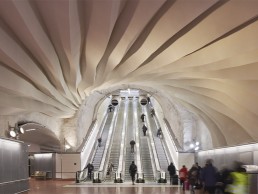
Alongside the many artworks on display, the station features a unique, swirling ceiling detail in the approach to the main escalators. The detail creates a sense of movement from above, accentuating the feeling of transportation as passengers enter and exit the station.
Again, WSP were involved with this from an early stage, and as Abrahamsson explained, they had some clear ideas in mind for the lighting design. “The thought was to have a cooler light on one side, and a warmer light on the other, so that you get the shapes in the ceiling with a different colour temperature on either side.
“We wanted to highlight the structure, to underline the movement in the ceiling – so we worked with the designer of the ceiling to do this. We created a 3D model of the ceiling, and made some renderings so that we could figure out the positions of the luminaires.”
Elsewhere, the lighting on the station platforms consisted of integrated Hoffmeister downlights in the ceiling, used in combination with Norka’s linear Brunn luminaires among the platform edges, while the ceiling is also illuminated through Lumenpulse’s Lumenfacade RGBW luminaires.
The lighting nearest to the platform is dynamic, with spotlights illuminating rock walls encased behind glass when no train is in, which serves to show and clarify the entire size of the room. When a train arrives at the station, these spotlights are dimmed down, and narrow-beamed downlights light up the floor area at the glass doors, alerting travellers to the presence of an incoming train.
“We tried to change the way of lighting the station in different areas,” explained Abrahamsson. “In some areas we have normal, direct lighting with recessed luminaires in the ceiling, and in some cases we also have light tubes that illuminate the wall, while in other areas we have backlit glass.
“These were the three main components that we worked with, and we tried to change these as you move through the station to different areas. For example, the backlit glass was good to have at the end of a long corridor to visualise and highlight the end of the corridor, and the change of direction and so on, while the artworks also act as a guidance in this system of tunnels and escalators.”
Completed in 2017, WSP’s involvement in the Citybanan project began back in 2009, and Abrahamsson added that the length of the project did, at times, complicate proceedings.
“When we started planning it in the beginning, we used very few LED luminaires – only some spotlights and downlights were LED, but even then, they were a very early type of LED luminaire.
“It was a very technical, complex project, and because it ran on for such a long time, we had to change our initial choices to LED luminaires at quite a late stage, so in some cases it was hard to make it work with our initial thoughts.”
However, Abrahamsson concluded that despite the challenges that he encountered during the life of the project, he is very satisfied with the outcome. “I think the end result is good, and the client was pleased,” he said.
“I think that what we were talking about initially, that it should have more of an airport feeling than that of a train station, I think that works really well.”
Indeed, by being involved from such an early stage, WSP were able to create an interesting, striking lighting scheme that expertly blends into the unique architecture of the City Station, helping to create a pleasant, welcoming atmosphere for Stockholm’s commuters.
Blixen, Denmark
While the focus on creating circadian or “Human Centric Lighting” in workspaces has become a fairly common trend in the lighting industry over the last few years, it is particularly pertinent in the Nordic region, where natural lighting can be at a premium.
In Aarhus, Denmark, the local municipality has recently opened Blixen, a new office building, that takes these considerations into action through a series of interesting, dynamic lighting configurations.
Jørgen Kjer, lighting designer at multidisciplinary consultancy group COWI worked with Arkitema Architects to develop new lighting solutions for the office space. He explained how he got involved with the project: “Around a year before commissioning, the Aarhus municipality contacted me to make sure that the lighting in their new building was sufficient.
“They were afraid that it would be getting too little light, not in terms of lux levels - that was predetermined in the scope of the tender - but in terms of there being enough well-lit meeting rooms and office spaces. They also had a number of areas that needed extra attention and special lighting.”
Following two workshop sessions with the municipality, Kjer was brought on board with a brief to upgrade the planned lighting to incorporate more circadian, human-centric fixtures in the office areas and meeting rooms. Alongside this, there was a desire to make the meeting rooms appear brighter and more inviting, while adding individuality to each space, giving them a sense of variety. “The brief also asked us to look at areas that required special lighting; the main entrance, the reception area, the rooftop area, the vertical garden, a couple of atriums and the food court area,” added Kjer.
As COWI Lighting Design came on board once the project had already commenced, it caused some logistical difficulties when it came to placing fixtures, which in turn caused some tension on site.
“All fixtures for the office space and meeting rooms had fixed positions, and therefore couldn’t be moved,” explained Kjer. “Due to the short time before commissioning, we had to make some quick decisions regarding fly points and fixture positions, because we had to use the present scaffolding.
“It was a friendly fight with the contractors to place some extra wallwashers, alongside the special lighting. The contractor was, to begin with, quite negative, so during the first couple of months it was a bit of an uphill battle. I did some diplomacy work - everything from bringing cakes to meetings and showing my willingness to cooperate.
“After all this hard work, the contractor was ‘looking forward to seeing all my crazy ideas’, was helpful, and we had a good process for the rest of the project.”
One area in particular that Kjer cited as particularly challenging during the course of his work on the project was the main entrance. The building’s entrance features dramatic artwork on its ceiling, greeting those entering the building. The artwork is an interpretation of downtown Aarhus,corroded into a reflective metal surface. These graphics create very distinctive, beautiful reflections on the pavement, giving a lasting impression to visitors.
However, lighting this artwork was a challenge for Kjer. “The task was to light up the metal artwork on the ceiling without creating any light spill through the windows, as there were office spaces just on the other side of the glass,” he said.
“After a lot of thinking, cracked the nut and realised that the only way to go was to use profile fixtures and framing projectors recessed into the ground, because placing fixtures on the walls was a big no go from the architect.
“However, the concrete construction on the ground was only 60cm deep. Because of this, we developed three inground boxes, each fitted with a Brother, Brother & Sons (BB&S) Force7 profile spot and a mirror system, which guided the light upwards to the ceiling above.”
Due to the customised solutions, using profile spot technology, there is no ambient light or glare in the office spaces that are situated just on the other side of the façade windows.
On entering the building, visitors are greeted with an impressive ‘artificial sun’ in the reception space. Situated on the ceiling of a large, double height lobby, the large, mirrored disk fills the vast space with a warm, natural-feeling light - in keeping with one of the original parameters of trying to integrate natural lighting alongside artificial light.
“Part of our initial workshop discussions looked at creating bright and welcoming spaces and areas,” Kjer continued. “I suggested a couple of possible solutions for the reception area, but quite quickly the client fell in love with the idea of ‘bringing the sun inside’. After the client had experienced another ‘indoor sun’ that I had made some years previously, it was decided to have the indoor sun in the welcome and reception area.”
The reception area is lit from the ‘sun’ at 500 lux, according to Danish regulations. Illuminated by a secondary reflector and sixteen narrow beam fixtures from Projekleuchten and Delux Denmark, it follows a natural circadian rhythm that Kjer feels the staff are very satisfied to work under.This circadian lighting effect continues throughout the building, with the meeting rooms and office spaces now fitted with a more natural feeling lighting system, complemented in some cases with asymmetric wallwashers that add an interesting, dynamic flair.
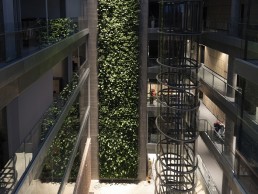
One of the main focal points in the new Blixen building is a vast, living vertical garden in one of the central atriums. The addition of living walls or vertical gardens is an emerging trend in office spaces, but such features come with their own special requirements. And at 23-metres in height - one of the largest vertical gardens in Europe - illuminating this vertical garden was another challenge for Kjer and the lighting designers.
“[Lighting the vertical garden] started out before I came into the project,” Kjer said. “The contractor and the architects had a couple of sales reps come up with some suggestions to get the illumination for the garden to the right lux level. Their only solution was to place fixtures on the balconies of each floor.
“When I heard about that, I suggested using some more powerful LED fixtures from the film industry, and to only illuminate it from one point with a very narrow beam, just like the sun. The architect got rid of all the fixtures, and I have been his best friend ever since!”
To ensure illumination was even from top to bottom, COWI used some fresnel-type fixtures on the top to get the distance, and then very narrow beam fixtures on the remainder of the wall. Through a close collaboration with BB&S, COWI developed a lighting set-up made specifically for illuminating the plants with 1200 lux evenly from top to bottom. The setup consisted of 48 CBL Beamers, alongside four LEDheimer fixtures mounted on a customised rig. These fixtures have been configured to dynamically change colour temperature from 2700K to 6500K, thus following the natural lighting pattern throughout the day.
“I have done a couple of vertical gardens before, and I know from plant experts and experience from other projects that 1200 vertical lux is sufficient for the plants that are used in this project,” Kjer added. “However, the 1200 lux needed across twelve hours every day will only occur if there is a skylight. Without this, more artificial light is needed.”
Throughout the Blixen building, COWI has created a natural feeling, subtle lighting design, with the majority coming from hidden or integrated fixtures, whether this is through recessed spotlights, integrated handrail lighting, or fixtures that blend into the fabric of the building.
These decisions help to bring a clean, crisp feel that complements the sharp lines and minimalist aesthetic of the building’s architecture. While such minimalist design can at times feel cold and impersonal, the focus on circadian light brings an added warmth to the space, creating a pleasant, comforting working environment.
Radisson Blu Scandinavia, Sweden
Situated in the centre of Gothenburg, Sweden, the Radisson Blu Scandinavia has undergone a dramatic interior renovation, dominated by a remarkable new lighting feature created by Lighting Design Collective (LDC).
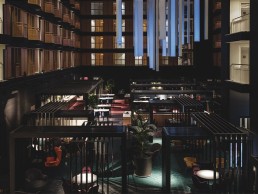
The renovation centred around the heart of the hotel – a vast interior atrium overlooked by guest rooms and surrounded by perimeter skylights. The atrium features a bar and café, alongside multi-purpose areas and pre-function spaces.
The interior design, developed by Lundwall Architects, started with darkness as a base material, and the designers worked with LDC to craft a balanced atmosphere, revealing transparencies, integrating lighting into latticed furniture, highlighting textures and playing with reflections.
Barbara Rodriguez, lighting designer at LDC, explained: “Our job was to dialogue with the existing design and find the right balance. Because the interior designers chose a lot of dark and reflective surfaces, this was very interesting for us because as lighting designers we usually try to find some darkness so that we can create some drama, and so there isn’t homogeneity. So we worked with them to try to reveal what was hidden.”
The atrium includes a series of canopies, intended to look like a collection of arches, that lower the height of the space in some areas to create a more intimate feel. Tracks fitted with Reggiani’s Yori projectors have been integrated into the canopies, providing gentle illumination to the spaces below. “Because it is a very big space, the canopies help to create open rooms within the space, and we integrated lighting into them,” added Rodriguez.
The dominant feature of the new renovation, though, is the huge suspended light structure that sits above these canopies. Designed to suit the large scale of the atrium, while functioning as a data-driven ambient communicator, the structure generates luminosity through light patterns, forming an abstract landscape with smooth movements linked to real-time meteorological data.
“The prime generator for the lighting concept was natural light,” explained Rodriguez. “We all live and are influenced through it. The relationship of its movement across the sky sets our body clocks. Flowers crane their heads on a daily cycle to maximise its life-giving benefits. Natural light is an ambient communicator giving us information about the weather, but importantly, also the time of day.”
The feature therefore was born out of a desire to lower the height of the atrium, and bring a sense of the outdoors into the vast, open space.
“It was born because first of all, it was very difficult to light all of this big space, because the ceiling is very far away,” she continued. “So sometimes we did have these canopies and some furniture to attach lighting to, but sometimes there was nothing at all. We thought we could design a feature that could have a double function – functional lighting, but also providing some brightness and flexibility to the space.
“Also, we wanted to create a symbol for the renovation, because it’s an existing hotel – I think the interior façade is from the 1980s, and it has a very strong geometry, which is not necessarily in fashion right now. It’s the central space that all of the rooms look into, and because a lot of activities take place there, we wanted to give it a new look.”
Although there is some connection to the outdoors through the perimeter skylights, Rodriguez also felt that having a large, central feature would connect guests to the sky further. “The atrium is a rectangle, and it has a skylight on the perimeter, and then an opaque ceiling,” she said.
“It’s connected to the outside, so you have views of the sky, which always makes your space feel dim, because the sky is always going to be brighter somehow. But, because it has this huge scale, we thought it would benefit from having a bright object.
“One of the reasons why we proposed to have this luminous surface in the atrium is because on a winter day at 4pm it will be a dim space with a connection to a dark sky, so the daylight in Scandinavia is one of the reasons that we proposed this.”
Furthering this connection to the sky, LDC wanted to make sure that the feature worked well both in daylight and at night, while retaining a very simple design.
“We wanted it to have a very simple geometry, as opposed to the geometry of the existing façades, because it had all these angles and details, so we knew that whatever we designed there, it had to be very clean and minimal. It had to look almost like it was not designed,” said Rodriguez.
“It had to work with daylight and during the night, so we proposed to have these backlit textiles, because if the lighting is not on they just look like clean surfaces.
“In the beginning, it was way bigger, we had to reduce the size of it. Because the space is so big, I think we overdid it. But it’s nice to see that even if you cut it in half, because the ideas are so strong, it still works.”
The feature, controlled by Skandal Technologies’ Poet software, also acts as a digital infrastructure that opens a new revenue channel for the operators, making it easy to create, commission and execute immersive content within the space and renting these as ambient branding for the corporate customers.
In the end, the lighting integrates brand colours together with graphical elements and custom generative content, all brought together in an artfully curated whole, while the feature creates an additional layer of lighting in the space.
“The tables, canopies and the functional lighting for these are on ground level, and the feature piece is always above it, so they work on different levels,” Rodriguez added. “So it feels like it’s part of a ceiling or an artificial sky, part of the ambient, and then the rest of the lighting is at your level. The functional lighting and the light for the tables, is closer to you, and this feature is like a cloud.”
Lighting can have a great impact on the feeling of comfort, while promoting an identity and sense of excitement, creating lively spaces and inviting destinations. The lighting scheme for the Radisson Blu strived for these qualities in an attempt to drive guests’ engagement and sociability to help turn the space into a destination. By introducing a dynamic volume driven by data yet created by light, the hotel’s night time image symbolises its newly renovated and contemporary character, conceptually connecting the atrium with its environment, its happenings and its purpose.
And, Rodriguez believes that the balance achieved through the architectural lighting at the ground level, and the vast structure overhead, helps to create a unified, cohesive scheme. “The architectural light brings balance, so all of this darkness and these surfaces are rendered, and have come to life through light, but it is also functional, so you don’t get lost in that maze,” she said.
“And the feature, I think it brings a lot of flexibility to the space, because if someone rents out the ballroom for an event, they can personalise it, so it makes people feel attached to it. And on the day to day, it’s spectacular. It creates a focal point within the space that before was lost. It was like a little piece of sky, and now they have something to look into every day.”
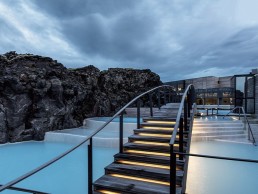
The Retreat at Blue Lagoon, Iceland
For many in the profession, American designer Richard Kelly is considered a pioneer of architectural lighting design, with his three tenets of lighting design - focal glow, ambient luminescence and the play of brilliants - remaining the core theoretical statements of lighting design.
These three concepts, intended to establish a hierarchy and sequence throughout a space, to evoke a relaxing atmosphere and to stimulate the body and spirit with the interplay of light and shadow, have been captured beautifully at the Retreat at Blue Lagoon, a new resort opened at the stunning Blue Lagoon geothermal spa in Iceland.
Designed by Basalt Architects, the Blue Lagoon was named one of the 25 wonders of the world by National Geographic in 2012, and since its opening it has promoted the benefits of geothermal seawater for health and wellbeing.
Continuing this promotion, the Retreat features a subterranean spa carved into the volcanic earth, a terraced geothermal lagoon, a restaurant intended to reinvent Iceland’s culinary heritage, and 62 elegant guest suites, surrounded by the area’s stunning mineral-rich landscape, therefore bringing mind and body into harmony with nature through a journey of relaxation, rejuvenation and exploration.
Because of the beauty of the surrounding environment, a large emphasis was placed on the balance between the natural and the artificial, the buildings and the nature, the indoors and outdoors. With architectural designs that include an abundance of full height windows to connect the interior and the exterior, and the integration of naturally formed lava walls throughout the site, the Retreat is firmly placed within its beautiful surroundings.
To preserve the enchantment and inspiration manifested by Iceland’s natural lighting and the night sky, the architectural lighting, designed by Icelandic studio Liska, was intended to create a relaxing and revitalising atmosphere, complementing the architecture and as such articulating the relationship between nature, human biology and architectural design.
Guðjón L. Sigurðsson of Liska has worked alongside Basalt on the Blue Lagoon since the very beginning. He explained: “Lighting was part of the design conversation from project initiation. Basalt Architects’ design emphasis was on the interaction of modern technology and nature.
“Views into the natural lava fields, the lagoon and the sky were crucial. The architecture is mainly comprised of full height windows, except at the spa and wine cellar, all other areas within the Retreat afford a distinctive view of the outside.”
The central idea of the lighting design was to introduce an elevated and intimate approach to hospitality. A holistic approach was employed, unique to the overarching architectural directive, to bring shape and clarity to the nuanced spatial composition.
This spatial composition is one that, intentionally or not, changed and developed as the project progressed, as Sigurðsson explained: “The Retreat sits deep in the lava, as envisioned by Basalt, to allow the lava formations to mark the perimeter of the lagoon, also forming interior walls of the Spa,” he said.
“We were faced with unforeseen situations uncovered by digging into the lava, but the design followed suit. The wine cellar that sits deep underground wasn’t originally planned for, but only after a massive hole was unearthed while the lava was being dredged up, it was then decided to create a cellar surrounded by the natural lava walls.”
When working on unpredictable grounds such as this, such improvisation may be expected, and while the lighting concept remained constant throughout, Sigurðsson revealed there was a great deal of making things up on the spot. “Even with a firm concept, the design was more or less accomplished on the fly,” he said.
“Almost every aspect of the design was dependent on the lava formation, and how well we could nestle in the Retreat. Nature was given much emphasis. The lighting concept, and the architectural directive, was to underscore the interaction between man-made elements and nature. We only wanted to illuminate the man-made architectural structures and interior elements, leaving the natural lava walls untouched.”
However, at the base of the wine cellar, Liska installed iGuzzini’s LineaLuce fixtures at the perimeter of the walls to showcase the natural iridescent colour of the rocks.”
Such interaction can be also be found in the Moss Restaurant, where interior design consultants Design Group Italia (DGI) designed a large-scale ornamental chandelier above the Chef’s table, comprising 106 individually controllable OLED panels, designed to resemble the multifaceted, columnar structure of volcanic rocks.
Despite the improvisatory nature of some of the spaces, Sigurðsson explained that Liska had a “clear vision on the architectural lighting and overall choreography,” working alongside DGI throughout the project. This was particularly pertinent in the blend between architectural and decorative lighting fixtures.
“It was vital for us to support and fulfil Basalt’s design directive while working our way through our design endeavours,” said Sigurðsson. “The overall lighting (architectural and decorative) was designed to fit our concept, envisioned in collaboration with DGI. The decorative fixtures were decided by DGI - we at Liska peer reviewed their selection for lighting quality and technical aspects.
“We collaborated closely with DGI and Basalt on the decorative elements, their placement and integration within the space to attain a balanced choreography throughout the project.”
Even with the various decorative and architectural elements, light levels throughout the Retreat are carefully controlled and balanced, taking into consideration the amount and availability of natural light.
All lighting products specified allow for a superior level of comfort, meeting the functional requirements, while at the same time creating a mood and atmosphere for guests to relax and rejuvenate. This has been achieved through the use of indirect, soft and diffused lighting, which serves to reveal the essence of materials, and their delicate textures, while providing an emphasis on the architectural volume.
Liska called on iGuzzini for the majority of the architectural fixtures, with the Italian manufacturer’s Laser Blade providing general lighting at the foyer and restaurant areas, while its Underscore provides a gentle, integrated linear light in the corridors, restrooms and showers, as well as illuminating outdoor steps. Elsewhere, iGuzzini’s Trick was used in window thresholds, and to provide a grazed lighting effect at the lagoon, alongside exterior pathway lighting, installed at the bottom of bollards to graze the motorway and highlight the lava walls that follow the motorway.
Hierarchy is achieved through precise control of light and carefully choreographed light levels. By punctuating carefully controlled lighting, visual contrast was achieved wherever desired. Throughout the spa, lighting was carefully employed to avoid any direct light on guests.
In the guest rooms, biodynamic lighting was employed through the use of iGuzzini’s SoleLuna fixtures, which were especially designed to meet the wellbeing aspect, while achieving all other functional aspects of lighting within the suites.
“We conducted innumerable tests and mock-ups to assess the installation and the appearance, in addition to the lighting quality, visual comfort and controls possibility,” said Sigurðsson. “During one of these tests, the installation was finally settled after a circular luminaire was inserted behind a Clipso membrane. We wanted to achieve a sharp, illuminated edge around the fixture, as well as soft penumbra as perceived around the sun on a cloudy day, in addition to making the fixture completely disappear into the ceiling.”
The fixture was also custom-designed to replicate the effect of the sun and the moon with a faint, diffused halo around it. Programmed to reproduce various phases of the day and night, along with the dark shadows that are perceived on the moon’s surface.
“The guests are afforded the flexibility to tune the light levels and colour temperature of the light, and are able to activate different lighting atmospheres from the keypad installed near the bedhead. A wake up call can also be set to gently and gradually wake up guests with light, not sound,” continued Sigurðsson.
Creating lighting that is beneficial for health and wellbeing was paramount to Sigurðsson and Liska, and he explained that, in a previous project at the Blue Lagoon, he had done some research into this area to find the most beneficial lighting conditions.
“One of the projects at the Blue Lagoon was the medical centre that I designed the lighting for. This centre is mainly for people with skin disease,” he said. “We conducted subjective assessment on the patients’ preference for colour temperature and CRI. From this test we were able to deduce that more warmer colour temperatures were much relief to the patients’ psychological wellbeing, as their skin appeared healthier, not pale or sickness stricken. We specified 2200K cold cathode fixtures back then.
“Here at the Retreat, we have therefore specified fixtures with higher R9 values to allow for better rendering of skin tones. Most light fixtures are warm dim as well. The lighting is designed so that the guests are able to see their surrounds but are not directly illuminated.”
The role of lighting on health and wellbeing is well established, and is something that has been discussed in previous issues of arc. Nowhere is this more apparent than in countries such as Iceland, that feature long summer days with 24 hours of daylight, and the exact opposite in the winter. Such drastic weather conditions meant that special measures had to be taken in the lighting design.
“As many of us are aware of Iceland’s long summer days, we wanted to attain complete darkness in the guest rooms, blocking out any natural light permeating into the rooms, and no indicator lights from appliances that would disrupt guests’ sleep. While in the case of those who suffer from Seasonal Affective Disorder, they can have artificial daylight in the rooms when It is dark out during the long winter nights of Iceland.
“First and foremost though, visibility and visual comfort were important considerations, as on most projects. The balanced interplay between daylighting and electric lighting, between quantitative use of light and its distribution, its interspatial relationship and colour temperature of lighting were some of the major lighting considerations at the Retreat.”
Although technology was used to facilitate the design intentions throughout the Retreat, the concept was to establish a seamless connection, and to integrate the elements of the design with nature, human biology and architecture, therefore creating sublime, experiential spaces where lighting and architecture are conceived as one and the same.
This, Sigurðsson feels, comes through the overall use of subtle and minimalistic lighting, while not compromising on functional aspects. “With architecturally concealed light fixtures, working with colour temperature of light as opposed to colours, and careful integration of natural and electric lighting to preserve the quality of light, with light underlining the architectural planes and interior elements, utilising concentrated cones of light to create drama while avoiding lighting up the ceiling planes, we were able to create a cozy and intimate ambiance.”
Richard Kelly’s three concepts have become a common mantra for lighting designers around the world, and for good reason. When effectively implemented, they can create beautiful, inspiring environments, and this is perfectly highlighted at the Retreat at Blue Lagoon, with its subtle yet moving lighting scheme that greatly contributes to the resort’s feeling of relaxation and rejuvenation, health and wellbeing.
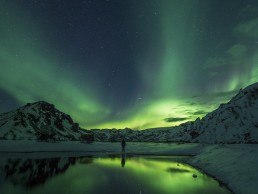
Northern Lights
The region of Scandinavia has a very unique relationship with light, due to its northern location and extended periods of darkness. But how does this affect the role of lighting designers based there? arc’s Matt Waring investigates.
Whether we are aware of it or not, each and every one of us is shaped according to our culture; our childhood upbringing, our social status, our race and religion – these factors make us who we are.
This extends further to a whole host of outside elements too: our geographical location, our surrounding environment, even the climate where we live – all of this has a huge impact on how we work and our perception of the world around us.
This is none more evident than in Scandinavia. The northern European region is perhaps best known in equal parts for its clean, minimalist design, echoing the sparse landscape, and the stunning natural phenomenon of the Aurora Borealis.
While tourists flock to the region to try and catch a glimpse of this radiant display of light, natural light can be hard to come by across Scandinavia. Its proximity to the North Pole means that the summer months consist of long days with plenty of sunlight, while in winter residents live almost entirely in darkness – in Northern Scandinavia, for example, summer means 56 days of continuous daylight, with 32 days of darkness in winter.
All of this means that the region has a very distinct, unique relationship with light, and its own culture of light that designers have to take into account. While this process might be fairly straightforward for designers born and raised in Scandinavia, how do those from further afield, from different cultures with different climates and, as such, completely different attitudes and perceptions of light, adapt?
Chiara Carucci is a lighting designer at Tengbom. She first moved from Milan to Stockholm in 2015, and she explained the transition of moving from Italy to Sweden: “It was more than a culture shock, especially when I first saw the snow falling, in May!
“When I understood the very different role of architects in the design process, I realised how getting into this culture would have been a challenge. However, I was very curious about Scandinavia, because here there are municipalities such as Malmö that have a lighting designer on staff. Generally, everything is less hierarchical, and the most important thing is the community.”
Isabel Villar, a lighting designer at White Arkitekter, moved to Sweden from Chile thirteen years ago. Initially only intending to stay there for three months, the duration of the Daylight Design course at the KTH Royal Institute of Technology, this turned into a Master’s, and then a job opportunity, and now a place that she calls home. Because of this, she feels that her integration into Swedish culture was a much slower process, although she says that the differences are vast, particularly in the appreciation of light.
“There’s no comparison with Chile when it comes to the cultural awareness Swedes have on how lighting affects us as human beings,” she said. “The lack of daylight during wintertime and the excess of it during summertime is something unique for people living at this latitude, and cannot be compared to the natural lighting conditions people have further down south.
“Here, the sun is something people long for, in Chile it is something we often want to shield from.”
“I had so much sun in Italy, but I never appreciated it as much as I do now,” Carucci agreed. “I find myself doing the classic sun worship, closing my eyes and facing the sun, like a classic Swede.”
While Carucci and Villar have both embraced the Swedish culture and the local appreciation of light on a personal level since moving to the country, they both believe that, when it comes to lighting design, gaining an understanding of the context surrounding a project, whether that be in Scandinavia, or elsewhere, is essential.
“To respect and understand the context and the light culture of the place we are working in is crucial at the start of our projects, and we carry this information with us all along our design process,” explained Villar. “Understanding the local daylight conditions should be at the start of every project, as well as considering any cultural associations that light can have within the context, such as specific traditions or even light preferences when it comes to lighting qualities.
“That being said, every so often we are involved in international projects where the client’s wish is to bring the ‘Scandinavian flair’ into the project, especially when it comes to the design, materials, character of light and colour temperature.”
“In my opinion, it’s all about the dialogue with locals,” continued Carucci. “Knowledge about lighting design and its applications, experience in the field and research are not enough. Curiosity, sensitivity and sensibility are fundamental: we should listen and create a concept together with the main stakeholders and, possibly, with the users of the space.
“This research and dialogue can be used to create the basis for understanding, to facilitate the achievement of common goals, and therefore a project tailored, not adapted, to the local context and culture.”
Such research forms the basis of a Master’s thesis conducted by ÅF Lighting’s Seren Dincel. Dincel relocated to Stockholm having previously worked for JVL Studio in Turkey, and her studies examine the possible connection and influence of Scandinavian culture, climate and way of living on lighting design.
“There is a cultural tendency for being reserved, calm and tranquil among individuals, not bringing something to the forefront as an achievement,” Dincel explained. “Prevalently known as ‘lagom’ in Swedish, which means the adequate amount of something, not too much and not too little, this has an impact on many things, from social behaviours to design approaches.
“I assume this reflects on the lighting design generally by not making bold or extravagant concepts, or using too bright or dramatic lighting schemes, instead keeping things functional and smooth.”
During her relatively brief time in Sweden – she joined ÅF Lighting in late 2016 – Dincel says she has noticed how “city lights are mostly not so bright or colourful, and not all the historical, significant buildings or parks are illuminated, even though these spaces are exposed to longer periods of darkness every year”.
This idea of using relatively low levels of illumination is recurrent across Scandinavia, despite the prolonged periods of darkness. Both in terms of larger architectural lighting schemes, and in residential environments, there appears to be a warmer, altogether more subtle approach to lighting, compared to areas with more natural light.
“At home in Sweden, we use warm light, 2700K or even lower; we use candles, are very sensitive to glare, and when it gets dark, we dim the lights to very low levels,” explained Villar. “But if you go to places that are hot, take southern Europe as an example, the lights are much cooler, they are more intense as if when the sun goes down you should have the same level of light from electrical sources, and you very seldom see candles around.”
Carucci agreed: “More or less explicitly, designers, as well as every other person, use light according to their culture.
“At home, each evening my mother would come in and draw the translucent curtain in the living room when it got dark, and the roller shutter before going to bed, so light from the public sphere wouldn’t bother us and we would have privacy.
“Here, nearly every window is not only beautifully decorated, but also features at least one charming lamp, usually hanging, or placed on the windowsill. They contribute to the cosiness of the Swedish flats, of course, but also make the neighbourhood look better and brighter after dark, especially in winter.”
While the local conditions mean that residents across Scandinavia interact with light in a different way, the lack of natural light has a very real impact on the approach of lighting designers, for a variety of reasons.
“It does have a huge impact, and this is something I identified soon after arriving in Sweden,” said Villar. “Because the lack of daylight impacts us so much, physiologically and psychologically, daylight availability and time should be taken into account when designing lighting strategies at this latitude.
“We strive to run daylight simulations of sDA (Spatial Daylight Autonomy) at early stages of every project, to have a better understanding of how the building ‘breathes’ throughout the year, taking into consideration the different orientation of the rooms and the weather conditions specific to each site. This gives us valuable information to map areas that receive low levels of daylight and that might need ‘higher quality’ of electric light to compensate the lack of natural light, as well as areas with good daylight levels where electric lighting takes a secondary role during the day.”
“It has increased my awareness and consideration about darkness, both in terms of preserving it and illuminating spaces for the needs of people,” added Dincel.
“However, from my point of view, the balance of using both light and darkness should be key. The conservation of darkness enables us to see natural elements like the night-sky, stars and Northern Lights in the northernmost parts.
“My colleagues at ÅF Lighting have been working on a project for the new city centre in Kiruna, located in the northernmost part of Sweden, that involves the implementation of lighting control systems for enabling the visibility of the Northern Lights. Several aspects need to take place in order to experience this light phenomenon, however, and in the inner cities where there is too much light, the chances are even lower. The project is still ongoing, however the idea is to use a lighting control system that adjusts illumination levels based on the presence of the natural light phenomenon.”
Carucci added that, because of the prolonged periods of darkness, effective lighting design, particularly in public spaces, also becomes much more important in terms of safety, security and equality. “I think about it constantly when designing for public spaces,” she said. “Not only is it more complicated to set scenarios and define dimming levels during the night, it’s a matter of culture and background: Swedes know that it’s not only dark at night time. They are in fact used to living in utter darkness for substantial parts of the year.
“The development of sustainable and safe environments is vital in most city planning projects today. Usually the goal is to create socially coherent, acceptable urban environments for inhabitants and visitors alike. But what happens to these qualities when darkness falls?
“In order for our urban environments to thrive, we are dependent on the correlation between architecture, urban planning and lighting. In a liveable city, 24/7, one simply cannot live without the other. In the municipality of Eskilstuna, through a frame agreement with Tengbom, through collaborative, multi-disciplinary processes, we are actually providing the right conditions for the development of urban sustainability, equality and economic progress around the clock.”
“Reinforcing the sense of security outdoors has a tight connection with the continuity of social life, particularly in winter,” added Dincel. “One way to handle extensive winter darkness is through fun projects and lighting events that bring people together and encourage them to spend longer amounts of time outside, although it’s dark outside.”
Dincel cited the Story Wall in Eskilstuna as a clear example of this. Previously a dark, unwelcoming pedestrian tunnel, ÅF Lighting installed coloured lights along the space – an uncommon occurrence in Sweden – to transform it into a secure, fun environment.
Elsewhere, in Fröslunda, Carucci and city landscape architect Malin Christensson have collaborated with an urban anthropologist and sociologist, alongside teachers and 50 schoolchildren to define the real needs of the area. The project was initially based on creating lighting for a path from the centre of the area to the surrounding schools, but it soon became clear that the proposal needed much more than “fun lighting for the kids”.
Carucci and Christensson hosted a series of workshops, with children painting jars, drawing lamps and mapping out their routes home, alongside two sessions with the local youth centres, to help define new goals for the area. “The kids helped us drawing the lighting fixtures for the path, asked for new benches and a new picnic area and soon, their own vision will become reality,” Carucci said.
It has become widely established over the last few years that lighting, specifically natural lighting, has a beneficial, positive effect on our health and wellbeing. It’s one of the main talking points at trade shows and conferences, and we’ve discussed it at length in the pages of this very magazine. Because of the scarcity of natural daylight for large periods of the year, this becomes a particularly serious issue in Scandinavia.
Research has shown that the general lack of daylight, and the lower levels of daylight when it is present, are not enough to effectively set our biological clocks, and due to this, people further up north have a higher chance of suffering from Seasonal Affective Disorder (SAD). In fact, recent studies have found that the number of young people in Scandinavia reporting that they suffer from depression, anxiety or other mental health disorders has risen in recent years, which is something that can be connected to SAD.
This puts an added onus on lighting designers to create ‘healthy’ lighting schemes that do what they can to boost health and wellbeing.
“We spend more than 90% of our time indoors, a big part of the year with very little exposure to daylight, so our daily rhythm is mainly triggered by the electrical light that we’re exposed to,” explained Villar. “Every single person knows how it feels when the ‘darker’ period starts, and can see how it affects others too: the quality of sleep, the energy levels and even darkness anxiety.
“We have seen an increased interest in the WELL certification, where higher levels of daylight need to be achieved and circadian light is a requirement in spaces where people stay for more than one hour. Even though there are some parameters that are difficult to implement, and have to be further developed, having the opportunity to discuss these matters with the project group and client is a big step forward.
“The key lies in first ensuring optimal daylight conditions and then complementing this by implementing a lighting strategy that can change in intensity and colour temperature to vary over time to meet our biological needs for light in specific locations.”
“We’re so used to judging design only on the surface and our acceptance is given by a double click, then it’s over. On to the next image,” argued Carucci. “But lighting design is about more than what meets the eye. We can create aesthetics that have an impact on both cognitive and emotional levels. It’s a matter of responsibility and health, in my opinion.
“At Tengbom, we aim to work closely – architects and lighting desingers – to take informed decisions and responsibility in the design process, by considering the visual and non-visual aspects of design.”
One designer who takes a particular focus on the role of lighting in health and wellbeing is Aleksandra Stratimirovic. A light artist who moved to Scandinavia from Belgrade almost 20 years ago, Stratimirovic has created a wealth of permanent and temporary installations for hospitals, schools, residential areas and different urban environments.
“For me, I find inspiration in the place, and I find inspiration around the place, and the people who are there, who I meet, who I imagine will be there. So in a way my work is linked to the culture and the local style somehow, but as I’m creating something else for the space, I try to balance those two,” she said.
Through her work in hospitals, with installations such as Berså in Örebro and Cellula in Alingsås, Stratimirovic has seen first-hand the role that lighting can play in health and wellbeing: “I think it is getting more and more obvious that light is important for wellbeing and for health, so I think in Scandinavia we have that approach, to integrate and include good lighting in hospitals, but also to bring something more than just functional lighting,” she said.
“Light is such a powerful medium to work with, and if you handle it in the right way, and with a specific aim, it can bring so much positivity to places such as hospitals. Hospitals are very sensitive places, people are there not to enjoy art, or to enjoy architecture, but usually for some not very pleasant reasons. Extra attention and care is very appreciated if you’re in a delicate situation, therefore I believe that, besides all the medical care and attention from the healthcare side, implementing positive experiences through art is very important. Artworks that are specifically created for hospitals are made with the aim to give that extra experience.”
While it doesn’t always take the main focus in her artworks - if present, daylight becomes integrated in her work - Stratimirovic feels that there is an underlying appreciation for natural light in Scandinavia, because of the darkness. “Daylight is always a priority in my projects. When I compare where I grew up to where I live now, there is more of a balance between darkness and light,” she said. “Those of us who live here are aware of light more than places where you have a more even distribution of daylight throughout the year, but I think in this part of the world we appreciate darkness also.
“There is a respect of the darkness that is present, and because of this there is a more sensible approach to the lighting, with respect to the architecture, to the history - more awareness of balanced lighting in relation to surroundings, as well as attention towards the environment, and the effect of artificial lighting on nature.”
This idea of balance, of celebrating the darkness and the light, is something that Villar has noticed during her time in Sweden too. “When Spring kicks in, you get a bad conscience when you stay indoors for too long, you have to seize every minute and absorb as much light as possible,” she said.
“People’s behaviour changes too: people talk to you at the bus stop, friends invite you for dinner, playgrounds are packed with kids. But after the long summer days, Swedes long for the winter, for a time to be more reserved, to sit on the sofa and read a book under a soft, dimly lit environment, and to embrace the darkness.”
“Natural light is a fundamental determinant factor in people’s lives,” Dincel concurred. “People make plans for their spare time based on the weather and if it’s a sunny day with a lot of daylight, you find everyone outside when they’re enjoying their day.
“I haven’t thought about natural light this much before, because in Turkey there are many opportunities to enjoy daylight throughout the day. Now, after living in Sweden these past three years, I have adapted more or less to how Swedish people feel about light and darkness.”
“The different ways of relating to light are also evident in language, in my opinion,” Carucci added. “Swedish language might not have a very wide vocabulary but, like English, the can translate directly ‘shimmer’, ‘twinkle’ and ‘glisten’ - there is no direct translation in Italian, we use ‘sparkle’ or ‘shine’ for everything, then describe how.
“One of my favourite words is ‘mångata’, meaning ‘moon road’, which describes the moon’s reflection on the water. It only exists in Hungarian besides Swedish. I believe that northern populations have so many ways of describing light phenomena because they appreciate the variation of light conditions more.”
As the lighting design community continues to expand worldwide, it is becoming more and more commonplace for designers to relocate to new countries, with new ways of life, and potentially drastically different attitudes towards light. It’s essential then, that designers always seek to integrate into their new surroundings and gain a full understanding of the local culture. This way, we can not only broaden our own minds and discover new ways of thinking (‘lagom’ for instance), but continue to create beautiful, authentic spaces, as Dincel concludes: “In the long run, it’s about creating harmony and meaningful spaces for residents, by understanding natural and cultural attributes.
“Every design needs to have a purpose, to bring quality in people’s lives.”
www.afconsult.com
www.whitearkitekter.com
www.tengbom.se
www.strati.se

WILD
“Women in Lighting and Design is a feminist organisation. We believe in the equality of the sexes and strive to promote and encourage this in the lighting industry.”
Assistant Editor Sarah Cullen spoke with Kelly Roberts and Megan Carroll, key members of WILD – Women in Lighting and Design - to discover more about the organisation that celebrates and supports professional women in the lighting industry across North America.
During the mid-1990s, a pattern emerged as professional women across the lighting industry met at international lighting conferences and events, and realised their conversations centered on parallel journeys and roles as women in the industry. Megan Carroll, currently Senior Specification Sales Manager at New York Digital, participated in these early conversations. Working as an informal network, WILD, Women in Lighting and Design, was established as the place where women in the industry could come together to discuss gender matters and more. A decade later, Kelly Roberts, Studio Director of Wald Studio, joined in the discussion, taking a leadership role to shape WILD today into a better organised, mission driven group of professional women.
“We knew that women had become a significant presence in the lighting industry,” reflected Carroll. “We enjoyed each other’s company, but lacked some of the same networking connections as our male colleagues. We knew we wanted to come together more purposefully, to learn from each other and to support each other – to network and share.”
At the very beginning, when momentum started building, they would organise spontaneous gatherings in their homes or businesses where word of mouth started to spread.
“Today, we utilise simple digital tools to send our message and to connect women across the country and to promote our events,” explained Roberts.
“Chapters [localised groups] are home grown and develop naturally as leaders come forward. Each chapter controls their own events, allowing growth within those communities at their own pace. A core group of volunteers from each chapter make up the ad-hoc national committee to help plan networking events at larger conferences.”
“The group functions solely on a volunteer basis, as Carroll explained: “We operate independent of dues or sustained, annual financial support of sponsors. This has made for some interesting pot-lucks, like the ‘all hummus’ or ‘all sweets’ gatherings. Volunteers do it all.”
“That said, recently sponsors have begun to approach us to offer their financial support. That gesture is very telling and appreciated.”
Carroll and Roberts have observed that many of the sponsors that have approached them to offer financial backing were either owned by women or had female contacts at the company who wanted to support their community. “However, recently we have seen a growth in the number of men or male-owned businesses that are interested in supporting our chapters. This is encouraging as the message WILD tells, and growth we support in the lighting industry, is for everyone. When women succeed, we all succeed,” championed Roberts.
Over time, as the meet-ups grew and developed, so did the name of the organisation. Different communities formed and other titles like Ladies of Lighting were used, as the original name of Women in Lighting Design felt limited to the design community. However, even as new names were considered, Roberts and Carroll felt they couldn’t abandon the charm of the WILD acronym. By adding the ‘and’ between ‘Lighting’ and ‘Design’, the organisation holds more weight: “The ‘and’ is more encompassing. It invites women from all parts of the lighting community to be a part of WILD. We also don’t ask that any previously existing groups change their name. We act as a conduit for communication, and they are offered the chance to come under the WILD umbrella to join the network, and yet keep their local identity if they prefer,” explained Carroll.
Gathering at some of the industry’s top lighting conferences in North America, the women look to openly discuss multiple workplace issues and topics that affect both men and women. “Our events focus on topics such as professional growth, workplace sexism, financial health and parental planning, as well as supporting charitable causes,” explained Roberts.
“These are not simply women’s issues, but are issues that affect the entire community. WILD is open to anyone in lighting: manufacturer, rep, distributor, engineer, designer, human resources, etc. Everyone has something to offer the group and is welcome to attend. We are first and foremost a networking group, and that network was begun for and by women.
“Many issues are repeatedly explored at gatherings because they haven’t been resolved after just one discussion. Our perspective is limited and, while each country and even each region in the United States has its own culture and norms, it’s very helpful to see which topics are recurring,” continued Roberts.
“For example, when compared to many other developed nations across the globe, the United States is lacking in parental support. It is telling that one of our main topics of conversation continues to be how women (and men) can both work and raise children, or care for their parents, or take a leave of absence for a disability. Sharing our stories and being vocal about our needs reverberates in the industry and helps drive change.”
Following suit with universal industry topics, the group also puts a spotlight on the financial world and the gender pay gap that is something most industries are currently dealing with.
“In New York we have annual financial seminars presented by financial planners or local lighting business owners to provide education and guidance. In an industry where many are looking to start their own business or learn investing techniques, this is an important topic with information that is typically not provided elsewhere,” explained Carroll.
Tackling the gender pay gap was recently on the agenda at LEDucation 2019 in New York. “The gender pay gap is a very real and frustrating reality for many women. Pay transparency can lead to more equal wages, but the topic is frequently considered taboo,” she added.
Aside from helping and supporting those in the lighting world, the WILD teams are also passionate about giving back to the community. Such charitable acts include: donating products for women’s health and hygiene to shelters for abused women; hosting events to support young girls’ education in computer science or in the arts; and supporting charities that WILD members feel personally about.
“We’ve also established yearly collaborations with some charities, specifically a breast cancer survivor group in New York called Paddle for the Cure. They offer a unique survivorship programme that uses recreational dragon boat paddling to manage side effects of treatment for breast cancer survivors and promotes a positive and healthy lifestyle,” explained Roberts. “WILD has helped build their yearly fundraiser - a bowling tournament - which has become a much-anticipated mixer event for the entire industry. Whichever charity we choose, we are always conscious of impacts on the local community and where we can do the most good. We are always women supporting women.”
Upon reflection, the WILD members have also found it a useful tool to look at the societal feminist shift that occurred in the United States during the 1970s and 80s, and how the lighting industry has changed and adapted to these changes over the years.
“As chapters become more established, their events grow around the needs in their communities,” reflected Carroll. “It’s actually quite interesting to witness the change in the lighting industry through a WILD lens, as new faces come into the field. The huge feminist growth that the United States saw in the 70s and 80s is largely taken for granted by the younger generations. In reality, that is what we are striving for – that the future would see more gender equality and that they could concentrate on fighting for other concerns. Our membership tends to be on the low side for emerging professionals, until their first negative experience in the field pops the bubble.”
The current goal for the team behind WILD is to continue to control and encourage its rapid growth, whilst maintaining the local culture of each chapter. “Our single largest challenge is steering WILD locally and nationally as a group of volunteers without infrastructure, without financial support and while maintaining our independence,” explained Carroll.
“We love the spirit of collaboration and growth, but there is only so much we can accomplish right now – so it’s a matter of prioritising what we can do and what will make a difference, while staying true to our mission.
“Women across North America are randomly learning of WILD and approaching us to learn how to establish a chapter in their community. Women need a local network for local discussions in their immediate community for support and knowledge sharing.”
To further their goals of building relationships and community, you can find the WILD team at two of the largest events in the States each the year; LEDucation in New York, with the Designers Lighting Forum, and Lightfair International, next in Las Vegas. “We also collaborate on both an ad-hoc and more structured basis with the IALD, and the Illuminating Engineering Society of North America,” explained Roberts.
“The reality is that many women still struggle on a day-to-day basis with inequalities and harassment, and as long as that occurs, our Women in Lighting and Design network will be needed and will continue to grow,” she elaborated.
Moving forward, the team is working on expanding their network and facilitating new communications systems. An online networking platform is being developed that will encourage further conversations to carry on following events, the ability to delve deeper into certain topics, and expand on ideas that members can use to change their personal stories. It will also benefit those in more rural situations, that do not have their own networking community, to become a part of the larger WILD network.
This also marks the beginning of a working relationship across the pond between Women in Lighting in the UK and WILD: “The Women In Lighting project is happy to announce the start of a collaborative partnership between WiL and the long established WILD in North America,” announced Sharon Stammers of Light Collective and Women in Lighting.
Carroll added: “We are thrilled to begin a relationship with Women in Lighting and to help encourage our members to be a part of that project. Women in Lighting’s goal to become a database of stories and experiences parallels the work that Women in Lighting and Design has promoted over the years. While our stories have traditionally been told locally, it is a unique opportunity to share them around the world.”
“Whether your women in lighting and design community is a few women or many, WILD has a place for you.”
womeninlightingdesign.wordpress.com
womeninlighting.com

James Cadisch
The newly rebranded Phos was officially unveiled at [d]arc room. Formerly Ecoled, the company announced its new brand with a special film entitled The Power of Light. arc spoke with James Cadisch, Development Director at Phos, about the film, the rebrand, and the next step for the company.
How did you get into lighting?
I slightly fell into lighting, as it seems most people do. Ten years ago I left the City for the bright lights of manufacturing and never looked back. What I didn’t realise was how passionate I was going to become about the subject and how powerful a medium it is!
You unveiled the newly rebranded Phos at [d]arc room. What was the reason for the rebrand?
Ecoled formed in 2008 when LED lighting was still in its infancy. The company was initially aimed at capitalising on energy saving, as the name intimates. We repositioned our focus in 2013 on the architectural grade specification market. Our business capitalises on its strategic relationships and knowledge from the company’s investors, where we have uniquely been able to draw upon a century of materials expertise in metals to create our own superior product lines in the UK. Having undergone a development in both product and core values, we decided a new, more apt brand name was necessary and launched, Phos.
Following the change, will we see a shift in direction or approach from the company?
Our new focus is to support our specification partners in challenging our target customers to rethink their decision making on the importance of their lighting, and the positive impact products such as ours can make to their homes or businesses.
Why “Phos”?
We place significant emphasis on the provenance of the materials we use to manufacture. These are the building blocks of our products. ‘Phos’ is a Greek word, which holds an important place in the building blocks of the language of the Western world. Phos means ‘light’ and represents our dedication to this magical medium in all its glory. Phos is an evolution of over a century of technical expertise, forward thinking creativity and precision engineering. This combined knowledge within the team has culminated in the rebranding of our architectural lighting company.
Alongside the new brand, you launched the film The Power of Light. How did this come about?
At the heart of our company is a passion for lighting and its significance in our world. Light is arguably the most influential force on how we perceive and connect with the world around us, but we felt that people often overlook the impact it has on us and the spaces we inhabit. The best way to try and articulate this message is through a film and after two years we finally got there!
What do you hope to achieve with the film?
We believe in The Power of Light and our ambition is to build a collective consciousness, and admiration of its benefits to our lives. We hope this film will help elevate light in the architectural environment, so it is fully considered. This in turn should help raise the profile of lighting.
Will you be touring the film around? How can people view it?
We have had a positive response from the film so far and several trade/industry websites and portals are kindly hosting it online for us. Our aim is to also feature it at other trade shows and events throughout the year too. Alongside these, the film can be found on our website, under our Power of Light section. We are also releasing a series of exciting and informative content, told through some of the world’s most respected and celebrated lighting designers, called Conversations with Light. Their passions and beliefs are aligned with our core values and focused around the emotion that light can bring, so that our community can feel its power.
Do you have any new products to coincide with the rebrand?
The rebrand is a culmination of years of background work which the company has undertaken. To compliment the rebrand we are delighted to announce the latest edition to the Phos family; the highly versatile, modular patented projector range for indoor and outdoor, the Orba. Our design philosophy has always been to develop and engineer highly original products. Our new spot light range is not just another “Can on a stick”, but a sphere. The range features a wide choice of installation options from track, recessed, pendant and drop tube. The high range of adjustability is achieved by a magnetic ‘puck’ and rail design that enables the lighting designer complete control when commissioning.
What do you think the future holds for the lighting industry?
I think it is an incredibly exciting time to be involved in the lighting industry. When I first started in the industry, LED technology was still very much evolving, and people didn’t always understand the importance of light or using a design consultant such as a lighting designer. A decade on and the industry is looking very different. The technology is superlative, and consultants really do have a design palette of lights to choose from. Creative limitations are only in the eye of the designer. Consumers and end clients are becoming much more aware of how integral lighting is to the success of an architectural scheme and on the back of this more and more lighting design practices are appearing. We at Phos truly believe that lighting is finally becoming a key factor in the building industry and we feel proud to be part in elevating its importance and help advocate its power!
The Power of Light can be viewed online here.
Issue 111
arc Aug/Sep 2019 – Issue 111
Yesterday is gone...
Tomorrow has not yet come. We have only today. Let us begin…
After twenty years as editor of arc, the time has finally come for me to hang up my editorial boots and to pass on the baton to the talented team we have here at [d]arc media. Helen Ankers, editor of darc, will take on the role of Managing Editor of both titles with Matt Waring taking on responsibility of Editor of arc and Sarah Cullen moving up to Assistant Editor.
We have changes to our commercial staff too. We welcome new members Andrew Bousfield and Isaac Lorenzo into Media Sales with Jason Pennington becoming Head of Business Development.
I will not be heading off into the sunset, however. As Managing Director of [d]arc media, I will be responsible for further developing the commercial aspect of the business. In truth I have been spending more and more time directing our events and leaving the editorial in the capable hands of Matt and Sarah. They will continue to create dynamic and interesting features for you all to enjoy in both the printed and digital formats as well as creating engaging content for our [d]arc awards and [d]arc room events.
It’s been a long journey and, initially, a steep learning curve. I’m the first to admit that when I started as editor I didn’t know my Artemides from my Zumtobels (or Zumbotel as I printed in 1999!) and Speirs + Major was the only lighting design practice I was really familiar with due to their work in the entertainment sector from where I came (arc began life as a supplement to mondo*dr magazine, our publication for technology in entertainment). It was through the encouragement of key players in the profession such as Jonathan Speirs and Mark Major that we have thrived and have now reached a position where our next issue will be exactly twenty years since we started (where has the time gone?!). Expect to see a celebration of this in our Oct/Nov issue.
Print is still the foundation of our business and, unlike many other media companies, we will continue to produce regular bi-monthly printed issues of this publication that we know you enjoy so much.
It’s been a pleasure to be arc editor for all this time. I am as excited about the future as I am proud of the past. Here’s to the next twenty years!
Paul James
Editor
arc
