
Agemar Headquarters, Greece
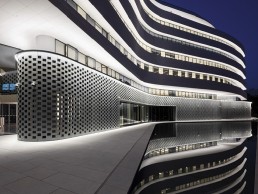
Located in Athens, Greece, the Agemar Headquarters building is an impressive stamp on the landscape of traditional Greek suburbia.
The 30,000sqm ship-like structure is the new home for the Anangel Maritime Group and is nearly all rounded in shape, with only a few squared areas. Eleftheria Deko Lighting Design was suggested to the client by the project’s architect Rena Sakellaridou.
Eleftheria Deko, Owner and Principal Designer at Eleftheria Deko Lighting Design, recalled their application process: “We sent over our portfolio to the client and the project managers and had a long interview where we discussed our philosophy, working procedure and the approach we were going to take with lighting the building.
“Shortly after, we were told that we had been chosen above other applicants, and thus began our collaboration.”
Deko explained that the brief handed over to them from the client was not specific, but that they were targeting the scheme to be applicable for the Platinum LEED award specifications.
“We had several meetings with the architect before presenting our lighting ideas, in order to fully understand the building and get a feel for its personality and desired ambience. We were on the same track aesthetically with the architect, which created the base for a very smooth and creative collaboration,” Deko explained.
“After the presentation of the preliminary lighting design to the client and the project and construction managers, we gained their trust and everyone was happy with the lighting direction. This offered us a very open field to design the lighting schemes on this project for the interior, exterior, façade and landscape.”
Taking a little more than four years to complete, the team worked closely with numerous people to bring the concept to realisation, including Sparch Architects, in particular Rena Sakellaridou; Dimand Project and Construction managers; Dimos Kapetanelis, a lighting automation expert; Jepa Electrical Engineers; and Mc Bains and Green Living, LEED Consultants and trainers.
As is with many unique architectural projects, this one was no different, and brought multiple challenges for the team to overcome. The foundations of the design were based around the idea that the building will look like a luminous ship, not only because of its shape, but because Agemar is a shipping company. With a clear idea and concept to work towards, the team had to figure out which lighting fixtures would be suitable for a uniformed, continuous and diffused look with matching colour temperatures that would suit the white marble of the façade. The peculiarity of the structure of the building proved complicated for the locations of the fixtures. Each size and width of the different surfaces of the façade needed to be lit differently as each floor varied. The team decided on finding one fixture for each application, otherwise a narrow beam fixture for the narrow surfaces and a wide fixture for the wide surfaces would have created a dissimilarity in the intensity of light. Furthermore, the costs of multiple different fixtures would have been unaffordable.
“The final decision was to separate the luminaires in groups based on their location and to use DMX to control the intensity of each group,” explained Deko. “We also decided to use different diffused media to achieve the varied beam angles needed.”
In addition to these architectural considerations, the luminaires also had to be custom made, linear, LED, IP high rated and low on consumption due to the LEED award restrictions. After testing multiple different brands, the team opted to go with the Linea Light Group to create these specific luminaires for the project.
The luminaires were set in-ground in slots that were supported in a way that allowed for rainwater to run off. Issues with maintaining the uniformity of the façade lighting arose in areas where there was no window support to place the luminaires on. Additional bases were created specifically to elevate the fixtures to the same levels as the others.
One of the main priorities for the fixtures, aside from creating the overall desired look, was to conform to the LEED award specifications. Deko explained the luminaires chosen for the individual needs: “The main fixture we used for the façade was a custom-made linear light, 15cm long, 24V (constant voltage), 2.3W, IP65 and 3000K. Linea Light derived it from the Paseo family of linear light modules. We used 1,730 units that were connected in groups of ten.
“To wall wash the claustra, we used 1,213 BoxLED ECO M Plus G3 modules by Osram (in chains of 32 per ten metres) and 3.1W per module, IP66 and 3000K.
“At the entrance we used four smooth poles and two bollards by Simes. For the planted areas of the landscape, we used three different heights of Traddel’s Twig bollards and pole, whilst selectively up-lighting the trees with inground Linea Light spots lights of narrow and wide angles, depending on the type of tree.”
Aesthetically, the ship-like building is bright in comparison to its surroundings, however it does not disturb its neighbourhood. As Deko regarded, “it stands out with grace”.
Integrated into the lighting scheme are three fixed scenarios, one for full intensity, another at 50 percent and a third at 30 percent to tailor for different lighting occasions. There is also an extra option for dynamic lighting, which crossfades smoothly and slowly upwards and downwards between 30-100 percent, giving the impression that the building is breathing and moving like a ship.
The building’s reflection on the unlit water features adds further aesthetically pleasing layers to the structure, along with the unique light lines that follow the architectural lines, making it an iconic stamp on the landscape. Deko reflected on the importance of not over-compensating with lighting on such a structure: “As in music, the silent parts are as important as the melody, similarly we believe that the choice to keep something unlit is as important (sometimes more so) than lighting it.”
The combination of LED lighting, motion sensors and daylight sensors all helped to reduce the energy consumption for the indoor working space and the external lighting fixtures were all carefully selected for their attributes. As a result, at the end of the project’s construction, it was deservedly presented with the LEED Platinum award the team had worked so hard to achieve.

The Lava Tunnel, Iceland
Located 30 minutes from Reykjavik, Iceland, is the Raufarhólshellir Lava Tunnel - a newly opened attraction showcasing the power, and beauty, of nature.
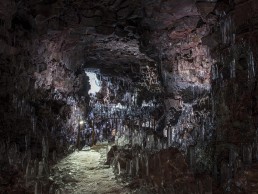
Formed as the result of massive eruptions 5,000 years ago, the Lava Tunnel is one of the longest such phenomena in Iceland at 1360 metres long, and features a majestic yet intricate interior collage of colours and textures.
Near to the entrance of the tunnel the ceiling has caved in, creating three beautiful columns of light. At the far end, it branches into three smaller tunnels where magnificent lava falls and formations are clearly visible.
These geological wonders have now been revealed in all their splendour thanks to a creative lighting installation from Nordic firm EFLA.
Agust Gunnlaugsson, Senior Lighting Designer at EFLA and the man behind the scheme, explained how the company joined the project: “The owners of the tunnel had visited the Langjökull Ice Cave, an earlier project of ours, and really liked what we had done there.
“We had a conversation about the project and how important it would be for the project to have a well-planned lighting scheme to perfect the guest experience, with lights, cables and other equipment as invisible as possible.”
From the offset, the aim of the lighting design for the Lava Tunnel was to develop a strong interaction between contrasts, light and shadow, to intensify the natural colours and emphasise the geological highlights of the tunnel. To complement this aesthetic, it was important that all lighting was unobtrusive, fitted and concealed, with minimal impact on the environment and the biology and ecosystem of the tunnel.
“Our mission was to ensure that the lighting was as harmonious and integrated with the environment as possible, with the overall goal of producing a unique, adventurous visitor experience,” Gunnlaugsson added.
The lighting concept also helps build some subtle drama and anticipation for visitors as they pass through the entrance and walk 400 metres into the tunnel. At this point, the tunnel is plunged into total darkness and complete silence, apart from the odd water droplet. After a minute, the guide uses a hand-held remote to activate a pre-programmed lighting sequence, where each element of the rock and lava is illuminated and highlighted individually, as the guide explains their related geology and history.
Alongside the lighting scheme, EFLA installed an elevated walkway, allowing for guided tours to safely take visitors deeper into the tunnel, showcasing its copious interiors and exquisite magical atmosphere. As with the lighting, this also had to blend into the surroundings, as Gunnlaugsson explained: “The rustic steel ramps, staircases and pathways were also designed by EFLA. They fit exceptionally well into the environment and become a part of the environment, rather than an uninvited guest there.”
EFLA used 100 Anolis ArcSource Outdoor fixtures with various lenses throughout the tunnel, scattered all over the bed of the cave, secreted behind rock sills and tucked into crevices, arranged - with the help of an installation team of professional climbers - to be completely out of sight.
Installing these fixtures, and making sure that they remained hidden, was just one of the challenges that came with working within such an unusual and testing environment.
“It took a lot of testing on site to find the right spots, out of sight for visitors, with the right lenses and the right colours, finding ways to hide the cables and distribution boxes, and so on,” Gunnlaugsson continued.
“In the beginning it was very difficult to travel through the cave. It was very slippery, with a great altitude difference - big rocks that we had to climb over with heavy and expensive equipment.
“It was not so much fun when you got into the cave bottom and found out that something had been forgotten outside! But it got easier once the stairs and paths had been finished later on in the project.”
Most of the real location work for the fixtures, finding the right spot and testing each fixture had to take place on site, as the tunnel is not the kind of scenario that could be easily or practically visualised. For every location, a light source with suitable lumen output and beam angles was positioned, aimed, focused and colour-adjusted to capture the intricacies, native colours and surfaces of the lava rocks.
The pathway lighting was designed to fit the environment. Low bollards of steel were constructed so that the material rusts in line with the bridges and platforms in the tunnel, with a high focus on lighting the paths without stealing any attention from the attractions and preventing glare.
This process of testing everything on site meant that the project evolved organically, in every sense of the word. Gunnlaugsson also believes that this was a big part of the project’s charisma and specialness.
Another aspect that adds to the special wonder is the magnificent natural colour palette. The array of red, pink and orange tones in the rock creates a lasting impression, and it was essential for EFLA to provide the right lighting to highlight these natural colours, without oversaturating them or making them feel artificial.
“Getting the precise colours - via DMX control - was vital to setting the aesthetics of the Lava Tunnel,” Gunnlaugsson said. “As was creating the required contrasts of light and shadow to intensify the natural colours and accent the dynamic geological DNA of the space.
“We took tests beside one of the three openings in the roof of the cave, where the daylight came in, and ‘copied’ the colours in order to get the most accurate colours.”
Lighting in these three openings also proved to be a challenge for Gunnlaugsson and his team. As the surrounding area is one of the best locations to see the Northern Lights, it was important to cut the light around the openings to prevent light pollution from the cave while at the same time lighting up the highlights around the openings without causing any glare to the guests. As installation took place over the summer, it wasn’t possible for EFLA to focus and adjust the lights around the openings, because of the long days, therefore these parts had to be adjusted in the autumn.
Further to this, the near freezing temperatures could have caused some complications when it came to installing lighting in the tunnel. From the entrance to the middle section of the pathway, the temperature mimics that of the outside, while the openings in the ceiling allow for rain and snow to enter. When the temperature drops below freezing, this part of the tunnel can be treacherous, as ice covers the stone pathway.
Deeper inside the tunnel, the temperature remains static most of the year at around five degrees Celsius. Humidity also remains constantly high for most of the year, with rainwater seeping through the stone and dripping from the ceiling. Luckily, EFLA’s prior experience working on the Langjökull Ice Cave (a previous darc awards / architectural winner) meant that they were used to working in such conditions.
However, while working on the Ice Cave gave EFLA experience of working in extreme conditions, the differences between the two projects were still enough for this to feel like a wholly new challenge, as Gunnlaugsson explained: “It’s different for so many reasons.
“Most of my projects are done at least 80-percent in the office, this one was at least 80-percent on the spot. If we think about projects in nature then we can mention the Ice Cave: there you have a pretty clear ice that gives light through and differs in colours, and there’s a different solution for hiding cables, lamps and other equipment as almost all lights are placed inside the walls and floors.
“Although these two are in many ways not so dissimilar in terms of technical solutions, the differences between them are totally black and white.”
Prior to EFLA’s work, the tunnel was a popular site for visitors, but the lack of any real structure to explore inside meant that there were a number of health and safety concerns, to the point that in 2016 the tunnel had to be closed.
The new lighting scheme, along with the raised walkways, has reinvigorated the site, allowing visitors to see the natural wonders inside safely. Gunnlaugsson is pleased with how well the new scheme has been received: “I’m really happy with the solution, and the final impression and experience is just as we wanted.
“There has been strong feedback, both from the owners and visitors about the overall experience, and the lighting. It’s been especially nice to get good reviews from people who had often been in the tunnel with just headlights before. Now they describe the experience as being much more powerful, more dramatic.”
And what is it that makes the experience that much better? The lighting, of course.
“I would say that the lights are definitely one of the key parts of how well it has gone,” Gunnlaugsson enthused. “The lighting helps to build up a more dramatic, spacious feeling, with better colours, and overall a much more powerful experience.”

Kevan Shaw
It’s been a busy few months for Kevan Shaw, Founder of KSLD, following the firm’s success at the Codega Awards, Shaw’s induction into the IALD College of Fellows at IALD Enlighten Europe and the recent merger of KSLD and EFLA. arc sat down with Shaw to discuss all the recent developments.
How did you get into lighting?
This is something I have thought about a lot over the years. There are the influencing factors, which include my father’s practice as a stained glass artist and tapestry weaver, which he carried out at home, and the consequential visits to cathedrals in France and elsewhere during family holidays. Then being introduced to stage lighting while at university. This resulted in opportunities to work in technical and design lighting for touring shows with rock bands, which kind of sealed my fate as being someone who became bound to light as a medium for creative expression.
Can you give us a brief overview of your career to date?
From becoming active in stage lighting at university, I went on to work as a trainee at Max Fordham engineering then spent several years touring shows with various bands. I then went to work with David Hersey designing lighting effects equipment, acting as a design assistant to David Hersey in the theatre, continuing stage lighting with Jethro Tull and doing some broadcast TV lighting. I also got into exhibition lighting and worked on The Mirage Hotel in Las Vegas.
You established KSLD in 1989, how has the company, and the lighting industry as a whole, changed over the past three decades?
Pretty massively! It started as a one-man consultancy, and has now grown and extended its international reach. The lighting technology has changed radically, with exponential change to LED lighting technology in the past decade. Overall, we have seen the manufacturing of lighting products shift from Europe to China and now the ownership of major historic brands follows as the big companies have backed out of the lighting business.
Do you have an overriding design philosophy that you like to implement in your work?
Yes! Really it is working to provide the best experience of light for the ultimate users of the space you are designing for, guiding clients to the optimum solution that achieves this.
Congratulations on your recent induction into the IALD College of Fellows - what does such recognition mean to you?
This is a great honour and recognition of the contribution I have made to the IALD and the profession as a whole. Being given this recognition from my peers makes me very proud.
As a member of the IALD, you are heavily involved in their work in the EU. How have you worked to improve the standing and reputation of lighting design as a profession within the EU?
I hope that by interacting with the EU at a very professional level we have demonstrated that we are serious knowledge holders in lighting. Most stakeholders are representing positions for what is most advantageous for them alone. We have always tried to provide reasoned commentary as to what is best, not just for us as lighting designers, but also for what will benefit the end users. Over the past nine years we have not been an official consultee and have had to work hard to gain access. In October, we were granted status as an official consultee, and now lighting designers are even being mentioned in communications by senior people in the Energy Commission. This is significant high-level recognition of the profession.
KSLD joined EFLA Consulting Engineering in November of this year. How did this merger come about?
We have known EFLA for many years. They have invited me to Iceland, and Kristján Kristjánsson came over and worked at KSLD for about two years. When he returned to Iceland, we discussed cooperation between KSLD and EFLA, and ultimately the closest cooperation would be through a merger. We have discussed this over several months and have now completed the transaction.
What will the move mean for KSLD?
Basically, the EFLA lighting design division offices in Reykjavík and Oslo are the same size, so you could say KSLD has doubled in size and now has three offices! We will be trading as KSLD EFLA Lighting Design, combining our experience and resources. We are now also part of a significant engineering consultancy with a broad range of specialisms, of which lighting design is one; so we now have the possibility of collaborating on multidisciplinary projects from the Nordic offices. In Edinburgh, we will remain a lighting design office.
What do you think the future holds for the lighting industry?
Well let’s put it this way: I will be considering fluency in Chinese a valuable skill for new employees! As a consequence of the rush into LED technology and the overly rapid banning of conventional lamp technologies, the largest volume of lighting manufacturing has moved to the Far East. The former major players have been divesting themselves of lighting businesses and many of these are now Chinese owned. The inevitable consequence will be that new ideas and innovative products will originate in the Far East. This is already in evidence; the filament LED lamp was invented in Taiwan.
We are still learning a lot about the impacts of light on people. While there is a lot of marketing based ‘human centric lighting’, there is much research to be done to understand the implications of the non-visual receptors in the eye. This will result in new knowledge and new considerations for lighting design. I really hope that as lighting designers, we can be involved with and contribute to this aspect of lighting.
Human Centric Lighting - The New X Factor?
Reflections on the known and unknown aspects of Human Centric Lighting (HCL) after darc room workshop
by Asst. Prof. Dr. K.M.Zielinska-Dabkowska IALD, IES, CIE, MSLL, RIBA
We live in challenging times, and one could even claim we’re experiencing a revolution in lighting with LED technology taking over the world. Part of this rapid change involves a concept called Human Centric Lighting (HCL). In Frankfurt this year, during Light+Building, it was the buzzword, with nearly every second manufacturer’s stand claiming they had figured out the special formula necessary to create perfect HCL illumination. But how can such claims be legitimate when we know so little about the full and complex impact of artificial lighting on human biology, let alone how to responsibly apply this new approach?
Many experts in this area of research are aware that their knowledge is still fragmented, that they don’t have the whole picture and thus, are unable to draw final conclusions that can guide the design and implementation of responsible LED lighting. This includes Dr Russel Foster from Oxford University: the neuroscientist who, with his team in 1991, identified the eye’s third photosensitive cells called intrinsically photosensitive retinal ganglion cells (ipRGSc) whose function, unlike that of rods and cones, is unrelated to vision. He recently stated: “We can’t develop human-centric lighting until we know what impact light has upon human biology across the day and night cycle”. [1] Also according to Dr. George Brainard, a well-known researcher in the field, “light works as if it’s a drug, except it’s not a drug at all”, [2] so if this is the case, why don’t we follow the medical industry and their best practice?
All modern medication requires various testing on animals and humans to obtain approval, and it might take ten to fifteen years or more to complete all three phases of clinical trials before the licensing stage, whereas, with lighting, we have omitted this stage. Rather than apply the precautionary principle, we allow ourselves and our clients to be unwitting guinea pigs without knowing or even anticipating the long-term consequences. Are we as lighting designers practicing medicine without a licence?
There are several reasons why our understanding of the impact of light on the human body is so limited. Firstly, the discovery of new photoreceptors is relatively new; less than two decades, and there is insufficient interdisciplinary research in this area.
Secondly, we’ve grossly underestimated the powerful influence of light on biology and therefore incorrectly assumed lighting plays a minor role in health and wellbeing. Now we know the opposite is true, we need to be more resourceful in our research because medical ethics prevents direct study on humans. (Unlike other animal subjects, researchers cannot, for example, induce rod and cone loss to investigate the ganglion cells in humans, neither genetically nor with chemicals). We do know from numerous research on test animals and the information obtained, that artificial light at night can have serious negative effects including alterations to the circadian clock [3], patterns of behaviour [4], or biochemistry [5], as well as an increase in various diseases [6].
What’s become obvious in recognising the limits of our understanding about this topic, is just how complex it is to mimic natural light, and that far more research is required to identity what’s needed to apply artificial lighting safely and effectively. This is why the Human Centric Lighting workshop held during darc room on 19th September 2018 took place - to initiate the important discussion between UK-based lighting practitioners, representatives of established lighting bodies, lighting industry partners and the general public.
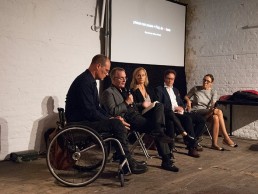
The panel discussion featured Mark Ridler (Director of Lighting at BDP); Rebecca Weir (Creative Director at Light IQ); Stephen Lisk (Past President of SLL and current President of CIBSE) and Iain Carlile (Associate at DPA and current President of the SLL) and also included myself as chair of this event, a practicing lighting designer, researcher and educator.
If one had attended this event and expected a clear and obvious solution, they might have left disappointed, as the focus was on the known and the unknown aspects of HCL. As indicated by the sheer number of participants, including John Lincoln of LightAware (a registered UK charity dedicated to supporting light-sensitive people), as well as the numerous comments from the audience, it was obvious this subject is a serious challenge for many.
To further complicate matters, lighting practitioners, responsible for designing artificial lighting are overwhelmed with recently developed metrics such as: circadian action factor, melanopic sensitivity, melatonin suppression index, circadian light, etc., and they need clear guidance on which ones to use and why. In Europe numerous associations with various task groups including SLL, CIBSE, and CIE are working around the clock on appropriate guidelines and standards; and overseas, IES is doing the same. But without proper, repeated long-term research involving humans of different ages, sex and sensitivity towards LED artificial lighting, all the proposed metrics might be just guesswork.

The Definitions
Human Centric Lighting (HCL) is defined by LightingEurope as a type of lighting that “supports the health, wellbeing and performance of humans by combining visual, biological and emotional benefits of light”[7]. This is achieved by dimming and a change in Correlated Colour Temperature (CCT) of a smart light source (most likely an LED), to mimic the appropriate levels of irradiance and spectrum of sunlight throughout the day. But how can this be achieved to a satisfactory degree when daylight constantly changes?
If we look closely at the whole HCL concept, gaps in our comprehension become obvious. How can we confidently claim to replicate daylight/sunlight and therefore provide its many benefits without taking into consideration all of its known components including: light intensity, timing, duration, spectral power distribution, irradiance, the angle where light comes from, and perhaps also even the variation of light due to different seasons? We also need to be aware, that just like with the discovery of ipRGSc in the human eye, there may also be important aspects of our biology and factors regarding the properties of sunlight that we haven’t yet considered or even know exist.
LED lighting technology has been designed to reduce energy consumption, and therefore minimise global warming, but there are certain inherent shortcomings with this technology as well as a great deal of misunderstanding about the unique characteristics of light produced by LEDs, that directly conflicts with the core principle of HCL. For example, the most energy efficient LED lighting produces blue-rich white light. While the CCT of a 6000K LED may appear similar to the bright light of midday, the actual spectral power distribution (SPD) is noticeably different to natural sunlight as it lacks infrared wavelengths and also has a trough in red wavelengths of light. Therefore, its biological effects are different, so it cannot be compared. Even with LEDs that emit less blue wavelengths of light and appear warmer to the human eye (for instance 2400K), important parts of the spectrum present in natural sunlight are still missing. It’s short-sighted to focus on changing the CCT of luminaires, especially when it’s a limited and insufficient metric. We should pay attention to the spectral power distribution (SPD) of a light source as this provides information about its light spectrum. As mentioned before, certain parts of the spectrum present in natural sunlight that benefits our biology, are absent with LED technology. We also need to consider that due to the “rebound effect” [8] humanity is now using far more energy to illuminate our surrounds than we did before the advent of LED technology (as this form of lighting is now cheaper, so we use more of it, and we also light up areas that were not lit up before). If we are to embrace HCL, we need to accept that the less lighting we use at night the better, that it's well positioned, and that the light it emits has the most appropriate SPD, is evenly distributed, and dimmable.
An alternative term often used to HCL is Circadian Light or Circadian Lighting, as “spectrally weighted retinal irradiance that stimulates the human circadian system”[9]. The word circadian comes from the Latin circa, meaning "around" or "nearly", and diēm, meaning "day". Circadian rhythm is approximately a 24-hour cycle in the physiological processes of living organisms that involves exposure to light during the day and darkness throughout the night, with the only sources of light being the moon, stars and planets. The very term ‘circadian light’ is an oxymoron, and more accurate terminology is needed to describe what we are doing or should be doing with artificial lighting.
Based on the above, I would like to propose a new term: Research Informed Human Light (RIHL) which more accurately describes benign light for humans in interior spaces, applied by lighting professionals based on solid knowledge and research. This type of lighting follows the natural patterns and properties of day and night. During the day, natural light via windows and skylights should be provided and only supplemented with artificial light where there is insufficient daylight available. Such light is of a continuous spectrum, brighter compared to natural early evening light, tuned to what is outside and from above. In the early evening, the rule should be warm white lighting with a colour temperature below 3000K, and as little blue light in the spectrum as possible. Ideally, at night, artificial lighting should be kept to a bare minimum with a recommendation of light with a spectrum greater than 600nm (amber, red colour). All forms of this lighting at night should be indirect, preferably positioned at a low level, flicker-free and also dimmable.
The challenges of HCL/Circadian lighting for Lighting Designers
As our clients follow multimedia and become more knowledgeable about the impact of natural and artificial light on their health, wellbeing and productivity; they want to apply this new knowledge supported by technological advancements in LEDs in their projects. They are given promises by lamp, luminaire and control manufacturers, based on claims that HCL can solve all sorts of problems (without understanding the complexity involved), and often they want to achieve circadian credit from WELL Building Standard (a performance-based system for measuring, certifying, and monitoring features of the built environment that impact human health and wellbeing, through air, water, nourishment, light, fitness, comfort, and mind). [10]
This means discrepancies result between the client’s expectations and what professional practicing lighting designers can actually deliver based on scientific knowledge. We have a moral responsibility and obligation to ensure the lighting provided by professionals is safe and effective because designing healthy lighting “is becoming an important ethical issue that cannot be ignored” [11].
There is hope. CIBSE’s environmental team and SLL in the UK, are currently working together on guidelines and memorandums related to HCL. For example, Technical Memorandum TM-40 “Health Issues in Building Services” is currently under review. There is also an RLRCL Report that describes an initial Literature Review on Circadian Lighting, which will be updated with new research in 2018.
| Table 1. Impact of artificial light on humans from modern light sources as LEDs based on available scientific research © K.M. Zielinska-Dabkowska |
|
| What we already know | What we need to learn |
| There is a new non visual photoreceptor type in the human eye named intrinsically photosensitive retinal ganglion cells (ipRGSc) unrelated to vision, which have a different function to rods and cones | The exact number and location of new photoreceptor type in the human eye |
| Light that reaches the human eye has visual and non-visual effects - with the latter influencing our biological clock | How ipRGCs communicate to rods and cones and why? |
| Light has an impact on physiology of humans | The long term impact/effects of different lighting conditions |
| We're aware of irradiance and that this new receptor is sensitive to it, but our knowledge is still fragmented | The dose (how much is enough or too much in terms of light irradiance)? |
| We're also aware of the light spectrum, and that this new receptor is sensitive to specific parts of it, but our knowledge is still fragmented | Which light frequencies should be avoided (having potentially deleterious effects) and which ones should be present due to their positive effects |
| Exposure to light has effect on people | The impact based on age (young children, adults, elderly) |
| Exposure to light has an effect on people | Impact based on Chronotype. (People are different ‘chronotypes’ – ‘larks’ or ‘owls’ – and lighting effects each group differently. One third of the world population will have a shift in their circadian rhythm) |
| Exposure to light has a significantly adverse effect on some people (approximately 1% of the population experiences hypersensitivity) | Impact based on specific light spectrum frequency. Which light frequencies should be avoided (due to potentially deleterious effects) and which ones should be present due to their positive effects |
| Exposure to bright light containing the blue part of the spectrum at the beginning of the day can have a stimulating impact on the body clock, and can promote alertness | The exact wavelength of spectrum, timing and duration |
| Exposure to light with the blue part of the spectrum in the early evening can stimulate wakefulness and disrupt sleeping patterns during the night | The exact wavelength of spectrum, timing and duration |
| Approved metrics and tools are required | What are the best tools and metrics to apply |
Conclusion: What are the next steps and action plan for the future?
The Lighting Community needs to acknowledge health and wellbeing as a major principle in engineering and the design of light and lighting systems - Primum non nocere (ang. first, to do no harm). Additionally, we must recognise that the effects of lighting on human health based on current research is not fully understood, and accept too, that its complexity requires further discussion and the necessary means to better understand it, necessitating financial support to conduct such independent research, the application of appropriate research tools and development of methodologies used.
It’s imperative we come together to define what is required in terms of design related questions. (Too many researchers and scientist from Academia conduct research studies without being aware of what’s needed by Lighting Professionals.) As LED technology is constantly evolving, relevant questions need to be framed in a practical fashion in the form of applied research. Respected Model for Applied Research Collaboration (MARC) (see Fig. 2) between Lighting Professionals (1), Professional Associations (2), the Lighting Industry (3) and Academia (4) need to be established.
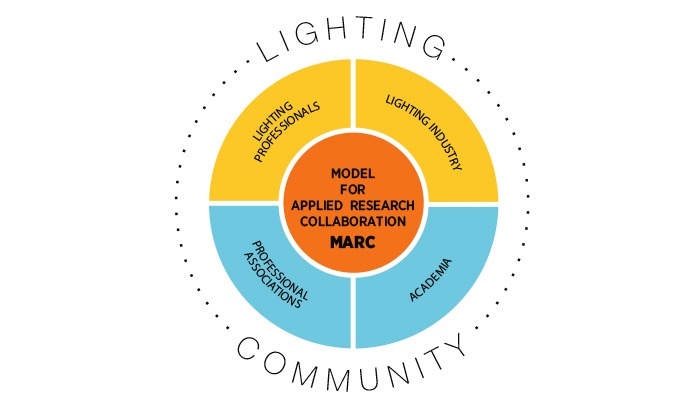
Proposed actions to be taken by the Lighting Community:
- To prioritise research in different areas and identify the most urgent issues.
- To accept and acknowledge that natural light is superior to all forms of artificial lighting.
- To encourage sharing and promote events such as Light Symposium Wismar, Stockholm (lightsymposium.de), and educational platforms/Consortia such as LLRC (www.LLRC.edu.com) etc. and use them as vehicles to network and spread the latest available knowledge for best lighting practice.
- To establish how research funding can be matched with Academia and the Lighting Industry.
Proposed actions to be taken by Lighting Professionals:
- To prioritise research in different areas and identify the most urgent issues.
- To be involved in/overseeing professional, independent, interdisciplinary research that will enable the design community to answer clients’ needs.
- To educate the public and build on growing public awareness of this topic.
- To understand the influence of culture on lighting preferences and what kind of impact it might have on overall health and wellbeing. For example, Asian people often prefer bright, cooler light at night compared to Europeans.
- To seek collaboration with RIBA, as Architects have the most profound impact on daylight design in buildings.
- To ensure healthy lighting is prioritised on the agenda of Governmental bodies.
- To find people who can translate the needs of Lighting Professionals into a series of academic questions that can then be collated to produce documents a layman understands and finds useful.
Proposed actions to be taken by the Professional Associations:
- Professional Associations such as IALD, CIBSE, SLL, IES, CIE should be involved in identifying what questions need to be collated from their professional members, as these will become an important resource for future research developments of MARC.
- To collate peer reviewed documents using current interdisciplinary, independent research, so Lighting Professionals have something to refer to that backs up their decisions, and informs clients of the latest research.
- To connect the Lighting Industry with Academia to create access to funding, and also provide Academia with questions that needs to be answered.
Proposed actions to be taken by Academia:
- Scientists and researchers from different fields of Academia need to be involved in research to allow complex understanding of different interrelated aspects of light and lighting.
- Peer reviewed research must be generated. European Commission will only change their polices if there is evidence that proves or disproves certain research theories/hypothesis.
Proposed actions to be taken by the Lighting Industry:
- To create a pool of various LED lamp manufacturers that have a joined approach to research (commercial advantage) with a shared outcome, as this provides more resources for Lighting Professionals and Academia.
A Nobel Prize should be awarded to those who discover the key to healthy artificial lighting. One day soon, we may realise/admit that incandescent illumination provided as close to a perfect form of light as we’ve come - and that perhaps we made a grave error in banning it, in our rush to save energy and embrace LED technology with its many shortcomings. For now, we must ensure the necessary research is undertaken to develop recommended practices to support our responsibilities as lighting designers and to focus on making LEDs lighting safer and healthier.
About the Author
Karolina is a chartered RIBA architect and award-winning practicing lighting designer. She is also an Assistant Professor at the Faculty of Architecture, Gdansk University of Technology (GUT), Poland, and co-founder of GUT LightLab, where she conducts research on various aspects of light and lighting in the built environment. She is actively engaged in the work of international organisations such as the International Lighting Designers Association (IALD), the Illuminating Engineering Society (IES), and International Dark-Sky Association (IDA), providing guidelines and sharing best practice for nighttime illumination in the built and natural environment.
References:
[1] Molony, R. (2018, March 26). ‘Too early to start human-centric lighting’ – top scientist. Luxreview online. Retrieved from http://luxreview.com/article/2018/03/-too-early-to-implement-human-centric-lighting-top-scientist [03.12.2018]
[2] Beil, L. (2011, July 4). In Eyes, a Clock Calibrated by Wavelengths of Light. The New York Times. Retrieved from https://www.nytimes.com/2011/07/05/health/05light.html [03.12.2018]
[3] Kempenaers, B., Borgström, P., Loës, P., Schlicht, E, Valcu, M. (2010). Artificial night lighting affects dawn song, extra-pair siring success, and lay date in songbirds. Curr Biol 2010;20(19):1735–1739
[4] Russart, K.L.G., Nelson, R.J. (2018, October). Artificial light at night alters behavior in laboratory and wild animals. J Exp Zool A Ecol Integr Physiol. 329(8-9):401-408
[5] Dauchy, R,T. et.al. (2011, May). Eliminating Animal Facility Light-at-Night Contamination and Its Effect on Circadian Regulation of Rodent Physiology, Tumor Growth, and Metabolism: A Challenge in the Relocation of a Cancer Research Laboratory. J Am Assoc Lab Anim Sci., 50(3): 326–336.
[6] Emmer, K. M., Russart, K. L. G., Walker, W. H. II, Nelson, R. J., & DeVries, A. C. (2018, August). Effects of light at night on laboratory animals and research outcomes. Behavioral Neuroscience, 132(4), 302-314.
[7] Retrieved from https://www.lightingeurope.org/human-centric-lighting [03.12.2018]
[8] Kyba, C. C. M. et al. (2017, November 22). Artificially lit surface of Earth at night increasing in radiance and extent Science Advances, Vol. 3, no. 11, e1701528
Retrieved from http://advances.sciencemag.org/content/3/11/e1701528 [03.12.2018]
[9] Rea, M., Figueiro, M., Bierman, A., Bullough J. (2010). Circadin Light. Journal of Circadian Rhythms 8(2).
[10] Knox, N. (2015, April 2). What is WELL? Retrieved from https://www.usgbc.org/articles/what-well [03.12.2018]
[11] Zielinska-Dabkowska, K.M. (2018). Make lighting healthier. Nature 553 (7688) pp. 274-276,
Retrieved from https://www.nature.com/articles/d41586-018-00568-7 [03.12.2018]

Mel Collins appointed new Director for Contrac Lighting
(UK) - Contrac Lighting has recently promoted Mel Collins as the new Commercial Director and she will be joining Anne, Kelvin and Graham on the board.
This year Collins marked her twentieth anniversary as a member of the Contrac team, having joined the firm as a junior admin role in 1998. Since then, Collins has moved up through the company ranks to become an important part of Contrac Lighting and has been instrumental over the two decades in guiding Contrac to the success it now enjoys.
Her long-standing service to the company, intimate knowledge of the industry and work in securing and managing some of Contrac’s most prestigious contracts makes Collins a great choice for the role.
Managing Director Anne Shone said: “I am really happy the Collins has agreed to take this step up with Contrac Lighting. It is a well-deserved promotion for her loyal services to the business, its customers and directors. I am sure her intelligence and enthusiasm will be valued addition to the board. Congratulations, Mel.”
Commercial Director, Mel Collins, said: “Starting out as a Sales Administrator and moving on to Commercial Manager, I was ready to face a new challenge and would like to thank Anne and Kelvin for giving me this fantastic opportunity in assisting them with the running of their business.”

darc awards / architectural winners unveiled at darc night
(UK) - DHA Designs picked up the Best of the Best darc award at darc night, the darc awards / architectural ceremony, which took place at MC Motors in London on December 6th.
Christmas came early this year, as the winners of the 2018 darc awards / architectural were unveiled at darc night, a special Christmas party held at MC Motors in London on December 6th, complete with street food, a free bar, and thirteen Christmas tree-themed light installations by top lighting designers and manufacturers.
The winners were:
STRUCTURES: Best Exterior Lighting Scheme - Low Budget: Coralarium, Maldives by Mushroom Lighting
STRUCTURES: Best Exterior Lighting Scheme - High Budget: Agemar Headquarters, Greece by Eleftheria Deko Lighting Design
PLACES: Best Interior Lighting Scheme - Low Budget: Ambience, Australia by Ambience
PLACES: Best Interior Lighting Scheme - High Budget: Hintze Hall, Natural History Museum, UK by DHA Designs
SPACES: Best Landscape Lighting Scheme - Low Budget: Black Prince Road, UK by Michael Grubb Studio
SPACES: Best Landscape Lighting Scheme - High Budget: The Lava Tunnel, Iceland, by EFLA
ART: Best Light Art Scheme - Low Budget: Aperture, UK by Visual Energy
ART: Best Light Art Scheme - High Budget: Skalar, Germany by Christopher Bauder and WHITEvoid
EVENT: Best Creative Lighting Event: Lumiere Durham, UK by Artichoke
KIT: Best Architectural Lighting Products - Exterior Luminaires: 3D LED Flex 100 IP66 by Radiant Architectural Lighting
KIT: Best Architectural Lighting Products - Interior Luminaires: Atto by Precision Lighting
KIT: Best Architectural Lighting Products - Technology: Bluetooth Lighting Controls by Xicato
darc award - Best of the Best: Hintze Hall, Natural History Museum, UK by DHA Designs
darc night marked the conclusion of a record-breaking six month process which saw more than 400 entries submitted (up from 300 last year), including 100 entries in the PLACES - High category, and more than 100 entries in the KIT categories.
Altogether projects from 50 countries were entered, and there were more than 7,000 votes, making this year’s awards the most hotly contested yet.
The unique presentation format, free bar, street food and impressive lighting installations all contributed to a hugely enjoyable and creative evening for the more than 600 lighting designers, interior designers and architects in attendance.
The installations on show at darc night were created by Nulty (in association with Linea Light Group), dpa (Targetti), Michael Grubb Studios (Ligman), Arup (formalighting), Lichtvision (EcoSense), 18 Degrees (Delta Light), MBLD (LED Linear), Speirs + Major (Osram), Hoare Lea (Lite), BDP (L&L Luce&Light), Light Bureau (Atrium), Superteam (Pulsar) and Light4 (Fagerhult).
After a vote on the night by visitors, an award for the best installation was presented to 18 Degrees and Delta Light for their installation, entitled Carousel.
The darc awards / architectural, organised by [d]arc media together with creative consultants Light Collective, is a celebration of the best lighting design around the world, and is the world’s only peer-to-peer lighting design awards.
www.darcawards.com/architectural
Modular Lighting Instruments open new North America HQ
(USA) - With a new headquarters and manufacturing facility opening, Modular Lighting Instruments is expanding into the American market.
Belgium-based Modular Lighting Instruments is expanding its presence in North America with a new HQ in Pittsburgh, and a local manufacturing facility in Grand Haven, Michigan.
“We see an enormous potential in North-America with regards to architectural lighting”, said North America Market Leader John Yriberri.
The move from Modular Lighting comes following recent market research reports showing that the US alone purchases nearly a quarter of the total global lighting fixtures.
The high-end indoor architectural lighting market - focused on wall and ceiling products, will continue to grow in both the US and Canada, while LED continues to displace traditional light sources.
In order to embed into the new surroundings, Modular Lighting is investing in product development resources and infrastructure, and the new HQ and manufacturing facility give the company a solid foundation for growth.
Approximately 65-percent of Modular Lighting’s products will be manufactured in Michigan by the end of 2018, and that number is expected to jump to nearly 80-percent by the end of Q1 in 2019.
Illuminotronica completes first trade show in Bologna
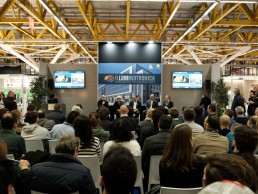
(Italy) - The Illuminotronica (Lumi) exhibition in Bologna, Italy, made its successful debut between 29 November and 1 December.
Drawing in more than 6,000 visitors from the industry, including architects, engineers, installers, system integrators, energy and facility managers, buyers and technical offices of companies and local authorities, Illuminotronica (Lumi) is referred to as a reference point for the new integration market for application of IoT technologies in many different sectors, such as lighting, building automation and security.
Promoted by Assodel, the Italian Association of Electronics Clusters, the event represented the new integration market by highlighting the ways of doing business with IoT.
The event hosted 95 training and conference sessions, including digital retail and experience design, eco-sustainable design and near zero emission building; services for the smart city and the circular smart city model; building management and energy saving best practices; smart lighting and interconnected light; privacy and digital security; connectivity and communication protocols.
Focusing on matching the demand and supply of innovation, with the aim of supporting digital transformation in the built environment, the trade show presented a new model of exhibition.
“Lumi puts in synergy for the professionals of the supply chain and brings together system integrators, designers, installers, software and hardware manufacturers. The goal is to represent the ecosystem of integration: from technology to applications through connectivity, bringing new business opportunities to companies and professionals,” explained Elena Baronchelli, general manager of Illuminotronica.
As a result of this year’s success, with more than 200 participating companies connecting with Bologna Fairground, the event will return in 2019. With its partnership with BolognaFiere, Lumi wants to achieve the goal of digitisation in the built environment sector including all different spaces, from offices to shops, buildings and the urban environment.
Signify joins Illuminated River Project, work to begin on site in 2019
(UK) - The Illuminated River Project has brought in Signify as its Connected Lighting partner, with work scheduled to begin on site in early 2019.
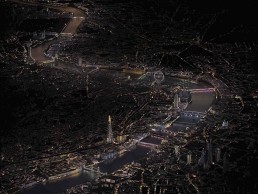
The initial stage of the Illuminated River public art commission, which will light up London Bridge, Cannon Street, Southwark and Millennium Bridges, will commence in 2019, the Illuminated River Foundation has announced.
Following the granting of planning permissions, work will shortly commence on site, two years since the winning team was announced by the Mayor Sadiq Khan, with the first four bridges scheduled for completion in summer 2019.
Designed by light artist Leo Villareal and architects Lifschutz Davidson Sandilands, the light installation will span up to fifteen central London bridges, from Albert Bridge in West London to Tower Bridge in the City. The activation across the bridges will be phased, with a further section completing in 2020, and Illuminated River due to be fully delivered by 2022, subject to funding being secured.
The scheme has been developed in consultation and collaboration with more than 50 organisations on and around the river, including the Port of London Authority, Historic England, Cross River Partnership, seven local authorities, from whom 29 planning permissions and eighteen listed building consents have been granted.
Chair of the Board of Trustees, Neil Mendoza, said: “A tremendous amount of work has been done since the winning team of Leo Villareal and Lifschutz Davidson Sandilands was announced almost two years ago.
“Much of that work has been undertaken in collaboration with organisations up and down the river, including one of the largest and most detailed planning processes London has seen. We are grateful for the contribution of all our partners and look forward to continuing our work together.”
As developments on the project continue, it has also been announced that Signify, formerly Philips Lighting, will be the connected lighting partner. The lighting manufacturer will supply its Interact Landmark system and Philips Color Kinetics LED luminaires to light up the bridges with dynamic, artistic lighting effects via its centrally managed software.
“London’s bridges are world famous, but had become overlooked in terms of their potential to transform our capital city at night,” said Sarah Gaventa, Director at the Illuminated River Foundation. “What we are doing now, in partnership with Signify, to transform the bridges and riverfront, is groundbreaking.”
“Light is one of the most powerful means of breathing new life into leading cities and metropolitan areas, heralding a new era of urban design and beautification,” added Maria-Letizia Mariani, President of Europe, SVP at Signify. “We’ve lit bridges around the world and seen first-hand the positive impact that dynamic architectural lighting has on transforming local communities and economies. It’s wonderful to give the people of London stunningly-lit bridges, with some lit up for the first time.”
www.illuminatedriver.london
www.signify.com
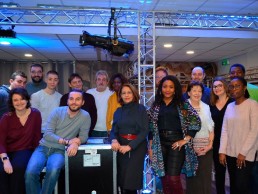
ETC announces new Paris office with recent acquisition
(France) – The new Paris office follows the acquisition of local distributor Avab Transtechnik France.
ETC has announced the opening of its newest office in Paris, France following the acquisition of local French distributor Avab Transtechnik France (ATF).
ATF has been selling and supporting ETC products for more than fifteen years. When owners Jean-Louis Pernette and Christian Rezgui retired in May, an opportunity arose for ETC to acquire the French company and increase its presence in the European market. With this acquisition, ATF becomes part of the ETC family and is officially named ETC France.
"I am extremely grateful for the dedication and effort Jean-Louis Pernette and Christian Rezgui have contributed through their leadership of ATF over the years,” said Fred Foster, co-Founder and CEO of ETC. “The close relationships they have built with our customers in France and the strength of the ATF team provide us with a solid foundation to build the future of ETC France. We wish them all the best in their future projects."
All ATF employees joined ETC as part of the acquisition. “The men and women of this organisation are our first force,” added Atika El Sayed, new General Manager of ETC France. “We want to continue to develop our presence in France thanks to this close relationship with the market that the team has been weaving for many years.”
ETC France is supported by current Regional Sales Manager, Daniele Peroni as well as Field Project Coordinators, Philippe Roy for ETC products, and Konstantinos Vonofakidis for the High End System’s brand.
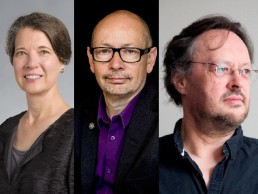
IALD announce 2018 inductees to IALD College of Fellows
(USA) - Patricia Glasow, Mark Major and Kevan Shaw have been inducted into the IALD College of Fellows.
The IALD has announced that three new members have been inducted into the IALD College of Fellows.
Patricia Glasow, Mark Major and Kevan Shaw were formally inducted at the IALD Enlighten Americas 2018 conference in Seattle in October, and were recognised in the opening keynote speech from IALD President David Ghatan at the IALD Enlighten Europe 2018 conference in Barcelona on 7-9 November.
Glasow, Managing Principal of Auerbach Glasow, has designed and managed hundreds of lighting projects throughout North America, Asia and Europe. Formally trained in theatrical lighting design at University of California - Los Angeles, she worked for Walt Disney Enterprises early in her career, which served as her transition to architecture and the firm she has led and helped grow for the past 34 years.
As a Principal at Speirs + Major, Mark Major has worked on a wide range of award-winning projects, including the Millennium Dome, the Beijing International Airport, and the re-lighting of Saint Paul’s Cathedral. Major acted as the Lighting Design Advisor to the Olympic Delivery Authority for the London 2012 games, and in the same year was appointed to the Mayor of London’s Special Assistance team for the Outer London Fund. Most recently, he completed the “Lighting Vision” for the city of London.
Kevan Shaw’s career in lighting began more than 40 years ago, 30 of which have been at his firm, Kevan Shaw Lighting Design. Shaw’s achievements in the field of lighting design consist of more than 650 projects from around the world, across a broad range of fields. Recent notable projects include the Ashmolean Museum in Oxford, the Scott Monument in Edinburgh, and the Scottish Parliament Debating Chamber - winner of the 2018 Codega Award.
A devoted advocate for the lighting design profession, Shaw has served on the IALD Membership Committee, currently serves as a member of the European Union Regulatory Affairs Working Group, and will be completing his fourth year on the IALD Board of Directors at the end of 2018.
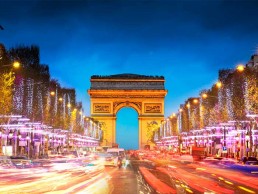
John Cullen Lighting opens new office
(France) - John Cullen Lighting opens its latest office in Paris this October, following on from its recent expansions in Dubai and Mumbai as part of its international growth.
The new location will enable the lighting firm to expand their brand and services to the French market, including residential and hospitality lighting applications.
Peter Rowledge, Director of International Sales said: “At John Cullen we are on a mission to inspire and educate people around the world to get the most out of light through perfectly executed world class lighting schemes. This new opening helps us to personally deliver our brand promise to this local market.”
CEO Peter van der Kolk added: “Our detailed approach will ensure that our international projects are finely crafted to evoke an emotional response to lighting. We are calmly understated and our mission is to help designers realise the power of light wherever they operate.”
