
Cariboni Orao
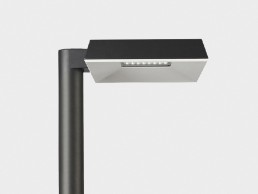
Orao lights up façades, paths and urban spaces with LED technology. The optical systems guarantee visual comfort, safety and enhanced quality of space. It includes different installation methods for any environment. Rotosymmetrical, symmetrical, asymmetrical and street optics are available, as well as solutions for wet road surfaces. The high efficiency of the lamps used and the various smart lighting systems ensure that only the required areas are lit.

DP Architects
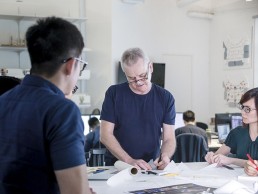
Established in 1967, two years after Singapore’s independence, DP Architects (DPA) was founded with the belief that this newly independent country should develop its own personality and identity as an island city-state with a diverse population.
Committed from the outset to be part of Singapore’s nation-building, DPA, originally known as Design Partnership (DP), evolved in much the same way the country did – adapting to changes, embracing innovation and pursuing excellence.
In the 51 years since its formation, DP has grown extensively, now operating as a group of companies that cover a spectrum of services, from lighting design and architecture to engineering, construction and landscape and arboricultural consultancy services.
“This growth has been possible because of three things: our continued pursuit of design excellence, our people-centric approach and a collaborative spirit,” said Angelene Chan, CEO of DP Architects and its group of companies. “From early on, we realised that people are and will be the key to greater success. After all, architecture is about the people – in other words, buildings for people, designed by people.”
Chan, who recently won the President*s Design Award 2018 for Designer of the Year – the highest design accolade in Singapore, believes that the practice of architecture as a deeply meaningful act has the power to foster a strong sense of community and improve lives. A believer in the transformative power of design, Chan’s greater aspiration as a designer is to nurture a culture of learning and design thinking, cultivating a spirit of exploration and invention within the practice.
As such, a culture of mentorship and collaboration was inculcated within the firm. “In the early years, collaboration took place between DP and external consultants, fellow experts and related specialists within the industry,” Chan continued.
“Now, 51 years on, this spirit of collaboration has led to the amassing of talents across a spectrum of related fields, leading to the DP Architects group of companies today, which have helped in growing the firm into the eighth largest architectural firm in the world.”
Alongside its eight specialist arms, DPA has been growing its knowledge and expertise in various typologies, with ten key typology research groups. Despite such a broad scope of expertise though, is there an area that DPA feels that it specialises in?
“If we really had to narrow it down, it would be our ‘Hub Ecology’, which is pioneered by DP,” said Chan. “It taps into the Mixed Development, Urban Planning and Sports, Community & Recreation typologies to capitalise on the creative mixing of programmes in the development of town centres that create greater social cohesion.”
A key example of this can be found in Our Tampines Hub (OTH), the world’s largest Public-Private Partnership (PPP) project, which was completed in 2017. An integrated community, sports and lifestyle development, OTH houses a wide range of facilities for arts, culture, civic, commercial, sports and community activities, and was designed through a participatory design process with the residents of the Tampines district in Singapore.
“We’ve also exported our design methodology overseas via our One Global Studio network into the international market, such as in China with projects like the Foshan Arena Centre and the recently completed Hongqiao Plot 8 Business Park,” Chan added.
The One Global Studio network, an international initiative established by DPA, connects its seventeen overseas offices, effectively expanding the firm’s global reach from Shanghai to London.
Effectively embedded within its unique context, each office allows DP to garner information in real time and to tailor to the immediate needs of each of its clients, while utilising a comprehensive support network and pool of shared resources that operate across geographical boundaries.
Such an interconnected approach across its global operations has allowed DP to implement a consistent design approach and philosophy in its work, as Chan explained: “DP’s designs are guided by a deep concern for the built environment and the need to create architecture of excellence that enriches the human spirit and experience.
“This is spearheaded by the ‘designFIRST’ ethos. Design is a sum of parts and DP makes it a point to carefully deliberate every design aspect at every stage and assess them with a key design tool we call the Attributes of Purposeful Design (APD) wheel.
“The APD wheel looks beyond architectural aesthetics to consider a project design’s economics, environmental responsiveness and people-centricity. By thus assessing our designs, DP is able to realise greater design consistency and quality among teams, raise awareness and increase collaboration among disciplines.”
A key facet of this design consistency among DP’s many disciplines is its people-oriented approach. The notion of ‘Human Centric Lighting’ has gained serious traction of late, and this human-centric notion is one that DP tries to implement across the board.
“People form the crux of architecture, and this in essence is what drives DP’s design and aesthetics,” Chan explained. “No matter the project’s origin, DP consistently integrates the spirit of the space and its people to create designs that are not only climate responsive but also culturally relevant.”
An example of this approach can be found in the façade design of the Esplanade – Theatres on the Bay, a performing arts centre near the mouth of the Singapore River. Responding to the tropical heat and monsoon, the cultural and performing arts building adopts a unique façade of lightweight, curved space-frames fitted with triangular glass and a system of champagne-coloured sunshades that optimise trade-off between solar shading and outward panoramic views.
The result provides a filtered natural light and a dramatic transformation of shadow and texture throughout the day. At night, it glows back onto the city, like a series of lanterns by the bay.
“This façade, which resembles the thorny outset of a locally beloved Southeast Asian fruit, has since resonated with the local community,” Chan continued. “Endearingly nicknamed ‘The Durian’, the design has evoked a sense of local identity while promoting international recognition.”
However, while The Esplanade is a remarkable project, showcasing DP’s ambition to create projects that are in keeping with their cultural background, perhaps the standout project for the firm, across its 51-year tenure, is The Dubai Mall. A site spanning more than 550,000sqm across four levels, the Dubai Mall is the largest indoor mall in the world, and alongside 1,200 shops, it also houses the world’s largest indoor aquarium, an all-weather shopping grove, an indoor adventure park and an Olympic-sized ice skating rink.
“The Dubai Mall has had a profound and lasting impact for DPA,” Chan said. “The sheer scale and complexity of the project alone was a challenge we were excited about, and it was the project that would truly push our design boundaries. The experience and knowledge that we gained from the project was absolutely invaluable.
“Upon completion, it was the project that truly put DPA on the global map, and paved the way for other project works in the Middle East. It was a testimony of our design and project management capabilities, and it endorsed us as a Singapore brand, which then opened doors of opportunity for us in the Middle East, China, Indonesia, Malaysia and the Turkey & CIS region.”
Alongside the Dubai Mall, Chan also cited projects such as the Golden Mile Complex and People’s Park Complex in Singapore. “They were the prototypes of the mixed development typologies you see today; and they were the first post-colonial architectures born from the Metabolist movement that defined the newly independent Singapore back in the early 1970s.”
To complement and augment the firm’s expanding typologies and areas of specialism, DP established DP Lighting (DPL) in 2016. Formed by Kevin Sturrock, a lighting designer with more than 30 years experience in architectural lighting and illumination design, the initial aim of DPL was to “offer a truly multi-disciplinary set of design services” to DP clients.
Prior to forming DPL, Sturrock co-founded and was Principal Design Director at independent lighting design consultancy iLAB, setting up iLAB Sydney in 2001 and iLAB Singapore in 2007. Following a meeting with DPA’s then-CEO Francis Lee, Sturrock proposed integrating and absorbing iLAB into the DP family.
Now, in his role as Director of DPL, Sturrock is responsible for the day-to-day operation of the company, from establishing its lighting design philosophy and directing the design strategies for each project to managing the finances.
The collaborative nature of the DP group is particularly evident within DPL and its synergy with DPA, combining purposeful design in architecture with atmospheric design in lighting and visual planning.
“The collaborative intention is always to emote architectural schemes by creating mood with lighting and to express identity by elevating design eccentricities,” explained Sturrock.
In order to achieve this, DPL brings its inherent understanding of the wider architectural and construction processes, diverse project experience across various typologies, and vast knowledge in lighting design and systems.
Broadly known as ‘sensitive lighting design’, DPL’s approach applies to artistic and architectural form, as well as urban infrastructure – including civic spaces, roadways and bridges – which blends architectural concept with the pragmatics of structural, mechanical and electrical engineering design.
Despite its relatively short tenure, DPL has already firmly established itself within the DP family, building an impressive portfolio of projects in the process. “DPL has been enthusiastically and wholeheartedly embraced by both our DPA clients and also within the DP family culture from day one across our One Global Studio network,” enthused Sturrock.
“To the extent that DPL is essentially working on DPA projects from London to the Middle East, Turkey, Uzbekistan and back into the APAC region with projects in Vietnam, Indonesia, Malaysia, China, Australia and of course, Singapore.
“As well as working primarily on DPA projects, DPL continues to work with clients carried over from the iLAB days on transport projects, commercial office projects and high-end luxury apartments and residences,” Sturrock continued.
Amongst these projects is the Huafa Commercial Plaza in Zhuhai, China, in which DPL created a stunning LED media canopy and façade. Working alongside HOK architects as specialist lighting consultants for the entire 800,000sqm mixed-use development, including retail space, a hotel and spa, DPL also provided wayfinding and signage design strategies, as well as associated branding for the entire site and the largest water-media-screen and musical fountain installation in Mainland China.
Similarly, DPL collaborated with design architects at Broadway Malyan on the Century City Mall in Makati in the Philippines. As well as designing the lighting for the interior public spaces, Sturrock and his team created a dynamic lighting scheme for the exterior façade of the 30,000sqm site.
“Envisioned as a prominent retail destination, the mall is designed to meet the leisure and entertainment needs of its high-end clientele,” Sturrock explained. “In this context, the façade, with its bold linear accents and gloss envelop, is designed to be trendy and sleek yet sophisticated.
“With this in mind, we incorporated dynamic highlights to the exterior, effectively tying the retail development to the external lighting of the surrounding residential blocks. This allows Century City Mall to join the wider urbanscape of Makati while enabling it to stand out as a commercial establishment.”
Inside, the lighting design uses linear elements throughout, giving the light both aesthetic and practical functions. By echoing the tone of the exterior, this use of light creates a seamless identity for the mall, while creating a sense of depth and brightening every space.
While DPL predominantly works in the architectural sphere, it has had success in creating works of light art also, most notably at Amsterdam Light Festival 2016, where DPL worked with colleagues at DPA to create Rhizome House. Displayed at the Hermitage Dock as part of the Illuminade and Watercolour routes, Rhizome House was a perfect marriage of light and structure, speaking to and connecting with its audience because of, not merely due to, its lighting aesthetics.
Constructed out of high-density polyethylene, the structure was inspired by the interconnected systems found in natural organisms. “The ultimate goal was to allow for the rhizomes, or root networks, to be displayed in a fun and interactive way, where its perceived boundaries encourage curious users to enter the trap,” Sturrock continued.
“In creating these ‘perceived boundaries’, it was essential that materiality and light come together in a playful and interactive manner. Our end product was a light installation containing brilliantly changing RGB LED light diodes and weather-resistant, translucent high-density polyethylene material parametrically shaped as root structures that grow, branch and connect.”
With a number of successful high profile projects already completed and many more in the pipeline, DPL has, in its brief tenure, already become one of the major players in the lighting design community of Singapore and Southeast Asia. With the support of the DP family and its One Global Studio network, the rest of the world awaits.
www.dpa.com.sg
www.dplighting.com.sg
Stephen Lisk
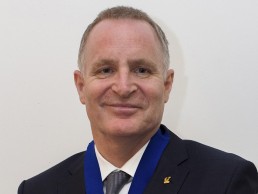
Following the election of the ‘Lighter’ Stephen Lisk as CIBSE (Chartered Institution of Building Service Engineers) President, arc talks to him about his career, his love of lighting and the major theme for Lisk’s year in office - the importance of collaboration between all the professionals whose experience should influence the design of buildings.
How did you get into lighting?
I have always had a passion for design and technology, but like a lot of young people never really knew a career in lighting existed. I joined a lighting company in Auckland called Fisher Vogue Lighting, who were the local distributors for Staff Lighting, later to become Zumtobel. I was hooked from day one.
Describe your lighting career so far?
I have been incredibly fortunate to have worked for some of the world’s leading lighting manufacturers, and with some of the most talented, creative people I could ever have imagined. Starting my career in New Zealand, and studying illumination engineering almost 30 years ago, lighting design was very much in its infancy. I knew pretty quickly that I was a ‘Lighter’ and I joined the Illumination Engineering Society of Australia and New Zealand (IESANZ) and became Chair of the Auckland Chapter. I was amazed at how generous people were to give of their time and share their experience.
When I emigrated to the UK in the late nineties, I knew I wanted to get involved in the Society of Light and Lighting, I found that the same generosity around knowledge sharing and an amazing spirit of friendship existed in the UK too - lighting was truly a global passport, and what’s more we spoke the same language.
How and why did you establish One Eighty Light?
Working with some of the most iconic brands in the European lighting market, I was and am, extremely grateful for the experience and education in lighting I have had.
I learnt how to connect products to projects, in a technical way, but I wanted to explore if a different way was possible and in 2009 founded One Eighty Light. A one eighty degree shift - being design led rather than product led, offering a business model that linked design and product choice together.
What brands do you use at One Eighty Light?
One of the things I am most proud of at One Eighty Light is the partners we work with. We work with some truly amazing partners, partners who believe what we believe, a philosophy and a culture of light. Working with fantastic brands such as Occhio, Davide Groppi, iGuzzini, Delta Light, viabizzuno and Bega every day is very rewarding.
What made you decide to go for CIBSE President?
I was honoured to be elected President of the Society of Light and Lighting in 2009, the same year that Past President of the SLL Mike Simpson took over as CIBSE President.
What I saw was the SLL being part of a bigger Institution, where the Façade Designers and Daylighting Group could interface with lighting in a much bigger way. The conversations that we were having with the SLL’s Young Lighters was the same story within CIBSE and the Young Engineers Network. If we talk about collaboration with external organisations, it is essential to continue to foster the same collaborative culture within CIBSE.
What do you want to achieve during your presidency?
My theme for my year as President is ‘Adapt to Change’, and I believe passionately this is what we need to do. And when we talk about change, we need to look at ourselves as Professional Engineering Institutions first. John Uff QC, in his wide ranging review of the Engineering profession, produced some far reaching recommendations. He identified the ‘lost three million’ – the three million people who could belong to an Engineering Institution but don’t. He also highlighted the need for a less siloed approach and more working across disciplines, and this is something I want CIBSE to lead.
How do you see the lighting industry changing?
Before my inaugural address as CIBSE President, I wanted to explore more about the disruptors that would have the biggest impact in lighting – changes in technology, changes in the geo-political context as the UK approaches Brexit, but overwhelmingly the message I was hearing was the change to our industry with AI. We must equip our future lighters with the tools they need to adapt to these changes, and initiatives like CIBSE’s newest Society, The Society of Digital Engineering reflect this.
You are discussing Human Centric Lighting at darc room. What do you think about this subject?
I, like others, first learnt about ‘biodynamic lighting’ and ‘circadian lighting’ many years ago, and I wonder how much our knowledge of the subject has moved on since then. There has been a great deal of communication on the subject, but I am very interested in the factual research from academics, and where that will lead the standards in my own Society of Light and Lighting, and more broadly the WELL buildings conversation. It is not so much what we know, as what we don’t know.
www.cibse.org
www.oneeightylight.com
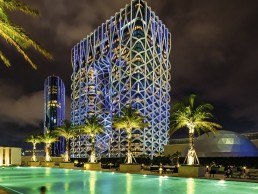
Morpheus Hotel, China
Commissioned by Melco Resorts, Zaha Hadid Architects (ZHA) was tasked with the challenge of creating a hotel space that would stand out from the crowd and dominate the landscape as an architectural spectacle. Now completed, the Morpheus Hotel is set to become an iconic landmark on the city’s horizon.
The gateway building consists of two towers blended together with internal voids through its centre to create an urban window connecting the hotel’s interior communal spaces with the outside city.
Planning began in 2012 when ZHA was initially brought on board to rescue the site of a previously failed project. Foundations for this project were already laid, but access was restricted due to a number of limitations; three sides of the site were enclosed by construction, a high-rise resort hotel was already standing to the west and a six-lane highway to the north. Viviana Muscettola, ZHA’s project manager, explained their design approach: “Vertical extrusion seemed logical as it addressed the two constraint sets: the restricted footprint and the dense, varied programme. This strategy also allowed Morpheus to be designed as a single tower, but one that contained two internal vertical circulation cores, or secondary towers, horizontally connected at podium or roof level, where dense accommodation was required.
“This generated a simple block, maximising the development envelope with radius edges. The block was then gouged with voids forming vortical urban windows, first one, then two and finally three heterogeneous loops. This gives Morpheus its unique form. Along with the distinctive aesthetic of the voids and the exciting internal spaces, this form also provided more corner rooms, which faced the central voids and had very special views of the atrium space with the potential to maximise yield.”
Inspiration for the unique form of the Morpheus Hotel originated through China’s rich traditions of jade carving. The exoskeleton was designed as a sculptural element to the building and gives it its characterising feature.
Muscettola described the influences in ZHA’s portfolio further: “ZHA has often explored the logic and coherence in nature’s systems when we are working to create environments. This research also includes geological formations that have been carved and eroded by the elements – evident in many of our previously completed projects such as the ‘canyons’ of the Galaxy Soho campus in Beijing. Traditional jade carving is a man-made extension of these natural erosion processes; working with each stone’s unique composition to create intricately carved fluid forms.
“Zaha Hadid originally began studying traditional Chinese architecture and arts, including jade carving, when she first travelled to China in 1981. This ongoing research continually informed her creative thinking, particularly for the Morpheus design.”
The exoskeleton is a unique concept devised by ZHA as a solution to increasing the internal space for the hotel. It also provided an intricate and challenging canvas for Isometrix, the project’s lead lighting designer, to incorporate lighting fixtures.
“Exoskeletons are the structures of buildings placed outside their external envelope. Locating a building’s structure externally frees its internal spaces from supporting walls and columns – creating larger areas for use by visitors and enabling these spaces to be much more adaptable. Low-rise free-form exoskeletons exist elsewhere, as do high-rise exoskeletons that follow strict orthogonal grids. But, our research did not find any precedents for a free-form high-rise exoskeleton,” she continued.
“The complexity of Morpheus’ free-form geometry and irregular exoskeleton, the sheer quantity of construction elements and their many required interconnections was a challenge. Further layers of complexity were added by Morpheus’ 40-storey height that had to comply with Macau’s building restrictions of 160-metres in height, its complex programme of many different functions, the tight schedule and worldwide location of all the different teams in the UK, USA, China and Southeast Asia that had to collaborate seamlessly to ensure the project’s success,” explained Muscettola.
The client, Melco, approached lighting design firm Isometrix in Hong Kong and Arnold Chan, Principal Director of the Hong Kong and UK offices, for consultancy on both the interior and exterior of the building. Nelson Ng, Design Director at Isometrix Hong Kong, explained: “They needed a firm that could understand the aesthetics of ZHA as well as knowledge and understanding of the local culture and prerequisites of running a hotel and casino complex in Macau. Isometrix has studios in both London and Hong Kong and has had very successful collaborations with the ZHA and Melco on previous projects.” He continued to describe the key architectural considerations their team had to factor in when designing a scheme for Morpheus: “The exoskeleton has many free-form structures and integrating small, discrete and powerful light fixtures that could also be adjustable to uplight the morphing shapes within each bay was the main challenge. This involved multiple calculations, studies and mock-ups to develop fixtures with the appropriate beam angles.
“All of the exterior light fixtures are custom made to fit into the façade details with minimal visual impact when seen during the day,” he added.
Isometrix was first informed of the uniqueness and complexity of the building, along with the views and opinions of the client, through ZHA’s first design brief. Ng explained the balance of design and client requirments further: “Our challenge was to develop and create a design that balanced the wishes of the architect, to incorporate light fixtures discreetly and emphasise the forms architecturally, all whilst ensuring the hotel visually stands out from the surrounding buildings, all in line with the client’s aspirations.”
During the installation process, the team was up against difficult conditions along with limited space within the cladding. It was important for the façade to be lit evenly and consistently in its entirety.
Ng explained Isometrix’s working relationship with ZHA and how easy it was to work as a team: “We have worked together on a number of projects dating back to Vitra Fire Station and Home House Private Member Club, Roca London Gallery, The Serpentine Sackler Gallery and developed a scheme for the Chengdu Contemporary Art Centre.
“We were free to come up with ideas and options, with the final scheme being finely tuned and refined after a detailed process of discussion and collaboration with the other project consultants, as well as considering budget constraints.”
Isometrix turned to Creative Lighting Asia (CLA) to aid in their fixtures for the façade. Paul Rees, of CLA, described their introduction to the project: “With respect to the façade lighting, CLA took a design brief drawn up by Isometrix and approached Lumascape Lighting from Brisbane, Australia, to work on two custom solutions that needed to take in both the output and beam angles required for such an organic structure, but also with the flexibility of design to allow them to fit into the very tight space allowances within the exoskeleton.
“After numerous sample submittals and mock-ups, CLA was awarded the supply and installation contract, using two fully bespoke luminaires from Lumascape, both incorporating the PowerSync proprietary technology. One fitting was a nine-watt RGBW horizontal narrow beam product, designed to uplight the underside of each façade section. The second was a 100-watt RGBW floodlight to uplight the external spaces within the central core of the building,” he added.
Ng elaborated: “Working as part of an experienced and skilled team of consultants who helped and supported us on resolving any lighting issues meant we were confident and felt no pressure throughout the duration of the project.”
A recent development in technology allowed all the design and construction teams to work from a single digital 3D model that contained information from every part of the building. The design could be manipulated and altered by any member of the teams around the world, which were then instantly re-calibrated, analysed and checked by a highly automated procedure and available for any member of the teams to work from. Muscettola regarded the new technology as something that will “radically change how we build in the future. The technologies that allowed us to create such a comprehensive digital 3D model of the hotel that combined all of its aesthetic, structural and construction information enabled us to create a building with such complexity as the Morpheus”.
With such an impressive external façade, it was important the interior continued the same standards of impact and design quality. The unique exoskeleton optimised the available space and allowed for a huge amount of adaptability to accommodate the many varying requirements of the prestigious venue. The internal voids of the hotel create an “urban window that links the hotel’s interior communal spaces with the city,” Muscettola commented, with reference to the internal design.
“Three horizontal vortices generate the voids through the building and define the hotel’s dramatic internal public spaces; creating unique corner suites with spectacular views of both the atrium and the city. This arrangement maximises the number of hotel rooms with external views and guarantees an equal room distribution on either side of the building. In between the free-form voids that traverse the atrium, a series of bridges create unique spaces for the hotel’s restaurants, bars and guest lounges by renowned chefs including Alain Ducasse and Pierre Hermé. The atrium’s twelve glass elevators provide guests with remarkable views of the hotel’s interior and exterior as they travel between the voids of the building,” she added.
The atria were particular areas where ZHA and Isometrix had full artistic control. As Muscettola reflected: “There is an inevitable logic to this holistic conformation in the upper atrium spaces, which are enclosed by free-form exoskeleton, macro-windows and faceted windows. But in the lower atrium areas, the three dimensional logic of the exoskeleton and macro-windows is forcibly extended and scaled down, most visibly in the design of the ground floor Pierre Hermé Lounge Bar’s pavilion.”
Working closely with Isometrix in these areas, ZHA and the team created theatrical qualities and projected high level concealed floodlights onto its faceted wall panels. Using the Laser Blade series of linear down lights by iGuzzini, track mounted spots by XAL and mini floor uplights by LightGraphix; the team achieved their dramatic and sophisticated lighting scheme in the internal spaces. Light boxes were created to follow the unique shapes and forms of the atrium wall design. Individual DMX control-dimmed channels are fitted to each light box allowing the whole atmosphere of the atrium to be programmed like a changing landscape for different times of the day.
Outside, Wibre underwater LEDs are used to illuminate the swimming pool, adding a further exotic atmosphere to the building and its surroundings.
Tony Ryan, Project Director at CLA, commented: “The complexity of this structure, from both a lit effect and installation point of view were what made this project a huge challenge. But working with the design teams of both ZHA and Isometrix, we were able to pull off an amazing project and one that is truly a stunning addition to the Macau skyline.”
Muscettola reflected on the relationship ZHA had with the client during the construction: “In Morpheus, Melco have established an entirely new brand within their portfolio that they plan to continue in other locations in Asia. From the very beginning, Melco shared ZHA’s vision of creating new experiences that offer visitors a journey of the imagination.”
www.zaha-hadid.com
www.isometrix.co.uk
www.cla.asia
The Macallan Distillery, UK
Speyside, in the North East of Scotland, is known the world over for its beautiful scenery and high quality whiskies, with a number of distilleries in the region.
One such distillery, The Macallan, has recently opened a new production facility and visitor experience, on the stunning Easter Elchies estate, the historic location where they have been distilling single malt whisky since 1824.
Designed by architects Rogers Stirk Harbour + Partners (RSHP), with lighting design by Speirs + Major, the new building is nestled seamlessly into the beautiful surrounding countryside, blending into the landscape while offering visitors the opportunity to immerse themselves in the intricate processes that go into making the world-renowned whisky.
The new distillery features a series of production ‘cells’ arranged in a linear format, with an open-plan layout that enables a view of all the stages of the production process at once. These cells are reflected from above in the form of the gently undulating timber ceiling, while from the exterior, the site’s roof appears as grass-covered peaks that rise and fall within the estate grounds, signalling to approaching visitors the activities housed below. Set into the naturally sloping contours of the site, the design makes direct reference to ancient Scottish earthworks.
Speirs + Major collaborated closely with the client, Edrington, and RSHP to use light to shape an atmospheric experience of the site and the new building, working also with Atelier Brückner to integrate light into the experience of each of the displays in the exhibition and gallery area.
“The lighting has a profound influence on the experience of the site and the new distillery,” explained Mark Major, Principal of Speirs + Major. “The site itself is characterised by its beauty – the rolling hills, long summer nights, and the purity of the water.
“Our lighting design draws from these dynamic qualities, crafting a balance of light and darkness that transforms perceptions of scale and space, building a sense of revelation – of both the architecture and the whisky making process – into the visitor journey.”
“From the client’s perspective, the brief was for the building to be the best distillery experience in the world,” added Clementine Fletcher-Smith, Associate Partner at Speirs + Major. “RSHP wanted the lighting to be fully integrated into the project, to help to express the relationship between the architecture, the landscape, the historical Easter Elchies house (the spiritual home of the Macallan) and the whisky.
“From the dramatic first glimpse of the illuminated undulating roofline and the mirrored reflection of trees and path lights, to the carefully orchestrated layering and depth within the interior, light is designed to celebrate the scale and form of the architecture, while evoking a sense of wonder in the alchemy within the pipes and distilling equipment.”
The varying qualities of light and the pay of light on different materials reflects the tonal qualities found in the landscape and the whisky. A sweeping brand wall made of hundreds of illuminated and controlled bottles of whisky forms an animated tapestry of light, glass and liquid, marking an impressive entrance to the visitor experience.
Behind this, the glass cabinets of the ‘Jewel Box’ are set against black polished surfaces, each individually controlled to highlight some of the most precious bottles and collaborations from the Macallan range.
Looking through to the production area, coloured light provides visual cues that help to tell the story of the whisky, with a cool blue used for the stainless steel cold process equipment, and amber red hues for the hot copper stills. The peaks within the timber roof glow softly with warm white light, echoing the heat from below and accentuating the form.
Exhibits are arranged in a special area, and form a part of the tour. From backlit text, to shafts of ‘sunlight’ appearing through timber shutters, to an illuminated floating drop of liquid, the lighting is meticulously crafted to that in each case light becomes an integral part of the display.
Lighting control was a key aspect for the designers from Speirs + Major, both in terms of enhancing the sense of revelation they sought, and also in supporting the telling of the whisky making story. A dynamic lighting scheme offers two modes, the first of which is an automated set of scenes for the lighting in the production area, designed to sequence throughout the day, creating a dramatic backdrop for the visitor centre bar.
The second is a theatrical control system that supports the distillery in running visitor tours of the plant, lead by a guide, who uses a tablet computer to cue various programmed scenes.
At the beginning of each tour, the interior is either solely day-lit, encouraging visitors to look out to the landscaping outside, or if it is dark, light is restricted to the interior route lighting to create a sense of suspense while walking the full length of an otherwise dark process unit. As the tour commences, the wash backs are lit up, followed by the stills, gradually building the story. Scenes range from a strong focus on a single entity through to a full revelation of the space.
This journey culminates in the ‘Cave Privée’, a unique circular whisky store, where programmable dynamic light combines with black polished surfaces to create stunning, immersive kaleidoscopic effects. In this area, the day-to-day architectural lighting was designed by Speirs + Major, along with numerous event lighting scenes, while the dynamic light show that completes the tour was created by Jason Bruges.
In parallel to creating this highly engaging and experiential lighting scheme, there was an equally pressing requirement of the brief; to provide lighting suitable for the technical demands of lighting a fully operational distillery.
“We had to ensure that good quality working light was provided for the building to successfully operate as a working production facility,” explained Fletcher-Smith. “The challenge was to do this in such a way that we could still support an unforgettable visitor experience.
“Alongside the dynamic lighting, there is a layer of robust functional lighting that allows the production team to do their jobs. By zoning and using lighting control, we made it possible to carefully direct the operational light to only the required specific areas at a given time, so that the rest of the distillery was free to be lit in a dramatic manner when required.”
Extensive investigations were also carried out regarding the role of daylighting within the building, helping the design team to determine the level of impact that they could create using artificial light when natural light is present, as well as when conditions are dark outside – the timing of which varies dramatically throughout the year in this part of the world.
“We studied different skylight and glazing options with RSHP to find the right balance between preserving the views and connection to the landscape and benefitting from the natural light when available, whilst also ensuring that we could create the desired effects,” Fletcher-Smith continued.
Speirs + Major has a long history of working with architects at RSHP, collaborating on projects as varied as the Millennium Dome and Terminal 5 at Heathrow Airport in London, and the Barangaroo South Masterplan in Sydney, Australia, alongside the new extension to Geneva Airport, a project that is still ongoing.
“RSHP was very keen to keep all lighting equipment off the underside of the roof for both aesthetic and maintenance reasons,” Fletcher-Smith explained. “Their concept was for the soffit to appear to float above the ‘landscape’ of the distillery below.
“Throughout the process areas, we worked around this by developing special columns that coordinate with various pipes and flues, on which the luminaires could be fixed. In the visitor’s centre and exhibition areas it was agreed that lighting could be fixed to the roof in limited positions, as long as they were carefully coordinated with the design.”
Another important consideration for the lighting design team was the restriction of working within an ATEX-rated environment (a site with a risk of explosions), particularly in such close proximity to extremely hot equipment.
While the ATEX rating initially limited what lighting equipment Speirs + Major could actually use, the team worked with the whisky process contractors to review and refine the ATEX classifications within the process area, significantly reducing the areas with the most stringent restrictions, which in turn allowed for more flexibility in the luminaire specification.
As such, Speirs + Major utilised fixtures from the likes of Mike Stoane Lighting, acdc, LED Linear, Alto and Thorn throughout the site. “The scheme is lit entirely by LEDs,” Fletcher-Smith confirmed. “In response to the zoning, all of the dynamic light fittings – RGBW spotlights – are located above the mezzanine/visitor level in the production area.
“Below the mezzanine, ATEX compliant LED floodlights fitted with dichroic filters are used, along with ATEX compliant industrial luminaires to provide functional process lighting when required.”
The Macallan brand combines tradition and a commitment to quality while embracing innovative technology. The lighting design draws on this dialectic, generating a strong sense of narrative through the revelation of surfaces, textures and space.
Fletcher-Smith continued: “The Macallan’s passion for creating something really special allowed us to explore how light could be used to reveal the narrative of their product, as well as to enhance the architecture itself, has enabled the lighting to become an inherent part of the whisky experience.”
Mark Major added: “This was a truly wonderful project. It required our response to a highly complex brief including consideration for history, architecture, brand experience and theatrical storytelling, while also providing the required functional light for a working production facility, without compromise to any of these aspects.
“Fortunately we were blessed with a supportive and imaginative client who was open to ideas, and with highly collaborative design partners in RSHP and Atelier Brückner. This enabled us to fully integrate the light into the design, so that we could choreograph an experience that is truly unprecedented, while meeting all the other requirements of the brief.”
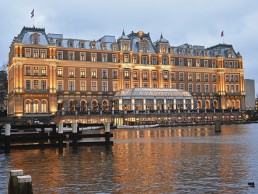
Amstel Hotel, Netherlands
In the heart of the city of Amsterdam is the Amstel Hotel, one of the most prestigious hotels in the Netherlands. Dating back to 1867, this five-star rated accommodation has acted as a temporary home for numerous celebrities and members of the royal family.
Founded by a prominent doctor of the nineteenth century, Dr. Samuel Sarphati built the magnificent building as an architectural landmark that he hoped would one day put Amsterdam on the international map. Heavily influenced by some of Europe’s most famous buildings, the Golden Age architectural style is strongly evident in the façade’s design and in the detailed arches, and has attracted many high-profile guests since opening on 27th April 1867.
Now owned by the globally recognised hospitality organisation, Katara Hospitality, the building has undergone a large-scale restoration on its exterior. The restorations took place over the course of exactly one year to transform the roof and façade to their former glory. With years of previous work put in to orchestrate the restoration programme, design teams worked towards reinstating all original colours and renew a total of 300 elements, ornaments and statues. As part of the planning process, original images of the façade from the local city archives were studied in depth.
Contractor Leidens Burgy Bouwbedrijf completed the full restoration, whilst the lighting design was brought together in a joint effort from Lichtconsult and Hans Wolff & Partners Lighting Designers for the complete exterior of the hotel.
CLS was responsible for the design and fabrication of most of the fixtures that were used, including a number of pre-existing fixtures that were customised into variant designs from its REVO series. These particular fittings were anodized in a special colour, the mounts were custom-built to the appropriate size, optics with several angular apertures were fitted into one fixture and special DMX electronics were designed for the REVO Micro.
Each fitting has the ability to be individually controlled with customised tunable white LED modules with a range of 1800 to 3000K. The REVO inground DMX was created specifically for this project and, in turn, has become available in the main CLS fixtures range.
Koen Smits, Lighting Designer and Associate from Lichtconsult, described their involvement: “If I remember correctly, it was Van Hoogevest Architects who, back in 2015, first felt there should be a lighting designer on the renovation team. The founding architect Gijsbert Van Hoogevest is an acquaintance of Hans Wolff, who ultimately asked us to help them out for the preliminary design phase. Later in the restoration process and when the definitive design was made, the main contractors hired us as a permanent part of the team.
“To make a lighting design scheme that would show the grace of the complete building at night time, strengthen the façade renovations and return its charm and greatness, was the aim for us.”
Smits described the approach to working with such a large team: “A challenge was to overcome the differences in our ensemble of contributors in our project team, (architect, contractor, middle-east owner, municipality officers and the committee on building aesthetics) and to realise the main goal – to illuminate this magnificent and iconic building without altering the architecture or adding visual clutter and without causing obtrusive light for the hotel guests and surrounding neighbours.”
The lighting team also faced challenges when minimising the visual installations on the façade. Smits elaborated: “It is the ever-returning issue of the much-needed air cable to supply power for the luminaires, which unfortunately hasn’t been invented yet! So, we had to try and hide all of the cables as much as possible by laying them behind the roofing, picking smart trajectories like drainpipes and such to ascend and descend lines using separate gears with smaller, lower voltage cables. All of these choices were made in close consultation with the restoration team and hotel facility managers.”
It is not usual practice to have two large lighting design firms working together on one project, but in this particular case Lichtconsult and Hans Wolff & Partners worked very well together and “with great enthusiasm”, as Smits remarked.
“In the last ten years, we have worked closely together on many projects. Usually, Hans Wolff concentrates on the more conceptual issues and I focus more on the detailing and design. Throughout the process, we maintained a healthy overlap and benefited from each other as a sounding board. I feel very blessed with our collaborations,” he continued.
Hans Wolff, of Hans Wolff & Partners, described their participation in the project: “Hans Wolff & Partners are known for their specialisation in historic restoration projects and have previously worked on notable cultural buildings such as the Anne Frank House, Royal Picture Gallery Mauritshuis, Hermitage a/d Amstel and Concertgebouw.
“Amsterdam has a long tradition of using floodlighting for their historical houses along the canals etc. and it’s been done in a modest and tasteful way by the local government. However, more recently this initiative was taken over by commercial parties. The result? Much higher light levels, papering the walls with lanterns, overpowering contrasts with the surroundings and the use of ‘dynamic’ colour lighting.
“So, ultimately there was a lot of pressure on us to come up with a light plan that overcame all of these ‘derailments’ and light the Amstel Hotel in a much more modest, stylish and attractive way.”
Using fixtures and technology from CLS, Opticalight, LED Linear, Pharos, Ligman and Tekna, the team put together a detailed scheme for the elaborate and highly decorated façade of the hotel building. The vertical structure and pilasters are lit upwards using CLS Revo fixtures, whilst the rest of the façade is illuminated with CLS Revo In-ground luminaires and CLS Revo Micros. The lounge area has accentuated the annex on the riverside that was not previously illuminated and now provides a pleasant space for the hotel guests to retire in. Wall luminaires were located on the columns that support the glass roof and miniature LED dots were installed on the interior structure of the roof.
Illuminating the entrance lobby was an important task for the team. Illuminating the entrance balcony, stairs and landing in the area was completed using in-ground luminaires to highlight the pillars, linear LED fixtures that shed light on the intricately detailed balustrade and down lighting on the canopy to raise the street lighting to a comfortable level that eases access on the floor levels to the stairs.
Adding lighting to the lowest part of the well-known view from the riverside emphasises the building’s position close to the water’s edge and creates the illusion that the hotel is floating.
Wolff, Smits and the team also felt it important to incorporate dimmable settings for almost all of the fittings in order to create the perfectly balanced final ‘image’, as well as ensuring both light levels and colour temperatures can be regulated. In doing so, the team were able to fine tune any issues in the illuminations that they stumbled across when putting the design scheme into practice. Smits referred to some examples: “The varying tonal differences between the 100+ year old bricks and the new bricks, and the height differences of the pilasters meant the shorter ones needed less light.”
One particular hurdle they had to pay close attention to was the light pollution and obtrusive lighting that may impact on the quality of stay for the hotel guests. Smits elaborated: “As a member of the Dutch Committee of Obtrusive Lighting, I know how much harm a light installation can do to its neighbours and the dark sky. So, deliberate choices were made to prevent negative effects as much as possible. The LED projectors from Opticalight that illuminate the façade from poles on a distance use masks to cut off not only the direct light into the windows of the guest, but also any light that would otherwise end up in the atmosphere. Projectors mounted on the façade were dimmed per architectural element so just the necessary amount of light (and energy) would be used for the desired night effects.”
The stunning and authentic results have created an iconic landmark on Amsterdam’s landscape today and provide a beautiful focal point that can be seen from the Amstel River.
Smits described the impact the luminaire design has: “I love the way the building is seen from the Amstel River. It really begins at the quay, where the wall luminaires softly light up the passage in front of the restaurant and swimming pool.
“Further up, the lounge annex is illuminated with up/down wall luminaires and the window sills of the building are then accentuated. The big brick façade is shown with special projectors with masks that illuminated the wall texture but cut out the windows, so guests can look in to the beam and not be blinded by it,” he explained.
The final result delivers a warm and inviting environment for prestigious guests and locals of Amsterdam to appreciate.
www.lichtconsult.nl
www.hanswolff.lighting
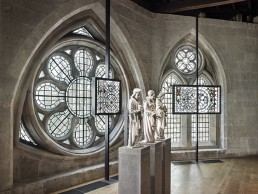
The Queen's Diamond Jubilee Galleries, UK
The Queen’s Diamond Jubilee Galleries is a new museum inside Westminster Abbey, located in the medieval triforium, a gallery that runs sixteen metres above the Abbey floor. Hidden to the public for more than 700 years, the opening of the Galleries to the public on June 11th marked an exciting moment in the Abbey’s history.
The Galleries give visitors magnificent views to the Palace of Westminster and into the Abbey church. They tell the history of Westminster Abbey through 300 treasures from the Abbey’s collection, reflecting its rich and varied thousand-year history.
DHA Designs was first introduced to the project by architects and museum specialists, MUMA, in September 2015. DHA Designs had been working with MUMA on a number of heritage projects over the last ten years, since their first collaboration on the restaurant at the Royal Academy of Arts in 2004 to the Medieval and Renaissance Galleries at the Victoria & Albert Museum in 2010.
MUMA describes their first visit: “On our first visit to the Triforium, we were struck by its otherworldly quality and unexpected characteristics – the unfolding spaces with intriguing glimpses inviting exploration, opportunities for views and the stunning vista along the Chancel, the crankiness of the timber, the beauty of the stone, the contrast between sunbeams and shadows, patterns of light and patterns of structure – we felt that it was important that the making of a modern museum display did not undermine or compete with the unique qualities of the space.”
Light, both daylight and sunlight, contributes greatly to the quality of the Triforium – however its retention was slightly at odds with the display of light-sensitive objects in the collection. Max Fordham’s London office was challenged with an extensive daylight study of the galleries, which allowed MUMA to locate objects within the space to best suit their light sensitivity. Other daylight light control measures were introduced, such as motorised blinds that are lowered outside of public hours, allowing the daylit experience for visitors to be retained while creating lower light level areas for more sensitive objects.
Peter Fordham, partner at DHA Designs, was responsible for the lighting design from the initial concepts through to its completion this June. The lighting design evolved as new technology became available during the design process, as Fordham explains:
“The lighting design is a traditional track and spot solution, using black lighting tracks fixed to the five-metre high timber ceilings between the deep timber beams, allowing maximum flexibility on site during the commissioning and focusing stages. When we started the project, we were adamant that we wanted to keep the lighting control as simple as possible. We originally proposed small track mounted LED spotlights with built in potentiometers, so that we could set light levels for each fixture as we put them into the track at the end of the project.
“We were really keen to avoid DALI, since we find this protocol slow and clumsy during the commissioning stages of a heritage project, where we are often changing and refining positions of the luminaires on the lighting tracks to suit the final positions of the objects. Using a DALI system, this requires a dedicated programmer to re-address the fixtures every time the fixtures are repositioned on the lighting track. But as the requirements for daylight control became more complicated, a DALI solution was quite difficult to dismiss.”
And then, the eureka moment occurred at Light + Building in 2016, during a whisky tasting event, attended by DHA Designs, on the Mike Stoane Lighting stand. “I had read about Xicato’s XIM Bluetooth modules already, but never really understood what they could do in the museum and gallery environment,” stated Peter Fordham.
“And I’d certainly never seen it in operation before. Mike Stoane’s display had it all: the usual, lockable fixtures that I know and trust from Mike Stoane, plus Xicato’s LEDs delivering quality white light which I could control with ease using my iPhone, plus battery operated PIR and lux sensors hidden into a picture frame that connect via Bluetooth to the LEDs. And the whisky wasn’t bad either!”
Returning to the UK, DHA Designs was tasked with how to introduce Xicato’s Bluetooth modules to the project before a fast approaching tender. With the help of Mike Stoane Lighting and Xicato, DHA Designs arranged on-site mock-ups with fixtures and sensors to demonstrate the quality of light and the new Bluetooth control technology to Westminster Abbey and the design team.
“Using Bluetooth control, we were able to simplify the lighting installation instantly, by providing only non-dimmable power to the lighting track and reducing the extent of cabling. It also saved over £12,000 on a conventional lighting control system.” However, despite the sophistication and ease of controlling the fixtures on an iPhone, the Clerk of Works at Westminster Abbey was adamant to have a single lighting control panel to turn on and off the lights at any time of day or night, without using a smartphone.
One of the limitations of early Bluetooth lighting control was the signal strength between fixtures. Whilst it was easy to control lights in one small area, controlling over two hundred fixtures together as one group from a single location was a more difficult task, particularly when the galleries are spread out across two sides of the Abbey in a horse-shoe shaped plan.
Bluetooth Mesh would overcome these issues easily, but the technology was still in the pipeline as far as Xicato were concerned. But the speed of construction on site could not wait for Mesh to become available. Ultimately, a decision was made to introduce a number of Xicato’s Bluetooth Gateways to sit as a backbone to the system and to ensure that lighting commands could be shared seamlessly between all 250 fixtures.
Mike Stoane Lighting developed a housing that could locate both the Gateways and the PIR and lux sensors in a single ceiling mounted enclosure. Based on a five-metre mounting height, Mike Stoane Lighting was able to map the field of reception for both their sensors and the Gateways, allowing DHA Designs to plot their positions across the galleries to gain complete coverage across the site.
Not all of the lighting specification used Xicato LEDs. A number of the displays were designed with integral lighting, either using Schott’s remote fibre optic lighting, or using LED fixtures inside some of the display cases. For example, the beautiful backlit stained glass displays that sit in front of the circular eight-leafed windows in two of the chapel bays use linear LED strips from KKDC with remote dimmable drivers, while Tryka’s Grazeline LED strips were used in the Architectural Fragments display case. All of these devices needed to be controlled by the Xicato Control application, either by switching on or off, or by dimming using 1-10V. Xicato offered its XIB Intelligent Bridge for each of these units, adding seamless control to their GalaXi Bluetooth lighting control system.
Max Fordham’s extensive daylight analysis of the gallery spaces concluded with a cumulative lux-hour analysis for DHA Designs to work towards. The daylight analysis was consistently updated as more layers of intervention were introduced, in order to maximise the amount of daylight in the space, without compromising on the sensitivity of the objects, or indeed, the visitor experience.
As well as motorised window blinds that operate outside of public hours, manually operated retractable drapes were introduced to shield specific areas from direct sunlight. In other areas, solar film was applied to some of the windows to further reduce daylight levels and UV penetration. In their analysis, Max Fordham’s engineers were able to focus on specific key objects located in the gallery and calculate the annual amount of daylight that an object will receive, expressed in cumulative lux hours. This could then be subtracted from the total allowable lux-hour budget for that object, according to its sensitivity, in order to determine how much artificial light could be added, based on a six-hour day, six days per week.
Throughout the construction period, DHA Designs, along with all other contractors, had to work within the constraints of the operating hours and services that took place at Westminster Abbey. On a daily basis the site had to be cleared by 16:45, before the start of Evensong, which lasted one hour. Other events at the Abbey required high level security searches the day before the event, cutting into valuable programming and commissioning time as the opening date drew closer.
The actual programming of the lighting system took place in two stages: the first allowed DHA Designs to pre-commission all of the Mike Stoane fixtures with a device number and name, so that it can easily be identified by the Xicato Control application after it had been added to the track; once all of the fixtures were in place, the actual light levels and fine tuning could be set, but this could only take place after dark once the levels of daylight had dropped.
“Commissioning a daylit gallery in May and June is never ideal, requiring several late nights on site with Xicato to get things set up” said Fordham. One of the difficulties that Xicato had to overcome was the change in Bluetooth signal strength when the gallery spaces were full of content and large display cases.
Patrick van der Meulen from Xicato was onsite with DHA Designs for the programming and commissioning. “Despite the relatively low signal strength from the Abbey’s Wi-Fi hotspots to our Bluetooth Gateways, the Xicato system allows you to select specific LED modules to work as node points, in the same way that Bluetooth Mesh works”, added van der Meulen.
The system is now up and running, and the galleries have received favorable coverage since their opening. All of the lighting now switches on and off automatically using the PIR sensors across the galleries, and as the daylight levels increase, the spotlights that light onto the more sensitive objects slowly dim down to conserve the lux-hour budget. And, of course, the Clerk of Works did get his touchscreen: a simple Android device that allows a staff member to manually select a lighting scene so that the galleries can be operated and maintained outside of public hours.
Asked whether he would use the same control system again, Fordham was quick to respond. “Absolutely. Xicato has proved that the days of conventional lighting control for museums and galleries are now numbered. And the advantage of using Xicato’s system is that you also get the consistency of colour and flicker free lighting from their LEDs as well as cutting edge lighting control.
“We plan to revisit the lighting again with the Abbey conservators in 6-12 months’ time, once they have collected lux-hour data from their sensors, and to see how we can improve the existing program and functionality of the sensors. In addition, the Abbey have shown interest in using URL beacon function of the Xicato LEDs in a future visitor experience smartphone application.”
But for the time being, you can enjoy the sunbeams and shadows.
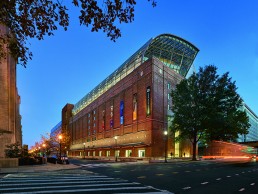
Museum of the Bible, USA
In the heart of Washington D.C, a stone’s throw from the United States Capitol building, designers at SmithGroup have renovated a 1920s era warehouse, transforming it into the new Museum of the Bible.
The museum repurposes the 400,000sqft building with exhibition spaces, a theatre, restaurant and ballroom, while a six-storey atrium and two-storey glass roof addition bring a new, modern element to the original architectural structure.
SmithGroup was responsible for the architecture, alongside the lighting design, and the firm sought to reflect the unusual architectural heritage of the site, as well as the museum’s non-sectarian educational mission, by highlighting some of the traditional elements of the building’s façade, such as the original warehouse loading dock, which was transformed into the main entrance to the building.
Careful to respect the heritage of the building, while still creating something new, the design team looked to the concept of a palimpsest – the idea of adding something new to an existing structure while still retaining trace elements of the original features.
Luke Renwick, Associate Lighting Designer at SmithGroup, explained how the lighting design adhered to this concept: “From a lighting standpoint, we tried to grab hold of accenting elements that remain or are resurrected, no pun intended, from the industrial age with lighting – things like the canopy and the hierarchy of brightness at the entry point, focusing on the entrance, which was the remnant of the loading dock – as well as the glass addition on the roof.”
However, due to the site’s proximity to the Capitol building, SmithGroup had to comply with the ‘urban fabric’ of the city, as Rodrigo Manriquez, Principal at the firm, explained: “The site is a couple of blocks from the Capitol building, and it literally falls into the last block of the jurisdictional review of the Commission of Fine Art, an independent federal agency charged with giving expert advice within the District of Columbia on matters of design and aesthetics, as they affect the federal interest and preserve the dignity of the nation’s capital. The Commission is composed of seven presidentially appointed experts in relevant disciplines including art, architecture, landscape architecture and urban design. It was a challenge for the project to have a lighting design that was sensitive to all things considered.
“There’s a hierarchy of brightness within the district that nothing can be brighter than the Capitol, so the technical aspect, even on the arrival sequence of the building, had to be balanced to meet that criteria.
“Because of that it turns out to be more respectful to the architecture and reverent to the existing components, while the new additions are also very sensitive when it comes to this identity and impact to the urban fabric.”
Because of this “hierarchy of brightness”, the lighting for the external façade remained fairly subtle, as Renwick described, serving to accent the architectural elements of the building, including the huge, 42-foot bronze panels mounted either side of the new entrance at the old loading dock.
“The panels represent the Gutenberg Printing Press, and include Genesis in Latin type face,” Renwick continued. “We used Bega linear ingrades to highlight the entry point and provide texture to the typeface. The housings had to be fairly small to fit into the structural footing detailing.”
Just inside the main entrance portal is a large art glass installation. Developed by artist Larry Kirkland, this component is comprised of a four-layer sandwich of glass, with the backside sandblasted to create an imprint of Psalm 19 in Greek – a replication of a biblical codex exhibited within the museum. This deep sandblasting has been sandwiched with a film in the glass, giving a rich golden brown image, while the front side features sixteen different translations of the Psalm engraved into it.
The number of layers, Renwick explained, serves to draw out the engravings, the translations and the rich texture and colour of the installation, while the dynamic dimming of Lumenpulse’s Lumenfacade inground and graze fixtures, and Philips Color Kinetics’ eW Reach Compact flood lights “activate” the glass for visitors as they enter the museum.
Inside, the firm designed an experiential lighting solution that uses light to guide visitors on a journey of individual discovery. By encouraging movement, reflection and curiosity, the lighting quality is intended to spark a transcendental guest journey that parallels one’s personal journey with the Bible itself – sometimes subtle and ethereal, and other times very explicit.
Although SmithGroup was not involved in the design of the exhibitions themselves, the team wanted to extend the experience of the exhibits into the rest of the site, ensuring a consistency in the conceptual integrity and adding to the experiential nature of the museum.
“If you go to a museum, you enter a pavilion or an exhibit area and you’re immersed in that experience,” said Manriquez. “It’s very controlled, it’s theatrical in its nature, but as soon as you leave that exhibit, you go into a neutral, what we call a negative space or transitional space.
“Our challenge was to take all that negative space and fill it with something that is interesting, without breaking away from the overall experience, framing it in a way that you never left the experience, but you give yourself some time to pause, regroup and reorient yourself within the building.”
A key example of this can be found in the building’s main lobby. The long corridor an avenue of columns clad in Jerusalem stone framing a dramatic digital ceiling installation, created by interactive media designers at Technomedia. This breath-taking space serves to immediately immerse visitors into the museum experience as they enter, as Renwick explained: “The lobby is one of those spaces where you can blur the lines between museum public space and museum exhibit space,” he said.
“We have the digital ceiling, that’s changing out different scenes and is very interactive, but at the human level we focused on the columns and the floor to really engage people and make them part of the experience.”
To do this, the team opted for a bottom up grounding of the columns, not only to ground them conceptually in the space, but also to provide a more pedestrian scale in this otherwise grand space. Philips Color Kinetics Evenbalance fixtures wash the columns in light, creating a subtle, rhythmic impression that, according to Renwick, “helps pull you down the volume of the space.”
Aside from the uplighting of the columns, the main source of light in the lobby comes from the ceiling display, which is reflected in channel glass either side of the installation and the highly polished floor. While the display is an impressive focal point for the lobby, factoring it into their designs initially proved difficult for SmithGroup.
“At first we didn’t know what this essentially giant light fixture was going to be,” said Renwick. “We knew that it would likely be able to illuminate the entire space, but we felt like there were so many interesting elements to the space, that the screen could be visually overwhelming if we didn’t balance it out with other accentuated features.
“We wanted the ceiling to remain prominent, yet give people the ability to interact with it – not to simply be seen from thirty feet above them, but actually have some tangible experience with it. That’s where the floor finish, of all things, comes into play.”
The idea for a ultra-reflective floor surface was initially intended to complement the design team’s concept of lightness building from the lobby up to the atrium stairs, with the visual brightness drawing visitors up the staircase to the exhibit floors and ultimately the glass roof addition.
“We had this idea for the floor tiles to transition from dark to light colour, but we took it a step further and said what about the finish?” said Renwick. “We had this incredible luminous ceiling element, so if we made the floor a high polished finish, especially in some of the dark tile areas, that reflective contrast allows a visitor to look down and engage with the feature element on a personal level – fostering the interaction of the person and the museum, the person and the Bible, and ultimately relating one’s external physical experience to what the Bible is telling you and making you ponder internally.”
Throughout the museum, SmithGroup tried to bring an “ethereal” quality to the lighting design, complementing the site’s subject matter, and this is particularly evident in the six-storey atrium. The main vertical transition in the building, the atrium leads up to the glass rooftop galley, harnessing natural daylight.
Upon joining the project, one of the primary concerns given to SmithGroup by the museum was to open up the floor space of the atrium, getting as much natural light into the building as possible. “When we got involved on the daylighting front, the client wanted this grand stair naturally illuminated by a central skylight. We worked with the team to make the floor openings as big as possible, keeping the staircase out of the way so that it’s not blocking the daylight contribution, and also maximised the north façade fenestration for diffuse light,” Renwick explained.
“From there, it turned into this suspended staircase, which is probably my favourite space in the building – just in the way that the lightness, and this increased ethereal quality that we worked hard to create, was successfully realised. As you climb the staircase there’s this beautiful notion of brightness that increases.”
Careful not to overpower the natural daylight pouring through the rooftop skylight, the artificial lighting solution for the atrium was fairly simple, remaining the same on each level while the daylighting increases. Renwick and the design team considered handrail lighting and integrating lighting into the stairs, but instead opted for simple cove lighting, utilising EcoSense Trov linear LEDs, alongside Lumenpulse downlights on each landing.
The journey through the museum culminates in the newest addition to the building, the two-storey glass rooftop ‘Galley’ that leads to the theatre, ballroom and restaurant. The parametrically designed galley space features an arced rib structure supporting a curtain-like glass wall, offering stunning views of Washington D.C and the U.S. Capitol building.
However, SmithGroup had to be cautious in creating the lighting for this space, considering the site’s standing within the urban fabric of the city. “We had to be very careful about what this looked like from the outside looking in,” said Renwick. “We didn’t want it to be a floating glowing element, so we had to be intentional about which surfaces to illuminate.”
The team specified track lighting from LSI and Soraa along the galley space, while accent lighting was added to the underside of the balcony, gently highlighting the curved ribs of the structure.
Further to these main spaces, the museum also features the grand Gathering Room – initially inspired by the ornate Palace of Versailles, this ballroom is adorned with a modern-day interpretation of Corinthian-style columns and contemporary-styled, custom-made chandeliers from Lasvit.
The Tabernacle, a theatre space inspired by the portable tent structures used as places of worship in biblical times features undulating ribbon panels that enclose the space. A simple RGBW cove lighting system from Traxon behind these panels allows light to peek through. Shifting in colour to evoke the changes in daylight from high noon to sunset, the lighting further complements the inspiration behind the room’s design. “It comes back to this concept of trying to let the lightness connect the different spaces, and be true to the symbolism without being overtly explicit,” Renwick continued.
The restaurant space, the last area to be completed, again channels traditional Middle Eastern structures in its design, this time calling to mind an outdoor souk market with its use of dark wood and a drooping fabric ceiling. This fabric ceiling is backed with tunable white Ribbonlyte LED tape lighting from Acolyte, simulating an open-air feeling in the space despite its enclosed nature and proximity to the overhead cooling tower. Again, this lighting is adjustable, from a natural, daylight-esque lunchtime setting, to a more moody and warm fine-dining evening experience.
The Museum of the Bible is a vast amalgamation of a number of different diverse typologies and spaces, meaning the design team had to work to ensure a conceptual integrity and consistency throughout the site, with a degree of coherency within the lighting. It was a challenge that could have been overwhelming for SmithGroup, but Manriquez is pleased with the end result.
“What gets me about this project is the intent to keep these different spaces looking as if they’re guided by the same principle of design, there’s a consistency. There were some challenges and concessions made at every corner, but we had a good team and a committed client that was willing to see it for what it was, and the integrity of the design remained.”
“Of course you could look at a project of this scale and say we could have done things a little bit differently,” Renwick added, “but the fact that our conceptual goals were completely realised, the fact that our team really executed these challenging solutions, I think shows that we were successful.”
However, while Renwick feels that there are minor elements that could have been improved upon, both he and Manriquez believe that the overall experience of working on the project throughout its seven-year completion period, and the collaborative creative process, helped to make it the success that it has become.
“I think we had a really good design team where everybody gave up some responsibility or pride if you will, or the protectiveness of their craft, and it opened it up to just solving the design challenges at hand,” Renwick said.
“It’s a great story, we learned a bunch about the different media – glass, metal, brick – and the actual tactile nature of lighting relative to each one of those materials,” Manriquez added.
“It might be a cliché, but I think the growth that the team had to be able to weather over a five to seven year period, the partnership attitude of the client to allow us to pull and push where creativity and creative solutions were coming in, made the project a success.
“That to me is the takeaway: the journey together, growing and really understanding each other’s crafts, that’s how we can make the process better for the next one.”
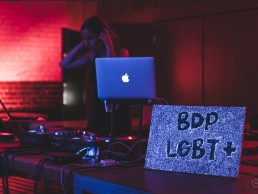
BDP Hosts Pride Glitterball
(UK) - To celebrate Pride month BDP hosted its first Glitterball on 27 July, in association with RIBA’s Architecture LGBT+ and IALD and sponsored by Zumtobel.
The event was organised by BDP LGBT+ which champions diversity within the practice and the wider industry, and brought together over 200 of the most influential lighting designers, architects, choreographers and artists as well as Pride in the City.
Lighting director Colin Ball who leads BDP’s LGBT+ group said: “The support we’ve had in launching this event has been overwhelming, from every level of BDP nationally, the IALD and Architecture LGBT. The immediate support we had from Zumtobel has enabled us to make the evening something that we can see everyone is proud to have played a part in.”
BDP LGBT+ was launched in 2017 and is committed to providing a positive and nurturing environment with a growing network of representatives across all of BDP's studios, which act as a first point of contact for any employees wishing to discuss any LGBT issues. All representatives act as ambassadors within the wider design and construction industry promoting BDP’s inclusivity and attending LGBT+ events.

Osram initiates sale of its luminaires business
(Germany) – As Osram looks to increase focus on growth markets in high-tech fields, it is to divest its luminaires business.
The management board of Osram has announced its decision to divest its luminaires business.
As part of the manufacturer’s strategic realignment, Osram is refining its positioning with an increased focus on the growth markets in high-tech fields.
“Thanks to numerous measures, the earnings position of the Lighting Solutions business unit has stabilised significantly, therefore allowing us to initiate an organised sales process,” said Osram CEO Olaf Berlien. “This will result in a more strategic focus with regards to applications with high growth potential.”
The company says that talks will be held with interested parties for the luminaires business, and the management board will provide an update on the progress of strategic plans for the company at the Capital Markets Day in November.
The move comes after the company saw a slump in its semiconductor segments Opto Semiconductors (OS) and in the Specialty Lighting (SP) segment in the third quarter of the fiscal year – brought on by the general economic slowdown and weak demand in the automotive industry, the company said.
Osram also cited the trade tariffs in the USA, more stringent emission tests in Europe and lower production expectations from premium manufacturers that caused more uncertainty, alongside project delays in business with mobile devices and horticulture applications, and a continued slowdown of the general lighting market.
Alongside selling its luminaires business, Osram management is looking at measures to rectify the current market situation, including streamlining the global administration, and the implementation of several structural and operational programs. The company will also look to improve the efficiency in R&D, in the supply chain, and in the German factory allowance, and is expecting that these operational programs should add up to €140million in savings by 2020.

Chauvet appoints new European Marketing Manager
(France) – Alain Minet, formerly of Serge Ferrari and Philips, joins the entertainment and architectural lighting manufacturer as European Marketing Manager.
Chauvet has named Alain Minet as the new Marketing Manager of Chauvet Europe. Minet, who joins Chauvet after successful tenures as a marketing executive at Serge Ferrari and Philips, will work out of the company’s recently opened Paris office.
“We have enjoyed exponential growth in Europe,” said Albert Chauvet, CEO of Chauvet. “Our French and German offices, which opened in January, have both been off to incredibly fast starts, while our UK and Belgium facilities have been growing at a rapid pace. Given this growth, we needed someone who could oversee our expanding marketing efforts. Alain fits this need perfectly.”
Prior to joining Chauvet, Minet directed corporate communications and marketing at Serge Ferrari. Before that, he was segment manager at Philips Office, Industrial and Healthcare Lighting. “Alain brings a wealth of experience to his position,” added Michael Brooksbank, European General Manager at Chauvet. “His knowledge, experience and passion for excellence will make him a valuable addition to the Chauvet team.”
Alain Minet will be heading the European marketing of the entire family of Chauvet brands, which includes Chauvet Professional, Chauvet DJ, architectural lighting brand Iluminarc, and Trusst. He will report directly to John Castelino, Global Vice President of Marketing at Chauvet.
“Our entire marketing team is excited about Alain joining Chauvet,” said Castelino. “As an organisation, we thrive on innovation. Our growth has been built on new ideas, and I am confident that Alain’s contributions will only make us stronger.”
For his part, Minet is eager to build on the success Chauvet has enjoyed in Europe. “This is a wonderful opportunity,” he said. “Chauvet has established itself as a leader in our industry. The company has a well-deserved reputation for quality and for advancing technology in new ways. I am excited to be part of a team that places such an emphasis on innovation.”

Signify and BRAC distribute solar lanterns in Bangladesh
(Netherlands) – Signify and BRAC supply families with solar lanterns in Bangladesh to improve safety for women and children at night.
Signify and BRAC, an international non-governmental development organisation, will distribute Philips LifeLight solar lanterns to families who have been sheltering in makeshift settlements across Cox’s Bazar in Bangladesh.
The solar lanterns will significantly improve the safety and security of women and children at night. So far, 22,495 families have received lanterns, reaching 132,720 individuals, of which 66,360 are children.
Prajna Khanna, Director of the Signify Foundation, said: “Lighting is a key enabler to create safer spaces. Especially in refugee camps where women and children are vulnerable to exploitation and abuse, lighting can make a real difference. Our continued collaboration with BRAC leverages the strengths and resources of both organisations to deliver interventions like these.”
Previously, the camps have been pitch black at night making basic activities near impossible. Furthermore, there were immediate concerns about the safety and security of women and children moving around the camps at night. Lighting was needed to increase security and support their basic needs.
Senior Director, Strategy, Communication and Empowerment at BRAC and BRAC International, Asif Saleh, said: “These clean solar powered lights will make the camps a much safer place at night, and are therefore making a much-needed contribution to the lives of people who are spending days in unimaginable difficulties. We hope this partnership with an organisation like Signify will be another step towards making lasting impact.”
Padmanava Gupta, Managing Director at Signify's operations in Bangladesh said: “At Signify, our ambition is to create safer spaces for communities. We are honored that we're able to support this noble cause by donating our solar-powered LifeLight Lanterns to Rohingya families living in Cox's Bazar.”
BRAC will distribute the solar lamps through its network of offices, seed and agricultural staff and community health workers. It will provide detailed training on care and maintenance and how to get replacements under warranty. Each lamp will be accompanied by an instruction and information sheet in the Rakhine language and script. BRAC will also work with local solar companies and local companies in the Cox's Bazar area to install and maintain the LifeLight Home systems. These companies will be trained on the specific Philips-branded products and will provide technical support.
