

UNStudio
Founded in 1988 by Ben van Berkel and Caroline Bos, United Network Studio – better known as UNStudio – is an international architectural design network with offices in Amsterdam, Hong Kong and Shanghai.
Although mainly operating in architecture, interior design, urban development and infrastructural projects, the firm has also worked in product design, working with Zumtobel on the Nightsight, alongside furniture pieces for Alessi and Walter Knoll, among others.
Since its inception, UNStudio has completed projects in countries around the world, working with a vision of ‘future-proofing the future’, in which it anticipates the future and any possible changes that it may bring.
These projects have always placed a large emphasis on collaboration, something that founder Ben van Berkel is particularly passionate about: “The ambition of UNStudio, and why we are called United Network Studio, is because we believe in collaborative models. We don’t believe in the concept of the architect at the front of the orchestra.
“We believe that, in the early stages of design, you need to consult with specialists and look beyond your own profession in order to make something more fascinating than just design for design’s sake. It needs to be people-oriented, it needs to connect to themes of health, sustainability and so on.”
This people-oriented approach has seen the company work on a diverse array of projects, spanning a wide range of disciplines and areas, over the past 30 years, but is there a particular area of expertise that Van Berkel believes the company specialises in?
“It’s interesting, ten years ago I would have said no, because we were so diverse and I always wanted to learn more about every other part of the profession, from infrastructure to product design, urban design and so on,” he said. “But now I can see that there are trends and common themes that I work within.”
One such theme surrounds infrastructure, a fascination for Van Berkel that comes from his work designing bridges (UNStudio created the Erasmus Bridge in Rotterdam, Netherlands, and has just won a competition to design a new bridge in Budapest). This fascination has led Van Berkel and UNStudio to work on designs for airports in Amsterdam, Brussels, Taiwan and Kutaisi, alongside long-term regeneration projects like the Arnhem Central Station masterplan – a project that Van Berkel has been involved with since 1996. “If you think about infrastructure, you have to think about how people move and who the user groups are that you design for, so it’s a very important topic to be found in our work,” Van Berkel explained.
It’s a topic that can even be found in projects unrelated to infrastructure. “If you look at some of the buildings that we’ve worked on, like the Mercedes-Benz Museum in Stuttgart [completed by UNStudio in 2006], it’s based on infrastructure,” Van Berkel continued. “The idea that you go up eight floors in an elevator, then at the top you have two spirals crossing each other as they go down, it’s quite a rich organisation. But this organisation comes out of a fascination for infrastructure.”
The newest infrastructural project for Van Berkel will see the introduction of cable cars to the Swedish city of Gothenburg. Similar to the Emirates Air Line in London, these cable cars will act as a form of public transport, rather than entertainment. “It’s something that the people of Gothenburg really wanted to have in the city,” explained Van Berkel. “People who live there work in the north of the city, at the Volvo factory and so on, so there’s always congestion.”
Alongside these large, infrastructure-led projects UNStudio’s extensive portfolio includes work ranging from museums, offices and retail centres to hotels and residential properties, yet while some architecture firms have a definite style or aesthetic that carries across their portfolio, Van Berkel instead prefers to mix it up with each new design.
“I’m always careful with style,” he said. “I believe that one should liberate style a bit more, to avoid a very mono-functional image that you can’t sustain for every location. I’m very location-oriented; even when our work is sometimes a bit more simple, less articulated or less curvy, you can still recognise it as our work because I like to bring a surprise into the design, maybe through the interior or another way.
“Our work is very experience-oriented, so although you can’t see it immediately, you can discover the recognisable links between the projects over time.”
The reason for Van Berkel’s visit to Frankfurt for Light+Building, further to seeing the latest advancements in the lighting and building services sectors, was to collect the Zumtobel Group Award for Urban Developments – an architectural award created by the Austrian lighting manufacturer designed to “act as a stimulus for new developments and concepts in the built environment that help meet current and future demands for improved urban living conditions and energy needs”.
UNStudio won this award for the aforementioned Arnhem Central Station in the Netherlands – a complex project that functions not only as a public transport hub, but also seamlessly incorporates office and retail spaces, a new station hall, a platform roof structure, a railway underpass, a road tunnel, storage for bicycles and parking space. Blurring the distinction between the inside and outside, the station helps to create a new identity for its region, while organising the main connections within the city.
Although the complex creates a more coherent, organised hub for the city’s transport links, the main inspiration, Van Berkel explained, was to rekindle the excitement of traveling. “There used to be a time when stations celebrated the idea of traveling, they would uplift you when you would depart or that you would enjoy seeing family again in the arrival hall, where you could really feel the enjoyment and uplifting qualities of traveling,” he said.
“Lately, stations have started to become negative areas or not so safe, so this station was designed to be more positive, a station where you feel comfortable, where a lot of light is to be found, where you almost feel like you’re in a community-like space.”
The station features a long, sweeping walkway around a curved central column, that adds to the more open, community-like aesthetic that Van Berkel was aiming for, while the use of large windows allows for plenty of natural light to complement the artificial lighting, designed by Arup.
“The architecture does the wayfinding and that is, especially today in very busy areas, very necessary because if you have to look for signs, then you don’t know where to find your train or bus. Here there’s more theatre and more to enjoy, with the light coming into the station, that helps connect you to where you are going.”
The mention of the use of light in the Arnhem Central Station moves our conversation on to lighting, and UNStudio’s relationship with light. While light has always played a role in his work, Van Berkel passionately talked about the new advancements in the lighting sphere, moving beyond basic illumination. “I’m very fascinated by light. I see light as data,” he enthused. “I think the lighting world has never been as exciting as it is today.
“I’ve done a lot of research with other parties to find out how important light is for the work environment, for instance, like how unhealthy light can be or how much you can actually steer it towards wellbeing and health.
“Amongst other things, lighting is a way of enriching space, as it is a product that is giving light, but I think that in the future it will also impact on other qualities in work and in the living environment.”
As such, Van Berkel believes that factors such as lighting design are being brought to the table much earlier in the design process now, something that he certainly welcomes: “What used to be so bad was how clients, developers and we as a profession, were maybe looking too much at making object-oriented architecture. But I think it’s important that we know what kind of effect or impact light can generate.
“Similar to infrastructure, and the way one walks through a building and how it defines the organisation of the building, I think the same for other elements of design, like lighting, ventilation, acoustics, these things can work together much more in the future.”
The quest for more research into the impact of lighting and air quality was one of the driving factors for Van Berkel in the formation of a new sister company of UNStudio – UNSense. UNSense is a self-proclaimed “arch tech” company that aims to “humanise architecture”, and explore and develop new sensor-based technologies designed specifically to positively impact people’s physical, mental and social health.
Set up because Van Berkel believes “that the future of design is going to be more tech-oriented”, he hopes that UNSense can help, through the use of new technologies, to make “a better human-centric environment for people who want to live and work in healthier ways in the future”.
“It’s going a bit beyond the smart city and smart home concept, in that we don’t just want to make things more efficient. We want to give them more direction and meaning.”
Light will play a role in this new, sensor-based off-shoot of UNStudio, but Van Berkel believes that it will “become part of a holistic system” surrounding the technological development of buildings.
“I’ll combine lighting design with acoustics and air quality, and maybe material research, and then put it into one system to work on the software,” he continued. “That’s why we set up UNSense – you have the hardware side of the building, and then the software side, and the latter needs a different kind of financial programming and expertise than an architectural office. You can do research in an architectural office but not data-driven organisation and analysis. You need different specialists for that.”
In the meantime, Van Berkel continues to work with external lighting designers on his projects, having completed several projects with Arup, including the Arnhem Central Station, as well collaborating with the likes of German firm AG Licht, and Rogier van der Heide, whom he feels is having a “beautiful career”.
His work with light has extended into the manufacturing sphere too, having worked with the likes of iGuzzini and Philips in the past, as well as teaming up with Zumtobel for the Nightsight: a modular system designed to create environments for social activity, mobility and walkability in a bid to “reclaim the night” within the public realm through variety in lighting scenarios and intensities.
“Nightsight is inspired by the many variations possible in theatre lighting,” Van Berkel said during the launch of the Nightsight at Light+Building 2016. “The system enables spatial choreography through light and is primarily aimed at facilitating activity, enjoyment, engagement and social interaction in the public realm.”
And while Van Berkel is hopeful that lighting will continue to play more of a role in his work going forward, particularly in the new UNSense venture, there are still a whole host of projects in the pipeline for UNStudio to keep him busy.
On the infrastructural side of things, there are projects like the aforementioned Gothenburg cable cars, and a brand new commission, only recently won by UNStudio, which has seen the firm design a new road, tram, cycle and pedestrian bridge across the Danube river in Budapest, Hungary – a competition that saw Van Berkel and his team work alongside Buro Happold, to beat off competition from the likes of Zaha Hadid Architects and Wilkinson Eyre.
Elsewhere, the firm is working on the headquarters for Booking.com in Amsterdam and the EuropaCity Centre Culturel Dédié Au 7è Art – a cultural cinema complex on the outskirts of Paris, to projects as far and wide as Germany, Azerbaijan, UAE and South Korea. “It’s really great, there are so many nice things. It’s the best time ever for us,” Van Berkel enthused. Based on everything I heard in our short time together, it’s hard to disagree.
www.unstudio.com


Ken Douglas
Following the acquisition of Illumination Arts by HLB Lighting Design, arc sat down with Ken Douglas, Principal at HLB Lighting Design to discuss his lighting design journey, the decision to become part of HLB and the benefits that such a move will bring.
What made you decide to become a lighting designer?
I’m one of those people you occasionally hear about who had a teacher set the course of their life at an early age. In middle school, I had a teacher who involved me in the school’s theatre programme doing sets, lights and sound. Those early experiences led to community theatre and a single-minded goal of becoming a lighting designer.
I owe Mr. Genovese a lot.
Give an overview of your career to date.
In my early twenties I decided to move from pursuing theatre work to seeking a job at an architectural lighting design firm. (I found that I wanted to have more stability and security than I found on the theatre side.)
My first architecture job was working for a gentleman named Ed Feldman, who was an early practitioner, and at the time was designing lighting for retail stores. From there my next major job was with David Mintz, Inc., where I would work for the next fifteen years. There I became an Associate Principal, where along with Faith Baum, we managed most of the day-to-day activity of the firm.
In 2003/2004 Faith and I decided that our career path required a change, which led us to found Illumination Arts. We would grow IA for the next fourteen years. Over that time we developed several strong and unique market sectors, including infrastructure and signature bridge projects.
Over the course of this entire period, I have been very involved in the lighting community, particularly IALD, where I served for many years on the board of directors, and where I had the good fortune to make many friends throughout the worldwide industry. That time spent doing that volunteer work has been some of the most satisfying of my career.
You moved to Osram and then back to IA. Can you explain that decision?
This was in the midst of the recession, and we found that the firm was having difficulty supporting the staff and two principals. Not wanting to place myself in the position of competing with the firm I founded, I made inquiries on the manufacturing side of the market. After about fourteen months, the economy improved and we were able to reverse that decision and come back together again at Illumination Arts. It proved to be a good port in a storm.
How did the decision to become part of HLB come about?
This actually goes back to the relationships I’ve formed within IALD over the years. Barbara Horton and I became friends through our time on the IALD Board, and would occasionally meet for lunch to catch up with each other.
In August of 2017, during one of these lunches, we were discussing where our firms were going and what we thought each firm needed to continue to grow to the next level.
We realised that the needs we were describing were things that the two firms could solve for each other.
What are the advantages of becoming part of HLB?
I think we all believe the advantages are manifold for all of us. For IA it provides a depth of resources and infrastructure from which to serve that client base and continue to grow and expand within the multi-office, national footprint that HLB already possess.
From the HLB side, it provides immediate additional growth with the addition of new staff (including two principals) in the New York and San Francisco offices, and access to new market sectors that IA is a strong player in, but that HLB did not have a presence in.
The team is already functioning as one strong unit, rather than two separate teams, and we can already see a synergy of ideas and experiences going back and forth to make the new team stronger and more creative.
Are you still in the IA studio or have you moved in with HLB?
All of the IA staff have moved into existing HLB offices. Most in the New York office, and our one remote Senior Designer, Elizabeth Johnson has joined the team in the San Francisco office as a Senior Associate.
This has help speed along the blending of everyone into one strong, collaborative team.
How do you see the future of lighting design?
From where I sit, the pace of digitisation is continuing at an ever-increasing pace.
The role of the lighting designer will continue to expand, as will the knowledge base required to be successful as a lighting designer.
As creative individuals practicing in this space, we not only need to be visualisers, and creative collaborators, we also need to have the technical skill set and understanding of both the digital and built environment to be able to execute the ever more complicated digital systems our designs require.
Our clients turn to us to produce beautiful and interesting luminous environments, but they also rely on us to have our finger on the pulse of technology, energy codes, LEED, Well Building, IoT, and all the other ever-expanding trends that impact lighting and the built environment.
This evolving marketplace demands that we stay ahead of these trends and be able to see the opportunities and the pain points they present us and our clients and be able to act quickly to take advantage of them in our designs.

The Lighting Practice opens New York office
(USA) – The new location, situated on Broadway, New York City, is the second office for lighting consultants The Lighting Practice.
National lighting consultant The Lighting Practice has opened a new office in the Financial District of New York City. Led by Principal Alfred Borden and Associate Jon Hoyle, the firm’s second location, situated on Broadway, will accommodate its rapid growth and act as a home base for local and national projects.
“The Lighting Practice’s New York office is an important step that supports our plan for growth. We look forward to expanding our relationships and continuing to collaborate with our New York clients and design partners,” said Helen Diemer, Principal and President of The Lighting Practice.
New York City is not uncharted territory for The Lighting Practice. The firm has been part of design teams for major landmarks including the Empire State Building, Madison Square Garden, The Helmsley Building and more.
In addition to opening its New York office location, The Lighting Practice is a certified Women-owned Business Enterprise (WBE) through the NYC Department of Small Business Services.

Smart lighting market value to hit $24bn by 2024
(USA) – The new research report from Global Market Insights predicts healthy growth in lighting control, LED and outdoor lighting markets as smart lighting becomes more prevalent.
According to a new research report by Global Market Insights, the smart lighting market is predicted to be valued at $24billion (£17.7billion) by 2024.
The smart lighting market growth is attributed to worldwide initiatives for smart city development and the growing popularity of home and building automation systems in residential, commercial, and industrial sectors.
Smart lighting products are used in different applications to enable highly connected and energy-efficient lighting solutions. These applications include commercial, residential, industrial, and outdoor lighting applications such dynamic traffic management systems employed in public places, highways and roadways, tunnels, and bridges.
In the light control market, sensors are expected to exhibit the fastest adoption over the forecast period. This accelerated adoption can be attributed to technological advancements in different types of sensors, such as occupancy sensors and motion sensors, which enhance the ability of smart lighting systems to effectively react to the surrounding conditions. Also, as these sensors enable remote operability of lighting systems through mobile devices, their utility in connected lighting solutions is likely to increase substantially over the forecast timeline.
With the rapid adoption of LED bulbs to replace traditionally used incandescent lighting systems, the LED market is projected to exhibit accelerated growth with a CAGR of more than 20% between 2018 and 2024. Their adoption in smart lighting systems is also expected to grow exponentially over the forecast timeline. Elsewhere, the outdoor lighting market is projected to register a fast growth over the forecast period due to the increasing popularity of intelligent street lighting systems in the smart city infrastructure.
Europe is projected to hold a dominant position in the market by 2024 with a market share of more than 30%. This market dominance is attributed to growing emphasis on developing smart city infrastructure in the region and the large-scale installation of smart lighting systems across the commercial and residential sectors.
However, the Asia Pacific smart lighting market is projected to witness the fastest growth between 2018 and 2024 due to the growing awareness among emerging economies including India, Japan, and Singapore regarding the efficacy of connected lighting systems in enabling significant cost savings through optimal energy consumption.
The full report is available to view online here.
IALD Nordic Chapter launched
(Europe) – The formation of the IALD Nordic Chapter follows the launch of IALD Netherlands and IALD Alpine in 2017.
IALD Europe has announced the formation of the IALD Nordic Chapter.
The new chapter covers Scandinavia and the Baltic States, including Iceland, Norway, Sweden, Finland, Denmark, Estonia, Latvia and Lithuania.
Its main objectives include strengthening the lighting community and increasing awareness of the profession of Lighting Design, supporting education as well as engaging with policy makers, stakeholder and other relevant parties.
Lead volunteer coordinators are Kristin Bredal, IALD (Norway), Chiara Carucci, Associate IALD (Sweden) and Jørgen Kjer, IALD (Denmark).
More information on the activities and events of the IALD Nordic Chapter can be found on its Facebook page here.
For more information on IALD Europe and its activities, please contact IALD Europe Manager Nele Devolder at nele@ialdeurope.com or via phone: +32 2 761 16 82.
New President calls on CIBSE to adapt to change
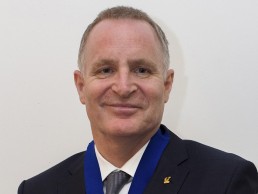
(UK) – Incoming CIBSE President Stephen Lisk gave a presidential address looking at the increasing rate of advancements in the construction sector.
Stephen Lisk, incoming President of CIBSE, has made a resounding call for the association to accelerate its evolution in response to a rapidly changing world.
During his Presidential address, Lisk focused on the pace of change within the natural world as well as the construction sector and the regulatory climate in which it operates: he stressed the vital importance of education and expert guidance to ensure that the built environment provides positive spaces for living and working into the future.
A major theme for Lisk’s year in office will be the importance of collaboration between all the professionals whose experience should influence the design of buildings. It is an appropriate focus for a non-engineer – Lisk is a ‘lighter’ – leading an institution with engineering at its heart.
It is in such collaboration that Lisk sees the value and relevance of a professional organisation such as CIBSE: constructive debate between like-minded profession producing the most comprehensive and practical solutions to building design challenges.
Lisk also commended the CIBSE Knowledge Portal and Build2Perform Live as excellent examples of initiatives that increase accessibility and fulfill the Institution’s aim of sharing its knowledge to the benefit of all.
The speech committed to continue and accelerate the pace of change within CIBSE with the objective of building “a virtuous circle of competency”. Members and, critically, the huge number of participants in CIBSE’s special interest groups who are not CIBSE members, should be prepared for some radical new thinking in the way CIBSE engages with and consults its unique corps of expert contributors.
Stephen Lisk, former president of the Society of Light and Lighting, and founder of One Eight Light, succeeds Peter Wong as CIBSE President and will, in turn, be succeeded by Professor Lynne Jack, Director of Heriot-Watt University’s Royal Academy of Engineering Centre of Excellence in Sustainable Building Design, who will be supporting Lisk in her capacity of President-Elect during the coming year.
Philips Lighting becomes Signify
(Netherlands) – Signify marks the first day under its new company name with the launch of its ‘Light for Better Learning’ campaign.
Signify has today [May 16th] officially launched its new company name, following the amendment of the company’s articles of association, changing its name from Philips Lighting N.V. to Signify N.V.
“The choice of our new company name originates from the way light becomes an intelligent language, which connects and conveys meaning,” said Eric Rondolat, CEO of Signify. “It is a clear expression of our strategic vision and purpose to unlock the extraordinary potential of light for brighter lives and a better world.”
Signify will continue to use the Philips brand for its products, the most trusted lighting brand in the world, under the existing licensing agreement with Royal Philips. The company expects the name change to be implemented in all the countries where it is active by the beginning of 2019.
Alongside the official announcement of its new name, Signify has revealed that it will light up more than 90 schools worldwide through its ‘Light for Better Learning’ campaign, in celebration of UNESCO’s first International Day of Light.
Through this campaign the Signify Foundation improves learning opportunities for young people in on- and off-grid communities by providing lighting to schools and workshops on energy efficiency and climate change.
Signify has already illuminated schools in China, Indonesia, Uganda and Morocco as part of the campaign and will extend support to more schools around the globe in the coming year.
"On our first day as Signify, we are proud to partner with UNESCO to light up schools around the world," said Shalini Sarin, Chair of the Board of the Signify Foundation. "Providing sustainable access to light to communities that are underserved by electricity is at the heart of what we do."
On May 7, 2018, approximately 60 volunteers from Signify Indonesia shared their knowledge on climate change with 10 classes of children aged 6 to 12 of the Bani Saleh 5 Elementary School, in Bekasi, near Jakarta.
"Our students learned a lot about the various aspects of climate change through games, songs and lively discussions with the volunteers," said Sudirno, Headmaster of Bani Saleh 5. "We had a lot of fun and I want to thank all the volunteers involved. I look forward to continue working with Signify in the future."
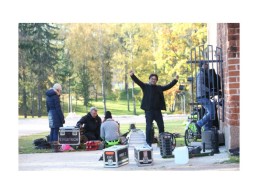
Registration for TAVA2018 is now open.
(Estonia) - Registration to participate in the programme of workshops and conferences at the TAVA2018 light festival is now open.
TAVA2018’s festival programme welcomes participants to take part in three different workshops during this year’s light event. IALD Architectural Lighting Design workshops will continue on from last year's success, and this year and will be lead by experienced international designers, including Dr. Amardeep M. Dugar (India), Johan Röklander (Sweden), Ruta Palionyte & Silmas Rinkevicus (Lithuania).
Sabine De Schutter, curator of the workshops, commented: “Lighting design workshops with hands-on methodology are quite rare in the world and we are expecting a big interest and lots of participants.”
Each participant will have a unique opportunity to work together with world-renowned lighting designers to co-create a lighting concept for three designated landmark buildings in the town of Tartu - the St. John’s Church, Tartu Toy Museum and Estonian Ministry of Education and Research.
The second part of the TAVA2018 event will include a mapping workshop, lead by video-artist Alyona Movko. Movko is most known for her video art and mapping including, most recently, the video mapping of Estonian singer Elina Nechayeva’s dress during the Eurovision Song Contest 2018.
Festival visitors can view the results of both of the workshops on October 25-28, at the TAVA2018 Lightpath.
A single day workshop on October 27 will be lead by Varvara&Mar, a duo of local active artists who will also curate the TAVA2018 cityspace light installations.
After the week of workshops, an international Lighting Design and Light Art Conference will take place. The speakers will include experienced professionals who are either working in, or researching in, the field of light, perception and public space. The first day will specifically focus on lighting design, whilst a lightfair will be running parallel to connect lighting companies, service providers and manufacturers together. The second day will host ‘ArtistTALK and LIGHTart’, an artistic and performance based day focusing on light-art.
Register now to take advantage of the limited early-bird prices that are on offer until the end of May. Most of the hotels and hostels of Tartu will support participants with special discounted prices for accomondation.
More information on the event, or how to get involved as a participant or sponsor, will be available in upcoming TAVA2018 newsletters or alternatively, visit: www.tartuvalgus.ee

Harvard Technology marks 25th anniversary with product development plans
(UK) – The investment in its R&D and new LED products comes as part of Harvard Technology’s 25th anniversary celebrations.
Harvard Technology is celebrating its 25th anniversary with a renewed investment in Research & Development (R&D) and plans to launch several new LED lighting products in 2018.
Over the past two decades, the company has launched a number of wireless connected lighting solutions including LeafNut, CoolLED programmable drivers, EyeNut and more recently the CoolLED Pro range - the next generation of the CoolLED range, which has achieved 10 million units sold worldwide.
Investing in R&D is a cornerstone of the company’s strategy, with Harvard Technology continuing its commitment to designing and manufacturing lighting solutions utilising leading edge LED technology.
The company will unveil a number of new lighting products throughout the remainder of 2018, including fresh additions to the CoolLED Pro range of LED drivers in the form of the CLi 40W DALI and the CLi15W Analogue drivers, as well as some significant enhancements to the emergency range, including the DALI self-test combined emergency driver and DALI self-test maintained emergency driver, plus much more.
Russell Fletcher, commercial director of Harvard Technology, commented: “During 2018 we will be investing heavily in new product development to increase the functionality and advanced features incorporated in our product ranges. This investment will give OEMs and specifiers more flexible lighting solutions that meet application-specific demands.
“We have also taken on board the feedback we have received from our customers and made a cultural shift back to our core values, which will focus on meeting customer requirements, developing quality leading edge products and delivering a best in class service for our OEM customers.”

Jonathan Speirs Scholarship Fund 2017/18 winners announced
(UK) – Two students, from the University of Belfast and University of Michigan respectively, have been awarded the 2017/18 Jonathan Speirs Scholarship Fund.
The winners for the 2017/18 Jonathan Speirs Scholarship Fund have been announced.
Katie Corr of Queen’s University, Belfast and Azadeh Omidfar Sawyer, currently a student at the University of Michigan are the recipients of this year’s fund.
John Roake, Chairman of the JSSF commented: “This year the other Trustees of the Jonathan Speirs Scholarship Fund and I wanted to broaden our ability to assist potential scholars. The additional generous support we have received from our Benefactors, Sponsors and Contributors has allowed us once again to award two scholarships for the 2017-2018 academic year.”
Roake and the other trustees were impressed by the high standard of entries from a broad range of students, at all stages of their courses, from many schools of architecture.
He added: “Despite the extremely strong competition we are happy to choose one worthy student from Queen’s University Belfast: Katie Corr and another from the University of Michigan: Azadeh Omidfar Sawyer. Whilst they come from different approaches, both scholars have that ‘special something’ we are always looking to find in the way they expressed their passion for light and architecture coupled with a clear financial need.
"We therefore heartily congratulate Katie and Azadeh and their respective institutions on being awarded the JSSF scholarships this year and look forward to following their future development and career progress.”
Corr is currently a Masters student at Queen’s University, Belfast. Her passion lies in rediscovering the ‘alchemy of light’, a term she uses to describe a rich understanding of how light evokes mood and influences the experience of space – something she feels has been lost in our obsession over light levels and performance.
Her exploration has involved modelling a scene from an Ingmar Bergman film in an effort to deconstruct the lighting composition, distilling the relationships that produce the mies-en-scene and give the film such character. She has studied the work of James Turrell and Luis Barragán and the way in which they carefully control light and use it to manage the effect of a space on people. This work has then informed the design of a small concert hall, and a lamp to be used within it; both with a strong focus on the experience of light. Her final thesis concerns the design of a music school centred on light, landscape and views, sited on the north coast of Ireland where the light is grey and even.
Corr plans to use her scholarship to help with the costs of completing her Masters, and in particular to create the models necessary to portray her ideas of the project.
Omidfar Sawyer is a PhD student at the University of Michigan. She has a focus on architecture that is highly integrative in design and performance, and her studies focus on how we can improve our approach to daylighting design, to balance occupant comfort and interest with sustainability concerns.
Her Masters thesis was completed at Harvard University, using advanced modelling technologies such as computational fluid dynamics and a five-axis robotic arm and castings to create integrated ornamental façade designs that increase indoor daylighting.
Her techniques showed a 35 percent reduction in energy use compared to ASHRAE standards, and her paper won the Daniel L. Shodek Award for Technology and Sustainability at the GSD.
For her doctoral work,Omidfar Sawyer is exploring the relationship between the objective quantifiable characteristics of daylight and the occupant’s subjective visual impressions.
Omidfar Sawyer plans to use the scholarship to travel to visit the buildings she has modelled as part of her work, to gain further perspective in comparing the simulated results with the actual physical environments.

ILP issue response to London Plan
(UK) – Following the release of the London Plan last December, the ILP has issued a response regarding its lack of lighting strategy.
The ILP has recently written a response to London Mayor Sadiq Khan about the lighting strategy outlined in his consultation for the ‘London Plan’ issued last December.
The London Plan is an important document for the English capital, as it outlines a vision for the development of London’s infrastructure over the next 25 years.
Of the plan, Khan said: “All planning decisions should follow London Plan policies, and it sets a policy framework for local plans across London.” It is also expected that other local authorities will refer to the London Plan when developing their own plans.
However, Graham Festenstein, Vice President Architectural for the ILP has raised his concerns with the plan, and its relative lack of reference to lighting. Across the document’s 526 pages, lighting is mentioned just six times, and according to Festenstein, these only address ‘relatively broad strokes’ regarding security, sports lighting and light pollution.
Speaking in the March edition of ILP’s Lighting Journal, he said that the London Plan “all but ignores the impact, and opportunity, of good lighting and lighting design, and fast-changing lighting technology.”
In response to the London Plan, the ILP has sent a letter to Sadiq Khan, written by Alan Jaques, President of the ILP. In this letter, Jaques says: “London is unusual as a major international city in that it does not have an overarching lighting strategy or masterplan for its public space, and although some London Boroughs have introduced lighting masterplans, notably the recent document prepared by the City of London, there is no strategic planning document that addresses the long term approach to public lighting across the capital.
“The London Plan is an excellent opportunity to rectify this, but unfortunately the present draft does not address many of the important issues and opportunities that could and should be included.”
The letter goes on to address areas in which lighting plays an important role throughout the city, from “creating a high quality public realm” and facilitating the night time economy, to aiding health and wellbeing. Jaques also discusses the rapid advances in lighting technology, particularly in energy efficient LED lighting, stating “it is critical that a long term strategic approach is taken to its selection and application”.
Jaques signs off the letter by saying: “We feel that lighting is too important to be consigned to the margins of planning policy. We wish to urge those with influence in policy making to move this essential element of our city life and health further up the agenda.”
Lightspace to launch book celebrating 20th anniversary
(Netherlands) – The crowd-funded publication will celebrate the works of Tamar Frank throughout the past 20 years.
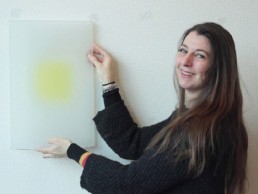
Tamar Frank, light artist and founder of Lightspace is celebrating the 20th anniversary of her practice with the launch of a new publication.
The book will serve as a retrospective, bringing together all of her work from the past 20 years, allowing readers the chance to see works that have since disappeared. “I make many artworks in public spaces, but even more temporary installations, where all that remains are the photos that I take,” Frank said. The centrefold will also feature a special artwork created by Frank that can only be seen in the dark.
While Frank has already received financial support from the Tijl Fonds – a Dutch culture fund specifically for female artists over the age of 40 – she has set up a crowd-funding page to raise the rest of the funds.
All donators to the campaign will have their name printed in the book, with increasing benefits for those who pledge more money, ranging from receiving a signed copy of the book, to attending a reception at the Angle Gallery in Amsterdam, to receiving a special, limited artwork created specifically for the anniversary: the multiple. This square light panel, limited to 20 signed and numbered pieces, slowly changes colour, and offers a unique opportunity, as it is the first time that Frank’s work has been available to buy.
Frank is expected to release the book in November 2018, at a special presentation at the Angle Gallery.
To view the crowd-funding campaign and make a donation, visit https://www.voordekunst.nl/projecten/6292-20-jaar-lightspace-het-boek-1