
Lightified
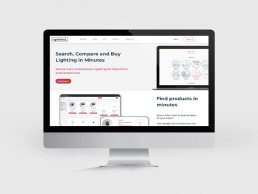
Rupert Tait, Founder of Smith Tait Lighting Consultants, tells us more about his newest creation: Lightified – an online tool aimed at streamlining the specification process
The lighting industry is highly competitive and demands that professionals work within tight deadlines and under immense pressure. As a means of easing some of that pressure, founder of Smith Tait Lighting Consultants, Rupert Tait, has created Lightified, a new online tool that aims to enable lighting professionals to fulfil their roles as efficiently as possible.
“Lightified was created to ease this pressure by digitising the current offline process,” Tait explained. “Outside of Lighting (and construction in general) we’ve seen digital revolutions in everything from F&B to Travel; with automation revolutionising processes and enabling companies to be far more efficient. The pressure lighting professionals experience is largely the result of an offline, highly analogue process – where being faster or more efficient is achieved by hiring more people, rather than optimising processes.”
Why was Lightified Created?
Tait is someone that has experienced this pressure first hand – as founder of Smith Tait Lighting Consultants, which over the last decade has grown into a multinational company with four global offices and a large market share across the MENA and SEA regions, and also in previous roles where he worked as a supplier in South Africa, where he explains the industry demands “were only magnified by the logistical nuances of the region”.
It is from these experiences that Tait envisioned Lightified. “The concept of Lightified in its most embryonic stage was designed as a tool to help my team leave the office on time,” he said. “It wasn’t long however, before it became clear that Lightified could be the saving grace of lighting professionals globally, and the tool developed into what clients see today.”
Since it started, Lightified has been chosen to participate in two start-up accelerator programmes; the first was the Dubai Smart City Accelerator by Startup Bootcamp, where Lightified was chosen out of 800 global companies and eventually achieved first place, securing funding from the Dubai government in the process. The most recent was the New York Abu Dhabi University Corporate Sprint Accelerator, which partnered with leading contractors in the Middle East. Lightified was awarded the innovation prize by ALEC Engineering & Contracting, winning the top prize of $10,000. ALEC is now partnering with Lightified to digitise its procurement process.
“That spirit of innovation is a common thread that runs throughout the team,” continued Tait. “Each bit of product development is done with one goal in mind – to digitise the industry and alleviate the pressure from lighting professionals.”
How Does It Work?
The core features of Lightified are concerned with searching for products and building specifications. The key time-saving opportunities lie in searching for products and comparing their technical information. In today’s world, that information is often found in fragmented offline places, making gathering it a time-consuming and often frustrating process.
“On Lightified, you will find all the product information in one place, with household brands (Flos, Linea Light, Sylvania, Kundalini, to name a few) quick to sign up to the platform to make it as easy as possible for designers to specify them. Product selection will now take minutes, rather than hours,” said Tait.
“It is not uncommon to see a lighting catalogue used as a mouse mat in our office. With the advent of new technology and the use of AI, we envisage that is all the catalogues will be good for in the future.”
Lightified, Tait explained, enables project information to be compiled and stored in one central, dynamic project page, which can be accessed and viewed by clients, contractors and suppliers. Once the products are selected, quotes can easily be requested with no need to upload product data and fill out Excel spreadsheets as the information is pre-loaded onto the system, and easily compiled into a quote.
“Where does Lightified go from here? For designers, the possibilities are endless,” Tait exclaimed. “It represents an area of focus where the technology can be pushed to the limit to deliver truly revolutionary services. At our most ambitious we will use the automated product selection to reduce the time it takes to build a specification.
“Utilising AI image recognition to identify products in project pictures, a designer will be able to select an inspirational project picture and gain instant insights into the products used to create the scene. The exciting part is this isn’t technology that will be available at some distant point in the future – it is on the roadmap for the next year.
“From a manufacturer point of view, we are producing industry-wide analytics. These will give insights into data that will help them to make decisions and form their corporate strategy. For example, which products are being specified in different regions around the world, which product ranges are the most/least competitive, and what areas of the market they’re not being specified in.
“We take inspiration from sites like Amadeus in the travel industry; building technology that brings all elements of the construction industry together. Long-term we will build out the verticals for all aspects of the construction industry, with Lightified the first (and most complicated) of that vision.”
How Can Designers & Manufacturers get involved?
Tait is inviting more designers and manufacturers to get in touch to help build Lightified further. “Lightified is built to help lighting professionals, so we encourage lighting designers and manufacturers to reach out and see the benefits for themselves. We cover all types of lighting, from decorative to commercial, floodlights to pendants.”
For more information, visit the Lightified website.

Hoare Lea: LightSIM
Dominic Meyrick, Partner at Hoare Lea, explains how the lighting design studio’s web-based controls app - LightSIM - helped to rejuvenate the lighting for LTS Architects’ new office space.
Back in August 2019, I gave a talk to LTS Architects at their rented offices in Bermondsey. During the conversation that followed, we discussed workplace lighting and
I mentioned that I thought their lighting was terrible... fortunately Greg Shannon, director and founder of LTS, took this in good grace, and we went on to examine the existing scheme, with its 600x600 ceiling downlights, together.
Recognising that the ‘LG3 throwback’ lighting was awful, Greg had hoped that the task lighting in which LTS had invested would enable everyone to turn off the inherited background fluorescents. However, when they tried this, staff complained that the space was too dark. My CPD seminar had mentioned that this approach doesn’t generally work, and because LTS were moving to a new office at 66 Wentworth Street in Spitalfields, London, I agreed that I would advise on the lighting scheme with a view to trying out new ideas about how an office could be lit to save energy, while creating a comfortable, attractive visual impression.
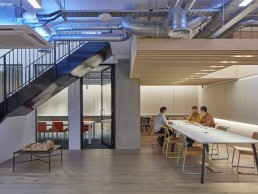
The new office comprises a ground floor containing the main workspaces and a small meeting room, while the basement level is designed around a long meeting table set beneath a timber slatted ceiling, lit by an internal skylight. I had the plans, knew the environment and the work that would be carried out, and so could tailor the lighting accordingly. Obviously, this is the luxury of a Cat B fit-out.
Ground Floor
Bang on trend, LTS were thinking of painting the ceiling and services black. Perhaps this aesthetic works in a hip coffee shop, but I didn’t think it would work for an office where visual comfort is paramount and factors, such as age, should be considered. The brain and visual system is designed for daylight. If the ceiling above our heads is dark, our visual system will take us to the time it is naturally dark overhead: nighttime. And so any space will appear dark. Clearly this would be a problem in a workspace. We therefore recommended keeping the galvanised silver elements on the ceiling and painting the concrete slab white. We could then uplight the ceiling and use the interreflection created to bring brightness into the space. Such an approach would mean that the mechanical kit would be lit and, well, why not! If it is there, why not flaunt it à la high-tech architecture.
The big idea on the ground floor was to have a continuous linear system, rather than pendants hanging over the desks. The main obstacle to this change was the aesthetic of exposed services, which were set.
We knew staff would be largely working in the middle of the floorplate, so the only space available for lighting was around the edge. Supplied by Optelma Lighting, the linear system runs around the space, uplighting the room and creating a background lighting level of 200lux +. The asymmetric system runs right across the windows. This is because at night, windows become ‘light suckers’; putting artificial light on the ceiling above the window opening reduces the impression of ‘black holes’. Therefore, with the exception of the entrance door, the eight areas of large glazing within the ground floor working area all have the system running across. However, the channel is so small (around 50x10mm) that it appears as a line, which does not upset the aesthetic.
We brought 13 Dyson Lightcycle task lights from LTS’s old office. These are the only ‘feature’ light fittings in the interior, and give the task lighting on each desk as required by BS EN 12464-1.
Having been a lighting designer for more than 30 years, I am happy to admit that while I love their light, I ‘hate’ light fittings as too often they distract from the architectural character of an interior. However, in this office, the Dyson task light is part of the ‘desk architecture’ and so is a visual enhancement rather than distraction.
Away from the main office space, the second big idea was to use concealed lighting. In the corridor between the office area and back meeting room, a floor-mounted, buried light fitting along one side uplights the wall. Opposite, in the alcove area where desks are located, concealed fittings ‘push’ downlighting onto the working area.
Finally, rather than trying to hide the ugly fan coil air-conditioning units, we decided to make them a feature, with colour-changing LED lighting putting colour into the space.
Basement
The basement comprises a meeting room, break-out space and desking. At present three of the desks are spares, which might in the future be rented out. As there is no task lighting in the basement, it was agreed that pendants would provide direct lighting over these. The main feature is the pin wall, which at 15m long, runs from one end of space to the other. Rather than putting downlighting on this thoroughfare, we specified asymmetric light fittings under the board. This system provides light that washes down onto the corridor that runs from the front to the back of the building.
The same asymmetric profile is used in the basement and the ground floor. Interestingly, we changed the lumen package for the LED strip: on the ground floor ceiling it is 3000lm per square metre, whereas under the pin wall in the basement it is 1000lm. Opportunities can be missed if care is not taken when working out the LED strip to be used within a profile. LED tape will only do the job if you consider the lumen package, placement and purpose.
LightSIM
Hoare Lea’s web-based LightSIM Controls App enabled LTS to explore lighting scenes, with photometrically accurate imagery on- screen, before they were uploaded to the real-world environment. Once a ‘scene’ is created in the app’s virtual environment, it is sent to a web-based lighting controls system and then imported directly into the enabled light fittings. We specified Mymesh from Chess; this enables each fitting to be ‘spoken to’ without hard wiring a control system.
LTS can easily reformat any of the lighting scenes. Whether in the building or working remotely, they can control the light, creating different scenes, while saving energy by making sure light is only on when needed.
Energy
The energy use across the lighting, if all on at 100% output, sails close to the maximum requirements of Part L (10.76W/m) for an office space. However, the LightSIM has allowed the ‘trimming’ downwards of the energy use to 6W/m, without losing that all important visual impression; and obviously the task lights are only on as and when required. The key is to remember that the eye, designed for the lit condition of daylight, will not ‘see’ the difference in visual impression of a lit scene when the lighting is at 100%, compared to 70% output. With further ‘tweaking’ the overall energy use was reduced without any detriment to users.
Commenting on the success of the solution, Shannon said: “It has been an absolute pleasure to work with Dominic and his team, and watch our humble home come to life. The results have transformed our thinking on lighting, energy use and what’s possible. We have saved significant sums on the build and on our running costs and have gained a beautiful scheme of which we are all very proud.”

David Morgan Review: Orluna Origin Natural
David Morgan inspects Orluna’s Fade Adjustable downlight fitted with the new Origin Natural light engine, following its debut at [d]arc room livestream.
A 50-year business trajectory has taken Orluna from its origins in the aeronautical industry into the architectural downlighting market.
Started in 1973 by a group of aeronautical engineers, the company was involved in early applications for LED light sources for use in civil and military projects where their efficiency, long life and mechanical resilience were ideally suited. This was long before LEDs were adopted for use in general lighting, so the company had a good headstart in their use.
In 2009, Andrew Kilborn took over the company after a career in private equity and venture capital. Under his management, Orluna has become one of the leading suppliers of downlights for high-end residential, hospitality and retail applications, working closely with lighting designers and specifiers around the world. His focus for Orluna is to grow the company organically with a long term investment horizon.
The company is truly international. It currently has more than 50 employees with overseas offices in Austria, Dubai and Singapore and works with a network of partners in 32 countries.
Orluna’s first big success in the architectural lighting market was the Quad 50 range of architectural downlights, which proved to be popular with the international lighting design community and helped to establish the brand.
All Orluna products are made in the UK with an above industry average content of UK-made mechanical components. Orluna plans to increase this proportion to even higher levels in the future. Sustainability is an important topic for the company and, by sourcing more mechanical components locally, it will help to reduce the carbon footprint caused by the shipping required to work with overseas supply chains. It will also allow easier re-use and re-assembly of products at the end of the life of the luminaire when light engines and drivers need to be replaced. By focusing on a limited number of related product types, Orluna is able to create a modular range where common components including heat sinks, light engines and bezels can be used on a variety of different product variants to achieve economies of scale.
The latest product introduction from Orluna is the Fade Adjustable downlight fitted with the new Origin Natural light engine.
Unusually Orluna luminaires incorporate custom COB light engines made to its own phosphor recipe. The previous generation of Orluna light engines, the Origin, features a CRI of 98 with a very high R9 value of 99. Under the TM30 system the Origin light engine has values of RF of 94 and RG of 101. However, the spectrum of the earlier Origin light engine was not fully continuous and had some dips in the violet and cyan areas.
The new Origin Natural light engine improves the RF value to 98 and the RG to 100 so getting even closer to the sunlight spectrum and achieving slightly higher values than a Soraa Vivid 3000k lamp. The spectrum of the new light engine is now noticeably more linear and continuous across all the colours. At the moment, only 2700k and 3000k colour temperatures are available as these are the most used for Orlua projects. A warm, dim light engine is available, which adjusts from 1800k to 3000k with a CRI of 98 and R9 of 98, but at the moment this is not included within the Origin Natural range.
The small improvements in the colour fidelity performance of the Origin Natural light engines should be useful to get the attention of the target market of lighting designers. The lit effect from the Fade adjustable downlight sample I tested was impressive with all colours well differentiated, attractive and with a clean, soft-edged beam with no imperfections.
I suspect that the wide range of distributions available may be of greater interest to designers, with up to 10 beam angles in most of the Orluna range. Ranging from a very narrow 8° spot up to a 55° wash in the symmetric distributions and with two different elliptical beam angles for asymmetric applications.
The Fade adjustable downlight is an 80mm diameter trimless, fully recessed luminaire with a 28° aiming angle. It incorporates both a cone and a baffle for good glare control and visual comfort. With 10 distributions and a wide variety of colour finishes there are many options to fit project requirements.
The development of the Origin Natural light engine and the Fade adjustable downlight were understood to have taken around 18 months. Design Director Graham Lunn and Daniel Mahdavi and Chief Technology officer were responsible for these projects.
The luminaire is constructed from a conventional combination of aluminium die castings, aluminium extrusions and machined components. The build quality and finish are good and the rotation in both axes is smooth with a positive horizontal rotational stop giving around 350° adjustment. The luminaire snaps positively into a moulded ceiling plate with ball catches that will allow further horizontal rotation if necessary. A somewhat flimsy moulded rubber gaiter fills in the variable gap created as the luminaire is angled back to prevent a direct view into the ceiling void which is a nice design feature. The bezel assembly is easily unscrewed to allow the reflector and diffusing window to be changed on site if necessary.
The heat sink on the sample I tested ran quite warm and I noticed that the direct air flow path through the heat sink was somewhat restricted, but I assume that the COB LED running temperature will be within operating limits when used in a ceiling void.
Orluna has achieved a very high level of performance with the new Origin Natural light engine, which should differentiate it to some extent from the many other downlight companies. The wide range of optics and variety of luminaire options, including the Fade adjustable that can use this new light engine will definitely give the company a strong story in this market.
Paula Rainha & Joana Mendo
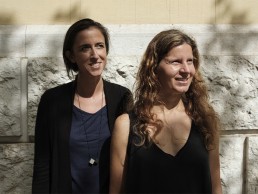
After several years of collaboration, Paula Rainha and Joana Mendo have joined forces to form new lighting design studio, Filamento. arc speaks to the duo about their aspirations for the new studio.
How did you both get into lighting?
Paula Rainha (PR): I wanted to be a dancer at some point in my life, but I ended up training as an architect. When I finished my degree, I felt that dance was missing from my life, and I started my quest on how to combine dance and architecture as a career. I found stage lighting design as a way to define space in the dance world and I applied for a MSc in Lighting in London. Cutting the story short, I never did stage lighting design but I completely embraced the architectural lighting design profession.
Joana Mendo (JM): After working some years as architect, I realised that light had always been my favourite subject and the priority in all my conceptual approaches. At the time I wasn’t quite sure if I could make it my profession, but my interest was growing bigger and bigger. I think also due to the adaptation from sunny Lisbon, where I grew up, to a northern European city, where light and sun are treasured, as they only come in small doses in winter. This was in 2008, when I got accepted for an internship at Lichtvision in Berlin, where I learned a lot and started understanding what it is to design light. I never wanted to do anything else after that.
Can you describe your lighting career so far?
PR: I started my lighting career in London with Gary Campbell at Campbell Design in 2005. Then I moved to BDP Lighting where I stayed for another two years before moving back to Lisbon in 2009, where the profession was almost unknown. After a difficult start in Lisbon, during the credit crunch, in 2011 I had the chance of winning a competition that made me travel the world in search of lighting installations. This also gave me the opportunity of meeting architects and raise awareness within the local industry. 10 years later I’m proud to say that I’ve established my own company, Synapse, and I started working with some of the largest and most recognised architectural practices in Lisbon.
JM: I’ve worked for different companies in Berlin and London, which were extraordinary experiences, both professional and personal. In larger companies like Lichtvision and Arup I learned about the latitude of our profession, that you can do so many things within lighting and you can reach so many people with your work. While working with Marci Song at Seam Design and living in London, I was reassured of the importance of design and our contribution to people’s lives, when we create a certain environment or atmosphere with lighting. My career is an important part of life, moving around, experiencing, keeping my eyes open and trying to respond the best that I can to the opportunities that cross my path.
How did the two of you meet and begin working together?
PR: We met in London, in a “Configuring Light” workshop in 2014, after knowing of each other and exchanging some emails (there were not many Portuguese lighting designers back then). Through many great conversations and sharing of professional experiences, we understood that we agreed on lots of subjects and had very compatible design backgrounds. It was a connection that got stronger very naturally. In 2019, when Joana moved back to Portugal, Synapse had a lot of work going on, as the country was booming with tourism and new investments, and I asked Joana to jump in and help out.
When was the decision taken to officially merge Synapse into a new company?
JM: After working for nearly a year together in outstanding projects such as Convento do Beato and a number of high-end hotels, it made sense to officially join forces and we decided to merge our companies.
Why did you decide to create a brand new practice?
PR: When we merged our companies, the issue was raised on whether to keep the name Synapse or start a new brand. We thought it made sense to open a new chapter for both of us - Joana for leaving Germany and her sole trader company and me for starting a new venture, with a larger structure and a business partner.
What would you say is the design philosophy for Filamento?
JM: Filamento is an independent lighting design practice – in some countries this is still not very common, particularly in Portugal. In our projects we are interested in providing the best design, technical and sustainable solution to our client, and we believe the only way to achieve this is to stay independent and work closely with the design team. Due to our architectural background, we are mindful of how light can reveal and uphold the built environment, its conceptual form and support its function. We believe each project is unique and that lighting can have a great impact within architecture and the people that use these spaces.
Do you have a particular area of specialism?
PR: Actually no, even though, due to the current market, we have been working a lot in hospitality and corporate office projects. Due to our past experiences, we have a strong interest in cities, the public realm and exterior lighting projects as well.
What are your aspirations for Filamento? What do you hope to bring to the lighting world?
PR: We would like Filamento to be recognised by the quality of our designs and continue to be involved in landmark projects, with extraordinary design teams that keep challenging us to come up with innovative solutions. Our wish is that the practice provides opportunities for us and the team to learn and grow as designers, in the long term. We also hope to play a role in developing a lighting design culture in Portugal, by bringing our international experience here and raising awareness on the impact of light in the built environment.
What do you think the future holds for the lighting industry?
JM: The lighting design community has been showing an extraordinary capability to connect in the digital world. Especially during this pandemic, we all realised that remote work and interaction within our profession can be very successful. We see this as an opportunity for smaller practices to work internationally and for some smaller communities to open up to the global market. For quite a long time, lighting design in Europe was centred mostly in Germany and the UK - we believe this is starting to change, which can enrich the lighting industry long term.

Asst. Prof. Dr. Karolina Zielinska-Dabkowska
WiL Ambassador for Poland, Asst. Prof. Dr. Karolina Zielinska-Dabkowska IALD, IES, CIE, MSLL, RIBA, reflects on her lighting career, as a designer, researcher, educator and mentor.
Although Asst. Prof. Dr. Karolina Zielinska-Dabkowska is now recognised as one of the primary educators and trend setters in the lighting design world, her career in lighting design almost didn’t happen.
“I never planned a career in lighting design, it just evolved on its own,” she said. “I always wanted to be an architect, and graduated with two degrees in Architecture. Until 2000, I was unaware that lighting design existed as a profession.”
Zielinska-Dabkowska first ‘discovered’ lighting design while studying architecture in Germany, where she noticed that in Hildesheim, at the HAWK University of Applied Sciences and Art, you could study architectural lighting design – the first such lighting programme in Europe.
Although she has some memories of playing with candlelight as a little girl growing up in Poland, it wasn’t until 2002, while participating in a lighting design workshop in Alingsås, Sweden with Jonathan Speirs and Mark Major, that Zielinska-Dabkowska realised lighting design was the career she wanted to pursue. “I was immediately hooked, as I always felt my architectural design was incomplete, that something important was missing. That special something turned out to be light.”
Zielinska-Dabkowska followed this interest in light and began working for L-Plan Lighting in Berlin in 2002. It was here where she began to understand the true potential of lighting design. “While working in Berlin on the illumination of the new Munich airport terminal, I realised for the first time, as a building architect for many years, that I could only work on one large project at a time. Whereas, a lighting designer is fortunate enough to work on many projects concurrently because these projects are at different stages of development and sometimes they are located in different places around the world,” she said. “It could be an urban lighting masterplan, the illumination of an exterior façade, the interior of the building, or elements of landscape architecture, there are many possibilities.”
Upon graduating in Architectural Engineering at HAWK in Hildesheim in 2004, she left for New York City to work for Fisher Marantz Stone.
“My departure to New York to gain experience in one of the oldest lighting design practices in the world, and to work with a great international team on many world-famous projects, convinced me that this was the professional path to follow,” she explained. “Light gives the opportunity to change architecture, to visually modify its form, material, etc.”
She relocated again in 2005, moving back to Europe to start a new role as Senior Lighting Designer at Speirs + Major’s London office, where she worked on numerous projects centred around external illumination. “This is also where my knowledge about urban lighting masterplans (ULM) developed, and thanks to this valuable experience, enabled me to contribute a chapter titled “Urban Lighting Masterplan – origins, definitions, methodologies and collaborations”, for a RIBA book called Urban Lighting for People: Evidence-Based Lighting Design for the Built Environment,” she explained.
Then, after a chance encounter during a flight in 2007, Zielinska-Dabkowska was offered an interesting job opportunity at Light Bureau by its founder, Paul Traynor. “The company was redesigning the previous lighting proposal for the new Main NATO HQ in Brussels, and I was going to be fully responsible for this, and other exciting projects.”
Six years later, due to family reasons, she relocated to Switzerland in 2013, where she started working for Reflexion, and after obtaining her PhD degree in Technical Sciences with honours from the Faculty of Architecture at Gdansk University of Technology (GUT), Poland, she founded designs4people [d4p].
With a CV that has seen her work for three of the largest, most well-known lighting design practices in the world, Zielinska-Dabkowska believes she learned a great deal before setting up her own studio. “I decided to join these companies to know what makes them stand out and discover why they’re so unique and different,” she said. “I soon realised that the creative designers of these companies work under visionary individuals. Also, each company has a specific design approach and process in place, so combining these experiences was highly useful.”
Zielinska-Dabkowska elaborated on how these experiences led to a shift of ambition in her lighting design career: “At first, I was only interested in creating beautiful spaces with the help of lighting and the expression of my creativity, but it didn’t take long before I understood there was much more to realise,” she said.
“My vision for the future soon became focused on redefining what it meant to design healthy lighting for humans and built environments, via education, research and policy making. I believe we are just at the beginning of a long and winding road. In today’s world, I think individuality equates to a designer’s ego, which is not my aim, rather, as things become more complex in terms of knowledge inputs, the solution involves the creation of intradisciplinary teams and teamwork.”
With this in mind, Zielinska-Dabkowska explained in more detail the design philosophy for her consultancy, designs4people: “We no longer solely design illumination just to create memorable, highly aesthetic spaces during the night. Our approach is unique and it’s centred on the user and his/her habitable environment.
“This involves basing our designs on the newest research knowledge in the fields of astronomy, biology, medicine, ecology, etc, whilst also applying practical experience. “Essentially, I am a problem solver. My love for integrated lighting design involves a hands-on process, lighting mock-ups and tests onsite in order to find the best possible lighting answers. A professional lighting designer with my perspective and background, has a responsibility and moral obligation to use lighting with far more care, caution and restraint. More recently, there’s been an increasing number of municipalities seeking my advice on how to create healthy, environmentally conscious nighttime built environments that exist in harmony with architecture, urban planning and the natural landscape. There’s growing awareness now, of the value and importance of providing a safer environment for humans, flora and fauna by significantly improving the way artificial lighting is applied both in urban and rural areas, and particularly, in places recognised as ecologically significant, or where there are vulnerable species.”
Alongside the aforementioned NATO HQ in Brussels, Zielinska-Dabkowska believes she has been privileged to work on a number of high-profile, well known projects. Some examples cited by Zielinska-Dabkowska include the Burj Khalifa in Dubai and the Tribute in Light Memorial art installation in New York while at Fisher Marantz Stone, the lighting vision for King’s Cross Lighting masterplan, the external illumination of the Granary Building and Granary Square in London and the external lighting for the new astronomical observatory cone at the Royal Observatory Greenwich while at Speirs & Major, and the urban lighting masterplan for Porto Montenegro, which includes the illumination of an historic crane, for Light Bureau. “One thing worth mentioning, is that these projects always involved teamwork,” she added.
While she has worked for some of the major lighting design studios across her career, Zielinska-Dabkowska cited Lesley Wheel as her lighting hero, one of the founders, and the only female founder of the IALD. She also has a strong admiration for her friend Anne Bureau. “Anne has not only established herself as a female lighting designer over the last 25 years, but she’s also capable of handling large scale projects almost on her own, and on top of that, she has a family with two children, enjoys what she does and is an authentic person. I do not know how she does it all!”
Throughout her lighting design career, education has also played a key role for Zielinska-Dabkowska, both in her own studies, but also through her work as a mentor and teacher. This is something she feels came naturally to her when she was young. “I seem to have teaching in my blood,” she said. “Very early on, I mentored people in the lighting design offices I worked for. Often, we had students who would intern with the company and would stay during their Master’s thesis semester, and I would mentor and supervise their Master’s thesis.
“This developed gradually over the years while I was a guest lecturer for the Polytechnic University of Catalonia (UPC) in Barcelona, and also during my time as a senior lecturer at Hochschule Wismar University of Applied Sciences: Technology, Business and Design in Germany for three years, I oversaw Master’s and PhD students.”
More recently, in 2018, Zielinska-Dabkowska was offered a part-time Assistant Professor position at GUT, where she founded the research lighting laboratory, GUT LightLab, which conducts research on various aspects of light and lighting in the built environment.
Now, she is currently involved in the new Erasmus+Strategic Partnership project called Light4Health – Health Research-Based Innovative Open Educational Resources and Tools for Lighting Design Students and Professionals. “The team is developing a novel educational course to teach health research methods and findings to lighting designers at the graduate level,” she explained. “I am especially excited as Prof. Dr. George Brainard and his lab are involved in this work.”
Over the last 15 years, since her early days in the profession, Zielinska-Dabkowska has noticed a marked improvement in the level of education on offer for prospective lighting designers.
“Today, it’s much easier to deepen your knowledge about lighting design than when I began,” she said. “Quality education is now offered in countries such as the UK, US, Germany, Sweden, Denmark and Spain. Interestingly, each of the programmes have a slightly different focus point, which I think is necessary. I love the variety.”
“While I was working for Hochschule Wismar as a senior lecturer, I often had requests from my colleagues, who were principals of top international lighting design consultancies, wanting recommended students for internships. After finishing their obligatory internship, many of my students were given a great job position before they even graduated.”
She continued that this increased level of educational opportunity only helps to boost the profile of lighting design as a profession – something she feels could still be enhanced. “Good quality education is one of the important pillars of professional recognition. For example, architects and civil engineers are subject to legal restrictions and requirements. As such, they can only be carried out by holders of specific qualifications. Yet, with lighting design, such credentials remain unrecognised worldwide. I hope one day soon this will change for the better.”
However, while Zielinska-Dabkowska does believe there is more recognition of lighting design, thanks to the greater availability of higher education on the subject, she feels there is still some way to go for it to be considered an essential service. She explained: “When there is an economic crisis, the first professionals who are mistakenly, often seen as just ‘nice to have’ and ‘unnecessary’ on a project, and therefore, easy to get rid of, are lighting designers and landscape architects.
“Today, I do see a trend of some of the large engineering companies such as Arup, WSP, AFRY and Buro Happold, offering lighting design in their services. With the rise in complexity, budgets, and also the scale of the latest architectural projects, clients increasingly prefer to deal with one company, i.e. a multidisciplinary consultancy that can provide all the required services under one roof. This way of appointing the design team is perceived as creating a better flow of communication between the different disciplines, which can facilitate faster solutions to problems. Moreover, responsibility is focused on one entity. The disadvantage with this approach, is that it can at times, prevent the introduction of innovative solutions to the project in order to avert risk, so there may be a tendency to avoid employing smaller or less known new outlets.”
Although she has achieved a great deal throughout her lighting design career, Zielinska-Dabkowska revealed it was a struggle for her to be to where she is in now. In her early days as a young woman she “had to fight to get to my current position. I wish I had a mentor back then but I did not,” she said.
“Most often, I was the only female and the youngest person on the project team. Many times, I also had the impression I was denied the same entry level on a project as my colleagues simply because I was a woman, and that I had to first prove my skills and competence. This has changed now as I have more grey hair [she laughs], or perhaps there has been a slow shift in attitudes of investors or architects?!”
While the situation is improving for her personally, Zielinska-Dabkowska still has some frank concerns regarding inequality within the lighting design field, both in terms of pay, and opportunities for career progression. “I remember once in the past, discovering my work colleague was earning 10% more than I was, even though we shared the same position and I was dealing with international projects, which involved a lot of travel,” she said. “When I questioned my boss about this discrepancy the answer was “you don’t have kids.” That seemed grossly unfair.
“From discussions with many of my colleagues, who are male owners of lighting practices, there appears to be some hesitation in hiring a woman of reproductive age. What’s preferred, are graduates who still want to have a career, who can work hard and believe it’s too early to settle down and have a family. Sadly, for those who do decide to have children, after maternity leave, often their contracts are terminated. This is unjust in our society and should change in our field as well. A real-life example, is of a good friend who was senior lighting designer in a large company. When her maternity leave ended, she was asked to depart after ten years of employment with that business.”
“This situation has impacted me personally as well. Throughout my career, due to the demands of my profession and the many ever-present expectations, the timing was never right to settle down and have a family of my own. If you were to ask me if I regret anything about my career, my answer is a resounding yes. I would have loved to have had children, but it’s impossible to turn back the clock.”
While her story is heartbreaking, it’s both striking and refreshing to see Zielinska-Dabkowska talk so candidly about what can be an uncomfortable topic, but such inequality is one of the core reasons that Women in Lighting (WiL) was established. Zielinska-Dabkowska has been involved with the initiative, acting as the Women in Lighting Ambassador for Poland, both to raise the profile for women in lighting design, and also to establish the lighting design profession in Poland.
“It is very hard to work here – I am the only IALD professional member in the country so far. It’s also challenging being a woman lighting designer. Most of my competitors here provide lighting design services for free by selling lighting equipment to cover their costs,” she explained.
“We will be unable to establish an independent lighting design profession in Poland if such procedures remain in place. Often, projects are lost as my fee proposal is considered too expensive. The general attitude of architects also needs to change. They expect between 10-25% of the lighting equipment budget price to be paid to them by lighting suppliers who also provide so-called “lighting design”. It’s unfeasible to compete with this.”
Looking forward, Zielinska-Dabkowska would like to see an increased impetus on the importance of cross-disciplinary research – something she feels would both improve the stature and recognition of lighting design as a profession, while also leading to an improvement in the health and wellbeing of both humans and wildlife. “The only way to establish lighting design as a recognised profession is to ensure a transdisciplinary, design-led research approach is established, in order to generate strategies that support both the health and life quality of humans and wildlife,” she asserted.
“We need to become experts in our own right and be paid for this complex knowledge as well as the proper methods to apply it. For us as practitioners, it’s crucial to gain new knowledge and an appropriate integration of skills, methods, data, and perspectives from different scientific fields connected to health, wellbeing and biology.”
Since 2014, Zielinska-Dabkowska’s has been active on the Scientific and Organising Committees of the Light Symposium Wismar, Germany, which is a platform to connect research and practice. She’s also been involved in public policy making connected to lighting and light pollution and is on the Technical Committees of the CIE, IES and IDA, which all work on the development and establishment of lighting standards and/or guidelines.
This means that Zielinska-Dabkowska’s role as an educator within the lighting profession shows no sign of slowing down, and she concluded that her role as a mentor and teacher is one of her main sources of inspiration. “I love to mentor my Master’s and PhD students on light and lighting,” she said. “My students and colleagues who have developed their skills under my tutorage and are recognised in the lighting design field, provide endless inspiration and are my ultimate lighting design qualifications.”
www.designs4people.com
www.researchgate.net/profile/Karolina_Zielinska-Dabkowska
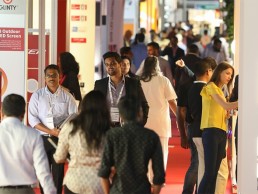
New dates announced for Light Middle East 2021
(UAE) – Show rescheduled from January to late September.
Light Middle East has been rescheduled from January to September 2021, organiser Messe Frankfurt Middle East (MFME) has announced.
The three-day event was initially set to run in January 2021, but will now take place from 28-30 September at the Dubai World Trade Centre, where it will co-locate with two other MFME-organised shows: SPS Automation Middle East, a platform for industrial automation solutions; and Middle East Cleaning Technology Week.
Dishan Isaac, Senior Show Manager for Light Middle East, said the move is widely supported after careful consideration and consultation with industry stakeholders, including exhibitors, trade professionals and supporting associations.
“Moving Light Middle East to September 2021 is in the best interest of our valued customers, and the co-location with SPS Automation Middle East and Middle East Cleaning Technology Week offers a level of synergy around the built environment,” said Isaac.
“In its 15th edition, Light Middle East 2021 will solidify its position as the region’s number one networking and sourcing platform for the entire scope of architectural, decorative, technical, industrial, indoor and outdoor lighting solutions.
“The platform will be packaged with the return of the THINKLIGHT Forum, offering insights and reflection on the evolution of our industry, particularly in light of the pandemic we’re now navigating.”
The newly rescheduled event, which is expected to welcome more than 300 exhibitors and 6,000 visitors, will open just a few days ahead of Expo 2020 Dubai, which takes place from 1 October 2021, through to 31 March 2022.
“Held under the theme Connecting Minds, Creating the Future, Expo 2020 Dubai is expected to attract more than 25 million visitors, with 70% coming from outside the UAE,” added Isaac.
“Once Light Middle East concludes, international exhibitors and visitors can take advantage of their time in Dubai and explore the myriad country pavilions and unique features of this six-month long mega event.”
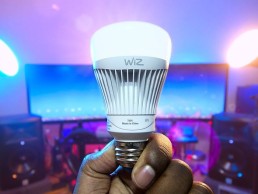
Signify, Ansell Lighting and 4Lite partner to introduce WiZ Connected to UK markets
(UK) – Ansell and 4Lite products to incorporate WiZ Connected technology.
Signify, Ansell Lighting and 4Lite – a subsidiary of Japanese lighting company Endo Lighting – are partnering to introduce WiZ Connected to both the professional and consumer markets in the UK. Ansell will be adding the broad range of WiZ Connected products to its OCTO portfolio, while 4Lite will add to its range of products aimed at the consumer market.
“We are delighted to be able to offer WiZ IoT platform within the OCTO and 4Lite brand proposition and breakthrough innovation with dual connectivity technology,” said Mark Abbott, Managing Direct at Ansell and 4Lite. “We want to offer cutting edge connected solutions and this partnership with WiZ reflects that.
“We have taken great time and care to ensure we align ourselves with partners that offer the same values and ethos as Ansell and 4Lite. We are looking forward to working with WiZ and excited to launch a number of exclusive products to the market.”
The WiZ connected lighting product range consists of lamps, a retrofit connector, LED strip and several accessories, all commissioned via the WiZ app. WiZ Connected technology is embedded into Ansell’s and 4Lite’s luminaires, meaning no hubs or additional wiring is required.
The OCTO WiZ Pro range provides a hybrid technology consisting of WiFi and Bluetooth. This hybrid technology is new for 2020, being the only dual protocol solution currently on the market, allowing seamless pairing and scalable deployments. The WiZ Pro software suite offers multi-users and multi-location options, making it suitable for new or existing residential buildings, restaurants, shops and the education sector.
“We are very pleased to partner with Ansell Lighting and 4Lite as their forward thinking approach reflects our own. This partnership is very emblematic of our ability to address the needs of lighting vendors who target simultaneously consumer and professional markets,” said Jerome Leroy, Head of Marketing, Platform and Ecosystem and WiZ Connected.
www.wizconnected.com
www.anselluk.com
www.4likeuk.com

Zielinska-Dabkowska recognised at 2020 IDA Awards
(Poland) – Asst. Prof. Dr. Karolina Zielinska-Dabkowska given Galileo Award.
Asst. Prof. Dr. Karolina Zielinska-Dabkowska has been recognised by the International Dark-Sky Association (IDA), picking up the Galileo Award at the 2020 IDA Awards.
Each year, the IDA recognises and celebrates the achievements of individuals and groups who are committed to its mission to preserve the night.
The Galileo Award is given in recognition of outstanding achievements in research or academic work on light pollution over a multiple-year period. Through her ongoing work, both as a researcher and lighting designer, Zielinska-Dabkowska has recognised the many adverse impacts of artificial light at night on human health, ecosystems, the environment and the night sky.
She also promotes and advances the mission of IDA to preserve the night sky in her work by authoring and co-authoring research articles on the topic. Additionally, she provides outstanding education to the lighting community via professional and scientific conference presentations. She also works with the policy-makers to combat light pollution through the lighting standards and guidelines she co-developed. Consequently, lighting practitioners implement these in their daily practice.
“In short, Karolina has had a profoundly positive impact on the lighting design community due to her consistent activity and sharing of research,” the IDA said.
The 2020 IDA Awards recognised 18 individuals and groups from around the world, including Zielinska-Dabkowska, with representatives from New Zealand, Ireland, USA, Serbia, Chile, Australia, Guatemala, Hong Kong, India and France honoured.
Registration open for virtual IALD Enlighten Europe 2020
(Europe) – IALD’s Enlighten Europe conference to be held online on 18-19 November.
The IALD has announced that registration is now open for Enlighten Europe 2020. The conference will be held online for the first time this year, owing to the ongoing Covid-19 crisis, and will take place on 18-19 November.
A popular fixture in the international lighting design community, Enlighten Europe draws a diverse audience of lighting designers, manufacturers and suppliers, educators, students and other related design professionals. The shift online makes the conference more accessible to a broader audience of professionals in the international lighting community.
“IALD has represented the profession of lighting design for more than 50 years, and this year, it is more important than ever to be that central point of connection for the greater lighting community,” said IALD President, Douglas Leonard.
“Our European members and friends have been looking forward to being together this year. While we are unable to meet in person, IALD’s Enlighten Europe 2020 online is our opportunity to bring our European lighting community together, foster personal connections, share learnings and participate in a new virtual experience.”
Created for and by lighting designers, Enlighten Europe 2020 online is designed to bring the lighting community together in new and exciting ways, at a time when staying connected matters most. This year’s event will feature the interactive “Light Playground”, special social gatherings, engaging breakout discussions and 15 luminaries of lighting from around the world. Speakers at this year’s event include: Andreas Schulz (Licht Kunst Licht); Monica Lobo (LD Studio); Julia Hartmann (Lightsphere); Kai Piippo (Light Bureau); Carla Wilkins (Lichtvision); Kaoru Mende (LPA); Dawn Hollingsworth (Darkhorse Lightworks); and former IALD President David Ghatan (CM Kling + Associates), among others.
“Given the challenges that many businesses are experiencing this year, the IALD is offering its Enlighten Europe 2020 registration at a significantly reduced rate,” added Marsha Turner, IALD CEO. “This decision was made so that our European members can easily connect with each other and gain valuable access to continue their professional development.”
Learn more and sign up for IALD’s Enlighten Europe 2020 online here.
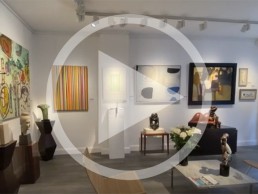
Remote Controlled Lighting (RCL): Alan Wheatley Art
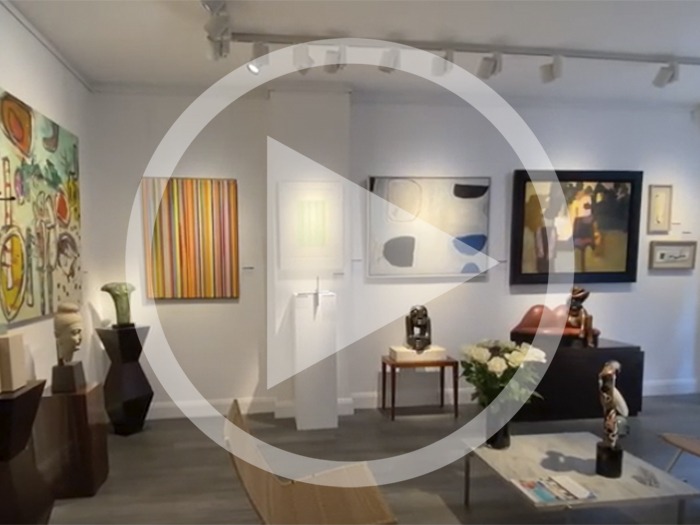
Join Remote Controlled Lighting (RCL) for a tour around the stunning Alan Wheatley Art gallery in London. This gallery is the first in the area to use DRX1 luminaires with LensVector variable beam technology.
DALI Lighting Awards open for entries
(USA) – Inaugural DALI Lighting Awards to celebrate the best use of DALI control solutions.
The DALI Alliance (DiiA), the global industry organisation for DALI lighting control, has announced the call for entries to the inaugural DALI Lighting Awards.
Held in association with arc and the IALD, the awards will look to showcase and celebrate the best use of DALI control solutions in lighting projects across the world, while also recognising the importance of producing great quality illumination.
All types of commercial, architectural and industrial lighting projects linked with DALI technology can be nominated, and there are different categories for indoor and outdoor lighting. There is no entry fee, and entrants can nominate multiple projects on an individual basis or as part of a team. Entries can be submitted from any section of the supply chain (including lighting designers, electrical consultants, architects, installers and commissioning engineers, among others) and there is no requirement for DALI Alliance members to participate.
Judges for this year’s awards include arc editor Matt Waring; lighting designer Tad Trylski, active member of the IALD and former chair of its industry liaison group; and Scott Wade, Technical and Certification Manager for the DALI Alliance.
Entrants can submit projects via an online entry form on the DALI Alliance website here. Entries for the awards are open until 30 November 2020, with the winners announced in January 2021 via a webinar hosted by arc.
RCL & LensVector: [d]arc room livestream workshop
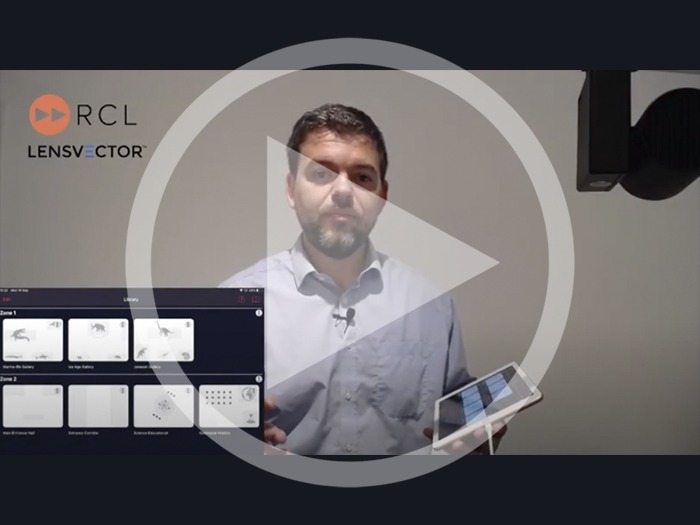
During a workshop held at [d]arc room livestream, RCL and LensVector showcased technology that streamlines commissioning, removing the need for ladders and manual focussing and aiming of fixtures whilst offering complete flexibility over lighting. Have complete control over beam width, intensity, colour temperature, positioning and scene setting over hundreds of luminaires across multiple spaces, quickly and easily, and from ground level.
www.rclighting.com
www.lensvector.com