

Light Reach
Nathalie Rozot and think tank PhoScope reach out to deserving communities to fight light poverty.
This year marks the beginning of a decade when the world is paying closer attention to climate change and improving sustainability. This movement is also reflected in the lighting industry with a focus on reusability and repairable fixtures to ensure their durability, as well as our awareness of light pollution and the spreading knowledge of environmentally-friendly light sources.
Nathalie Rozot, Founder of PhoScope, is on a mission to spread and share knowledge about light with underserved communities, while fostering social engagement in the architectural lighting industry.
“Our vision is to expand the knowledge and application of light worldwide, using scalable solar lighting programmes with replicable and rapidly deployed projects,” explained Rozot when talking to arc.
Starting out, Rozot obtained degrees in both science and design and practiced architectural, landscape, urban and exhibit design for ten years in Paris and New York. In 2000, she discovered ‘light’ whilst working at l’Observatoire International in New York. There, Rozot was responsible for leading prestigious, large-scale international projects, while also organising the studio’s workflow and production processes.
Simultaneously, Rozot began teaching at Parsons where she has since taught thesis studios and seminars for over ten years. She has also taught intensive workshops in France with Roger Narboni and then Sara Castagné and Sophie Bruère, in landscape architecture Master’s programmes in Versailles and Lille for many years, and served as education columnist for the Illuminating Engineering Society’s LD+A publication.
“I have always pursued an independent research practice,” explained Rozot, “and I have long ventured away from our discipline’s robust for-profit and grid-tied design culture; I have advocated for social innovation and environmental stewardship throughout my professional, academic and pro-bono work. In 2011, I founded the international think tank on light, PhoScope, to focus my design research and practice on the social value of innovative and disruptive ecological and economical light applications, from scenic to architectural and urban solutions.
“The solar-powered lighting project I developed for Haiti’s informal settlements, which was implemented with cLSF (Concepteurs Lumière Sans Frontières), set the premise for PhoScope’s global initiative, Light Reach.”
Light Reach is a large-scale and multi-programmed initiative whose mission is to scale-up social action and engagement in the field of lighting design, and to fight light poverty with rapidly deployable project models.
The charitable initiative strives to empower communities with solar lighting and knowledge about light, and to build an infrastructure to enable and encourage lighting industry participation.
Rozot’s unique path to lighting activism is solar, modular and scalable, with project templates designed to suit the needs of communities and residents in a variety of situations and locations.
“Access to light can greatly benefit communities by improving their natural, public and domestic environments. It is also essential to community placemaking, and displacement prevention after disasters,” elaborated Rozot.
“Moreover, education about the physics of light and the physiology of vision is valuable in more ways than one: it helps solve kitchen table issues in daily life, and it sparks creative and cultural expression.”
Rozot explained further that light poverty not only curtails in-home educational and economic development, but also impedes wellbeing by depriving communities of public spaces after dark.
“It obstructs sociocultural fulfilment for individuals and communities by obscuring social life, artistic expression and creative enterprise.
“Humanitarian lighting programmes are typically market share-driven and product-based and only offer barebones lighting commodities; they address baseline tasks and safety, but not communities’ social and cultural needs. We need more sophisticated deployment models to positively effect social change, and lighting experts and professionals are uniquely positioned to advance communities with impactful initiatives.”
“Light Reach offers an actionable plan to scale-up the positive impact of lighting design with a game-changing replicable project model across multiple programmes: it combines the deployment of off-grid lighting kits and knowledge transfer about light with a framework for social engagement for lighting professionals. Its lighting design projects immediately solve pressing social and recreational needs, plus they double-up as sustainable back-up lighting systems for relocation and distribution to families and communities in case of emergencies,” she added.
Based in New York, Light Reach operates on a global basis. Its pilot programme Recreo de Noche in Puerto Rico, supported by seed grants from the New York sections of the Design Lighting Forum and the Illuminating Engineering Society, has already served three Puerto Rican communities with five workshops and 137 donated fixtures. Marién Vélez, a young woman in lighting from Puerto Rico, facilitated partnerships with local community organisations she was connected to, and led the pilot projects with a small team of volunteers while working closely with Rozot.
“Our volunteers lead workshops where the participants learn about the science and art of light and lighting, and help each community determine where to install the stationary lights.”
After the success of this pilot programme and moving forward, the team is planning to expand it and to introduce new programmes. It is hoping to work with volunteers in Mexico to start Lighting in Unplanned Settlements in the upcoming months, and is seeking project opportunities and partnerships worldwide to aid launch Lighting in Transitional Refuge this year to help communities of refugees.
PhoScope is now focusing on outreach. Light Reach is gaining traction amongst local communities and the lighting community: demand for projects is rising, and several new volunteers have signed up for the two-session Volunteer Training Programme, which will launch as soon as the next projects are funded.
“With our system of project models and templates, the work of two volunteers benefits a community of 250 people, so collectively our international professional lighting community can reach hundreds of thousands of people worldwide,” explained Rozot.
Rozot is also working closely with the Women in Lighting and Design (WILD) and Women in Lighting (WiL) organisations to expand Light Reach’s work and network.
“The New York WILD chapter is awesome and WiL is amazing: kudos to Sharon and Martin for their magnificent vision.
“WiL and WILD exert a strong sense of community; they offer expansive platforms and great opportunities for cross-generational networking and collaboration. Organisations that embody professional women in lighting also thrill me, since I experienced gender politics first-hand in my professional and academic careers.
“Light Reach is a uniquely homegrown and women-led lighting design initiative, so WiL and WILD are ideal stages for us to address light poverty and scale-up social action in the field. I believe connecting the Light Reach network with the WiL and WILD networks will not only help us inspire positive change in our industry, but it will also fundamentally contribute to advance lighting justice at a grand scale.”
In October 2019, PhoScope officially partnered with WeWork to launch an annual fundraiser in six global locations: New York, San Francisco, Tokyo, Mexico City, Bengaluru and London. The multi-city fundraising marathon for Light Reach kicked off with great success, with participants creating their own light-crafts and hosting raffles, and raised over $2,000 for Light Reach.
“Every project costs $15,000. The vision and model for Light Reach imply a shared effort with the participation and social engagement of our industry at large – together we rely on each other and we can only keep serving more communities with light if more sponsors, partners and volunteers join our network.”

Grimshaw
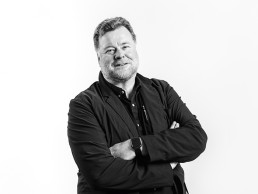
As Grimshaw Architects celebrates its 40th anniversary, arc speaks with Chairman Andrew Whalley about the firm’s past, its present, and its future.
While the principle of ‘Form Follows Function’ seems almost common sense, the idea that a building’s design should correlate to its intended purpose, there are some in the architectural sphere that prefer to focus on creating outlandish, incredibly stylised structures, without much consideration for what their creations will actually be used for.
Such an approach is not shared by architectural studio Grimshaw, which, since its formation by Sir Nicholas Grimshaw 40 years ago, has built its reputation on responding to the needs and resources of the contemporary world, approaching projects with a detailed understanding of the functions they must fulfil, the conditions they have to provide, and the materials from which they are constructed.
“We have a very pragmatic approach to design where flexibility and adaptability become a critical operational requirement of the building,” explained Andrew Whalley, Chairman and Partner at Grimshaw. “That has grounded us in a certain approach to architecture, which is driven predominantly by function and performance.”
This approach has seen Grimshaw, since its beginnings in 1980, expand from its London offices to seven locations around the world - from Los Angeles and New York, to Melbourne and Sydney, to Paris and Dubai – building a vast portfolio of projects, covering everything from airports and train stations to stadiums, office spaces and cultural centres.
With such a wide spectrum of work, across myriad sectors, Whalley believes that it’s important for Grimshaw to take each project on a case-by-case basis, rather than focusing on imprinting their own signature style. “We’re very driven by the programme,” he said.
“We don’t bring a pre-ordained stylistic approach. Some architects do, that’s their signature and that’s fine, but with Grimshaw, I think you can never say what one of our buildings might turn out to be.
“It becomes a kind of recipe – a chemical combination of the client, their vision, our vision and the programme, the building. You bring all of those ingredients together, and then it’s a fascinating journey and out of it comes the unique solution that is just about that one project. Then the next project is going to be different because there’s a different client, a different programme, so you respond in a different way.”
Whalley joined Grimshaw Architects in 1986 after completing his undergraduate at the Glasgow School of Art, before studying under Ron Herron for his diploma at the Architectural Association in London.
“When I finished my diploma, I came out penniless and had to find a job immediately,” he explained. “I was fortunate because I knew somebody at Grimshaw. He said ‘there aren’t many jobs but come in anyway, I’ll get you to meet Nick’. He went through my portfolio and said that they could find something for me to do, so I literally started here the week after I finished at the AA, and I haven’t gone anywhere since.”
Not long after Whalley joined, Grimshaw was commissioned to complete the Waterloo International Terminal, to coincide with the opening of the Channel Tunnel – the biggest infrastructure project in the UK at the time.
“Waterloo was a really interesting project, in that no one had done a major, large-scale station for a generation or more, and it would mark the start of a renaissance in rail for us,” Whalley said.
“It was a watershed moment for us in that it took us into the large-scale infrastructure and rail projects, which is something that we really enjoy because it’s so important. Particularly going forward to a more sustainable future, we need rail, it will be a very important part of that.”
From Waterloo International Terminal, Grimshaw went on to complete a number of high profile rail and transport projects, not just in the UK but around the world. From the London Bridge Station to Melbourne’s Southern Cross Station - an environmentally-minded development whose unique, ‘mogul field’ inspired roof contributes to the station being Grimshaw’s first net zero carbon building.
A particular highlight for Whalley though, was the redevelopment of Paddington Station. Completed in the late 90s, the renovations helped to return the splendour of Isambard Kingdom Brunel and Matthew Digby Wyatt’s original Victorian design, showcasing its original features, while modernising elements, blending the old and new.
“Working on Paddington Station was a great privilege because Brunel is one of our great heroes, so renovating that and turning what was a rather black hole into something more pleasant to use that had great spaces was really important,” Whalley said. “We worked with Speirs + Major on the lighting, and the light is very important because it transformed the whole experience of the station at night, turning it into a really good public asset and resource.”
The late 90s proved to be a busy time for Grimshaw; as the UK was preparing for the new Millennium they had a number of different enquiries from across the country. “This included the Leicester Space Centre and Bath Spa, but probably the most critical one was the Eden Project,” Whalley said.
Located in Cornwall, since opening in early 2001 the Eden Project has become one of the UK’s most popular tourist destinations, thanks in no small part to its stunning design. Whalley explained how the project came about: “We were approached by Tim Smit and his partner, who had this amazing idea to build some of the world’s greatest greenhouses. They told us that they didn’t have a site, and didn’t have any money, which normally sets alarm bells off, but it was such an exciting opportunity that we just had to help make it happen.
“It took several years, but we eventually found an amazing site, which was a disused quarry in Cornwall, and I remember when I first saw it, I walked to the edge and looked into it, and it looked like the Lost World. You didn’t see it until you came across this massive crater, so we liked the idea of having something that was just that – you discovered it as it unveiled itself.”
Not only was the Eden Project an important one for Grimshaw because of its status as a new landmark destination within Britain, it also acted as a clear signpost of the firm’s environmentally-conscious, sustainable focus. “It’s something that we’ve been passionate about for more than three decades now, dating back to the British Pavilion at the World Expo Seville, and it’s very much at the forefront of our current thinking. The Eden Project was a natural progression on that, looking at ecology, the environment, plants and how important they are.”
The Eden Project’s design features domes clad in ethelyne tetrafluoroethylene (ETFE), creating a super lightweight structure inspired in equal parts by nature and technology. “We’re known for our exploration of technology, but part of that is just about finding the best, most optimum way of doing things,” Whalley said. “I’d also been very influenced by Frei Otto, and that idea of using natural forms as a generator.
“We can learn a lot from nature – the reason why nature is so beautiful, why we all think it’s elegant, is that it never does things unnecessarily, it always uses the minimum to do the maximum, and that gives inherent elegance.
“Quite a few architects started to do wavy forms, but for no apparent reason, which isn’t how we approach architecture. It’s the old adage, just because you can doesn’t mean you should, and in our minds the technology is there for us to create much better performing buildings and environmentally performing buildings, not just about creating different shapes.”
This approach towards creating more environmentally performing, sustainable buildings will see Grimshaw unveil its Sustainability Pavilion at the World Expo in Dubai later this year. The Pavilion, Whalley explained, will follow in the footsteps of Southern Cross Station, in that it will be completely self-sufficient.
“They’re expecting more than 20 million visitors to the World Expo. It’s going to be one of the busiest expos ever, because of where it is, with a very high number of international visitors. So on this amazing world stage, we decided we wanted to do a completely net zero building, that’s not just net zero energy and net zero carbon, but that’s net zero water too, so it generates its own water, recycles its own water, and is completely self-sufficient.
“And we thought ‘if you can do it here, in one of the world’s harshest environments, you can do it anywhere’. It’s been very complicated and challenging, but the client has backed it 100% of the way.”
The role of lighting, and specifically of lighting designers, has consistently played a part in Grimshaw’s work, dating back to the Waterloo International Terminal, where Jonathan Speirs, then at LDP, developed the lighting scheme. And Whalley eulogised the importance of lighting design in architecture: “In the daytime, we obviously have one very large light that gets switched on – in some places more than others. Obviously manipulation of natural light is really important, particularly in our transport projects, because we use it to help people navigate and to give a sense of direction. But when the sun goes down, that’s when the lighting designer’s opportunity emerges.
“I always think that working with a lighting designer is like working with a wizard, because they can do all sorts of magical things, and as lighting technology has developed, it has become more and more a piece of magic, with LEDs and the ability to change colour, they’re so controllable, and the energy consumption has dropped with it as well.
“So we’ve always worked very closely with lighting designers in our projects, and recognise their importance. It’s not something we do, it’s something that we collaborate on.”
This collaborative approach has seen Grimshaw work with a whole host of lighting designers (arc has featured projects from WSP and Cundall Light4 in recent years), and Whalley feels that this approach, rather than sticking to one practice in particular, reaps greater rewards in the long run. “We work with a whole range of firms, in the same way that we work with different engineers, different structural engineers, different mechanical engineers. And the nice thing about working with different consultants is it’s the same as when you work with a different client on a different project, you come up with a concept that’s appropriate to that, with a team that’s appropriate to the demands of the project, that’s tailor-made to that project’s particular needs.”
Whalley was also keen to stress that, because of the importance that Grimshaw places on lighting design, it is something that the firm bears in mind right from the concept stages. “Obviously when you’re coming up with the bare bones and skeleton of the project, it’s just about form creating, but within that, quite soon afterwards you have to think about the whole experience,” he said.
“Not all of our projects benefit from the availability of natural light, so the integration of lighting is absolutely the experience of the space – it’s got to be thought of from the beginning.
“So I think how you integrate lighting into the architecture, so that it’s seamless, and just becomes a natural part of the architectural experience, is absolutely critical.”
Having worked at Grimshaw for the past 34 years, Whalley has noticed how attitudes towards lighting designers, and lighting design as a concept, have changed within the architectural field.
“I would hope that now, most architects, when you’re doing buildings, especially large-scale public buildings, appreciate the importance of lighting and integrated design. But I think some probably put greater emphasis on it than others.
“Sometimes I walk around buildings and it looks to me that lighting came along rather late on. So that’s why it’s so important to bring it in at an earlier stage.
“I think it has changed a lot in the last 20 years though, because when we did Waterloo, bringing in a lighting designer was fairly exotic – lighting designers were for theatre, and seldom used on public buildings, and the array of lighting fixtures available was much more limited.
“But I think that as lighting technology has evolved, so too has the craft and skill of lighting designers, and it’s become a much more integral part of buildings. Seeing the opportunity, if you have an imaginative lighting designer and what they can bring to a project, really transformed things.”
However, while the role of lighting design is becoming more appreciated, especially within Grimshaw, Whalley doesn’t believe there are plans within the firm to introduce its own lighting design department. Instead, he would prefer continued collaboration with separate lighting design specialists. “Some do that, they start adding more things, but the trouble is that would then take away our flexibility to work with different designers. And I think we would lose something by doing that. In the same way that we don’t talk about doing engineering, it’s so important to be able to collaborate with different designers for different projects.”
Looking ahead to the future, with the Sustainability Pavilion at the World Expo almost complete, Grimshaw will continue to push towards being more sustainable in its own efforts, with the firm pledging to make all of its buildings net zero by 2030. “We’ve also appointed Dr Paul Toyne as our Head of Sustainability,” Whalley added. “It’s become a very important part of what we do, and I think it’s very important for the whole planet.
“It wasn’t as fashionable a few years ago, but it’s gone from being something that’s interesting to being imperative.”
This approach will extend to its building design too, as Grimshaw hopes to remain flexible to the changing demands of both the client, and wider society. “We’re very interested in how things can change and how architecture is part of an evolving society. Architecture is very much in the service of society, and how that can influence the future.
“A really important lesson going forward is that if you create buildings that are flexible and that can absorb change, they have a very long lifespan.”
Over the last 40 years, Grimshaw has established itself as a major player within the architectural field, and with its new sustainability goals, the future looks equally bright. Here’s to the next 40.
London Bridge Station, UK
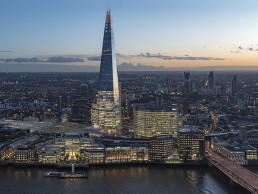
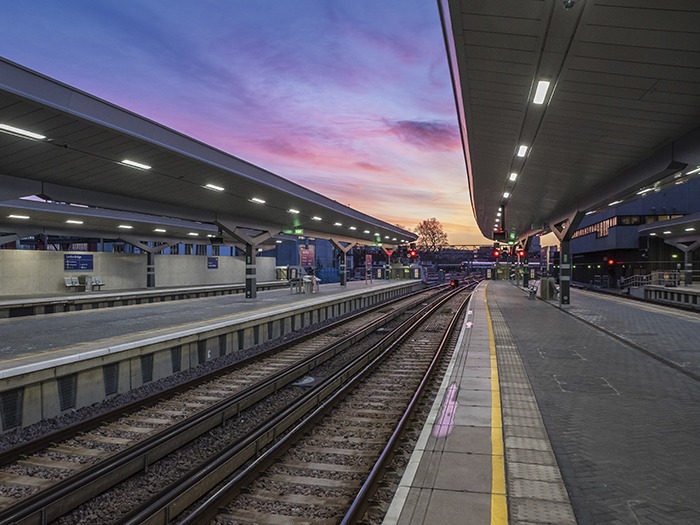
London’s oldest rail station has been brought firmly into the 21st Century, thanks to a major, full-scale renovation. Designed by Grimshaw, with lighting design from WSP, the new-look station creates a pleasant, welcoming hub for London’s commuters.
Originally opened in 1836, London Bridge Station is one of the oldest rail stations in the world. Handling more than 50 million customers a year, it is the fourth busiest station in London, and in 2013 underwent a dramatic, five-year refurbishment process that sought to bring the station firmly into the 21st century.
Upgrade work to the station included major track upgrades, a new rail underpass on the approach to the station, and platform widenings and extensions, allowing 30% more trains into the station and improving commuter journeys for decades to come.
Working alongside Grimshaw Architects, WSP developed the lighting design for the station, as Sacha Abizadeh, Associate at WSP, explained: “The refurbishment of London Bridge Station has been one of the most complex and ambitious rail station redevelopments in UK history, with an innovative lighting scheme at its heart.
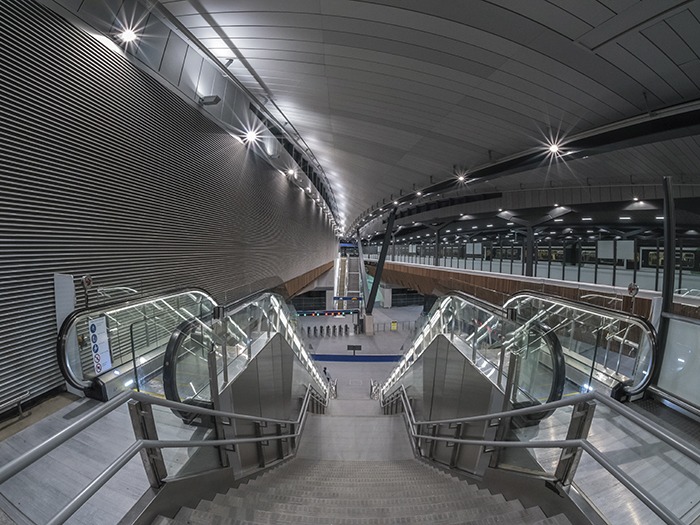
“The scheme involved the design of an 8,000sqm concourse at street level, with a live railway running over the top on a viaduct, utilising existing brick arches, and a new deck supported on columns located within the concourse. Several parts of the station were heritage listed, and we incorporated these original features into the final design, while creating an attractive environment that allowed free passenger movement through the station from street to platform level.”
For the project to have maximum impact and usability, it was imperative that the lighting design was developed in parallel with the architectural design. This presented the challenge of coordinating across multiple disciplines in a short time frame, while always considering budget, buildability and procurement on a site with significant constraints. As Abizadeh explained, “it was a total engineering approach”.
However, the biggest challenge wasn’t coordinating the many different disciplines, but instead ensuring that the station was still operational during the extensive renovations.
“Completion of the design was subject to several significant challenges, including the need to provide permanent works to maintain the integrity of the Victorian arches,” he continued. “But the key challenge was to minimise disruption for passengers.
“With historical findings during excavations, design alterations and a hugely public space, we were required to be flexible and resilient to any changes that came our way. The complex construction strategy involved a phased demolition and reconstruction, with more than 70 sub-stages, ensuring that the station remained operational throughout the works.”
For the newly renovated station, the client’s vision was to provide a safe, cost-effective yet well-lit environment across the entire station, and as such the lighting design brief called for an installation that “embraced luminaire specification for all public areas, covering associated issues such as luminaire installation, maintenance requirements and safety procedures,” Abizadeh continued.
“By providing a uniform scheme with modern functional LED technology that blended into the architectural surroundings, this enhanced the building and its concrete, tiling and brickwork features. Highlighting the use of materials meant that the architects vision came to life, allowing the site’s history to mesh with the modern era.”
A key example of this approach can be found in the Victorian arches in the Western Arcade, which currently provides pedestrian access to and from the London Underground.
“The new station design lengthens the Arcade by more than double its current length and increases its width by approximately three times, with retail units either side of the central circulation vaults,” Abizadeh said. “The historic quadripartite vaults are grazed with a series of recessed mounted linear LED uplighters, enhancing the arch structures, form and texture, using warm white lighting, giving the space a welcoming feeling.
“In amongst the historic Victorian brickwork areas, the emphasis of the lighting was to provide passengers with a pleasant experience and to make their journey through the building effortless.”
Adding to this pleasant experience is the introduction of some striking new artwork from artist Mark Titchner. Commissioned by Network Rail and curated by Futurecity, Me. Here. Now. is situated in Stainer Street, the new pedestrianised walkway linking Tooley Street and St Thomas Street. The work comprises three giant polished stainless steel domes suspended from the ceiling of the new walkway. Mirrored inside and out, the domes reflect both the existing brickwork of the walkway ceiling, and the movement and colour of everyday life below. These reflections animate the domes, continually shifting the view in their reflected image; emphasising both the individual and their place in the wider community.
Titchner hoped to associate the experience of travel and commuting with endurance and the potential for self-improvement, reflection and spiritual growth. Each dome contains text, offering words of encouragement to passersby underneath and a moment of pause within the hectic transportation hub. The quotes – “Only the first step is difficult”, “The distance means nothing” and “One foot in front of the other” – can be attributed to 18th Century French noble Anne de Vichy-Chamrond, American post-hardcore band Fugazi and a self-help book, and according to Titchner, the circular shape of the domes acts as a metaphor for a journey without end: “As long as we continue to change, so does the world around us.”
Despite large parts of the station being underground, one of the key aims for the proposed lighting strategy at London Bridge was to optimise natural light and minimise artificial lighting, helping to reduce energy consumption. The street level concourse receives daylight via ceiling voids, as well as the external vertical glazing facing Tooley Street and St Thomas Street. Escalator shafts also allow daylight from the terminus rooflights to reach the circulation zones at street level. As part of its natural light studies, WSP also looked at how glare from The Shard – situated adjacent to the station – would affect both train drivers and passengers within the station.
“For the covered areas of the station, we analysed a daylight simulation model and determined which parts of the station concourse would be naturally lit,” Abizadeh continued. “The daylight levels allowed us to optimise intelligent photocell positions throughout the concourse level. This meant that artificial lighting would be reduced during quieter spells in the evenings and early mornings, making significant environmental gains. Dawn and dusk scenes were incorporated to transition the entire station from natural to artificial light, with the use of intelligent sensors to balance out the existing natural light with artificial lighting, reducing operational costs while providing the appropriate task lighting.”
Despite working within an old, pre-existing structure, Abizadeh revealed that developing the lighting design was a relatively pain-free process. “We progressed the lighting design through numerous iterations and reviews, and worked closely with the clients and architects to deliver the project,” he said.
“As part of the design, we created a full multi-discipline 3D BIM model including the lighting, which contributed to managing the stages, ensuring that any conflicts had been identified and designed out before construction of each stage commences.”
The process was helped by the near constant communication between the various teams, as Abizadeh highlighted: “The team, client, architect and design engineers were all based on site, which helped with forward design thinking, communication and decision making. By working side by side on site, we could communicate through weekly presentations, visualisations and mock-ups, and report back to the design team straight away.
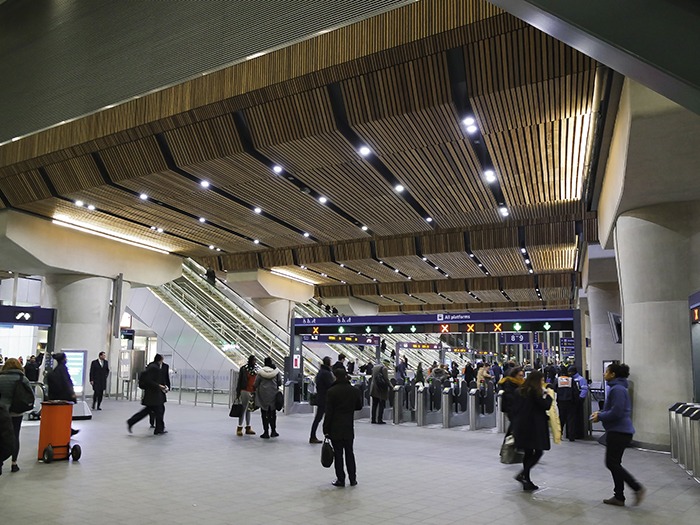
“We worked closely with the other design teams to fully understand their requirements; lighting boom systems were created across the station to accommodate smoke detectors, speakers, presence detectors, CCTV, wi-fi antenna and a cable management system, helping to keep the ceiling clean and free from conduits, providing a pleasant passenger experience and making their journey through the building effortless.”
Commencing in 2013, the renovation of the station was completed in 2018, but despite this being a fairly long-running project, Abizadeh was happy with the extensive time-frame. “It was great working on the project for a long period of time,” he said. “It allowed me to gain a lot of knowledge from various design stages, and understand the client expectations.
“The project was subject to constant changes from the client, from the initial stages right through to the construction phase and beyond. As the lead lighting design engineer, I was responsible for re-coordinating all lighting services whenever one of these changes occurred. Changes included revised internal space layouts between secure and non-secure areas, revised lighting specifications and external landscaping.”
The extended time frame proved valuable though, as now the modernised station is fully befitting of its place next to some of London’s most iconic architecture. WSP’s lighting scheme, alongside Grimshaw’s architecture helps to create a pleasant, welcoming environment in the often stressful world of commuting in and around London.
“The lighting scheme transformed central London’s oldest station into a station fit for the 21st century,” Abizadeh concluded. “We created a striking, modern lighting scheme unique to the station, despite all of the challenges presented by the product, which was a fantastic achievement.”
TWA Flight Centre, USA
One Lux Studio transforms the iconic TWA Flight Centre into a glamorous hotel lobby with updated fixtures from Spectrum Lighting.
One Lux Studio and Spectrum Lighting recently collaborated y to bring the 1960s TWA Flight Centre into the 21st century as a new, retro-inspired, hotel lobby at John F. Kennedy Airport, New York.
The former airport lounge was designed by mid-century architectural icon Eero Saarinen in 1958, and was used as an iconic backdrop in multiple Hollywood films, most notably in the cinematic Catch me if You Can.
The original lighting design was completed by Stanley McCandless, who is widely considered as the “father of theatrical lighting design and inventor of 3-point lighting”.
The flight centre closed its doors in 2001 after Trans World Airlines went bankrupt, and it wasn’t until early 2017 that One Lux was brought on board to help complete its renovation into a hotel lobby.
Jack Bailey, Partner at One Lux Studio explained the studio’s initial involvement with the project: “We started work in the Spring of 2017 and the interior lighting was completed in the fall of 2019, with the exterior floodlighting still in progress. The design brief was to use lighting to transform an early 60s airport terminal into a hotel lobby without altering its authentic appearance. With a faithful architectural restoration, lighting presented the greatest opportunity to transform the character of the space after dark.
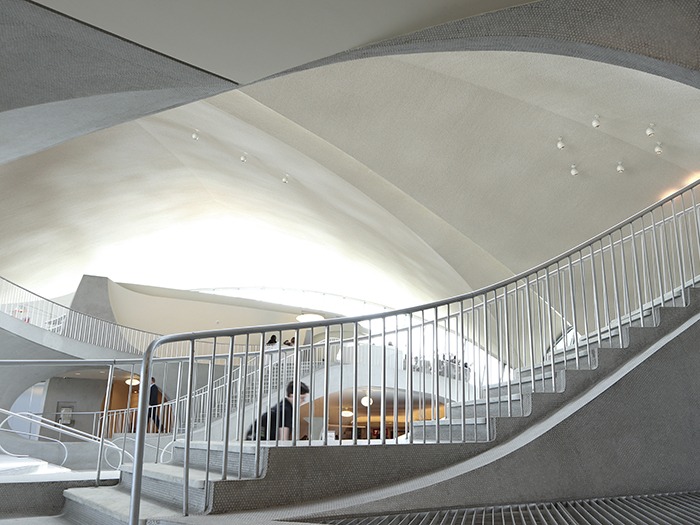
“A hotel lobby has a much different character than an airport terminal – it requires warm, dim lighting, contrasts and highlights. These attributes are not ordinarily found in airport terminals.”
The team at One Lux worked closely with Spectrum Lighting to complete the new lighting scheme for the lobby that replaced the original fixtures from the 1960s with like-for-like modern updates. “All of the visible functions are custom-manufactured to match the appearance (though not always the function) of the originally installed lighting,” explained Bailey.
“Spectrum produced three different custom fixtures. One of these was replicated from existing fixtures, one was a reproduction based on original photos, and the third was a new design to mount at existing locations. In all three cases, the performance of the light was determined based on the present needs of the space, rather than the original lighting characteristics.”
The eyeball, cylinder and spotlight fixtures blend modern LED components and high-tech controls with original mid-century lighting designs. Due to the ceiling being the underside of the concrete roof, it was impossible to introduce new lighting positions, so the fixtures had to be replaced in the exact same locations.
“The irony of being a 21st century lighting designer for a futuristic building from the middle of the 20th century is clear to me,” explained Bailey. “We can do things they wouldn’t have been able to imagine, and yet at times it seems like they did. Lighting positions are just where we need them and drive us towards the inevitable solutions that Saarinen had determined for us 60 years ago.
“The urn is just the right height to avoid shadowing on the roof shell at the porte cochere and the surface globe lights are at just the right position to avoid shadow from the ‘brow’ onto the sign at the information desk.”
Spectrum Lighting installed four rows of custom deep recessed cylinder fixtures that line the skylight over the lobby, and clusters of louvered eyeball fixtures light the seating areas throughout the space. The fixtures can all be controlled via Bluetooth, connected to an ETC dimming system.
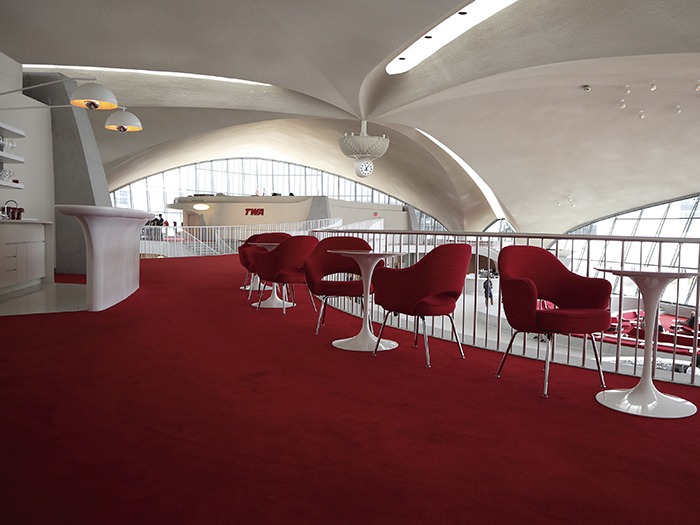
“There were practical constraints associated with working in a landmarked interior, and especially in this project, where the ability to add lighting at new positions is almost non-existent. In some cases, we were required to not just re-use existing positions, but also to re-use existing 60-year old wiring,” added Bailey.
The teams successfully completed their brief of modernising the original TWA terminal into an atmospheric, relaxing and glamorous hotel lobby that evokes an authentic period of recreation and 1960s glamour.
“You are transported to that place and time as you walk through the doors after dark. It is the lighting that gives the building a warmth in the evening,” he reflected.
“The building is exceptional in almost every way. It is a masterwork by one of the greatest architects of the 20th century. Everything about it, including the lighting, was custom-designed in pursuit of Saarinen’s vision. Given the extensive modifications to the lighting that have occurred over the years, one of the greatest challenges was understanding the architect’s original vision, and how it could be re-interpreted for the new hotel.”
Jewel Changi Airport, Singapore
The Jewel Changi Airport is the latest piece of iconic architecture in Singapore. Combining retail spaces with interior gardens and the stunning Rain Vortex waterfall, Lighting Planners Associates designed the lighting for this impressive new destination.
Jewel Changi Airport is a world-class, multi-dimensional lifestyle destination that combines gardens and attractions, retail and dining offerings, a hotel, and facilities for airport operations.
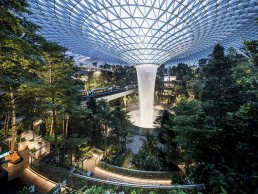
Designed by renowned architect Moshe Safdie, it has been gaining plaudits since its official opening towards the end of 2019 for its iconic glass and steel domed façade and huge indoor waterfall – the largest of its kind in the world – which acts as a striking, dramatic centrepiece to the building.
Aimed at being the next tourist hotspot in Singapore, Jewel Changi was created with the idea of marrying the contrasting concepts of a serene garden and a bustling city. The beautiful indoor gardens marry with large retail spaces more akin to shopping malls. Taking cues from the Garden of Eden, Shangri-La and the Hanging Gardens of Babylon, the architect’s vision was to design a unique destination for travellers and locals alike.
The vast glass dome fills the interior with an abundance of natural daylight, creating an experience more in line with strolling through an outdoor park, rather than an airport terminal. The natural light that floods the space is complemented by lighting design from Lighting Planners Associates (LPA), which sought to create a 24-hour, immersive visual experience, in which the gentle and slow transition of natural light is reflected in the artificial lighting.
Brought in to the project by developers Changi Airport Group, through which the studio has a good track record of previous experience, LPA worked closely with Safdie Architects to complement its vision. For Reiko Kasai, Managing Director of LPA Singapore, the opportunity to work with an architect of Safdie’s calibre was an exciting prospect: “The most unique part of this project is the architect.
“From the very beginning, he was very excited to create a garden park within the airport. His concept idea, and the expectation for the lighting, was to create something very subtle within the protected environment. The lighting had to be as if you were walking in a park in the evening.”
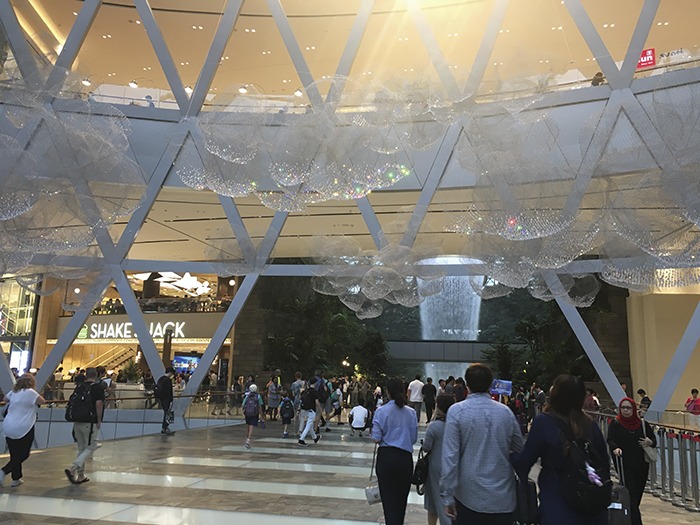
From afar, Jewel Changi’s façade glows with a blue-white lighting that alludes to a depiction of clear daytime sky, creating a soothing, calming impression. This colour constantly shifts within its blue hues to show a transition of time, while creating a pleasant contrast with the warm interior lighting. Up close, the glow around the façade fades from floor to ceiling, with the glowing light of the interior gaining prominence and dematerialising the façade.
For the interior space, Kasai continued: “Our initial concept was for an amphitheatre that appreciates nature, that blends natural light with artificial light.” The colour temperature and brightness of the lighting constantly changes, giving different experiences throughout the day. However, the retail area has been clearly differentiated from the garden spaces through differences in brightness levels – in the retail area, frontage is brightest, with light levels concentrated towards the perimeters, while in the garden space, light levels are intentionally kept low, so that the eyes are able to wander into the magnificent views.
Sunyoung Hwang, Associate at LPA Singapore, explained: “Because of the dome structure, there is a lot of daylight coming into the building, especially in the central garden areas, and there are pockets that let light through to the retail areas. But we wanted to make sure that the retail areas still have the experience of the ‘outside’ areas, extending the garden feeling.
“We wanted to use tunable white lighting for all the retail areas. When we were developing the concept, it was quite new in the market, and the client was hard to convince, so we had to do some mock-ups to convince them what kind of value it brings to the project. In the end we didn’t take the colour temperature as high as it could be during daytime, except in the areas receiving daylight through the opening, because the client wanted to have a warmer feeling for the retail spaces throughout the day.”
Although the contrasting spaces within Jewel Changi blend together effectively, there was some degree of conflict between the designers and client over how the project should be defined.
Kasai continued: “The architect had a very strong idea of creating a retail shopping experience within the garden, but the client and the developers had the opposite vision. What they wanted was more like a shopping mall with greenery. That was a big challenge for us because in the beginning we worked to fulfil the architect’s vision, to create the experience of walking in nature, in a natural environment, but then this was replaced by the need to fulfil the requests from the operator’s side.”
This conflict was in some ways complicated by LPA’s design approach, in which the firm adopts a ‘less is more’ approach. “In Singapore, clients often get very nervous when they sense the word ‘darkness’ or ‘subtle’,” Kasai explained.
“LPA’s lighting design is known for creating beautiful shadow, light and shadow, learning from nature, beautiful darkness. These terms are almost taboo to some clients.”
However, after a series of mock-ups, demonstrated to both the client and other consultants, including the architects, LPA was able to finalise the selection of lighting fixtures, and agree on the right colour temperature and brightness throughout the space.
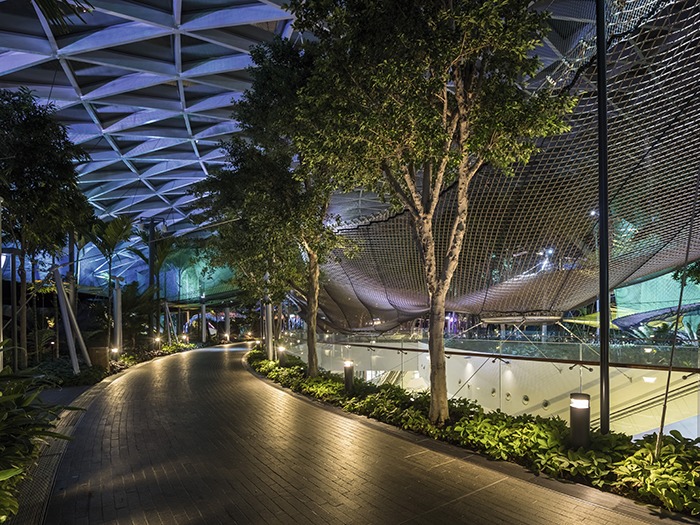
In the garden spaces, LPA was free to create a much more subtle, atmospheric lighting scheme. Instead of a uniform, homogenous lighting experience, pockets of light are created so that both light and dark can be appreciated, creating a sequential rhythm that allows visitors to appreciate light without using too much of it.
Adding to this sense of intrigue, one of the key parameters for the lighting within the garden areas was for fixtures to remain hidden amongst the greenery so that they don’t disturb the ‘look’ of the forest.
As such, pole-mounted lights are placed amidst the trees, while step and coping lights from KKDC offer the main source of functional lights along two walking trails within the Shiseido Forest Valley, with spike-mounted spotlights for the trees. Elsewhere, Roblin’s fibre optic lighting was used to create a ‘firefly’ effect in the Shiseido Forest Valley, West Gateway Garden, and the attractions at Canopy Park. Uplights were limited to the trees, while other lights were aimed downwards to minimise light spill to the sky, and the reflection of light sources within the interior from the glass panes of the dome.
Throughout the Jewel, LPA utilised a range of downlights and spotlights from the likes of Alto, Erco, HK Lighting, Endo and Zumtobel to create a subtle yet specific, focused lighting scheme.
“The elements of lighting that we chose are very minimal, almost not visible,” Hwang explained. “When you go there, there are not many lighting elements that you can find very easily. It’s very focused.”
“The project is under a glass dome, which is considered an indoor environment, but actually, because there are lots of greens and plants, we had to consider IP-rated, outdoor fixtures,” added Yusuke Hattori, Associate Director at LPA Singapore.
“The challenge was to comply with indoor lux level standards, while creating the exterior feeling. To cater to this outdoor feeling, we only had bollard lights and pole lights, as those are lighting elements that you normally see in outdoor environments.”
The defining centrepiece of the Jewel Changi though, is the beautiful Rain Vortex. At 130ft tall, it is the largest indoor waterfall in the world, spanning the full seven-storey height of the building.
The waterfall utilises Singapore’s plentiful rainfall, funnelling rain from the roof through a central oculus, before it is then recycled back to the roof. A recreation of the precipitation cycle, the Rain Vortex is seamlessly integrated into Jewel Changi, framing natural rainwater as the centrepiece.
Highlighting this extraordinary feature is a special lighting show, which LPA helped to coordinate. As a key focal point of the project, LPA ensured that its architectural lighting scheme complements the lighting show. Most of the light fixtures in the Shiseido Forest Valley, terraces and Canopy Park dim down during the show, while LPA also installed “stardust” point source lighting around the rim of the waterfall, which is activated during the show.
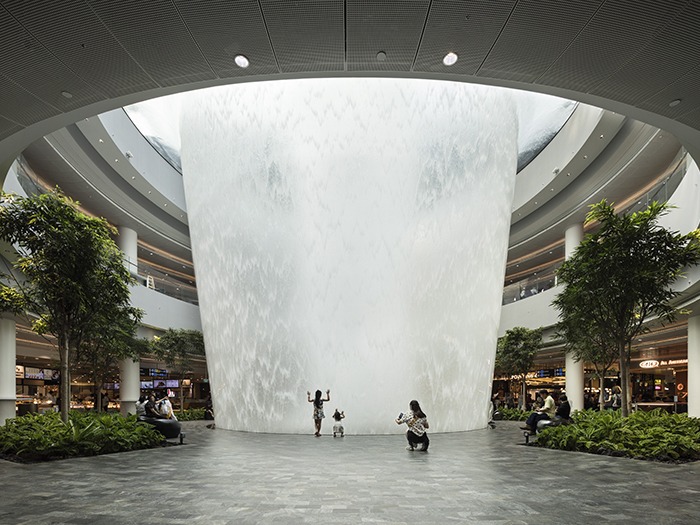
Outside of this, no lighting fixtures were installed on the complex latticework of the glass ceiling, as the architect wanted a clean visual of both the internal dome and the sky outside.
Since officially opening in October 2019, the Jewel Changi has become a landmark destination for Singapore, and the LPA team has expressed its pride in being involved in such a notable project.
“Because of the size of the project, we’ve spent a lot of time on it – more than 13,000 hours - but we’re very proud of the team, and that we finally delivered a good result,” said Hattori.
“It was a really demanding, time-consuming project, because there were so many people from so many different perspectives and departments, each with their own agenda,” added Kasai. “The scale of the project is so big, and because it can be seen as a garden, as a shopping mall, as a public space, it’s a mixture of everything, that meant that it was completely unique.”
Looking back over the project, a particular highlight for LPA is seeing how visitors have interacted with the space since its opening. “Seeing how people spend time there is really what we intended in terms of atmosphere. We’ve seen people after long flights having naps, sitting and chilling out, so that was quite successful for us,” Hattori continued.
“We said in the beginning we wanted people to appreciate the space at any time, be that daytime or evening, early in the morning or late at night, when the lighting show turns on or when it’s off, you still enjoy the space,” said Kasai.
“In fact the architect, Moshe Safdie seems to be extremely happy with how this project was conceived. He’s said that he’s so happy to see people in the space – whoever comes here, they all look very happy. Whether it’s local people or visitors.
“Because of that, we’re very happy with the contribution that we were able to make.”
KAIA International Airport, Saudi Arabia
Light-art sculptures by M+R greet passengers coming through the departures hall at the new KAIA International Airport in Jeddah, Saudi Arabia.
Neil Musson and Jono Retallick of M+R have recently unveiled their latest artwork Dawn inside the new KAIA International Airport in Jeddah, Saudi Arabia. The artwork was commissioned by Areen Design, who managed the interior design for the vast space in which the sculpture is located.
“The illuminated sculpture forms a centrepiece consisting of four enormous sculptures that spiral upwards like currents of air into the curved rooves of the main hall,” explained Retallick.
The sculptures are comprised of colour-changing wing-shaped translucent acrylic blades that reflect light. Individually programmed LED light strips, located on the inside of each blade, illuminate the outer surfaces with a palette of sky-blues, soft greys and subtle whites. The programmed light sequence mimics the movement of clouds drifting across the sky; as the light drifts across each sculpture towards an adjacent sculpture located further down the departure hall.
Musson elaborated: “We started with the shapes and forms being used in the architectural scheme and expanded these with the concept of birds in flight. The form captures the moment that a flock of birds suddenly takes off as one dynamic shape. We started with chalk sketches and are pleased to see that the energy of those sketches remains in the final sculptures.”
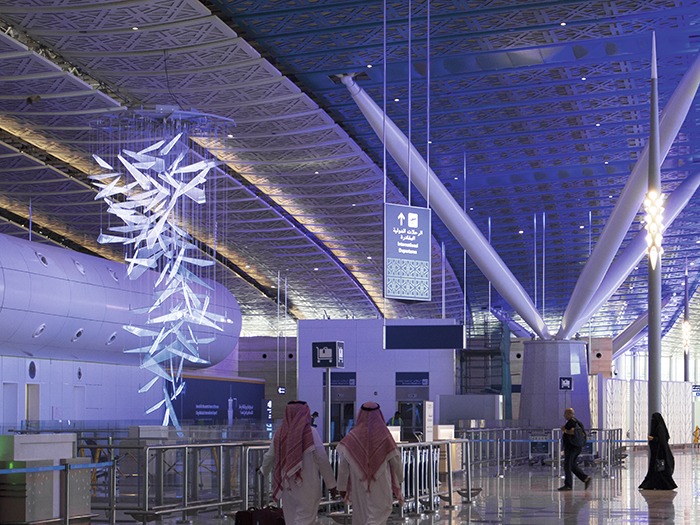
Each individual light-art piece is comprised of 80 custom-made blades supported by 160 weight-bearing wires of differing lengths.
“The extraordinary engineering, made possible by Colin Musson, used complex computer modelling to ensure that no blades or wires touched each other or changed the delicate overall shape of the cluster of wings.
“Each wire carries data to the blades and is also carefully considered as part of the sculptural form. The cables were chosen for their translucent and reflective qualities with the result that they glisten as light shines through them rather like a fine rain,” explained Retallick.
M+R’s sculptural light effect brings a sense of calm into the centre of a busy airport, and “uses metaphors of light reflecting and refracting within the structure to suggest the way in which peoples’ lives cross over and influence each other in this busy space,” he added.
The team developed the pieces through close collaboration with Applelec, to design the blades using its LED light sheet, and Control Lighting to develop the programming. Ray Dolby of Control Lighting commented: “This is one of the most exciting and interesting projects that we have been part of for many years. Whilst we have worked extensively on both artwork and commercial lighting control projects, Neil and Jono’s knowledge of exactly what they wanted and their amazing attention to detail was remarkable. They involved us closely at all stages, so we really bought into their vision.”
M+R’s portfolio of work particularly focuses on the sensitive integration of art into architecture, with the aim of enhancing social interaction.
“We enjoy collaboration and consider the client, the engineers and the public a vital part of our creative team. We look forward to the next challenge and aim to make something else that is equally high quality, beautiful and original.”
Cityringen, Denmark
Lighting design guru and former Global Leader at Arup, Rogier van der Heide discusses the design process for Copenhagen’s seventeen Cityringen stations, how they blend daylight with electric lighting and create pleasant environments for the city’s commuters.
"Public transport - you may love it or hate it. You may consider it a responsible choice or perhaps something “not for my type of people”. However you feel about it, public transport keeps our cities going and it helps billions of us to get to work, to see our friends and families and get our errands done every day.
But how do you get everyone else out of their cars and into the metro? While many cities debate the pricing of public transport or the frequency of trains as a main factor, the City of Copenhagen believes that the quality of the experience in transit is a key motivator for the public to travel by metro. And that is where design kicks in: the creation of a pleasant, effective, delightful experience. It is the true purpose of design. Whether we create a pair of earphones, an MRI scanner or a metro station: design establishes an emotional bond with the user by offering a great experience.
We – designers I mean – love this kind of thing. Because contributing at the emotional level means moving away from following the crowd, from tech features, from specifications and from efficiency. It means having a discussion about value instead of cost. Design is all about getting to the essence of what it is to be a human: our emotions. Design, as a custodian of brands, truly differentiates. It establishes an emotional connection. Could you love a metro station? Well if you’d love any, it would be one of the Cityringen stations in Copenhagen, Denmark. Or all seventeen of them. That is how you get people into public transport: make them love it.
Design, whether lighting design, architecture, product design or the Cityringen (which mixes of all of those at the same time) also drives business. It was 1973 when Thomas Watson Jr. said in a lecture at the University of Pennsylvania: “Good design is good business”. Who was he? The CEO of IBM. 50 years later, Watson is still so very right. His vision is the second rationale behind the role of design in the Cityringen project. Forget the timetable of the trains, or the cost of a ticket: design is what makes Cityringen a success.
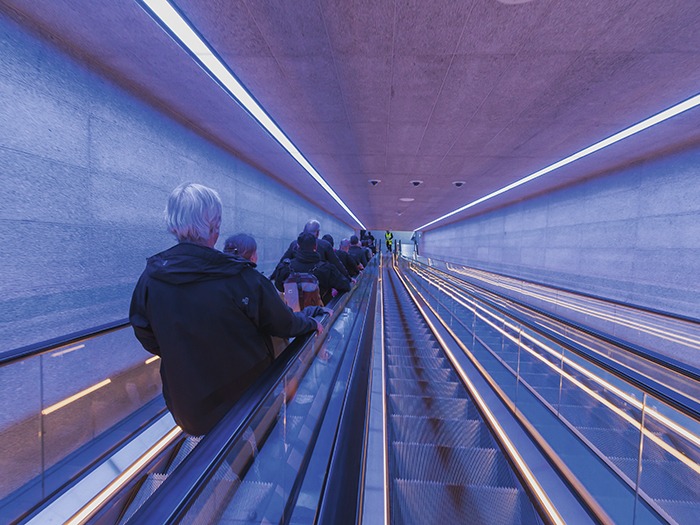
Is that all it’s about? Well, no. Besides enabling an emotional bond and driving good business, design is instrumental in a third way. Nille-Juul Sørensen, the brilliant Dane who is not just an architect but also a product designer, a thought leader, a luminary and an illustrator, got it right when he started as the Chief Architect of Cityringen. He composed a team of some of the brightest design minds he could find. The contacts in Nille’s phone read like the who-is-who of design, so he could hand-pick the very best.
This idea of true teamwork and taking a holistic approach to design was instrumental. By doing so, Nille wanted to influence, and enable the client to take bold decisions. Blending daylight and electric illumination in a 30-metre deep metro station? It’s easy to say “it’s not possible”. But how cool would you feel as a client when you decide to just do it and give your team a mandate? This is a vision that we practice in every project and with every client. It truly moves things forward and into the future. Cityringen engaged designers so that they could take bolder decisions than they would have taken without them. We give you not just ideas, we give you confidence. In the Cityringen project, we validated those “crazy” ideas in my favorite way. And we discarded a few too.
Long before Cityringen, in 1994, we developed large-scale physical models to evaluate natural light and miniature versions of architectural light fittings. We went all the way to the Science Museum in London, modelling parts of the building at a scale of 1:5, including scrims, dimmable lights, colour gels and everything else. We had so much fun, and that has never changed. Later, in our work with Zaha Hadid Architects, projects were getting so large that we had to resort to scales such as 1:250 for our wooden models of bridges and large office complexes.
Then when working on the Apple Stores, we returned to full scale mockups and developed the famous seamless, continuous ceiling illumination. All those projects are examples of pushing the boundaries of what light can do: the way it plays with materials, how it changes perception, how it drives the experience and how it is good for the project in new and unexpected ways, and how clients take bolder decisions than they would have taken without the designers.
The large-scale models of Cityringen were stunning, and they illustrated very effectively the things that are otherwise just so hard to explain: the rendering of the textures of walls; the liveliness of the colours of tiles; the pattern of shadows on concourses; the perceived changes of sunlight outside when you’re 30-meters deep under the surface, waiting for your train; the light in its magnificent wholeness. The models showed that wholeness. They convince without words, without calculations, but with so much persuasion. The models were big enough to include light, yet small so you could walk around them.
They were rough enough so that we did not lose ourselves in details, yet fine enough to tell what had to be told. They were inspiring, and they generated many new and better ideas. And they were affordable. So, I say: what else do you want? And the interesting thing is, once such models are there, engineers, architects, lighting designers, acousticians, wayfinding experts, industrial designers, investors, owners and even train drivers all start using them in their very own way.
Models provide a simplification of a complex problem, and that is not a bad starting point to find an elegant solution. Moreover, my teacher at the Academy of Arts, Peter de Kimpe, was right when he said: “If you can make it out of cardboard, you can make it for real.” He did not only mean that models are a great way to validate design, I think that he also meant that imagination is the designer’s most important instrument when creating the man-made world that surrounds us.
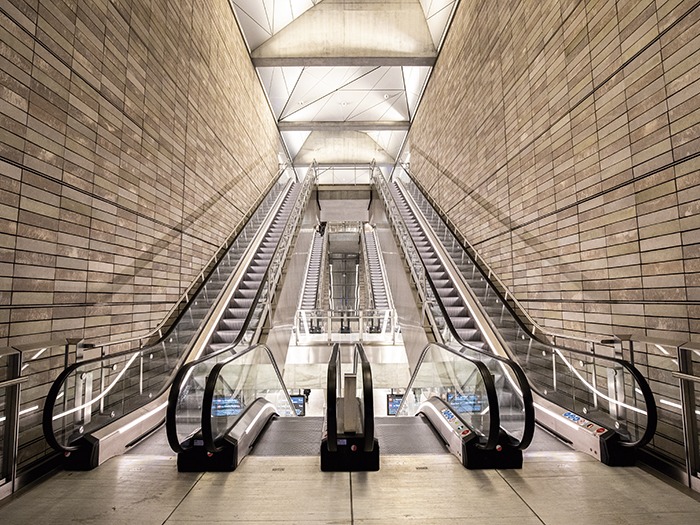
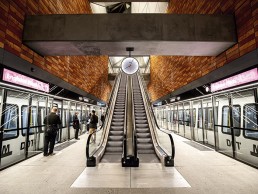
The lighting plan for Cityringen is simple and clear - the light is “easy to experience”. With that, I mean that you don’t need to be an expert on architecture to appreciate its quality. There is a simplicity to it, and that is what I love: the patterns are intuitive, and the lights seems to be placed just how everyone else would place them -I like that so much. It’s the natural logic of a great design. At Cityringen, the light is just how it is meant to be.
In the Cityringen stations, there are light lines, where we suggest to guide you - just follow them and you’ll find the train. There are splashes of light where surfaces are interesting - just look at them and you’ll discover. There are highlights - just see them and you’ll step safely (at an escalator landing, for instance). And in some stations, there is the generous, ample daylight from skylights and mirrors, or does it come from heaven? Either way, we have directed it as deep as we could.
The project opened towards the end of last year, but we began its design back in 2007. There was LED, for sure, but it was not always viable, in particular not wherever colour rendition was really important. The choice of LED fittings was limited. Most lighting people were still using metal halide when it had to be bright, and tungsten for everything else. So, it is no wonder that many asked me how the Cityringen team anticipated the expected changes and the full digitisation of lighting.
Well, there wasn’t any rocket science: instead of specifying lighting technologies, we detailed lighting principles. We described the effects and how the public will experience the light. Sure, at some point we had to make an estimate of power consumptions, and describe physical dimensions. But even then, what prevailed was what we wanted it to look like and to feel like, not what happens behind the walls and ceilings. Later in the project, the priorities shifted of course, and the technical design became crucial to delivering a well-executed project.
And now, having visited the final result just after the opening, I can say that the project has worked out wonderfully, just like any other project that uses digital light not just for energy savings, but also for focus and direction, as well as for glare control, colour rendition, beam shaping and controllability. The lighting team and the designers and engineers have done a fabulous job.
The seventeen stations of the Cityringen demonstrate that “form follows emotion” and together they are a tremendous project. And while their lighting may look easy and intuitive when you travel underneath Copenhagen, it was born out of a desire to delight travellers and give them a rewarding and memorable experience. And that is exactly what design is supposed to do."
Arlanda VIP Services, Sweden
As part of the ongoing expansion of Stockholm’s Arlanda International Airport, Tengbom has designed the Arlanda VIP Services – a slice of Scandinavian luxury for high-profile travellers.
Nestled away from the hustle and bustle of the main airport terminals, Arlanda VIP Services, at Stockholm’s Arlanda airport, provides a luxurious retreat for travelling royalty, dignitaries, world leaders and celebrities.
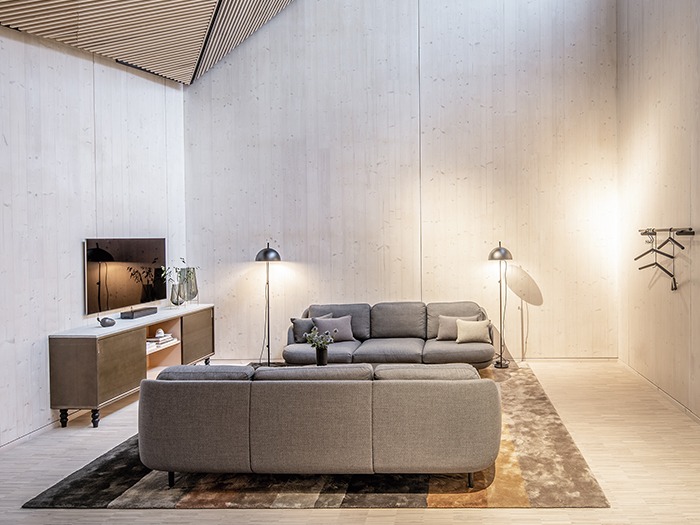
Designed by Tengbom Architects, the private terminal captures the essence of ‘Nordic Luxury’, with the delicate blend of concrete, wood and stone creating a simple yet sleek environment that the architects hoped would create a “visual experience that will linger long after its occupants depart”.
From the outside, the building is as discreet as it is functional – an anonymous concrete shell that blends into its surroundings, avoiding any undue attention for the VIPs passing through. However, on entering the terminal, the hard outer shell gives way to a warm, welcoming spot of luxury, showcasing an architectural concept that builds on the contrasting relationship between hard and soft, cold and warm, with the Swedish landscape and culture serving as a key source of inspiration.
Inside, wood materials dominate the interior via simple wooden façades and panelling, while leather-bound stair rails, neutral colour schemes and a functional yet expressive curation of exclusive Scandinavian furniture add to the local feel that Tengbom sought.
Mark Humphreys, Practice Director and Partner at Tengbom, explained further: “The materials are quite simple – a cross between stone, wood and cement. We thought this was a more toned down Swedish luxury.”

Originally intended to be an extension of Terminal 5, Arlanda VIP Services is a completely separate, free-standing space within the airport – one of very few of its kind around the world. On entering, travellers go through their own security control and check-in before being directed to their private suite. Here, they can relax, unwind and prepare for their flight, while staff are on hand to cater to their every need, before a car takes them directly to their flight.
Despite its high-end, luxurious finish, the project had a very fast turnaround from concept to completion, as Humphreys explained.
“The story behind Arlanda VIP was that it was meant to be a really quick project – it had a really short timeframe, but it’s also got the highest security class, so it was a challenge. The pressure on us was enormous to deliver a conceptual building, but we thought ‘this building is a really big thing for Sweden, shouldn’t we try to make it a sort of ‘brand’ building for the country?’"
Complementing the architectural concept, Tengbom Studio Ljus developed the lighting concept for the VIP terminal. This was built on lighting principles intended to enhance the architectural design, improve safety and security, ensure code compliance and improve wayfinding.
Chiara Carucci, Lighting Designer at Tengbom Studio Ljus, explained the initial concept for the lighting: “The role of the lighting is to create a well-cared for environment, with the distinctive Nordic Light as a reference.
“With light, we highlight the spatial identities throughout the day and year, while reinforcing volumes and the choice of materials. By designing through contrasts made of light and shadows, and cold daylight and warmth, we created a dynamic place.
“As both lighting designers and architects, our desire was to integrate lighting within the architecture and interior design, and to be more sustainable, both economically and environmentally.”
After developing the initial lighting concept, Tengbom worked with electrical consultants Ramboll on the design development and specifications, utilising fixtures from iGuzzini and Reggiani to create a minimalistic lighting scheme that blends into the architectural frame of the building.
“Working with the architects, we designed a special mounting solution for the lighting fixtures integrated within the wooden ribs on the ceiling, as well as several other details, such as very small scale, specially-designed mirrors with 3cm radiused corners in the bathrooms,” Carucci added.
In each of the private rooms, decorative lighting adds to the “Scandinavian Luxury” feel, while customised control systems offer a range of lighting scenarios, such as “Welcome”, “Movie”, “Dinner” and “Lounge”.
While from the outside the VIP terminal appears to be a windowless, concrete bunker, Tengbom was able to utilise natural light to fantastic effect through the use of upward facing windows and skylights – partly due to safety regulations, but also because of the users’ need for discretion and privacy.
“The natural light coming in through the skylights is to create the feeling that you’ve got a little cabin sitting in a concrete box,” Humphreys continued. “So you’re aware of the protective shell, but you can still see the daylight. And the way that the concrete has been rendered, it catches the light beautifully as it comes in, so you’re aware of the outside.
“If you had done a normal building, you’d put all the rooms on the outside, but there’s not a lot to look at outside,” he continued. “If we did that here, we’d have to have bullet-proof glass, which is very expensive, and then curtains drawn, because you don’t want anyone looking in at the guests. So it would have been counterproductive.
“Instead, we decided to make a building with no windows, and just use skylights. The result is an environment that emanates stillness and relaxation from its very core. For us, this is Scandinavian Luxury.”
Indeed the spatial qualities of the terminal evoke a sense of sanctuary, where guests can shake off the stresses of travel, escape everyday life for a while and prepare for their onward journey.
“Scandinavian Luxury is going into the forest and being alone, or going into a cabin and cutting off from the world. And at Arlanda VIP, this unexpected experience in the modern world, when all these people are under all this stress, must be luxury.”
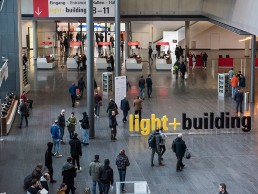
Light + Building postponed until September
(Germany) – Messe Frankfurt postpones
Light + Building amid coronavirus concerns and stand cancellations.
The world’s leading trade fair for lighting and building-services technology will now be held in Frankfurt am Main on September 27 - October 2.
The announcement came quickly after a spate of cancellations, most notably from Signify, which announced it would not take part in this year’s event due to health risks associated with coronavirus.
The organisers have said the
unexpected appearance of Covid-19 in Italy demanded a new analysis of the
situation in close cooperation with the public-health authorities of the City
of Frankfurt. After Germany, the largest groups of exhibitors and visitors come
from China and Italy.
A multi-stage health check on guests
from China has been called for, the implementation of which would be extremely
challenging for Messe Frankfurt. Additionally, more and more travel
restrictions are being put into place thus making it difficult for both
visitors and exhibitors to attend the fair.
The decision is supported by the
cooperation partners of Light + Building, the Electrical Installation Systems
and the Light Working Groups of the Central Association of the German
Electrical and Electronic Engineering Industry (ZVEI) and the Central
Association of German Electricians (ZVEH). The foremost Italian associations
also back this decision.
With only two weeks to go before the six-day event was due to take place, many visitors will have already confirmed travel plans for March – many of which will now be non-refundable. The postponement at such a late stage raises the question of how the news will impact attendance figures in September.
www.light-building.messefrankfurt.com
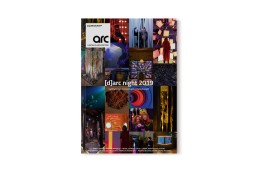
Issue 113
arc Dec/Jan 2019/20 – Issue 113
A [d]arc night to remember…
Christmas came early at our festive [d]arc awards celebration…
Well that was a bit fun, wasn’t it??
After months of build-up, organisation, preparation, logging entries and counting votes, the 2019 [d]arc awards culminated in spectacular fashion on 5th December with [d]arc night - our own industry Christmas party at London’s wonderful MC Motors.
It was another incredible evening, full of fun, festivities, and plenty of free booze, and a great way to get into the Christmas spirit while celebrating some of the best lighting design projects from the past twelve months.
As with previous years, [d]arc night marked the end of a six-month process that saw us receive more than 400 entries across thirteen categories. Altogether, we received projects from more than 45 countries, and over 12,000 votes (a huge increase on 7,000 votes last year), so thanks to everyone that got involved!
A huge congratulations to all of our winners, especially Finland’s WhiteNight Lighting, who not only won the SPACES - High category, but also received more votes than any other winning project, landing it the coveted ‘Best of the Best’ [d]arc award.
At [d]arc night, we also saw fifteen teams of lighting designers and manufacturers create their very own ‘Christmas present’ light installations. Each and every one was amazing in its creativity and delivery, but special mention must go to Lighting Design International and Linea Light Group, whose Ministry installation won the Best Installation award on the night. Huge thanks to all the sponsors and installation teams who helped to make this year’s
[d]arc night the best one yet!
Special thanks must also go to all who came, along with everyone who entered, the fantastic panel of judges (a worldwide panel comprised of nine Women in Lighting ambassadors), Light Collective, my co-host on the night and darc editor Helen Ankers, and of course, everyone who voted. You can read more about all of the winners, and see some great shots from the party (thanks Gavriil!) later on in this issue.
Finally, I wanted to say a huge congratulations to our Marketing Manager/Party Planner Moses Naeem and his wife Rose, who this month celebrated the birth of their beautiful daughter Margot Ivy. Congrats, Mo!
Matt Waring
Editor
arc
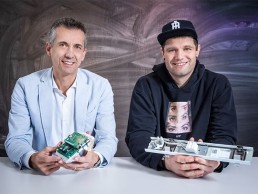
Trilux acquires majority share in Crosscan
(Germany) – The acquisition expands Trilux’s position in the digital services market.
Trilux has expanded its digital portfolio with the
acquisition of a majority share in Crosscan.
Founded in 2003, Crosscan is one of the largest system
providers for visitor frequency measurement and analysis in the retail sector,
and the acquisition expands Trilux’s portfolio of services in the field of digital
services beyond lighting.
“Many digital projects fail in advance due to the complexity
of the material, too many options, too many contact persons and far too many
open issues,” said Joachin Geiger, Managing Director of Marketing and Sales at Trilux.
“As a one-stop, full-service provider, we make things as
simple as possible for customers – not only in terms of lighting, but also
beyond lighting.”
Crosscan founder Benny Philip Lehmann added: “Our
cooperation with Trilux provides us with access to new customer segments in
which the company has hardly been active until now, for example in industry,
office and education.”
“At the same time, Crosscan brings an element of start-up
culture into the Trilux Group, and its agility and innovative spirit will set
important new impulses in the company,” added Thorsten Cramer, who has transferred
from Trilux to Crosscan.
Crosscan will continue to operate as an independent company
in the future with dual leadership: executive management will be shared by Lehmann
and Cramer.
www.trilux.com
www.crosscan.com
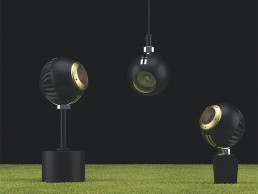
Phos Orba
The Orba is the latest addition to Phos family – a highly
versatile, modular projector range for indoor and outdoor use. The range
features a wide choice of installation options, from track, recessed, pendant
and drop tube. The high range of adjustability is achieved by a magnetic ‘puck’
and rail design that gives lighting designers complete control when
commissioning.
The ø70 spherical body is also the heatsink
for the high-powered cree LED. Delivering up to 830 luminaire lumens, the Orba
features easily interchangeable optics of 10, 20, 30 and 50-degrees – all of
which accept Phos’ honeycomb, anti-glare louve for tighter beam control.
The exterior variants are sealed using a stainless steel
rail with a lockable connector to achieve the desired IP65 rating.
